Overview

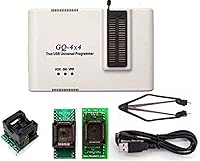
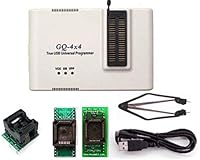
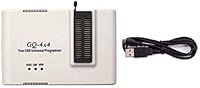
The GQ GQ-4X4 Universal Device Programmer is a professional-grade chip programming tool built by MCUmall Electronics, a Canadian manufacturer that has earned genuine credibility in the embedded systems community. This is not the kind of device you hand to someone who has never touched a soldering iron. It targets repair technicians, electronics hobbyists, and embedded developers who need a programmer they can actually trust. The robust enclosure and 40-pin ZIF socket signal real build quality — a noticeable step up from the flimsy boards common at the budget end. With a True USB interface, it also works cleanly on modern laptops that no longer carry legacy parallel or serial ports.

Features & Benefits

What separates the GQ-4X4 programmer from cheaper alternatives is its fully automatic configuration — no jumper fiddling, no DIP-switch headaches. You plug in the chip, the software identifies it, and you get to work. Beyond basic EPROM and NOR Flash support, it handles PIC microcontrollers, AVR chips, BIOS flash memory, and the W25Q256 series, which matters when your workload shifts week to week. The fast SPI and JTAG support push it well beyond simple memory duplication tasks. The base unit covers a broad range, but optional adapters unlock even more device families — worth factoring into your total budget. It also runs on everything from Windows XP through Windows 11, both 32-bit and 64-bit.

Best For

The GQ device programmer earns its place on the bench of anyone who regularly works with firmware at the chip level. Electronics repair shops re-flashing BIOS chips on motherboards will appreciate the consistent chip recognition. Embedded developers handling batch programming of PIC or AVR microcontrollers will value the reliability above all else. Retro computing fans cloning old EPROM chips for vintage machines have found it well-suited for that work too. Auto technicians reading and writing ECU flash memory also show up frequently in user discussions. That said, casual hobbyists looking for an occasional-use tool should weigh the cost and learning curve carefully — this is a mid-to-professional tier investment.

User Feedback

Across nearly 100 reviews, this chip programmer holds a 4.5-star rating — and reading through the feedback, that number feels earned rather than inflated. Users consistently highlight chip identification accuracy and software stability, particularly in BIOS and Flash programming workflows. Long-term owners report the hardware holds up well over years of regular bench use. On the downside, several buyers note the software interface is purely functional — it gets the job done but is not particularly modern-looking. The adapter add-ons, while useful, represent additional spending that newcomers sometimes underestimate. Windows-only operation is another real constraint worth knowing before committing. Still, experienced users tend to stay loyal, and that kind of retention says a great deal.

Pros

  • Automatic chip identification removes manual configuration entirely, cutting setup errors down to near zero.
  • Supports a genuinely wide range of chip types — EPROM, NOR Flash, PIC, AVR, BIOS, and W25Q256 — across a single unit.
  • Fast SPI programming mode noticeably speeds up workflows compared to slower budget-tier alternatives.
  • JTAG support opens up use cases well beyond basic memory chip reading and writing.
  • True USB interface works reliably on modern laptops that no longer have legacy ports.
  • The 40-pin ZIF socket and solid enclosure feel built to last through years of daily bench use.
  • Compatible with Windows XP through Windows 11, so it works across older lab machines and newer workstations alike.
  • The adapter ecosystem means you can expand device support over time without replacing the core unit.
  • At roughly one pound and a compact footprint, this chip programmer is light enough to take into the field.
  • A 4.5-star rating held across nearly 100 reviews over many years reflects consistent real-world performance.

Cons

  • Software is Windows-only, locking out macOS and Linux users entirely.
  • The user interface looks dated and has a steep learning curve for anyone new to chip programming.
  • Expanding device compatibility beyond the base unit requires buying additional adapters at extra cost.
  • Total investment can climb significantly once adapters are factored in alongside the base price.
  • No Mac or Linux driver support has been a persistent frustration for cross-platform users.
  • Documentation and setup guides can feel sparse, making the initial configuration harder than it should be.
  • Occasional reports of software quirks on certain Windows configurations, requiring manual troubleshooting.
  • Not ideal for one-off or infrequent use cases where the cost-to-benefit ratio tilts unfavorably.

Ratings

The GQ GQ-4X4 Universal Device Programmer has accumulated a 4.5-star average across nearly 100 verified purchases, and every score below was generated by AI after analyzing that real-world buyer feedback — with incentivized reviews, duplicate submissions, and bot activity actively filtered out. The analysis draws on both short-term impressions and long-term ownership reports to surface patterns that a single reading would miss. Strengths and genuine pain points are reflected in equal measure, so you get a complete picture rather than a polished one.

Programming Accuracy
91%
Chip recognition is the single most praised aspect of this device programmer across long-term user reports. Repair technicians working on BIOS recovery consistently note that the unit identifies target chips correctly on the first attempt, and verify passes return clean results — a critical reliability factor when working on hardware you cannot afford to brick.
A small subset of users has flagged occasional read inconsistencies with certain older or non-standard EPROM variants that have unusual timing requirements. It is not a common complaint, but for anyone working with obscure legacy chips, cross-checking the official supported device list before buying is strongly advisable.
Chip Compatibility
88%
The breadth of supported chip types is genuinely impressive for a single base unit — covering EPROM, NOR Flash, PIC, AVR, BIOS, and W25Q256 series without needing to swap hardware. For repair shops or developers whose workload spans multiple chip families week to week, that flexibility translates directly into saved time and fewer tool purchases.
The base unit does not cover every chip package type, and users targeting TSOP, PLCC, or BGA-packaged chips will need additional adapters sold separately. Some buyers have noted frustration when discovering this after purchase, so mapping your target chip list against the compatibility database before buying is worth the extra time.
Build Quality
86%
The robust enclosure and 40-pin ZIF socket set this chip programmer apart from bare-board budget alternatives that feel fragile after a few dozen chip insertions. Long-term owners consistently report that the hardware holds up well under daily bench use, with the ZIF socket in particular showing minimal wear over extended periods.
A few users describe the overall aesthetic as purely industrial — functional grey plastic with no attempt at modern design. While this does not affect performance, buyers accustomed to more polished hardware may find the build feels dated compared to newer tools entering the market at a similar price point.
Software Usability
57%
43%
The software does what it needs to do: it detects chips, reads and writes reliably, and has maintained stable Windows compatibility from XP through Windows 11. Experienced users who already understand chip programming workflows appreciate that it stays out of the way and does not over-complicate straightforward read/write/verify operations.
The interface is visually dated and has a learning curve that catches new users off guard. There is no hand-holding, tooltips are sparse, and the overall experience feels built for engineers rather than for usability — something that comes up repeatedly in reviews from buyers who expected a more guided setup experience.
Value for Money
73%
27%
Relative to the chip recognition accuracy and long-term durability that real users report, this chip programmer holds its value well compared to cheaper alternatives that require frequent replacement or produce unreliable results. Repair shops and developers who use it daily tend to describe the investment as justified within the first month of regular ownership.
For buyers who only need occasional chip programming, the upfront cost is harder to justify — especially once adapter purchases for non-DIP chip packages are factored in. The total cost of ownership can be meaningfully higher than the base price alone suggests, which is a real consideration for budget-conscious buyers.
Setup & Configuration
83%
Fully automatic chip detection removes the jumper configuration and DIP-switch adjustments that make older programmers tedious to use. In practice, this means you can move between different chip types during a busy repair session without stopping to reconfigure anything — a genuine time-saver in a professional environment.
While hardware configuration is automatic, the software-side setup on a new Windows machine is not always smooth. A handful of users report needing to troubleshoot driver installations or software settings before getting a stable connection, which adds friction to what should be a straightforward first-time experience.
Programming Speed
84%
The fast SPI programming mode is noticeably quicker than what budget programmers offer, and developers batch-programming multiple identical chips particularly appreciate the time savings during repetitive sessions. For BIOS flash chips specifically, write and verify cycles complete at a pace that keeps repair workflows moving without unnecessary waiting.
Programming speed is strong in SPI mode but considerably slower when working with older parallel EPROM types, which is a function of the technology rather than a flaw. Users coming from high-end gang programmers may also find throughput adequate for single-chip work but limiting when volume is a priority.
USB Connectivity
87%
The True USB interface means the GQ device programmer works cleanly on any modern laptop or desktop without legacy parallel or serial port adapters. Field technicians who carry it to client sites appreciate that a standard USB cable is all that is needed — no power brick, no bulky secondary cables required.
A small number of users on specific USB 3.0 hub configurations have reported intermittent connection stability issues during programming sessions. Plugging directly into a motherboard USB port rather than through a hub resolves this for most people, but it is a nuisance worth being aware of before your first field job.
Adapter Ecosystem
71%
29%
The availability of optional adapters means this chip programmer can grow with your needs rather than becoming obsolete when work shifts to a new chip package type. Users who have invested in a few targeted adapters over time describe the expanded capability as significantly extending the practical lifespan of the base unit.
Each adapter is a separate purchase, and costs add up faster than some buyers anticipate upfront. A few reviewers also note that certain adapters can be harder to source quickly, which can stall a project when you urgently need to program a non-DIP chip and the right adapter is not already on hand.
OS Support
68%
32%
Supporting Windows XP through Windows 11 in both 32-bit and 64-bit variants is genuinely useful for shops that maintain older dedicated programming machines while also wanting the option to run it on a current workstation. Ongoing driver support across a decade of Windows versions reflects a meaningful level of manufacturer commitment.
Windows-only operation is a hard wall for macOS and Linux users, and there is no official workaround from the manufacturer. Those attempting to use the software through virtualization on non-Windows hosts report inconsistent results, making this chip programmer effectively inaccessible without a native Windows machine available.
Portability
82%
18%
At one pound with a compact footprint, this chip programmer is one of the more travel-friendly professional-grade units available and fits easily into a laptop bag. Field technicians doing on-site BIOS recovery or ECU work describe carrying it as effortless — no special case or dedicated transport bag needed.
The unit requires a Windows host machine to function, which limits true portability to situations where a laptop is already part of the kit. Without a standalone or tablet-compatible operating mode, the full working setup still depends on dragging a notebook computer to every remote job.
Long-term Durability
89%
Multi-year ownership reports are consistently positive, with users describing the hardware as reliable well past the point where cheaper programmers have failed. The ZIF socket — which takes the most mechanical stress from repeated insertions — is specifically called out by experienced users as holding up without meaningful degradation over hundreds of programming cycles.
Official warranty information is not prominently communicated, which leaves some buyers uncertain about their recourse if the unit arrives with issues or fails early. A small number of older reviews mention units arriving with software recognition problems, though these appear isolated rather than indicative of a production-level quality control issue.
Documentation & Learning Curve
62%
38%
The GQ community and third-party online forums provide a reasonable supplementary resource base for new users working through setup challenges. Users who have navigated the initial learning curve generally describe the software as logical once the workflow clicks, and community-maintained chip lists help fill gaps that official documentation leaves open.
Official documentation is thin for a tool of this complexity, and in-software guidance is minimal at best. Buyers without prior chip programming experience frequently report that the first few sessions involve significant trial and error, with the manual providing little actionable help when something does not behave as expected.

Suitable for:

The GQ GQ-4X4 Universal Device Programmer is purpose-built for people who work with chip-level firmware as a regular part of their day, not as an occasional curiosity. Electronics repair technicians who frequently re-flash corrupted BIOS chips on motherboards will find the automatic chip recognition alone worth the investment. Embedded developers programming batches of PIC or AVR microcontrollers benefit from the broad compatibility and consistent read/write reliability across long work sessions. Retro computing enthusiasts hunting down working replacements or clones for old EPROM chips in vintage hardware have praised it specifically for that niche. Auto and ECU technicians who need to read and write flash memory on automotive control modules will also find it fits that workflow well. In short, if chip programming is something you do often enough to care deeply about accuracy and reliability, this tool is built for you.

Not suitable for:

The GQ GQ-4X4 Universal Device Programmer is genuinely not the right fit for casual buyers or beginners who expect a plug-and-play experience out of the box. The software is Windows-only, which immediately rules it out for anyone working primarily on macOS or Linux systems. The interface is utilitarian and requires some familiarity with chip programming concepts before it feels intuitive — if you have never programmed a chip before, the learning curve is real. Budget-conscious hobbyists should also know that the base unit does not cover every device family; certain chips require purchasing additional adapters separately, which adds to the total cost. If you only need to flash one specific chip type once or twice a year, a cheaper and more narrowly focused programmer would likely serve you better without the added complexity.

Specifications

  • Brand: Manufactured by MCUmall Electronics Inc, a Canadian company with an established reputation in professional chip programming hardware.
  • Model: GQ-4X4 (V4), the fourth-generation revision of the GQ-4X line of universal device programmers.
  • Interface: True USB data transfer interface, compatible with both desktop PCs and modern laptops that lack legacy parallel or serial ports.
  • Socket Type: Equipped with a 40-pin ZIF (Zero Insertion Force) socket, which protects chip pins during repeated insertion and removal.
  • Chip Support: Natively supports EPROM, NOR Flash, PIC microcontrollers, AVR microcontrollers, BIOS chips, and the W25Q256 SPI Flash series.
  • Programming Modes: Supports fast-mode SPI (Serial Peripheral Interface) programming and JTAG, enabling a broader range of read, write, and verify operations.
  • Configuration: Fully automatic chip detection with no manual jumper settings or DIP-switch adjustments required by the user.
  • OS Compatibility: Compatible with Windows XP (32-bit and 64-bit) through Windows 11 (32-bit and 64-bit), covering a wide range of lab and workstation environments.
  • Power Source: DC-powered entirely through the USB connection, requiring no external power adapter for standard programming operations.
  • Weight: The unit weighs 1 pound, making it light enough to carry to field service locations without adding significant load.
  • Dimensions: Package dimensions measure 9.3 x 6.5 x 1.9 inches, resulting in a compact footprint that fits easily on a crowded electronics bench.
  • Enclosure: Housed in a robust grey enclosure purpose-built for the GQ-4X4, providing better physical protection than bare-board programmer alternatives.
  • Expandability: An ecosystem of optional plug-in adapters extends support to additional device families beyond what the base unit covers natively.
  • Product Rating: Holds a 4.5-out-of-5-star rating across 92 Amazon customer reviews, with the listing active since October 2014.
  • Discontinuation: Listed as not discontinued by the manufacturer, indicating ongoing production and continued software support as of the latest available information.

Related Reviews
GQ Electronics GQ-4X4 Universal EPROM Programmer
78%
88%
Chip Compatibility
74%
Software Quality
82%
Build & Hardware Quality
58%
Ease of Setup
84%
Adapter Coverage
More
SofaBaton X1S Universal Remote Control
77%
61%
Ease of Setup
88%
Activity Programming
83%
Hub Signal Reliability
74%
Device Compatibility
81%
Build Quality
More
Pebblebee Card Universal (2024)
82%
91%
Cross-Platform Compatibility
83%
Battery Life
93%
Form Factor & Portability
74%
Charging & Power Management
77%
Tracking Accuracy
More
Energizer Recharge Universal Charger
86%
88%
Charging Speed
93%
Battery Compatibility
91%
Ease of Use
86%
Build Quality
92%
Value for Money
More
SofaBaton U2 Universal Remote Control
78%
71%
Ease of Setup
74%
App Experience
88%
Macro Functionality
91%
Backlit Buttons
83%
Device Compatibility
More
Rubis Tweezer Crab Universal
87%
94%
Precision and Effectiveness
89%
Ergonomic Design
91%
Durability and Sharpness
85%
Comfort for Extended Use
88%
Value for Money
More
Walfront EZP2019 USB EEPROM Flash Programmer
71%
83%
Read & Write Speed
74%
Chip Compatibility
86%
Automatic Chip Detection
81%
Offline Copy Function
51%
Software Quality
More
Universal Remote MX-990
84%
88%
Value for Money
85%
Ease of Setup
90%
Display Quality
92%
Device Compatibility
80%
Build Quality
More
Spot Trace Satellite Tracking Device
81%
90%
Tracking Accuracy
95%
Global Coverage
92%
Battery Life
88%
Ease of Setup
94%
Portability
More
MaximalPower FC999 Mark I Universal Battery Charger
75%
91%
Chemistry Compatibility
88%
Size Versatility
84%
LCD Display Clarity
89%
Charge Protection
52%
Charging Speed
More

FAQ

No, it does not. The software is Windows-only, supporting everything from XP through Windows 11 in both 32-bit and 64-bit versions. If your primary workstation runs macOS or Linux, you will need a dedicated Windows machine or a Windows virtual machine to use it — and results with virtualization can be inconsistent, so a native Windows install is the safer route.

Out of the box, this chip programmer natively handles EPROM, NOR Flash, PIC microcontrollers, AVR microcontrollers, BIOS chips, and the W25Q256 SPI Flash series. That covers a solid range of common tasks right from the start, though you should check the GQ compatibility list for your specific chip model before purchasing.

It depends on what you need to program. The base unit covers a wide range on its own, but if you work with TSOP, PLCC, BGA, or other non-DIP package types, you will need specific adapters. Each adapter is an additional purchase, and if you need several, the total investment can grow noticeably beyond the base unit cost — so it is worth mapping out your chip list before buying.

Yes, BIOS chip re-flashing is one of the most commonly cited use cases among buyers. Users in the repair community specifically praise the GQ-4X4 programmer for its accurate chip identification and reliable write verification on SPI BIOS chips. It handles the W25Q256 and similar series that appear frequently in modern motherboard BIOS replacements.

It is steeper than most beginners expect. The software interface is functional but dated, and there is a real assumption that you already understand basic chip programming concepts like reading, writing, and verifying. If you are completely new to the field, plan to spend time with the documentation and community forums before your first successful session.

Many auto and ECU technicians do use this chip programmer for reading and writing flash memory on automotive control units, and it shows up in user discussions for exactly that purpose. That said, automotive ECU work often involves non-standard chip packages, so verify that the relevant adapter is available and compatible with your target ECU before committing.

It draws power entirely through the USB connection, so no external power brick is needed for standard operations. This also makes it reasonably portable — just a laptop and a USB cable are enough to get to work in the field.

Budget programmers typically require manual jumper configuration, support a narrower chip list, and tend to have less stable software. The GQ device programmer trades a lower upfront cost for automatic detection, broader compatibility, and a build quality that holds up over years of regular use. For occasional hobbyist use, a cheaper unit might suffice — but for repair shops or developers doing this daily, the reliability difference tends to justify the price gap.

It has been available since October 2014, but it is not abandoned hardware. The manufacturer lists it as not discontinued, and the software has continued to receive updates to maintain Windows 10 and Windows 11 compatibility. The GQ community also remains active, which helps with troubleshooting and chip support requests.

Buyers who have owned the GQ device programmer for several years generally report that the hardware holds up well under regular bench use. The ZIF socket, which is the most mechanically stressed component given how often chips are inserted and removed, tends to remain reliable over time. The enclosure, while not flashy, does its job of protecting the internals.