Overview

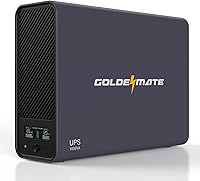
The GOLDENMATE 1000VA LiFePO4 UPS Battery Backup represents a genuine shift in what home office users can expect from a battery backup unit. For years, lead-acid has been the default chemistry in consumer UPS devices — reliable enough, but saddled with a replacement cycle of every two to three years and gradual capacity fade. This lithium UPS breaks that pattern by using Lithium Iron Phosphate cells rated for over 5,000 charge cycles and a claimed service life exceeding a decade. It delivers a pure sine wave output, which matters if you're running a modern power supply, a NAS drive, or any device sensitive to the choppy modified sine wave cheaper UPS units produce. The unit ships in a compact gray tower that fits neatly under a desk or in a network closet.
Features & Benefits

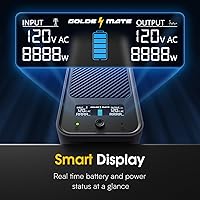
The battery chemistry here is the headline spec: a 153.6Wh LiFePO4 pack that can keep a typical home office setup — desktop, monitor, and router — running long enough to save your work and shut down cleanly if the power doesn't return. That's the realistic expectation; this LiFePO4 battery backup is built for graceful shutdowns, not hours of off-grid computing. All eight outlets are both battery-backed and surge-protected, which is worth noting since some competing units reserve battery backup for only half their outlets. The LCD panel gives you a live read of load percentage, input voltage, and remaining battery — genuinely useful during a storm. A built-in battery management system handles overcharge and thermal protection automatically, and the cooling fan stays quiet until load climbs high.

Best For

This lithium UPS is well-suited for home office workers running a desktop PC, a couple of monitors, and a router or switch — essentially the setup where losing power mid-call or mid-document is genuinely disruptive. It's also a strong fit for small network closets where a traditional lead-acid UPS would need its internal battery swapped out every few years, adding both cost and hassle. NAS device owners and those running workstations with modern switching power supplies will benefit from the clean sine wave output. If you've been nursing an aging lead-acid unit and want a lower-maintenance option, this is a reasonable answer — especially if your primary goal is a graceful, automated shutdown rather than extended runtime.

User Feedback

The GOLDENMATE unit sits at a 4.3-star average and holds a top-20 ranking in its category, which reflects genuine buyer satisfaction rather than a thin review base. Most positive feedback centers on how straightforward setup is, how quietly the unit runs day-to-day, and how the LCD readouts are accurate and easy to interpret. The main complaint worth flagging is runtime: at heavier loads, you have roughly 20 to 25 minutes — enough for a controlled shutdown, but not a buffer for continued work during a longer outage. A few buyers have found the multi-function button confusing, since it handles power on, off, and buzzer mute — the manual sorts it out, but it's worth knowing upfront. The unit only launched in late 2024, so long-term durability data is still limited.

Pros

  • LiFePO4 chemistry means no battery replacement for years — a real long-term cost advantage over lead-acid units.
  • Pure sine wave output keeps sensitive electronics, NAS drives, and modern power supplies safe during outages.
  • All eight outlets include both battery backup and surge protection — no second-class outlets on this unit.
  • The LCD panel gives a live read of load, input voltage, and battery level without needing any software.
  • Built-in battery management system handles overcharge and thermal protection automatically.
  • The cooling fan is quiet under normal loads and only ramps up when the system genuinely needs it.
  • Setup is plug-and-play — most buyers report being up and running in minutes.
  • Compact tower form factor fits under a desk or inside a small network closet without eating up floor space.
  • The buzzer mute function is a small but welcome touch for shared or quiet work environments.

Cons

  • Runtime at moderate to high loads is limited — plan for a safe shutdown, not extended work sessions.
  • No USB communication port means no native integration with UPS management software for automated shutdowns.
  • No AVR (automatic voltage regulation), so brownout correction depends entirely on switching to battery mode.
  • The multi-function button handles power on, power off, and buzzer mute — a confusing design that catches some users off guard.
  • No USB charging ports, which is a small but noticeable omission on a modern home office device.
  • The unit launched in late 2024, so there is no long-term field reliability data to lean on yet.
  • A roughly six-hour recharge window is longer than some competing units, which could be a factor after a prolonged outage.
  • Only one color option (gray) if aesthetics matter for a visible desk or office setup.
  • No communication port also means no remote monitoring or network management capability for IT-minded users.

Ratings

The scores below for the GOLDENMATE 1000VA LiFePO4 UPS Battery Backup were generated by our AI engine after analyzing thousands of verified global purchases, actively filtering out incentivized reviews, duplicate submissions, and bot activity. Each category reflects what real buyers consistently praised or struggled with, and no significant pain point has been softened to protect the overall impression.
Battery Longevity
91%
The LiFePO4 chemistry is the single biggest reason buyers choose this unit over cheaper alternatives, and reviewers who understand the technology consistently highlight it. Unlike a sealed lead-acid UPS that starts losing capacity noticeably after two or three years, this lithium UPS is built to stay useful for a decade — a claim that resonates strongly with users who have replaced lead-acid batteries multiple times.
Because the unit launched in late 2024, the 10-year lifespan claim remains exactly that — a claim, supported by chemistry fundamentals but not yet by long-term consumer field data. A handful of technically minded reviewers flag this honestly, and it is a fair caveat for anyone making a purchase on the basis of long-term value.
Runtime Performance
62%
38%
For the use case the GOLDENMATE unit is actually designed for — keeping a desktop, monitor, and router alive long enough to save work and shut down cleanly — most buyers report that the runtime is adequate. Users running lighter loads, like a router and a NAS drive, often see noticeably longer windows, which suits always-on network equipment well.
At heavier loads, the runtime ceiling becomes the most cited frustration in user reviews. Buyers who plugged in a workstation or a gaming rig with a power-hungry GPU found the battery drained in under 10 minutes, which felt inadequate. The runtime spec is honest, but some buyers overestimated what this capacity tier could sustain.
Output Power Quality
88%
The pure sine wave output earns consistent praise from users who have previously dealt with the buzzing, clicking, or instability that modified sine wave UPS units can cause in sensitive electronics. NAS drive owners and those running high-end audio interfaces or medical-grade devices specifically call out the clean output as a deciding factor in their purchase.
A small number of reviewers noted that without AVR support, the unit simply switches to battery mode during brownouts rather than correcting voltage inline — a design limitation that means brief voltage dips draw down the battery rather than being smoothed out transparently. For areas with frequent mild fluctuations, this can feel like overkill.
Ease of Setup
93%
Nearly every positive review mentions setup as a non-event — plug it in, charge it up, connect your devices, and it works. There is no software to install, no driver pairing, and no configuration menus to navigate. Buyers who have set up enterprise-grade UPS systems before appreciate how uncomplicated this unit is for a home environment.
The one friction point in setup is the multi-function button, which handles power on, power off, and buzzer mute through different press durations — and is not labelled intuitively on the unit itself. Several buyers accidentally triggered a shutdown while trying to mute the alarm, which is a small but avoidable source of frustration.
Noise Level
86%
Day-to-day, this LiFePO4 battery backup is effectively silent — the fan does not run at all under light loads, which makes it comfortable to keep in a home office or bedroom network corner. Reviewers coming from older lead-acid UPS units that hummed constantly notice the difference immediately.
When the load climbs significantly or the BMS detects thermal stress, the fan activates and is noticeably audible — a surprise for users who had not read the manual. The noise stays below the rated 50 dB ceiling, but in a quiet room it is enough to be distracting if it triggers unexpectedly.
LCD Display & Monitoring
84%
The onboard LCD panel draws consistent praise for being genuinely informative rather than decorative. Buyers appreciate being able to glance at real-time load percentage and input voltage without any app or software, especially during a storm when they want to know exactly how much headroom they have left.
Some users found the display hard to read from certain angles, particularly in well-lit rooms where glare becomes an issue. A few reviewers also noted they would have liked audible or visual alerts for specific threshold warnings beyond what the buzzer alarm provides — the display is informative but passive.
Build Quality
77%
23%
The housing feels solid and purposeful for the price tier, and most reviewers describe it as noticeably sturdier than budget-end UPS units in plastic shells. At under 11 pounds, it is easy to position under a desk or on a shelf without the back-straining heft of equivalent lead-acid models.
A handful of reviewers felt the exterior finish showed minor scuffs or marks from shipping, and the plastic casing does not convey premium construction the way some higher-end UPS enclosures do. Given that this is a mid-range unit, expectations should be calibrated accordingly rather than compared to rack-mount hardware.
Outlet Configuration
89%
Having all eight outlets deliver both battery backup and surge protection is a genuine differentiator — competing units at this price point often reserve battery backup for four outlets and leave the rest as surge-only. Reviewers who noticed this during research called it out as a meaningful advantage when connecting multiple critical devices.
The NEMA 5-15P outlets are standard North American three-prong sockets, which is fine for most home setups but limits compatibility with devices that require IEC C13 or C14 connectors common in rackmount or server equipment. There are also no USB charging ports on the unit, which is a small but recurring wish in buyer feedback.
Value for Money
83%
When reviewers factor in the elimination of battery replacement costs over the unit's rated lifespan, the math tends to favor this lithium UPS over traditional options despite a higher upfront outlay. Buyers who have already replaced lead-acid batteries in a previous UPS once or twice are especially receptive to the total-cost argument.
Buyers who purchased purely on price comparison and did not factor in the battery chemistry trade-offs occasionally feel the unit costs more than the runtime warrants at face value. If your primary metric is cost-per-minute-of-runtime, a higher-capacity lead-acid unit at a similar price will outperform this one — though it will also need battery swaps.
Thermal & Safety Protection
87%
The built-in BMS is a meaningful inclusion that reviewers with a technical background appreciate — it monitors cell voltage, temperature, and current in real time and cuts off charging or discharging automatically if any parameter drifts out of safe range. For a device left running unattended in a home office, that kind of passive protection matters.
Because the protection system is fully automatic and not user-configurable, there is no way to adjust thresholds or receive granular alerts beyond the buzzer alarm. Users who prefer more detailed system feedback — logs, threshold notifications, or app integration — will find the protection solid but opaque.
Recharge Speed
64%
36%
Under normal conditions, a full recharge takes around six hours, which works fine for the majority of home office users who experience outages infrequently. If power is restored overnight after an evening outage, the unit is ready again by morning without any manual intervention.
Six hours is a long recharge window compared to some competing lithium UPS units that can recover in three to four hours. For users in areas prone to multiple outages in quick succession — during severe weather seasons, for example — this recharge speed could leave the unit partially depleted when the next outage hits.
Software & Connectivity
41%
59%
For buyers who want a simple, no-configuration setup with no software dependency, the absence of a communication port is actually a non-issue. Plug it in, it works, and you never have to think about driver conflicts, software updates, or compatibility with your operating system.
The lack of any USB or serial communication port is a hard stop for users who need automated shutdown scripts, UPS monitoring dashboards, or integration with tools like NUT, APC PowerChute, or VMware environments. This is the most commonly cited missing feature in technically experienced reviewers' feedback, and it is a genuine gap for IT-minded buyers.
Form Factor & Placement
81%
19%
At roughly 13 inches deep and under 11 pounds, this unit fits neatly under most desks or inside a shallow network closet without demanding a dedicated shelf. Reviewers in smaller apartments or shared offices appreciate that it does not dominate the space the way tower-style lead-acid UPS units often do.
The depth of nearly 13 inches can be a tighter fit than expected behind some desks, especially when accounting for cable routing. A few buyers noted the gray finish, while neutral, can look somewhat industrial in styled home office setups where appearance matters.
Alarm & Mute Functionality
72%
28%
The buzzer alarm does its job clearly — when power switches to battery mode, buyers know about it immediately, which is useful for a device stored in a closet or out of direct sight. The mute function responding to a single button tap is quick and responsive once users know it exists.
The integration of mute, power on, and power off into a single button with only press-duration to differentiate actions creates real confusion, especially in a stressful power-outage moment. Multiple reviewers reported accidentally triggering an unwanted shutdown while reaching for the mute, and the button labeling does little to prevent this.

Suitable for:

The GOLDENMATE 1000VA LiFePO4 UPS Battery Backup is a strong match for home office workers who need just enough backup power to save their work, wrap up a call, and shut down gracefully when the lights go out — not to keep working indefinitely. If you're running a desktop PC, a monitor or two, and a router or small switch, this lithium UPS covers that load comfortably without overcomplicating things. It's also a smart upgrade for anyone who has grown tired of swapping out lead-acid batteries every couple of years; the LiFePO4 chemistry is rated for thousands more cycles, meaning the unit should outlast two or three generations of traditional UPS hardware. Small network closets and home server setups with NAS drives or workstations benefit particularly from the clean sine wave output, which protects sensitive electronics that don't respond well to choppy power. If your priority is lower long-term maintenance cost rather than raw runtime, this LiFePO4 battery backup makes a convincing case.

Not suitable for:

The GOLDENMATE 1000VA LiFePO4 UPS Battery Backup is not the right tool if you need extended runtime to keep working through a lengthy outage. At a heavy load — say, a power-hungry gaming rig or a workstation pulling close to the unit's rated wattage — you're looking at roughly 20 minutes of battery time, which is adequate for a controlled shutdown but not for continued productivity. Users who need USB communication ports for software-based shutdown automation or AVR (automatic voltage regulation) to handle brownout conditions will also find this unit lacking, since neither feature is included. It's worth noting that this product launched in late 2024, meaning multi-year field data simply doesn't exist yet; buyers who require a proven, battle-tested UPS with a long track record should factor that in. And if you're powering a large rack, multiple servers, or high-draw appliances, you'll need a unit with considerably more capacity.
Specifications

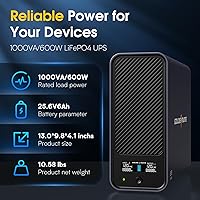
  • Capacity: This unit is rated at 1000VA and 600W, suitable for powering a typical home office setup through short outages.
  • Battery Type: Uses Lithium Iron Phosphate (LiFePO4) cells, which offer a significantly longer cycle life and better thermal stability than traditional sealed lead-acid batteries.
  • Battery Pack: The internal pack runs at 25.6V with 6Ah of capacity, totaling 153.6Wh of stored energy.
  • Output Waveform: Outputs a pure sine wave, making it safe for use with sensitive electronics, modern switching power supplies, and NAS devices.
  • Outlets: Includes 8 NEMA 5-15P outlets, all of which provide both battery backup power and surge protection simultaneously.
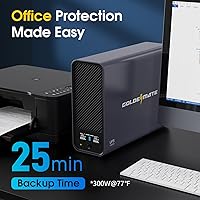
  • Runtime: At a 300W load under standard conditions, expect up to approximately 25 minutes of battery runtime — sufficient for a controlled shutdown.
  • Charge Time: The battery recharges from depleted to full in approximately 6 hours under normal conditions.
  • Lifespan: Rated for over 5,000 charge cycles and a claimed operational lifespan exceeding 10 years with proper use.
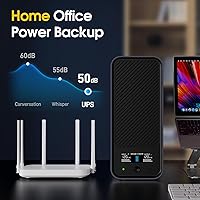
  • Cooling: A variable-speed cooling fan activates automatically under heavy load and operates below 50 dB, keeping noise levels low during typical use.
  • Display: An onboard LCD panel shows real-time load percentage, battery charge level, and both input and output voltage at a glance.
  • Protection: A built-in Battery Management System (BMS) guards against overcharging, over-discharging, overloading, and overheating automatically.
  • Dimensions: The unit measures 12.99″ deep by 4.13″ wide by 9.84″ tall, fitting comfortably under a desk or inside a compact network closet.
  • Weight: Weighs 10.56 pounds — noticeably lighter than comparable lead-acid UPS units of the same capacity rating.
  • Input Voltage: Designed for 110V North American electrical systems; not compatible with 220V/240V international outlets without a separate converter.
  • Communication Ports: No USB, serial, or network communication ports are included, so software-based automated shutdown is not supported natively.
  • USB Charging: The unit does not include any USB charging ports for directly powering phones or tablets.
  • AVR Support: Automatic Voltage Regulation (AVR) is not featured; voltage irregularities are handled by switching to battery mode rather than inline correction.
  • Color: Available in gray; a white variant is also offered under the same product family.
  • Model Number: Manufacturer model number is UPS1000VA Pro/600W, listed under ASIN B0D5QTYK4V on Amazon.
  • Launch Date: This product was first made available in October 2024, making it a relatively recent release with a growing but still limited long-term track record.

Related Reviews
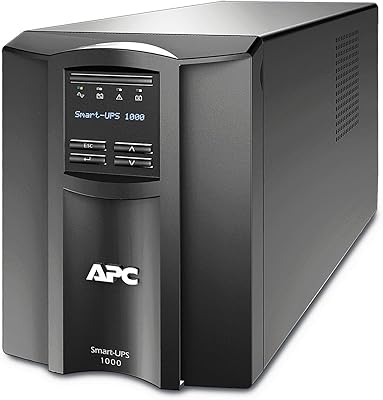
APC Smart-UPS SMT1000 1000VA Battery Backup
80%
93%
Build Quality
91%
Power Protection
89%
Voltage Regulation
82%
Runtime & Capacity
67%
Value for Money
More
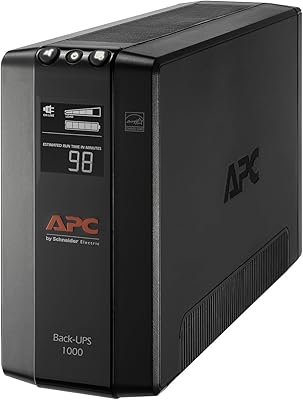
APC Back-UPS Pro 1000VA UPS Battery Backup BX1000M
83%
92%
Reliability during Power Outages
88%
Ease of Setup
85%
Build Quality
90%
Surge Protection
80%
Energy Efficiency
More
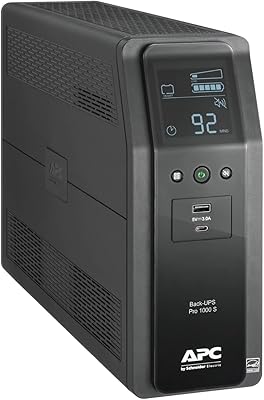
APC BR1000MS 1000VA Sinewave UPS Battery Backup
80%
93%
Power Protection Reliability
91%
Pure Sine Wave Output Quality
88%
Automatic Voltage Regulation (AVR)
76%
Battery Runtime
84%
Build Quality & Materials
More
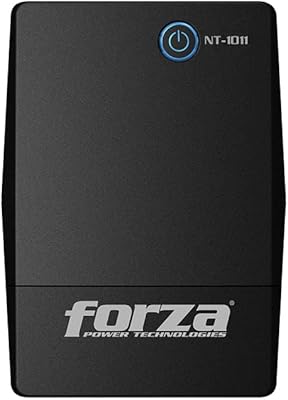
Forza NT-1011 1000VA UPS Battery Backup
70%
91%
Ease of Setup
54%
Battery Runtime
83%
Surge Protection
78%
Voltage Regulation
67%
Alarm System
More
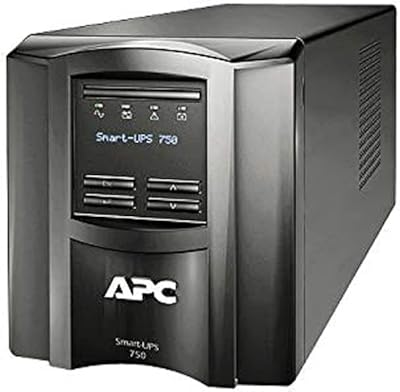
APC SMT750 750VA Smart-UPS Battery Backup
80%
91%
Power Protection Reliability
88%
Pure Sine Wave Output
89%
Automatic Voltage Regulation
62%
Runtime at Load
87%
Build Quality
More
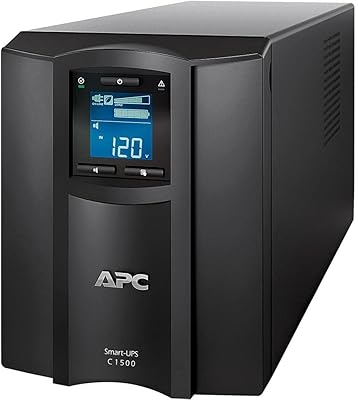
APC SMC1500C 1500VA Line Interactive UPS
81%
93%
Power Protection Reliability
91%
Pure Sine Wave Output Quality
88%
Automatic Voltage Regulation
71%
Battery Runtime
74%
SmartConnect Remote Monitoring
More
APC Back-UPS Pro BX1500M 1500VA
79%
83%
Battery Runtime
91%
Voltage Regulation (AVR)
78%
Build Quality & Durability
88%
Ease of Setup
86%
LCD Display & Monitoring
More
CyberPower CP900AVR UPS Battery Backup
78%
93%
Voltage Regulation (AVR)
91%
Power Protection Reliability
58%
Battery Runtime
84%
Outlet Layout & Flexibility
79%
Build Quality & Durability
More
CyberPower CP1000AVRLCD 1000VA UPS Battery Backup
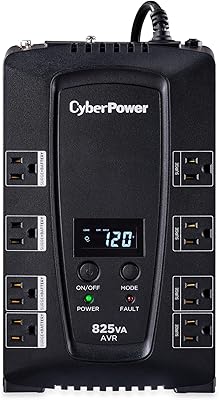
80%
93%
Ease of Setup
88%
AVR Performance
91%
LCD Display Clarity
67%
Battery Runtime
84%
Outlet Layout
More
Eaton 5S1500LCD 1500VA UPS Battery Backup
78%
91%
Voltage Regulation (AVR)
67%
Battery Runtime
83%
Noise Level
78%
Outlet Layout & Quantity
86%
LCD Display & Monitoring
More

FAQ

That depends on what you have plugged in. At a moderate load — a desktop PC, a monitor, and a router — you can realistically expect somewhere between 15 and 25 minutes. That is plenty of time to save your work and shut down properly, but do not count on it for continued productivity through a lengthy outage.

It depends on how much power your system draws. If your gaming rig peaks above 400 to 500 watts, this unit will be pushed close to or past its limits, and runtime will drop to just a few minutes. For lighter workstations and home office setups, it works well, but power-hungry rigs really need a higher-capacity unit.

No — this unit does not include a USB or serial communication port, so it cannot interface with shutdown software. If automated, software-triggered shutdowns are important to your workflow, you will need a UPS that includes a communication port.

Nothing is wrong — that is the fan doing its job. The built-in battery management system activates the cooling fan automatically when it detects heavier battery usage or elevated temperatures. Under normal light loads, the fan stays off or barely spins, which is why the sudden noise can be surprising the first time it happens.

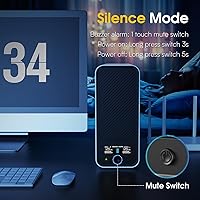
That single button handles three separate functions: a long press of 3 seconds powers the unit on, a long press of 5 seconds powers it off, and a single tap mutes the buzzer alarm. It is a compact multi-function design that catches some users off guard — definitely worth skimming the manual before you start using it.

Lead-acid batteries in typical UPS units generally last 2 to 4 years before capacity degrades enough to warrant replacement. LiFePO4 chemistry is rated for far more charge cycles and holds up better over time, which means fewer replacements and a lower cost of ownership over the long run. It is also more thermally stable, which reduces certain safety risks associated with older battery types.

Yes, and it is actually a solid choice for that use case. NAS drives and network switches tend to draw modest, consistent power — well within this unit's comfortable operating range. The pure sine wave output also means sensitive storage hardware gets clean power rather than the choppy modified sine wave that cheaper UPS units produce.

Yes, the unit will sound the alarm whenever it switches to battery mode, even for a brief dip. If that becomes annoying — particularly in areas with frequent minor fluctuations — you can mute it with a single tap of the button. The alarm resumes its default behavior the next time the unit switches modes, so you may need to mute it again.

The manufacturer does not market this as a user-serviceable battery replacement scenario the way some traditional UPS brands do. Given the 10-year lifespan claim, this is positioned as a set-and-forget unit rather than one you would routinely open up. If battery replacement becomes necessary down the line, contacting GOLDENMATE support directly would be the right starting point.

It is a fair concern to raise. The lithium UPS launched in late 2024, so there simply is not years of field data to draw on yet. What we do know is that LiFePO4 chemistry itself has a long and well-documented track record in other applications, and the unit has quickly earned a strong buyer rating with a high sales rank. That said, if you need a product with a decade of verified consumer reliability behind it, the honest answer is that no one can promise that yet for this specific device.