Overview

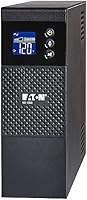
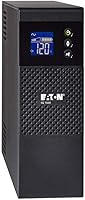
The Eaton 5S1500LCD 1500VA UPS Battery Backup has been a steady presence in the home office power protection market since 2013 — a run that speaks to its reliability rather than any flashy reinvention. It operates as a line-interactive UPS, meaning it actively regulates incoming voltage before problems reach your equipment, without constantly draining the battery. At 1500VA and 900W, it sits comfortably in mid-to-upper territory for workstation setups. The horizontal tower form factor slides under a desk without drama. And the LCD display gives you a real readout of remaining runtime, current load, and past outage history — no guesswork required.
Features & Benefits

The outlet layout is worth understanding upfront: of the 10 total outlets, only 5 are battery-backed — the other 5 provide surge protection alone. That distinction matters when you're deciding what to plug where. The built-in automatic voltage regulation quietly handles minor sags and swells without switching to battery at all, which keeps the internal cells lasting longer. ECO control is a practical touch: when your computer shuts down, it cuts power to connected peripherals automatically. A USB connection ties into Windows, Mac, and Linux for graceful automated shutdowns. The wired network port and three-year warranty covering both unit and batteries round out a thoughtful package.

Best For

This Eaton UPS is a strong fit for home office setups — think desktop PC, an external monitor, a router, and maybe a NAS or small printer. It handles that kind of load without issue. It also makes good sense for small business workstations where an unexpected shutdown could mean lost work or corrupted files. If you live somewhere with inconsistent power quality — frequent brownouts or voltage dips — the AVR topology is particularly valuable here. One honest caveat: at 900W, this battery backup unit is not sized for high-end gaming rigs or workstations with power-hungry GPUs. Know your load before committing.

User Feedback

Most owners single out quiet everyday operation as a genuine highlight — the fan stays completely off under normal conditions, only kicking in during battery use, and it is audible when it does. Setup earns consistent praise too. On the critical side, some users find the runtime under heavy load shorter than they anticipated, so calibrate your expectations if you're running near the watt ceiling. Long-term owners report that battery replacement is straightforward and reasonably priced, which matters after a few years of service. A smaller number of users have hit inconsistencies with the USB monitoring software, particularly on Linux. Overall sentiment remains solidly positive.

Pros

  • Automatic voltage regulation handles brownouts without switching to battery, protecting connected gear passively.
  • The fan stays completely silent under normal utility power, making it easy to live with in quiet workspaces.
  • Ten outlets total give you enough coverage for a full desk setup without needing an additional power strip.
  • The LCD display shows real-time load wattage and remaining runtime at a glance, no software login required.
  • User-replaceable AGM battery means you can extend the unit lifetime significantly without buying a whole new device.
  • ECO control automatically cuts power to idle peripherals when the main computer shuts off, reducing wasted energy.
  • A three-year warranty covering both the unit and internal battery is notably generous for this product category.
  • Setup takes minutes out of the box, with no drivers or complex configuration needed for basic protection.
  • RJ-45 data line protection adds a layer of surge defense that most buyers forget to consider for their wired network.
  • The long production history since 2013 means replacement parts, batteries, and community troubleshooting resources are easy to find.

Cons

  • Runtime under heavy load shrinks fast — users near the watt ceiling may get only a few usable minutes on battery.
  • The five surge-only outlets are easy to confuse with battery-backed ones, and the on-unit labeling is not obvious enough.
  • USB monitoring software feels outdated and has reported compatibility issues on Windows 11 and several Linux distributions.
  • The audible beeping during battery mode is persistent and can be disruptive in quiet home or office environments until disabled.
  • The unit weighs over 26 lb, making repositioning or moving it between locations more cumbersome than expected.
  • No pure sine wave output on battery limits compatibility with certain sensitive or higher-end connected equipment.
  • Battery capacity typically begins degrading noticeably after two to three years, requiring replacement sooner than some buyers anticipate.
  • Oversized power adapter plugs can block adjacent outlets due to the standard outlet spacing on the rear panel.

Ratings

The Eaton 5S1500LCD 1500VA UPS Battery Backup has been scored across 12 performance categories by our AI system after analyzing thousands of verified global buyer reviews, with spam, bot-submitted, and incentivized feedback actively filtered out. The scores below reflect the full picture — what this battery backup unit genuinely does well and where real users have run into frustration. Both the strengths and the friction points are represented without softening either side.
Voltage Regulation (AVR)
91%
Users in areas with inconsistent utility power — frequent brownouts, voltage sags during storms — consistently report that the AVR keeps their equipment running without a single battery transfer event. That means the internal battery stays healthier over time, which buyers in older neighborhoods or rural areas especially appreciate.
A handful of users note that in regions with severe or sustained undervoltage, the AVR correction range has its limits and the unit will eventually fall back to battery. It handles mild instability well, but is not a substitute for a proper power conditioning solution in genuinely problematic grid environments.
Battery Runtime
67%
33%
At a modest load — a desktop PC, one monitor, and a router — most users report enough runtime to save work and shut down gracefully during an outage, typically in the range of several minutes up to around 20. For the intended use case of workstation protection, that window is adequate.
Users running near the 900W ceiling find runtime shrinks dramatically, sometimes to just a few minutes. This is the single most common complaint in long-form reviews. Buyers who expected extended uptime for heavier setups are often disappointed, and the LCD runtime estimate can feel optimistic under real load conditions.
Noise Level
83%
Day-to-day, this Eaton UPS is genuinely quiet — the internal fan does not run at all under normal utility power, which makes it unobtrusive in a home office or bedroom workstation setup. Multiple users specifically called out the silence as a reason they preferred it over competing models they had previously owned.
When the unit switches to battery or corrects a severe voltage event, the fan activates and is clearly audible. There is also a repetitive beeping during battery mode that some users find intrusive — though it can be disabled, not everyone discovers that option immediately, leading to initial frustration.
Outlet Layout & Quantity
78%
22%
Ten outlets on a single UPS is genuinely useful for a fully equipped desk — enough for a tower PC, monitor, external hard drive, router, desk lamp, and phone charger simultaneously. Users with cluttered power strips appreciate consolidating everything into one protected unit with a clear layout.
The split between five battery-backed and five surge-only outlets catches buyers off guard more than almost any other feature. Several reviewers admitted to plugging critical gear into a surge-only port and only discovering the mistake during an actual outage. The physical labeling on the unit could be clearer.
LCD Display & Monitoring
86%
The front LCD panel gives at-a-glance data that users find genuinely useful in daily life — current load wattage, estimated battery minutes remaining, and a record of recent outages. For buyers who want visibility into their power situation without installing software, this display is a meaningful differentiator.
The display backlight is not always on by default, requiring a button press to wake it, which some users find mildly annoying. A few buyers also note that the runtime estimate recalibrates slowly after a load change, making it briefly unreliable when you add or remove devices.
Setup & Ease of Use
89%
Nearly universal agreement among buyers that this battery backup unit is ready to use within minutes of unboxing. There is no complicated configuration required for basic protection — plug it in, plug your devices in, and it works. The USB cable for software integration installs without needing a driver on most modern systems.
The accompanying software interface feels dated and some users on Windows 11 have reported minor compatibility hiccups. Linux users face the steepest setup curve for automated shutdown features, with some needing to rely on third-party tools rather than the bundled utility to get reliable behavior.
USB Monitoring & Software
61%
39%
When it works correctly, the USB monitoring integration is a practical feature — the OS can detect a power event and initiate a controlled shutdown automatically, protecting against data loss even when no one is at the desk. Mac and Windows users generally report acceptable out-of-box compatibility.
This is one of the weaker areas in user feedback. Linux compatibility is inconsistent across distributions, and a subset of Windows users report that the monitoring software loses connection to the unit intermittently. For a feature that is supposed to provide hands-off protection, reliability complaints here are worth taking seriously.
Build Quality & Construction
82%
18%
The physical unit feels solid and well-assembled — the casing does not flex, the outlets have appropriate resistance, and the weight (just over 26 lb) communicates that the internal components are substantial. Users who have owned cheaper UPS units frequently note the 5S1500LCD feels noticeably more robust by comparison.
A small number of long-term owners report that the plastic casing shows scuff marks and minor surface wear after a few years under a desk. The outlets, while functional, do not accommodate oversized wall-wart adapters on every port simultaneously — a common frustration for users with multiple power bricks.
Battery Longevity & Replacement
74%
26%
The AGM lead-acid battery inside this Eaton UPS is user-replaceable without tools beyond a screwdriver, and compatible replacement batteries are widely available at reasonable cost. Several multi-year owners specifically mention that replacing the battery themselves extended the unit's useful life significantly, treating it as a long-term infrastructure investment.
Most users find the original battery begins losing capacity noticeably after two to three years of regular use, which is fairly typical for AGM chemistry but can still feel premature. The replacement process, while manageable, involves opening the chassis, which not all buyers are comfortable doing on a live electrical device.
ECO Control Feature
69%
31%
For users who remembered to configure it, ECO control earns genuine appreciation — having the UPS automatically cut power to a monitor, printer, or desk lamp when the PC shuts down is a small but real energy-saving convenience, especially for people who tend to leave peripherals running overnight.
A recurring criticism is that ECO control is either ignored entirely or misconfigured by a large portion of buyers who never read past the quick-start guide. The feature also requires correct outlet assignment, and users who do not segregate their primary device from peripherals thoughtfully will find it either does nothing or cuts power unexpectedly.
Value for Money
72%
28%
For home office and light workstation use, the combination of AVR, a solid outlet count, LCD monitoring, a three-year warranty, and a substantial connected-equipment guarantee represents a credible package at this price tier. Buyers who factor in the replaceable battery and long product lifespan tend to view the total cost favorably over time.
At its price point, some buyers compare it against competing brands offering pure sine wave output at similar costs, and feel the 5S1500LCD comes up short for that specific requirement. Users who ultimately needed more runtime or a higher watt ceiling also feel they paid for more protection than the unit practically delivered under their real workload.
Warranty & Support
81%
19%
A three-year warranty covering both the unit and the internal battery is above average for this product category and gives buyers a meaningful confidence cushion. The connected-equipment guarantee is a credible backstop, and users who have actually needed warranty service generally report that Eaton handled their cases professionally.
Some buyers note that accessing warranty support requires navigating a registration process they were not clearly prompted to complete at setup. A few users also found that the connected-equipment claim process involved more documentation than they expected, dampening enthusiasm for what sounds like a straightforward guarantee on paper.

Suitable for:

The Eaton 5S1500LCD 1500VA UPS Battery Backup is built squarely for the home office worker or small business employee who relies on a desktop computer, external monitor, and networking equipment to get things done each day. If you live in an area where the power occasionally dips or flickers — brownouts during summer heat waves, voltage sags when a neighbor runs heavy appliances — the automatic voltage regulation here is genuinely useful, correcting those variations without touching the battery at all. It also suits anyone who has ever lost an hour of unsaved work to an unexpected outage and wants a meaningful buffer: enough runtime to save files, close applications, and shut down properly. The LCD display makes this a good fit for users who want to monitor their actual power draw without installing software, and the horizontal form factor means it can live quietly under a desk without occupying valuable floor or shelf space. Small businesses running point-of-sale terminals, network switches, or light server equipment at modest wattages will find it appropriately sized for that kind of always-on workload.
Not suitable for:

The Eaton 5S1500LCD 1500VA UPS Battery Backup is not the right tool for anyone running a high-performance gaming rig, a workstation with a power-hungry discrete GPU, or any setup that routinely draws close to or above 900 watts. At those loads, the available battery runtime shrinks to a matter of minutes — barely enough for an emergency shutdown, and certainly not enough to ride out a meaningful outage. Buyers who specifically need pure sine wave output for sensitive audio equipment, certain medical devices, or advanced networking hardware should also look elsewhere, as this unit outputs simulated sine wave on battery, which can cause compatibility issues with those loads. If your primary concern is extended runtime rather than clean shutdown time, the battery capacity here will likely leave you wanting more. Linux users who depend on automated shutdown integration should be aware that the bundled monitoring software has inconsistent support across distributions, and may require additional configuration effort to work reliably.
Specifications

  • Capacity: This unit provides 1500VA and 900W of output power, suitable for mid-range workstation and home office setups drawing well under the watt ceiling.
  • Topology: Line-interactive design with automatic voltage regulation actively corrects incoming voltage sags and swells without switching to battery power.
  • Total Outlets: Ten 5-15R outlets are included: five provide full battery backup plus surge protection, while the remaining five deliver surge protection only.
  • Battery Type: An internal sealed lead-acid AGM battery powers the unit and is designed to be user-replaceable without specialized tools or professional service.
  • Display: A front-panel LCD screen shows real-time data including estimated battery runtime remaining, current load in watts, and a log of recent power outages.
  • Input Voltage: The unit is designed for 120V AC input using a standard 5-15P three-prong grounded plug, compatible with North American household and office outlets.
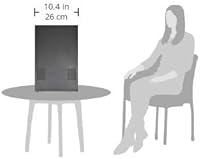
  • Dimensions: The horizontal tower measures 15″ wide by 3.4″ deep by 9.8″ tall, sized to fit under a standard desk or on a low equipment shelf.
  • Weight: The unit weighs 26.1 lb fully assembled with its internal battery, which should be factored in when planning placement or any future repositioning.
  • USB Connectivity: A USB port on the rear panel connects to a host computer for automatic graceful shutdown integration on Windows, Mac, and Linux operating systems.
  • Data Protection: An RJ-45 pass-through port provides surge protection for wired Ethernet connections running at up to 10/100 Mbps network speeds.
  • ECO Control: ECO control functionality monitors the primary connected device and automatically cuts power to designated peripheral outlets when that device powers off.
  • Warranty: Eaton covers both the UPS unit and the internal battery under a three-year warranty, which is notably comprehensive for this product category.
  • Equipment Guarantee: A connected-equipment protection guarantee of up to $150,000 covers damage to devices properly connected to the unit during a covered power event.
  • Fan Operation: The internal cooling fan remains off during normal utility power operation and only activates when the unit switches to battery mode or corrects severe voltage events.
  • OS Compatibility: The bundled power management software and USB monitoring integration are officially compatible with Windows, Mac, and Linux desktop operating systems.
  • Form Factor: The unit is configured as a horizontal tower, designed to lie flat on a surface rather than stand vertically like a traditional tower UPS.
  • Outlet Type: All ten outlets use the standard NEMA 5-15R three-prong receptacle format, compatible with most common North American device power cords.
  • National Stock Number: The unit carries National Stock Number 6130-01-627-4317, indicating it has been qualified for government and institutional procurement use.

Related Reviews
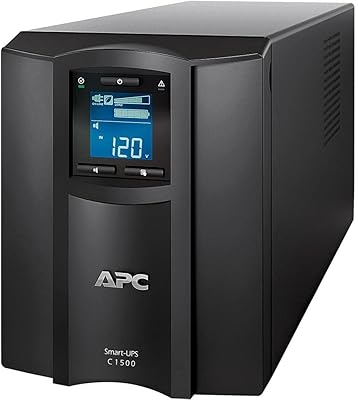
APC Smart-UPS SMC1500C 1500VA Sinewave UPS Battery Backup
85%
91%
Power Protection Reliability
87%
Ease of Setup & Installation
92%
Remote Monitoring Functionality
85%
Build Quality & Durability
70%
Weight & Portability
More
APC Back-UPS Pro BX1500M 1500VA
79%
83%
Battery Runtime
91%
Voltage Regulation (AVR)
78%
Build Quality & Durability
88%
Ease of Setup
86%
LCD Display & Monitoring
More
APC SMT750 750VA Smart-UPS Battery Backup
80%
91%
Power Protection Reliability
88%
Pure Sine Wave Output
89%
Automatic Voltage Regulation
62%
Runtime at Load
87%
Build Quality
More
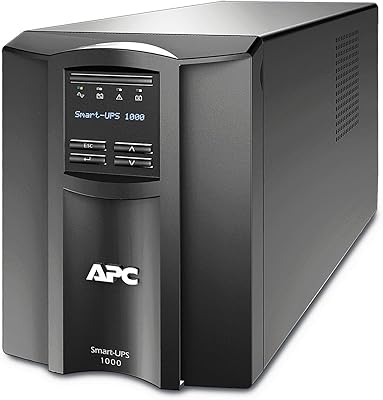
APC Smart-UPS 1000VA UPS Battery Backup (SMT1000)
87%
88%
Performance
91%
Value for Money
85%
Battery Life
92%
Build Quality
89%
Noise Level
More
APC Back-UPS Pro 1000VA UPS Battery Backup BX1000M
83%
92%
Reliability during Power Outages
88%
Ease of Setup
85%
Build Quality
90%
Surge Protection
80%
Energy Efficiency
More
CyberPower BRG1500AVRLCD2 UPS Battery Backup
86%
88%
Overall Performance
90%
Reliability
68%
Battery Runtime
94%
Ease of Setup
92%
Surge Protection
More
CyberPower CP2000PFCRM2U 2000VA Rackmount UPS
78%
88%
Value for Money
93%
Pure Sine Wave Output
91%
Short-Depth Form Factor
62%
Battery Runtime
87%
Installation & Setup
More
APC BX2200MI Backup Battery UPS
85%
94%
Reliability during Outages
88%
Setup & Installation
91%
Surge Protection Performance
89%
Voltage Regulation (AVR)
85%
Build Quality & Durability
More
CyberPower CP900AVR UPS Battery Backup
82%
87%
Power Backup Performance
91%
Ease of Setup
90%
Reliability
56%
Battery Runtime at Full Load
88%
Value for Money
More
CyberPower CP825AVRLCD 825VA UPS Battery Backup
74%
91%
Voltage Protection
47%
Battery Runtime
83%
Surge Protection
88%
LCD Display
93%
Setup & Ease of Use
More

FAQ

It depends heavily on what you have plugged in. At a modest load — a desktop PC, one monitor, and a router drawing around 100 to 150 watts combined — most users get somewhere between 15 and 25 minutes. Push the load closer to the 900W ceiling and that drops to just a few minutes. The LCD display will show you a live runtime estimate once the unit is running, which helps you calibrate expectations for your specific setup.

Only five of the ten outlets are connected to the battery — those will keep your devices powered during an outage. The other five outlets provide surge protection but will go dark the moment utility power cuts out, just like an unprotected wall outlet would. Make sure your computer, monitor, and any critical networking gear are plugged into the battery-backed group, not the surge-only side.

Under normal conditions, you will not hear it at all — the fan does not run while the unit is on utility power. It only activates when the unit switches to battery mode or is correcting a significant voltage problem. When it does run, it is audible but not loud. The beeping that occurs during battery mode is more likely to catch your attention, though that alert can be disabled through the unit's settings.

Yes, and this is one of the more practical aspects of this design. The battery is accessible without any special tools beyond a basic screwdriver, and compatible replacement AGM batteries are widely available from Eaton and third-party suppliers. Most users find the replacement process straightforward. Expect to replace the battery somewhere between two and four years into ownership, depending on how frequently your power fluctuates.

It depends on your system's actual power draw. If your gaming rig — GPU, CPU, drives, and peripherals combined — pulls significantly more than 900 watts under load, this unit is not sized for it. Even if your system fits within the watt rating, the simulated sine wave output on battery can occasionally cause issues with some high-end power supplies. For gaming systems, a pure sine wave UPS is generally the safer choice.

You designate one outlet group as the primary device — your computer, for example — and another as peripherals like a monitor or printer. When the primary device powers off, the UPS detects it and automatically cuts power to the peripheral outlets after a short delay. It is a genuinely useful energy-saving feature, but it requires correct setup. If you plug everything into the same outlet group, ECO control will not do anything useful.

Officially yes, but the experience varies by distribution. On mainstream distros like Ubuntu, the USB monitoring integration works acceptably. On less common distributions, or with certain kernel configurations, users have reported needing to use third-party tools like Network UPS Tools (NUT) to get reliable automated shutdown behavior. If Linux compatibility is critical to your setup, it is worth researching your specific distribution before purchasing.

The display shows your current load in watts, the estimated battery runtime remaining at that load, and a record of recent power outages including how long they lasted. It is a genuinely useful readout for anyone who wants to monitor their power situation without running software on their computer. The backlight is not always on by default and requires a button press to wake, which is a minor but occasionally annoying quirk.

Absolutely — this is actually one of the better use cases for this battery backup unit. A network switch, NAS, or small router draws relatively modest wattage, meaning the battery runtime extends considerably compared to running a full desktop. Just make sure those devices are plugged into the battery-backed outlets, not the surge-only ones, and you will have solid protection for your local network infrastructure.

The guarantee covers up to $150,000 worth of equipment damage caused by a power surge while devices are properly connected to the unit. In practice, making a claim requires documentation — proof of purchase for both the UPS and the damaged equipment, plus evidence that the damage was power-related. It is a meaningful backstop and reflects Eaton's confidence in the surge protection design, but read the terms carefully so you are not surprised by the claims process if you ever need it.

Where to Buy