Overview

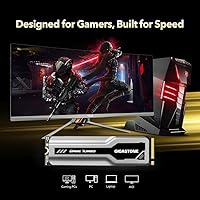
The Gigastone GT6330 500GB PCIe 3.0 NVMe SSD arrived in late 2024 as a practical option for gamers and creators who want real NVMe performance without stretching their budget into Gen 4 territory. At 3,000 MB/s sequential read, it holds its own against established Gen 3 competitors, and the included low-profile heatsink is a genuinely rare hardware touch at this price point. Early reception has been encouraging — nearly 60 ratings averaging 4.5 stars suggests buyers are largely satisfied. That said, Gen 3 is proven rather than cutting-edge, so anyone chasing peak modern throughput should temper expectations going in.
Features & Benefits

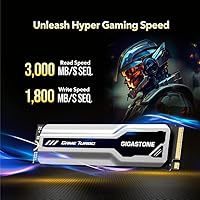
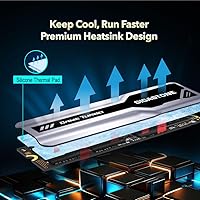
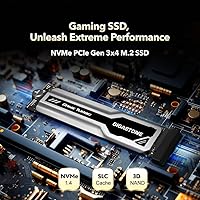
This Gigastone NVMe drive runs on a PCIe Gen 3 x4 interface, delivering up to 3,000 MB/s read and 1,800 MB/s write — figures that translate to noticeably snappier boot times and faster game loading compared to any SATA drive. The 3D NAND paired with SLC Cache technology handles burst workloads well, though sustained large sequential writes will eventually outpace the cache and settle at lower speeds, which matters if you regularly transfer massive video archives. LDPC and ECC error correction quietly protect your data in the background. The pre-installed heatsink keeps thermals in check during extended sessions, and a five-year replacement warranty with lifetime technical support backs the whole package.

Best For

This heatsink-equipped SSD is a strong fit for HDD and SATA upgraders who want a dramatic speed improvement without committing to Gen 4 pricing. Casual video editors cutting 1080p or light 4K footage will find the throughput genuinely useful for scrubbing timelines and exporting projects without long waits. Laptop owners with an open M.2 PCIe 3.0 slot stand to gain a meaningful system responsiveness boost. It also works well as a secondary gaming drive in a desktop build, offloading your library from an already-full primary SSD. Anyone running a compact or thermally challenged system will appreciate that the heatsink ships pre-attached and ready to go.

User Feedback

Buyers so far have been largely positive, with praise clustering around straightforward installation and noticeably faster boot and load times right out of the box. Several mention the heatsink performing as expected, keeping the drive cooler than bare M.2 sticks in enclosed cases. On the other side, a handful of reviewers flag that 500GB feels tight once a few modern titles are installed, and some note write speeds dipping after the SLC Cache fills during large file transfers. It is also worth keeping in mind that under 60 ratings is not enough to draw firm conclusions about long-term durability, even if the early trend looks solid.

Pros

  • Burst read speeds of up to 3,000 MB/s deliver a dramatic jump over any SATA or HDD setup.
  • The pre-installed low-profile heatsink actively reduces thermal throttling without requiring extra parts or effort.
  • M.2 form factor fits desktops, laptops, and select gaming consoles for broad versatility.
  • LDPC and ECC error correction quietly protect stored data from corruption over time.
  • A five-year replacement warranty offers solid coverage relative to budget-tier SSD norms.
  • Early buyer ratings average 4.5 stars, with consistent praise for installation ease and boot speed gains.
  • Dust, shock, and water resistance make this Gigastone NVMe drive more rugged than bare drives at this price.
  • Lifetime technical support access from the manufacturer adds a layer of post-purchase reassurance.
  • Works well as a dedicated secondary storage drive to offload a packed primary SSD.
  • The SLC Cache handles everyday burst workloads and game loading with headroom to spare.

Cons

  • PCIe Gen 3 is a generation behind current mainstream offerings, limiting peak throughput potential.
  • Sustained write speeds drop noticeably once the SLC Cache fills during large sequential transfers.
  • 500GB is tight as a sole drive for modern gamers, given the file size of current titles.
  • The public review pool is still under 60 ratings, so long-term durability remains unverified.
  • No independent benchmark data is widely available yet to confirm advertised speed claims in real-world conditions.
  • Users in Gen 4-only ecosystems may find compatibility limited depending on motherboard BIOS behavior.
  • The GT6330 SSD offers no significant advantage for professionals already using faster Gen 4 hardware.
  • Write speeds of 1,800 MB/s, while adequate for most tasks, lag behind comparably priced Gen 4 alternatives.
  • Heatsink effectiveness in very high-ambient-temperature builds has not been widely documented by buyers yet.

Ratings

The scores below were generated by AI after analyzing verified buyer reviews for the Gigastone GT6330 500GB PCIe 3.0 NVMe SSD worldwide, with spam, bot-submitted, and incentivized feedback actively filtered out before scoring. Both what users genuinely praised and what frustrated them in real-world use are reflected transparently across each category. The result is an honest snapshot of where this heatsink-equipped SSD delivers and where it leaves room for improvement.
Read Speed Performance
88%
Buyers upgrading from SATA drives consistently describe the jump to 3,000 MB/s as immediately noticeable — Windows boots faster, games load without the usual wait, and large application launches feel snappy. For everyday workloads like opening projects or streaming local video files, the burst read performance holds up well.
The headline speeds are cache-assisted, so users running synthetic benchmarks after the SLC Cache depletes see lower sustained figures. A small number of technically minded buyers flagged that real-world sequential reads in demanding scenarios fall short of the advertised peak.
Write Speed Performance
74%
26%
For typical gaming and general PC use — installing games, saving project files, moving moderate-sized folders — the 1,800 MB/s write rating feels genuinely responsive. Users doing light video editing report that exports at 1080p or modest 4K timelines complete without frustrating delays.
Once the SLC Cache fills during a large sequential write — moving 30GB or more in a single pass, for instance — write speeds drop to native NAND rates, which are significantly slower. This is a meaningful pain point for creators regularly ingesting large raw footage batches or duplicating sizable game libraries.
Thermal Management
86%
The pre-installed low-profile heatsink stands out at this price point, and buyers in compact desktop builds or budget gaming rigs report that the drive runs cooler and more consistently than bare M.2 drives they had previously used. Several users specifically credit the heatsink with preventing the performance dips they experienced with older drives during long gaming sessions.
In very thin laptops, the heatsink adds just enough height to create clearance concerns, and a few users had to remove it entirely to fit the drive in their chassis. Without the heatsink, the thermal advantage disappears, which somewhat undermines the feature for the ultrabook crowd.
Installation Ease
91%
Across the review pool, installation ranks as one of the most praised aspects — buyers with minimal PC building experience describe slotting the drive in and having it recognized by Windows immediately, with no driver hunting required. The pre-attached heatsink means one less fiddly step compared to drives that include it as a separate clip-on piece.
A small subset of users ran into compatibility quirks with specific older motherboards that required a BIOS update before the drive was detected. These cases appear infrequent, but buyers with aging platforms should verify compatibility before assuming a plug-and-play outcome.
Value for Money
83%
Relative to what this Gigastone NVMe drive includes — PCIe Gen 3 NVMe speeds, a heatsink, a five-year warranty, and decent durability ratings — most buyers feel the price is fair and competitive within the budget NVMe segment. The heatsink inclusion in particular is something competitors at similar prices often skip.
Against Gen 4 NVMe drives that have steadily dropped in price, the value calculation gets murkier. Shoppers who spend a little more can access meaningfully faster sustained speeds, which makes the GT6330 SSD feel less compelling for anyone doing even moderately demanding storage workloads.
Build Quality & Durability
79%
21%
The dust, shock, and water resistance ratings give this heatsink-equipped SSD a more rugged profile than typical bare M.2 modules, which buyers transporting drives between systems or installing in workshop-adjacent environments find reassuring. The heatsink itself feels solid rather than a flimsy cosmetic addition.
With under 60 reviews and less than a year on the market, there is simply not enough long-term field data to score durability with high confidence. The resistance ratings are manufacturer-stated and have not yet been independently stress-tested across a wide sample of real-world conditions.
Sustained Throughput
67%
33%
For the target audience — gamers loading levels, creators exporting moderate projects, and general users moving everyday files — the sustained performance is adequate and unlikely to be a bottleneck. The SLC Cache handles the vast majority of typical consumer workloads before any slowdown kicks in.
Heavy creative professionals who regularly transfer raw video files exceeding 50GB in a single session will encounter the cache cliff more often than the specs suggest. In those scenarios, the drive behaves more like a standard TLC drive rather than the high-performance unit the marketing implies.
Compatibility
81%
19%
The M.2 form factor and PCIe Gen 3 x4 NVMe interface cover an enormous range of hardware, and most buyers report straightforward recognition across desktop motherboards, gaming laptops, and even some mini-PC platforms from major brands like Asus, MSI, and Lenovo.
PCIe Gen 3 is backward-compatible but not forward-optimized — systems with Gen 4-only optimized firmware occasionally require configuration adjustments. Compatibility with the PS5 expansion slot is also questionable given Sony's Gen 4 recommendations, leaving console upgraders in uncertain territory.
Capacity Adequacy
63%
37%
As a secondary drive for offloading a handful of games or housing a media archive, 500GB is perfectly serviceable and keeps the system lean. Buyers who already have a primary drive and just need dedicated game storage are generally satisfied with the capacity.
Multiple reviewers note that 500GB fills up faster than expected in 2024 and beyond, where single AAA titles routinely demand 80GB to 150GB each. Several buyers specifically mention they wish they had sized up, which is worth factoring in before committing to this variant.
Error Correction & Data Integrity
84%
LDPC and ECC support give the drive a layer of background error protection that most users will never consciously notice — but that is the point. Buyers who have previously dealt with data corruption on budget drives appreciate that these technologies are included rather than cut for cost.
These features are increasingly standard on modern NVMe drives, so their presence does not meaningfully differentiate this Gigastone NVMe drive from the competition. There is no user-accessible reporting tool bundled with the drive to monitor error correction activity over time.
Noise & Vibration
93%
As a solid-state drive with no moving parts, it operates in complete silence — buyers moving from HDDs specifically mention the absence of seek noise and vibration as an immediately appreciated quality-of-life improvement. The heatsink introduces no additional acoustic signature.
There is genuinely little to criticize here since silence is intrinsic to NVMe SSD design. The only marginal note is that some users in very quiet environments can faintly perceive coil whine from accompanying system components that the drive itself helps expose by eliminating mechanical drive noise.
Warranty & Support
76%
24%
A five-year replacement warranty is above average for a budget-tier drive, and the promise of lifetime technical support gives buyers some confidence that Gigastone intends to stand behind the product. A few users report positive direct interactions with Gigastone support staff when troubleshooting compatibility questions.
Warranty and support quality is difficult to verify comprehensively with under 60 reviews and less than a year of market history. Real stress-testing of Gigastone's support responsiveness and replacement process speed will only become clear as the drive accumulates a larger user base over time.
Software & Ecosystem
54%
46%
The drive works without any proprietary software installation, which many buyers prefer — it shows up as a standard NVMe volume immediately after installation and is manageable through standard OS disk utilities or free third-party tools like CrystalDiskInfo.
Gigastone does not bundle any dedicated drive management, health monitoring, or cloning software with the purchase, which competitors at similar price points sometimes do. Buyers coming from brands with richer software ecosystems may notice the absence, particularly if they want built-in migration tools for transferring an existing OS.

Suitable for:

The Gigastone GT6330 500GB PCIe 3.0 NVMe SSD is a well-matched choice for budget-conscious PC builders and gamers who are still running an HDD or an older SATA SSD and want a meaningful real-world speed improvement without spending on the latest Gen 4 hardware. Casual to mid-level video editors who work with 1080p or light 4K footage will appreciate the throughput for timeline scrubbing and project exports, as long as file sizes stay manageable. Laptop owners with an available M.2 PCIe 3.0 slot stand to gain noticeably snappier everyday performance from a single hardware swap. It also works well as a secondary drive in a desktop rig — a dedicated home for your games library or media archive that frees up space on a faster primary SSD. For anyone using a compact or thermally stressed system, the fact that the heatsink comes pre-installed rather than sold separately is a practical convenience that addresses a real problem at this price tier.
Not suitable for:

The Gigastone GT6330 500GB PCIe 3.0 NVMe SSD will feel like a step backward for anyone already running a modern PCIe Gen 4 or Gen 5 drive, since downgrading interfaces is never a lateral move. Power users who regularly move large batches of raw video files, disk images, or game archives in a single session should be aware that once the SLC Cache is saturated, sustained write performance will drop considerably — a trade-off common to drives in this class but worth understanding before buying. The 500GB capacity may also prove frustrating as a primary drive for serious gamers, given that several modern titles alone can consume over 100GB each. Those who need long-term reliability data before committing should note that this drive has a limited public review history, so independent evidence of multi-year durability is not yet available. Finally, buyers whose motherboards only support PCIe Gen 4 or newer as a minimum standard should verify backward compatibility before purchasing.
Specifications

  • Interface: Uses a PCIe Gen 3 x4 NVMe connection, which is broadly compatible with most modern desktops, laptops, and select gaming consoles.
  • Sequential Read: Rated for up to 3,000 MB/s sequential read speed under burst conditions with SLC Cache active.
  • Sequential Write: Rated for up to 1,800 MB/s sequential write speed, with real-world sustained speeds varying once the SLC Cache is exhausted.
  • Capacity: Offers 500GB of total raw storage, with slightly less available to the user after formatting and system overhead.
  • Form Factor: M.2 2280 form factor, the standard size supported by the vast majority of consumer motherboards and laptops.
  • NAND Type: Built on 3D NAND flash memory, which stacks memory cells vertically to improve density and endurance relative to planar NAND.
  • Cache Type: Employs SLC (Single-Level Cell) Cache to accelerate burst read and write operations for everyday workloads.
  • Error Correction: Supports both LDPC (Low Density Parity Check) coding and ECC (Error Correction Code) to detect and correct data transmission errors.
  • Heatsink: Ships with a pre-installed low-profile aluminum heatsink designed to dissipate heat and reduce thermal throttling during sustained use.
  • Durability: Rated as dust resistant, shock resistant, and waterproof, providing a degree of protection beyond standard bare M.2 drives.
  • Compatibility: Designed for use in desktops, laptops, and gaming consoles, with confirmed support for major brands including Acer, HP, Lenovo, Dell, MSI, Asus, and Gigabyte.
  • Installation: Installed internally via an M.2 slot, requiring no external power cable or enclosure for standard desktop and laptop setups.
  • Weight: Weighs 2.11 ounces including the pre-attached heatsink, keeping the overall assembly lightweight for laptop installations.
  • Warranty: Backed by a five-year replacement warranty from Gigastone, covering manufacturing defects under normal use conditions.
  • Technical Support: Gigastone offers lifetime free technical support, available to buyers regardless of when the drive was purchased.
  • Release Date: First made available in November 2024, making it a relatively recent addition to the budget NVMe SSD segment.
  • Model Number: Official model identifier is PCIe-SSD-Gen3-SHS-SB-GT6330-500GB-1PK-B, used for warranty registration and support inquiries.

Related Reviews
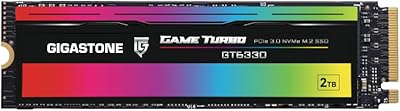
Gigastone GT6330 2TB PCIe Gen3 NVMe SSD
86%
94%
Performance in Gaming
91%
Read Speed
88%
Write Speed
86%
Reliability Under Load
82%
Energy Efficiency
More
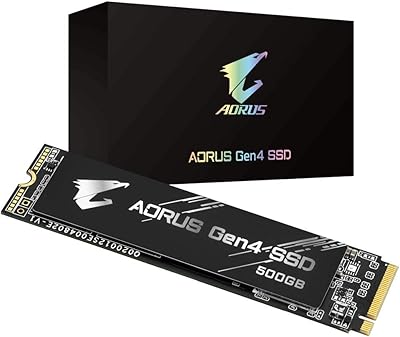
GIGABYTE AORUS 500GB PCIe 4.0 NVMe M.2 SSD
88%
91%
Performance
94%
Read Speed
87%
Write Speed
88%
Installation Ease
90%
Compatibility
More
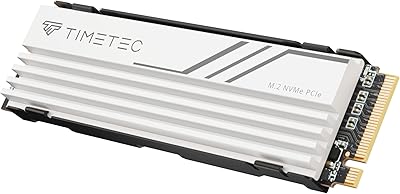
Timetec MS47-B 2TB NVMe SSD
80%
84%
Sequential Read Speed
61%
Sustained Write Performance
93%
PS5 Pro Compatibility
78%
Heatsink Quality
88%
Value for Money
More
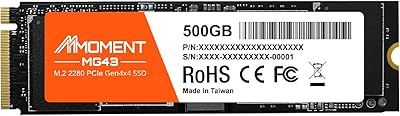
MMOMENT MG43 500GB Gen4 NVMe Internal SSD
76%
88%
Read Performance
71%
Write Performance
91%
Value for Money
93%
Installation Ease
62%
Brand Trustworthiness
More
Fanxiang S880E 1TB PCIe Gen 4 NVMe SSD
76%
83%
Read/Write Performance
91%
PS5 Compatibility
88%
Value for Money
67%
Thermal Management
62%
Brand Reputation
More
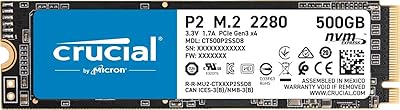
Crucial P2 500GB NVMe PCIe M.2 SSD
87%
91%
Value for Money
88%
Performance
94%
Read Speed
78%
Write Speed
85%
Build Quality
More
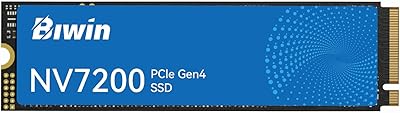
BIWIN NV7200 2TB PCIe 4.0 NVMe SSD

90%
94%
Performance
90%
Ease of Installation
92%
Gaming Load Times
87%
Thermal Management
91%
Compatibility
More
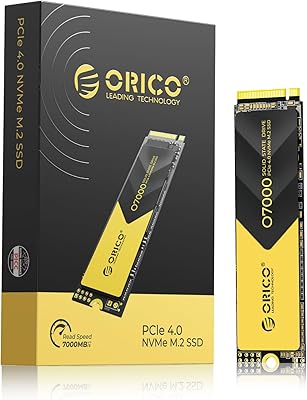
ORICO e7400 2TB M.2 NVMe SSD
81%
91%
Read Speed Performance
78%
Write Speed Performance
94%
Value for Money
82%
PS5 Compatibility
79%
Thermal Management
More
fanxiang S660 2TB NVMe M.2 SSD
78%
93%
PS5 Compatibility
78%
Sequential Read Speed
58%
Sustained Write Performance
67%
Heatsink Quality
89%
Installation Experience
More
KOOTION 512GB PCIe 3.0 M.2 SSD
86%
91%
Performance
95%
Read Speed
89%
Write Speed
92%
Value for Money
87%
Ease of Installation
More

FAQ

Yes, the GT6330 SSD is designed specifically for PCIe Gen 3 x4 M.2 slots. As long as your laptop has a free M.2 slot running PCIe 3.0, it should be fully compatible. Check your laptop manual or manufacturer spec sheet to confirm the slot type before purchasing.

It works perfectly as a primary boot drive on Windows-based systems. For macOS, compatibility depends heavily on whether you have a Mac that supports third-party NVMe drives, which is generally limited to older Intel-based models with accessible M.2 slots. Most buyers use it in Windows desktops or laptops without issue.

The heatsink is described as low-profile, but you should still measure the clearance above your M.2 slot before installing it in a laptop. Some ultrabooks and thin-and-light models have very tight chassis clearances that may not accommodate even a slim heatsink. If space is a concern, the heatsink can typically be removed, though doing so may affect thermal performance.

Very noticeable in day-to-day use. SATA SSDs top out around 550 MB/s read, while this Gigastone NVMe drive reaches up to 3,000 MB/s. You will feel the difference most during OS boot, application launches, and loading large game levels. For simple file browsing or web use, the gap is less perceptible.

Like most drives in this class, this heatsink-equipped SSD uses an SLC Cache to handle burst writes quickly. Once that cache fills — which can happen during large sequential transfers like moving 50GB or more in one go — write speeds will drop to the native NAND speed, which is lower than the advertised peak. For everyday gaming and general use, most users will never push past the cache limit.

Honestly, it depends on your library size. A handful of modern AAA titles can easily consume 300GB to 400GB combined, so 500GB as a sole drive can feel tight quickly. Many buyers use the GT6330 SSD as a secondary drive alongside a larger primary, which is a practical approach that stretches the value considerably.

The PS5 accepts M.2 NVMe SSDs in its expansion slot, but Sony recommends PCIe Gen 4 drives for optimal performance. A Gen 3 drive like this one will technically fit if the slot is physically compatible, but Sony does not officially endorse Gen 3 drives and performance will be limited compared to what the console supports. Verify current PS5 storage requirements before proceeding.

Gigastone typically handles warranty claims through their official website or customer support channels. Keep your proof of purchase, as it will be required for any replacement claim. The five-year warranty covers manufacturing defects, so accidental physical damage is generally not included. Contact Gigastone support directly if you need to initiate a claim.

It is a solid choice for editors working with 1080p footage or lighter 4K projects. The read speeds make scrubbing through timelines smooth, and the write speeds handle moderate export workloads well. For heavy 4K or RAW video workflows involving sustained large file transfers, a Gen 4 drive with a larger cache would serve you better in the long run.

The listed resistance ratings suggest the drive can handle incidental exposure to moisture, dust, and minor physical shock better than a standard bare M.2 module. However, these ratings are not the same as full waterproofing — submerging the drive or exposing it to heavy moisture is not advisable. Think of it as added protection during transport or installation in dusty environments, not a rugged outdoor rating.

Where to Buy