Overview

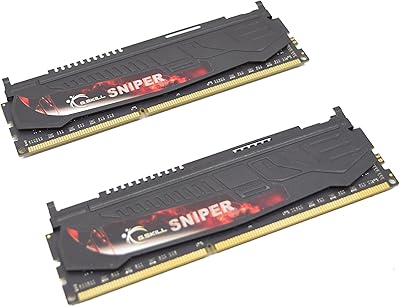
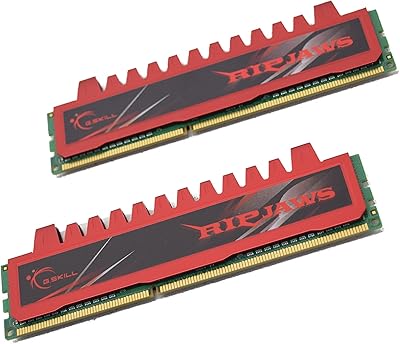
The G.SKILL Ripjaws 8GB DDR3 1600 Desktop Memory is a dual-channel 8GB (2x4GB) kit built for desktop builders refreshing older platforms or working within tight budgets. DDR3 1600 MHz may not turn heads in 2026, but it remains the ceiling for a massive installed base of LGA 1155, LGA 1156, and AM3+ systems still in daily use. Running at 9-9-9-24 timings and 1.5V, this kit is about as plug-and-play as memory gets — no manual BIOS configuration required. G.SKILL has kept it in production for well over a decade, which alone signals strong reliability. The red and black Ripjaws heatspreader is a familiar aesthetic that fits cleanly into most mid-tower builds.
Features & Benefits

Running in dual-channel mode, this Ripjaws DDR3 kit delivers meaningfully better bandwidth than a single stick of equivalent capacity — a real difference on platforms with integrated graphics or CPU-bound workloads. The CL9 latency at 1600 MHz is competent rather than exceptional; it handles everyday computing without bottlenecking the rest of the system. At standard 1.5V operation, compatibility concerns are virtually nonexistent across the DDR3 desktop ecosystem. The low-profile heatspreader manages thermals reasonably without creating clearance issues with most tower coolers. Perhaps the most underappreciated part of the package is the lifetime warranty — for a budget-tier memory kit, that long-term backing carries genuine weight.

Best For

This memory upgrade makes the most sense for anyone running a Sandy Bridge, Ivy Bridge, or Bulldozer-era desktop that tops out at DDR3. Whether you are repairing a secondary machine, building a budget office PC, or extending the life of an older gaming rig, this kit delivers without drama. It suits DIY builders who have no need to invest in a newer platform just to handle basic workloads or casual gaming. If your board supports DDR3 1600 and you are sitting on a single 4GB stick, moving to dual-channel 8GB is one of the highest-impact, lowest-cost upgrades available on legacy hardware.

User Feedback

Most owners of the G.SKILL DDR3 1600 module report the same core experience: it just works. Across a wide range of older motherboards, reviewers consistently describe booting straight to rated speeds without touching the BIOS. Long-term reliability comes up frequently too, with users noting the sticks still running cleanly after years of continuous operation. The heatspreader gets occasional praise in windowed-case setups. Negative feedback is genuinely rare, and when it appears, it tends to reflect a platform limitation rather than any product fault — DDR3 is an older standard, full stop. The one piece of practical advice repeated across reviews is to check your motherboard's QVL list before ordering.

Pros

  • Installs and runs at rated DDR3 1600 MHz speeds on first boot with no BIOS adjustments needed.
  • Dual-channel configuration meaningfully improves bandwidth compared to running a single stick.
  • Standard 1.5V operation makes this Ripjaws DDR3 kit compatible with virtually every DDR3 desktop board.
  • The low-profile heatspreader fits under most air coolers without clearance issues.
  • G.SKILL backs this memory upgrade with a lifetime warranty, which is rare at this price tier.
  • Long-term reliability is well-documented, with many users reporting years of trouble-free operation.
  • The red and black heatspreader looks clean in a windowed mid-tower case.
  • JEDEC-standard timings mean no XMP profile is required for plug-and-play setup.
  • Sustained market availability over many years reflects consistent quality and broad user confidence.

Cons

  • DDR3 is an aging standard with no upgrade path on current-generation platforms.
  • 8GB total capacity feels tight for modern multitasking, even on legacy systems running recent software.
  • Finding a compatible DDR3 1600 board in good condition is increasingly difficult as the platform ages.
  • No XMP or overclocking headroom is marketed, so enthusiasts looking to push speeds will be disappointed.
  • The kit is desktop-only and offers no value for laptop or small form-factor SODIMM builds.
  • Buying DDR3 in 2026 is a platform-driven compromise that limits the long-term utility of this purchase.
  • Secondary market DDR3 motherboards can introduce compatibility wildcards that make QVL verification essential.
  • Limited upside for gaming — DDR3 1600 CL9 will rarely be the performance differentiator on older CPUs.

Ratings

Our AI rating system analyzed thousands of verified global purchases of the G.SKILL Ripjaws 8GB DDR3 1600 Desktop Memory, actively filtering out incentivized reviews, bot submissions, and outlier feedback to surface what real buyers genuinely experience. The scores below reflect both the consistent strengths and the honest limitations of this Ripjaws DDR3 kit across a wide range of real-world desktop builds and use cases. Nothing has been smoothed over — where buyers ran into friction, the scores reflect it.

Ease of Installation
94%
Buyers across a wide range of skill levels report that this memory upgrade installs and boots to rated speed without any manual BIOS intervention. First-time builders especially appreciate that there is no XMP profile to enable or frequency to set manually — it simply works on the first attempt in nearly every case.
A small number of users on particularly old or obscure DDR3 boards encountered initial POST failures requiring a CMOS reset before the kit was recognized. These cases are rare, but they are a reminder that even JEDEC-compliant kits occasionally need a nudge on aging hardware.
Compatibility
91%
The standard 1.5V operating voltage and JEDEC-compliant DDR3 1600 spec make this Ripjaws DDR3 kit broadly compatible with Intel LGA 1155, LGA 1156, and AMD AM3+ platforms without requiring any special board support. Reviewers consistently confirm it works across motherboards from ASUS, Gigabyte, MSI, and ASRock without incident.
Compatibility is entirely platform-bound — if your board runs DDR4 or DDR5, this kit is physically unusable. A handful of buyers also report that some older boards defaulted to DDR3 1333 instead of 1600, requiring a manual frequency adjustment in the BIOS to unlock the rated speed.
Value for Money
88%
For buyers working within the constraints of a DDR3 platform, the G.SKILL DDR3 1600 module delivers a meaningful capacity and bandwidth upgrade at a price point that is hard to argue with. The inclusion of a lifetime warranty at this tier makes the purchase feel notably lower-risk than competing budget alternatives.
The value equation weakens considerably if you factor in the cost of sourcing a compatible DDR3 motherboard separately. For anyone not already committed to a DDR3 platform, the per-gigabyte cost versus modern DDR4 kits makes this a harder sell from a pure economics standpoint.
Reliability & Longevity
89%
Long-term user reports are a genuine highlight here — multiple reviewers mention running this memory upgrade continuously for five or more years without a single failure or stability issue. The consistent feedback from owners with years of uptime suggests the underlying ICs are well-selected and the build quality holds up under sustained operation.
Because DDR3 hardware is no longer in active development, sourcing a warranty replacement in the future may involve navigating an aging supply chain. There are no reported widespread failure patterns, but the platform's end-of-life status is a background risk for anyone planning a very long-term deployment.
Dual-Channel Performance
82%
18%
Installing both sticks in the correct paired slots noticeably improves memory bandwidth compared to running a single 4GB module, which translates to smoother multitasking and better frame pacing on integrated graphics setups. Buyers upgrading from a single-stick configuration report a tangible difference in system responsiveness, particularly in memory-sensitive workloads.
The performance ceiling is set by the DDR3 standard itself rather than any shortcoming of this specific kit. At CL9 1600 MHz, there is no headroom for further overclocking or tighter timings without manual experimentation, and some buyers expecting more aggressive performance than JEDEC stock were left wanting.
Thermal Management
78%
22%
The aluminum heatspreader does its job adequately under standard desktop workloads, keeping module temperatures within safe margins during prolonged use. Users running the kit in well-ventilated mid-tower cases report no thermal issues even during extended gaming or encoding sessions on compatible older hardware.
The heatspreader is functional but not exceptional — there is no active airflow channel or heat pipe design, so in poorly ventilated cases or alongside very hot components, thermal performance is unremarkable. Enthusiasts who want aggressive cooling on their memory will not find it here.
Aesthetics
74%
26%
The red and black Ripjaws heatspreader has a clean, purposeful look that fits naturally into builds with matching color schemes, and several buyers with windowed side-panel cases specifically mention appreciating the styling. For a budget DDR3 kit, the finish quality is noticeably above bare-PCB alternatives.
The design is now over a decade old and shows its age next to modern RGB-equipped memory modules. Buyers building systems with a contemporary aesthetic or specific lighting themes will find the static red and black styling limiting and potentially clashing.
Packaging & Delivery Condition
81%
19%
Most buyers report receiving both sticks in proper anti-static packaging with no physical damage, and the modules arrive correctly seated in their protective trays. The straightforward packaging is no-frills but functional, which aligns with the practical nature of the product.
A small subset of buyers report receiving retail packaging that showed signs of handling wear or minor dents, though module damage itself is rarely reported. Those expecting premium unboxing presentation will find the packaging underwhelming compared to higher-tier memory lines.
Warranty & Support
86%
A lifetime warranty on a memory kit at this price tier is genuinely unusual and reflects G.SKILL's confidence in the product. Users who have initiated warranty claims report a straightforward process with responsive support, which is reassuring for a purchase that may be kept in service for many years.
Warranty claims require proof of purchase, which can be difficult to produce years down the line for users who did not retain their receipts. Additionally, replacement availability for a DDR3 product may become more constrained as the platform ages further and retail stock thins out.
Documentation & Setup Guidance
69%
31%
For experienced builders, no documentation is needed — the kit is straightforward enough that most users install it in minutes without consulting any manual. The model number printed clearly on the label makes QVL verification fast and unambiguous.
Novice builders looking for guidance on optimal slot placement or troubleshooting tips will find no included documentation beyond the bare minimum. There is nothing to guide a first-timer through BIOS verification steps, which can cause unnecessary confusion on older boards that do not auto-configure correctly.
Platform Longevity
51%
49%
For a system that is already committed to a DDR3 platform, adding this memory upgrade can meaningfully extend its useful life for light productivity, web browsing, and casual gaming without requiring a full platform replacement. It is a cost-effective way to squeeze additional years out of hardware that would otherwise feel sluggish on 4GB.
DDR3 as a standard is firmly in end-of-life territory, meaning no future upgrade path exists beyond what the existing motherboard already supports. Buyers should be clear-eyed that this purchase extends a platform rather than investing in one, and that the clock on DDR3 system relevance is running down.
Noise & Power Efficiency
83%
Running at 1.5V within its rated spec, this memory upgrade draws minimal power and generates very little heat under typical loads, contributing nothing meaningful to system noise or thermal output. In home office or quiet-build scenarios, the passive heatspreader design means no additional fan noise is introduced.
There is no low-voltage DDR3L variant of this kit, so users with platforms that specifically support or prefer 1.35V operation will be running slightly above the optimal power floor. This is a minor concern for most desktop use cases but worth noting for efficiency-focused small form-factor builds.

Suitable for:

The G.SKILL Ripjaws 8GB DDR3 1600 Desktop Memory is a practical, no-nonsense choice for anyone working with an older desktop platform that maxes out at DDR3 — think Sandy Bridge or Ivy Bridge Intel builds on LGA 1155 or LGA 1156, as well as AMD AM3+ systems running Bulldozer or Piledriver processors. If you are sitting on a single 4GB stick and want to unlock dual-channel bandwidth without replacing your entire motherboard, this kit is one of the cleanest, lowest-effort ways to do it. Home office users who need a reliable secondary machine for light productivity will find it more than adequate. DIY builders assembling a budget spare PC from older parts will appreciate the broad compatibility and the fact that it runs at rated speed right out of the box. The lifetime warranty is a genuine bonus for a purchase at this price point, removing one potential long-term headache from the equation.
Not suitable for:

Anyone building or upgrading a current-generation system should look elsewhere entirely — the G.SKILL Ripjaws 8GB DDR3 1600 Desktop Memory is strictly a DDR3 product and will not physically fit or function in any DDR4 or DDR5 motherboard. If your platform supports newer memory standards, buying DDR3 at this stage makes little practical sense, even at a low price. Competitive gamers or power users chasing maximum performance will find 8GB limiting on modern workloads and the DDR3 standard itself a bottleneck well before the RAM becomes the weakest link. Content creators, video editors, or anyone running memory-intensive software should consider a more capable platform upgrade rather than pouring money into legacy hardware. Users who have not yet confirmed their motherboard supports DDR3 1600 or checked the QVL list should do that homework before ordering, as compatibility assumptions on decade-old boards can occasionally go wrong.
Specifications

  • Capacity: This kit provides a total of 8GB of system memory, split across two 4GB modules designed to run together.
  • Memory Type: Both modules use DDR3 SDRAM technology, the 240-pin double data rate standard common to desktop platforms from roughly 2007 through 2015.
  • Speed: The rated operating speed is 1600 MHz (PC3-12800), reflecting the peak transfer bandwidth available at this frequency.
  • Timings: The CAS latency and full timing sequence are set at 9-9-9-24-2N, which are standard JEDEC-compliant values for DDR3 1600.
  • Voltage: Both sticks operate at 1.5V, which is the standard DDR3 voltage and requires no special motherboard power delivery support.
  • Form Factor: The modules use the 240-pin DIMM form factor, which is physically incompatible with DDR4 or DDR5 slots.
  • Configuration: The two sticks are sold and validated as a matched dual-channel pair intended to be installed in the appropriate paired slots on a compatible motherboard.
  • Heatspreader: Each module features a low-profile aluminum heatspreader finished in red and black, characteristic of the Ripjaws product family.
  • Platform Support: This kit is compatible exclusively with desktop motherboards supporting DDR3, including platforms such as Intel LGA 1155, LGA 1156, and AMD AM3 and AM3+.
  • Model Number: The official G.SKILL model designation for this kit is F3-12800CL9D-8GBRL, which can be used to verify compatibility on motherboard QVL lists.
  • Warranty: G.SKILL covers this kit with a lifetime warranty against manufacturing defects, which is transferable and handled directly through G.SKILL support.
  • Weight: Each module weighs approximately 0.387 ounces, making the full kit negligibly light for transport or installation purposes.
  • XMP Support: This kit does not require XMP or any manual BIOS profile to reach its rated speed; it runs at DDR3 1600 MHz under standard JEDEC auto-detection.
  • First Available: This model has been available on the market since March 2010, reflecting a long production run and well-established reliability record.
  • Manufacturer: This kit is manufactured by G.Skill International Enterprise Co., Ltd., a Taiwanese memory specialist with a long track record in enthusiast and value RAM segments.

Related Reviews
G.SKILL Ripjaws 8GB DDR3 Desktop Memory
76%
91%
Compatibility
88%
Installation Ease
86%
System Stability
84%
Value for Money
79%
Performance for Intended Use
More
G.SKILL RipjawsX Series 16GB (2 x 8GB) DDR3 1866MHz Desktop Memory
88%
90%
Performance
88%
Ease of Installation
94%
Compatibility with Desktops
91%
Speed and Responsiveness
86%
Overclocking Support (XMP)
More
Samsung 16GB (2 x 8GB) DDR3 1600 MHz Desktop Memory Module
89%
93%
Performance Boost for Multitasking
88%
Ease of Installation
91%
Gaming Performance
92%
Build Quality and Durability
89%
Compatibility with Desktops
More
G.SKILL RipjawsX 8GB DDR3 2133MHz Desktop RAM
79%
91%
Out-of-Box Stability
67%
Compatibility Range
83%
Memory Speed Performance
78%
Latency & Timing Quality
89%
Long-Term Durability
More
G.Skill Sniper 1866-919 8GB (2 x 4GB) DDR3 Memory Kit
86%
91%
Performance
88%
Ease of Installation
87%
Energy Efficiency
89%
Build Quality
75%
Compatibility
More
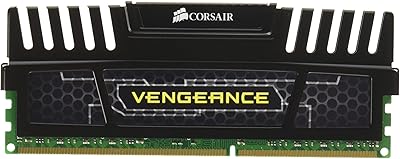
Corsair Vengeance 8GB DDR3 Desktop RAM
76%
91%
Installation Ease
93%
Reliability & Longevity
83%
Value for Money
44%
Platform Longevity
63%
XMP Configuration
More
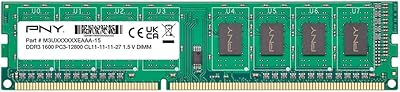
PNY Performance 8GB DDR3 Desktop RAM
76%
88%
Compatibility
93%
Ease of Installation
86%
Value for Money
79%
System Performance Impact
84%
Long-Term Reliability
More
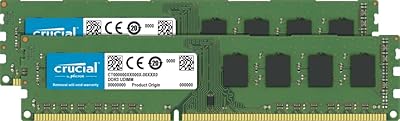
Crucial 16GB DDR3 1600 MHz CL11 Desktop Memory Kit
87%
94%
Performance
91%
Ease of Installation
89%
Compatibility
85%
Energy Efficiency
92%
Reliability
More
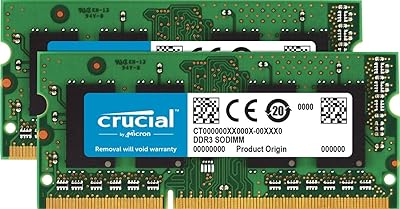
Crucial 8GB Kit (2x4GB) DDR3 1600 MHz Laptop Memory
88%
93%
Installation Ease
88%
Performance Boost
85%
Energy Efficiency
91%
Compatibility
86%
Build Quality
More
G.SKILL Ripjaws S5 48GB DDR5 Desktop RAM
83%
91%
Performance & Speed
74%
Compatibility
83%
Value for Money
79%
Ease of Setup
93%
Stability & Reliability
More

FAQ

In most cases, yes. The kit runs at JEDEC-standard DDR3 1600 MHz timings, so the vast majority of LGA 1155 boards will detect and apply the correct speed automatically on first boot. That said, checking your motherboard's QVL list for the model number F3-12800CL9D-8GBRL beforehand is always a smart move, especially on older boards with strict memory validation.

You can run a single stick, but you would lose the dual-channel bandwidth benefit, which is one of the main reasons to buy this kit over a single 8GB module. For best performance, install both sticks in the paired DIMM slots specified in your motherboard manual.

Yes, AM3+ boards that support DDR3 1600 are fully compatible with this kit. Just confirm your specific board supports the speed natively or can auto-configure it, as some older AM3+ boards default to DDR3 1333 unless the frequency is set manually in the BIOS.

No. This is a full-size 240-pin DIMM designed exclusively for standard desktop motherboards. Laptops and many compact systems use SODIMM slots, which are physically different and incompatible with this kit.

Unlikely. The Ripjaws heatspreader is deliberately low-profile, and most standard tower air coolers clear it comfortably. If you are running an especially wide cooler with a large base, just measure the clearance from the DIMM slot edge to the cooler fin stack to be safe.

No, and that is actually one of this kit's practical advantages. The 1600 MHz speed is a standard JEDEC frequency, so most DDR3-capable boards will apply it automatically without requiring you to enable any XMP profile in the BIOS.

This depends entirely on your specific motherboard. Nearly all dual-channel boards color-code the slots or label them A1, A2, B1, B2 in the manual. Typically you install the two sticks in the same-colored or same-letter slots, but always defer to your motherboard documentation for the exact recommended configuration.

It depends entirely on your use case. If you already have a working DDR3 platform and just need more RAM to keep it functional, this memory upgrade makes perfect sense at a modest cost. If you are considering a platform that requires DDR3, weigh that against the cost of upgrading to a newer DDR4 or DDR5 motherboard and CPU, as the long-term value equation shifts significantly in favor of newer standards for anyone starting fresh.

G.SKILL's lifetime warranty covers manufacturing defects on both sticks for the life of the product. If a module fails under normal use conditions, you would contact G.SKILL support directly to initiate a replacement claim. Keep your purchase documentation handy, as proof of purchase is typically required.

Technically possible, but not recommended. Mixing kits from different manufacturers or with different timings and voltages can cause instability, force the system to run all memory at the slowest common settings, or prevent dual-channel mode from activating. For the most stable experience, use this Ripjaws DDR3 kit on its own or pair it only with identical modules from the same model number.