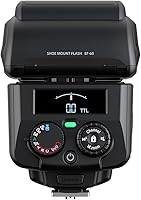
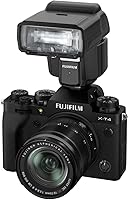
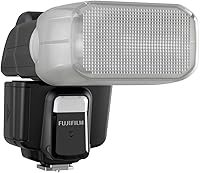
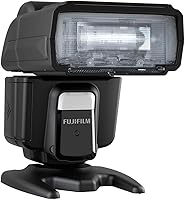
Overview

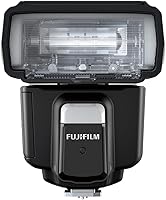
The Fujifilm EF-60 Shoe Mount Flash arrived in mid-2020 as the brand's first radio-controlled wireless flash built specifically for X Series and GFX System cameras — and it filled a real void. Before this, Fujifilm shooters wanting native wireless control had to rely on optical triggering or third-party workarounds. Despite its compact, portable build, it punches well above its weight in output capability. This is not a flash aimed at hobbyists or beginners; the premium pricing makes that clear from the start. It sits at the intersection of on-camera convenience and genuine off-camera control, making it a credible option for working photographers who shoot Fujifilm exclusively.

Features & Benefits

The EF-60's headline spec is its guide number of 60 at 200mm — real reach for a flash this size. The zoom range spans 24mm to 200mm, meaning it adapts whether you're shooting a wide environmental portrait or a tighter telephoto setup. Wireless control runs on 2.4 GHz radio, supporting up to 30 units across 3 groups and 8 channels, with power adjustable in 1/3-stop increments for dialed-in precision. A white LED modeling light aids focus and positioning in dim settings and doubles as a usable continuous source for video catch-lights. NAS compatibility also opens the door to Nissin flashes like the i60A and Di700A, meaningfully extending the system for photographers already working in that ecosystem.

Best For

This shoe mount flash is built for a specific kind of photographer — one who shoots Fujifilm natively and needs serious off-camera capability without hauling a full studio kit. Portrait and event photographers working on location will appreciate the reliable 2.4 GHz radio triggering, especially when time is tight and adjusting individual units isn't practical. Hybrid creators who shoot both stills and video get real value from the LED modeling light for catch-lights. Photographers embedded in the Nissin Air System will find the NAS compatibility a genuine bonus. That said, if you're new to off-camera flash or shooting casually, the learning curve and total system cost — especially once you factor in the separately sold commander — may not be the right fit.

User Feedback

With a 4.0 out of 5 rating across 68 reviews, the EF-60 earns solid marks without being universally loved. Buyers consistently praise its build quality and TTL accuracy, and most report that the wireless radio system performs reliably across varied shooting conditions. Battery life, rated at around 1,500 flashes, holds up reasonably well according to multiple reviewers. The friction points, though, are worth knowing upfront. The most repeated complaint involves the cost of entry: unlocking full wireless functionality requires the EF-W1 commander and potentially the EF-X500, both sold separately, adding significantly to an already steep outlay. Some buyers also question whether this Fujifilm flash justifies its price against established third-party alternatives. Capable, yes — but budget carefully before committing.

Pros

  • Native TTL integration with Fujifilm X Series and GFX System cameras delivers accurate, reliable exposures.
  • Guide number of 60 at 200mm offers serious power in a compact, travel-friendly body.
  • 2.4 GHz radio triggering is consistent and does not depend on line-of-sight like optical systems.
  • The LED modeling light doubles as a continuous video light source, adding real versatility for hybrid shooters.
  • Fine power control in 1/3-stop increments makes dialing in manual exposures precise and repeatable.
  • NAS compatibility means it works with select Nissin flashes, broadening your lighting toolkit.
  • Zoom range of 24mm to 200mm adapts well across a wide variety of focal lengths and shooting styles.
  • Battery life of approximately 1,500 flashes per charge holds up well across longer shooting sessions.
  • Build quality is consistently praised by buyers as sturdy and confidence-inspiring in professional use.

Cons

  • Full wireless radio functionality requires the EF-W1 commander, which is sold separately at additional cost.
  • Optical triggering via the EF-X500 also requires a separate purchase, making the total system price steep.
  • The high total cost of entry is hard to justify for photographers who only occasionally use flash.
  • Third-party alternatives offer comparable output and broader multi-brand compatibility for significantly less money.
  • With only 68 reviews to draw from, long-term reliability data is thinner than for more established flashes.
  • No built-in commander mode means the EF-60 cannot natively control other flashes without additional hardware.
  • Heavier than some competing shoe mount flashes at 10.6 ounces, which can unbalance smaller mirrorless bodies.
  • The 4.0 average rating, while decent, reflects recurring frustration over hidden accessory costs among buyers.

Ratings

Our AI-generated scores for the Fujifilm EF-60 Shoe Mount Flash were produced by analyzing verified buyer reviews from across major global markets, with spam, incentivized, and bot-flagged submissions actively filtered out before scoring. Each category reflects the honest distribution of real photographer experiences — including the friction points that prevent this flash from earning a clean sweep. Both the strengths that make it a standout in its niche and the trade-offs that give buyers pause are transparently represented below.

Wireless Reliability
88%
Photographers running multi-light portrait setups consistently report that the 2.4 GHz radio system holds a stable connection across typical studio and location distances. Unlike optical triggers, it does not drop in bright ambient light or when flashes are positioned around corners, which matters a lot during fast-paced event shoots.
A small but notable portion of users report occasional misfires when working with many units simultaneously near other 2.4 GHz devices. The system has not been universally tested at the upper limit of 30 units, so real-world reliability at that scale is less documented than at smaller group sizes.
TTL Accuracy
86%
Native TTL integration with Fujifilm bodies is a genuine strength — reviewers shooting weddings and events note that exposure consistency across rapidly changing scenes is noticeably better than with third-party alternatives. The tight communication between the EF-60 and Fujifilm's metering system translates to fewer throwaway frames during critical moments.
A handful of users shooting in high-contrast environments report occasional overexposure when relying on TTL alone, requiring manual compensation dialing. TTL performance on non-Fujifilm bodies, while functional, is reported as less consistent and sometimes reverts to basic auto or manual-only behavior.
Build Quality
84%
The construction draws frequent compliments from working photographers who handle gear roughly on location — the flash feels dense and well-assembled rather than hollow or plasticky. Several reviewers specifically contrast it favorably against budget third-party units they had previously used, noting the EF-60 inspires confidence when packed into a carry-on kit bag.
No weather sealing is specified or confirmed, which frustrates photographers who shoot outdoors in variable conditions. A few reviewers mention the hot shoe foot feels slightly less precise in fitting than they expected at this price tier, though no structural failures were widely reported.
Value for Money
58%
42%
For photographers who shoot exclusively within the Fujifilm ecosystem and need full native TTL and radio wireless control without compromise, the feature set does justify a premium over budget alternatives. The combination of high guide number, NAS compatibility, and LED modeling light in one unit avoids the need for multiple accessories in some workflows.
The sticker price alone is a stretch for many buyers, and the hidden cost of the EF-W1 commander and EF-X500 needed to unlock full wireless functionality pushes the real total significantly higher. Multiple reviewers explicitly state that competing systems from Godox deliver comparable or broader functionality at a fraction of the combined cost, and that comparison is difficult to dismiss.
Output Power
91%
A guide number of 60 at 200mm is genuinely impressive for a portable unit, and photographers shooting in large venues or needing to overpower ambient sunlight outdoors report that the EF-60 holds up well where smaller flashes fall short. The zoom range reaching 200mm also means the beam narrows efficiently for telephoto work, preserving effective power at distance.
At wider zoom settings the effective guide number drops substantially, as it does with any zoom flash, which some buyers did not fully account for when making their purchase. A small number of users shooting large group portraits found the power ceiling tighter than expected when bouncing off high ceilings in ballroom settings.
Ease of Setup
67%
33%
On-camera TTL use straight out of the box is straightforward for any photographer already familiar with Fujifilm menus, and the flash communicates intuitively with the camera body without extensive configuration. For simple single-flash assignments, the learning curve is minimal.
Setting up a full multi-group wireless system — especially for first-time users — involves a steeper learning process, and the requirement to purchase and configure the EF-W1 commander separately adds complexity before you even fire a test shot. Several buyers wished the documentation included more practical multi-flash setup guidance rather than just technical specifications.
Modeling Light
79%
21%
The white LED modeling light is a real functional addition rather than a token feature — users shooting in dim indoor locations appreciate how it aids autofocus acquisition and helps visualize light positioning before committing to a shot. Video shooters specifically call it out as a practical tool for adding catch-lights during close-up interview or product footage.
The output intensity of the LED is limited compared to a dedicated continuous light source, so it works best at close to medium distances rather than for broader scene illumination. A few hybrid shooters note it is not powerful enough to serve as a primary video light, only a supplementary one.
Battery Life
77%
23%
The rated 1,500 flashes per charge aligns reasonably well with real-world reports from event and portrait photographers, with most saying they comfortably get through a full session on a single set of batteries when shooting at moderate power levels. The use of standard AA cells is widely praised for travel convenience.
Sustained shooting at full power drains batteries noticeably faster, and a few photographers working long back-to-back events report needing spare sets on hand. Recycle time at higher power settings is also mentioned as a minor frustration when trying to keep pace with fast-moving subjects.
Portability
82%
18%
At 10.6 ounces and with compact dimensions, the EF-60 travels well and fits comfortably in standard flash pouches or camera bag side pockets. Location photographers appreciate being able to carry two or three units without significant weight penalty compared to larger studio monolights.
The weight does create minor balance concerns when mounted directly on smaller Fujifilm bodies like the X-S series, where the flash noticeably outweighs the camera. It is not a flash you would choose to keep mounted on-camera for extended handheld shooting without a grip attached.
Multi-System Compatibility
71%
29%
NAS compatibility is a meaningful bonus for photographers who already own Nissin Air System units like the i60A or Di700A, allowing a mixed fleet of flashes to be controlled from a single commander setup. The additional hot shoe compatibility with Nikon, Olympus, and Panasonic mounts also gives it some flexibility beyond pure Fujifilm use.
Full TTL and wireless radio features are meaningfully degraded on non-Fujifilm bodies, limiting the EF-60's appeal to photographers who regularly switch between camera systems. Broader third-party radio trigger compatibility — beyond the Nissin Air System — is not a built-in feature, which restricts integration with popular universal triggering systems.
Zoom Range Versatility
83%
The 24mm to 200mm zoom range handles the majority of practical focal lengths photographers encounter in portrait, event, and editorial work without any manual swapping of diffusion panels or add-ons. Auto-zoom functionality on Fujifilm bodies means the flash head adjusts in the background, which speeds up shooting in varied focal length situations.
The zoom motor is audible in quiet environments, which some users find distracting during slow-paced portrait sessions. A small number of reviewers note that the auto-zoom occasionally lags a beat behind rapid focal length changes, briefly mismatching the light spread before correcting itself.
Manual Control Precision
85%
The 1/3-stop increment power control gives working photographers the granularity needed to fine-tune exposures without guesswork, and users shooting in manual-only setups for product or studio portraiture specifically call this out as a strength. Remote adjustment via the EF-W1 commander means you can dial individual groups without walking to each flash head.
Manual control is only fully accessible in a remote wireless context when the EF-W1 is connected, which again ties the full experience to that separately purchased accessory. A few users mention the physical controls on the flash body feel slightly cramped when adjusting settings in the field with gloves on.
Ecosystem Integration
80%
20%
For photographers committed to Fujifilm, the EF-60 slots into the native system in a way no third-party alternative fully replicates — firmware updates, camera menu integration, and consistent TTL behavior across X Series and GFX bodies make it a coherent part of a professional kit rather than a workaround. Fujifilm-specific features like auto-zoom coordination work reliably across supported bodies.
The ecosystem benefits only hold up if you stay within Fujifilm, and the dependency on Fujifilm-specific accessories for core features limits flexibility. Photographers who might transition systems in the future would be leaving most of their investment behind, which is a real long-term consideration at this price point.

Suitable for:

The Fujifilm EF-60 Shoe Mount Flash is purpose-built for serious Fujifilm shooters who want native wireless flash control without resorting to third-party systems or optical triggering workarounds. Portrait photographers working on location will find the 2.4 GHz radio system genuinely useful — the ability to organize up to 30 units across 3 groups and 8 channels means complex multi-light setups can be managed efficiently even in fast-moving environments. Event photographers who need consistent TTL accuracy across varying conditions will appreciate how tightly this flash integrates with X Series and GFX System bodies. Hybrid creators who switch between stills and video also get practical value from the LED modeling light, which works as a real continuous source for eye catch-lights during video recording. Photographers already using Nissin Air System gear will find the NAS compatibility a worthwhile bonus that stretches their existing investment further.

Not suitable for:

If you are new to off-camera flash or are looking for a straightforward, affordable on-camera speedlight, the Fujifilm EF-60 Shoe Mount Flash is almost certainly not the right starting point. The premium price alone narrows the audience considerably, and that figure does not include the EF-W1 Wireless Commander or the EF-X500 flash required to unlock the full wireless radio feature set — both sold separately, and both adding meaningful cost to the total. Casual shooters who rarely work with artificial light will find the power and complexity here excessive for their needs. Photographers considering third-party alternatives like Godox should know that well-regarded options with comparable or broader compatibility are available at a lower total outlay, and that trade-off deserves honest consideration. Anyone not committed to the Fujifilm ecosystem specifically would also be better served by a system with broader cross-brand native support.

Specifications

  • Guide Number: Maximum guide number of 60 at 200mm (ISO 100), providing strong output reach for a portable shoe mount unit.
  • Zoom Range: The flash head covers a zoom range of 24mm to 200mm, adapting automatically or manually to match the lens in use.
  • Sync Speed: Maximum flash sync speed is 1/250s, compatible with standard focal-plane shutter synchronization on supported Fujifilm bodies.
  • Wireless System: Uses a 2.4 GHz radio frequency for wireless triggering, eliminating the line-of-sight dependency of optical flash systems.
  • Wireless Capacity: Supports control of up to 30 individual flash units organized into 3 groups across 8 selectable channels.
  • Power Control: Output can be adjusted in 1/3-stop increments in both TTL and manual exposure modes for precise lighting control.
  • Modeling Light: A high-luminance white LED modeling light is built in, usable for focus assistance in low light and as a continuous source for video.
  • Flash Tube: The primary flash uses a Xenon flash tube, the standard technology for high-output, accurate-color portable flash units.
  • Battery Life: Rated for approximately 1,500 flashes per charge under standard test conditions, which aligns with real-world reports from working photographers.
  • Dimensions: The unit measures 4.45 x 2.87 x 3.82 inches, keeping it compact enough for travel kits and smaller camera bags.
  • Weight: The flash weighs 10.6 ounces, which is manageable but worth considering when mounting on lighter mirrorless camera bodies.
  • Mount Type: Uses a standard hot shoe mount with confirmed compatibility across Fujifilm, Nikon, Olympus, and Panasonic systems.
  • NAS Compatibility: Supports the Nissin Air System (NAS), enabling wireless integration with compatible Nissin flashes such as the i60A, Di700A, and MG Series.
  • Optical Triggering: Can be triggered optically by the Fujifilm EF-X500 Shoe Mount Flash, though that unit must be purchased separately.
  • Commander Required: Full 2.4 GHz radio wireless functionality requires the separately sold Fujifilm EF-W1 Wireless Commander, which is not included.
  • Manufacturer: Manufactured by Fujifilm and released in July 2020 as the brand's first native radio-controlled wireless shoe mount flash.

Related Reviews
JINTU 85mm f1.8 Portrait Prime Lens
75%
84%
Build Quality
73%
Optical Sharpness
82%
Bokeh Quality
88%
Value for Money
71%
Manual Focus Experience
More
Lightdow 420-800mm F8.3 Telephoto Zoom Lens
68%
83%
Value for Money
61%
Image Sharpness
69%
Manual Focus Usability
58%
Build Quality
72%
Setup & Compatibility
More
Godox TT350F Fujifilm TTL Camera Flash
80%
88%
TTL Accuracy
76%
Build Quality
84%
HSS Performance
82%
Wireless Reliability
61%
Recycle Time
More
Godox iT30Pro-F Pocket Flash
80%
93%
Portability
86%
TTL Accuracy
81%
Wireless Performance
88%
High-Speed Sync
83%
Touchscreen Usability
More
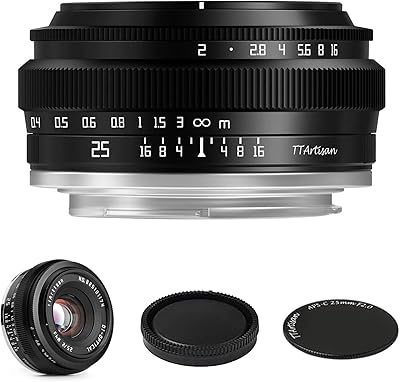
TTArtisan 25mm F2 Fujifilm X-Mount Lens
85%
88%
Image Quality
75%
Manual Focus Control
90%
Low-Light Performance
85%
Portability
92%
Build Quality
More
YONGNUO YN35mm F2 Wide-Angle Prime Lens
71%
93%
Value for Money
74%
Image Sharpness
58%
Autofocus Performance
61%
Build Quality
71%
Low-Light Capability
More
Fujifilm QuickSnap Flash 400
74%
78%
Image Quality
82%
Flash Performance
94%
Ease of Use
67%
Value for Money
74%
Film Speed & Low-Light Handling
More
7artisans 35mm f/0.95 APS-C Mirrorless Lens
70%
91%
Bokeh Quality
88%
Low-Light Performance
63%
Wide-Open Sharpness
89%
Build Quality
87%
Value for Money
More
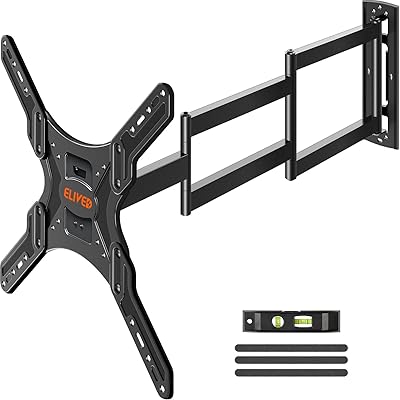
ELIVED Long Arm TV Wall Mount 26-60 Inch
84%
89%
Value for Money
93%
Ease of Installation
87%
Build Quality
85%
Viewing Flexibility
90%
Stability and Support
More
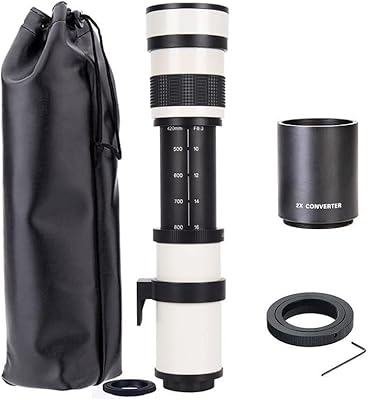
JINTU 420-1600mm Telephoto Zoom Lens
71%
83%
Value for Money
88%
Focal Reach
61%
Image Sharpness
79%
Build Quality
54%
Manual Focus Experience
More

FAQ

Yes, and this is the part that catches a lot of buyers off guard. To use the 2.4 GHz radio wireless control, you need the Fujifilm EF-W1 Wireless Commander, which is sold separately. If you prefer optical triggering instead, you can use the EF-X500 flash as the controller, but that is also a separate purchase. The EF-60 itself does not include a built-in commander mode, so factor those additional costs into your budget before buying.

The hot shoe is physically compatible with Nikon, Olympus, and Panasonic mounts in addition to Fujifilm, so it will fire on those systems. That said, the native TTL metering and full wireless radio integration are optimized for Fujifilm bodies. On other brands, you may get reduced functionality or manual-only operation, so check compatibility with your specific camera model before committing.

Absolutely, and this is really where it shines. When paired with the EF-W1 commander, you can control up to 30 units spread across 3 groups and 8 channels, adjusting each group's power remotely in 1/3-stop increments. For location portrait work where you need consistent, repeatable results across multiple lights, that level of control is genuinely useful.

More useful than you might expect. In dimly lit shooting environments, it helps the camera acquire focus faster and lets you see how the light is falling on your subject before you fire. For video shooters, it also works as a small but real continuous light source, particularly for adding a catch-light to a subject's eyes during close-up footage.

Honestly, probably not. The price point and the additional cost of required accessories make this a tough recommendation for someone still learning the fundamentals of off-camera lighting. There are more affordable entry points that will teach you the core concepts without as steep a financial commitment. This flash is better suited to photographers who already know what they need and are building a serious Fujifilm-native system.

The rated figure of approximately 1,500 flashes is a reasonable estimate under normal shooting conditions, and most working photographers report that it holds up well through a typical portrait session or event. Recycle times and power level will affect real-world performance, so shooting at full power continuously will drain the battery faster than moderate output use.

It supports the Nissin Air System (NAS), so if you have a compatible NAS controller like the Nissin Air10s, you can integrate the EF-60 into that system alongside other NAS-compatible flashes. Outside of Nissin Air System and the native Fujifilm EF-W1 commander, broad third-party trigger compatibility is not a guaranteed feature, so verify before assuming it will work with your existing triggers.

The main advantage of this shoe mount flash is its native TTL integration and the assurance of manufacturer support for Fujifilm-specific features. Third-party systems like Godox offer strong TTL performance across multiple brands and often cost significantly less, including the triggers. If you shoot exclusively Fujifilm and want a fully native experience, this flash makes sense. If cross-brand flexibility or budget matters, third-party alternatives deserve a serious look.

Based on buyer feedback, yes. Build quality is one of the most consistently praised aspects of the EF-60, with reviewers describing it as solid and well-constructed. It does not feel like a consumer-grade product, which is in line with what you would expect at this price tier. That said, no weather sealing is specified, so exercise normal caution in damp or dusty environments.

The EF-60 runs on AA batteries, which are widely available and easy to source anywhere in the world — a practical advantage for travel photographers. Using high-quality lithium AA batteries will typically improve both recycle times and overall shot count compared to standard alkaline cells, especially in cold weather conditions.

Where to Buy

B&H Photo-Video-Audio
In stock $519.99
Samy's Camera
In stock $519.00
Unique Photo
In stock $519.00
San Jose Camera & Video
In stock $519.95
Glazer's Camera
In stock $519.99
Woodland Hills Camera and Telescopes
In stock $519.99
Jack's Camera
In stock $519.99