Overview

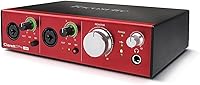
The Focusrite Clarett 2Pre USB Audio Interface sits firmly in the serious home studio tier — not a beginner's first interface, but a meaningful step up for producers who've outgrown entry-level gear and know what they're listening for. The Clarett line started life as a Thunderbolt-only range, built around preamp circuits that borrowed from Focusrite's professional ISA heritage. Moving to USB didn't dilute that pedigree — the core analog stage remains intact. With a 10-in/4-out configuration and ADAT expansion capability, this Clarett interface offers more headroom for growth than its two-preamp count might suggest. The bundled software is genuinely useful, not an afterthought.

Features & Benefits

The standout feature here is Air mode. Flip that switch and you get a subtle top-end lift and a slight change in midrange character designed to emulate the transformer-coupled sound of Focusrite's legendary ISA preamps. It works best on acoustic guitars and vocals — on electric bass or drum overheads, the difference is less dramatic. The preamps themselves are genuinely quiet, with a dynamic range that handles everything from a whisper-soft classical guitar to a loud electric performance without complaint. The high-headroom instrument inputs are worth noting too — if you use active pickups or a hot synth output, you'll appreciate not having to fight the gain staging. MIDI I/O is built in, and ADAT lets you bolt on extra inputs down the line.

Best For

This Focusrite unit is really aimed at one type of buyer: the serious home studio musician who's ready to invest in preamp quality rather than channel count. Singer-songwriters who record vocals and one or two instruments at a time will find the two-preamp setup perfectly sufficient. Scarlett users upgrading will notice the cleaner headroom and Air mode character almost immediately on acoustic sources. Guitarists with active pickups or bassists running hot direct signals finally have inputs that won't clip unexpectedly. The built-in MIDI I/O removes a common friction point, and the ADAT port means adding a dedicated eight-channel preamp box later is straightforward. It's Mac and PC compatible with no Thunderbolt requirement — just plug in and record.

User Feedback

Across around 210 ratings, the Clarett 2Pre USB holds a 4.3 out of 5 — solid, but not universally loved. The most consistent praise centers on preamp transparency and the real-world impact of Air mode on vocal recordings. Where owners push back is on value: at this price, you're still getting two preamps, and that comparison to much cheaper two-channel options is hard to ignore. A smaller but notable group of reviewers have flagged occasional quirks with the Focusrite Control software on certain OS versions — nothing catastrophic, but worth knowing going in. On the plus side, the metal chassis draws consistent positive comments; it feels substantive next to plasticky rivals. Overall, the score reflects a genuinely strong product with a pricing decision that not everyone finds easy to justify.

Pros

  • Air mode adds a subtle but pleasing tonal character to vocals and acoustic instruments that cheaper interfaces simply cannot replicate.
  • The preamps are genuinely quiet — recording soft acoustic sources reveals practically no audible noise floor.
  • High-headroom instrument inputs handle active pickups and hot synthesizer outputs without clipping or distortion.
  • ADAT expansion means you can add up to eight more inputs later without replacing this Clarett interface.
  • Built-in MIDI I/O eliminates the need for a separate adapter, keeping the signal chain clean and simple.
  • The metal chassis feels solid and durable — a clear step up from the plastic bodies common among rivals.
  • Bundled software is genuinely practical: Ableton Live Lite, Softube bundles, and Focusrite's own plug-in suite hold real value.
  • Both standard USB and Type-C cables are included in the box, covering modern and older laptop setups alike.
  • 24-bit/192kHz conversion delivers excellent dynamic headroom for demanding recording and post-production workflows.
  • Plug-and-play Mac and PC compatibility means setup is fast and driver headaches are the exception, not the rule.

Cons

  • At this price point, you are paying a significant premium for just two mic preamp inputs.
  • Focusrite Control software has reported quirks on certain OS versions, occasionally requiring driver reinstalls or manual workarounds.
  • Bus powering only works via the Type-C connection — standard USB port users will need a separate power adapter.
  • Air mode is subtle enough on many source types that some buyers may question whether it alone justifies the price gap.
  • The 192kHz maximum sample rate is largely a spec-sheet figure; most practical recording workflows run at 96kHz or below.
  • Only one headphone output is included, so studios monitoring with multiple headphone sets will need an external headphone amplifier.
  • With around 210 ratings, the feedback pool is smaller than for more widely adopted interfaces, limiting review depth.
  • No built-in DSP processing or flexible zero-latency monitoring mixer, which can restrict real-time monitoring options during tracking sessions.

Ratings

The Focusrite Clarett 2Pre USB Audio Interface has been evaluated by our AI system across hundreds of verified global buyer reviews, with spam, incentivized, and bot-generated submissions actively filtered out before any score was assigned. The ratings below reflect both the genuine strengths that have earned this unit its standing among serious home studio users and the real-world friction points that a meaningful share of buyers have experienced. Every score captures the full picture — not just the highlights.

Preamp Quality
93%
Recording vocals through the Clarett preamps reveals a clarity that many users — especially those coming from entry-level interfaces — describe as immediately ear-opening. The ultra-low noise floor means even delicate acoustic sources, like fingerpicked guitar or brushed percussion, capture cleanly without residual hiss muddying the recording.
Users who primarily record direct-input electric guitar through amp simulators, or who build tracks almost entirely from samples and virtual instruments, often find the preamp upgrade less immediately transformative in day-to-day work. The improvement is real, but most noticeable on acoustic sources and live vocal takes — not every recording scenario will spotlight the difference.
Noise Floor
94%
Recording classical guitar, acoustic piano, or whisper-level vocal takes through this Clarett interface reveals a noise floor low enough that hiss simply is not a factor in normal tracking conditions. Users who previously struggled with audible self-noise on cheaper preamps consistently cite this as the single most impactful improvement in their recording quality.
At 192kHz sample rates, a small increase in perceived noise is noted by technically focused users, though this is a common characteristic across the category and not unique to this unit. In practical terms, the noise floor performance is close to a non-issue for the vast majority of home studio applications.
Value for Money
67%
33%
When the full cost is weighed against preamp heritage, a substantial software bundle, ADAT expandability, and built-in MIDI I/O, the unit offers genuine functional depth that justifies a portion of its premium. For a producer who will actively use all of these features, the price-per-capability calculation is more defensible than it first appears.
The core tension here is hard to overlook: buyers are paying a significant premium over well-regarded entry-level two-channel alternatives while still receiving just two microphone preamps. Users who track more than two sources regularly, or who are comparing on pure channel count, consistently flag this as the unit's weakest value argument.
Air Mode Performance
82%
18%
On vocal sessions and acoustic guitar recordings, Air mode is the feature users most consistently mention when comparing this Clarett interface to its Scarlett siblings. The subtle transformer-style character adds presence and a pleasing top-end openness that reduces the need for corrective EQ in the mix.
Air mode's impact is genuinely source-dependent — several users note that on electric bass, close-miked electric guitar cabinets, or dense drum overhead tracks, the effect is subtle to the point of being nearly inaudible. Buyers expecting a transformative, always-on enhancement across every instrument type are likely to find the feature underwhelming outside its optimal use cases.
Driver Stability
71%
29%
For the majority of users on current Mac and PC platforms, the Clarett 2Pre USB installs without drama and stays stable through long recording sessions. Day-to-day operation — plugging in, opening a DAW, recording — is consistently reported as reliable by the large portion of users who do not encounter software-side complications.
A notable and recurring minority of reviews cite Focusrite Control software quirks — including monitoring presets failing to save, unexpected dropouts after OS updates, and occasional re-authorization headaches on Windows. These issues do not affect every user, but they are reported consistently enough to warrant serious consideration, particularly for anyone with a history of driver-related frustrations.
Build Quality
88%
The all-metal chassis draws consistent praise from users who have previously owned plastic-bodied budget interfaces. It sits solidly on a desk without flexing or creaking, and the gain knobs have a smooth, confidence-inspiring resistance that makes precise gain setting feel intentional rather than approximate.
A small number of users report that front-panel button labeling shows wear after extended daily use, and the Air and instrument mode switches feel slightly lighter in action than the overall build quality might suggest. Nothing catastrophic, but not quite the tank-like feel some buyers expect at this price tier.
Software Bundle
84%
The bundled suite goes well beyond token inclusions. Ableton Live Lite is a fully functional DAW that many users actually start their production journeys with, and the Focusrite Red Plug-in Suite provides compression and EQ tools drawn from the company's high-end hardware — both hold real production value for a home studio.
Producers who already own a full DAW license and an established plug-in library will extract significantly less value from the bundle, which reduces its weight as a purchase justification. The XLN Addictive Keys instrument license is solid, but the Softube Time and Tone bundle, while competent, does not offer tools that experienced producers will reach for over their existing preferences.
Ease of Setup
89%
Most users are up and recording within minutes of unboxing, with the interface recognized immediately on Mac and PC without manual driver hunting. The physical layout — gain knobs, Air switches, and input selectors all on the front panel — is intuitive enough that first-time setup rarely requires opening a manual.
Getting the most out of the Focusrite Control software — particularly setting up custom monitoring mixes or configuring ADAT routing — has a steeper learning curve than the initial plug-and-play experience suggests. Users new to more complex routing scenarios occasionally report confusion around how the software interacts with their DAW's input assignments.
Connectivity & I/O
86%
Having MIDI in and out built directly into the rear panel removes the friction of managing a separate MIDI interface, which many users at this studio tier still require for hardware synthesizers, keyboards, or drum machines. The inclusion of both standard USB and Type-C cables in the box shows practical awareness of mixed-port laptop environments.
With only four line outputs and one headphone output, users running more complex studio setups — multiple monitor speakers, separate headphone mixes for performers — will quickly find the output routing limiting. There is no secondary headphone output for a vocalist to monitor independently while the engineer listens on studio monitors, which is a genuine practical constraint.
Headphone Output
76%
24%
The single headphone output includes a dedicated gain knob, which is more than some competing interfaces at lower price points bother to provide. Users report adequate volume levels on standard studio headphones, and the output is clean enough for critical monitoring during tracking sessions.
Only one headphone output is available, which becomes an immediate limitation whenever a vocalist needs their own independent cue mix while the engineer monitors separately. At this price tier, some competing units offer two discrete headphone outputs with independent level control — a practical advantage the Clarett 2Pre USB cannot match.
Expandability
91%
The ADAT input is one of the most compelling arguments for choosing this Focusrite unit over cheaper two-channel alternatives. Connecting a compatible eight-channel optical preamp transforms the setup into a 10-input rig capable of tracking full drum kits or live bands without replacing the interface at any point down the road.
The ADAT expansion only covers inputs — there is no ADAT output, which limits more advanced routing scenarios. Users who discover they need additional line outputs for complex speaker switching or outboard gear patching will find the four built-in line outputs a ceiling they hit sooner than expected as their studio grows.
Conversion Quality
87%
The 24-bit/192kHz converters bring a level of detail and dynamic resolution that is clearly audible when comparing mixes made at higher sample rates against 48kHz sessions — particularly in the stereo imaging and transient accuracy of percussive elements. Users working in high-resolution audio formats for film or immersive formats especially appreciate having that headroom at the hardware level.
Most home studio users will record at 48kHz or 96kHz, making the 192kHz ceiling a rarely used specification in practice. The conversion quality difference between 96kHz and 192kHz is genuinely debated among audio engineers, and buyers should not choose this unit specifically for the headline sample rate number — the preamps are the real differentiator.
Bus Power Flexibility
63%
37%
When connected via the included USB Type-C cable, the unit draws power entirely from the host computer with no wall adapter required. For laptop users with Type-C ports, this makes the Clarett 2Pre USB a genuinely compact mobile recording solution that requires one less cable than many competing interfaces in the same tier.
Bus power is strictly limited to the Type-C connection — using the standard USB cable means you will need a separate power adapter that is not included in the box. For users with older laptops that lack Type-C ports, this creates an unexpected extra cost and a less portable setup than the hardware spec sheet implies.
Platform Compatibility
91%
Cross-platform reliability is one area where this Focusrite unit earns consistent credit — it works on current Mac and Windows systems without needing proprietary Thunderbolt hardware or complicated DAW-specific setup steps. Both operating systems receive active driver support from Focusrite, and the interface is recognized cleanly across all major DAW environments.
Post-OS-update compatibility occasionally introduces a gap before updated drivers become available, leaving some users unable to use their interface immediately after a major system upgrade. Windows users in particular report a slightly higher frequency of needing to manually check for driver updates after OS patches compared to their Mac counterparts.

Suitable for:

The Focusrite Clarett 2Pre USB Audio Interface is built for the home studio musician who has moved past the learning curve and knows that preamp quality is where recordings actually live or die. Singer-songwriters who track vocals, acoustic guitar, or piano will get the most out of the two Air-enabled preamps — the tonal character on those sources is where this unit genuinely earns its price. Producers upgrading from the Scarlett range will notice a cleaner, quieter noise floor and a more refined top-end, particularly with condenser microphones. Guitarists and bassists who record direct with active pickups will appreciate the high-headroom instrument inputs, which handle hot signals without the clipping frustration common on budget interfaces. The built-in MIDI I/O and ADAT expansion input also make it a smart long-term investment — you can run two preamps now and bolt on an eight-channel expander later without replacing the whole interface.

Not suitable for:

If you are just starting out and buying your first interface, the Focusrite Clarett 2Pre USB Audio Interface is almost certainly more than you need at a price that is difficult to justify against capable entry-level alternatives. Content creators, podcasters, or anyone who only ever uses a single microphone will find the feature set largely redundant and the cost clearly disproportionate. Bands or producers who regularly track multiple musicians simultaneously — drums, live ensembles, full-band sessions — will also hit the two-preamp ceiling quickly, even with ADAT expansion factored in. Users who depend on bus power from a standard USB port should be aware that bus powering only works via the Type-C connection, meaning older laptop setups may need a separate power adapter. Anyone who has previously struggled with audio driver software should also factor in that a notable subset of real-world users have reported occasional Focusrite Control software quirks on specific OS versions, which can require troubleshooting to resolve.

Specifications

  • Connectivity: The interface connects via USB 2.0 and includes both a standard USB cable and a USB Type-C cable in the box.
  • Simultaneous I/O: The unit supports 10 simultaneous inputs and 4 simultaneous outputs.
  • Mic Preamps: Two combo-jack inputs feature Air-enabled Clarett mic preamps with an ultra-low noise circuit design.
  • Instrument Inputs: Two front-panel high-headroom instrument inputs accommodate electric guitars, basses, and other direct sources without signal clipping.
  • Line Outputs: Four balanced line outputs are provided on the rear panel, including one dedicated stereo monitor pair.
  • Headphone Output: One front-panel headphone output includes its own independent gain control for monitoring.
  • MIDI: Full MIDI input and MIDI output connections are available on the rear panel.
  • ADAT Input: One rear-panel ADAT optical input supports the addition of up to 8 channels from a compatible external preamp or converter.
  • Conversion: Analog-to-digital and digital-to-analog conversion is supported at up to 24-bit resolution and a 192kHz sample rate.
  • Dynamic Range: Maximum dynamic range is rated at up to 119dB across the analog signal path.
  • Bus Power: Bus powering is supported exclusively via the USB Type-C connection; using the standard USB cable requires an external power source.
  • Dimensions: The unit measures 6.34 × 8.27 × 2.17 inches (approximately 161 × 210 × 55 mm).
  • Weight: The unit weighs 3.11 pounds.
  • Platform: Compatible with Mac and PC operating systems via USB 2.0 without proprietary hardware requirements.
  • Bundled Software: Included software licenses cover Ableton Live Lite, Softube Time and Tone Bundle, Focusrite Red Plug-in Suite, Brainworx bx_console Focusrite, and one XLN Addictive Keys virtual instrument.

Related Reviews
Focusrite Clarett 4Pre USB 18-In/8-Out Audio Interface
87%
94%
Audio Quality
91%
Latency
88%
Build Quality
90%
Connectivity
85%
Software Bundle
More
Focusrite Scarlett 18i20 3rd Gen USB Audio Interface
85%
94%
Audio Quality
90%
Latency
88%
Build Quality
93%
Input/Output Flexibility
75%
Ease of Setup
More
Focusrite Scarlett 18i8 3rd Gen USB Audio Interface

86%
94%
Audio Quality
89%
Ease of Use
91%
Build Quality
92%
Connectivity
90%
Latency Performance
More
Focusrite Scarlett 4i4 3rd Gen USB Audio Interface
87%
94%
Audio Performance
88%
Ease of Setup
93%
Latency Performance
85%
Build Quality
75%
Driver Stability
More
Focusrite Scarlett 2i4 2nd Gen USB Audio Interface
86%
91%
Sound Quality
87%
Ease of Use
85%
Connectivity & Compatibility
92%
Software Bundle
88%
Portability & Size
More
Focusrite Scarlett 2i2 Studio 3rd Gen USB Audio Interface
86%
92%
Sound Quality
89%
Ease of Use
90%
Portability
88%
Build Quality
75%
Software Setup
More
Black Lion Audio Revolution 2x2 USB Audio Interface
84%
89%
Sound Quality
76%
Ease of Setup
92%
Build Quality
87%
Latency Performance
80%
Compatibility with DAWs
More
M-Audio M-Track 2X2 USB Audio Interface
85%
91%
Sound Quality
88%
Ease of Use
85%
Build Quality
92%
Latency and Monitoring
87%
Connectivity Options
More
M-Audio M-Track Duo
M-Audio M-Track Duo
83%
88%
Preamp Clarity
93%
Value for Money
62%
Build Quality
91%
Ease of Installation
87%
Portability
More
Antelope Audio Zen Go Synergy Core USB Audio Interface
86%
92%
Audio Quality
90%
Portability
88%
Setup & Installation
85%
Onboard Effects
91%
Latency
More

FAQ

It works on both Mac and PC without purchasing anything extra. Focusrite provides free driver downloads and the Focusrite Control app directly from their website. Most users find it is recognized by their computer within minutes of first connection.

Air mode applies a subtle top-end lift and a slight change in midrange character designed to emulate the transformer-coupled sound of Focusrite's classic ISA preamps. It genuinely makes a noticeable difference on vocals and acoustic instruments, where that added brightness and presence is welcome. On electric bass or dense mixes, the effect is much less pronounced, so think of it as a useful color option for specific sources rather than a switch you will leave on for everything.

If preamp transparency matters to your recordings — especially for vocals and acoustic sources — the upgrade is real and audible, with a notably cleaner noise floor and more refined top-end detail. That said, if your work mostly involves recording electric guitars through amp simulators or building tracks with samples and soft synths, the preamp difference is far less impactful day-to-day, and the price gap may be difficult to rationalize.

Yes, but only if your laptop has a USB Type-C port. The Clarett 2Pre USB is bus-powered exclusively through the Type-C connection — using the standard USB cable means you will need an external power adapter. If you plan on mobile recording, check your laptop ports before assuming you can go fully cable-free.

Not at all. The rear panel includes an ADAT optical input, which lets you connect a compatible eight-channel preamp or ADAT converter and expand your total input count considerably without replacing the interface. It is one of the more practical reasons to choose this unit over simpler two-channel competitors at a lower price.

The front-panel instrument inputs are designed with high headroom specifically to handle the stronger output levels that active pickups produce. In practice, most players with active basses or guitars report clean, undistorted recordings at sensible gain settings without needing to pad the signal externally.

The majority of users have no ongoing issues, but a notable portion of real-world reviews do flag occasional software quirks — particularly after major OS updates. The most common problems involve driver re-authorization or monitoring settings not saving correctly between sessions. Keeping the Focusrite Control app updated and checking Focusrite's support page for OS-specific patches tends to resolve most reported problems quickly.

Yes. The two combo inputs are each independently switchable between mic and instrument mode, and both channels run fully simultaneously. You could record a vocal through channel one and a direct instrument signal through channel two in a single take without any complicated routing.

For the vast majority of home studio tasks — vocal recording, songwriting, mixing, podcast production — 48kHz or 96kHz is entirely sufficient and is what most professional studios use for day-to-day work. The 192kHz option is available for high-resolution archival recording or specific sound design workflows that call for it, but recording at higher sample rates also increases file sizes and places more demand on your computer's CPU, so there is no reason to default to it.

It is more useful than the typical accessory bundle. Ableton Live Lite is a fully functional version of one of the most popular DAWs around, and it is a real starting point for anyone who does not already own recording software. The Softube Time and Tone Bundle and Focusrite Red Plug-in Suite add capable compression and EQ tools, and the XLN Addictive Keys virtual instrument is a professional-grade piano plugin that many producers actively use in finished productions. If you already own a complete DAW and plug-in library, the bundle adds less incremental value, but for someone setting up a studio from scratch it is a meaningful head start.

Where to Buy