Overview

The FeiyuTech SCORP Mini 2 Gimbal Stabilizer sits in an interesting spot in the market — a mid-range stabilizer that punches above its weight by pairing built-in AI tracking with a physical OLED touchscreen, features you'd typically expect to pay considerably more for. FeiyuTech has been quietly competing with DJI and Zhiyun for years, and this stabilizer reflects that ambition. It handles mirrorless cameras, action cams, and smartphones, making it genuinely versatile. That said, it's worth being clear: this gimbal is built for content creators and hybrid shooters, not professional cinema productions. Set expectations accordingly, and it's hard not to be impressed by what's here.
Features & Benefits

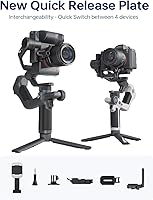
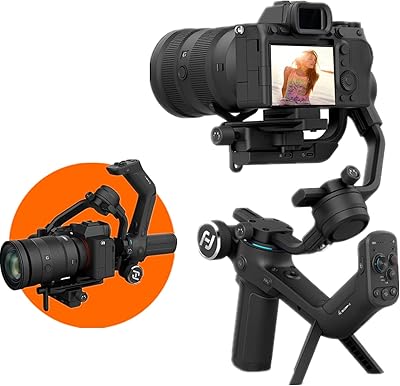
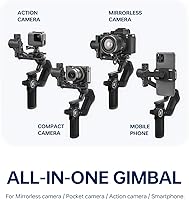
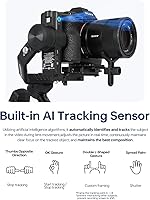
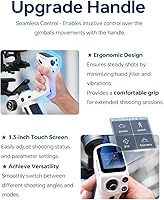
What makes this gimbal stand out is the on-device AI tracking sensor — unlike competitors that rely on a phone app to identify subjects, the SCORP Mini 2 handles recognition directly on the unit, which matters when you're shooting in a fast-moving environment and can't babysit a Bluetooth connection. The 1.3″ OLED touchscreen lets you flip between modes and tweak settings without pulling out your phone. The upgraded quick-release plate makes swapping between a mirrorless body and a GoPro genuinely quick. Add in the multi-functional zoom knob — which also controls focus and works with the Focus Follow accessory — plus the T-shaped ergonomic handle, and you have a stabilizer built for long shoots without hand fatigue.

Best For

This stabilizer is an obvious fit for solo content creators — specifically those who need reliable subject tracking without a camera assistant in tow. Travel vloggers will appreciate the compact folded footprint and the fact that it handles everything from a Sony A7III to an iPhone without buying separate gear. If you're currently on an entry-level gimbal and want more control without jumping to a premium price point, the SCORP Mini 2 is a natural step up. Creators frustrated by app-dependent setups will find the on-device controls a practical relief. One honest caveat: if you regularly shoot with heavier glass near the payload limit, expect the motors to work noticeably harder.

User Feedback

Buyers generally come away positive, with most praise centering on tracking accuracy in well-lit, open environments and the convenience of a touchscreen that works without launching an app. Build quality also earns consistent mentions — it doesn't feel like a budget product in hand. On the other side, a recurring theme is the motor balancing learning curve; first-time gimbal users report trial and error before things run smoothly. Battery life in practice tends to fall short of rated figures, particularly with AI tracking active. Users pushing heavier lenses near the weight ceiling have noted occasional motor strain and drift. Firmware updates and customer support draw mixed but mostly reasonable responses from the user base.

Pros

  • Built-in AI tracking works without a phone app, keeping solo shoots fast and uninterrupted.
  • The 1.3″ OLED touchscreen puts mode switching and settings control directly on the grip.
  • Upgraded quick-release plate makes swapping between a mirrorless body and a GoPro genuinely quick.
  • Compatible with a wide range of cameras, action cams, and smartphones — one stabilizer for multiple devices.
  • T-shaped ergonomic handle noticeably reduces wrist and forearm fatigue during extended handheld shooting.
  • Build quality feels more substantial than the price tier typically delivers.
  • Compact folded size fits into a standard camera bag alongside a full mirrorless kit.
  • Multi-functional zoom knob handles pan, tilt, roll, and focus control from a single input.
  • Firmware updates have meaningfully improved tracking stability since the initial launch.
  • A practical step-up option for creators moving off entry-level gimbals without a dramatic price jump.

Cons

  • AI tracking loses subject lock in low light or crowded environments, limiting its reliability outdoors.
  • Motor balancing has a steep learning curve that catches first-time gimbal users off guard.
  • Real-world battery life with AI tracking active falls noticeably short of rated figures.
  • Bluetooth app connectivity drops frequently, especially on Android devices during longer sessions.
  • No travel case included in the box, which is a frustrating omission for a travel-oriented product.
  • Motor strain becomes audible and visible when shooting near the maximum payload with heavier lenses.
  • The companion app interface feels underdeveloped compared to what DJI and Zhiyun offer at a similar tier.
  • Quick-release plate is proprietary, creating compatibility friction for users with existing Arca-Swiss accessories.
  • Documentation in the box is sparse, leaving new users to troubleshoot balancing and configuration independently.
  • Firmware update process requires the app, which loops back into the Bluetooth reliability problems some users face.

Ratings

The scores below for the FeiyuTech SCORP Mini 2 Gimbal Stabilizer were generated by our AI system after analyzing thousands of verified buyer reviews from global markets, with spam, incentivized, and bot-flagged submissions actively filtered out. What you see reflects a genuine cross-section of real-world experiences — from travel vloggers shooting in unpredictable conditions to studio-based hybrid shooters testing payload limits. Both the strengths that make this stabilizer genuinely compelling and the friction points that frustrate some buyers are transparently represented in every score.
AI Tracking Performance
78%
22%
When conditions cooperate — decent lighting, uncluttered background, subject moving at a moderate pace — the on-device tracking works reliably without needing a phone app running in the background. Solo shooters especially appreciated being able to lock onto a subject and walk away from the tripod without losing the frame.
In low light or busy environments with multiple moving subjects, the sensor struggles to maintain a clean lock and occasionally jumps to the wrong target. Users shooting outdoor events or nighttime content reported noticeably inconsistent tracking compared to controlled indoor sessions.
Stabilization Quality
84%
For standard walking shots, b-roll, and slow-to-moderate panning, the 3-axis stabilization produces smooth, usable footage that would satisfy most YouTube and social media audiences. Pairing it with a lightweight prime lens on a Sony A7 series body gave particularly clean results in everyday testing.
At faster movement speeds or when mounted with lenses approaching the payload ceiling, some users noticed micro-jitter creeping into footage. It is not a replacement for professional cinema-grade stabilizers, and buyers expecting DJI RS3 Pro-level smoothness may come away slightly underwhelmed.
Build Quality & Feel
82%
18%
The physical construction feels more premium than the price point would suggest — the grip has a solid, dense feel with no obvious flex or cheap plastic rattle. Multiple buyers coming from budget gimbals specifically noted that the SCORP Mini 2 felt like a meaningful step up in hand.
Some users flagged that the joystick and button feedback feel slightly mushy compared to rivals at a higher price tier. Over extended daily use, a few buyers also reported minor cosmetic wear around the quick-release locking mechanism after several months.
OLED Touchscreen Usability
86%
Having a 1.3″ touchscreen directly on the body is a genuine practical advantage — switching between pan-follow, lock, and sport modes without unlocking a phone app saves real time on a busy shoot. The display is bright enough to read in outdoor conditions, which was a recurring positive mention.
The touchscreen is responsive but small, and users with larger hands or gloves found precise tapping occasionally frustrating. A handful of buyers also noted that the interface menu structure has a learning curve and could benefit from a more intuitive layout in a firmware update.
Quick-Release System
81%
19%
The redesigned quick-release plate is a genuine improvement over previous FeiyuTech systems — swapping between a mirrorless body and a GoPro takes seconds rather than the awkward fumbling that plagued older plate designs. Travel shooters found this particularly useful when transitioning between setups on location.
The plate is proprietary, so users who already own Manfrotto or Arca-Swiss compatible accessories need adapters. A few buyers noted the locking lever feels slightly loose after repeated use, raising minor concerns about long-term reliability under frequent swaps.
Payload Capacity & Balance
71%
29%
The 2.65 lb limit comfortably covers most APS-C mirrorless bodies with a standard kit or lightweight prime lens, and even handles full-frame bodies like the Sony A7III when paired with a compact lens. For the majority of content creator setups, the payload is genuinely adequate.
Push toward that ceiling with a heavier zoom or add a microphone and monitor, and motor strain becomes audible and visible — the gimbal works harder and stabilization consistency drops. Users with Sony A7 bodies and 24-70mm f/2.8 lenses specifically called out noticeably reduced performance near the limit.
Battery Life
67%
33%
Under light to moderate use with AI tracking turned off, most users reported getting through a solid half-day of casual shooting on a single charge, which is workable for travel days and shorter shoots. The included battery charges via USB-C, which is a practical convenience.
With AI tracking actively running, real-world battery life drops considerably from the rated figures, and several buyers noted the battery draining faster than expected during continuous outdoor sessions. Users on full-day shoots consistently recommended carrying an external power bank as backup.
Compatibility Range
83%
The ability to mount a Sony A7III, a GoPro 12, and an iPhone 15 Pro on a single stabilizer without buying separate hardware is a real selling point for creators who switch between devices. Setup and balance adjustments across device types are manageable, though not instant.
Compatibility in practice requires careful balancing for each device type, and lighter devices like smartphones can occasionally feel over-motorized, producing subtle overcorrection artifacts in footage. Dedicated smartphone gimbal users may find the experience less refined than a purpose-built option.
Ergonomics & Comfort
79%
21%
The T-shaped handle distributes weight in a way that genuinely reduces wrist fatigue during extended handheld shooting — a noticeable difference compared to straight-handle designs after 30 or more minutes of continuous use. Multiple users highlighted comfort during event coverage and walking tours.
The overall weight of 3.39 lb with a camera attached adds up over a full day, and buyers who are accustomed to ultralight travel rigs noted arm fatigue on long shooting days. The grip texture, while decent, could benefit from a rubberized coating for sweaty-hand scenarios.
Motor Balancing & Setup
63%
37%
Once properly balanced, the motors run quietly and handle their workload without drama. Users who invested time in the initial balancing process — using the OLED screen's real-time feedback — reported a noticeably smoother experience than those who rushed through setup.
First-time gimbal users consistently flagged the balancing process as confusing and time-consuming, with the manual providing insufficient guidance. Even experienced shooters switching from a different brand reported a trial-and-error period before achieving optimal balance, which is frustrating out of the box.
App Connectivity
61%
39%
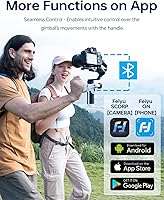
For users who choose to use the companion app, it does extend control options and provides access to firmware updates. When the Bluetooth connection holds, the added remote control functionality is a useful supplement to the on-device controls.
Bluetooth pairing drops were a consistent complaint, particularly on Android devices, and several users reported the app freezing mid-session. The on-device controls reduce dependency on the app significantly, but for those wanting full remote functionality, the connectivity instability is a real frustration.
Portability & Travel Friendliness
80%
20%
The folded dimensions make this stabilizer compact enough to fit in a mid-size camera bag alongside a mirrorless body and a couple of lenses without dominating all available space. Travel content creators moving through airports and city streets found it manageable to carry daily.
At 3.39 lb fully assembled with a camera, this is not an ultralight travel companion, and ultraportability-focused buyers will feel the weight by day two of a trip. It lacks a dedicated travel case in the base package, which is a miss for a product clearly targeting creators on the move.
Value for Money
77%
23%
Measured against what you get — on-device AI tracking, an OLED screen, multi-device compatibility, and solid build quality — the pricing positions this gimbal as one of the more feature-dense options available at this tier. Buyers upgrading from basic entry-level gimbals consistently felt they received meaningful value.
When compared directly to DJI's RS series at a modest price premium, some buyers felt the gap in software polish and ecosystem support narrowed the value case. Users who primarily needed simple stabilization without the AI features occasionally felt they paid for capabilities they rarely use.
Firmware & Software Updates
66%
34%
FeiyuTech has a track record of releasing firmware updates that address performance issues, and several buyers noted improvements to tracking stability after post-launch updates. The brand's responsiveness to community feedback was viewed positively by longer-term owners.
Update frequency has been inconsistent, and some reported bugs lingering across multiple firmware versions without resolution. The update process itself requires the companion app, which loops back to the Bluetooth reliability issues some users already experience, making the process unnecessarily cumbersome.
Out-of-Box Experience
72%
28%
The packaging is organized and the unit arrives ready to use for basic operation without hunting for accessories. Most buyers were up and shooting within 15 to 20 minutes for simple single-camera setups, which is a reasonable expectation at this level.
The included documentation is sparse, and new gimbal users particularly noted that the quick-start guide skips over the nuances of proper motor balancing and mode configuration. A more thorough printed guide or prominent QR-linked video tutorial would have meaningfully improved the first-use experience.

Suitable for:

The FeiyuTech SCORP Mini 2 Gimbal Stabilizer is a strong fit for solo content creators who need to operate independently — particularly vloggers, travel filmmakers, and social media shooters who can't rely on a second person to operate the camera. If you regularly shoot with a Sony A7 series, Canon R6, Nikon Z30, or a similar APS-C or entry-level full-frame mirrorless body paired with a compact lens, this stabilizer covers your payload needs comfortably without overcomplicating your kit. Travel creators will appreciate the folded footprint and the ability to carry one stabilizer that handles a mirrorless body, a GoPro, and a smartphone across different shooting scenarios. The on-device AI tracking is a genuine time-saver for run-and-gun situations — think walking tours, fitness content, or event coverage — where stopping to configure an app is not realistic. Creators who have outgrown basic entry-level gimbals but aren't ready to invest in a professional rig will find this stabilizer hits a sensible sweet spot in both capability and price.
Not suitable for:

The FeiyuTech SCORP Mini 2 Gimbal Stabilizer is not the right tool for shooters who regularly use heavy zoom lenses or fully rigged camera setups — pushing the 2.65 lb payload ceiling with a Sony A7 body and a 24-70mm f/2.8, for instance, introduces noticeable motor strain and compromises stabilization consistency. Professional videographers working on commercial productions, documentary shoots, or any context where footage quality is non-negotiable should look at higher-tier options from DJI or Zhiyun that offer greater motor headroom and more refined software ecosystems. If reliable Bluetooth app connectivity is central to your workflow — for remote control, advanced settings, or scripted motion moves — the inconsistent app experience reported by a significant portion of buyers will likely frustrate you. Battery life under continuous AI tracking use is a real limitation for all-day shooters, and without a bundled travel case or extended battery solution in the box, it asks more preparation from the user than some competitors at a comparable price. Ultraportability-focused creators who prioritize minimal kit weight above all else may also find the fully assembled weight tiring over long days in the field.
Specifications

  • Stabilization Axes: 3-axis motorized stabilization covering pan, tilt, and roll for smooth footage across all movement directions.
  • Max Payload: Supports cameras and rigs up to 2.65 lb, covering most APS-C and lightweight full-frame mirrorless bodies with compact lenses.
  • Folded Size: Folds down to 9.75 x 2.35 x 9.24 inches, compact enough to fit alongside a camera body in a standard shoulder bag.
  • Item Weight: The stabilizer unit weighs 3.39 lb, which includes the handle assembly but not a mounted camera.
  • Tracking System: Features a built-in AI tracking sensor that identifies and follows subjects directly on the unit without requiring a connected smartphone app.
  • Display: Equipped with a 1.3″ OLED touchscreen for real-time mode switching, parameter adjustment, and status monitoring.
  • Control Input: Multi-functional zoom and focus knob allows single-handed control of pan, tilt, and roll angles, plus camera focus and the Focus Follow accessory.
  • Quick-Release: Upgraded proprietary quick-release plate system designed for rapid camera mounting and removal across compatible device types.
  • Handle Design: T-shaped ergonomic integrated handle engineered to distribute weight evenly and reduce muscle fatigue during extended handheld use.
  • Battery Type: Powered by one included rechargeable lithium polymer battery that charges via USB-C.
  • Compatible Devices: Works with mirrorless cameras, action cameras including GoPro 11 and 12, and smartphones including iPhone 15 and Samsung Galaxy series.
  • Compatible Brands: Officially supports Sony, Canon, Nikon, Fujifilm, GoPro, Apple iPhone, and Samsung device ecosystems.
  • Color: Available in Black as the standard colorway.
  • Connectivity: Bluetooth connectivity enables pairing with the FeiyuTech companion app for extended controls and firmware updates.
  • Product Dimensions: Full product dimensions measure 11.81 x 7.87 x 7.87 inches in operational configuration.
  • Manufacturer: Designed and produced by Guilin FeiYu Technology Incorporated Company, headquartered in China.
  • Model Number: Official model identifier is USF12-FYSCOP40830.
  • Market Launch: First made available for purchase in November 2023.
  • Power Included: One lithium polymer battery is included in the retail package, so the unit is ready to charge and use out of the box.
  • BSR Ranking: Ranked within the top 150 in both Video Camera Supports and Professional Video Stabilizers categories on major retail platforms.

Related Reviews
FeiyuTech Scorp Mini Gimbal Stabilizer
85%
88%
Stabilization Performance
84%
Battery Life
90%
Portability/Size
87%
Build Quality
85%
Ease of Use
More
FeiyuTech SCORP 2 Kit
74%
83%
AI Tracking Accuracy
78%
Build Quality & Durability
86%
Stabilization Performance
81%
Vertical Shooting Setup
74%
Ergonomics & Handling
More
FeiyuTech SCORP-C Gimbal Stabilizer
85%
92%
Stabilization Performance
88%
Ease of Use
90%
Build Quality
85%
Battery Life
89%
Portability & Weight
More
ZHIYUN Weebill 2 3-Axis Gimbal Stabilizer
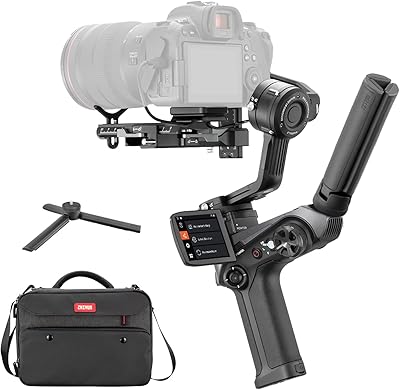
77%
83%
Stabilization Performance
88%
Touchscreen Usability
79%
Build Quality & Durability
74%
Ergonomics & Handling
91%
Battery Life
More
ZHIYUN Weebill 2 SE 3-Axis Gimbal Stabilizer
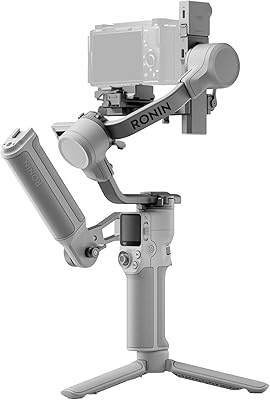
76%
83%
Stabilization Performance
88%
Battery Life
86%
Charging Speed
81%
Touchscreen Usability
79%
Build Quality & Durability
More
DJI RS 4 Mini Combo
DJI RS 4 Mini Combo
82%
93%
Setup Speed
91%
Stabilization Performance
84%
Intelligent Tracking
89%
Build Quality & Materials
88%
Vertical Shooting Switch
More
DJI RS 2 3-Axis Gimbal Stabilizer
81%
93%
Build Quality
91%
Stabilization Performance
89%
Payload Capacity
84%
Touchscreen Usability
81%
Balancing & Setup
More
DJI RSC 2 Pro Combo 3-Axis Gimbal Stabilizer
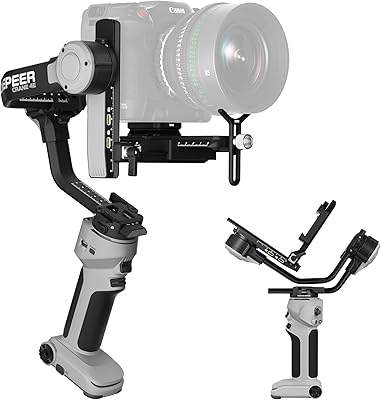
86%
95%
Stabilization Performance
89%
Portability & Design
90%
Ease of Use
85%
Battery Life
88%
Build Quality
More
Zhiyun Crane M2S Camera Gimbal Stabilizer
74%
83%
Stabilization Performance
91%
Portability & Size
78%
Build Quality
86%
Fill Light Quality
88%
Quick Release System
More
ZHIYUN Crane 4E Camera Gimbal Stabilizer
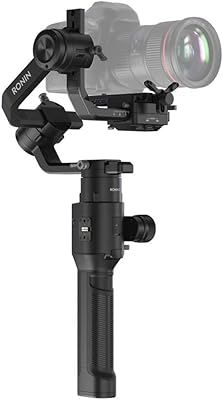
78%
91%
Stabilization Performance
88%
Build Quality
86%
Ergonomics & Fatigue
89%
Battery Life
58%
Ease of Setup & Balancing
More

FAQ

Technically it can mount that combination, but you will be very close to the 2.65 lb payload ceiling once you factor in the lens weight. At that limit, users report the motors working harder than ideal, which can introduce subtle stabilization inconsistencies and drains the battery faster. For that specific body-lens pairing, a lighter prime lens will give you noticeably better results.

Yes, and that is genuinely one of this stabilizer's more practical advantages. The tracking sensor is built directly into the unit, so you can activate subject tracking from the OLED screen without pairing a phone. It works best in good lighting with a relatively uncluttered background — in crowded scenes or low light, it can lose the subject lock, so it is not infallible, but for standard vlogging and solo shooting scenarios it performs reliably.

With AI tracking running continuously, expect somewhere in the range of 6 to 8 hours depending on motor load and ambient temperature — noticeably less than the rated figure. Turning off AI tracking when you do not need it extends runtime considerably. For all-day shoots, carrying a USB-C power bank as a backup is strongly recommended.

No — the plate system is proprietary to FeiyuTech, so it will not directly mate with standard Arca-Swiss or Manfrotto plates without an adapter. If you have existing tripods or accessories using those mounting standards, you will need a separate adapter plate, which adds a small cost and an extra step to your setup process.

Balancing is the part most new users find frustrating, and the included documentation does not explain it thoroughly enough. The good news is that the OLED screen provides real-time motor load feedback, which helps once you understand what you are looking at. FeiyuTech has tutorial videos online that are considerably more helpful than the printed guide — watching those before your first setup session will save you a lot of trial and error.

You can, and this is one of the scenarios the gimbal is genuinely designed for. The quick-release system makes the physical swap fast. The main task is rebalancing for each device, since a GoPro and a mirrorless body have very different weight distributions. With a bit of practice, most users get the swap-and-rebalance process down to a few minutes.

App connectivity is one of the weaker aspects of this stabilizer. Android users in particular report frequent Bluetooth drops and occasional app freezes during longer sessions. iOS connectivity tends to be more stable but is still not rock-solid. The on-device controls are good enough that many users simply stop relying on the app for routine shooting, using it mainly for firmware updates rather than active control.

If you do a lot of manual focus pulling during video, yes — the multi-functional knob integrates with the Focus Follow accessory in a way that feels natural once you are used to it. For casual shooters relying on autofocus, it is an optional add-on rather than an essential one. Just keep in mind that adding the accessory increases the total rig weight, which eats into your available payload headroom.

DJI's ecosystem offers more polished app integration, better object tracking in difficult lighting, and a wider accessory range. Where this stabilizer competes is on on-device control without app dependency, the OLED screen convenience, and the broad multi-device compatibility from a single unit. If deep software integration and brand ecosystem matter to you, DJI holds the edge. If you want strong hardware controls and flexibility across device types, the gap narrows considerably.

FeiyuTech does release firmware updates periodically, and several post-launch updates have improved tracking stability and addressed motor calibration issues. The process requires the companion app and a Bluetooth connection, which is straightforward when the connection holds — but given the Bluetooth inconsistencies some users experience, the update process can occasionally require multiple attempts. Checking for updates every few months is worth doing, as the firmware improvements have been meaningful since the original release.

Where to Buy