

Overview

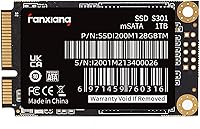
The fanxiang S301 1TB mSATA SSD is a straightforward storage upgrade aimed at users breathing new life into older ultrabooks or compact machines that still have an mSATA slot. A full terabyte of space is a meaningful jump for anyone who has been limping along on a cramped 128GB or 256GB drive. Priced in the mid-range, it does not ask you to overpay for a name brand, though that naturally raises questions about quality worth exploring. The use of 3D NAND flash is a reassuring signal; it is the same core technology found in more established brands and generally holds up better over time than older planar NAND designs.

Features & Benefits

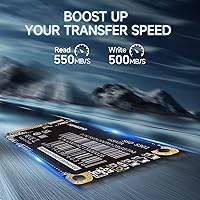
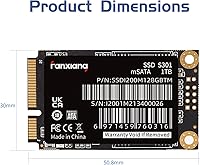
The S301 measures just 30x50.8mm — noticeably smaller than a standard 2.5-inch SATA drive — which matters when working inside a tight chassis. Over a SATA III 6Gb/s connection, it reaches sequential read speeds of up to 550MB/s and writes at up to 500MB/s. That is about as fast as the mSATA interface allows; do not expect NVMe territory here, but it is a substantial leap over any spinning hard drive. The 1TB variant carries a 300TBW endurance rating, comfortable for typical everyday use. No moving parts also means silent operation and far better resistance to bumps and drops than a mechanical drive.

Best For

This mSATA drive makes the most sense for someone pulling an aging laptop back into daily service — a netbook or ultrabook from the early-to-mid 2010s that still has a working mSATA slot. It handles light to moderate workloads well: web browsing, document editing, media playback. Migrating from a traditional spinning drive will feel like a dramatic improvement. It also works as a capable OS or cache drive inside a compact desktop. One critical note: mSATA slot compatibility is not universal, so confirm your device has an mSATA connection — not M.2 or mini PCIe — before committing to a purchase.

User Feedback

Sitting at 4.4 stars from roughly 200 buyers, this compact SSD earns generally solid marks. The most common praise centers on easy installation and a noticeably snappier feel after replacing an old hard drive. Many buyers specifically appreciate the 1TB capacity at this price tier, viewing it as fair value for a secondary or revived machine. On the other hand, a handful of users express reservations about long-term reliability — understandable for a brand without a long public track record. Occasional compatibility issues also appear, reinforcing the need to verify your device specs upfront. The 3-year warranty is a reasonable safety net, though few reviewers mention having used it.

Pros

  • Replacing an old spinning hard drive with the S301 produces an immediately noticeable speed improvement in daily use.
  • A full terabyte of storage is a generous allocation for a drive in this compact form factor and price range.
  • The mSATA footprint is tiny, making installation straightforward in any device with a compatible slot.
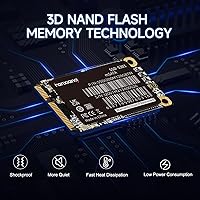
  • 3D NAND flash provides better long-term data retention and endurance than older planar NAND technology.
  • A 300TBW endurance rating means the drive can handle years of typical consumer read and write activity.
  • Silent operation is a genuine quality-of-life upgrade, especially in quiet work or study environments.
  • The three-year warranty offers a meaningful safety net for a budget-tier internal drive.
  • Compatible with Windows, Linux, and macOS, covering the vast majority of everyday computing setups.
  • Multiple capacity options from 128GB to 2TB allow buyers to right-size storage without overpaying.
  • Early user feedback consistently highlights easy installation, even for people with limited hardware experience.

Cons

  • Fanxiang is a relatively unknown brand with a limited long-term reliability track record compared to established competitors.
  • mSATA slots are uncommon in modern machines, so this drive has a narrow compatibility window buyers must verify before purchasing.
  • SATA III throughput peaks well below what any current NVMe drive can deliver, making it a poor fit for performance-focused builds.
  • With roughly 200 reviews collected so far, there is not yet enough long-term user data to fully assess durability over multi-year use.
  • Some buyers have reported device-specific compatibility issues, suggesting the drive does not work universally across all mSATA hardware.
  • Customer support experience under the three-year warranty remains largely untested and unverified in public user feedback.
  • The drive produces no meaningful performance gains for users already running any SSD, regardless of age.
  • Thermal behavior under sustained workloads in enclosed chassis has not been well documented by independent reviewers.

Ratings

The fanxiang S301 1TB mSATA SSD has been scored by our AI rating engine after parsing verified buyer reviews from multiple global markets, with spam, bot submissions, and incentivized feedback actively filtered out. The scores below reflect a genuine cross-section of real-world experiences — both the aspects users consistently praised and the friction points that surfaced repeatedly. Nothing has been smoothed over; the strengths and the limitations are weighted equally.

Read & Write Performance
78%
22%
For a SATA III mSATA drive, users consistently found the real-world speed more than adequate for reviving older machines. Boot times dropped noticeably, application launches felt snappier, and everyday file transfers handled without frustration — exactly what this category of drive is designed for.
Buyers coming from NVMe-equipped machines were occasionally underwhelmed, which is an interface limitation rather than a flaw in the drive itself. Sequential speeds hit their ceiling early under sustained workloads, and users running large media libraries or doing any video editing noticed the bottleneck.
Value for Money
83%
For the target buyer — someone upgrading a functional but sluggish older laptop — the price-to-capacity ratio lands well. Getting a full terabyte of SSD storage at this tier feels like a reasonable exchange, and most buyers reported feeling like they got a fair deal for what the drive delivers.
Those who compared it directly against established brands with similar pricing found the value proposition slightly less clear-cut, given fanxiang's shorter track record. If the drive underperforms or fails outside the warranty window, the savings feel less significant in hindsight.
Compatibility
71%
29%
The S301 worked without issue for the majority of buyers who confirmed their device had a proper mSATA slot before purchasing. Installation was reported as straightforward on compatible ultrabooks and compact desktops, with no driver installation required on Windows or Linux.
A recurring frustration among negative reviewers was purchasing the drive for a machine that turned out to have an M.2 slot rather than mSATA — a distinction not always obvious without researching. A handful of users also reported device-specific recognition issues that required BIOS updates or settings adjustments to resolve.
Installation Experience
88%
The physical installation process drew consistent praise, with users describing it as one of the simpler hardware upgrades they had attempted. The small form factor slots in cleanly, and the drive is immediately recognized by most operating systems without additional configuration.
The drive ships without mounting hardware or an installation guide, which left a small number of less experienced users searching for screws or instructions independently. The lack of bundled cloning software also meant buyers doing a migration — rather than a fresh install — had to source their own tools.
Build Quality
74%
26%
The drive feels solid and well-constructed for its size and price tier. Users handling it noted there was nothing flimsy about the board or connector, and the compact PCB design does not show obvious cost-cutting in the physical assembly.
Fanxiang does not publish detailed information about the controller chip or NAND supplier used in production runs, which makes it difficult to fully assess what is under the hood. Some technically inclined buyers flagged that component sourcing can vary between batches in drives at this price point.
Brand Trust & Reputation
61%
39%
Fanxiang has steadily built a growing user base on major retail platforms, and the overall positive sentiment in reviews suggests the drives are performing acceptably for everyday consumers. The 3-year warranty communicates at least a baseline level of accountability from the manufacturer.
Among buyers who researched before purchasing, the most common hesitation was the brand's relative anonymity compared to Samsung, Crucial, or Western Digital. There is simply not enough multi-year public data on this brand's drives to make a confident reliability prediction beyond the initial ownership period.
Long-Term Reliability
63%
37%
The 300TBW endurance rating on the 1TB variant is reasonable for typical home and office workloads, and 3D NAND technology does offer better longevity than older planar designs. Users who have owned the drive for over a year without issues report continued stable performance.
Because the drive has only been on the market since early 2023, long-term failure data is still limited. A visible minority of reviews flagged early failures or sudden recognition drops, which, while not statistically dominant, are concerning enough to give cautious buyers pause.
Thermal Management
69%
31%
For light to moderate workloads — the primary use case for this drive — heat output was not flagged as a meaningful issue by most users. Installed in laptops with reasonable airflow, the drive maintained stable temperatures during typical daily sessions.
In compact desktops or machines with limited internal airflow, a small number of users noticed the drive running warmer than expected under sustained read and write loads. There is no heatspreader or thermal pad included, which could matter in tighter or poorly ventilated chassis configurations.
Capacity Satisfaction
86%
The jump to 1TB was a significant quality-of-life improvement for buyers migrating from 128GB or 256GB drives. Users reported finally having enough room for their OS, applications, and personal files without constantly micromanaging available space.
A few users noted that formatted usable capacity comes in slightly under the advertised 1TB, which is standard for the industry but still caught some buyers off guard. Those with very large media or game libraries found 1TB a tighter fit than expected after a full system migration.
Noise & Vibration
94%
The absence of moving parts means the S301 runs completely silently — a genuine upgrade for anyone transitioning from a mechanical hard drive that clicked, whirred, or vibrated noticeably during use. Users working in quiet environments specifically mentioned appreciating this aspect.
There is not much to criticize here for an SSD category product, as silent operation is essentially a baseline expectation. Users comparing it to NVMe drives noted no meaningful difference in this regard, making it a hygiene factor rather than a genuine differentiator.
Shock & Drop Resistance
87%
The solid-state design gives the S301 a meaningful durability advantage over spinning drives for users who carry their laptops frequently or work in environments where physical bumps are common. No moving parts means no read head crashes or platter damage from sudden movement.
While the drive itself is shock-resistant, the bare PCB format of mSATA means the board has no protective housing beyond the laptop chassis. A sufficiently severe impact to the machine could still damage the drive or its solder connections, and there is no additional protection built into the package.
Software & Ecosystem
48%
52%
The drive works out of the box across Windows, Linux, and macOS without needing proprietary drivers, which is about the most any buyer can reasonably ask for at this price tier. Plug-in, format, and go is essentially the full software experience.
Fanxiang provides no companion software for drive health monitoring, firmware updates, or migration assistance — tools that brands like Samsung bundle as part of their ecosystem. Users who want S.M.A.R.T. data visibility or scheduled health checks need to rely on third-party utilities entirely.
Packaging & Unboxing
67%
33%
The drive arrives adequately protected and undamaged in the experience of most reviewers. For a budget-tier internal component, the packaging does its primary job of safe transit without unnecessary material excess.
Several buyers noted the packaging felt minimal to the point of being underwhelming for what is still a meaningful hardware purchase. No accessories, no documentation, and no installation quick-start card were included, which left less experienced users relying entirely on external resources for guidance.

Suitable for:

The fanxiang S301 1TB mSATA SSD is a practical choice for anyone trying to squeeze more life out of an older laptop or small-form-factor machine that has a dedicated mSATA slot. If your device is from roughly 2010 to 2016 and is still running on a mechanical hard drive, swapping in this compact SSD will likely be the single most impactful hardware upgrade you can make — boot times drop, applications open faster, and the machine simply feels responsive again. The 1TB capacity is generous enough to serve as a primary drive for most everyday users, covering documents, photos, and a reasonable media library without constantly managing free space. It also suits anyone who needs a quiet, shock-resistant internal drive for a compact desktop, embedded system, or secondary cache role where an mSATA interface is available. Budget-conscious upgraders who understand the SATA III ceiling and are not chasing NVMe-grade throughput will find the performance-per-dollar ratio here genuinely reasonable.

Not suitable for:

The fanxiang S301 1TB mSATA SSD is not the right call for buyers building or upgrading modern systems, which have largely moved on to M.2 NVMe slots that deliver several times the throughput. If your workflow involves heavy video editing, large database operations, or anything that leans hard on sustained drive performance, the SATA III interface will become a bottleneck that no amount of 3D NAND can fix. Buyers who are unfamiliar with their device's internal slot type should also proceed carefully — mSATA and M.2 connectors look similar but are not interchangeable, and installing the wrong drive is a frustrating and costly mistake. Those who prioritize brand pedigree and a long-established reliability track record may feel uneasy with a lesser-known manufacturer, and that hesitation is fair; fanxiang does not yet have the years of public data that brands like Samsung or Crucial carry. Finally, users who need plug-and-play simplicity without any research or hardware verification should look for an external solution instead.

Specifications

  • Form Factor: The drive uses the mSATA (Mini SATA) form factor, measuring 30x50.8mm — significantly smaller than a standard 2.5-inch SATA SSD.
  • Dimensions: Physical dimensions are 1.97 x 1.18 x 0.12 inches, making it one of the most compact internal drive formats available.
  • Weight: The drive weighs 1.13 ounces, light enough that it adds no meaningful mass to a laptop or compact desktop.
  • Capacity: This variant offers 1TB of usable flash storage; the S301 family also comes in 128GB, 256GB, 512GB, and 2TB configurations.
  • Interface: It connects via mSATA / Mini SATA III, operating at up to 6Gb/s — the maximum bandwidth of the SATA III specification.
  • Read Speed: Maximum sequential read speed is rated at 550MB/s under the SATA III 6Gb/s interface.
  • Write Speed: Maximum sequential write speed is rated at 500MB/s, consistent with high-performing SATA-class solid state drives.
  • NAND Type: The drive uses 3D NAND flash memory, which stacks memory cells vertically to improve density, endurance, and data retention over older planar NAND.
  • Endurance: The 1TB variant is rated for 300TBW (terabytes written), sufficient for several years of typical consumer workloads.
  • OS Compatibility: The S301 is compatible with Windows, Linux, and macOS, covering the vast majority of consumer and professional computing environments.
  • Installation: This is an internal drive requiring physical installation into a device with an available mSATA slot; no external enclosure or adapter is included.
  • Moving Parts: The drive contains no mechanical moving parts, resulting in silent operation and improved resistance to physical shock and vibration.
  • Color: The drive is finished in black and ships without additional accessories such as mounting screws or cloning software.
  • Warranty: Fanxiang provides a 3-year manufacturer warranty covering defects, with support available directly through the brand.
  • Available Sizes: Beyond the 1TB model, the S301 series is available in 128GB, 256GB, 512GB, and 2TB capacities to match different storage needs and budgets.

Related Reviews
Dogfish mSATA 1TB Internal SSD
74%
83%
Read & Write Performance
88%
Value for Money
86%
Installation Experience
71%
Compatibility Range
74%
Build & Physical Quality
More
ORICO ZH10 1TB mSATA Internal SSD
80%
88%
Value for Money
79%
Read Speed Performance
76%
Write Speed Performance
91%
Installation Ease
62%
Compatibility Accuracy
More
fanxiang S880ER 1TB NVMe SSD
87%
92%
Performance for Gaming
90%
Data Transfer Speed
89%
Cooling Efficiency
87%
Ease of Installation
91%
PS5 Compatibility
More
fanxiang PS2100 1TB Portable External SSD
78%
88%
Transfer Speed
84%
Build Quality
89%
Durability & Protection
86%
Value for Money
68%
Sustained Write Performance
More
fanxiang FF951 1TB Dual-USB External SSD
78%
78%
Transfer Speed
91%
Dual-Connector Design
88%
iPhone Compatibility
84%
Build Quality
67%
Value for Money
More
fanxiang PS3000 1TB External SSD
78%
88%
Transfer Speed
84%
Build Quality
91%
iPhone 15 Pro Compatibility
73%
Thermal Management
92%
Portability
More
fanxiang S500 Pro 1TB NVMe M.2 SSD
80%
91%
Value for Money
84%
Read Speed Performance
67%
Write Speed & Cache Behavior
93%
Installation Experience
78%
Thermal Management
More
fanxiang S770 1TB NVMe M.2 SSD
79%
88%
Read Speed Performance
91%
PS5 Compatibility
86%
Value for Money
83%
Thermal Management
67%
Write Speed Consistency
More
Fanxiang S880E 1TB PCIe Gen 4 NVMe SSD
76%
83%
Read/Write Performance
91%
PS5 Compatibility
88%
Value for Money
67%
Thermal Management
62%
Brand Reputation
More
fanxiang S630 1TB M.2 2230 NVMe SSD
80%
88%
Read Speed Performance
74%
Write Speed Performance
81%
Device Compatibility
79%
Thermal Management
93%
Installation Experience
More

FAQ

The safest way is to check your laptop's service manual or the manufacturer's spec sheet for your exact model number. mSATA slots were common in ultrabooks and thin laptops roughly from 2010 to 2016, but they are not universal — some devices have M.2 slots instead, which look similar but are physically incompatible. A quick search of your laptop model along with the word mSATA will usually give you a definitive answer within minutes.

Many Lenovo ThinkPads, IdeaPads, and Dell Inspiron or Latitude models from the early-to-mid 2010s do include mSATA slots, so there is a reasonable chance of compatibility. That said, you should always confirm your specific model number supports mSATA before ordering, since even laptops from the same product line can have different internal configurations depending on the year and region.

Yes, almost certainly. Moving from a spinning hard drive to any solid state drive — even a SATA-based one — is one of the most dramatic performance upgrades you can make to an older machine. Boot times, application launches, and file transfers all improve significantly, and the machine simply feels more responsive day-to-day.

It works well as a primary OS drive for everyday computing tasks. A full terabyte gives you plenty of room for an operating system, applications, and a solid personal file library. If your machine only has one internal slot, using it as the primary drive is the obvious and practical choice.

No, they are different standards and are not interchangeable. mSATA uses a connector that looks similar to M.2 but has different keying and operates exclusively over the SATA protocol. M.2 slots can support both SATA and the much faster NVMe protocol. Installing an mSATA drive into an M.2 slot — or vice versa — is not physically possible without an adapter, and adapters are not always reliable.

There is a meaningful gap. NVMe drives commonly reach 3,000 to 7,000MB/s sequential read speeds, while this compact SSD tops out around 550MB/s due to the SATA III interface ceiling. For everyday tasks like web browsing, document editing, and media playback, that difference is not something most users feel in practice — but for heavy file transfers or video editing, NVMe is in a different league.

Installation typically requires only a small Phillips-head screwdriver to open your laptop and seat the drive. Most operating systems will recognize the drive automatically once installed. If you are cloning an existing drive rather than doing a fresh install, you will need third-party cloning software, which is not included with the drive.

Fanxiang is a Chinese SSD manufacturer that has grown in visibility on platforms like Amazon over the past few years. They are not in the same tier as Samsung, Crucial, or Western Digital in terms of track record and independent testing data. That said, early user feedback has been generally positive for everyday use cases, and the 3-year warranty provides some protection. If long-term brand confidence is a priority, established names offer more documented reliability history.

Fanxiang offers a 3-year warranty and states that buyers can contact them directly for support. In practice, warranty service through smaller brands can vary in responsiveness, and the process typically involves contacting them via email or Amazon messaging. It is worth keeping your purchase receipt and registering the product if the brand offers that option.

You can use it in any device that has a physical mSATA slot, which includes certain compact desktop PCs, mini-ITX builds, and embedded systems from the same era as compatible laptops. Standard full-size desktop motherboards rarely include mSATA slots, so check your board's specification sheet before assuming compatibility.