Overview

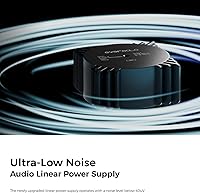
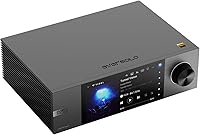
The Eversolo DMP-A6 Gen 2 represents a meaningful step forward from its predecessor, targeting serious listeners who want a capable network streamer and DAC in a single, well-built box. The headline engineering change is a linear power supply with a noise floor below 40uV — a real improvement that matters when you are chasing low-level detail retrieval. You also get a large 6-inch touchscreen and a solid control knob, so the physical experience feels premium rather than an afterthought. At its price point, it competes in a crowded field, but the combination of clean power, dual functionality, and polished hardware gives it a credible claim to stand out.
Features & Benefits

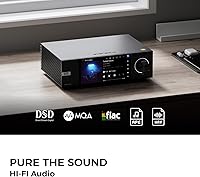
The additions that make the DMP-A6 Gen 2 genuinely more practical day-to-day start with HDMI ARC support, which lets you pull audio directly from your TV without running extra cables — a welcome convenience in a living-room system. The TRIGGER I/O handles automated power sequencing with compatible amps, which is a small feature that saves real daily annoyance. Format support is comprehensive: PCM up to 768kHz/32-bit, DSD512 in both stereo and multichannel, MQA, and the usual lossless suspects. Balanced XLR outputs sit alongside RCA, giving you clean connectivity to most power amplifiers. Streaming coverage is broad — Roon Ready, Tidal Connect, Qobuz, Amazon Music, and Squeezelite are all on board.

Best For

This hi-fi streamer makes most sense for audiophiles who are tired of managing a separate transport and DAC box, or who simply want everything handled cleanly by one unit. Roon users will appreciate finding a Roon Ready device that does not require adding an outboard DAC to get respectable analog output. The HDMI ARC input also opens the door for home theater listeners who want their TV audio routed into a proper stereo chain without a dedicated processor. Anyone juggling a large local library alongside multiple streaming subscriptions will find the unified interface genuinely useful. And if you dislike phone-only control, the physical touchscreen is a real differentiator here.

User Feedback

Owners who upgraded from the original generally report a noticeable improvement in background quietness — the lower noise floor from the revised power supply translates into a blacker, more defined presentation at the listening chair. Build quality and the touchscreen interface draw consistent praise. That said, being Android-based comes with the usual caveats: some users have encountered firmware hiccups, occasional app connectivity drops, and the odd UI quirk that did not exist in the prior hardware. Wi-Fi stability is a recurring mention in negative reviews, so a wired Ethernet connection is advisable. Against alternatives like the WiiM Ultra or Bluesound Node, buyers consistently rate it higher on DAC performance but note the software still has room to mature.

Pros

  • Revised linear power supply produces a noticeably quieter noise floor, audible on complex, low-volume passages.
  • Functions as both a network streamer and a standalone DAC, replacing two separate components in one chassis.
  • Roon Ready certification works reliably out of the box with no manual network configuration required.
  • Balanced XLR outputs deliver clean signal transfer to most power amplifiers and active speakers.
  • Supports DSD512, PCM 768kHz/32-bit, MQA, and every mainstream lossless format without manual codec setup.
  • HDMI ARC input lets TV audio feed directly into a hi-fi chain, simplifying living-room cable management.
  • The 6-inch touchscreen is responsive and large enough to browse artwork and playlists without the companion app.
  • TRIGGER I/O automates amplifier power sequencing, reducing friction for daily listening sessions.
  • Streaming coverage is broad: Tidal Connect, Qobuz, Amazon Music, Squeezelite, and more all run natively.
  • The mobile app provides clean remote control from a phone or tablet with a short learning curve.

Cons

  • Firmware updates have occasionally introduced new bugs requiring a factory reset to fully resolve.
  • Wi-Fi dropout issues under mesh networks or non-standard router configurations remain unresolved for some users.
  • HDMI ARC handshake failures with certain TV brands mean compatibility is not guaranteed without testing.
  • The display has no ambient light sensor, making screen brightness management awkward during late-night listening.
  • NAS and network share setup is more involved than the documentation suggests, frustrating less technical buyers.
  • Multichannel DSD channel mapping requires manual configuration that is not clearly explained out of the box.
  • The Android OS base adds ongoing software overhead that embedded-OS streamers in this category avoid entirely.
  • The rear-panel USB Type-C port placement is awkward when the unit sits close to a wall on a rack shelf.

Ratings

The Eversolo DMP-A6 Gen 2 has been put through its paces by a wide range of buyers — from dedicated two-channel audiophiles to Roon power users integrating it into complex home setups — and our AI-driven scoring reflects that breadth of real-world experience, filtered for verified purchases and scrubbed of incentivized or bot-generated feedback. Scores below capture both what this hi-fi streamer genuinely excels at and where it still leaves some buyers wanting more. Nothing has been smoothed over.
Sound Quality
91%
Owners consistently describe a cleaner, more composed presentation compared to the original, with the revised linear power supply making an audible difference on quiet passages and low-level detail. Paired with a quality amplifier via balanced XLR, the analog output holds its own against dedicated DACs at similar price points.
A small number of experienced listeners feel the DAC stage, while very capable, lacks the last degree of tonal density that dedicated separate components can offer. At the highest DSD rates, a few users noted a very slight sterility in timbre that is unlikely to bother most but worth knowing for critical listeners.
Build Quality
88%
The chassis feels genuinely solid for its class — hefty enough at over seven pounds to stay planted on a rack, with a well-damped volume knob that has real mechanical heft. The 6-inch touchscreen is bright, responsive, and looks the part in a dedicated listening room.
Some buyers have flagged that the screen attracts fingerprints aggressively and the display coating shows micro-scratches faster than expected with daily use. The rear panel labeling could be cleaner, and a couple of owners noted slight unevenness in the chassis finishing on early units.
Streaming Integration
86%
Roon Ready certification works reliably here, and Tidal Connect operates with the kind of stability that budget streamers rarely manage. Having Qobuz, Amazon Music, and Squeezelite all living natively inside one interface is a practical win for anyone with subscriptions spread across multiple services.
Apple Music integration remains limited compared to native apps on other platforms, and a handful of services listed in the specs behave more like web embeds than truly native implementations. Users switching between streaming sources occasionally experience a few seconds of lag that can interrupt listening flow.
Software & Firmware
67%
33%
The Android 11 base gives the DMP-A6 Gen 2 flexibility that purpose-built embedded systems cannot match, and Eversolo has pushed several meaningful firmware updates since launch that addressed early complaints about the UI and playlist handling. The mobile app is well-designed for a companion controller.
This is the most common pain point in user reviews. Android-based audio devices carry inherent maintenance overhead, and several buyers have encountered bugs after firmware updates that required a factory reset to resolve. Wi-Fi dropout issues under certain router configurations have persisted across multiple firmware versions for a subset of users.
HDMI ARC Implementation
72%
28%
For buyers building a hybrid home theater and hi-fi setup, the ability to route TV audio directly into this streamer without an extra DAC or receiver in the chain is genuinely useful, and most users report it working correctly with mainstream televisions. It simplifies cabling considerably.
Compatibility with some older or less common TV brands has proven inconsistent, and a handful of users report audio sync irregularities or handshake failures that required toggling settings on both devices to resolve. It works well when it works, but it is not quite the plug-and-play experience some buyers expected.
App & Remote Control
78%
22%
The dedicated iOS and Android app gives clean access to library browsing, EQ settings, and streaming service switching from the couch without needing to walk to the unit. Most users find the interface intuitive within a short learning curve, and tablet control in particular feels well-optimized.
Occasional Bluetooth and Wi-Fi reconnection delays mean the app sometimes takes a moment to re-establish contact after the phone screen has been idle. A few Android users on older OS versions reported intermittent crashes that have not been fully resolved across all devices.
Format & Resolution Support
93%
PCM up to 768kHz/32-bit and DSD512 in both stereo and multichannel cover every realistic high-resolution use case a home listener will encounter, and MQA unfolding works correctly without requiring any manual configuration. For users with large libraries of varied formats, nothing gets left behind.
Multichannel DSD playback requires careful output routing setup that is not immediately obvious from the documentation, and a few users with SACD ISO files reported needing to consult the user forums before achieving correct channel mapping. Not a dealbreaker, but not frictionless either.
Connectivity & I/O
87%
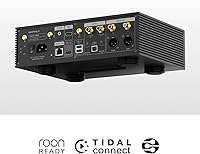
The range of digital inputs and outputs — coaxial, optical, USB Type-C, and HDMI ARC on the input side, with USB, optical, coaxial, and HDMI for output — makes this unit genuinely versatile as both a source and a DAC for existing systems. Balanced XLR and RCA analog outputs cover virtually every amplifier pairing scenario.
The USB Type-C input position on the rear panel is slightly awkward for desktop setups where the unit sits close to a wall, and the absence of a front-panel USB port for thumb drives is a minor inconvenience that several buyers mentioned when comparing against competing units.
TRIGGER & Automation
81%
19%
For users with compatible integrated amplifiers or power amps that support TRIGGER input, the automated power-on and power-off sequencing works reliably and removes a layer of daily friction from the listening ritual. It is a thoughtful addition that competitors at this price often omit entirely.
TRIGGER compatibility is limited to equipment that supports the standard 12V trigger protocol, which excludes a meaningful portion of the amplifier market. Users who invested in this feature expecting broad compatibility occasionally found their specific amp was not supported without an additional adapter.
Value for Money
74%
26%
Buyers who replace both a standalone streamer and a DAC with this single unit generally feel the pricing is justified given the performance level and the breadth of features packed in. The linear power supply upgrade alone addresses a hardware limitation that competitors at lower prices have not resolved.
Against aggressively priced alternatives like the WiiM Ultra, the premium here is real and some buyers feel the software experience does not yet fully justify the gap. Users who do not need the DAC stage and only want a Roon endpoint may find the value proposition less compelling than it first appears.
Setup & Onboarding
76%
24%
Physical setup is straightforward — connect power, outputs, and network, and the touchscreen walks through initial configuration clearly. Roon detection is automatic, and most streaming service logins require nothing more than entering credentials once through the app.
Network share and NAS library configuration proved more involved than expected for less technical users, and the initial firmware update process on first boot can take longer than the documentation implies. Several buyers noted that the printed quick-start guide does not reflect the current firmware UI.
Touchscreen Usability
83%
The 6-inch display is large enough to navigate album artwork and playlists without squinting, and the touch response is fast enough that direct on-unit control feels like a first-class option rather than a fallback. Casual listeners who want to keep their phone in their pocket will appreciate this.
The screen brightness in a darkened listening room is fixed at a level some users find too bright for late-night sessions, as there is no ambient light sensor and manual dimming requires navigating into settings. A persistent screensaver timeout would be a welcome addition.
Wi-Fi Stability
63%
37%
In standard home network environments with a modern dual-band router, the majority of users report stable wireless connectivity for uninterrupted high-resolution streaming. For straightforward setups, it works without ongoing attention.
This is a recurring weak point in long-term ownership reviews. Users with mesh networks, VLANs, or older 2.4GHz-only routers encounter dropout issues that have not been fully addressed by firmware updates. A wired Ethernet connection is the practical recommendation for anyone prioritizing reliability.
EQ & DSP Features
79%
21%
The built-in parametric EQ is a genuine tool for room correction and personal preference tuning, not a cosmetic feature. Users who have taken time to dial in their room response report meaningful improvements to bass definition and midrange clarity without needing an outboard processor.
The EQ interface, while functional, lacks the depth and visual feedback that dedicated room correction software provides. Audiophiles accustomed to tools like Dirac or REW-based correction will find it useful as a supplement but insufficient as a replacement.

Suitable for:

The Eversolo DMP-A6 Gen 2 is purpose-built for the kind of listener who has already assembled a serious stereo system and wants one intelligent source component to handle everything — streaming, local playback, and DAC duties — without the clutter of a separate transport and converter stack. Roon subscribers in particular will find it hits a sweet spot: a certified Roon Ready endpoint with a capable onboard DAC means you are not forced to budget for an additional converter just to get quality analog output. If your amplifier supports 12V TRIGGER, the automated power sequencing alone makes daily listening noticeably less fussy. The HDMI ARC input is a genuine differentiator for anyone who has a dedicated two-channel setup in the same room as a television and wants to route TV audio into that chain cleanly. Listeners who maintain large local libraries across NAS or attached storage alongside multiple streaming subscriptions will appreciate how the unified interface handles cross-service queues without requiring constant app-switching. Physical controls matter to some people, and the large touchscreen combined with a proper volume knob makes this one of the more satisfying units to operate directly, without reaching for a phone every time.
Not suitable for:

Buyers who expect a truly appliance-like experience — power on, press play, never think about the software again — should think carefully before committing to this hi-fi streamer, because its Android foundation means firmware updates, occasional quirks, and a degree of ongoing maintenance that embedded-OS competitors simply do not require. If your home network relies on a mesh system or an older 2.4GHz-only router, the Wi-Fi stability issues that a meaningful number of owners have reported could become a persistent irritation rather than a solved problem. Listeners who already own a high-quality standalone DAC and only need a clean Roon or Tidal Connect endpoint will likely find the pricing harder to justify, since they would be paying for a DAC stage they do not need. The Eversolo DMP-A6 Gen 2 is also not the right fit for anyone on a tight budget looking to take their first step into streaming — there are capable alternatives at a lower price tier that cover basic streaming needs without the complexity. Finally, if HDMI ARC compatibility with your specific television is non-negotiable, it is worth researching your TV model before purchasing, as interoperability has not been universal across all brands in real-world use.

Specifications

  • Dimensions: The unit measures 7.36 x 10.63 x 3.54 inches, sized to fit a standard equipment rack shelf without overhanging.
  • Weight: At 7.04 pounds, the chassis is substantial enough to stay planted on a shelf without additional bracing.
  • DAC Resolution: The onboard DAC handles PCM up to 768kHz at 32-bit depth, covering every high-resolution format currently in commercial distribution.
  • DSD Support: DSD playback extends to DSD512 in both stereo and multichannel configurations, including DSF, DFF, ISO, and DST container formats.
  • Power Supply: An internal linear power supply operates at a noise floor below 40uV, reducing interference that switching supplies typically introduce into the analog output stage.
  • Display: A 6-inch LCD color touchscreen serves as the primary on-unit interface for library navigation, playback control, and settings access.
  • Operating System: The system runs a customized build of Android 11, enabling native third-party streaming app support alongside Eversolo's own interface layer.
  • Analog Outputs: Balanced XLR and single-ended RCA analog outputs are both provided, allowing direct connection to balanced or unbalanced power amplifiers and active speakers.
  • Digital Inputs: Digital inputs include coaxial S/PDIF, optical TosLink, USB Type-C, and HDMI ARC, covering most source and TV connection scenarios.
  • Digital Outputs: Digital outputs comprise USB audio, optical TosLink, coaxial S/PDIF, and HDMI, with all digital-in signals converted to analog only — no digital passthrough on the analog outputs.
  • Wireless: Wi-Fi and Bluetooth 5.0 are built in, with DLNA supported for local network audio streaming from computers and NAS devices.
  • Streaming Protocols: Roon Ready, Tidal Connect, and Squeezelite are natively supported, enabling the unit to act as a certified endpoint for each respective ecosystem.
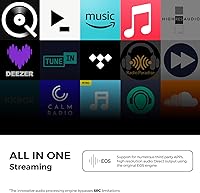
  • Music Services: Natively supported streaming services include Tidal, Qobuz, Amazon Music, Apple Music, Deezer, HIGHRESAUDIO, IDAGIO, Presto Music, Radio Paradise, and TuneIn Internet Radio.
  • TRIGGER I/O: A 12V TRIGGER input and output allow the unit to automatically power compatible amplifiers on and off in sync with its own power state.
  • HDMI ARC: The HDMI ARC port accepts incoming audio from a television, routing TV sound through the unit's DAC and analog outputs without requiring a separate converter.
  • Control Options: The unit can be controlled via the 6-inch touchscreen, a front-panel mechanical knob, or the dedicated Eversolo app available for iOS and Android devices.
  • MQA Support: Full MQA decoding and rendering is supported, allowing bit-perfect unfolding of MQA-encoded files and streams from compatible services.
  • Bluetooth Version: Bluetooth 5.0 is supported for both audio input and output, with HD Bluetooth codec support for high-quality wireless source connection.
  • Connectivity: Network connectivity options include Gigabit Ethernet and dual-band Wi-Fi, with wired Ethernet recommended for stable high-resolution streaming.
  • Format Support: Supported file formats include FLAC, WAV, APE, AIFF, MP3, AAC, and OGG in addition to the full DSD and high-resolution PCM format range.

Related Reviews

dockteck DH0002 M.2 NVMe/SATA SSD Enclosure
84%
88%
Transfer Speed (NVMe)
76%
SATA Drive Performance
83%
Build Quality
93%
Ease of Setup
79%
Thermal Management
More
SSK 512GB USB 3.2 Gen 2 Flash Drive
84%
91%
Performance & Speed
88%
Build Quality & Durability
95%
Ease of Use (Plug-and-Play)
87%
Compatibility (USB-A & USB-C)
80%
Portability & Size
More
THKAILAR 256GB USB 3.2 Gen 2 Flash Drive
88%
92%
Performance
89%
Compatibility
85%
Build Quality
90%
Portability
95%
Ease of Use
More
Netac Zslim 250GB Portable SSD USB 3.2 Gen 2
87%
90%
Performance
88%
Portability
85%
Build Quality
91%
Ease of Use
92%
Compatibility
More
Timetec 1TB Pro Portable USB 3.2 Gen 2 SSD
88%
93%
Performance
90%
Portability/Size/Weight
92%
Compatibility/Connectivity
95%
Speed (Read/Write)
85%
Value for Money
More
fanxiang FF952 512GB USB 3.2 Gen 2 Flash Drive
88%
94%
Data Transfer Speed
89%
Portability
90%
Build Quality
92%
Ease of Use
77%
Compatibility with Devices
More
SABRENT 5-Bay USB 3.2 Gen 2 SATA Docking Station
82%
94%
Transfer Speed
88%
Build Quality
90%
Ease of Use
78%
Cooling Efficiency
85%
Flexibility of Drive Management
More
TEAMGROUP X1 MAX 512GB USB 3.2 Gen 2 Flash Drive
88%
94%
Data Transfer Speed
90%
Portability/Size/Weight
91%
Compatibility/Connectivity
85%
Build Quality/Durability
88%
Value for Money
More
Sabrent 10-Bay USB 3.2 Gen 2 SATA Docking Station
85%
94%
Ease of Use
88%
Build Quality
79%
Cooling Performance
90%
Speed & Data Transfer
91%
Compatibility with Operating Systems
More
THKAILAR 1TB USB 3.2 Gen 2 External SSD Flash Drive
85%
89%
Data Transfer Speed
91%
Build Quality & Durability
93%
Portability & Size
88%
Compatibility & Connectivity
92%
Ease of Use (Plug-and-Play)
More

FAQ

For most setups, the Eversolo DMP-A6 Gen 2 genuinely covers both roles. The onboard DAC handles PCM up to 768kHz and DSD512, and the balanced XLR outputs are clean enough that a large number of owners have retired their standalone converters after switching. If you own a very high-end dedicated DAC, you might still prefer running digital output into it, but that is an edge case rather than the norm.
Ethernet is the safer choice, full stop. Most users on standard home routers report adequate Wi-Fi performance, but enough owners on mesh networks and older routers have experienced dropout issues that a wired connection is the practical recommendation if your rack position allows it. Hi-res and DSD streams are particularly sensitive to any packet interruption, so the cable removes that variable entirely.

Once the unit is on your network, Roon Core detects it automatically as a Roon Ready endpoint — no manual IP entry or configuration required in most cases. You select it as an audio zone in Roon, set the output to match your preferred sample rate handling, and it behaves like any other certified endpoint. It is one of the more reliable aspects of this hi-fi streamer according to long-term Roon users.

It works correctly with most modern televisions from major brands, but compatibility is not universal. Some older TVs or budget models with non-standard ARC implementations have caused handshake failures or audio sync issues for a subset of users. If HDMI ARC is a key reason you are buying this unit, it is worth checking Eversolo's compatibility notes or the user forum for your specific TV model before committing.

Eversolo has been reasonably active with firmware updates since launch, addressing UI issues and streaming service compatibility over time. The reality of Android-based audio devices is that updates occasionally introduce new quirks while fixing old ones — a small number of users have needed to factory reset after certain updates. It is a manageable situation, but it is worth keeping automatic updates off and reading the release notes before applying any new firmware.

Yes, and this is one of the more practical features of Eversolo's software. You can build playlists and queues that pull from local storage or a NAS alongside tracks from Tidal, Qobuz, or other connected services. It is not a seamless drag-and-drop experience on first use, but once you are familiar with the interface it works reliably.

The TRIGGER I/O uses the standard 12V trigger protocol, which is supported by a wide range of integrated and power amplifiers from brands like Rotel, NAD, Marantz, and many others. However, it is not universal — some amplifiers use a different voltage or a non-standard implementation. Check your amplifier's manual for 12V trigger compatibility before relying on this feature.

The 6-inch screen is genuinely usable as a primary interface for day-to-day listening. Browsing album art, adjusting volume, switching inputs, and controlling playback all work comfortably from the unit itself. The mobile app adds convenience — especially for browsing large libraries from the couch — but it is a supplement rather than a necessity for most users.

If you already have a quality outboard DAC and only need a streaming transport, the WiiM Ultra and Bluesound Node both offer strong competition at lower price points, and both have arguably more mature software ecosystems at this stage. Eversolo's second-gen streamer earns its premium primarily through the onboard DAC stage and the linear power supply — if those components are redundant for your setup, the value equation shifts considerably toward the alternatives.

USB storage attached directly to the unit is recognized quickly and works without any configuration. NAS setup via SMB or NFS is supported but involves a few more steps — entering share paths and credentials through the settings menu — and the documentation is not as clear as it could be for users who are not already familiar with network shares. Most users get there without needing outside help, but it is worth budgeting a bit of time for initial network library configuration.