Overview

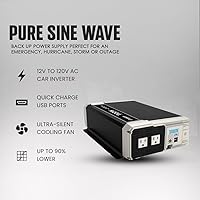
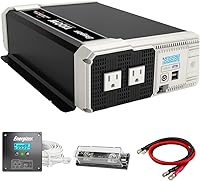
The Energizer EP1100 1100W Pure Sine Wave Inverter sits in the mid-range of the inverter market — recognizable brand, solid specs, reasonable price. What separates it from cheaper alternatives is the pure sine wave output: unlike modified sine wave units, it produces clean, utility-grade AC power that won't damage sensitive electronics like CPAP machines, laptops, or audio gear. It delivers 1100 watts continuously and can handle up to 2200-watt surge loads briefly — enough for most portable appliances. It's also ETL certified under UL STD 458, which adds meaningful credibility. Just keep expectations realistic: this is a vehicle or off-grid solution, not a whole-home backup system.
Features & Benefits

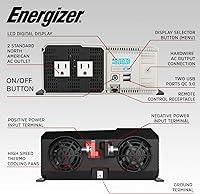
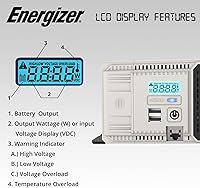
The LCD display is one of those small touches that actually changes how you use an inverter day to day — at a glance you see input voltage, output wattage, battery level, and any fault code if something trips. Both AC outlets handle up to 15 amps each, and the dual QC 3.0 USB ports fast-charge phones and tablets without needing a separate wall adapter. Five layers of protection cover overload, over-voltage, under-voltage, high temperature, and short circuits — the kind of safety net that matters when you're miles from anywhere. The included wired remote is a genuine convenience for anyone mounting the unit under a truck seat or in a cabinet.

Best For

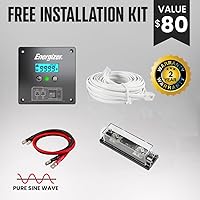
This car power inverter makes the most sense for people who spend real time living or working out of a vehicle. CPAP and nebulizer users have the most to gain — modified sine wave inverters can interfere with motor-driven medical equipment, and this sine wave inverter removes that risk entirely. Overlanders and van lifers will appreciate having two full AC outlets for a laptop and a small appliance running side by side. Contractors and tradespeople who want to run a drill or small saw from a work truck will find the wattage adequate for typical job-site tools. It's also a solid pick for anyone who has been intimidated by inverter installation — the included kit genuinely simplifies setup.

User Feedback

Buyers consistently praise the EP1100's clean power delivery and the legibility of the LCD readout — two things that matter a lot when troubleshooting in the field. Build quality earns strong marks for a unit at this price point. On the flip side, a fair number of owners note that it runs noticeably warm under sustained loads above 800 to 900 watts, and the cooling fan noise is audible in quieter environments. A smaller group has flagged that the wired remote's cable feels short and the connector less durable than the rest of the unit implies. The Energizer name clearly drives purchase confidence, though after-sale support experiences appear mixed.

Pros

  • Pure sine wave output makes it safe for sensitive electronics like CPAP machines, laptops, and medical devices.
  • ETL certification under UL STD 458 provides independent safety and performance validation — not just a marketing claim.
  • The LCD screen gives you real-time visibility into voltage, wattage, and battery level at a glance.
  • Dual QC 3.0 USB ports mean you can fast-charge phones and tablets without taking up either AC outlet.
  • Five built-in protections handle overload, over-voltage, under-voltage, overheating, and short circuits automatically.
  • The wired remote is a genuinely useful addition for anyone mounting the EP1100 out of easy reach.
  • Installation kit with ANL fuse and battery cables lets most buyers get up and running without a separate hardware run.
  • Handles real-world loads up to around 900 watts comfortably — enough for the majority of portable appliance and tool use cases.
  • The Energizer brand name carries recognizable trust that gives buyers reasonable confidence in long-term reliability.
  • Two standard 15-amp AC outlets allow two devices to run simultaneously without an adapter or power strip.

Cons

  • The cooling fan becomes noticeably loud under heavier loads, which can be disruptive in quiet environments.
  • Sustained loads above 800 to 900 watts generate significant heat and push the unit closer to its thermal limits.
  • The wired remote control cable is reported to be short, limiting placement flexibility in larger vehicles.
  • Remote control connector durability has drawn criticism from some buyers, feeling inconsistent with the rest of the build quality.
  • At nearly 10.5 pounds and almost 16 inches long, this car power inverter is bulky to mount in tighter spaces.
  • After-sale customer support experiences appear inconsistent based on buyer feedback patterns.
  • No wireless or Bluetooth remote option is available for those who prefer cable-free control setups.
  • The 3-foot battery cables included in the kit may not reach comfortably in all vehicle or battery configurations.

Ratings

The scores below reflect AI-driven analysis of verified global buyer reviews for the Energizer EP1100 1100W Pure Sine Wave Inverter, with spam, bot activity, and incentivized feedback actively filtered out before scoring. Each category captures both what real users genuinely praised and where frustrations emerged, so the picture you see here is honest rather than polished. No score has been softened to protect the brand.

Power Output Reliability
88%
Buyers consistently report that this sine wave inverter delivers stable, clean power across a wide range of connected devices — from CPAP machines to laptops to small power tools. The pure sine wave waveform performs exactly as advertised, with no reported interference, device incompatibility, or flickering under normal operating loads up to around 900 watts.
Push the unit toward its rated ceiling and stability becomes less predictable — several users describe voltage sag and thermal throttling under sustained 1000-watt-plus loads. It is reliable within its practical headroom, but the gap between the rated 1100 watts and the comfortable real-world ceiling frustrates buyers who expected full-rated output for extended periods.
Thermal Management
61%
39%
The automatic thermal protection triggers before any real damage occurs, and the LCD fault code system makes diagnosing an overheat event straightforward. For light-to-moderate use — a laptop and phone charger running simultaneously — the unit stays at manageable temperatures without the fan running aggressively.
Sustained loads above 800 watts cause the unit to run noticeably hot, and the cooling fan ramps up to levels that multiple buyers describe as distracting in quiet environments. A number of owners report the housing becoming uncomfortably warm to the touch during extended high-load sessions, which raises understandable concern even when the protection systems are working correctly.
Build Quality
82%
18%
The casing feels solid and purposeful for a mid-range unit, and most buyers express confidence in its durability after extended use in vehicles and outdoor environments. The overall fit and finish is consistently praised as better than expected at the price point, with the housing holding up well to vibration common in truck and van installations.
A recurring weak point is the wired remote control, where the connector and cable quality feel noticeably below the standard of the main unit. Several users report early wear on the remote connector, which undermines confidence in the overall package despite the core inverter body holding up well.
Ease of Installation
84%
The included ANL fuse kit and 3-foot battery cables mean most buyers can complete a basic installation without a separate hardware run, which is a meaningful advantage for first-time inverter owners. The wired remote simplifies the setup further by allowing flexible mounting locations without needing direct physical access to the inverter once it is in place.
The 3-foot battery cables are adequate for installations where the inverter sits close to the battery, but buyers with larger vehicles or unconventional mounting positions frequently find them too short. A small number of users also note the manual could be clearer on grounding best practices for safe permanent installation.
LCD Display & Monitoring
86%
Real buyers frequently single out the LCD screen as one of the EP1100's most practically useful features, particularly for monitoring battery health during off-grid camping or overnight CPAP use. Seeing live input voltage, output wattage, and fault codes on a single screen removes a lot of guesswork that comes with cheaper units that offer no feedback at all.
The display is functional rather than refined — contrast and viewing angle limitations make it harder to read in direct sunlight or from certain angles in a vehicle installation. A few buyers also note the screen brightness is fixed, which can be intrusive when the inverter is mounted in a sleeping area at night.
Fan Noise
58%
42%
At lighter loads the fan operates at a low speed that most buyers describe as unobtrusive in a running vehicle or active campsite. The variable-speed design means the unit is genuinely quiet during standby and low-draw situations, which is a reasonable baseline for an inverter in this class.
Once load climbs past roughly 700 to 800 watts, the fan becomes loud enough to be a real annoyance in enclosed spaces — multiple van life and RV users specifically flag it as a problem for nighttime CPAP use. The noise level at high load is the single most common complaint across buyer feedback, and it is notable enough to be a dealbreaker for noise-sensitive buyers.
USB Charging Performance
83%
The dual QC 3.0 ports charge modern smartphones and tablets at full fast-charge speed, which means buyers do not need to dedicate an AC outlet to a USB wall adapter. In practice this effectively gives users four charging points simultaneously — two AC outlets and two USB ports — which is genuinely useful on long road trips or at a campsite.
QC 3.0 is a capable but no longer cutting-edge standard, and buyers with newer devices that support USB Power Delivery or higher-wattage charging protocols will not get maximum charging speed from these ports. There are also isolated reports of one USB port underperforming relative to the other, though this does not appear to be a widespread pattern.
Value for Money
79%
21%
For a pure sine wave inverter with ETL certification, an LCD display, fast-charge USB ports, and a full installation kit included, most buyers feel the price is competitive and fair. Compared to similarly priced modified sine wave units, the EP1100 offers a meaningfully better technical foundation that justifies the slight premium for anyone powering sensitive electronics.
Buyers who push the unit hard and encounter thermal limitations or remote control durability issues start to question whether the value holds up over the long term. A handful of users feel the pricing implies a headroom and durability ceiling that the unit does not always deliver, particularly when comparing it against higher-rated competitors at a similar price.
Wired Remote Control
57%
43%
Having a remote at all is a genuine convenience that many competing units at this price omit entirely, and for standard truck cab or RV cabinet installations it works as intended. Being able to switch the inverter on and off from the driver seat without reaching into a storage compartment is a practical quality-of-life improvement.
The cable is widely reported as too short for flexible placement, and the connector durability is the most cited hardware complaint in the entire product review pool. Several buyers have dealt with intermittent remote failures within the first year, which is a meaningful reliability concern given how central the remote is to a clean, permanent installation.
Protection Systems
87%
Five layers of automatic protection — overload, over-voltage, under-voltage, overheating, and short circuit — cover the realistic failure scenarios an inverter faces in vehicle and off-grid use. Buyers who have accidentally overloaded the unit report it trips cleanly and recovers without drama, which is exactly what you want from a safety system in a remote environment.
The protections do their job, but there is no audible alarm to accompany the LCD fault code, meaning a tripped protection can go unnoticed if the display is not visible from the user's position. A louder or more prominent alert would add meaningful safety value, particularly for users running the inverter out of sight in a truck bed or cargo area.
Compatibility Range
85%
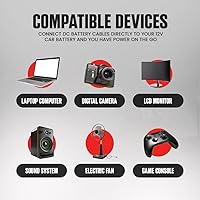
The clean sine wave output means this car power inverter works comfortably with essentially any device that runs on standard North American AC power — medical equipment, audio gear, variable-speed tools, and modern laptops all operate without issue. Buyers coming from modified sine wave inverters frequently note the improvement in device behavior as immediate and obvious.
Compatibility is limited by wattage, not waveform — buyers wanting to run appliances like microwaves, hair dryers, or electric skillets will hit the capacity ceiling quickly. The 12V-only input also limits deployment to vehicle or deep-cycle battery setups, ruling it out entirely for anyone hoping to run it from a standard household AC source.
Brand Trust & Credibility
81%
19%
The Energizer name carries genuine consumer recognition that gives buyers confidence at the point of purchase, and the ETL certification under UL STD 458 backs up that trust with independent third-party validation. For buyers choosing between an established brand and a no-name import at a similar price, this credibility gap is a real and rational differentiator.
Brand trust does not fully insulate buyers from variable after-sale support experiences, and a subset of reviews reflect frustration with warranty claim responsiveness. The Energizer name is more associated with batteries than power electronics, and some buyers note that the depth of technical support does not always match what a dedicated inverter brand might provide.
Portability & Form Factor
71%
29%
At just over 10 pounds and with a relatively compact footprint for a 1100-watt unit, the EP1100 can be semi-permanently mounted or moved between vehicles without excessive effort. The straightforward cable connection system means transitioning it from a truck to an RV setup requires only a few minutes of work.
The nearly 16-inch length makes finding a clean mounting location a genuine challenge in smaller vehicles, particularly compact trucks and crossover SUVs where under-seat space is limited. It is not a unit you want rattling around loose in a cargo area — it needs a fixed mount, and not every vehicle offers an obvious one.

Suitable for:

The Energizer EP1100 1100W Pure Sine Wave Inverter is the right call for anyone who needs clean, stable AC power drawn from a 12-volt vehicle battery. It's especially well-matched for travelers who rely on a CPAP or nebulizer overnight — those devices have sensitive motors that modified sine wave inverters can damage or shorten the life of over time. Van lifers and overlanders will get solid mileage out of it too, particularly when running a laptop, charging multiple devices, and occasionally powering a small appliance all from the same unit. Contractors who want to run a drill, small circular saw, or job-site light directly from a work truck will find the 1100-watt continuous rating adequate for most single-tool use. The included installation hardware and wired remote also make it accessible to people who have never wired an inverter before, lowering the barrier to a working setup considerably.
Not suitable for:

The Energizer EP1100 1100W Pure Sine Wave Inverter is not the right fit if your power needs push consistently above 900 watts for extended periods — real-world thermal behavior suggests the unit runs hot under sustained heavy loads, and that limits its practical headroom. Anyone hoping to use this as a home backup solution during a power outage will find 1100 watts too limiting for most household circuits, and the 12-volt DC input requirement means it only works with a vehicle or deep-cycle battery, not a standard home electrical system. If you need to power a microwave, full-size refrigerator, or electric heater simultaneously, look at higher-capacity units in the 2000-watt or above range. Buyers who require a very quiet operating environment — a sleeping area in a camper van, for example — may also find the cooling fan intrusive at higher loads. Finally, anyone who prioritizes a long, flexible remote control cable should verify this unit's cable length meets their installation requirements before committing.
Specifications

  • Continuous Power: The unit delivers 1100 watts of continuous AC power, suitable for running most laptops, CPAP machines, and small appliances simultaneously.
  • Peak Surge Power: A 2200-watt surge capacity allows it to handle the brief startup spikes that motors and compressors produce when first switched on.
  • Input Voltage: Requires a 12V DC source, connecting directly to a standard vehicle or deep-cycle battery via the included battery cables.
  • Output Voltage: Produces 120V AC output, matching standard North American household current for full compatibility with domestic plugs and devices.
  • Waveform Type: Pure sine wave output replicates utility-grade power, making it safe for sensitive electronics including medical devices, audio equipment, and modern laptops.
  • AC Outlets: Two standard North American AC outlets are included, each rated at 15 amps, allowing two devices to run independently at the same time.
  • USB Ports: Two Quick Charge 3.0 USB ports provide fast charging for smartphones and tablets without occupying either AC outlet.
  • Display: An onboard LCD screen shows real-time input voltage, output wattage, battery charge level, and active fault codes for easy monitoring.
  • Protections: Five automatic protections cover overload, over-voltage, under-voltage, high temperature, and short circuit conditions, with fault codes surfaced on the LCD.
  • Certification: ETL certified under UL STD 458, providing independent third-party verification of both safety standards and performance claims.
  • Dimensions: The unit measures 9.82 x 15.97 x 4.13 inches, making it a mid-sized inverter that requires thoughtful placement in tighter vehicle installations.
  • Weight: At 10.32 pounds, it is substantial enough to require secure mounting rather than leaving it loose in a vehicle cargo area.
  • Model Number: The official model designation is EP1100, used for warranty registration, replacement parts, and technical support inquiries.
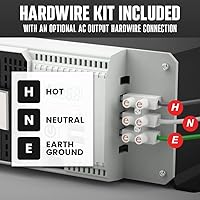
  • Included Accessories: Package includes a wired remote control, ANL fuse kit, and 3-foot battery cables to support a complete basic installation out of the box.
  • Brand: Manufactured by Energizer Batteries, a brand widely recognized in the consumer power and battery category across North America.
  • Color: Available in a black and white finish that suits most vehicle interiors without drawing excessive visual attention.

Related Reviews
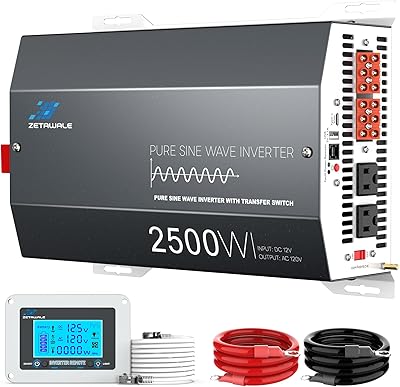
ZETAWALE 2500W Pure Sine Wave Inverter
78%
91%
Pure Sine Wave Quality
87%
Auto Transfer Switch
84%
Value for Money
61%
Long-term Reliability
68%
Cooling & Noise
More
Novopal 1500W Pure Sine Wave Inverter
76%
83%
Power Output Accuracy
88%
Power Quality
74%
Build Quality
86%
Ease of Installation
89%
Remote Control Usability
More
TVNIKD 2500W Pure Sine Wave Power Inverter
77%
88%
Power Output Quality
81%
Build Quality
63%
Heat Management
86%
Ease of Installation
83%
LCD Display Usability
More
VOLTWORKS VS-3000PCR 3000W Pure Sine Wave Inverter
79%
83%
Output Power Accuracy
91%
Output Signal Quality
88%
Cooling & Noise Level
79%
Build Quality & Housing
86%
Installation Ease
More
TVNIKD 3500W Pure Sine Wave Inverter
86%
92%
Power Conversion Performance
89%
Ease of Setup
72%
Portability & Size
90%
Reliability & Durability
91%
Power Output (Wattage)
More
KORKIE 1000W Pure Sine Wave Inverter
76%
88%
Output Signal Quality
82%
Port Variety & Charging
91%
Ease of Setup
79%
Fan Noise
63%
Build Quality
More
Tebrol 3500W Pure Sine Wave Inverter
79%
88%
Output Power Accuracy
92%
Pure Sine Wave Quality
79%
Build Quality
83%
Cooling & Thermal Management
81%
Ease of Installation
More
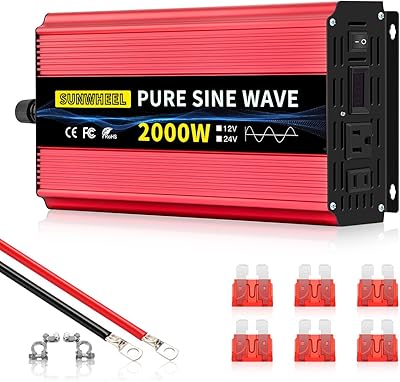
SUNWHEEL 2000W Pure Sine Wave Inverter
80%
86%
Power Output Reliability
91%
Waveform Quality
83%
Build Quality
88%
Noise Level
67%
LCD Display Usefulness
More
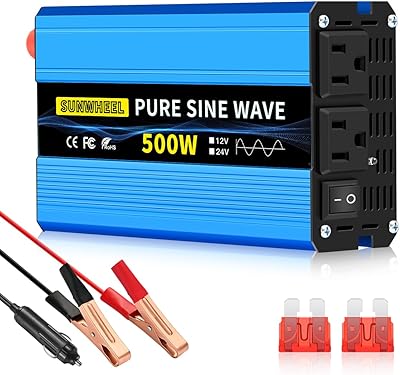
SUNWHEEL 500W Pure Sine Wave Inverter
86%
92%
Power Conversion Efficiency
88%
Noise Level
85%
Build Quality & Durability
80%
Cooling System
83%
Portability
More
LEESKY 1500W Pure Sine Wave Power Inverter
82%
88%
Output Power Quality
84%
Build Quality
86%
Value for Money
91%
Remote Controller Usefulness
79%
Noise Level
More

FAQ

Yes, and this is actually one of the strongest use cases for this sine wave inverter. CPAP machines have sensitive motors that require clean, stable AC power — the kind that pure sine wave units produce. Modified sine wave inverters can cause CPAP motors to run hotter, produce audible hum, or wear out faster over time. This one removes that concern entirely.

You can, as long as their combined draw stays within the 1100-watt continuous limit. Both AC outlets are independently rated at 15 amps, so you could run a laptop on one and a small appliance on the other without issue. Just be mindful of the total load — if you are pushing close to the ceiling for an extended period, the unit will run warm.

Most people with basic mechanical comfort can handle it. The included kit comes with battery cables, an ANL fuse, and a wired remote, which covers the core of a standard installation. You connect the cables directly to your 12V battery, mount the unit securely, and run the remote to wherever you need it. No electrical license required, though reading the manual carefully before starting is always a good idea.

It lets you turn the inverter on and off from a distance, which is genuinely useful if the unit is mounted under a seat, in a cabinet, or in a truck bed. You do not have to physically reach the inverter every time you want to switch it. The cable length has been noted as relatively short by some users, so plan your mounting location with that in mind.

At lighter loads the fan is fairly quiet and easy to ignore. Once you start pushing above 700 to 800 watts, it becomes more noticeable — audible in a quiet cab or sleeping space. If you are running it in an enclosed van at night, it is worth factoring that into your setup decisions, like mounting location and ventilation.

Yes, it works with lithium deep-cycle batteries as long as they output a stable 12V DC, which most lithium house batteries do. Just confirm your battery can handle the sustained current draw at full inverter load, as lithium batteries vary in their continuous discharge ratings.

The built-in overload protection will trip automatically before any damage occurs, and the LCD will display a fault code to tell you what happened. You reduce the load, clear the fault, and restart — no permanent damage in most cases. It is a safety net, not a license to push the unit hard on a regular basis.

It is a solid fit for part-time or moderate full-time use, provided your loads stay in a comfortable range below the continuous rating. For very power-intensive setups — running multiple high-draw appliances simultaneously or doing a lot of sustained high-wattage work — you may eventually want a higher-capacity unit. For typical van life loads like a laptop, phone charging, and occasional small appliance, this car power inverter handles things well.

It uses an ANL-style fuse, and the kit includes one in the box. ANL fuses are an industry-standard format for inverter installations and are widely available as replacements at automotive and electrical supply stores if you ever need a spare.

It will connect to a standard car battery, but a deep-cycle battery is strongly recommended for anything beyond brief use. Standard automotive batteries are designed for short, high-current bursts to start an engine — draining them repeatedly with an inverter shortens their lifespan noticeably. A dedicated deep-cycle or dual-purpose battery gives you far more usable capacity and handles the sustained discharge much better.