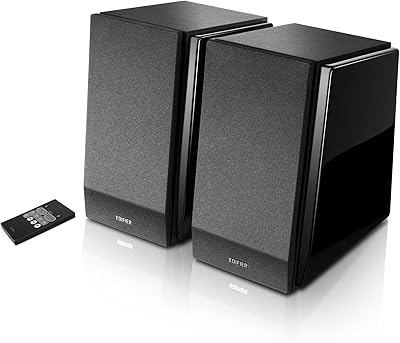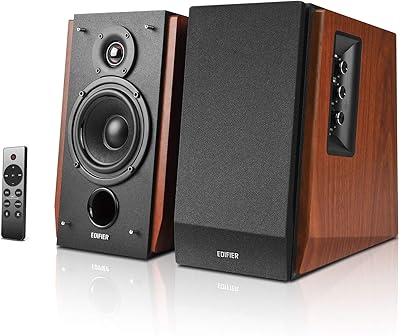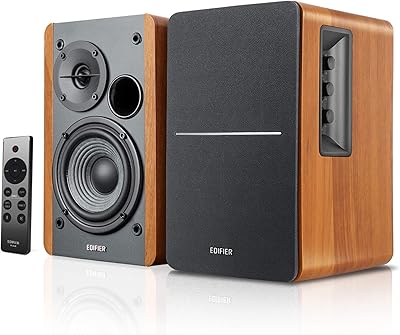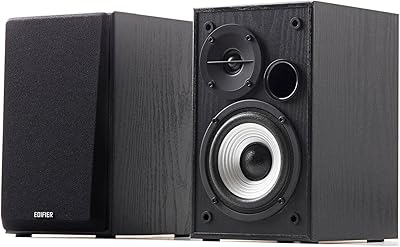

Overview

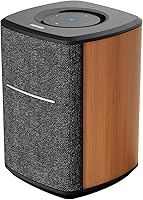
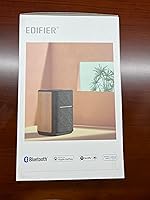
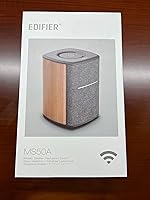
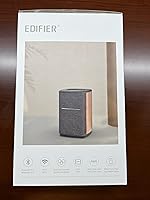
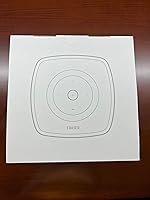
The Edifier MS50A WiFi Bookshelf Speaker occupies a genuinely unusual spot in the smart speaker market: it connects to Alexa and supports AirPlay 2, yet it contains no built-in microphone. That design choice is not an oversight — it is the whole point. For anyone who wants smart home integration without a listening device permanently stationed in their bedroom or home office, this is a rare option. The wood cabinet also sets it apart from the sea of plastic cylinders dominating this category, giving it a look that actually belongs on a shelf. It sits between a traditional bookshelf speaker and a full smart speaker, and that middle ground is exactly where certain buyers want to be.

Features & Benefits

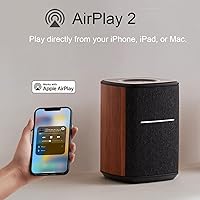
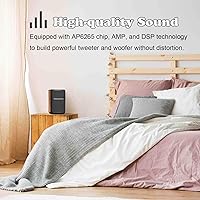
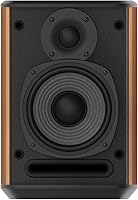
The MS50A runs a dual-driver setup — a 4-inch woofer handling 25 watts paired with a 0.75-inch silk dome tweeter adding another 15 watts — totaling 40W RMS. That is a solid output for a single cabinet this compact. Connectivity covers both Wi-Fi and Bluetooth 5.0, so you can stream from your home network or pair a phone directly without fussing over modes. The speaker supports AirPlay 2, Spotify Connect, Tidal Connect, and Alexa, which is a wide net for one unit. A second MS50A can be linked for true stereo pairing over Wi-Fi, and multi-room grouping works through AirPlay or Alexa. One notable caveat: control is app-only — no physical remote is included.

Best For

This mic-free smart speaker makes the most sense for a specific kind of buyer. If you value privacy at home but still want Alexa for music control or smart home commands — without a microphone running in the background — this is one of very few products designed with that tradeoff in mind. Apple users will find AirPlay 2 reliable for device handoff, and Spotify or Tidal subscribers benefit from native Connect support, meaning the speaker streams independently rather than tethering to your phone. It also suits desktop or shelf setups where aesthetics matter, and works as a reasonable entry point into multi-room audio without committing to a single closed ecosystem.

User Feedback

The MS50A holds a 3.6-star average, and the spread is revealing. Buyers focused on audio quality tend to be satisfied — the silk dome tweeter draws consistent praise for clean, detailed highs, and the build quality feels sturdy for the price. The friction shows up elsewhere. The companion app has attracted repeated criticism for unreliable behavior, and the initial setup can frustrate users who are not comfortable with home networking. Stereo pairing works well when stable, but a notable portion of reviewers report the paired connection dropping unexpectedly. Firmware updates have resolved some issues for certain users, though others note that updates occasionally surface new problems rather than solving old ones.

Pros

  • No built-in microphone gives genuine privacy without sacrificing smart home connectivity.
  • Supports AirPlay 2, Spotify Connect, Tidal Connect, and Alexa — very few single speakers cover all four.
  • The wood cabinet looks far more considered than the typical plastic smart speaker sitting on a shelf.
  • 40W RMS output from a cabinet this compact is a strong value for desktop or small-room listening.
  • Silk dome tweeter consistently draws praise for clean, detailed high-frequency reproduction.
  • Bluetooth 5.0 and Wi-Fi coexist, so switching between network streaming and a quick phone connection is straightforward.
  • Two units can be paired for true stereo separation over Wi-Fi, which most single smart speakers cannot do.
  • Multi-room grouping via AirPlay or Alexa works without subscribing to a proprietary ecosystem.
  • Solid build quality and weight feel appropriate for a shelf-mounted speaker rather than a portable device.

Cons

  • The companion app has a track record of reliability issues that surface regularly in user reviews.
  • Initial Wi-Fi setup can be genuinely frustrating for users who are not comfortable with home networking.
  • Stereo pairing, while functional, has been reported to drop connection inconsistently for some users.
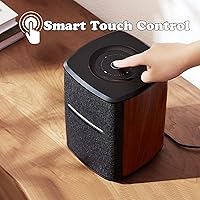
  • There is no physical remote or hardware volume control — everything goes through the app.
  • Firmware updates have occasionally introduced new problems rather than cleanly resolving existing ones.
  • The MS50A is mains-powered only, so there is no battery option for portable or outdoor use.
  • A single unit produces mono output — buyers expecting stereo from one speaker will need to purchase two.
  • Customer support responsiveness for software-related issues has drawn criticism in user feedback.
  • At its size, bass extension below 52Hz drops off, which may underwhelm listeners who favor bass-heavy genres.

Ratings

The scores below for the Edifier MS50A WiFi Bookshelf Speaker were generated by our AI engine after analyzing verified global buyer reviews, actively filtering out incentivized, bot-generated, and duplicate feedback to surface what real owners consistently report. Both the genuine strengths and the recurring frustrations are reflected here without padding or spin — because understanding where a product actually falls short is just as useful as knowing where it delivers.

Sound Quality
81%
19%
For a single compact cabinet, the MS50A punches above its weight on clarity. The silk dome tweeter handles vocals and acoustic instruments with real finesse, and at moderate listening volumes in a small-to-medium room, the overall presentation feels balanced and engaging rather than thin or harsh.
Bass extension rolls off noticeably below 60Hz, which becomes apparent on bass-heavy electronic or hip-hop tracks. Listeners accustomed to a subwoofer-assisted system will find the low-end output polite at best — adequate for background listening but not satisfying for critical playback of bass-forward genres.
Privacy Design
94%
The deliberate omission of a microphone is the single most distinctive feature this speaker offers, and buyers who specifically sought a mic-free smart speaker consistently rate this aspect as a genuine selling point. For home offices, bedrooms, or any space where ambient listening devices feel intrusive, this design decision removes a real concern that most competing smart speakers cannot address.
The tradeoff is absolute — there is no workaround or mute switch. Users who later decide they want hands-free voice interaction will need to purchase a separate microphone-equipped device, which adds both cost and complexity to the setup that was not always clear at the point of purchase.
Streaming Compatibility
88%
Covering AirPlay 2, Spotify Connect, Tidal Connect, and Alexa in one speaker at this size is genuinely broad. Spotify subscribers especially appreciate that the speaker pulls audio directly from the service without needing a phone as a continuous relay, and Apple users find AirPlay 2 device handoff works reliably once the initial setup is complete.
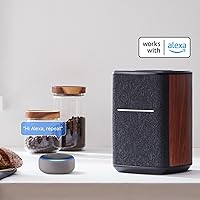
Alexa functionality is limited to output control — without a microphone, the speaker cannot initiate or respond to voice commands independently. Buyers who assumed Alexa support meant a full voice-assistant experience, similar to an Echo, frequently flagged this expectation gap as a source of disappointment after purchase.
App Experience
47%
53%
When the Edifier app behaves, DSP tuning and stereo pairing configuration work as intended, and some users report getting the most out of the speaker after adjusting the EQ settings to their preference. The interface itself is reasonably laid out and not difficult to navigate for users willing to spend time with it.
App reliability is the most frequently cited frustration across global reviews, and the criticism is consistent enough to carry real weight. Crashes, connection timeouts, and pairing dropouts appear with enough regularity that some users reported abandoning app-based control entirely in favor of native streaming apps — which defeats a portion of the product's feature set.
Setup & Onboarding
53%
47%
Users with solid home networking experience and a straightforward dual-band router typically get through the Wi-Fi setup without significant difficulty. Once the speaker is successfully registered and connected, subsequent reconnections tend to be automatic and require no additional steps.
For less technically confident buyers, the setup process has generated a disproportionate share of one-star reviews — including cases where the speaker never successfully connected at all. Router band conflicts between 2.4GHz and 5GHz networks are a recurring culprit, and the in-app troubleshooting guidance does not adequately walk non-technical users through resolving this.
Build Quality
83%
The wood cabinet construction gives the MS50A a density and solidity that feels appropriate for a shelf-mounted speaker. Buyers consistently note that it does not feel cheap when placed next to typical plastic consumer electronics, and the weight of 2.3 kg conveys a sense of substance that reinforces confidence in the hardware.
A small number of reviewers reported minor cabinet finish inconsistencies out of the box — slightly uneven veneer edges or color variation — suggesting quality control is not perfectly uniform across production batches. Nothing structurally concerning, but worth inspecting on delivery.
Stereo Pairing
66%
34%
When two units maintain a stable paired connection, the stereo separation over Wi-Fi is genuinely impressive for the price. Users who set up a desk stereo pair report a noticeably wider and more immersive soundstage compared to a single unit, which validates the two-speaker purchase for dedicated listening spaces.
The paired connection drops without warning for a meaningful portion of users, requiring manual reconnection through the app. This instability surfaces enough in reviews to be a real risk rather than an isolated edge case, and it undermines what would otherwise be a compelling feature for buyers specifically purchasing two units for stereo use.
Multi-Room Audio
71%
29%
AirPlay 2 multi-room grouping works reliably for users already within the Apple ecosystem, and grouping the MS50A with other AirPlay 2 speakers for whole-home audio is straightforward from the iOS Music app or Spotify. Users who primarily lean on Apple hardware report this working consistently day to day.
Multi-room performance via Alexa is more dependent on network stability and the reliability of the Edifier app maintaining its device registration. Users on non-Apple setups report a less predictable experience, and any app instability directly impacts whether the speaker shows up reliably as a target device.
Value for Money
69%
31%
For buyers who specifically need a mic-free Wi-Fi speaker with broad streaming compatibility, the MS50A occupies a rare niche with few direct competitors at a comparable price. If the app works well in your environment and your use case aligns with its strengths, the hardware delivers genuinely good value.
The app and connectivity inconsistencies erode the value proposition significantly for a segment of buyers. Paying for a feature set that requires repeated troubleshooting to access fully — or partially abandoning it — makes the speaker feel overpriced compared to more stable alternatives from brands like Sonos or even Amazon's own Echo lineup.
Design & Aesthetics
86%
The wood-finished cabinet in a compact bookshelf footprint is one of the most visually distinctive smart speakers in this category. On a desk, beside books, or on an entertainment unit, it looks like it belongs there — a detail that matters to buyers who are tired of smart speakers looking like utilitarian cylinders or plastic pods.
Color options are limited, and the brown wood tone will not suit every interior palette. Buyers decorating around lighter or more contemporary aesthetics may find it harder to integrate naturally, and the lack of additional finish variants has been noted as a missed opportunity by design-conscious reviewers.
Connectivity Stability
58%
42%
Bluetooth 5.0 pairing is generally reported as fast and stable for direct device connections, and users who primarily use the speaker via Bluetooth rather than Wi-Fi tend to have a noticeably smoother experience overall. Short-range Bluetooth sessions for desktop use work reliably across the board.
Wi-Fi connectivity is the weak link, with intermittent drops appearing across multiple firmware versions. Some users have found that placing the speaker closer to their router or switching to a dedicated 2.4GHz network improves stability, but the fact that these workarounds are necessary at all reflects an underlying reliability issue that firmware updates have only partially addressed.
Firmware & Support
51%
49%
Edifier has issued firmware updates since the speaker launched, and a portion of early adopters credit specific updates with resolving pairing and app registration issues they initially encountered. The fact that updates are being pushed at all signals some level of ongoing post-sale support.
The update track record is mixed at best. A recurring pattern in reviews describes updates introducing new bugs alongside fixes, which has eroded trust in the update process itself. Customer support responsiveness for software-related issues has also drawn criticism, with some buyers reporting slow or unhelpful responses when troubleshooting persistent connectivity problems.
Ease of Daily Use
62%
38%
Once fully configured and stable, day-to-day music playback through Spotify Connect or AirPlay 2 requires almost no interaction with the Edifier app. Streaming from a phone or tablet feels natural, and the speaker responds quickly to playback commands issued within the streaming apps themselves.
The absence of any physical controls — no volume knob, no input button, no remote — creates friction in simple moments like quickly lowering the volume when a phone call comes in. App-dependency for all adjustments is a genuine daily inconvenience that multiple reviewers specifically called out as something they did not fully anticipate before buying.

Suitable for:

The Edifier MS50A WiFi Bookshelf Speaker was built for a specific kind of listener — one who wants the convenience of a smart home audio ecosystem without planting a live microphone in their living space. If you have been holding off on smart speakers purely for privacy reasons, this is one of the very few products that genuinely addresses that concern rather than asking you to ignore it. Apple users will feel at home with AirPlay 2 handling multi-device handoff, and committed Spotify or Tidal subscribers will appreciate that the speaker streams independently via Connect — your phone can stay in your pocket. It also suits anyone replacing a cluttered desktop audio setup with a single compact unit that actually looks good on a shelf. For those who want to eventually expand into a multi-room system without locking into Sonos pricing, buying two of these for stereo pairing is a reasonable long-term plan.

Not suitable for:

Anyone expecting a fully hands-free Alexa experience will be disappointed — the Edifier MS50A WiFi Bookshelf Speaker has no microphone, so you cannot call out voice commands across the room the way you can with an Echo device. It functions as an Alexa output target, not a voice-activated assistant, and that distinction matters a great deal if voice control is a core part of how you use your home. Buyers who prefer simple plug-and-play setup without diving into app configuration and home network troubleshooting may also find the onboarding process more involved than expected. If you want deep bass response or the room-filling low end of a subwoofer-equipped system, a compact two-driver cabinet at this size will not satisfy that need. Finally, users who want tactile hardware controls — a volume knob, input buttons, a remote — will find the app-only control model limiting in everyday use.

Specifications

  • Brand & Model: Manufactured by Edifier under the model designation MS50A, part of the brand's wireless bookshelf speaker lineup.
  • Total Power: Delivers 40W RMS total output, split between a 25W amplifier driving the woofer and a 15W amplifier powering the tweeter.
  • Woofer: Features a 4-inch (102mm) dynamic driver handling the mid-bass frequency range with a dedicated 25W amplifier channel.
  • Tweeter: A 0.75-inch (19mm) silk dome tweeter handles high-frequency reproduction, contributing to a notably clean and detailed treble response.
  • Frequency Range: Rated frequency response spans 52Hz to 18kHz, covering a broad range suitable for most music genres at typical listening volumes.
  • Signal-to-Noise: Signal-to-noise ratio is rated at 85dB or higher, indicating a low noise floor and relatively clean audio output for this class of speaker.
  • Wireless: Connects via both Wi-Fi (2.4GHz or 5GHz home network) and Bluetooth 5.0 for flexible wired or direct device pairing.
  • Streaming Support: Natively supports AirPlay 2, Alexa (as an output target), Spotify Connect, and Tidal Connect for direct network-based streaming.
  • Microphone: Contains no built-in microphone, meaning the speaker cannot receive voice commands directly and relies on an external Alexa device for voice control.
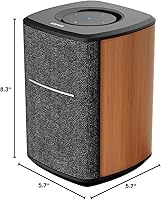
  • Dimensions: Measures 5.7″ deep by 5.7″ wide by 8.3″ tall, making it compact enough for a desktop or bookshelf without occupying excessive space.
  • Weight: Weighs approximately 2.3 kg (5.06 lbs), which is substantial enough to feel sturdy on a shelf without requiring dedicated speaker stands.
  • Cabinet Material: Enclosure is constructed from wood, which contributes to acoustic resonance control and distinguishes its appearance from typical plastic smart speakers.
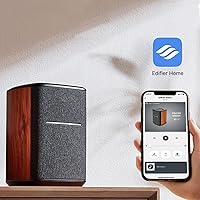
  • Control Method: Operated entirely through the Edifier companion app; no physical remote control or hardware buttons for day-to-day volume or input adjustment are included.
  • Stereo Pairing: Two MS50A units can be wirelessly linked over a shared Wi-Fi network to operate as a dedicated left and right stereo pair.
  • Multi-Room Audio: Supports multi-room grouping through AirPlay 2 or Alexa, allowing synchronized playback across multiple compatible speakers in different rooms.
  • Power Source: Requires a direct AC mains power connection and does not include a battery, making it a fixed-position speaker rather than a portable one.
  • Warranty: Covered by a limited manufacturer warranty; buyers should confirm the specific duration and terms with the retailer at the time of purchase.

Related Reviews
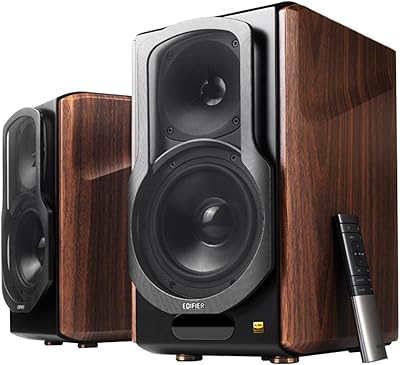
Edifier S2000MKIII Active Bookshelf Speakers
80%
89%
Sound Quality
91%
Treble & Detail
88%
Build Quality
87%
Connectivity
76%
Value for Money
More
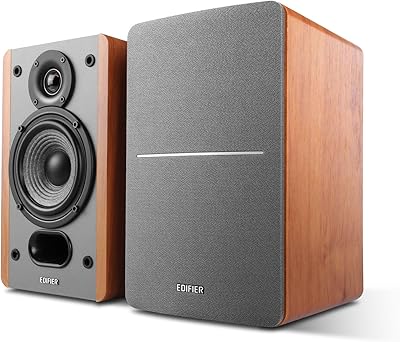
Edifier P12
Edifier P12
78%
83%
Sound Clarity
61%
Bass Performance
79%
Treble Quality
86%
Build Quality
91%
Wall-Mount Bracket
More
Edifier S1000W
Edifier S1000W
79%
91%
Sound Quality
88%
Wireless Connectivity
67%
App Experience
84%
Build Quality
63%
Bass Performance
More
Edifier R1850DB
Edifier R1850DB
79%
83%
Sound Quality
93%
Connectivity & Inputs
86%
Build Quality
67%
Bluetooth Performance
81%
Value for Money
More
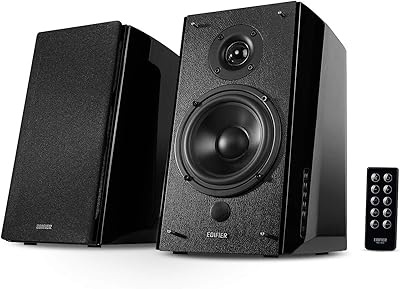
Edifier R2000DB Bookshelf Speakers
80%
88%
Sound Quality
79%
Bass Performance
93%
Connectivity & Inputs
67%
Bluetooth Performance
86%
Build Quality
More
Edifier R1700BTs Bluetooth Bookshelf Speakers
82%
86%
Sound Quality
83%
Bass Response
71%
Bluetooth Performance
89%
Build Quality
88%
Value for Money
More
Edifier R1280DBs
Edifier R1280DBs
77%
83%
Sound Quality
67%
Bass Performance
79%
Build Quality
91%
Connectivity & Input Options
72%
Bluetooth Performance
More
Edifier R980T 4″ Active Bookshelf Speakers
85%
87%
Sound Quality
72%
Bass Performance
91%
Build Quality
93%
Ease of Setup
85%
Connectivity Options
More
Edifier S360DB Bluetooth Bookshelf Speaker with Subwoofer
86%
88%
Sound Quality
92%
Bass Performance
89%
Connectivity & Compatibility
85%
Ease of Setup
87%
Build Quality
More
Edifier S1000MKII
Edifier S1000MKII
81%
91%
Sound Quality
68%
Bass Performance
88%
Build Quality
74%
Bluetooth Performance
93%
Connectivity & Inputs
More

FAQ

Not directly from the speaker itself. The Edifier MS50A WiFi Bookshelf Speaker acts as an Alexa audio output device, not a voice-activated assistant. You would need a separate mic-equipped Alexa device — like an Echo Dot — to issue voice commands, and you can then direct playback to this speaker. Think of it as a high-quality Alexa-connected speaker rather than an Alexa smart speaker.

It depends on your comfort level with home networking. The setup goes through the Edifier app and requires connecting the speaker to your Wi-Fi network, which is straightforward for most users. That said, several buyers have reported that the process can be finicky — particularly on certain router configurations or when switching between 2.4GHz and 5GHz bands. If you run into trouble, making sure your phone is on the same network as the speaker during setup resolves most issues.

Yes, that is one of the main advantages of Spotify Connect. Once you hand off playback to the MS50A, the speaker streams directly from Spotify's servers. Your phone is just a remote control at that point, so locking your screen or stepping outside does not interrupt the music.

A single unit plays in mono. To get true stereo left and right channel separation, you need to purchase two and pair them through the app over your Wi-Fi network. The stereo pairing works well for most users, though a minority report occasional connection drops between the paired units.

You need the app for initial configuration, but for day-to-day streaming through AirPlay 2, Spotify Connect, or Tidal Connect, you can largely control playback from within those apps. The Edifier app is mainly required when you want to adjust DSP settings, manage stereo pairing, or reconfigure network settings. That said, without a physical remote, you will likely return to the app more often than you might expect.

Yes. Bluetooth 5.0 works with both platforms, and Spotify Connect and Tidal Connect are cross-platform. AirPlay 2 is Apple-only, so Android users will rely on Bluetooth or the Connect protocols rather than AirPlay for wireless streaming.

The MS50A reaches down to around 52Hz, which covers most of the mid-bass range reasonably well for a speaker this size. For casual listening it holds its own, but if you are used to a dedicated subwoofer or a larger floor-standing system, the low-end extension will feel limited on bass-heavy tracks. There is no subwoofer output, so adding a sub to the chain is not an option with this unit.

It is both. Wood naturally damps internal resonances better than thin-walled plastic, which can reduce cabinet coloration and contribute to a cleaner sound. Whether that difference is audible to most listeners at this power level is debatable, but it is a genuine acoustic consideration, not just a styling choice.

No — the MS50A is not waterproof or weather-resistant, and it requires a direct AC power connection, so outdoor use is not practical. It is designed strictly as an indoor, fixed-position shelf speaker.

Edifier has released firmware updates since launch, and some users confirm that earlier pairing and connectivity bugs were improved. However, reviews are mixed — a portion of buyers report that certain updates introduced new issues rather than cleanly resolving old ones. Checking the Edifier support page for the latest firmware version and release notes before purchasing is worth a few minutes of your time.

Where to Buy