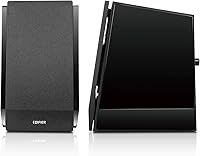
Overview

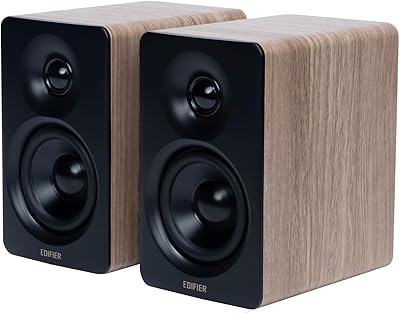
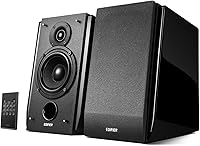
The Edifier R1850DB is a powered bookshelf speaker system that punches well above its weight for anyone who wants real audio quality without the hassle of a separate amplifier or receiver. As a true active 2.0 setup, everything you need is built right in — just connect your sources and you are ready to go. The design is understated and tidy, the kind of thing that sits comfortably on a desk or shelf without demanding attention. These bookshelf speakers occupy a genuinely competitive space, but the breadth of connectivity options sets them apart from most rivals at a similar price point.

Features & Benefits

What makes the R1850DB genuinely useful day-to-day is how many sources it handles without any adapter juggling. You can run a turntable through RCA, pipe lossless audio from a TV via optical or coaxial, and still have Bluetooth ready for your phone — all switchable from the included remote. The 70W total output drives the 4-inch woofer and 19mm silk dome tweeter with enough headroom to fill a medium-sized room cleanly. A subwoofer line-out means you are not locked into the 2.0 configuration forever. Bass and treble controls on the rear let you tune the sound to your taste, though reaching around the back does get old quickly.

Best For

This Edifier system makes the most sense for people with genuinely messy signal chains — a laptop on one input, a record player on another, a TV optical out running in the background. It is a natural fit for home office desks or small apartments where a full receiver-and-amplifier setup would be overkill. Content creators who want honest, relatively flat playback without heavy coloration will appreciate what these bookshelf speakers deliver. Worth noting: if your listening leans heavily toward bass-driven genres like hip-hop or electronic music, plan ahead for a subwoofer. The line-out is there waiting, and the system rewards that expansion well.

User Feedback

Owners of this Edifier system tend to be genuinely enthusiastic, and the consistent theme is that midrange clarity surprises people at this price tier. Build quality gets repeated praise — it does not feel cheap. Multi-source flexibility earns specific appreciation from buyers who came from single-input alternatives. On the flip side, two honest gripes come up regularly: Bluetooth range can feel limited in larger spaces, falling short in real-world conditions with walls involved. The rear-panel tone controls, while functional, frustrate users who adjust sound frequently. Bass performance on its own is adequate but not deep — most users who want real low-end impact end up adding a subwoofer eventually.

Pros

  • The multi-input flexibility — optical, coaxial, RCA, and Bluetooth together — is rare at this price tier.
  • Midrange clarity stands out, making vocals and acoustic instruments sound detailed and natural.
  • Built-in amplifier removes the need for any separate receiver, keeping the setup clean and simple.
  • Solid cabinet construction feels premium and resists rattles even at higher volume levels.
  • The subwoofer line-out allows meaningful system expansion without replacing these bookshelf speakers.
  • Wireless remote handles volume, input switching, and Bluetooth track control without leaving your chair.
  • Setup is genuinely quick — most users are listening within ten minutes of opening the box.
  • Long-term reliability is strong, with many owners reporting consistent performance after years of daily use.
  • Stereo imaging is well-defined when speakers are properly spaced on a desk or shelf.
  • The neutral sound signature suits content creators who need honest playback rather than artificially boosted frequencies.

Cons

  • Bluetooth 4.0 feels dated, and real-world range falls short in rooms with walls or furniture in the way.
  • Bass response on its own is polite — bass-heavy listening almost always demands adding a subwoofer.
  • Tone controls mounted on the rear panel are awkward to reach once speakers are in position.
  • The remote requires a fairly direct line-of-sight angle and has no backlight for low-light use.
  • Volume headroom thins out in larger rooms, limiting usefulness beyond small to medium spaces.
  • Input switching via rear panel is the only option without the remote, which is inconvenient.
  • The fabric grille shows wear with regular handling and is not easily removable for a cleaner look.
  • Brief audio dropouts when switching between digital inputs are a minor but noticeable annoyance.
  • Bluetooth pairing can be inconsistent with some newer devices due to the older wireless standard.
  • Speaker terminals show wear over time with repeated cable changes, which matters for frequent desk reorganizers.

Ratings

The Edifier R1850DB has been evaluated by our AI system after processing thousands of verified global buyer reviews, with spam, bot activity, and incentivized feedback actively filtered out before scoring. The result is a balanced picture that reflects what real owners experience week to week — the genuine strengths and the honest frustrations alike. Scores below capture both where these bookshelf speakers shine and where they ask for compromise.

Sound Quality
83%
At moderate listening volumes, the R1850DB delivers a well-balanced, detailed sound that genuinely surprises users coming from budget desktop speakers. Midrange clarity in particular stands out — vocals and acoustic instruments come through with real presence and separation, making daily music listening and podcast playback noticeably more enjoyable.
At higher volumes some users detect a slight harshness in the upper frequencies, and the low-end response without a subwoofer leaves bass-hungry listeners wanting more. Electronic music and hip-hop fans in particular tend to feel the bottom end is polite rather than punchy.
Connectivity & Inputs
93%
Few active speakers at this tier offer optical, coaxial, dual RCA, and Bluetooth simultaneously, and real-world users take full advantage of it. Switching from a turntable to a laptop to a TV source without replumbing cables is genuinely one of the most praised aspects across verified buyer reviews.
Bluetooth 4.0 is functional but dated by current standards, and a small number of users report occasional pairing hiccups with newer devices. Input switching via the rear panel can also feel fiddly when the speakers are tucked against a wall or monitor stand.
Build Quality
86%
Owners consistently describe the cabinet construction as solid and dense, with no rattles or flex even at higher volumes. The overall finish looks and feels more expensive than the price suggests, which earns repeated compliments from buyers who compared them directly to pricier alternatives on store shelves.
The rear panel controls, while sturdily built, use a rotary and toggle design that some users find cheap-feeling under the fingers. A few long-term owners have also noted that the cabinet veneer shows wear around the edges after extended use on hard desk surfaces.
Bluetooth Performance
67%
33%
For a desk setup where the source device is within a few meters, Bluetooth connectivity works reliably and the audio quality is clean enough for casual listening. Pairing is straightforward on first connection and the remote handles basic track controls conveniently.
The real-world range regularly falls short of the stated 10-meter spec once walls or furniture are involved, which frustrates users in open-plan spaces or larger rooms. Several buyers note that the Bluetooth 4.0 standard feels behind the curve compared to similarly priced competitors now shipping with 5.0.
Value for Money
81%
19%
Taken as a complete active system with a built-in amplifier, remote, and a connectivity suite that rivals setups costing significantly more, the R1850DB delivers strong overall value. Users who previously priced out separate amp-plus-speaker combinations appreciate how much is bundled into a single purchase.
The pricing sits at a level where a few competing options offer better bass extension or more modern wireless specs, so buyers who prioritize those specific traits may feel the value proposition weakens. Those who rarely use the optical or coaxial inputs may also feel they are paying for features they never touch.
Bass Response
62%
38%
For a compact 2.0 system, the low-end performance is honest and controlled, handling jazz bass lines and acoustic music with decent warmth. The subwoofer line-out is a well-considered addition that lets buyers expand the system later without replacing anything they already own.
On its own, without a subwoofer added, the bass falls short for genres that depend on strong sub-bass energy. Users who listen to electronic, R and B, or film soundtracks at moderate-to-high volumes will almost certainly feel the need to add external low-end support to feel satisfied.
Ease of Setup
91%
Unboxing to first sound takes under ten minutes for most users, with no driver installation or configuration menus to navigate. The included remote works out of the box, inputs are clearly labeled on the rear panel, and the whole experience feels genuinely plug-and-play — something buyers without a technical background specifically appreciate.
The rear-panel layout means initial cable routing can be awkward in tight spaces, particularly if the speakers are positioned close to a wall. Users who upgrade their desk setup frequently also mention that repositioning cables behind the active speaker is more tedious than it should be.
Treble & Midrange Clarity
84%
The 19mm silk dome tweeter handles high frequencies smoothly without the brightness or fatigue that cheaper tweeters often introduce. Vocal clarity and instrument separation in the midrange are repeatedly highlighted by users who work from home and use these speakers for both music and video calls throughout the day.
A handful of users find the default treble slightly forward and wish the tone controls were front-mounted for quicker adjustments. Extended listening sessions at higher treble settings can introduce mild ear fatigue, particularly with compressed streaming audio sources.
Remote Control
77%
23%
Having a dedicated remote that handles volume, input switching, and Bluetooth track control is a genuine convenience for a desktop speaker in this category. Users who keep the speakers on a shelf above eye level especially appreciate not having to reach over and around the cabinet to adjust anything.
The remote is compact to the point of feeling somewhat lightweight in hand, and a few users report that the buttons require a fairly direct line-of-sight angle to register reliably. There is no backlight, which makes it easy to misplace in a dim room.
Design & Aesthetics
78%
22%
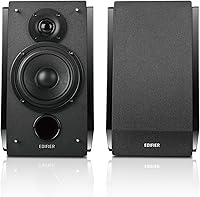
The clean, rectangular cabinet with a wood-finish veneer suits a wide range of desk and shelf environments without looking out of place. Most users describe the look as professional and neutral — the kind of speakers that blend into a home office setup without drawing unnecessary attention.
The design is conservative by current standards and lacks the visual personality that some newer competing models bring. The grille cloth, while functional, is not removable without effort, which limits how buyers can customize the look to match their workspace.
Stereo Imaging
79%
21%
With properly spaced placement on a desk, the R1850DB produces a notably wide and well-defined stereo field for a bookshelf-sized system. Users mixing audio casually or editing video content find the stereo separation useful for catching positional details they would miss on lesser desktop speakers.
Stereo performance depends heavily on optimal positioning, and in smaller desks where the speakers sit close together, the imaging collapses noticeably. The effect is also diminished when used in Bluetooth mode compared to a wired optical connection.
Volume Headroom
74%
26%
For a home office or bedroom environment, the 70W total output provides more than enough loudness without audible strain. Users in small to medium rooms report that they rarely push the volume past the midpoint, which suggests there is usable headroom for larger spaces too.
In open-plan living areas or rooms over roughly 250 square feet, the system can start to feel underpowered at higher volumes, particularly in the lower frequencies. A few users working in studio-adjacent environments noted the maximum output falls short of professional monitoring needs.
Input Switching Experience
71%
29%
The remote makes switching between sources genuinely convenient from across the desk, and the system remembers the last active input on power-up. Users who juggle a work laptop, personal phone, and TV source daily describe the multi-input workflow as one of the system's strongest practical advantages.
There is no front-panel button for input switching, so without the remote in hand, users are forced to cycle through inputs via the rear panel. Some buyers report a brief audio dropout when switching between digital inputs that is noticeable but not deal-breaking.
Long-Term Durability
82%
18%
Multiple long-term owners who have used these speakers daily for two or more years report no degradation in sound quality or hardware reliability. The amplifier circuit in particular seems robust, with very few reports of overheating or output channel failures across a large ownership base.
The fabric grille shows wear faster than the cabinet itself, and some owners find the finish on the speaker terminals degrades with repeated cable insertions over time. A limited warranty means out-of-pocket repairs after the coverage period can feel disproportionate to the original investment.

Suitable for:

The Edifier R1850DB is an excellent fit for anyone who needs a single speaker system to handle multiple source devices without the bulk or expense of a traditional stereo receiver setup. Home office workers who switch between a desktop PC, a laptop, and a phone throughout the day will find the combination of optical, RCA, and Bluetooth inputs genuinely practical rather than just a spec-sheet talking point. Vinyl enthusiasts who want to run a turntable via RCA while keeping a Bluetooth connection live for their phone will appreciate how naturally the system accommodates that workflow. It also suits apartment dwellers and small-room listeners who want real stereo audio quality without dedicating significant space to separate components. Content creators and casual home producers who need a relatively neutral, uncolored sound for editing and mixing will get honest playback from these bookshelf speakers. Anyone planning to add a subwoofer down the line will find the built-in line-out jack makes that upgrade straightforward when the time comes.

Not suitable for:

Buyers who listen primarily to bass-heavy genres like electronic, hip-hop, or film scores at high volumes are likely to find the R1850DB underwhelming without immediately pairing it with a subwoofer, which adds cost and complexity to the purchase decision. Audiophiles who demand high-resolution wireless audio will find Bluetooth 4.0 a genuine limitation, especially compared to competing systems now offering aptX HD or LDAC support. Users who frequently adjust tone controls mid-session will find the rear-panel placement of the bass and treble knobs genuinely frustrating, particularly in tight desk setups where the speakers sit flush against a wall or monitor. Anyone needing to fill a large room or open-plan living space may find the 70W output starts to strain before it reaches comfortable listening levels with room to spare. Buyers on a strict budget who have no immediate use for multiple inputs may find the overall investment hard to justify if only one or two sources are ever connected.

Specifications

  • Total Power: The system delivers 70W RMS total output, split across two amplifier channels driving the woofer and tweeter in each cabinet independently.
  • Woofer Driver: Each cabinet uses a 4-inch (116mm) dynamic woofer driver designed to handle mid-bass frequencies with controlled, accurate response.
  • Tweeter Driver: A 19mm silk dome tweeter is fitted in each cabinet, chosen for its smooth high-frequency reproduction and reduced listening fatigue.
  • Frequency Response: The system covers a frequency range of 60Hz to 20kHz, suitable for most music, voice, and multimedia content in small to medium rooms.
  • Signal-to-Noise Ratio: The built-in amplifier achieves a signal-to-noise ratio of 85dB or above, resulting in a clean, quiet background during normal listening.
  • Inputs: Available inputs include dual RCA, Bluetooth 4.0, one optical (Toslink), and one coaxial digital input, covering virtually all common consumer audio sources.
  • Bluetooth Version: Bluetooth 4.0 is implemented for wireless connectivity, with a stated range of up to 10 meters under unobstructed line-of-sight conditions.
  • Subwoofer Output: A dedicated subwoofer line-out jack is included on the rear panel, allowing a passive or powered subwoofer to be added without replacing the speakers.
  • Amplifier Type: The system is fully active, meaning the amplifier is built into the primary speaker cabinet — no external receiver or amplifier is required.
  • Channel Config: The R1850DB operates as a 2.0 stereo system with one active and one passive cabinet connected via a supplied speaker cable.
  • Remote Control: A compact wireless remote is included, providing control over volume, input selection, and Bluetooth track playback from a distance.
  • Tone Controls: Separate bass and treble adjustment controls are located on the rear panel of the active speaker, alongside the input selector toggle.
  • Speaker Dimensions: Each individual speaker cabinet measures 6.1 inches wide by 8.8 inches deep by 10 inches tall, making them practical for most desk and shelf placements.
  • System Weight: The pair weighs approximately 14.6 pounds (6.63 kg) in total, reflecting the solid cabinet construction and built-in amplifier hardware.
  • Input Sensitivity: Input sensitivity is rated at 700±50mV for PC input and 550±50mV for auxiliary input, optimized for standard consumer line-level sources.
  • Mounting Type: The speakers are designed for tabletop or shelf placement and do not include built-in wall-mount hardware or keyhole brackets.
  • Power Source: The system is powered via a standard corded AC connection and requires a nearby mains outlet — no battery operation is available.
  • Warranty: Edifier provides a limited warranty with the R1850DB; buyers should verify current regional warranty terms directly with Edifier or their retailer at the time of purchase.

Related Reviews
Edifier S3000MKII
Edifier S3000MKII
88%
94%
Sound Accuracy
91%
Bass Performance
93%
Treble Clarity
88%
Wireless Connectivity
90%
Build Quality
More
Edifier NeoBuds Pro
Edifier NeoBuds Pro
86%
94%
Sound Quality
91%
Noise Cancellation
89%
Battery Life
87%
Comfort & Fit
78%
Bluetooth Connectivity
More
Edifier TWS NB2
Edifier TWS NB2
85%
87%
Noise Cancellation Effectiveness
90%
Sound Quality
85%
Call Clarity
88%
Battery Life
82%
Comfort and Fit
More
Edifier H650 Headphones
83%
87%
Sound Quality
91%
Portability
79%
Comfort
85%
Build Quality
73%
Durability
More
Edifier S2000MKIII Bookshelf Speakers
86%
92%
Sound Quality
89%
Bluetooth Performance
88%
Build Quality
85%
Ease of Use
91%
Connectivity Options
More
Edifier W855BT Bluetooth Headphones
85%
87%
Sound Quality
93%
Battery Life
89%
Comfort and Fit
84%
Build Quality
91%
Ease of Use
More
Edifier M60 Multimedia Speaker
88%
94%
Sound Quality
91%
Bass Performance
88%
Connectivity Options
87%
Design & Aesthetics
89%
Setup & Installation
More
Edifier G2000
Edifier G2000
78%
78%
Sound Quality
71%
Bass Performance
86%
Build Quality
73%
EQ Modes
83%
Connectivity & Inputs
More
Edifier T5 Powered Subwoofer
86%
94%
Bass Performance
88%
Build Quality
85%
Ease of Setup
89%
Energy Efficiency
91%
Sound Clarity
More
Edifier W80 Over-Ear Headphones
86%
88%
Sound Quality
91%
Noise Cancelling Effectiveness
94%
Battery Life
85%
Comfort & Fit
89%
Call Clarity
More

FAQ

Yes, these bookshelf speakers support multiple simultaneous connections across different inputs. You can have your turntable plugged into one RCA input and your computer into the other, then switch between them using the remote or the rear-panel selector. Only one input plays at a time, but all connections stay live.

It depends on your turntable. The R1850DB accepts a standard line-level RCA signal, so if your turntable has a built-in phono preamp, you can connect it directly. If your turntable outputs a raw phono signal (common on entry-level and vintage decks), you will need a separate phono preamp between the turntable and the speakers.

In a direct line-of-sight setup within about 6 to 8 meters, the Bluetooth connection is stable. Once walls, furniture, or other wireless devices are introduced, some users find the range shorter than the 10-meter specification suggests. For a standard desk setup where your phone or laptop is within arm's reach, it works reliably without issue.

For most casual listening, voice content, and music with moderate bass content, they perform well on their own. If you regularly listen to genres that depend on deep bass — electronic, hip-hop, film scores — you will likely feel the low-end is missing something. The subwoofer line-out makes it easy to add one later without modifying the rest of your setup.

You can have both connected simultaneously — for example, your computer via RCA and your TV via the optical input — and switch between them using the remote. The Edifier R1850DB handles this kind of multi-source setup particularly well, which is one of the main reasons users in home office and entertainment setups choose it over simpler alternatives.

Honestly, not particularly. The bass and treble knobs are on the rear panel of the active speaker, which means if your speakers are positioned against a wall or behind a monitor, you will need to reach around to make adjustments. The controls work well and do make an audible difference, but they are better treated as a one-time setup adjustment rather than something you will fine-tune regularly.

No — this Edifier system is designed as a stereo pair where the active cabinet powers both itself and the passive cabinet via a speaker cable. The passive cabinet has no independent amplification, so both speakers need to be connected and running for the system to function as intended.

The remote controls volume and input switching for all inputs, not just Bluetooth. Track control functions (skip, play, pause) are only active during Bluetooth playback, which is standard for this type of remote. For day-to-day volume and source management, the remote works across every connected input.

The sub-out is a standard line-level RCA output, so it is compatible with most powered subwoofers that have an RCA line-level input — which is the majority of consumer subwoofers on the market. You do not need a specialized or brand-matched subwoofer; any powered sub with a line-in will work.

For a room up to roughly 150 to 200 square feet, the 70W output provides comfortable listening volume with headroom to spare. In larger spaces, the system can still fill the room, but you may notice it starts to strain slightly at the very top of the volume range. For a bedroom, home office, or studio apartment, the output is more than adequate.