



Overview

The Coda IEM-One-R is a compact wired in-ear monitor amplifier built for musicians who need a reliable personal mix on stage. Released in mid-2025 by Coda Music Technologies, this IEM amp occupies a practical mid-range position — accessible enough for working performers without the overhead of a flagship belt-pack system. The standout power approach sets it apart: included AAA batteries recharge directly inside the unit via USB-C, so there is no fumbling with a separate charger before a gig. The single-channel design keeps the signal path clean and the physical footprint impressively small, weighing under 10 oz and easy to clip to a belt or waistband.

Features & Benefits

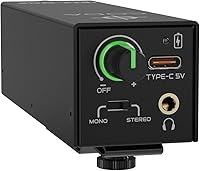
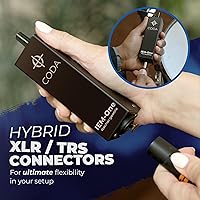
The USB-C in-unit charging is the most practical detail here — plug a cable into the unit and the included AAA cells top up without ever leaving the device, which matters enormously when prep time is short. The hybrid XLR/TRS input means this personal monitor amplifier connects to virtually any console or audio interface without needing adapters. A top-mounted mono/stereo toggle gives quick, intuitive control over channel blending. The LED volume knob does double duty: it glows for low-light visibility and shifts color as the battery drains, giving performers a passive, at-a-glance heads-up before the power runs out mid-set.

Best For

This IEM amp suits singers, drummers, and instrumentalists who need a personal monitor feed but are not yet ready to invest in a full wireless system. The universal input compatibility makes it easy to drop into almost any backline setup, from a small club with a basic mixing board to a mid-size venue with a professional FOH rig. Mono-focused players will appreciate the channel blend switch, while budget-conscious performers benefit from not having to source batteries or a separate charger at launch. It is a sensible, low-friction pick for the semi-pro and gigging-amateur stage circuit.

User Feedback

Early buyers have responded warmly, with a 4.5-star average across more than 200 ratings in its opening months. The illuminated indicator knob draws consistent praise as a genuinely stage-useful feature rather than a gimmick. Reviewers also appreciate that rechargeable batteries ship in the box — a detail competitors at this price point frequently skip. On the downside, some users report the unit runs noticeably warm during extended charging sessions, which is worth considering for back-to-back performances. A smaller contingent flags that the single-channel layout does not suit every monitoring need, particularly for performers who rely heavily on wide stereo separation in their mixes.

Pros

  • Rechargeable AAA batteries are included in the box — no separate purchase needed to get started.
  • USB-C charging works directly in the unit, so you top up between sets without touching the batteries.
  • Hybrid XLR/TRS input means this IEM amp connects to virtually any console without adapters.
  • The LED volume knob shifts color as charge depletes, giving a passive battery warning on dark stages.
  • Setup takes under two minutes — connect your cable, plug in your IEMs, and you are monitoring.
  • The mono/stereo toggle is genuinely useful for performers who want either a centered blend or separation.
  • At under 10 oz the unit clips to a belt without adding awkward bulk or throwing off movement.
  • Audio output is clean and transparent for the price tier — appropriate for reliable stage monitoring.
  • Early buyer reception is strong, with a 4.5-star average across more than 200 ratings since launch.
  • Universal input compatibility makes this personal monitor amplifier easy to use across different venues and rigs.

Cons

  • No dual-input option means you cannot blend two separate audio feeds simultaneously.
  • Charge level indicator is coarse — you know when power is low, but not exactly how low.
  • The unit runs noticeably warm during USB-C charging sessions, which some users find concerning.
  • Plastic chassis raises durability questions for high-sweat or physically demanding stage environments.
  • No official runtime specification is published, leaving battery life as a per-user guessing exercise.
  • High-sensitivity custom IEMs may reveal a faint background hiss at lower volume settings.
  • The belt clip can shift on wider or thicker waistbands during active, high-movement performances.
  • No gain staging, EQ, or mute control limits the amp for users wanting more refined signal management.
  • Output headroom may feel insufficient in very loud stage environments at the top of the volume range.

Ratings

The Coda IEM-One-R earned its 4.5-star average from a pool of 218 verified buyers, and the scores below reflect what our AI found after systematically analyzing that feedback — filtering out incentivized posts and outlier noise to surface what real performers actually experienced. Every category score here, whether strong or underwhelming, is grounded in patterns from genuine stage and rehearsal use. Both the standout strengths and the honest friction points are reflected without softening either side.

Ease of Setup
93%
Reviewers consistently describe getting signal in under two minutes — plug an XLR or TRS cable into the input, connect IEMs to the output, and you are monitoring. For musicians doing quick soundchecks at small venues with no dedicated tech support, that plug-and-play reliability is a real operational advantage.
A small number of users initially found the mono/stereo toggle placement unintuitive without reading the manual first. Nothing that causes ongoing frustration, but first-time IEM amp users may need a moment to orient themselves before their first gig.
Battery & Charging System
88%
The ability to recharge the included AAA cells inside the unit via USB-C is a genuine convenience that competing units at this price tier rarely offer. Musicians can top up from a power bank backstage or in a green room without removing a single battery, which cuts pre-show prep friction noticeably.
Several users report that the unit runs warm to the touch during extended USB-C charging sessions, which raises mild concern for some buyers even if no failures have been documented. Actual charge times and per-charge runtime are not officially specified, leaving performers to estimate their own usage windows through trial and error.
Input Compatibility
91%
The hybrid XLR/TRS combo jack is one of this personal monitor amplifier's most consistently praised practical features. Performers who rotate between venues — some with only TRS sends, others with balanced XLR aux outputs — can carry one unit and never worry about hunting for an adapter at the last minute.
The single input design means this IEM amp cannot simultaneously accept two separate feeds, which limits use cases for performers who want to blend a monitor mix with a click track or backing track from a separate source. For that workflow, a dual-input unit is a better fit.
LED Volume & Battery Indicator
86%
The color-shifting LED knob is one of those small design choices that earns disproportionate appreciation in real-world use. On a dim stage, being able to glance at a knob and read both your volume position and a rough battery status without pulling out a phone or interrupting focus is quietly valuable.
The color gradations indicating charge level are broad rather than granular, so the indicator tells you when battery is low but not how low. Performers deep into a long set who see the color shift may still have anywhere from a few minutes to half an hour left, which forces some guesswork.
Audio Clarity
79%
21%
For the price tier this unit occupies, the audio output is clean enough that vocalists and instrumentalists can reliably hear pitch, dynamics, and blend detail without obvious coloration or noise floor intrusion. Users describe it as transparent rather than flattering, which suits monitoring purposes well.
This is not a studio-reference-grade signal chain, and buyers with high-end IEMs will likely notice a ceiling on resolution compared to premium dedicated amplifiers. A handful of reviewers with sensitive custom-molded earphones flagged a faint background hiss at higher volume settings.
Build Quality & Durability
74%
26%
The unit feels solid enough for regular gigging at the semi-pro level — the chassis does not flex under normal handling, and the input jack shows no early signs of loosening after repeated cable connections reported by users several months into ownership.
The housing is plastic rather than metal, and a few reviewers who use this IEM amp in high-sweat or high-humidity stage environments expressed uncertainty about long-term durability. No widespread failure reports exist yet, but the build does not inspire the same confidence as more expensive metal-bodied competitors.
Portability & Form Factor
89%
At just under 10 oz and sized to clip onto a belt or waistband, this personal monitor amplifier disappears into a performer's rig without adding awkward bulk. Drummers in particular appreciate not having a heavy unit throwing off their movement during an active set.
The clip mechanism is functional but not the most secure on wider belts or thick fabric waistbands. A couple of reviewers mentioned the unit shifted position during energetic performances, which is a minor but real annoyance when you are mid-song and cannot adjust.
Mono/Stereo Flexibility
81%
19%
Having an accessible top-mounted toggle to switch between a focused mono blend and full stereo separation means performers can adapt their monitoring in real time. Drummers wanting a punchy centered mix and vocalists wanting spatial awareness in their ears can both get what they need from the same unit.
The single-channel architecture means stereo separation is derived from one incoming feed rather than two discrete channels, which places a ceiling on how rich the stereo image can realistically be. Performers accustomed to true dual-channel belt-packs will find this distinction meaningful.
Value for Money
87%
Factoring in that rechargeable batteries ship in the box and no adapter is needed for most console connections, the total out-of-pocket cost to get operational is lower than the sticker price suggests. For a working musician on a tight gear budget, that ready-to-run package has clear appeal.
Buyers who need dual-channel inputs or higher output headroom will quickly outgrow this unit and spend more on an upgrade anyway. At that point the value calculation changes, and it is worth being honest that the Coda belt-pack amp is sized for a specific, narrower use case rather than a universal monitoring solution.
Volume Range & Output Level
77%
23%
Most users report sufficient headroom for IEMs at typical stage monitoring volumes — singers and acoustic instrumentalists in particular find the output more than adequate for hearing themselves over a live band without pushing the amp to its limits.
Drummers and players in high-volume environments occasionally report wanting more output at the top of the knob's range. The amp does not clip audibly at maximum, but there is a noticeable plateau in perceived loudness before the knob reaches its stop that limits usefulness in the loudest stage contexts.
Noise Floor
72%
28%
Under normal operating conditions and at moderate listening volumes, the background noise level is low enough that it does not intrude on the monitoring experience for most users. Casual gigging musicians using standard universal-fit IEMs are unlikely to notice it during a performance.
Users with high-sensitivity custom IEMs or those who monitor at lower volumes specifically to protect their hearing are more likely to detect a faint hiss. It is not a dealbreaker for most, but it is a real limitation that separates this amp from cleaner higher-priced alternatives.
Indicator & Controls Usability
84%
The control layout is minimal by design, which works in its favor for live use — there is no menu to navigate, no hidden mode to accidentally trigger, and the LED feedback gives enough information for confident operation without requiring attention or thought mid-performance.
Minimalism also means there is no fine-grained EQ, gain staging control, or mute function. For more advanced monitoring needs these omissions matter, and users who have worked with more feature-rich units will notice the absence even if they understand why the simplicity exists.
Packaging & Unboxing Experience
71%
29%
The included rechargeable batteries and user manual are practical inclusions that reduce the setup friction new buyers often encounter with budget audio gear. Reviewers appreciate not having to make a separate purchase before the unit is usable.
The packaging itself is straightforward rather than premium, and the manual covers only the basics. Users looking for technical detail — impedance specs, exact frequency response, maximum output level — will not find it in the box and may struggle to locate it elsewhere.

Suitable for:

The Coda IEM-One-R is built for the working gigging musician who needs a personal monitor feed without the complexity or cost of a wireless system. Vocalists, drummers, and guitarists performing at clubs, houses of worship, theater pits, or rehearsal spaces will find the straightforward single-input design covers everything they actually need. Performers who rotate between multiple venues benefit especially from the hybrid XLR/TRS input, since it removes the adapter guesswork that comes with mixing consoles of different ages and configurations. The USB-C rechargeable battery system is a real advantage for musicians who prep quickly — topping up from a laptop or power bank backstage takes no special equipment. If you are moving from passive stage wedges to in-ear monitoring for the first time, this personal monitor amplifier offers a low-barrier, low-risk entry point that gets you operational fast without a steep learning curve.

Not suitable for:

The Coda IEM-One-R is not the right tool for every monitoring scenario, and being honest about that matters before you buy. Performers who need to blend two separate feeds — say, a main monitor mix and an independent click track from a backing track laptop — will hit a hard wall with the single-input design, since there is no way to route multiple sources into this unit simultaneously. Musicians using high-sensitivity custom-molded in-ear monitors may notice a faint noise floor at lower volume settings that more discerning ears will find distracting. Anyone who needs true dual-channel stereo from two discrete inputs, rather than a mono/stereo toggle on one feed, should be looking at a more capable belt-pack. Studio engineers or home recording musicians who want a headphone amp for mixing work will also find this IEM amp too limited in output control and too narrow in feature set for that application. Finally, performers in consistently loud, high-humidity stage environments may want to weigh the plastic chassis against the long-term durability demands of that specific context.

Specifications

  • Brand: Manufactured by Coda Music Technologies, a brand focused on accessible performance audio gear for working musicians.
  • Model: IEM-One-R, the rechargeable single-channel variant in Coda's in-ear monitor amplifier lineup.
  • Form Factor: Compact belt-pack style unit designed to clip onto a waistband or belt for hands-free stage use.
  • Input Type: Hybrid XLR/TRS combo jack accepts both balanced XLR and standard TRS cables without requiring any adapter.
  • Channels: Single-channel design with a top-mounted mono/stereo toggle to switch between blended and separated output modes.
  • Output: Standard headphone output jack compatible with wired in-ear monitor earphones of typical consumer and professional impedance ranges.
  • Power Source: Operates on AAA batteries, with rechargeable AAA cells included in the box ready for first use.
  • Charging: Batteries recharge directly inside the unit via a USB-C port, eliminating the need to remove or separately charge cells.
  • Volume Control: LED-illuminated rotary knob that glows for low-light visibility and shifts color progressively to indicate remaining battery level.
  • Noise Control: Passive sound isolation through the in-ear form factor, relying on the seal of the user's IEM earphones rather than active noise cancellation.
  • Weight: 9.9 oz (0.28 kg), light enough to wear clipped to a belt throughout a full performance without discomfort.
  • Dimensions: Package measures 5.87 x 4.17 x 1.93 inches, reflecting the compact footprint of the unit and its included accessories.
  • Connectivity: Fully wired operation with no wireless or Bluetooth components, keeping latency at zero and setup straightforward.
  • Included Items: Ships with the IEM-One-R unit, rechargeable AAA batteries pre-loaded, a USB-C charging cable, and a printed user manual.
  • Release Date: First made available in May 2025, positioning it as a recent mid-2025 product launch from Coda Music Technologies.
  • User Rating: Holds a 4.5 out of 5 star average based on 218 verified ratings collected during its initial launch window.
  • Best Sellers Rank: Ranked #127 in the Headphone Amps subcategory and #60,940 overall in Electronics on Amazon as of available data.
  • UPC: Registered UPC is 726152096455, corresponding to the single black IEM-One-R configuration.

Related Reviews

Insta360 ONE R 1-Inch Edition

85%
89%
Image Quality
94%
Stabilization Performance
87%
Low-Light Performance
92%
Waterproofing
75%
Battery Life
More
R+Co CENTERPIECE All-In-One Elixir Spray 5.2oz
86%
86%
Effectiveness at Frizz Control
89%
Hydration & Moisture Retention
79%
Scent Appeal (Lavender)
90%
Shine & Smoothness
92%
Weightlessness & Texture
More
Undefined Beauty R&R Day Serum 1oz
85%
88%
Effectiveness for Hyperpigmentation
85%
Hydration & Skin Texture
82%
Pore Refining
92%
Gentleness & Skin Sensitivity
90%
Fragrance-Free Formula
More
R&R Collective Frankincense Tallow Face Moisturizer 2 oz
85%
92%
Effectiveness for Hydration
89%
Skin Compatibility (Sensitive Skin)
77%
Absorption and Finish
70%
Fragrance (Frankincense)
95%
Ingredient Quality (Natural and Chemical-Free)
More
UHPPOTE UT-RL-209 Non-Visual One-to-One Intercom Doorphone

81%
87%
Audio Clarity
92%
Ease of Installation
83%
Range/Distance Performance
90%
Affordability
76%
Build Quality
More
Undefined Beauty R&R Sun Serum SPF 50 PA++++ Tinted Mineral Sunscreen (Medium Tint)
89%
95%
SPF Protection
90%
Tinted Formula Performance
88%
Texture and Absorption
85%
Hydration and Moisture
91%
Non-Greasy Finish
More
Undefined Beauty R&R Sun Elixir SPF 30 – Glow Oil for Face, Hair, Scalp & Body
85%
89%
Texture and Absorption
92%
Scent and Fragrance
88%
SPF Protection and Effectiveness
85%
Multi-Use Versatility
75%
Moisturization and Hydration
More
Donner Dobuds ONE
Donner Dobuds ONE
85%
94%
Sound Quality
91%
Active Noise Cancellation
89%
Call Clarity
88%
Battery Life
87%
Fit and Comfort
More
Canon EOS R
Canon EOS R
88%
97%
Image Quality
94%
Autofocus Accuracy
91%
Video Performance
88%
Build Quality
90%
Ergonomics & Handling
More
ClearClick VT33 All-in-One Turntable
76%
84%
Build Quality & Materials
63%
Sound Quality
91%
Ease of Use
88%
Format Versatility
67%
USB Recording Function
More

FAQ

No, rechargeable AAA batteries are already included and installed in the unit when it ships. You can charge them via the USB-C port before your first use and be ready to go without any separate purchase.

Yes, that flexibility is built into the design. The unit accepts both rechargeable and standard alkaline AAA batteries, so if you ever find yourself without a charge, a convenience store run will get you back up and running before showtime.

Coda has not published an official runtime specification, which is a genuine gap in the product documentation. Based on typical AAA rechargeable capacity and the power draw of a compact headphone amp, most users should expect several hours of continuous use, but your mileage will vary depending on output volume and battery age.

Absolutely. The hybrid input jack on this personal monitor amplifier accepts either XLR or TRS cables, so it plugs directly into any standard aux or monitor send regardless of whether the connector is balanced XLR or a quarter-inch TRS.

No, and that distinction matters. The Coda IEM-One-R is a wired amplifier — you run a physical cable from the console's monitor send to the unit, then plug your IEM earphones into the output. There is no wireless transmitter or receiver involved, which keeps the cost down but means you are tethered to a cable on stage.

The knob glows so you can see your volume position on a dark stage, and it changes color as the battery drains — typically shifting from one color to another as charge runs low. Performers who have used it consistently say the color change gives them enough warning to swap or recharge between sets rather than being caught off guard mid-song.

Unfortunately no. The unit has a single input, so it can only accept one audio source at a time. If you need to combine a monitor feed with a click track or backing track from a separate device, you would need an external small mixer to combine those signals before they reach this IEM amp.

Several users have noted it runs warm during USB-C charging sessions, which is common behavior for devices that charge batteries internally. No widespread failures or safety incidents have been reported, but if you notice it getting very hot rather than just warm, it is reasonable to pause charging and let it cool before continuing.

It will work with custom IEMs, but keep expectations calibrated. Users with high-sensitivity custom-molded earphones are more likely to detect a faint background noise floor at low volumes than those using standard universal-fit IEMs. It is not a dealbreaker for most performers, but if you are using very sensitive monitors in a quiet acoustic environment, it is worth knowing upfront.

Very quickly — that is one of the most consistently praised aspects of this unit. Connect an XLR or TRS cable from the console's monitor send, plug your IEM earphones into the output jack, set the mono/stereo toggle, and adjust the volume knob. Most users report being fully set up and ready to soundcheck in under two minutes.