Overview

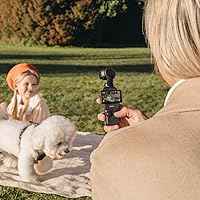
The DJI Osmo Pocket 3 Vlogging Camera arrived in late 2023 as a serious step up from its predecessor, and it shows. Where the original felt like a capable experiment, this pocket gimbal camera feels like a finished product built for creators who actually need to rely on their gear. The jump to a 1″ CMOS sensor alone changes what the camera can do in challenging light. It sits in an interesting spot — more capable than most action cameras, but far lighter and simpler than an entry-level mirrorless kit. For anyone tired of hauling heavy equipment, that trade-off is immediately appealing.
Features & Benefits

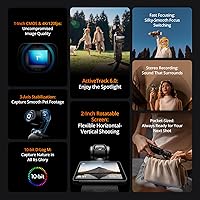
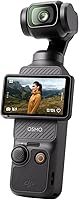
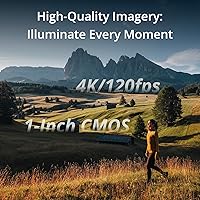
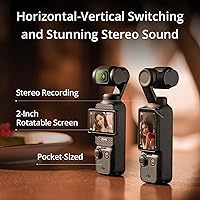
The 3-axis mechanical gimbal is the foundation everything else builds on — even when you're running down a cobblestone street or dancing at a concert, footage stays impressively composed. The 1″ sensor genuinely pulls its weight in low light; evening shots that would look muddy on an action cam come out detailed and usable. Shooting at 4K/120fps gives you slow-motion that adds real production value to travel or sports content. ActiveTrack 6.0 is surprisingly reliable for solo shooting — set the camera on a tripod, start recording, and it stays locked on you. The rotating 2″ OLED screen makes switching between landscape and vertical formats quick and intuitive.

Best For

This compact vlogging cam is an especially strong fit for solo content creators — specifically the kind who don't have an extra pair of hands to adjust framing mid-shoot. YouTubers documenting travel, fitness routines, or daily life will get consistent, polished results without a steep learning curve. It's also a natural upgrade for creators who've outgrown their smartphones but aren't ready to commit to a full mirrorless system. Anyone producing content for Instagram Reels or TikTok will appreciate how naturally it switches to vertical mode. If you shoot in varied lighting and genuinely care about footage quality, this camera earns its place.

User Feedback

Owners consistently praise the stabilization and low-light performance, with many noting a meaningful improvement over the previous model. The rotating screen gets frequent mentions as a practical, well-executed addition. On the critical side, buyers point out that the base unit lacks a dedicated microphone port — usable outdoor audio often means purchasing a separate mic, which adds to an already high price. Real-world battery life tends to fall noticeably short of the official rating when 4K and tracking run simultaneously. A few buyers feel the accessory costs compound the investment. That said, the majority conclude the results justify what they paid.

Pros

  • Mechanical 3-axis gimbal produces genuinely smooth footage even during active, fast-moving shoots.
  • The 1″ CMOS sensor is a real upgrade in low-light situations compared to action cameras and smartphones.
  • ActiveTrack 6.0 makes solo shooting practical — no second person needed for consistent subject framing.
  • 4K at 120fps delivers usable, detailed slow-motion that adds production value to travel and lifestyle content.
  • The rotating 2″ OLED screen makes vertical and horizontal framing quick and accurate from any angle.
  • D-Log M with 10-bit color gives editors meaningful latitude to color grade footage in post-production.
  • At just over 6 ounces, the Osmo Pocket 3 fits in a jacket pocket and is genuinely carry-anywhere portable.
  • Fast charging gets the battery back to 80% in roughly 16 minutes, reducing downtime during long shoot days.
  • The touchscreen interface is intuitive enough for beginners to pick up quickly without reading a manual.

Cons

  • Built-in microphone port is absent on the base unit, making quality outdoor audio an added accessory cost.
  • Real-world battery life drops noticeably below the rated figure when 4K resolution and tracking run together.
  • Wind noise from the built-in stereo mics renders outdoor audio unreliable in anything above a light breeze.
  • A microSD card is not included — an easy-to-overlook omission at this price point.
  • Accessory costs for a fully functional outdoor setup accumulate quickly on top of an already significant base price.
  • Screen visibility in direct sunlight is a recurring frustration, making precise framing difficult on bright days.
  • Tracking can lose the subject in crowded scenes or when the subject turns away from the lens.
  • The compact grip offers limited ergonomics during extended handheld shoots without an accessory handle.
  • D-Log M footage looks flat straight out of camera, requiring post-production work that not all buyers anticipate.

Ratings

The DJI Osmo Pocket 3 Vlogging Camera scores here reflect AI-processed analysis of verified global buyer reviews, with spam, bot activity, and incentivized feedback actively filtered out. The result is an honest picture of where this compact vlogging cam genuinely excels and where real users have run into friction. Both the standout strengths and the recurring frustrations are weighted and reflected transparently in every score below.
Video Quality
93%
Buyers consistently describe footage as punchy and detailed, with the 1″ sensor producing results that hold up even when viewed on larger screens. Travel vloggers in particular note that daylight shots rival what they used to get from entry-level mirrorless cameras, without the extra bag weight.
A small number of users report slight softening at the edges in wide shots, and a few pixel-peepers feel sharpness drops off when shooting at the highest slow-motion frame rates. Not a dealbreaker, but worth noting for creators who prioritize absolute resolution over versatility.
Low-Light Performance
88%
The jump from a smaller sensor to a 1″ CMOS makes a tangible difference when shooting after sunset or indoors under mixed lighting. Users coming from action cameras or smartphones frequently call this out as the single biggest improvement — evening street footage that looked grainy before now comes out usable and often genuinely impressive.
In very demanding low-light scenarios — think dimly lit bars or candlelit rooms — some noise is still visible, especially when color grading in post. The camera handles it better than its competitors at this size, but it is not a replacement for a fast prime lens on a larger body.
Gimbal Stabilization
96%
This is the area where the Osmo Pocket 3 draws the most consistent praise across buyer reviews. Runners, cyclists, and concert-goers all describe footage as remarkably composed, with the 3-axis mechanical gimbal absorbing movement that would leave other compact cameras producing unwatchable results.
In rare cases involving very sudden or extreme lateral jolts — think rough off-road terrain — users notice brief correction artifacts as the gimbal resets. It is a minor complaint relative to overall performance, but creators doing high-impact sports content should be aware of the limitation.
Subject Tracking (ActiveTrack)
84%
Solo creators setting up the camera on a tripod and stepping in front of it report that ActiveTrack 6.0 locks on quickly and holds its subject well even through moderate occlusion or direction changes. For fitness instructors, solo travel vloggers, and presenters, this largely removes the need for a second person behind the camera.
Tracking occasionally struggles in crowded scenes where multiple people cross the frame, and a few users note it can lose the subject when they turn their back or move too close to the lens. It performs best with a clear, well-lit subject against a relatively uncluttered background.
Build Quality & Portability
89%
At just over 6 ounces, the Osmo Pocket 3 slips into a jacket pocket or small bag without adding meaningful bulk to a travel kit. The materials feel premium without being precious — most buyers describe it as solid and confidence-inspiring, not the kind of thing you worry about tossing into a daypack.
The form factor, while excellent for portability, does mean the grip is modest and can feel a little precarious during fast-moving shoots without an accessory handle. A handful of users also wish the protective lens cover felt more robust given the price of the unit.
Screen Usability
87%
The 2″ rotating OLED touchscreen is a genuine quality-of-life feature that buyers across skill levels appreciate. Being able to flip it to check framing from in front of the camera, or rotate it for vertical shooting, removes a lot of the guesswork that plagues fixed-screen compact cameras.
Outdoor visibility in direct sunlight gets a fairly regular mention as a weak point — the screen can wash out enough to make precise framing difficult on bright days. Touch responsiveness is generally good but occasionally sluggish when the camera is cold.
Audio Quality
63%
37%
The built-in stereo microphones handle controlled indoor environments reasonably well, capturing voice clearly enough for casual vlogs filmed inside. Users recording sit-down content, tutorials, or indoor interviews find the audio perfectly acceptable without any accessories.
Outdoors, wind noise is a recurring and significant complaint. Even light breezes introduce audible rumble that can render footage unusable, and the base unit has no dedicated microphone port, meaning an external mic requires the purchase of an additional accessory. For creators who shoot primarily outside, this is a real cost and inconvenience to factor in.
Battery Life
71%
29%
Under moderate conditions — shooting shorter clips, not running tracking continuously, using lower resolutions — many users comfortably get through a half-day of content creation on a single charge. The fast-charge capability getting back to 80% in around 16 minutes is a well-received practical feature.
When shooting sustained 4K with ActiveTrack and the screen running simultaneously, real-world battery life falls noticeably below the rated figure. Creators shooting full travel days or events frequently find themselves needing a power bank or spare battery handle to avoid gaps in their coverage.
Ease of Use
91%
Setup is fast enough that it does not interrupt the impulse to capture a moment — the camera is ready to shoot quickly, and the touchscreen interface is intuitive even for users coming from smartphones with no dedicated camera experience. Automated axis locks and straightforward menu logic keep the learning curve gentle.
Some of the more advanced features, like manual D-Log M color profile settings and custom tracking zones, take a bit of trial and error to configure confidently. Users who want full manual control sometimes find the touch interface fiddly for precise adjustments when in a hurry.
Slow-Motion Performance
82%
18%
4K at 120fps delivers genuinely cinematic slow-motion that adds production value to travel recaps, sporting moments, and lifestyle content. Users describe the results as smooth and detailed, well above what they expected from a camera this compact.
Shooting at the highest slow-motion settings generates significant heat over extended sessions and accelerates battery drain noticeably. A few users also note that autofocus reliability dips slightly under fast-motion 120fps conditions compared to standard frame rates.
Color Grading Flexibility
79%
21%
The D-Log M profile with 10-bit color depth gives post-production editors real latitude to push colors and recover highlights or shadows that would clip in a standard profile. Buyers who color grade their footage consistently call this out as a feature that makes the footage feel closer to what larger cameras produce.
D-Log M footage looks flat and desaturated straight out of the camera, which can confuse newcomers who expect ready-to-post results. Extracting the full benefit requires at least a basic understanding of color grading software, adding a step that not all target buyers are prepared for.
Vertical Shooting Support
86%
The ability to rotate the screen and switch the gimbal into portrait mode natively — rather than just cropping a landscape frame — is something social media creators specifically appreciate. Instagram Reels and TikTok content filmed vertically looks properly composed rather than awkwardly letterboxed.
Some users note that switching between orientations mid-shoot takes a couple of deliberate steps rather than happening automatically, which can mean missing a spontaneous moment. The vertical mode also slightly reduces the effective stabilization range compared to the standard landscape orientation.
Focusing Speed & Accuracy
83%
Full-pixel PDAF locks on to subjects quickly in most shooting conditions, and users filming fast-moving subjects like children, pets, or athletes describe focus tracking as reliable enough to trust without babysitting it. Close-up shots also resolve sharply, which matters for product-style inserts in vlogs.
In low-contrast or very low-light environments, hunting behavior surfaces occasionally — the camera visibly searches before locking, which can introduce a brief soft moment in otherwise clean footage. It is infrequent but noticeable enough that several buyers flagged it in detailed reviews.
Accessory Ecosystem
74%
26%
DJI's accessory range — including the battery handle, wireless microphones, and ND filter sets — is well-integrated and genuinely useful. Creators who invest in even one or two accessories report that the overall system feels significantly more capable and production-ready.
The cost of rounding out the setup adds up quickly from an already high starting price. Essentials like a microSD card, carrying case, and a usable external microphone are all additional purchases, and some buyers feel these should be included or better bundled at this price point.
Value for Money
72%
28%
For creators who regularly produce content and need a reliable, high-quality result from a compact form factor, most buyers conclude the investment is justified once they see the footage. The combination of sensor size, stabilization, and tracking in this form factor has few direct rivals at any price.
Casual or infrequent creators may find it difficult to justify the cost compared to capable action cameras available for significantly less. When the accessory costs to get a fully functional outdoor shooting setup are factored in, the total outlay can feel steep relative to what occasional vloggers genuinely need.

Suitable for:

The DJI Osmo Pocket 3 Vlogging Camera is built for creators who need to move fast, shoot consistently, and do it without an assistant or a camera bag full of gear. Solo YouTubers and travel vloggers will get the most out of it — the combination of reliable subject tracking and mechanical stabilization means you can focus on the moment rather than the mechanics of the shot. It is equally well-suited to fitness and lifestyle creators who shoot themselves in motion, where shaky footage would otherwise be a constant problem. Beginners stepping up from smartphone video will find the learning curve manageable while immediately noticing a meaningful jump in footage quality, particularly in low light. Anyone producing content for vertical platforms like TikTok or Instagram Reels will appreciate that portrait-mode shooting is a native, well-supported feature rather than an afterthought.

Not suitable for:

The DJI Osmo Pocket 3 Vlogging Camera is a harder sell for buyers who shoot primarily outdoors and rely heavily on in-camera audio — wind noise from the built-in stereo mics is a genuine limitation, and solving it properly means spending more on external microphone accessories. Photographers looking for a stills-first device will find the feature set skewed heavily toward video, with limited appeal for serious photo work. Casual or infrequent creators who pick up a camera once a month for family events or occasional social posts will likely find the investment difficult to justify when cheaper alternatives exist. Creators who need waterproofing for water sports or harsh weather should also look elsewhere, as this compact vlogging cam offers no meaningful weather sealing. Finally, anyone who wants to shoot cinematic content and walk away without touching post-production may find D-Log M footage requires more editing knowledge than they currently have.
Specifications

  • Image Sensor: The camera uses a 1″ CMOS sensor, which is significantly larger than the sensors found in most compact action cameras and enables better light capture and dynamic range.
  • Video Resolution: Records video at up to 4K resolution with a maximum frame rate of 120fps, enabling detailed slow-motion footage alongside standard recording modes.
  • Lens: The fixed lens has a 20mm equivalent focal length and a maximum aperture of f/2.0, providing a moderately wide field of view suitable for vlogging and travel content.
  • Stabilization: A 3-axis mechanical gimbal handles physical stabilization, keeping footage composed during movement such as walking, running, or filming from a moving vehicle.
  • Focusing System: Full-pixel phase-detection autofocus (PDAF) covers the entire sensor area, allowing fast and accurate focus acquisition across a wide range of shooting distances and subject speeds.
  • Tracking: ActiveTrack 6.0 provides subject tracking for faces, bodies, and objects, enabling hands-free, center-frame recording without a dedicated camera operator.
  • Screen: A 2″ OLED touchscreen rotates to support both landscape and portrait orientations, with touch controls for menu navigation, focus selection, and shooting mode changes.
  • Color Profile: D-Log M color profile records in 10-bit depth, capturing up to approximately one billion colors and preserving highlight and shadow detail for post-production color grading.
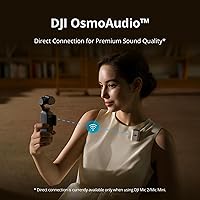
  • Audio: Built-in stereo microphones record at 48kHz with 16-bit AAC encoding, with no dedicated 3.5mm microphone port on the base unit.
  • Battery Life: The rated operating time is up to 166 minutes under controlled conditions, though real-world usage with 4K recording and active tracking will reduce this figure noticeably.
  • Charging: Charges via USB and reaches approximately 80% capacity in around 16 minutes, making quick top-ups practical during breaks in a shooting day.
  • Storage: Records to a microSD card (not included in the box), requiring a separately purchased card that is compatible with high-bitrate 4K video recording.
  • Dimensions: The unit measures 5.5 × 1.66 × 1.32 inches, making it small enough to fit in a jacket pocket or small compartment of a travel bag.
  • Weight: The camera weighs 6.3 ounces, keeping the total carried load minimal even when combined with a small accessory or mounting solution.
  • Connectivity: Connects to a host device or charger via USB, and integrates with the DJI Mimo app on compatible iOS and Android smartphones for remote control and editing.
  • Vertical Shooting: Portrait-mode shooting is natively supported through the gimbal and rotating screen, producing properly composed vertical video without cropping a landscape frame.
  • Slow-Motion: The 4K/120fps mode enables slow-motion footage at four times standard speed, with lower resolution options available at higher frame rates depending on the shooting mode selected.
  • Release Date: The product was first made available in October 2023 and is not discontinued, with ongoing firmware updates distributed through DJI's Mimo companion application.
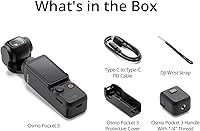
  • In the Box: The standard package includes the camera unit with an integrated battery, a wrist strap, a USB-C charging cable, and a protective lens cover; a microSD card and external microphone are sold separately.
  • Compatibility: Works with DJI's broader accessory ecosystem including the battery handle, wireless microphone adapters, ND filter sets, and various mounting solutions designed specifically for the Osmo Pocket platform.

Related Reviews
DJI Osmo Mobile 3 Smartphone Gimbal Stabilizer
79%
91%
Stabilization Performance
93%
Portability & Form Factor
78%
Subject Tracking (ActiveTrack 3.0)
62%
App Dependency & Software Experience
84%
Ease of Setup & Learning Curve
More
FeiyuTech Pocket 3 Gimbal Camera
74%
91%
Gimbal Stabilization
84%
Video Quality
88%
Detachable Design
76%
AI Subject Tracking
67%
Battery Life
More
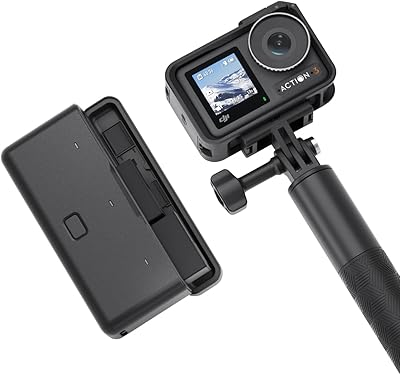
DJI Osmo Action 3 Adventure Combo Action Camera
81%
91%
Video Quality
88%
Stabilization
79%
Battery Life
87%
Build & Durability
93%
Waterproofing
More
SJCAM C300 4K Pocket Action Camera

70%
88%
Battery Life
81%
Value for Money
66%
Video Quality
69%
Stabilization Performance
86%
Ease of Setup & Use
More
myFirst Camera 3 Kids Digital Camera
72%
76%
Image Quality (Daylight)
51%
Low-Light Performance
74%
Video Quality
83%
Macro Lens
81%
Ease of Use
More
ROQIOO A9
ROQIOO A9
67%
83%
Value for Money
61%
Image Quality
58%
Video Quality
81%
Flip Screen Usability
54%
Build Quality & Durability
More
AOREGRE 5K Digital Camera WiFi Autofocus Vlogging Camera
83%
92%
Value for Money
89%
Image Quality
87%
Ease of Use
90%
Video Quality (5K)
85%
Portability & Size
More
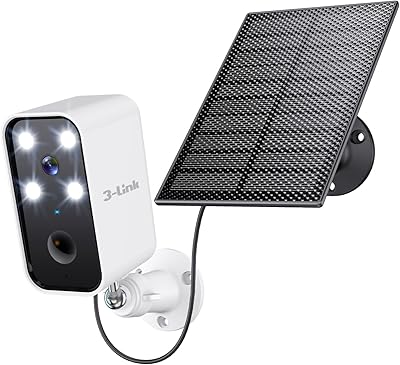
3-Link Battery Camera TB1 S Solar Security Camera
84%
91%
Setup & Installation
89%
Motion Detection Reliability
88%
Solar Charging Efficiency
83%
Night Vision Performance
85%
Weather Resistance
More
ZEROXCLUB B3C 3-Camera Wireless Backup Camera System
76%
84%
Video Signal Reliability
83%
Image Quality
76%
Night Vision Performance
71%
Installation Experience
88%
Weather & Build Durability
More
DJI Pocket 2
DJI Pocket 2
85%
96%
Portability & Size
91%
Stabilization Performance
89%
Video Quality (4K)
87%
Ease of Use
85%
Audio Quality & Noise Reduction
More

FAQ

You will need to buy one separately — no microSD card comes in the box. For 4K video at high frame rates, look for a card rated at V30 speed or faster, and UHS-I U3 or better. A slower card can cause dropped frames or recording errors.

Not directly on the base unit, since there is no built-in microphone port. To use an external mic, you need either the DJI Microphone or a compatible adapter that connects via USB-C. If clean audio is important to your content — especially outdoors — budget for this from the start.

It is a real issue outdoors. Even a modest breeze introduces audible rumble that can make the built-in stereo audio difficult to use in final cuts. For indoor or controlled environments it is fine, but for travel or outdoor vlogging, an external microphone is worth treating as a near-essential accessory rather than an optional one.

No, it is not waterproof or weather-sealed in any meaningful way. It should be kept away from rain, splashing water, and humid environments. If you need to shoot near water or in unpredictable weather, a protective case or housing is worth looking into.

Under real shooting conditions — particularly with 4K recording, ActiveTrack enabled, and the screen on — expect noticeably less than the rated 166 minutes. For a full day of content creation, having a power bank or the optional battery handle on hand is a practical precaution.

Yes, the Osmo Pocket 3 can be used as a USB webcam when connected to a computer, which is a useful bonus for creators who also stream or join video calls. The image quality is significantly better than most built-in laptop cameras.

For solo shooting in a clear environment, it is genuinely reliable. Set the camera on a tripod, tap to select yourself on the screen, and it will follow you through movement, turns, and moderate jumps. Where it struggles is in crowded scenes where other people cross the frame, or when the subject moves very close to the lens. With some practice, you learn when to trust it and when to reframe manually.

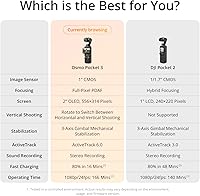
It is a meaningful upgrade for anyone who shoots in varied or challenging lighting. The 1″ sensor versus the smaller sensor in the Pocket 2 makes a visible difference in low-light footage, and the larger rotating screen is a practical improvement for everyday use. The stabilization and tracking are also improved. If you already own a Pocket 2 and shoot only in good light, the upgrade is less urgent — but for serious creators, the sensor difference alone is significant.

Yes, and it handles this better than most compact cameras. The gimbal physically rotates to portrait orientation and the screen flips to match, so you get properly stabilized vertical footage rather than a cropped landscape clip. It is one of the more practical implementations of vertical shooting in this class of camera.

D-Log M files work with most professional and prosumer video editing applications, including DaVinci Resolve (which has free color grading tools and is a popular choice among vloggers), Adobe Premiere Pro, and Final Cut Pro. DJI also provides LUTs to help convert D-Log M footage to a natural-looking color baseline quickly if you do not want to grade from scratch. If you are new to color grading, starting with DJI's provided LUTs is the most practical approach.

Where to Buy