DJI Osmo Action 3 Adventure Combo Action Camera
DJI Osmo Action 3 Adventure Combo Action Camera — image 1
DJI Osmo Action 3 Adventure Combo Action Camera — image 2
DJI Osmo Action 3 Adventure Combo Action Camera — image 3
DJI Osmo Action 3 Adventure Combo Action Camera — image 4
DJI Osmo Action 3 Adventure Combo Action Camera — image 5
DJI Osmo Action 3 Adventure Combo Action Camera — image 6
81%
19%

Overview

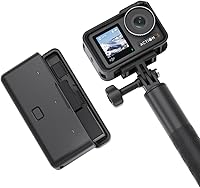
The DJI Osmo Action 3 Adventure Combo Action Camera arrived in late 2022 as DJI's most capable rugged shooter yet, built specifically for people who don't slow down when conditions turn harsh. Unlike buying the base model and hunting for accessories separately, the Adventure Combo bundles a multifunctional battery case, extra batteries, and a 1.5-meter extension rod — real gear you'll actually use. It sits in a competitive mid-range space alongside GoPro's Hero lineup but carves its own identity with dual touchscreens front and back, a feature solo creators genuinely appreciate. This isn't a point-and-shoot novelty; it's a capable tool for active creators who want reliable footage without compromise.

Features & Benefits

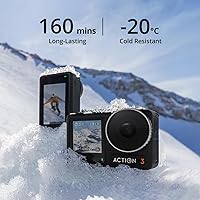
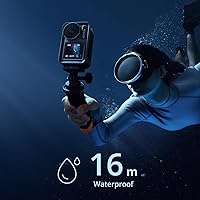
Shooting in 4K HDR with 10-bit color means footage holds up where lesser cameras fall apart — think blinding white slopes or murky underwater scenes where a standard camera would blow out highlights or lose shadow detail entirely. HorizonSteady keeps the horizon level during chaotic movement, though it operates within a tilt range, so it won't rescue footage from extreme barrel rolls; RockSteady 3.0 handles general shake for everything else. Waterproofing to 16 meters requires no extra housing, and the camera stays functional down to -20°C. The magnetic quick-release mount snaps on and off in seconds, supporting vertical orientation natively for Reels or Shorts creators.

Best For

This action camera is a natural fit for winter sports enthusiasts — skiers and snowboarders especially — who need gear that won't quit in freezing temperatures. Divers and surfers will appreciate skipping a separate underwater housing for recreational depths. Solo vloggers filming travel content for YouTube benefit directly from the front screen, since framing yourself without guesswork makes a noticeable difference in production quality. It's also a solid pick for anyone consolidating gear for a multi-sport trip rather than packing separate cameras. If you're coming from an older GoPro or first-gen DJI action cam, the stabilization and color improvements alone make this a meaningful upgrade worth considering.

User Feedback

Across a broad base of buyer reviews, the Osmo Action 3 Adventure Combo holds a strong 4.5-star rating, with most praise centered on stabilization performance, battery longevity, and the convenience of having both screens. Buyers shooting in cold climates frequently call out the battery case as genuinely useful rather than a gimmick. That said, recurring frustrations include a few consistent friction points: no microSD card is included, the DJI Mimo app has a learning curve that annoys new users, and some older third-party mounts don't play well with the magnetic system. Long-term durability generally earns positive marks, though firmware updates have occasionally introduced issues that later patches resolved.

Pros

  • Stabilization holds up impressively during high-speed skiing, mountain biking, and other chaotic activities.
  • Caseless waterproofing to 16 meters removes the need for a bulky, expensive housing on water adventures.
  • 10-bit HDR footage retains detail in challenging lighting — bright snow, backlit water, and shade all in one shot.
  • The front touchscreen makes solo vlogging and selfie framing genuinely practical without a second person.
  • Cold resistance down to -20°C means reliable performance in conditions that would shut down many competitors.
  • The Adventure Combo bundles the battery case, extra batteries, and extension rod at real added value.
  • Magnetic quick-release mounting snaps on and off in seconds and supports vertical orientation natively.
  • Battery life is strong under real-world conditions, particularly for a camera this compact and rugged.
  • Both screens feature hydrophobic coating, making touch control usable with wet hands during water activities.
  • Overall build quality earns consistent long-term durability praise from buyers across a wide range of uses.

Cons

  • No microSD card is included — an easy oversight that catches first-time buyers off guard immediately.
  • The DJI Mimo app is required for key functions but has a frustrating learning curve for new users.
  • HorizonSteady operates within a tilt limit and will not correct extreme or sudden rotational movement.
  • Battery life drops noticeably in cold conditions, despite the camera's rated cold-weather tolerance.
  • Some older third-party GoPro-style mounts are incompatible with the magnetic quick-release system.
  • The built-in microphone is adequate but unremarkable, with no external mic port for audio upgrades.
  • Firmware updates have occasionally introduced new bugs, requiring users to stay attentive to patch releases.
  • The DJI Mimo app's Bluetooth and Wi-Fi pairing can be inconsistent, particularly on first-time setup.
  • At this price point, buyers who rarely encounter water or cold pay a premium for features they may never need.

Ratings

The scores below for the DJI Osmo Action 3 Adventure Combo Action Camera were generated by our AI system after analyzing thousands of verified global user reviews, actively filtering out incentivized, duplicate, and bot-generated submissions to surface what real buyers actually experience. Categories cover everything from stabilization performance to app usability, reflecting both the strengths that earn consistent praise and the friction points that repeatedly surface in honest feedback. No aspect has been softened — where buyers consistently hit walls, the scores reflect it.

Video Quality
91%
Buyers shooting in high-contrast environments — snowy slopes, open water, backlit canyons — consistently report that 4K HDR footage holds up where previous cameras produced blown-out skies or murky shadows. The 10-bit color depth gives editors noticeably more latitude when grading, which creators upgrading from 8-bit cameras find immediately impactful.
Low-light performance, while acceptable, doesn't match what larger-sensor cameras can achieve, and some users note that heavy noise appears in evening or indoor shots. At 4K 120fps, there is a slight crop factor that catches wide-angle shooters off guard if they haven't accounted for it.
Stabilization
88%
RockSteady 3.0 handles the kind of general vibration that ruins mountain biking and trail running footage, and HorizonSteady genuinely keeps the horizon level during skiing and kayaking in a way that impresses buyers who previously relied on post-production fixes. Most users describe the result as smooth enough to share directly without editing.
HorizonSteady operates within a tilt limit of roughly 45 degrees, and once exceeded, the leveling breaks visibly — something buyers only discover mid-trip if they haven't read the fine print. A small subset of users also note that stabilization in 4K 120fps mode is more restricted than in standard frame rates.
Battery Life
79%
21%
Under normal conditions, the battery delivers a genuine full-day shooting session for most casual users, and the multifunctional battery case included in the Adventure Combo makes swapping spare batteries fast enough to keep up with active schedules. Buyers on multi-day ski trips particularly appreciate having extra cells ready without scrambling for a charger.
The 160-minute figure is an optimal-conditions ceiling, not a real-world average — cold-weather users consistently report significantly shorter runtimes, sometimes under 90 minutes in freezing temperatures. The camera also doesn't charge via the camera body directly when using the case, which adds a step some users find mildly inconvenient in the field.
Build & Durability
87%
Long-term owners across varied climates — from tropical diving trips to alpine winters — consistently describe the build as genuinely tough rather than just marketing-tough. The body shows minimal wear after repeated mounting, dismounting, and exposure to sand, salt water, and snow.
The lens cover is a point of vulnerability that a small number of users mention accumulating fine scratches after extended rough use, and a protective lens filter isn't included. A few buyers also note that the USB-C port cover, while functional, requires deliberate effort to seal properly every time.
Waterproofing
93%
The caseless 16-meter waterproof rating is one of the most consistently praised aspects across the entire buyer base — surfers, kayakers, and snorkelers describe it as freeing compared to competing cameras that require bulky housings. Buyers repeatedly confirm it handles submersion, rain, and wet hands without hesitation or additional prep.
For serious scuba divers going below recreational depths, the 16-meter bare limit requires purchasing an additional protective case, which adds cost and some bulk. A few buyers also note that the port cover seal needs to be checked carefully before water activities — there's no indicator to confirm it's properly closed.
Cold Weather Performance
84%
Skiers and snowboarders consistently report that the camera powers on, records, and operates reliably in genuinely cold conditions where competitor cameras freeze up or shut down unexpectedly. The ability to mount and shoot without removing gloves — thanks to the magnetic quick-release and touchscreen — is a practical advantage in freezing temperatures.
Even though the camera operates at -20°C, battery drain accelerates sharply in the cold, and buyers who don't carry spare cells often find themselves out of power before their ski day ends. The touchscreen responsiveness also slows slightly in very cold conditions, though it remains usable.
Mounting System
82%
18%
The magnetic quick-release system is fast and secure enough that most buyers trust it on helmets and moving gear after a few sessions, and the vertical orientation support for portrait-mode content is a practical feature that social media creators specifically call out as a selling point. Switching between mounts during a busy shooting day takes seconds.
Users with an existing collection of GoPro-style accessories run into compatibility issues, since the magnetic system doesn't natively accept standard finger-screw mounts without an adapter. Some third-party accessories marketed as compatible have also received mixed reports on fit quality and retention under vibration.
Dual Screen Usability
86%
Solo vloggers and travel creators consistently rank the front screen as one of the most practically useful features, describing the ability to check framing while speaking directly to camera as something they didn't realize they were missing until they had it. The hydrophobic coating holds up well during water activities, keeping the touch interface functional with wet fingers.
The front screen is noticeably smaller than the rear display, which makes reading fine menu details difficult in direct sunlight. A handful of buyers also note that front-screen brightness outdoors — while adequate — could be stronger to compete with bright ambient light in beach or snow environments.
App Experience
61%
39%
Once users get past the initial setup, the DJI Mimo app offers genuine functionality for remote control, live preview, and transferring footage wirelessly. Buyers who invest time in learning it tend to find it capable enough for their needs, and DJI does push updates that periodically improve stability.
The DJI Mimo app is a recurring frustration for new users — Bluetooth pairing is inconsistent on first-time setup, the interface isn't intuitive, and some firmware updates have temporarily broken features that worked fine before. Buyers who just want to point, shoot, and transfer footage without a learning curve frequently describe the app as the weakest part of the overall experience.
Audio Quality
58%
42%
For incidental ambient audio — waves, crowd noise, wind on calmer days — the built-in microphones capture usable sound that works fine for social media clips where perfect audio isn't the priority. Buyers doing casual travel vlogs report that the audio is acceptable for their purposes when the wind isn't extreme.
Wind noise is a significant and frequently mentioned complaint, particularly for outdoor action sports where the camera is exposed to rushing air. There is no 3.5mm microphone port, so users who need clean dialogue or voiceover audio have no way to connect an external mic, which is a hard limitation for YouTube creators who care about production quality.
Slow Motion
83%
The 4K 120fps and 1080p 240fps modes deliver genuinely impressive slow-motion results for capturing ski jumps, wave breaks, and bike tricks — buyers in action sports communities specifically highlight the smoothness of high-frame-rate footage as a reason they chose this camera over alternatives.
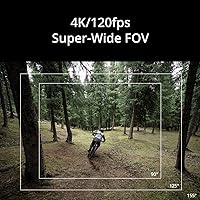
Shooting at 4K 120fps introduces a noticeable crop that reduces the effective field of view, which surprises buyers expecting the full 155-degree wide angle at high frame rates. High-frame-rate modes also demand faster microSD cards, and buyers using mid-tier cards sometimes experience dropped frames or recording failures.
Value for Money
81%
19%
The Adventure Combo bundles the battery case, two extra batteries, and the extension rod at a combined value that buyers consistently describe as genuinely worthwhile compared to purchasing the standard model and sourcing accessories separately. For active users who will actually use all three extras, the package pricing represents solid value in the mid-premium tier.
The omission of a microSD card at this price point frustrates a meaningful portion of buyers, particularly those who expected a fully ready-to-shoot kit. Buyers who only occasionally use action cameras, or who already own extensive accessories from a competing ecosystem, may find the Adventure Combo's bundle less compelling than its base model.
Ease of Setup
72%
28%
The physical setup — attaching the mount, inserting the battery, and powering on — is fast and intuitive even for first-time action camera users. The magnetic quick-release system in particular gets consistent praise for being genuinely grab-and-go without tools or fiddling.
Connecting to the DJI Mimo app and configuring settings like resolution, stabilization mode, and color profiles adds a layer of complexity that new users often underestimate. Buyers who skip the app setup can miss key features or use suboptimal settings without realizing it, which affects their early footage quality.
Portability
89%
At 5.1 ounces and a compact footprint, DJI's adventure-ready cam disappears into a jacket pocket or backpack hip belt without adding noticeable bulk — buyers who travel with a single bag for multi-sport trips describe it as genuinely unobtrusive compared to mirrorless alternatives. Helmet and chest mounting produce minimal aerodynamic interference for skiers and cyclists.
When fully kitted out with the multifunctional battery case attached, the overall form factor grows enough that pocketability becomes less convenient — a minor trade-off that buyers using it primarily as a mounted camera will never notice, but vloggers who switch frequently between handheld and mounted use may find slightly awkward.

Suitable for:

The DJI Osmo Action 3 Adventure Combo Action Camera was built for people who actually put their gear through punishment — not those who shoot in comfortable conditions on weekends. Winter sports enthusiasts get the most obvious payoff: the camera handles freezing temperatures without the battery dying after twenty minutes, and the stabilization genuinely keeps ski and snowboard footage watchable rather than nauseating. Water sports athletes and recreational divers will appreciate skipping the underwater housing entirely for depths down to 16 meters, which removes both the bulk and the added cost. Solo travel vloggers and YouTube creators benefit from the front-facing touchscreen, since being able to see yourself while filming alone is a practical advantage that many competitors still don't offer. If you're upgrading from an older action camera and frustrated by washed-out colors in high-contrast scenes or shaky footage on rough terrain, this combo addresses both issues meaningfully. The included battery case and extension rod also make it a strong pick for travelers who want one versatile kit for a multi-sport trip without buying extras separately.

Not suitable for:

Buyers expecting a fully ready-to-shoot package out of the box should know that the DJI Osmo Action 3 Adventure Combo Action Camera does not include a microSD card, which is a frustrating omission at this price tier. Casual users who only plan to shoot birthday parties, calm hikes, or everyday moments will find the rugged feature set excessive for their needs — and the DJI Mimo app, which is required for full configuration and firmware updates, has a learning curve that occasional users tend to find annoying rather than worth mastering. Videographers expecting cinema-level audio quality will also be disappointed; the built-in microphone is functional but unremarkable, and there is no standard 3.5mm port for an external mic. If your existing action camera ecosystem is built heavily around GoPro accessories, some of that gear won't transfer cleanly due to mounting system differences. Finally, buyers in very warm or tropical climates who never encounter cold or water may find they're paying a premium for environmental resilience they will rarely use.

Specifications

  • Video Resolution: Records up to 4K at 120fps, with additional modes including 4K at 60fps and 1080p at 240fps for slow-motion capture.
  • Image Sensor: Uses a 1/1.7-inch CMOS sensor that balances dynamic range and low-light performance in a compact body.
  • Color Depth: Supports 10-bit color output, capturing over one billion colors for richer, more gradable footage in post-production.
  • HDR Video: HDR recording is supported natively, helping retain highlight and shadow detail in high-contrast environments.
  • Stabilization: Combines RockSteady 3.0 for general vibration reduction and HorizonSteady for active horizon leveling within a defined tilt range.
  • Waterproofing: Rated waterproof to 16 meters without any additional housing, and up to 60 meters when used with the optional protective case.
  • Cold Resistance: Operates in temperatures as low as -20°C (-4°F), making it functional in extreme winter conditions where most cameras fail.
  • Battery Life: Delivers up to 160 minutes of recording under optimal conditions; real-world cold-weather use will reduce this figure noticeably.
  • Lens: Features a 155° wide-angle lens with a 24mm equivalent focal length and an f/2.8 maximum aperture.
  • Screens: Equipped with dual touchscreens on the front and rear, both featuring a hydrophobic coating for reliable touch response with wet hands.
  • Mounting: Uses a magnetic quick-release system compatible with vertical mounting, designed for fast gear swaps during active use.
  • Connectivity: Connects to the DJI Mimo app via Bluetooth and Wi-Fi for remote control, settings adjustment, and firmware updates.
  • Storage: Accepts microSD cards (not included); a high-speed card rated for 4K recording is required for reliable high-frame-rate capture.
  • Audio: Records audio at 48kHz in AAC format using built-in microphones; no 3.5mm external microphone port is available.
  • Dimensions: Measures 2.76 x 1.73 x 1.30 inches, making it compact enough to mount on a helmet, chest harness, or selfie rod with minimal profile.
  • Weight: Weighs 5.1 ounces (approximately 145g), light enough for extended helmet or body mounting without noticeable fatigue.
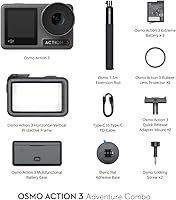
  • Combo Contents: The Adventure Combo includes the camera, a multifunctional battery case, two additional batteries, and a 1.5-meter extension rod.
  • Video Format: Saves footage in MP4 format, which is broadly compatible with most editing software without requiring conversion.
  • Slow Motion: Supports up to 4x slow motion at 1080p/240fps, useful for capturing fast-moving sports moments in detail.
  • Charging: Supports fast charging via the multifunctional battery case, which can also charge individual spare batteries independently from the camera.

Related Reviews
DJI Osmo Mobile 3 Smartphone Gimbal Stabilizer
79%
91%
Stabilization Performance
93%
Portability & Form Factor
78%
Subject Tracking (ActiveTrack 3.0)
62%
App Dependency & Software Experience
84%
Ease of Setup & Learning Curve
More
DJI Osmo Pocket 3 Vlogging Camera
83%
93%
Video Quality
88%
Low-Light Performance
96%
Gimbal Stabilization
84%
Subject Tracking (ActiveTrack)
89%
Build Quality & Portability
More
DJI Osmo Action 4 Action Camera
81%
88%
Low-Light Performance
91%
Video Quality
89%
Stabilization
86%
Battery Life
87%
Cold-Weather Reliability
More
DJI RS 3 Combo Gimbal Stabilizer
83%
93%
Stabilization Performance
88%
Ease of Balancing
91%
Automated Axis Locks
86%
OLED Touchscreen Usability
89%
Battery Life & Charging
More
DJI Osmo Action 5 Pro Action Camera
80%
93%
Low-Light Image Quality
89%
Video Quality & Resolution
88%
Stabilization Performance
91%
Battery Life
94%
Waterproofing & Durability
More
DJI Action 2 Power Combo 32GB
85%
89%
Video Quality
92%
Stabilization Performance
94%
Portability & Size
80%
Battery Life
88%
Magnetic Design & Accessories
More
Dragon Touch Vision 3 4K Action Camera
84%
92%
Value for Money
89%
4K Video Quality
87%
Waterproof Performance
75%
Battery Life
81%
Remote Control Functionality
More
DJI RS 2 3-Axis Gimbal Stabilizer
81%
93%
Build Quality
91%
Stabilization Performance
89%
Payload Capacity
84%
Touchscreen Usability
81%
Balancing & Setup
More
DJI RSC 2 Pro Combo 3-Axis Gimbal Stabilizer

86%
95%
Stabilization Performance
89%
Portability & Design
90%
Ease of Use
85%
Battery Life
88%
Build Quality
More
myFirst Camera 3 Kids Digital Camera
72%
76%
Image Quality (Daylight)
51%
Low-Light Performance
74%
Video Quality
83%
Macro Lens
81%
Ease of Use
More

FAQ

No, it does not. The DJI Osmo Action 3 Adventure Combo Action Camera does not include a microSD card, which surprises a lot of buyers. You will need to purchase one separately — look for a card rated at UHS-I Speed Grade 3 or higher to handle 4K recording without dropped frames.

HorizonSteady keeps the horizon visually level by cropping into the frame and compensating for tilt. It works very well for skiing, cycling, and activities with rolling movement, but it has a tilt limit of around 45 degrees — beyond that, it can't correct the horizon and the footage will still look off. It is not designed to handle full rotational or upside-down scenarios, so manage your expectations for extreme acrobatic shots.

It depends on the mount. The Osmo Action 3 uses DJI's own magnetic quick-release system, which is not directly compatible with standard GoPro-style finger-screw mounts out of the box. However, DJI does offer an adapter that bridges the two systems, and some third-party manufacturers sell compatible accessories. Check compatibility carefully before assuming your existing gear will work.

The camera can operate at temperatures down to -20°C, which is a genuine advantage over most competitors. That said, cold weather does drain batteries faster than the 160-minute maximum figure suggests — expect significantly shorter runtime on a freezing ski slope. The multifunctional battery case included in the Adventure Combo helps by letting you swap batteries quickly and keep spares warm in a pocket between uses.

For solo creators, it is genuinely practical. The front screen lets you frame yourself accurately without guessing or relying on a separate phone. It is smaller than the rear screen but clear enough to check composition and confirm recording status, which makes a real difference if you are vlogging or filming travel content alone.

You do not need the app to record video — the camera is fully functional as a standalone device. However, the Mimo app is required for firmware updates, advanced settings, and features like live preview on your phone. New users often find the app's interface a bit confusing at first, but most work through it after a session or two.

The camera is rated waterproof to 16 meters without any housing. For recreational snorkeling and shallow diving, that is more than enough. If you plan to go deeper, DJI offers a dedicated waterproof case that extends protection to 60 meters.

Yes, and this is one of the more convenient features of the mounting system. The magnetic quick-release bracket supports vertical orientation natively, so you can rotate the camera to portrait mode and shoot 9:16 content without cropping a horizontal clip in post. It takes only a few seconds to switch between orientations.

Both are strong action cameras, but they differ in key ways. The Osmo Action 3 has a front-facing screen that GoPro's standard Hero models lack, and many users feel DJI's HorizonSteady stabilization produces slightly smoother results in tilt-heavy situations. GoPro tends to have a wider accessory ecosystem, which matters if you already own compatible mounts. Color science and overall footage quality are competitive enough that the right choice usually comes down to which ecosystem and app experience you prefer.

This action camera supports up to 4K at 120fps, 2.7K at 120fps, and 1080p at 240fps. That gives you genuine 4x slow motion at full HD resolution, which is solid for capturing fast sports moments. Keep in mind that higher frame rates require more storage space and a fast enough microSD card to write data reliably.

Where to Buy