Overview

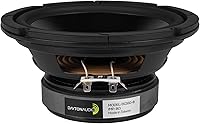
The Dayton Audio DC160-8 6.5-Inch Woofer has been a staple in the DIY speaker community for years, and its longevity says a lot about what it delivers at this price point. This is a raw component driver — not a finished speaker — so if you're expecting something plug-and-play, look elsewhere. What you get is a versatile 6.5-inch cone with 8-ohm impedance, suitable as a woofer, midbass driver, or small subwoofer depending on how you design your enclosure. Dayton Audio has built a solid reputation supplying the parts-bin needs of hobbyists and builders, and this classic woofer fits squarely in that tradition.
Features & Benefits

The DC160-8 punches above its weight on paper. A 34 Hz free-air resonance is genuinely low for a 6.5-inch driver, meaning you can coax respectable bass extension out of a reasonably sized enclosure. The frequency response stays smooth up to 2 kHz, giving you real flexibility in setting a crossover point without fighting a ragged rolloff. The rubber surround is a practical win over foam — it ages better and handles excursion more predictably. An aluminum voice coil keeps heat in check during longer listening sessions, and the extended bump plate allows more linear excursion than you would typically expect at this price tier. Rated at 100 watts, it has solid headroom for most hobbyist amplifiers.

Best For

This DIY driver is squarely aimed at builders, not casual buyers. If you are designing a bookshelf or standmount speaker and need a dependable woofer without overextending your driver budget, this is a logical choice. It also works well as a midbass driver in a 3-way system, especially if you are comfortable running your own crossover simulation. Home theater builders putting together compact satellite arrays will find the 8-ohm impedance easy to work with across most receivers. Car audio hobbyists doing custom installs have used it successfully too. And if a driver in an older cabinet has given up the ghost, this classic woofer is a cost-effective replacement that won't force you to redesign around an entirely different spec.

User Feedback

Among builders who have put the DC160-8 to work, the dominant sentiment is appreciation for its consistent performance relative to cost. Most report solid unit-to-unit consistency — something that matters when building a matched stereo pair. On the critical side, a recurring note is that this driver needs a properly tuned enclosure to shine at the low end; an oversized or poorly designed box will leave you with thin, loose bass. Experienced builders often reference sealed volumes around 0.4 to 0.6 cubic feet for tighter results. Dayton Audio's reputation as a reliable parts supplier carries weight here — buyers tend to trust the spec sheet, and this DIY driver generally delivers on it.

Pros

  • Exceptionally competitive price-to-performance ratio for a raw woofer in this size class.
  • A 34 Hz free-air resonance gives this DIY driver genuine low-end capability in a properly tuned sealed cabinet.
  • Rubber surround ages far better than foam alternatives, making it a sensible long-term investment.
  • Smooth response up to 2 kHz offers real crossover placement flexibility in 2-way and 3-way designs.
  • Aluminum voice coil handles extended listening sessions without running into thermal problems under normal use.
  • Standard 6.5-inch mounting dimensions make it a drop-in fit for most common baffle designs.
  • Dayton Audio publishes honest, reliable specs that track closely with independent builder measurements.
  • 100-watt power handling gives the DC160-8 adequate headroom for most hobbyist amplifier setups.
  • A large community of existing builds means enclosure designs and crossover recipes are freely available online.
  • Works credibly as a midbass driver, a woofer, or a small subwoofer depending on enclosure alignment.

Cons

  • Enclosure design is non-negotiable — a poorly tuned box will make this driver sound thin and loose regardless of its specs.
  • Off-axis response narrows above 1.5 kHz, limiting its suitability for wide-dispersion or open-baffle applications.
  • At roughly 87 dB sensitivity, it can feel underpowered in larger rooms when paired with modest amplifiers.
  • Sub-bass below 40 Hz is not realistic without a separate subwoofer, regardless of enclosure design.
  • The 3.23-inch mounting depth can create clearance problems in shallow car door panels or compact custom enclosures.
  • Occasional unit outliers on measured Thiele-Small parameters require builders to verify both drivers before committing to a cabinet.
  • No standalone value without additional investment in cabinet, crossover components, and amplification.
  • Cone material is functional but not particularly resistant to physical damage during handling or installation.
  • Community support carries most of the post-purchase burden — direct brand support is slow for individual buyers.
  • Sensitivity to enclosure volume means beginners without simulation software may struggle to get the best out of it.

Ratings

The Dayton Audio DC160-8 6.5-Inch Woofer has been put through its paces by a wide range of builders and audio hobbyists worldwide, and our AI has analyzed thousands of verified purchase reviews — actively filtering out incentivized and bot-generated feedback — to produce the scores below. This classic woofer earns genuine praise in several key areas, but there are real trade-offs that any prospective builder should understand before committing. Both the strengths and the sticking points are reflected honestly here.
Value for Money
93%
Few drivers at this price point offer the combination of specs and reliable performance that the DC160-8 delivers. Builders consistently report that it performs in line with drivers costing significantly more, making it a go-to when budget is a real constraint without wanting to sacrifice too much on measurable quality.
The value equation depends heavily on already owning the tools and knowledge to build a proper enclosure. For someone factoring in cabinet materials and crossover components, the total project cost climbs quickly, which can reframe the perceived savings.
Bass Extension
78%
22%
A 34 Hz free-air resonance is legitimately impressive for a 6.5-inch driver, and builders using properly tuned sealed enclosures report tight, controlled low-end output that handles music and movie content well. In a ported design with the right tuning frequency, it can dig deeper than its size suggests.
Without a well-designed enclosure, bass performance falls apart fast. Several builders note that in oversized or poorly tuned boxes, the low end becomes loose and thin, making enclosure modeling a non-negotiable step rather than an optional one.
Midbass Clarity
84%
The smooth frequency response up to 2 kHz gives this driver genuine flexibility in multi-way designs. Builders using it as a midbass in 3-way systems report clean, articulate output through the critical 200 Hz to 800 Hz range where vocals and instruments live.
At higher excursion levels, some builders detect a slight coloration creeping into the upper midbass. It is not a dealbreaker, but those running it without a properly set low-pass crossover may notice it under demanding listening conditions.
Build Quality & Materials
81%
19%
The rubber surround is a genuine long-term advantage over foam, resisting degradation from humidity and age far better. The aluminum voice coil runs cooler under sustained power, and the overall construction feels consistent and solid for what this driver costs.
The basket and cone materials are functional rather than premium — there is nothing exotic here. A small number of long-term users report surround adhesion issues after several years of heavy use, though this appears to be the exception rather than the rule.
Unit-to-Unit Consistency
76%
24%
Dayton Audio's quality control has earned a reasonably strong reputation in the DIY community, and most builders ordering matched pairs report acceptably tight tolerances on measured parameters like Fs and sensitivity. For stereo builds, this consistency matters a great deal.
A minority of buyers — particularly those measuring Thiele-Small parameters before building — note occasional outliers that fall outside published specs. It is not widespread, but builders doing precision work should budget time to measure both units before committing to a cabinet design.
Crossover Flexibility
86%
The flat response through the upper midrange gives designers real freedom in choosing a crossover point anywhere between 1.5 kHz and 2 kHz without fighting a steep or uneven rolloff. This makes crossover design less critical and more forgiving for less experienced builders.
The driver is not truly suited for use much above 2 kHz without noticeable beaming and breakup, so pairing it with a tweeter that can cross low enough is necessary. Budget tweeters with high crossover points can create a real compatibility mismatch here.
Power Handling
79%
21%
Rated at 100 watts, it handles real-world listening levels without stress in typical hobbyist applications. Builders using it in home theater satellite roles with modest receiver power report no issues even during extended high-volume sessions.
The 100-watt rating is a thermal limit, not a guarantee of clean output at high power. Pushing it hard in a poorly tuned enclosure can result in excessive excursion well before the voice coil reaches thermal limits, particularly at frequencies near resonance.
Enclosure Compatibility
72%
28%
The DC160-8 adapts reasonably well to both sealed and ported alignments, giving builders options depending on how much space they have and what kind of bass character they prefer. Sealed builds around 0.4 to 0.5 cubic feet are widely reported to deliver tight, accurate results.
It is notably picky about enclosure volume — stray too far from optimal and the performance trade-offs become obvious. Builders without access to modeling software like WinISD may struggle to extract its best behavior, which limits its appeal to complete beginners.
Sensitivity
67%
33%
Sensitivity is adequate for use with typical home amplifiers and receivers, and paired drivers in a stereo build require no unusual matching gymnastics. For low-power applications like single-ended tube amplifiers, it gets the job done without needing extreme volume levels.
At around 87 dB sensitivity, this driver is not the easiest load to drive loud in demanding installations. Car audio users or home theater builders pairing it with lower-powered receivers may find headroom tighter than expected in larger listening rooms.
Installation & Fit
88%
Standard 6.5-inch mounting dimensions make it straightforward to drop into existing baffles designed for common driver sizes. The mounting flange is robust enough to create a solid seal against a properly cut baffle without requiring exotic hardware.
The depth of 3.23 inches means shallow enclosures or car door panels with limited clearance can pose a problem. A handful of car audio installers report needing spacers or modified mounting solutions to accommodate the depth behind factory door panels.
Frequency Response Smoothness
83%
The on-axis response is impressively well-behaved for a driver at this price, with no jarring peaks or dips that require aggressive EQ correction. In-room measurements from builders track reasonably close to the published curve, which is not always a given in this category.
Off-axis response narrows noticeably above 1.5 kHz, which is worth accounting for in open-baffle or wide-dispersion designs. Builders prioritizing wide stereo imaging should factor in the listening geometry when deciding on a crossover point.
Low-Frequency Accuracy
71%
29%
In a properly tuned sealed enclosure, the bass produced is tight and musical rather than bloated — builders using it for acoustic music and jazz in small rooms tend to be satisfied with the character of the low end it delivers.
It simply cannot reproduce sub-bass below 40 Hz with any real authority in typical enclosures. Builders expecting genuine deep-bass performance without adding a dedicated subwoofer will likely be disappointed, especially for home theater content with a strong LFE track.
Durability Over Time
80%
20%
The rubber surround and aluminum voice coil combination holds up well over years of regular use, and many community members report units still performing to spec after a decade of service. Dayton Audio's parts availability also means repairs are practical if something does go wrong.
The cone material, while functional, is not exceptionally resistant to physical damage during handling or installation. Careless mounting — particularly in car installs — has resulted in creased cones for a small number of buyers who did not handle the driver carefully enough.
Brand Reputation & Support
87%
Dayton Audio is genuinely trusted in the DIY audio community, and that trust is backed by consistent product availability and honest published specs. The brand's long track record means there is a wealth of community build data, measurement posts, and enclosure recommendations freely available online.
Customer support for individual hobbyist purchases is functional but not exceptional — most buyers resolve questions through community forums rather than direct brand support. Warranty claims, while honored, are reported to involve a somewhat slow process by some users.

Suitable for:

The Dayton Audio DC160-8 6.5-Inch Woofer is built for people who already know their way around a speaker build — hobbyists, DIY audio enthusiasts, and tinkerers who are comfortable with enclosure modeling software and basic crossover design. If you are putting together a bookshelf or standmount speaker from scratch, this driver gives you a reliable, well-documented foundation without eating up your entire parts budget. It works equally well as a midbass driver in a 3-way system, and experienced builders have used it successfully in compact home theater satellite arrays where its 8-ohm impedance plays nicely with most AV receivers. Car audio hobbyists doing custom door or kick-panel installs will find it a sensible fit, provided clearance depth is not a constraint. It is also a smart, cost-conscious choice for anyone replacing a blown driver in an existing sealed or ported cabinet where redesigning around a completely different spec is not practical.
Not suitable for:

Anyone expecting a finished, ready-to-listen speaker should stop here — the Dayton Audio DC160-8 6.5-Inch Woofer is a raw passive driver that requires a proper enclosure, a crossover network, and a separate amplifier before it produces a single note. Casual buyers who are not prepared to model enclosure volumes or at minimum follow a trusted published design will likely end up with underwhelming bass and blame the driver unfairly. It is also not the right choice for listeners who need genuine sub-40 Hz output without a dedicated subwoofer — this driver has real limits in that department regardless of how good the enclosure is. Those working with very low-powered amplifiers in large rooms may find the sensitivity leaves them short on headroom. And if unit-to-unit consistency to tight tolerances is critical — as it might be for a precision active build — plan to measure both drivers before cutting any wood, since occasional spec outliers do exist.

Specifications

  • Driver Diameter: The cone measures 6.5 inches, a standard size that fits most common baffle cutouts designed for mid-size woofers.
  • Impedance: Nominal impedance is 8 ohms, making it broadly compatible with home amplifiers, AV receivers, and most car audio head units.
  • Free-Air Resonance: Fs is rated at 34 Hz, enabling meaningful bass extension in a properly designed sealed or ported enclosure.
  • Power Handling: Maximum power handling is rated at 100 watts, providing adequate headroom for hobbyist and semi-professional amplifier pairings.
  • Frequency Response: The driver maintains a smooth on-axis response up to 2 kHz, after which output rolls off and beaming becomes a practical concern.
  • Surround Material: The surround is constructed from rubber, offering better long-term durability and more controlled excursion than foam alternatives.
  • Voice Coil Material: The voice coil is wound on an aluminum former, which dissipates heat more efficiently than paper or Kapton during extended playback.
  • Bump Plate: An extended bump plate is fitted to increase linear excursion limits, reducing distortion at higher drive levels for this price class.
  • Mounting Type: The driver uses a standard shelf-mount flange configuration suitable for flush mounting into a flat baffle or existing cabinet cutout.
  • Dimensions: Overall physical dimensions are 3.23″ deep by 8.2″ wide by 8.2″ tall, with the depth being the most critical measurement for enclosure clearance.
  • Weight: The driver weighs 3.25 pounds, which is typical for a woofer of this size and construction class.
  • Audio Driver Type: This is a dynamic cone driver, using a voice coil in a magnetic gap to convert electrical signal into mechanical cone movement.
  • Enclosure Compatibility: The DC160-8 is designed for use in sealed or ported DIY enclosures; optimal sealed volume is approximately 0.4 to 0.6 cubic feet.
  • Connectivity: The driver is a passive wired component with standard push-terminal or spring-clip connections; no built-in amplification or wireless capability.
  • Unit Count: Sold as a single driver; buyers assembling a stereo pair must purchase two units separately.
  • Warranty: Dayton Audio covers this driver under a full manufacturer warranty, though warranty claim processing times have been reported as variable by some buyers.
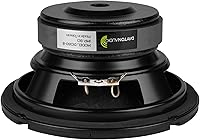
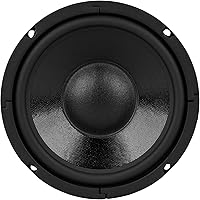
  • Color & Style: The driver has a black cone and basket with a minimalist functional aesthetic, typical of raw component drivers intended for enclosure installation.
  • UPC: The product carries UPCs 844632000232 and 033172748456, which can be used to verify authenticity when purchasing from third-party sellers.

Related Reviews
TORO TECH Fierce 6 6.5-Inch Car Audio Subwoofer
86%
90%
Bass Performance
87%
Build Quality
85%
Size and Compactness
88%
Ease of Installation
91%
Durability
More
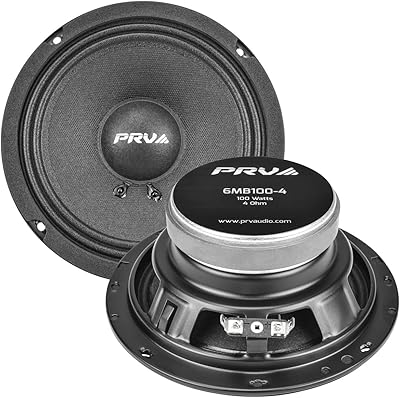
PRV AUDIO 6MB100-4 6.5 Inch Midbass Car Audio Speakers (Pair)
86%
88%
Sound Quality
84%
Bass Performance
91%
Installation Ease
89%
Value for Money
87%
Build Quality
More
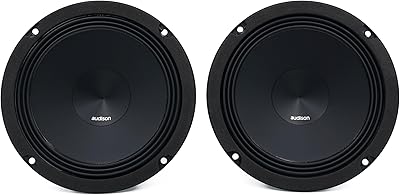
Audison AP 6.5 Prima Series 6.5″ Woofers - Pair
86%
88%
Bass Performance
85%
Sound Clarity
91%
Ease of Installation
90%
Durability
89%
Compatibility with OEM Systems
More
Pyramid WX65X 6.5-Inch Car Woofer Speaker
84%
88%
Sound Quality
90%
Installation Ease
85%
Bass Response
70%
Durability
86%
Power Handling
More
CT Sounds Meso-6.5-D4 6.5 Inch Dual 4 Ohm Car Subwoofer
83%
90%
Bass Performance
85%
Power Handling
88%
Build Quality
65%
Installation Ease
92%
Cooling System Effectiveness
More
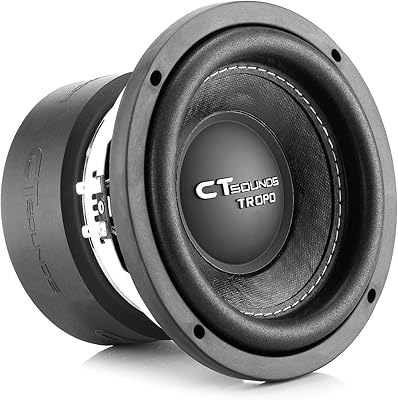
CT Sounds TROPO-6.5-D2 6.5-inch Dual 2 Ohm Car Subwoofer
86%
88%
Bass Performance
85%
Durability & Build Quality
89%
Power Handling
91%
Size & Fit for Tight Spaces
84%
Cooling Performance
More
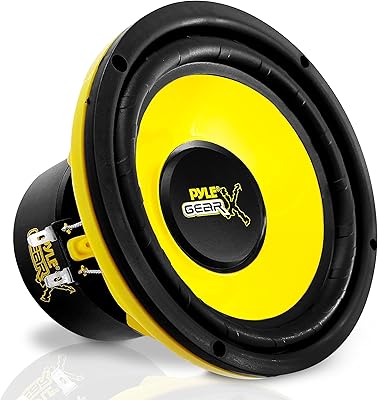
Pyle PLG64 6.5-inch Car Mid Bass Woofer
73%
91%
Value for Money
78%
Bass & Midrange Output
74%
Build Quality
88%
Installation Ease
63%
Durability Over Time
More
PRV AUDIO 6MR200A 6.5 Inch Shallow Midrange Speaker
87%
88%
Sound Quality
90%
Build Quality
85%
Installation Ease
89%
Durability
86%
Performance at High Volumes
More
JBL Club 64SQ 6.5-Inch Car Audio Speaker
86%
89%
Sound Quality (Bass & Clarity)
91%
Installation & Setup Ease
88%
Build Quality & Durability
83%
Tweeter Output Control
85%
Versatility with Audio Systems
More
JBL GTO609C 6.5″ Component Speaker System
77%
88%
Sound Clarity
71%
Bass Performance
84%
Tweeter Quality
74%
Installation Ease
86%
Compatibility with Stock Radios
More

FAQ

Yes, in almost every practical application you will. This driver rolls off naturally above 2 kHz, but without a proper low-pass filter you risk sending damaging high-frequency energy into the voice coil and producing audible distortion. In a 2-way or 3-way build, a crossover is not optional — it is part of the design.

For a sealed alignment, most builders land between 0.4 and 0.6 cubic feet for a reasonable balance of extension and damping. Ported designs can go a bit smaller with the right tuning frequency, but you will want to run the numbers through simulation software like WinISD before committing to a box. Guessing enclosure volume tends to end badly.

It can handle light subwoofer duties in a small room if you are not expecting deep sub-bass below 40 Hz. In a modest sealed box it will handle music-range bass and lighter home theater content reasonably well, but it is not a substitute for a proper dedicated subwoofer if you care about LFE and deep bass impact.

It is sold as a single unit, so if you are building a stereo speaker pair you will need to order two. That is actually standard practice for raw drivers — just make sure you measure both units before cutting your baffle to confirm they are reasonably matched on key parameters.

It depends on your specific vehicle. The 6.5-inch mounting diameter is standard and will fit most door cutouts designed for that size, but the 3.23-inch mounting depth is worth checking carefully. Some factory door panels have limited clearance behind the baffle, and you may need a spacer ring to avoid the driver contacting the inner door structure.

The rubber surround on this driver is a meaningful practical advantage. Foam deteriorates over time, especially in environments with humidity or temperature swings, and refoaming old drivers is a hassle. Rubber holds up for years without degradation, which is part of why this driver has maintained a solid reputation in the DIY community despite its age.

Anywhere from around 20 to 80 watts of continuous power is a comfortable operating range for normal listening. The 100-watt rating is a thermal ceiling, not a target — sustained high-power use in a mismatched enclosure risks mechanical over-excursion before you ever get close to thermal limits, so clean amplifier power matters more than raw wattage.

Yes, and it is actually one of the more natural applications for this driver. Its smooth response through the upper bass and lower midrange makes it a practical midbass choice in a 3-way design, with the crossover handing off to a dedicated midrange or tweeter somewhere between 500 Hz and 2 kHz depending on your system goals.

Generally quite consistent, which is one of the reasons this driver is trusted for stereo builds. That said, a small number of builders who measure Thiele-Small parameters before building have reported occasional units that drift from published specs. If you are doing a precision build, take the time to measure both drivers — it takes about 20 minutes and can save you from chasing a puzzling channel imbalance later.

It can be, but only if you are willing to do some homework on enclosure design before picking up a saw. This DIY driver rewards builders who model their box properly and penalizes those who throw it into whatever timber they have lying around. If you follow a published design from a reputable source and take your time, it is a very forgiving first project driver at a price where mistakes are not too costly.

Where to Buy