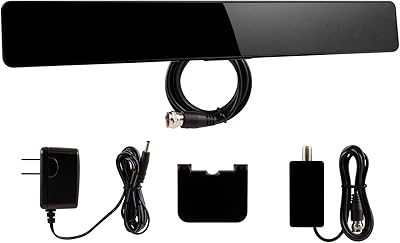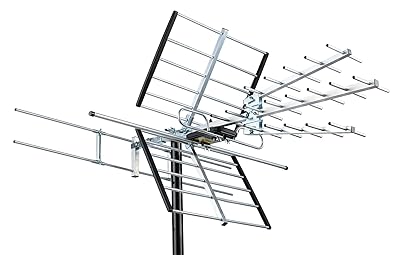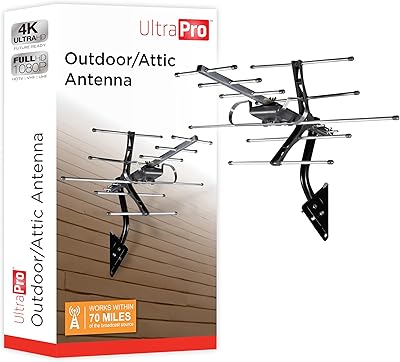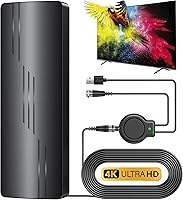
Overview

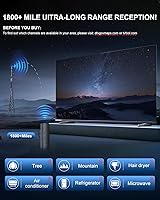
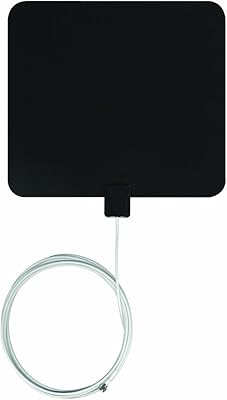
The Cusvuevi HX01 Indoor Outdoor TV Antenna is a practical, no-subscription option for anyone tired of paying monthly cable bills just to watch local news and network TV. This TV antenna sets itself apart with a dual-use design — windowsill, attic, or rooftop — backed by a weatherproof build that holds up through rain and wind. The advertised 1800+ mile range is a marketing figure, not a realistic benchmark; actual performance depends heavily on your proximity to broadcast towers and the terrain around you. That said, for suburban or rural households within a sensible distance of a tower cluster, it delivers solid results with plug-and-play setup and a generously long included cable.

Features & Benefits

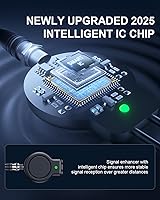
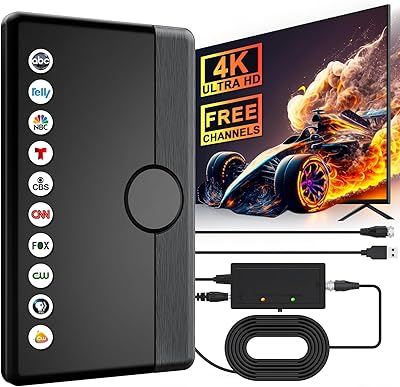
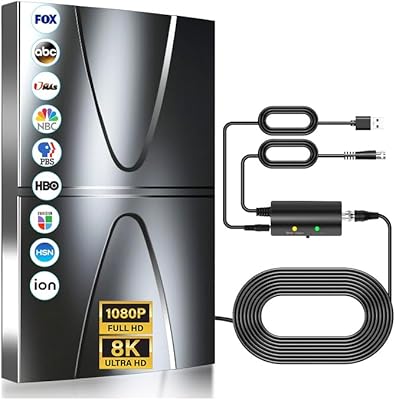
The built-in signal amplifier is the most practical thing about this antenna — it helps pull in weaker signals from distant towers and reduces the pixelation that hits unamplified antennas in fringe reception zones. Worth noting: if you live close to broadcast towers, the amplifier can actually introduce noise rather than improve things, so it pays to experiment with it on and off. The HX01 antenna handles 4K and 1080p formats, works with virtually any TV carrying a coax input, and draws power via USB, which keeps the install tidy. The 33ft coaxial cable is long enough to reach an attic or exterior wall without needing an additional cable run.

Best For

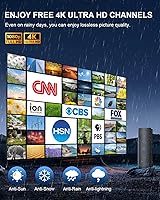
This indoor/outdoor antenna suits cord-cutters in suburban or semi-rural areas who primarily want free access to the major broadcast networks — ABC, NBC, CBS, FOX, and PBS — without a monthly bill attached. It is also a sensible pick for households that still want live local news and sports after dropping cable, areas where streaming services consistently come up short. Anyone who needs to mount outside or in an attic to clear trees or neighboring buildings will appreciate the weatherproof shell. RV owners and vacation home users get solid value here too, since the antenna is light, portable, and built to handle outdoor exposure without fuss.

User Feedback

Buyers in open suburban and rural areas tend to be genuinely pleased with the HX01 antenna — common praise focuses on how quickly it gets up and running and how well it performs once placed near a window or mounted outdoors. The long cable length comes up repeatedly as a real-world convenience. On the flip side, users in dense urban areas report more inconsistent results, where buildings create multipath interference that no amplifier fully resolves. Several reviewers flag the range claims as exaggerated and recommend setting realistic expectations upfront. Before purchasing any antenna, it is well worth running a free address scan at AntennaWeb.org to see what broadcast signals are actually reachable from your location.

Pros

  • Dual indoor and outdoor capability gives you real flexibility in finding the best signal placement.
  • The weatherproof build holds up to rain, wind, and temperature swings without needing extra protection.
  • At 14 ounces, this TV antenna is light enough to reposition or take on the road without hassle.
  • The 33ft coaxial cable is long enough for most attic or exterior installs without buying an extension.
  • USB-powered amplifier keeps the setup clean — no separate wall adapter cluttering the install.
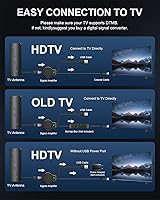
  • Works with both modern smart TVs and older sets that have a coax input, so no extra adapter needed.
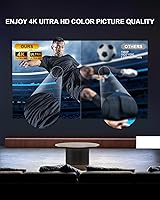
  • Supports 4K and 1080p broadcast formats, so picture quality is limited only by your local signal strength.
  • Channel scanning is straightforward — most users are watching free TV within minutes of unboxing.
  • Ranked in the top 200 TV antennas on Amazon, suggesting consistent buyer volume and product viability.
  • A low entry cost makes it a reasonable first antenna for households just starting to explore over-the-air TV.

Cons

  • The 1800-mile range claim is a marketing figure and should not be treated as a reliable performance benchmark.
  • Urban buyers frequently report inconsistent reception due to multipath interference that the amplifier cannot resolve.
  • The amplifier can degrade signal quality for viewers who already live near strong broadcast towers.
  • Channel counts vary dramatically by zip code — what one buyer gets in 50 channels, another may get in 8.
  • Build quality feedback is mixed for long-term outdoor durability, particularly around cable connection points.
  • No carrying case or mounting hardware is included, which adds small friction for outdoor or attic installs.
  • The HX01 antenna has limited brand recognition and after-sale support compared to established antenna makers.
  • Amplifier performance is inconsistent across user reports — some see clear gains, others notice added noise.
  • Fringe-area rural users in mountainous or heavily wooded regions may find even outdoor mounting insufficient.
  • Buyers who need reliable reception of distant or low-power stations will likely need a more specialized antenna.

Ratings

The scores below for the Cusvuevi HX01 Indoor Outdoor TV Antenna were generated by our AI system after analyzing verified buyer reviews from multiple global markets, with spam, bot-submitted, and incentivized feedback actively filtered out before scoring. Each category reflects the honest spread of real user experiences — suburban households picking up 30+ channels, rural users pushing the antenna to its limits, and urban buyers hitting multipath interference walls. Both the genuine strengths and the recurring frustrations are weighted transparently so you can make a clear-eyed decision.

Signal Reception
71%
29%
In suburban and semi-rural settings with reasonable tower proximity, users consistently report locking in major network channels cleanly on the first scan. The amplifier makes a tangible difference for households sitting 30 to 50 miles from a broadcast cluster, where an unamplified antenna would struggle.
Urban buyers frequently report inconsistent or broken reception caused by multipath interference — a problem the amplifier cannot fix and sometimes worsens. Reception quality varies so dramatically by location that two buyers in the same city can have completely opposite experiences.
Amplifier Performance
66%
34%
For fringe-area users in semi-rural zones, the built-in signal booster meaningfully reduces pixelation and dropout on channels that sit at the edge of receivable range. Several reviewers noted it made the difference between a stable picture and an unwatchable one on weaker UHF signals.
A notable portion of buyers living near strong broadcast towers report that the amplifier actively degrades their signal by overloading the tuner — a well-documented issue with amplified antennas used in strong-signal environments. There is no easy toggle to disable the amp, which limits flexibility.
Ease of Installation
88%
The plug-and-play setup is one of the most consistently praised aspects across all buyer feedback. Connecting the coax, powering the amp via USB, and running a channel scan takes most users under ten minutes, regardless of their technical comfort level.
Outdoor and attic installs require a bit more planning since no mounting hardware is included in the box. A handful of buyers also noted the coaxial connector felt loose on certain TV ports, requiring some adjustment to maintain a stable connection.
Cable Quality & Length
83%
The 33ft coaxial cable is genuinely one of the standout practical features — long enough to route from a rooftop or attic mount down to the TV without needing an extension in most standard home layouts. Buyers consistently flag this as a real convenience compared to shorter cables on competing budget antennas.
Some users report the cable feels a bit thin and lightweight for permanent outdoor routing, raising minor concerns about long-term durability at bending points. A locking F-connector would also improve confidence in the coax-to-TV connection.
Weather Resistance
79%
21%
The weatherproof housing holds up well through rain, wind, and cold based on buyer reports from regions with harsh seasonal weather. Most outdoor users who mounted it on a roof or exterior wall report no physical degradation after several months of exposure.
Long-term durability feedback is limited since the product only launched in early 2025, meaning there is not yet a strong data set covering full seasonal cycles. The coax connection point at the antenna base remains the most exposed weak spot if left unsealed.
Value for Money
81%
19%
At its price point, this TV antenna delivers a fair entry into over-the-air TV for buyers who go in with realistic expectations — particularly those in suburban areas where free network channels are genuinely accessible. Eliminating a cable bill makes the math easy for most households.
Buyers who expected the performance implied by the range marketing claims feel let down and consider the purchase poor value. If your location requires a more specialized or directional antenna, spending more upfront would have been the smarter call.
Build Quality
68%
32%
The physical housing feels solid enough for its price tier, and the overall construction is more robust than many competing antennas at a similar cost. The compact form factor — 3.7 x 2.7 x 12 inches — keeps it unobtrusive whether mounted indoors or out.
Some buyers note that the plastic housing, while weatherproof, feels somewhat lightweight compared to higher-end outdoor antennas. A few reports mention the cable strain relief at the base showing early wear after extended outdoor mounting.
Range Accuracy
38%
62%
A small number of rural buyers in flat, open terrain with minimal obstructions report pulling in channels from surprisingly long distances, which loosely supports the idea that the antenna has above-average sensitivity in ideal conditions.
The 1800-mile range claim is the single most criticized aspect of this antenna across all buyer feedback — virtually every critical review calls it out as grossly exaggerated. Realistic performance tops out around 40 to 70 miles in favorable terrain, which is respectable but a fraction of what is advertised.
Channel Count
63%
37%
In well-covered suburban markets, buyers regularly report channel counts in the 25 to 45 range after a full scan, which covers the major networks and a useful number of subchannels for news, weather, and entertainment.
Channel availability is almost entirely dictated by geography, not the antenna, and buyers in rural or obstructed areas sometimes scan fewer than 10 usable channels. This leads to frustration that would have been avoidable with a quick AntennaWeb lookup before purchase.
Compatibility
86%
The standard 75-ohm coaxial connection means this antenna works out of the box with essentially any TV sold in the last two decades — smart TVs, legacy HDTVs, and even older sets with a digital tuner. No adapters or additional hardware are required for basic setup.
Buyers wanting to run the signal to multiple TVs will need a separate splitter and possibly a distribution amplifier, neither of which is included or clearly mentioned in the product listing. Using a splitter without extra amplification in a weak-signal area leads to noticeable degradation.
Indoor Performance
67%
33%
Window placement facing a broadcast tower works reliably for users in suburban areas with moderate signal strength. Several buyers report solid results simply by positioning the antenna at a second-floor window without any outdoor mounting.
Interior placement in homes with thick walls, metal framing, or low-floor apartments consistently yields weaker results, and some buyers in these situations report being unable to lock in even nearby channels consistently. Attic mounting is generally a better fallback than ground-floor indoor placement.
Portability
77%
23%
At 14 ounces and a compact profile, this indoor/outdoor antenna is easy to pack for RV trips, cabin stays, or vacation homes where you want free TV without committing to a permanent install. Setup and teardown take only a few minutes.
The 33ft cable, while generous for fixed installs, becomes slightly unwieldy when packing the antenna for travel unless you coil and store it carefully. There is no included storage pouch or cable management solution for mobile use cases.
Outdoor Mounting
72%
28%
The weatherproof housing makes it genuinely suitable for rooftop and exterior wall mounting, and buyers who make the effort to get it outside or into an attic consistently report better results than those using it indoors. The physical footprint is small enough to mount discreetly.
No mounting bracket or hardware is included in the package, which means buyers have to source their own solution — an easy task for experienced installers but an unexpected friction point for first-timers. Rooftop mounting also requires careful coax sealing to protect the connection from moisture.

Suitable for:

The Cusvuevi HX01 Indoor Outdoor TV Antenna is a strong fit for cord-cutters living in suburban or semi-rural areas who want reliable, free access to major broadcast networks like ABC, NBC, CBS, FOX, and PBS without committing to another monthly subscription. Households that dropped cable primarily to save money but still care about live local news, network sports, and prime-time programming will find this antenna covers the essentials without fuss. Its weatherproof construction makes it a practical choice for anyone who needs to mount it outdoors or in an attic to get a cleaner line of sight past trees, rooftops, or neighboring structures. RV owners and vacation home users also benefit here — the antenna is light enough to move around, durable enough to leave exposed, and simple enough to reinstall quickly. Anyone who has never set up an over-the-air antenna before will appreciate that the setup genuinely is as straightforward as advertised.

Not suitable for:

The Cusvuevi HX01 Indoor Outdoor TV Antenna is not the right tool for viewers living in dense urban environments, where signal multipath interference caused by surrounding buildings tends to undercut even a well-placed, amplified antenna. Buyers expecting to pull in channels from genuinely extreme distances should recalibrate — the 1800-mile range figure printed on the box is a marketing number, not a technical guarantee, and real-world reach is dictated by tower proximity, terrain, and local obstructions. If you already live close to strong broadcast towers, the built-in amplifier may actually work against you by overloading the tuner and introducing noise, which means this antenna could underperform a cheaper passive model in those conditions. Viewers hoping to replace a full cable package with dozens of niche or premium channels will also be disappointed — over-the-air TV is limited to what local broadcasters transmit, full stop. Anyone in a heavily shaded valley, a mountainous region, or a rural area genuinely far from any broadcast infrastructure should research local signal maps at AntennaWeb.org before spending anything on this or any antenna.

Specifications

  • Brand: Manufactured by Cusvuevi, a consumer electronics brand focused on budget-friendly TV reception accessories.
  • Model: The HX01 is the specific model identifier for this amplified indoor/outdoor antenna.
  • Dimensions: The antenna body measures 3.7 x 2.7 x 12 inches, making it compact enough for windowsill or attic placement.
  • Weight: The complete unit weighs 14 ounces, light enough for easy repositioning or portable use in an RV.
  • Cable Length: A 33ft coaxial cable is included, providing enough reach for most attic, window, or exterior wall installations.
  • Impedance: The antenna operates at the industry-standard 75 Ohm impedance, ensuring broad compatibility with TVs and coax splitters.
  • Signal Type: This is an amplified digital HDTV antenna designed to receive over-the-air broadcast signals in VHF and UHF bands.
  • Supported Formats: Compatible with 4K Ultra HD and 1080p Full HD broadcast formats, limited by local signal availability.
  • Power Source: The built-in amplifier draws power via USB, eliminating the need for a separate wall adapter.
  • Weather Resistance: The outer housing is rated waterproof, windproof, and lightning-resistant, supporting safe permanent outdoor or rooftop mounting.
  • Use Case: Designed for both indoor and outdoor installations, including window, attic, exterior wall, and rooftop placements.
  • Compatibility: Works with any smart TV or legacy television that has a standard coaxial antenna input port.
  • Claimed Range: The manufacturer lists a coverage range of 1800+ miles, which is a marketing figure and not a verified technical specification.
  • Channel Count: The spec sheet lists up to 18 channels, though actual receivable channels depend entirely on local broadcast tower availability.
  • Amplifier: A built-in signal booster is integrated into the antenna to help reduce interference and stabilize reception in weak-signal areas.
  • Release Date: The HX01 was first made available for purchase in March 2025.
  • Sales Rank: As of launch, it holds a Best Sellers Rank of approximately #159 in the TV Antennas category on Amazon.
  • UPC: The product UPC is 860013729400, assigned to the standard single-unit retail configuration.

Related Reviews
iGENJUN ANT-CS8218 Amplified Indoor Outdoor TV Antenna
72%
73%
Signal Reception Quality
67%
Amplifier Performance
88%
Ease of Installation
48%
Range Accuracy vs. Claimed Specs
71%
Build Quality & Materials
More
Vragey HD012 Indoor/Outdoor TV Antenna
70%
71%
Signal Reception Quality
88%
Ease of Setup
63%
Amplifier Performance
34%
Range Accuracy vs. Marketing Claims
67%
Build Quality & Durability
More
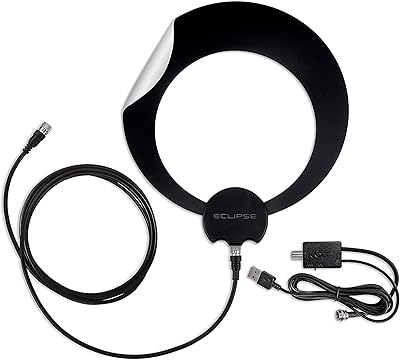
Antennas Direct ClearStream Eclipse Indoor TV Antenna
77%
74%
Signal Reception
67%
Amplifier Performance
93%
Design & Profile
91%
Ease of Setup
62%
Cable Length
More
Mohu Gateway Indoor TV Antenna
86%
87%
Signal Reception
92%
Setup and Installation
89%
Design and Aesthetics
90%
Value for Money
84%
Durability and Build Quality
More
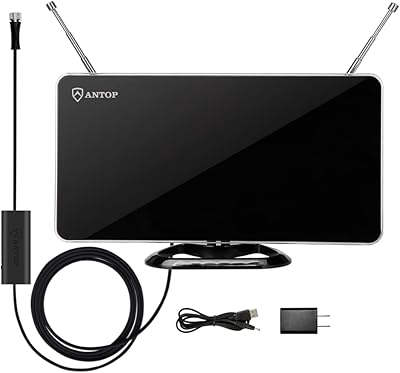
ANTOP AT-211B Indoor TV Antenna
71%
72%
Signal Reception
67%
Amplifier Performance
91%
Ease of Setup
63%
Build Quality
58%
VHF Channel Support
More
Winegard FlatWave FL-5000 Indoor TV Antenna
79%
78%
Reception Quality
93%
Ease of Setup
72%
Signal Stability
84%
Build Quality
88%
Design & Aesthetics
More
UltraPro 47331 Amplified Indoor TV Antenna
77%
74%
Signal Reception Quality
91%
Ease of Setup
88%
Design & Aesthetics
67%
Amplifier Performance
71%
Channel Count
More
YiziAifsion 2024 Upgraded Indoor TV Antenna
84%
88%
Signal Reception
85%
Picture Quality
91%
Setup & Installation
80%
Build Quality
87%
Range & Coverage
More
UltraPro Outdoor 70-Mile HD TV Antenna
76%
73%
Signal Reception
61%
Range Accuracy
82%
Installation Ease
78%
Build Quality
81%
Weather Resistance
More
PIBIDI UHD-8903 Outdoor TV Antenna
77%
73%
Signal Range & Reception
67%
VHF Band Performance
84%
UHF Band Performance
78%
Build Quality & Durability
81%
Lightning & Grounding Protection
More

FAQ

That depends almost entirely on where you live, not on the antenna itself. In a suburban area with several broadcast towers within 30 to 50 miles, picking up 20 to 40 channels is reasonable. In a rural or mountainous area, that number drops significantly. Before buying any antenna, run a free address lookup at AntennaWeb.org — it shows exactly which channels are reachable from your location.

Yes, and many users do exactly that. Placing it near a window, especially one facing the direction of your nearest broadcast towers, often gives you a decent signal. Outdoor or attic mounting will generally improve reception, but indoor use is a valid starting point — especially if you live within a reasonable distance of a tower cluster.

It genuinely helps in fringe reception areas where signals are weak and need a boost to lock in cleanly. That said, if you live very close to broadcast towers, the amplifier can actually cause problems by overloading your TV tuner and introducing noise. If you notice pixelation or dropped channels, try bypassing the amplifier first to see if that clears things up.

The housing is rated waterproof, windproof, and lightning-resistant, and it is built for permanent outdoor installation. Most buyers who mount it on a roof or exterior wall report it holds up through rain and cold without issue. As with any outdoor electronics, the coaxial connection point is the most vulnerable spot, so sealing it with weatherproofing tape is a smart precaution.

Yes, as long as your TV has a coaxial antenna input — which virtually all HDTVs made in the last 20 years do. You just plug the coax cable into the antenna port, run a channel scan from your TV menu, and you are done. The antenna does not require any internet connection or smart TV functionality to work.

For indoor placement, there is nothing to it — plug the coax into your TV, connect the USB power cable, and run a channel scan. Outdoor or attic mounting is slightly more involved since you will want to secure the antenna properly, but no special tools beyond basic hardware are required. The 33ft cable gives you enough length to route it from a rooftop or attic to your TV without needing an extension.

You can, but keep in mind that splitting a signal always reduces its strength. If your reception is already solid, a two-way splitter usually works fine. If you are in a fringe area where the signal is borderline, splitting it may cause one or both TVs to drop channels. A distribution amplifier can help compensate if you need to feed several sets.

Ignore the 1800-mile figure — no consumer antenna performs anywhere near that. A more grounded expectation for an amplified antenna in good conditions is roughly 50 to 80 miles from a broadcast tower, assuming minimal obstructions. Terrain, buildings, and dense foliage all eat into that range. Check a signal map for your address to set realistic expectations before purchase.

The antenna itself is built to stay mounted and intact through rough weather, which is the main weather-related claim worth trusting. However, heavy rain and storm clouds can attenuate broadcast signals temporarily, so some signal degradation during severe weather is normal with any over-the-air antenna. It is not a fault of the antenna — it is just how radio wave propagation works.

Urban environments are genuinely tough for over-the-air antennas. The issue is not distance — urban users are usually close to towers — but multipath interference, where signals bounce off buildings and arrive at your antenna from multiple directions simultaneously, causing distortion. An amplifier can make this worse, not better. If you live in a dense city, a well-placed unamplified antenna or a directional model may outperform this one.