Overview

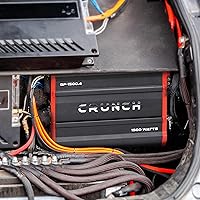
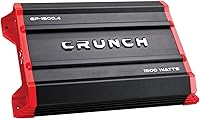
The Crunch GP-1500.4 4-Channel Car Amplifier sits squarely in the value tier of the car audio market, targeting drivers who are tired of factory sound but aren't ready to spend big on a boutique setup. Crunch has built its reputation on affordable, accessible gear, and this model follows that tradition with a flexible multi-mode design that supports everything from straight 4-channel stereo to bridged mono configurations. At under 11 inches long, it punches above its weight in terms of what you can fit into a compact trunk or under-seat location. Expect solid real-world performance with a few caveats worth knowing before you buy.
Features & Benefits

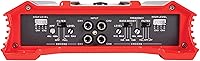
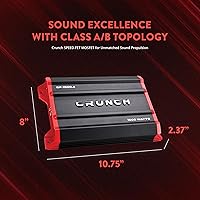
On paper, this 4-channel amp delivers 375 watts per channel at 2 ohms and 185 watts per channel at 4 ohms, with a peak total rating of 1500W — worth noting that peak figures rarely reflect sustained RMS output. Bridge two channels together and you get a dedicated 750W mono output at 4 ohms, which opens the door to running a subwoofer off the same unit. The built-in variable crossover at 12 dB per octave handles basic high-pass and low-pass filtering without needing an outboard processor. The chassis measures roughly 10.75 x 8 x 2.28 inches — compact enough for tight installs — and the surface-mount design keeps wiring relatively straightforward.

Best For

This Crunch amplifier makes the most sense for first-time installers who want a single unit powering a full set of door speakers, possibly with a sub bridged off the rear channels. If you're building out a small sedan or hatchback where trunk real estate is limited, the compact footprint is a genuine advantage. It's also a smart starting point for anyone who wants to learn amp installation without risking an expensive piece of kit. Audiophiles chasing low distortion figures or precise staging will likely want to look higher up the price ladder, but for casual daily drivers upgrading from stock, it covers the basics well.

User Feedback

With over 1,500 ratings averaging 4.0 out of 5 stars, the Ground Pounder GP-1500.4 has earned broadly positive marks from real-world buyers. Most satisfied owners point to easy installation and a noticeable improvement over factory head unit output as the main wins. Where criticism shows up, it tends to cluster around heat management during extended high-volume sessions and some buyers noting the real-world power delivery feels modest relative to the headline numbers — a common reality in this price bracket. A handful of users also flag that the amp benefits from a proper ground connection; a poor ground is frequently the culprit when people report noise or unexpected shutdowns.

Pros

  • Four channels of amplification at a price that leaves room in the budget for better speakers.
  • Bridgeable design lets you add a subwoofer later without buying a second amplifier.
  • The compact chassis fits in tight spaces where most 4-channel amps simply won't go.
  • Built-in variable crossover handles basic filtering without needing an external processor.
  • Terminal layout and surface-mount design make the wiring process approachable for first-timers.
  • Supports four distinct operating modes, giving the system flexibility as your build evolves.
  • Audible improvement over factory head unit output is noticeable even at moderate listening volumes.
  • Holds a strong community rating across a large pool of verified buyers, indicating consistent satisfaction at the price point.
  • Lightweight at 5.4 pounds, making repositioning or reinstallation in a new vehicle easy.

Cons

  • Peak power rating overstates real-world sustained output by a significant margin.
  • Thermal protection shutdowns occur more frequently than expected during extended high-volume sessions.
  • Background hiss and alternator whine appear with enough regularity to suggest the noise floor is sensitive to wiring quality.
  • Included documentation is too thin for beginners, leaving critical setup steps unexplained.
  • A notable share of user reports describe early unit failures within the first few months of use.
  • Running all four channels at 2 ohms simultaneously accelerates heat buildup under sustained load.
  • Gain structure can be difficult to dial in correctly when paired with low-output factory head units.
  • The 12 dB per octave crossover slope is too gradual for installers who need precise frequency control.
  • Quality control appears inconsistent, with some buyers receiving units with cosmetic or functional defects out of the box.

Ratings

Our scores for the Crunch GP-1500.4 4-Channel Car Amplifier were generated by AI after systematically analyzing thousands of verified global buyer reviews, with spam, bot-submitted, and incentivized feedback actively filtered out. The ratings reflect the full picture — where this amp genuinely delivers for budget-conscious builds and where real-world performance falls short of the marketing claims. Both the strengths that keep buyers recommending it and the pain points that draw criticism are transparently baked into every score.
Value for Money
88%
Most buyers come away feeling they got a fair deal for the asking price, especially those stepping up from a factory head unit for the first time. Getting four amplified channels plus bridging capability at this price point is genuinely hard to match, and that calculation resonates strongly in the reviews.
A subset of buyers who pushed the amp harder — running lower-impedance loads or pairing it with demanding subwoofers — felt the real-world output didn't justify even a budget purchase. Value perception drops noticeably when expectations are set by the peak wattage figure rather than the more modest sustained output.
Ease of Installation
83%
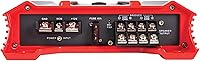
First-time installers frequently call out how straightforward the wiring layout is, with clearly labeled terminals and a surface-mount design that doesn't require custom brackets in most vehicles. The compact footprint means it tucks under a rear seat or into a shallow trunk corner without much fuss.
A recurring theme in negative reviews is noise and unexpected shutdowns traced back to a weak ground connection — something beginners don't always anticipate. A few buyers also noted the included documentation is sparse, leaving newer installers to rely on forums or YouTube to get the gain structure set correctly.
Real-World Power Output
61%
39%
For casual daily listening — music at moderate volumes through a set of coaxial door speakers — most users report a satisfying and audible improvement over unamplified factory output. The jump in clarity and headroom is noticeable enough to satisfy drivers who aren't chasing SPL competition numbers.
The gap between the 1500W peak headline and actual sustained RMS delivery is where this amp draws the most pointed criticism. Buyers who researched amp specs before purchasing flagged that real measured output is considerably lower than advertised, which is a known pattern in this price tier but still frustrates those who expected more muscle.
Thermal Management
57%
43%
Under normal listening conditions — moderate volume, reasonable impedance loads, and decent airflow around the unit — the amp runs warm but stable. Buyers who mounted it in open trunk installations with some ventilation rarely reported heat-related issues during typical daily commutes.
Extended high-volume sessions, especially in warmer climates or enclosed under-seat locations with poor airflow, trigger thermal protection shutdowns more often than buyers expect. Several reviewers noted the amp needs time to cool before it resets, which becomes genuinely annoying on long drives or at outdoor events.
Build Quality
66%
34%
The chassis feels solid enough for the price, with a reasonably rigid housing that holds up to normal handling during installation. The heatsink fins are well-formed and the binding posts accept standard wire gauges without stripping easily.
Up close, the fit and finish shows the cost-cutting common to value-tier gear — the face plate graphics can scratch easily and the internal components won't satisfy anyone who has handled mid-range or premium amplifiers. A few buyers reported units arriving with minor cosmetic damage, suggesting the packaging could be more protective.
Bridging Flexibility
79%
21%
The ability to bridge channels for dedicated subwoofer or mid-bass duty is a practical advantage that buyers appreciate, especially those building out a system in stages. Running a sub off the bridged rear channels while keeping the fronts in stereo is a popular and effective configuration among reviewers.
The bridged mono output requires a 4-ohm minimum load, which limits compatibility with some single-coil subwoofers wired to lower impedances. A handful of buyers noted confusion about which operational mode their wiring reflected, pointing again to the need for clearer documentation.
Crossover Functionality
72%
28%
Having a variable crossover built in saves buyers from needing an external processor for basic setups, which is a meaningful convenience at this price. Being able to roll off low frequencies from door speakers or high frequencies from a bridged sub channel makes a real audible difference in overall system balance.
The crossover is functional rather than precise — the 12 dB per octave slope is fairly gentle, and experienced installers note it lacks the surgical control of a dedicated processor or DSP. For a simple two-way setup it works fine, but anyone trying to dial in a more refined crossover point will hit the limits of this onboard filter quickly.
Gain Structure & Sensitivity
74%
26%
Most buyers using a standard aftermarket head unit report that the gain controls have enough range to match their source signal without maxing out the knobs, which is a good sign for noise floor management. Setting gains by ear works acceptably well for casual users who aren't using an oscilloscope or multimeter.
Buyers running factory head units with lower preamp output sometimes struggled to get adequate volume without pushing the gains high, which introduced background hiss. Without proper gain-setting technique, a few users reported distortion at high volumes that they initially blamed on their speakers.
Noise Floor & Signal Clarity
67%
33%
When properly grounded and installed away from ignition wiring, most buyers report a clean enough signal for the price bracket. At moderate listening volumes, the background noise is low enough that casual listeners won't notice it over music.
Alternator whine and ground loop hum show up with notable frequency in negative reviews, particularly when installers ran ground wires to suboptimal points or routed signal cables alongside power wiring. These are partly installation-dependent issues, but the amp appears more sensitive to wiring quality than some competitors.
Compact Footprint
84%
At just over 10.75 inches long and under 2.5 inches tall, this Crunch amplifier fits in spaces where full-size 4-channel amps simply won't go. Buyers with small sedans, hatchbacks, and even motorcycles with storage compartments have found creative mounting solutions that wouldn't work with a larger chassis.
The compact size does mean the heatsink surface area is limited, which feeds directly into the thermal management issues noted elsewhere. Buyers who need to mount the amp in a sealed or semi-enclosed location should account for that trade-off before purchasing.
Long-Term Reliability
63%
37%
A meaningful portion of reviewers report the amp running without issues for a year or more of regular daily use, which is encouraging for a product in this price range. Those who installed it properly and kept it in a ventilated location tend to have the most positive long-term experiences.
There is a visible minority of reviews describing early failures — units dying within weeks or a few months of purchase. Whether this reflects a quality control variance or installation errors is hard to separate definitively, but it's frequent enough to warrant noting and suggests buying from a retailer with a clear return policy.
Documentation & Setup Guidance
51%
49%
The basic wiring diagram included in the box is sufficient for experienced installers who already understand amp terminology and setup principles. The physical layout of the terminals is intuitive enough that knowledgeable buyers rarely need to reference the manual at all.
For beginners — who are arguably the primary audience for this amp — the documentation is genuinely lacking. Critical topics like how to set gain correctly, what wire gauge is appropriate, and how to configure each operating mode are either glossed over or absent entirely, leading to a disproportionate share of avoidable installation mistakes.
Compatibility with Speaker Loads
76%
24%
The amp handles both 2-ohm and 4-ohm speaker loads across all four channels, giving it broad compatibility with the most common aftermarket speakers on the market. Buyers running standard 4-ohm coaxial or component sets report trouble-free pairing in the large majority of cases.
Running all four channels at 2 ohms simultaneously under sustained load puts noticeable stress on the unit and appears to accelerate heat buildup. A few buyers with aggressive multi-speaker configurations found the amp less stable than expected, particularly in warm weather conditions.

Suitable for:

The Crunch GP-1500.4 4-Channel Car Amplifier is a strong match for everyday drivers who are done with the thin, lifeless sound of a factory stereo and want a meaningful upgrade without committing to a high-end budget. It works especially well in compact vehicles — small sedans, hatchbacks, or SUVs — where trunk or under-seat space is limited but four channels of amplification are still on the wish list. First-time DIY installers will appreciate the surface-mount design and relatively forgiving wiring layout, which reduces the intimidation factor that comes with a first amp install. Buyers planning a staged build — starting with door speakers now and adding a sub later — will find the bridging capability a practical feature that extends the amp's usefulness over time. If your goal is simply to make your daily commute sound noticeably better than stock without spending a lot, this Crunch amplifier delivers that outcome reliably.
Not suitable for:

The Crunch GP-1500.4 4-Channel Car Amplifier is not the right tool for anyone chasing serious output levels, whether for competition use, high-volume outdoor setups, or pairing with power-hungry subwoofers. Buyers who research amplifier specs carefully will notice that the sustained RMS power figures fall well short of the 1500W peak headline, and that gap matters when you're building a system around precise power matching. Audiophiles prioritizing low distortion, a quiet noise floor, and tight signal accuracy should look further up the price ladder — this amp is not built to those tolerances. Anyone planning to run the unit hard in an enclosed, poorly ventilated location should be aware that thermal shutdowns are a documented issue at sustained high volumes. And if you're already running a mid-tier or premium system and looking to upgrade an existing amplifier, the Ground Pounder GP-1500.4 is unlikely to feel like a step forward.
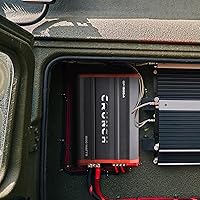
Specifications

  • Peak Power: Total peak power output is rated at 1500W across all four channels combined.
  • 4-Ohm Output: Each of the four channels delivers 185W at a 4-ohm load under peak conditions.
  • 2-Ohm Output: Each channel is rated for 375W at a 2-ohm load, accommodating lower-impedance speaker configurations.
  • Bridged Output: When bridged, two channels combine to deliver 750W mono into a 4-ohm load, suitable for subwoofer duty.
  • Channel Count: This is a 4-channel amplifier supporting independent left and right front and rear signal paths.
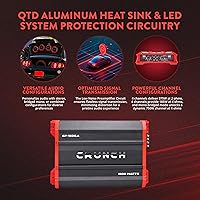
  • Operating Modes: Supports four configurations: full 4-channel stereo, dual stereo bridged, stereo plus bridged mono, and dual bridged mono.
  • Crossover Type: An onboard variable electronic crossover operates at 12 dB per octave for both high-pass and low-pass filtering.
  • Dimensions: The chassis measures 10.75 x 8 x 2.28 inches, making it one of the more compact options in the 4-channel segment.
  • Weight: The unit weighs 5.4 pounds, light enough for straightforward single-person installation.
  • Mounting Type: Designed for surface mounting, meaning it can be secured directly to a flat surface without requiring a custom enclosure or bracket.
  • Supply Voltage: The maximum rated supply voltage is 9V DC, consistent with standard 12V automotive electrical systems under varying load conditions.
  • Brand & Model: Manufactured by Crunch under the Ground Pounder product line, with the specific model designation GP-1500.4.
  • Fuse Rating: The amplifier requires a 30A inline fuse on the power wire, which should be installed as close to the battery as possible.
  • Wire Gauge: A minimum 8-gauge power and ground wire is recommended to support stable current delivery at rated output levels.
  • Signal Input: Accepts RCA preamp-level inputs from a head unit, with sensitivity adjustable via the onboard gain controls.
  • Customer Rating: Holds a 4.0 out of 5 star average rating based on over 1,500 verified buyer reviews on Amazon.
  • Market Rank: Ranked number 5 in the Car Multichannel Amplifiers category on Amazon at the time of evaluation.
  • Date Available: First made available for purchase in September 2020, establishing a multi-year track record of buyer feedback.

Related Reviews
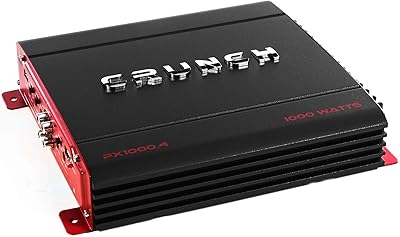
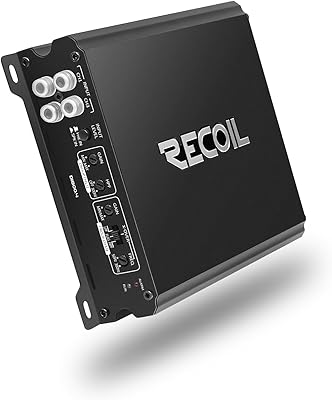
Recoil DI550.4 4-Channel Car Audio Amplifier
74%
91%
Value for Money
78%
Power Output
86%
Ease of Installation
74%
Sound Quality
67%
Build Quality
More
Planet Audio AC2400.4 4-Channel Car Amplifier
84%
95%
Power Output
89%
Sound Clarity
87%
Bass Performance
82%
Ease of Installation
65%
Thermals/Heat Management
More
Crunch PX 1000.4 4-Channel 1000W Amplifier
85%
88%
Sound Quality
85%
Ease of Installation
81%
Build Quality
91%
Power Output
93%
Size & Portability
More
Recoil DI800.4 4-Channel Car Audio Amplifier
83%
88%
Sound Quality
92%
Power Output
65%
Thermal Management
84%
Build Quality
91%
Ease of Installation
More
Recoil REA600.4 4-Channel Car Audio Amplifier
84%
89%
Audio Performance
91%
Ease of Installation
85%
Sound Quality at High Volumes
62%
Heat Management
90%
Power Output
More
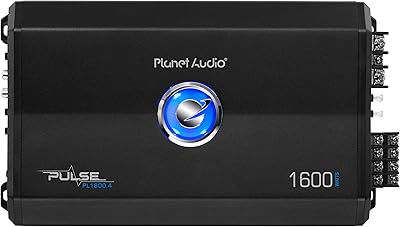
Planet Audio PL1600.4 4-Channel Car Amplifier
72%
88%
Value for Money
84%
Ease of Installation
74%
Sound Quality
58%
Power Output (Real-World)
61%
Build Quality
More
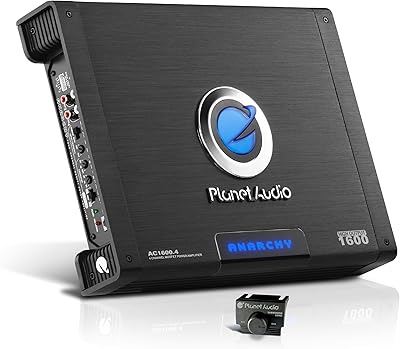
Planet Audio AC1600.4 Anarchy Series 4-Channel Car Amplifier
82%
94%
Power Output
88%
Sound Quality
70%
Ease of Installation
92%
Value for Money
85%
Build Quality
More
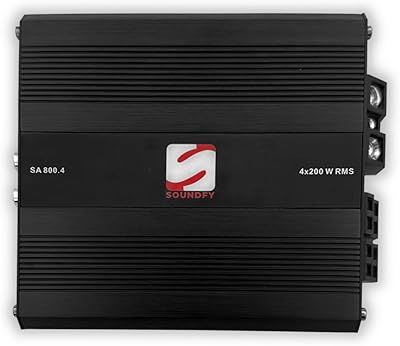
Soundfy SA 400.4 4-Channel Car Amplifier
71%
78%
Value for Money
72%
Sound Quality
63%
Power Output
58%
Build Quality
81%
Thermal Management
More
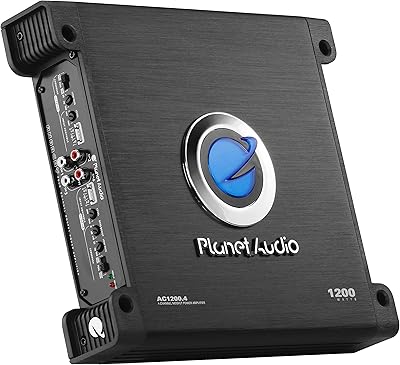
Planet Audio AC1200.4 4-Channel Car Amplifier
73%
88%
Value for Money
67%
Power Output
83%
Installation Ease
74%
Sound Quality
61%
Build Quality
More
Stetsom HL 2000.4 2-Ohm 4-Channel Car Audio Amplifier
87%
93%
Power Output
85%
Cooling System Efficiency
88%
Sound Quality
91%
Ease of Installation
82%
Durability
More

FAQ

You can, but with a trade-off. The most common setup is to run your front speakers on channels 1 and 2 in stereo, then bridge channels 3 and 4 together to drive a single subwoofer. That leaves your front doors amplified and your sub covered, all from one unit. Just make sure your sub has a 4-ohm impedance when bridged, since the amp requires that minimum load in bridged mode.

Bridging combines two channels into one, which roughly doubles the power going to a single speaker — in this case, a subwoofer. On this Crunch amplifier, you connect your sub to the positive terminal of one channel and the negative terminal of the adjacent channel, then flip the mode switch or follow the wiring diagram in the manual. It sounds more complex than it is, and there are plenty of straightforward video guides online that walk through it step by step.

It can work with a factory head unit, but you may need a line output converter to step down the speaker-level signal to an RCA preamp signal the amp can read. Most factory head units don't have RCA outputs, and the amp expects a preamp-level input. A decent line output converter costs around 15 to 30 dollars and solves the problem cleanly.

It runs warm under normal use, which is typical for amps in this class. The main thing to avoid is mounting it in a completely sealed, unventilated space — under a seat with decent airflow or in an open trunk area works much better than a fully enclosed cabinet. If you plan to listen at high volumes for long periods, giving the heatsink some breathing room is genuinely important for avoiding thermal shutdowns.

A minimum of 8-gauge wire for both the power and ground runs is the standard recommendation for this amp. Use a quality ground connection — bare metal on the vehicle chassis, not a painted surface — and keep the ground wire as short as possible. A poor ground is the single most common cause of noise issues and unexpected shutdowns with any amplifier at this power level.

That sound is alternator whine, and it almost always comes down to a grounding issue or RCA cables running too close to power wires. Start by checking your ground connection and making sure it's on bare metal. If that doesn't resolve it, try rerouting your RCA cables to the opposite side of the vehicle from your power wire. A ground loop isolator is a cheap fix if the routing adjustment doesn't fully clear it up.

Yes, it supports 2-ohm loads on each channel and actually puts out more power at 2 ohms than at 4 ohms. That said, running all four channels at 2 ohms simultaneously generates more heat, so ventilation becomes even more important in that configuration. For most everyday setups with standard 4-ohm coaxial or component speakers, 4-ohm operation is the more thermally stable choice.

The simplest method is to play a familiar track at about 75 to 80 percent of your head unit's maximum volume, then slowly raise the amp's gain knob until you just start to hear distortion, then back it off slightly from that point. This gives you maximum clean output without clipping. If you have a multimeter, you can do it more precisely by measuring AC voltage at the speaker terminals and matching it to the speaker's rated power, but the by-ear method works acceptably well for casual setups.

You can absolutely use it for sub duty alone by bridging two channels and using the onboard low-pass crossover to roll off the high frequencies. Many buyers use it exactly that way, running a single subwoofer off the bridged rear channels while keeping the front channels free for door speakers. Just confirm your sub's impedance is 4 ohms or higher in the bridged configuration.

Expect a few hours if everything goes smoothly — running the power wire from the battery through a firewall grommet is usually the most time-consuming part. The amp itself wires up fairly quickly once power, ground, remote turn-on, and RCA inputs are connected. Having the right tools on hand beforehand — a wire crimper, drill, and a basic multimeter — will save a lot of frustration and cut down the total time significantly.

Where to Buy