Overview

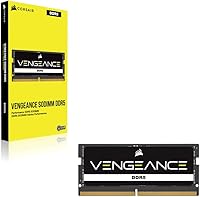
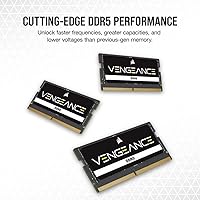
The Corsair Vengeance 32GB DDR5 SODIMM RAM represents Corsair's entry into the DDR5 laptop memory space — and it's a confident one. DDR5 brings real architectural improvements over DDR4: higher bandwidth, lower operating voltage, and greater capacity headroom. This single 32GB stick runs at 4800MHz on 1.1V, which matters in a laptop where power draw affects battery life. The SODIMM form factor makes it compatible with a wide range of thin-and-light notebooks, mini PCs, and Intel NUC systems. You will pay a DDR5 premium here, but that's the current reality of the market, not something specific to this module.
Features & Benefits

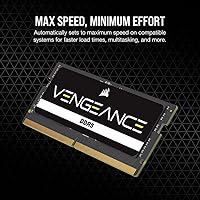
One of the more practical advantages of going with a single 32GB stick is that it leaves your second slot open. If you ever want dual-channel performance down the line, you can add an identical module without discarding what you already have. On compatible Intel and AMD systems, the module auto-configures to full speed — no BIOS diving required. The 1.1V operating voltage contributes to cooler, more efficient operation compared to older DDR4 sticks, which is meaningful on battery. The CL40 timings are typical for this speed bin; they're not the tightest on the market, but for general laptop use they're more than adequate. Corsair's testing protocols add a layer of confidence before the module ever ships.

Best For

This DDR5 SODIMM module makes the most sense for people who already own a DDR5-compatible laptop and want to push past the stock memory configuration. Content creators working in video editing, photo processing, or running virtual machines will feel the difference at 32GB in a way that lighter users simply won't. It's also a solid fit for small-form-factor builds — Intel NUC kits and compact desktops that take SODIMM modules benefit just as much as notebooks. If you tend to stick with trusted brands and value the peace of mind that comes with proper warranty coverage, this laptop memory upgrade is a natural choice over cheaper, lesser-known alternatives.

User Feedback

With over 2,500 ratings averaging 4.7 out of 5, the reception for the Corsair Vengeance stick has been broadly positive. Most buyers report straightforward installation and immediate recognition at the correct speed without any BIOS adjustments. Real-world gains — faster boot times, smoother multitasking — come up repeatedly in feedback, which is more meaningful than synthetic benchmark scores alone. Long-term stability reports are encouraging, with many users citing months of reliable daily use. That said, a handful of compatibility complaints do surface, mostly around specific AMD laptop models, so checking your system's supported memory list before buying is worth the extra step.

Pros

  • Plug-and-play speed configuration means no BIOS adjustments on most compatible Intel and AMD laptops.
  • A single 32GB stick leaves the second slot free for future dual-channel expansion without waste.
  • DDR5 architecture runs at 1.1V, which contributes to cooler operation and better battery efficiency on notebooks.
  • Over 2,500 ratings averaging 4.7 out of 5 reflects a broad, consistent pattern of buyer satisfaction.
  • Installation is straightforward — most users report POST recognition at full speed on the first boot.
  • Corsair's rigorous pre-shipment testing process adds real confidence around long-term stability.
  • The SODIMM form factor covers a wide range of laptops, mini PCs, and Intel NUC kits.
  • Real-world gains like faster boot times and smoother multitasking are consistently reported by buyers, not just benchmark numbers.

Cons

  • DDR5 pricing remains noticeably higher than comparable DDR4 capacity, making the cost harder to justify for lighter workloads.
  • CL40 timings are standard but not class-leading — tighter DDR5 SODIMM options do exist at higher price points.
  • A small number of users report compatibility issues with certain AMD laptop models, so checking your system's memory support list is essential.
  • Single-module purchases do not enable dual-channel performance out of the box, which matters for bandwidth-sensitive tasks.
  • No heatspreader or thermal management feature is included, which is typical for SODIMM but worth noting for compact, thermally constrained builds.
  • Buyers on DDR4 platforms get no use from this module whatsoever — the generational lock-in is absolute.
  • At this capacity and price tier, value-oriented buyers may find competing DDR5 SODIMM brands offering similar specs for less.

Ratings

The Corsair Vengeance 32GB DDR5 SODIMM RAM scores here are generated by AI after analyzing thousands of verified global buyer reviews, with spam, bot activity, and incentivized feedback actively filtered out. Across more than 2,500 real-world ratings, this module earns consistently high marks — but the analysis surfaces both the genuine strengths and the friction points that matter to buyers making a DDR5 upgrade decision. Nothing is glossed over.
Overall Reliability
93%
Buyers across extended ownership periods — some reporting six months to over a year of daily use — consistently describe stable, error-free operation. Content creators running overnight renders and gamers logging long sessions report no crashes, memory errors, or unexpected reboots attributable to the module.
A small but vocal group of users experienced instability specifically on certain AMD DDR5 laptop configurations, pointing to platform-level compatibility gaps rather than outright defects. These cases are outliers, but they're real enough to warrant checking your system's memory compatibility list first.
Installation Experience
91%
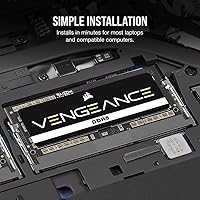
Most laptop users describe the installation as genuinely painless — remove the back panel, seat the module at an angle, press down until it clicks, and you're done. The slim SODIMM profile fits snugly without forcing, and the majority of buyers report the system POSTing correctly on the very first boot.
A handful of users with specific ultrabook models noted that accessing the memory slot required more disassembly than expected, which isn't a fault of the module itself but is worth flagging. A few also reported needing to reseat the module once before the system recognized it consistently.
Speed & Auto-Configuration
88%
On compatible Intel and AMD DDR5 platforms, the module reliably initializes at its full 4800MHz rated speed without touching BIOS settings. For users who have historically avoided RAM upgrades due to fear of BIOS configuration, this plug-and-play behavior is a meaningful confidence boost.
Users on platforms where auto-configuration doesn't kick in correctly — usually older BIOS versions — find themselves needing a firmware update before the memory runs at rated speed, which adds an unexpected step. This is a platform issue more than a Corsair issue, but it does affect the out-of-box experience for some.
Real-World Performance Gain
84%
Buyers upgrading from 8GB or 16GB configurations report tangible differences in daily tasks — faster application launches, smoother browser performance with many tabs open, and noticeably quicker load times in games and creative software. The jump to 32GB on a DDR5 platform feels like a proportional leap for workloads that genuinely needed the headroom.
Users already running 16GB in dual-channel sometimes report a less dramatic improvement than expected, since moving from dual-channel DDR4 to single-channel DDR5 can reduce memory bandwidth for bandwidth-sensitive tasks. The real-world difference in those cases is subtler and heavily dependent on the workload.
Compatibility Range
79%
21%
The standard SODIMM form factor covers a broad ecosystem — gaming laptops, thin-and-light notebooks, Intel NUC kits, and compact desktop systems all use this slot. On Intel's 12th and 13th Gen mobile platforms in particular, users report near-universal compatibility with no issues.
AMD DDR5 laptop compatibility is less consistent, with a subset of users encountering initialization problems on specific models that nominally support DDR5. The module is also entirely incompatible with any DDR4 system, which is not a design flaw but does catch uninformed buyers off guard more often than it should.
Value for Money
72%
28%
Within the DDR5 SODIMM segment, Corsair's Vengeance pricing sits at a reasonable position considering the brand backing, testing validation, and warranty coverage. For buyers who factor long-term reliability and support into their purchase decision, the cost feels justified compared to unbranded alternatives.
DDR5 as a category still carries a meaningful premium over DDR4, and this module is no exception. Budget-conscious buyers upgrading from older systems sometimes feel the price-to-performance ratio doesn't add up unless their workload genuinely saturates 16GB — which not everyone's does.
Latency Performance
68%
32%
CL40 timings at 4800MHz are exactly what the DDR5 standard calls for at this speed tier, and for everyday computing, gaming, and creative software, the real-world latency impact is not perceptible. Most buyers who aren't running synthetic benchmarks will never encounter a scenario where CL40 feels like a limitation.
Enthusiast buyers who researched the market before purchasing are aware that tighter DDR5 SODIMM kits exist at CL36 or lower, often at similar price points. For latency-sensitive workloads, this module is not at the top of the class, and that gap is noticeable in certain competitive gaming or benchmarking contexts.
Power Efficiency
87%
Running at 1.1V, this DDR5 SODIMM module draws noticeably less power than equivalent DDR4 options, which translates to modest but real battery life improvements on notebooks. Users who work unplugged for extended periods — on flights or in meetings — appreciate the efficiency dividend that DDR5 brings by design.
The power efficiency benefit is largely invisible to desktop-adjacent users and those who primarily work plugged in. It's a genuine advantage, but one that only a specific subset of mobile users will ever consciously notice in their day-to-day experience.
Brand Trust & Warranty
92%
Corsair has a long-established reputation in PC memory, and buyers cite that history as a direct factor in their purchasing decision. The combination of documented pre-shipment testing, responsive customer support, and a solid warranty gives this module a clear advantage over lesser-known DDR5 alternatives at similar specifications.
Some users noted that warranty claims require going through Corsair's RMA process, which, while generally reliable, adds wait time if a faulty unit needs replacing. A few buyers outside North America mentioned slower support response times, which is worth factoring in depending on your region.
Dual-Channel Upgrade Path
83%
Buying a single 32GB stick specifically to leave the second slot open is a deliberate and practical strategy, and it's one that several experienced buyers explicitly called out in their reviews. The ability to double capacity later without discarding the initial investment makes this a forward-thinking purchase for systems with two SODIMM slots.
Single-channel operation inherently caps memory bandwidth below what a matched dual-channel kit would deliver at the same total capacity. Users who run bandwidth-hungry applications like video encoding or large dataset processing will see a real, measurable difference compared to a 2x16GB configuration.
Physical Form & Fitment
89%
At 2.76 x 1.18 x 0.12 inches and without a bulky heatspreader, the module slides into tight laptop chassis without clearance issues. Users installing this in slim notebooks and compact NUC builds consistently report a clean, flush fit that causes no interference with surrounding components or the bottom panel.
The absence of any heatspreader means there's no visual indicator of the module's orientation once installed, which is a minor point but occasionally mentioned by first-time installers second-guessing themselves. It's not a functional concern, but a small labeling improvement could reduce that hesitation.
Long-Term Stability
91%
Owners reporting six or more months of continuous use — through heavy gaming sessions, prolonged rendering jobs, and daily productivity — overwhelmingly describe zero degradation in performance or stability. Corsair's pre-shipment validation appears to translate into genuine field reliability that holds up over time.
The long-term sample size for DDR5 products generally is still maturing, and a small number of users experienced early failures within the first few weeks that required RMA. These instances appear isolated rather than systematic, but they do exist in the review pool.
Documentation & Setup Guidance
74%
26%
For most users, the installation process is intuitive enough that documentation is barely needed. Corsair does provide basic installation guidance, and the auto-speed configuration removes the most technically intimidating step — BIOS memory tuning — from the equation entirely.
Users who encountered edge cases — systems not recognizing the module at full speed, BIOS firmware needing an update — found Corsair's included documentation insufficient for troubleshooting. Online resources fill the gap, but the out-of-box guidance leaves something to be desired for less technical buyers.

Suitable for:

The Corsair Vengeance 32GB DDR5 SODIMM RAM is the right call for anyone who owns a DDR5-compatible laptop and wants a meaningful, no-fuss memory upgrade from a brand with a proven track record. Content creators — video editors, photographers working with large RAW files, or anyone running memory-hungry applications on a notebook — will get the most tangible benefit from jumping to 32GB on a modern DDR5 platform. It also makes strong sense for small-form-factor PC builders using Intel NUC kits or compact systems that accept SODIMM modules, where space and efficiency constraints make the 1.1V operating voltage genuinely useful. Gamers who want smoother frame pacing and faster level loads without swapping out their entire laptop will find this a clean, targeted upgrade. If brand reliability and warranty coverage matter to you more than squeezing every last dollar out of a purchase, this module fits that mindset well.
Not suitable for:

If your laptop still runs DDR4, the Corsair Vengeance 32GB DDR5 SODIMM RAM is simply incompatible — DDR4 and DDR5 slots are physically different, and no adapter exists. Budget-focused buyers should also think carefully here, as DDR5 carries a real price premium over DDR4 at this capacity, and if your workload doesn't push past 16GB regularly, the upgrade may not justify the cost in practice. Enthusiasts chasing the tightest possible latency figures should know that CL40 timings, while perfectly standard for this speed bin, are not the lowest available in the DDR5 SODIMM market. Users with older Intel 11th Gen or AMD Ryzen 5000 laptops will find no compatibility here, as those platforms are DDR4-only. Finally, anyone who needs a dual-channel kit out of the box — rather than building toward it — would be better served by a matched 2x16GB DDR5 package instead.
Specifications

  • Brand: Manufactured by Corsair under the Vengeance series, a line focused on performance laptop and small-form-factor memory.
  • Model Number: The exact model identifier is CMSX32GX5M1A4800C40, useful for confirming compatibility with your system's supported memory list.
  • Capacity: This is a single 32GB module, providing substantial headroom for multitasking, content creation, and memory-intensive applications.
  • Memory Type: Uses DDR5 SDRAM technology, the current generation standard offering higher bandwidth and lower voltage than DDR4.
  • Form Factor: SODIMM form factor measures 2.76 x 1.18 x 0.12 inches, designed for laptops, mini PCs, and Intel NUC systems.
  • Speed: Rated at 4800MHz, delivering strong throughput for modern Intel and AMD DDR5-compatible platforms.
  • Latency Timings: Operates at CL40-40-40-77 timings, which are standard and expected for DDR5 memory running at this speed bin.
  • Voltage: Runs at 1.1V, lower than typical DDR4 operating voltages, contributing to reduced heat output and improved power efficiency.
  • Auto Configuration: Automatically sets to maximum rated speed on compatible systems without requiring any manual BIOS adjustments.
  • CPU Compatibility: Supports a wide range of Intel and AMD platforms that natively accept DDR5 SODIMM memory modules.
  • Device Compatibility: Compatible with DDR5-capable laptops, notebooks, small-form-factor PCs, and Intel NUC kits using the standard SODIMM slot.
  • Module Count: Sold as a single module, leaving a second memory slot free for future dual-channel expansion if needed.
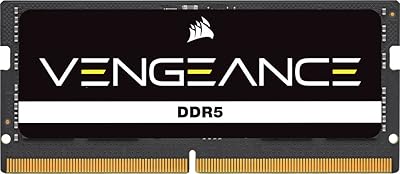
  • Color: Ships in a clean black finish with no heatspreader, keeping the profile slim and chassis-friendly.
  • Weight: The module weighs just 0.352 ounces, making it negligible in terms of added weight to any portable system.
  • Reliability Testing: Each module undergoes Corsair's in-house screening and validation process to verify stable performance before shipping.
  • Seller Rank: Ranked #129 in the Computer Memory category on Amazon, reflecting sustained buyer interest and consistent sales volume.
  • Customer Rating: Holds a 4.7 out of 5 star average across more than 2,500 verified ratings at the time of this review.
  • Release Date: First made available in April 2022, coinciding with the broader rollout of consumer DDR5 laptop platforms.

Related Reviews
Corsair Vengeance SODIMM DDR5 32GB Laptop RAM
80%
93%
Installation Ease
89%
Speed Detection & XMP
84%
Real-World Performance
76%
Platform Compatibility
67%
Latency & Timings
More
Corsair Vengeance DDR5 32GB (2x16GB) 6800MHz RAM
88%
91%
Overall Performance
94%
Gaming Performance
88%
Ease of Overclocking
89%
Software Integration (iCUE)
92%
Compatibility with Intel Systems
More
Corsair Vengeance DDR5 32GB (2x16GB) 7200MHz RAM
89%
93%
Performance
94%
Speed and Responsiveness
88%
Ease of Installation
90%
Overclocking Stability
91%
Compatibility with Modern Motherboards
More
Corsair Vengeance 32GB DDR4 SODIMM Memory Kit
82%
62%
Compatibility Clarity
91%
Installation Ease
88%
Performance Uplift
93%
Long-Term Reliability
79%
Value for Money
More
Corsair Vengeance DDR5 32GB (2x16GB) 5200MHz
91%
94%
Performance for Gaming
91%
Ease of Installation
88%
Overclocking Stability
90%
Multitasking Performance
89%
Power Efficiency (1.25V)
More
Corsair Vengeance SODIMM DDR5 16GB Laptop RAM
80%
93%
Ease of Installation
81%
System Compatibility
74%
Real-World Performance
79%
Value for Money
88%
Long-Term Stability
More
Crucial 32GB DDR5-5600MHz SODIMM Kit (CT2K16G56C46S5)
90%
94%
Multitasking Performance
97%
Ease of Installation
92%
Value for Money
89%
Compatibility
86%
Gaming Stability
More
Corsair Vengeance RGB DDR5 32GB (2x16GB) 6400MHz
88%
91%
Performance for Gaming
94%
Overclocking Stability
88%
Ease of Setup
85%
RGB Lighting Customization
90%
Compatibility with Intel Systems
More
Corsair Vengeance RGB DDR5 32GB (2x16GB) 6200MHz
86%
92%
Performance
88%
RGB Lighting Customization
89%
Overclocking Support
85%
Build Quality
90%
Compatibility with Desktop PCs
More
Corsair Vengeance DDR5 32GB 6600MHz Desktop RAM
81%
88%
Out-of-Box Performance
84%
XMP Stability
71%
Value for Money
77%
Software Integration
91%
Build Quality
More

FAQ

No, it will not. DDR4 and DDR5 use different physical slot designs and are electrically incompatible. You need to confirm your laptop's motherboard specifically supports DDR5 SODIMM before purchasing any DDR5 module.

On most compatible Intel and AMD systems, the Corsair Vengeance stick auto-configures to its rated 4800MHz speed without any BIOS intervention. That said, it's always worth booting into BIOS after installation just to confirm the speed is being detected correctly — it takes 30 seconds and removes any doubt.

Yes, and that's actually one of the smarter ways to buy into DDR5 right now. Installing a single 32GB module gives you immediate capacity, and you can add a second identical module later to enable dual-channel mode. Just make sure the second module matches the speed and timings to avoid any compatibility headaches.

It is compatible with AMD platforms that natively support DDR5, but this excludes older Ryzen 5000 and earlier generations, which are DDR4-only. A small number of users have reported compatibility quirks with certain AMD DDR5 laptops, so checking your specific model's memory support documentation before buying is a smart move.

CL40 refers to the number of clock cycles the memory waits before responding to a command. It sounds high compared to DDR4 CL16 or CL18, but DDR5 operates on a much faster clock, so the real-world latency gap is narrower than the numbers suggest. For general laptop use, multitasking, and gaming, CL40 at 4800MHz is perfectly adequate.

For most laptops, installation requires nothing more than a Phillips-head screwdriver to remove the back panel. The SODIMM slot is typically accessible once the panel is off, and the module clicks in at an angle before laying flat. Most users report the whole process taking under 15 minutes even without prior experience.

It depends on your current setup. If you're upgrading from 8GB or 16GB, the jump to 32GB can reduce stuttering and improve frame pacing in memory-hungry titles. If you're already running 32GB in dual-channel, a single-stick upgrade may actually be a step backward in bandwidth terms — dual-channel typically outperforms single-channel at the same total capacity.

No, it ships as a bare SODIMM with no heatspreader, which is completely standard for laptop memory. Laptop chassis are designed with tight clearances, and heatspreaders on SODIMM modules can actually cause fitment problems. The 1.1V operating voltage keeps thermals manageable without additional cooling.

The main differences come down to reliability testing and warranty support. This laptop memory upgrade goes through Corsair's own validation process before shipping, and Corsair backs it with their warranty and customer support infrastructure. Cheaper alternatives may test fine out of the box, but long-term stability and recourse if something goes wrong are harder to count on.

No, faster DDR5 SODIMM options exist — 5200MHz and higher modules are available from several brands including Corsair themselves. However, 4800MHz is the standard baseline speed for DDR5 and runs at spec on the widest range of compatible platforms. Faster modules can sometimes require BIOS support or may not be validated for all systems, so the compatibility trade-off is worth factoring in.

Where to Buy