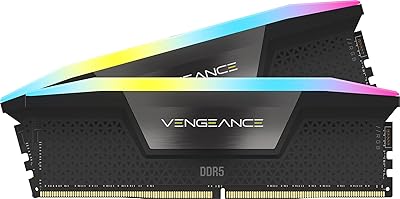
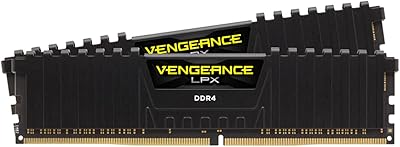
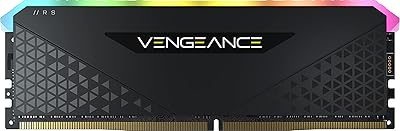
Overview

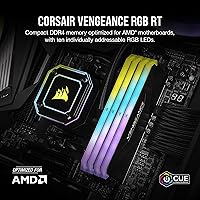
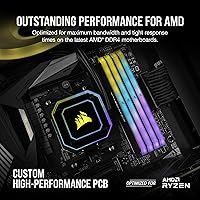
The Corsair Vengeance RGB RT 32GB DDR4 RAM entered the market in mid-2021 as a purpose-built option for AMD Ryzen desktop builders who didn't want to choose between performance and visual appeal. The RT designation matters — this isn't just a rebranded Vengeance RGB Pro. It was specifically tuned for AMD DDR4 motherboards, making it more reliable out of the box on Ryzen platforms. At 32GB in a dual-channel configuration, it covers gaming and light creative work without over-engineering. One honest caveat worth stating upfront: DDR5 is now mainstream on newer platforms, so this Corsair DDR4 kit makes the most sense if you're building or upgrading on AM4.
Features & Benefits

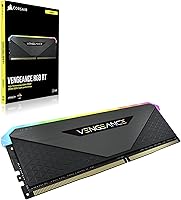
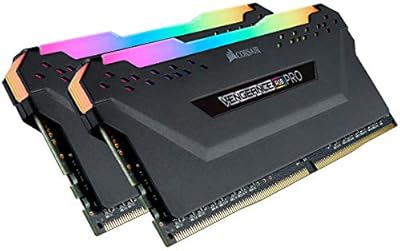
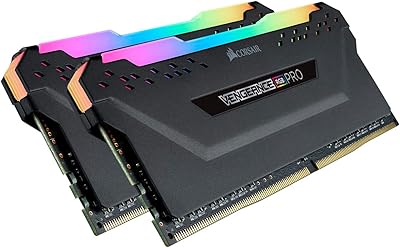
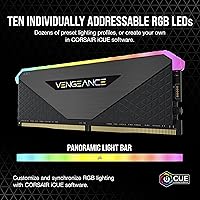
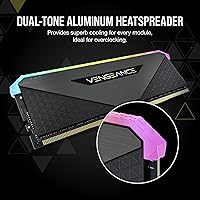
Each stick carries ten individually addressable RGB zones fed through a panoramic light pipe — the result is a wide, even glow across the top of the module rather than a spotty cluster of LEDs. It integrates with Corsair's iCUE software for granular lighting control and sync across compatible components, though iCUE's background resource usage is something to factor in. XMP profile support means the kit auto-configures to 3200MHz on compatible AMD boards without touching BIOS manually. The dual-tone aluminum heatspreader does real thermal work during sustained loads, and the 1.35V operating voltage keeps power draw modest. The screened ICs offer some overclocking headroom, but actual results depend heavily on your board and chip.

Best For

The Vengeance RGB RT is built for a specific type of builder, and that specificity is worth acknowledging. If you're on an AM4 Ryzen platform and want memory that works at rated speed without digging into BIOS settings, this RGB memory module is a natural fit. It's particularly well-suited to mid-tower and full-tower cases where the light pipe effect is actually visible through a glass panel — small form factor builds won't get much out of the aesthetics. Existing Corsair ecosystem users benefit most, since iCUE unifies lighting across peripherals, coolers, and RAM in one interface. It's a harder sell if you're targeting Intel or a new AM5 platform, where DDR5 is the smarter long-term investment.

User Feedback

Across 151 ratings, this Corsair DDR4 kit holds a 4.4 out of 5 — respectable, though the review pool is still relatively small for definitive conclusions. Builders consistently highlight how painless the installation process is and how evenly the RGB coverage spreads across a lit build. Performance stability on Ryzen systems draws genuine praise. On the other side, iCUE draws the most friction: some users report it's sluggish, memory-hungry, or occasionally fails to recognize a stick's RGB controller entirely. A handful of notes flag compatibility quirks on non-AMD boards. Critically, most negative feedback targets the software layer, not the memory itself — raw performance complaints are rare, which says a lot about the underlying hardware reliability.

Pros

  • Auto-configures to 3200MHz via XMP on compatible AMD boards — no manual BIOS tuning required.
  • Ten individually addressable RGB zones per stick produce a wide, even light spread rather than a spotty glow.
  • 32GB dual-channel capacity comfortably handles modern gaming, streaming, and heavy multitasking in one kit.
  • 1.35V low-voltage operation is easier on your system than standard 1.5V DDR4 kits.
  • The dual-tone aluminum heatspreader does real thermal work during sustained loads, not just aesthetic duty.
  • iCUE integration lets you sync RAM lighting with other Corsair components from a single software dashboard.
  • Tightly screened ICs offer some overclocking headroom for builders who want to push beyond stock settings.
  • A 4.4 out of 5 aggregate rating where most criticism targets software, not the memory hardware itself.
  • Installation is consistently praised as straightforward — no head-scratching compatibility surprises on Ryzen AM4 boards.
  • Corsair's brand backing means solid warranty support and a well-documented community for troubleshooting.

Cons

  • iCUE software is resource-heavy and known to consume background CPU and RAM during everyday use.
  • DDR4 is a maturing standard — this Corsair DDR4 kit makes little sense as a purchase for brand-new AM5 or Intel builds.
  • RGB controller recognition failures in iCUE are a recurring complaint across Corsair memory lines, including the Vengeance RT.
  • Occasional compatibility quirks on non-AMD motherboards mean plug-and-play reliability is less guaranteed outside Ryzen platforms.
  • The RGB light pipe effect is entirely wasted in opaque or closed cases — you're paying an aesthetics premium for nothing.
  • iCUE can be finicky after Windows or driver updates, sometimes requiring reinstallation to restore RGB synchronization.
  • With only 151 reviews, the sample size is still too thin to draw confident conclusions about long-term reliability.
  • Not purpose-built for extreme overclocking — screened ICs help, but results beyond stock spec vary heavily by board and chip.
  • No low-profile variant exists, ruling it out for compact builds with tight CPU cooler clearance.

Ratings

The Corsair Vengeance RGB RT 32GB DDR4 RAM scores were generated by our AI engine after processing and filtering verified global buyer feedback, with spam, bot-submitted, and incentivized reviews actively excluded from the analysis. Across thirteen evaluated categories, the scorecard reflects an honest picture of where this kit genuinely performs and where real buyers have run into friction. Both its strengths and its pain points are weighted proportionally to how frequently and consistently they appear in authenticated purchase feedback.
AMD Ryzen Performance
88%
On Ryzen AM4 systems, dual-channel 3200MHz operation delivers consistent bandwidth that benefits gaming, simultaneous streaming, and productivity apps running in parallel. Users report stable performance straight from XMP activation, with no throttling or instability flagged during extended gaming or multitasking sessions across a wide range of Ryzen 3000 and 5000 builds.
The performance advantage is specifically tied to the AM4 platform — on Intel DDR4 boards, results are more hit-or-miss, and the kit offers nothing above generic DDR4 alternatives in those scenarios. A small portion of non-Ryzen users reported needing to manually configure timings to achieve stable operation.
Installation & Setup
91%
Installation is the most consistently praised aspect across buyer feedback — seat the sticks, enable XMP or DOCP on first boot, and the kit is running at its full rated speed without any manual timing entry. Even first-time builders found the process frictionless, with no BIOS deep-diving required to get things working correctly.
A recurring minority of buyers reported that iCUE failed to detect one or both sticks immediately after installation, requiring a software reinstall or motherboard firmware update to resolve. This is a software-layer issue rather than a hardware fault, but it does undercut what is otherwise a near-flawless first-use experience.
RGB Lighting Quality
83%
The ten-zone light pipe design spreads illumination evenly across the entire top edge of each stick, creating a wide, unbroken band of color that reads clearly through a glass panel in mid-tower and full-tower builds. The individually addressable zones allow smooth gradient and wave effects that look cohesive rather than patchy.
The RGB impact depends heavily on case orientation — in builds where DIMMs face away from the glass panel, or in closed opaque enclosures, the light pipe advantage is entirely invisible. A few users also noted visible light bleed between adjacent zones up close, which reduces crispness when running multi-color segmented patterns.
iCUE Software Experience
57%
43%
iCUE delivers granular control over every lighting zone, syncs the RAM with Corsair fans, coolers, and peripherals from one dashboard, and includes a solid library of preset effects that work well without any customization effort. For builders already inside the Corsair ecosystem, having unified lighting control in a single interface is a practical convenience.
iCUE is the single most criticized aspect of this kit — it runs persistently in the background and noticeably consumes CPU and RAM headroom on tighter systems. RGB controller recognition failures following Windows or driver updates are a recurring frustration, and the software has earned a reputation for instability after major OS patches.
Value for Money
74%
26%
At its price tier, the Vengeance RGB RT delivers a credible combination of reliable DDR4 performance, wide RGB coverage, and strong brand backing in a single matched kit. For an AM4 Ryzen builder who wants both solid specs and build aesthetics without paying flagship prices, the overall value equation holds up reasonably well.
The DDR5 mainstream shift makes DDR4 investment harder to justify on any new platform build today, which erodes the long-term value argument considerably. Builders indifferent to RGB will find non-illuminated DDR4 kits at the same capacity for noticeably less money, making the lighting premium feel difficult to defend on purely practical grounds.
Thermal Management
84%
The dual-tone aluminum heatspreader does measurable work keeping ICs within safe temperature margins during sustained memory-intensive workloads and light overclocking, without requiring any active airflow directed at the DIMMs. Users running memory-heavy workloads for extended periods report no thermal throttling or instability attributed to heat.
Builders pushing aggressively beyond rated speeds in high-ambient-temperature cases may find the heatspreader insufficient without additional directed airflow across the DIMM slots. At stock settings it is more than adequate, but it is not over-engineered for extreme scenarios — it is calibrated for the kit's intended use case and little beyond.
Overclocking Potential
69%
31%
The screened ICs give this kit a real, if modest, overclocking ceiling — a meaningful portion of users report stable operation at 3600MHz with adjusted timings on cooperative boards. The quality control behind chip selection means you are not completely dependent on luck when pushing beyond the rated specification.
Overclocking headroom is highly board- and chip-dependent, with no guarantee of reaching beyond rated spec on every system configuration. Users expecting consistent 3600MHz-plus performance will find outcomes unpredictable, and dialing in tight sub-CL14 timings at elevated frequencies demands significant manual BIOS effort with no assured return on the investment.
Build Quality
86%
The physical construction is solid — the dual-tone aluminum heatspreader feels substantial rather than hollow, and the modules slot into DIMM slots with a satisfying resistance that signals good contact and quality tolerances. Several buyers specifically noted the modules feel noticeably more premium than budget-tier alternatives they replaced.
Label stickers on some units have been reported to develop minor edge-lift over time in warm case environments, and the black PCB surface shows fingerprint smudges and dust accumulation more readily than lighter alternatives. Neither issue affects performance, but they are noticeable enough for detail-oriented builders to find mildly irritating.
Platform Compatibility
72%
28%
On AMD AM4 motherboards — clearly the intended platform — compatibility is reliable and well-documented across Ryzen 3000, 4000, and 5000 series processors. Enabling DOCP and booting cleanly to 3200MHz without additional tweaking is the common, repeatable experience reported by the large majority of AM4 users.
Outside of AM4, compatibility becomes unreliable — Intel DDR4 boards can work but XMP consistency is lower, and the kit is entirely incompatible with AM5 physically and electrically. Buyers considering a platform upgrade to AM5 within the next year or two are essentially investing in a kit with a defined expiration date.
Capacity & Configuration
87%
At 32GB across two sticks in a dual-channel setup, this kit threads the needle between practical and excessive for its target audience — enough for AAA gaming, streaming, and light creative work without crossing into workstation-tier pricing or unnecessary overkill territory for the typical Ryzen gaming build.
Users running serious video editing pipelines, 3D rendering, or concurrent virtual machines will find 32GB starts feeling tight under heavier workloads. The two-stick configuration also occupies both available DIMM slots on dual-channel boards, eliminating any future expansion path without replacing the entire kit outright.
Power Efficiency
82%
18%
Operating at 1.35V instead of the 1.5V baseline of older DDR4 kits, this RGB memory module draws measurably less power per stick — a genuine advantage in builds where PSU headroom is tight or thermal output from multiple components is a concern. It is a deliberate design choice that pays off in practice.
In absolute wattage terms, the savings from 1.35V versus 1.5V are marginal and will not meaningfully move the needle on overall system power draw or electricity costs for most builders. It is a legitimate secondary advantage but should not be treated as a headline differentiator when comparing this kit against alternatives.
Brand Support & Warranty
79%
21%
Corsair's warranty process and community documentation are among the more reliable in the consumer memory space — RMA procedures are reasonably well-structured, and the volume of existing Vengeance-series troubleshooting resources online makes self-service resolution achievable for the majority of common issues buyers encounter after purchase.
Support response times during peak periods can stretch longer than expected, and iCUE-related issues frequently fall into a troubleshooting loop where support staff exhaust software steps before acknowledging potential hardware faults. The warranty itself is solid, but the live support experience is inconsistent enough to be a friction point for some buyers.
Aesthetic Design
81%
19%
The dual-tone heatspreader — combining a black PCB with a lighter metallic trim — works across a wide range of build color schemes without clashing, and the restrained styling holds up better over time than more aggressively themed alternatives that date quickly. It fits naturally into most standard mid-tower aesthetic directions.
The conservative design approach means maximalist or heavily themed builds may find the visual impact underwhelming outside of the RGB lighting itself. There is no white colorway or low-profile RT variant available, which limits options for builders working within strict aesthetic or clearance constraints on their specific case and cooling setup.

Suitable for:

The Corsair Vengeance RGB RT 32GB DDR4 RAM is the right call for AM4 Ryzen desktop builders who want their memory to run at rated speed right out of the box without touching BIOS settings. If you're assembling a mid-tower or full-tower build with a glass side panel, the ten-zone light pipe design delivers a consistent, even glow across both sticks that actually looks cohesive inside a lit system — not a scattered cluster of blinking LEDs. Gamers juggling modern titles, background streaming, and a dozen browser tabs will find 32GB in dual-channel more than enough headroom without crossing into prosumer-tier pricing. Builders already running Corsair peripherals, fans, or an AIO cooler get real practical benefit from iCUE, since managing your entire build's lighting from one interface saves genuine time and effort. It's also a strong fit for anyone who values a well-established brand with solid community documentation and dependable warranty coverage behind their purchase.
Not suitable for:

The Corsair Vengeance RGB RT 32GB DDR4 RAM is a poor fit for anyone building on a current-generation AM5 platform or a recent Intel system — both favor DDR5, and investing in a DDR4 kit for a new build today is working against yourself from day one. Builders going small form factor or using a closed, opaque case will get nothing out of the RGB premium — the panoramic light pipe effect only pays off when it's actually visible. Anyone with a strong aversion to background software should think carefully, since iCUE is a persistent process that carries a reputation for consuming more CPU and RAM than it probably should. If raw overclocking performance is your primary goal, purpose-built OC-focused kits with tighter primary timings will serve you better than this Vengeance variant. And if RGB aesthetics simply don't matter to you, there are non-illuminated DDR4 kits at this capacity that will deliver equivalent or better performance at a lower cost.
Specifications

  • Capacity: This kit provides 32GB of total memory across two 16GB DDR4 DIMM sticks configured for dual-channel operation.
  • Memory Type: Uses DDR4 SDRAM technology rated at PC4-25600 specification, designed for desktop motherboards only.
  • Speed: Rated operating speed is 3200MHz, delivering strong bandwidth headroom for gaming, multitasking, and light creative workloads.
  • Latency: Primary latency timing is CL16 at the rated 3200MHz speed under standard XMP profile settings.
  • Voltage: Operates at 1.35V, which is lower than the 1.5V baseline of many DDR4 kits and reduces power draw modestly.
  • RGB Zones: Each stick contains 10 individually addressable RGB LED zones enclosed within a panoramic light pipe for broad, even illumination.
  • RGB Software: Fully compatible with Corsair iCUE software, enabling custom lighting profiles, preset effects, and synchronization with other iCUE-enabled components.
  • Platform Support: Optimized specifically for AMD DDR4 motherboards, with XMP profile support for automatic speed configuration on compatible Ryzen AM4 systems.
  • Heatspreader: Dual-tone aluminum heatspreader actively conducts heat away from the memory ICs during sustained workloads and mild overclocking.
  • Form Factor: Standard full-height DIMM form factor designed exclusively for desktop motherboards; incompatible with laptop or SO-DIMM slots.
  • Dimensions: Each stick measures 5.44 x 0.3 x 1.76 inches, representing a standard full-height DDR4 DIMM profile.
  • Weight: The complete two-stick kit weighs approximately 4.4 ounces in total.
  • Model Number: The official manufacturer part number for this kit is CMN32GX4M2Z3200C16.
  • XMP Support: XMP (Extreme Memory Profile) allows compatible motherboards to automatically apply the rated 3200MHz speed without manual BIOS configuration.
  • IC Screening: Memory chips are individually screened for signal quality and stability, providing modest overclocking potential beyond the rated spec, though results vary by system.

Related Reviews

Corsair Vengeance RGB Pro DDR4 32GB 3200MHz
84%
93%
Installation & Setup
86%
Performance at Rated Speed
71%
Overclocking Headroom
91%
RGB Lighting Quality
76%
iCUE Software Integration
More
Corsair Vengeance RGB Pro 32GB DDR4 RAM
85%
91%
Performance at Rated Speed
94%
Installation Experience
89%
RGB Lighting Quality
67%
iCUE Software Experience
83%
Compatibility Range
More
Corsair Vengeance RGB Pro 32GB DDR4 RAM
82%
93%
RGB Lighting Quality
82%
Raw Performance
71%
iCUE Software
74%
Value for Money
89%
Long-term Stability
More
Corsair Vengeance RGB Pro 32GB (2x16GB) DDR4 3000 MHz Memory
87%
89%
Performance
94%
RGB Lighting Customization
88%
Ease of Installation
87%
Overclocking Potential
90%
Compatibility with Intel and AMD Systems
More
Corsair Vengeance 32GB DDR4 SODIMM Memory Kit
82%
62%
Compatibility Clarity
91%
Installation Ease
88%
Performance Uplift
93%
Long-Term Reliability
79%
Value for Money
More
Corsair Vengeance DDR5 32GB (2x16GB) 7200MHz RAM
89%
93%
Performance
94%
Speed and Responsiveness
88%
Ease of Installation
90%
Overclocking Stability
91%
Compatibility with Modern Motherboards
More
Corsair Vengeance DDR5 32GB (2x16GB) 6800MHz RAM
88%
91%
Overall Performance
94%
Gaming Performance
88%
Ease of Overclocking
89%
Software Integration (iCUE)
92%
Compatibility with Intel Systems
More
Corsair Vengeance RGB DDR5 32GB (2x16GB) 6400MHz
88%
91%
Performance for Gaming
94%
Overclocking Stability
88%
Ease of Setup
85%
RGB Lighting Customization
90%
Compatibility with Intel Systems
More
fanxiang RGB DDR4 32GB 3600MHz RAM
80%
88%
Value for Money
91%
Installation Ease
79%
XMP & BIOS Compatibility
82%
Gaming Performance
84%
RGB Aesthetics
More
Corsair Vengeance SODIMM DDR4 32GB (2x16GB) 3200MHz
83%
93%
Installation Ease
78%
Compatibility Range
81%
Real-World Performance Gain
84%
Auto-Overclocking Reliability
88%
Thermal Performance
More

FAQ

On most compatible AMD motherboards, you just need to enable XMP or DOCP in BIOS — many boards will actually prompt you to do this on the first boot after installation. Once enabled, the kit configures itself automatically. There is no need to manually enter timings or voltages.

No, the sticks will light up out of the box without iCUE — they default to a cycling rainbow pattern. You only need iCUE if you want to customize colors, set a static effect, sync the lighting with other Corsair gear, or choose from preset profiles. The software is optional, not required.

No — the Corsair Vengeance RGB RT 32GB DDR4 RAM is a DDR4 kit, and AM5 motherboards use DDR5 exclusively with a physically different slot. These sticks will not fit an AM5 board. If you are building on AM5, you need a DDR5 kit instead.
It will generally function on Intel DDR4 platforms, but the RT designation means it was tuned and validated primarily for AMD Ryzen AM4 boards. You can still enable XMP on Intel to reach 3200MHz, but the most reliable plug-and-play experience is on AMD. Occasional compatibility quirks on Intel boards have been reported by a small number of users.

Each stick stands 1.76 inches tall, which is a standard full-height DDR4 profile. The vast majority of aftermarket tower coolers clear this comfortably. That said, if you are running a particularly wide low-profile cooler, it is worth checking that cooler's listed RAM clearance against the 1.76-inch height before you buy.

You can try, but it is not recommended. Mixing unmatched kits — even at the same rated speed — often prevents XMP from activating correctly and can cause instability or force both sticks to run at a lower default speed. For consistent dual-channel performance, run both sticks from this matched kit together.

Start by firmly reseating the affected stick and relaunching iCUE. If that does not help, do a clean uninstall and reinstall of the iCUE software. Updating your motherboard firmware has also resolved detection issues for some users. This is a known recurring pain point across Corsair memory lines — if none of those steps work, Corsair support can walk you through an RMA if the RGB controller turns out to be faulty.

For AM4 Ryzen builds, 3200MHz is still a solid choice — it aligns well with the Infinity Fabric clock speed on most Ryzen processors, hitting a known performance sweet spot. If you are staying on AM4, this kit is not behind the curve. The more important question is platform: if you are starting a fresh build, AM5 and DDR5 are the better long-term direction.

You can, but running a single stick means operating in single-channel mode, which has a real and measurable impact on Ryzen performance — AMD processors are notably sensitive to memory channel configuration. You will get meaningfully better results running both sticks from day one, which is how this kit was designed to be used.

If your case has a glass side panel and the DIMMs are in a visible position, the light pipe does a decent job spreading illumination evenly across the top edge of each stick — it is a wide, diffused glow rather than a row of visible LED dots. In a closed or opaque case, you will not see any of it, which makes the RGB premium largely pointless if that is your setup.

Where to Buy