Overview

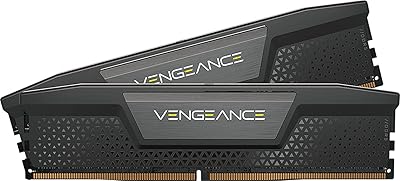
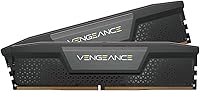
The Corsair Vengeance 32GB DDR5 4800MHz Desktop RAM represents a sensible entry point for anyone stepping onto the DDR5 platform for the first time, particularly builders working with Intel 12th or 13th gen processors. Corsair has spent decades earning trust in the memory market, and this Vengeance DDR5 kit carries that credibility forward. Running at 4800MHz JEDEC baseline for DDR5, it sets honest expectations rather than chasing headline speeds. The 2x16GB dual-channel configuration suits modern multitasking workloads well, and the pricing sits comfortably in the mid-range — below the premium asked for 5600MHz or 6000MHz alternatives, without sacrificing brand reliability.
Features & Benefits

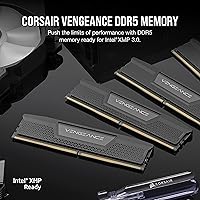
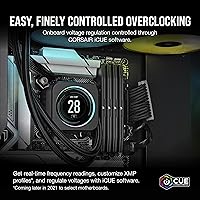
One of the more practical engineering choices here is the onboard PMIC — a power management chip built into each module rather than relying on the motherboard to handle voltage regulation. That shift means tighter, more stable control over power delivery, which matters especially once XMP is enabled. Intel XMP 3.0 support lets you push beyond the JEDEC baseline with minimal effort, and iCUE software allows saving custom profiles per application — though some users find the software suite heavier than they'd like. The 1.1V operating voltage keeps thermals low during long sessions, and the low-profile black aluminum build clears most tower coolers without issue. AMD users should verify board compatibility carefully before purchasing.

Best For

This Corsair memory kit makes the most sense for first-time DDR5 builders on Intel Alder Lake or Raptor Lake platforms who want a reliable, well-supported kit without overspending. Content creators juggling video exports, tab-heavy browsing, and background tasks will appreciate the dual-channel bandwidth more than hardcore overclockers chasing 6000MHz. If you want your memory to just work from day one, this 32GB DDR5 module pair delivers exactly that — though XMP must be enabled manually in your BIOS, a one-time step many beginners overlook and wrongly blame on the hardware. Those planning aggressive overclocking may feel constrained eventually, but for everyday high-performance use, it holds up well.

User Feedback

Across hundreds of verified purchases, this Vengeance DDR5 kit has earned a strong 4.7-star rating, and the buyer sentiment is consistent. Most highlight easy installation and reliable XMP activation on Z690 and Z790 boards as the clear standouts. A handful note that iCUE, while functional, can feel bloated for users who simply want memory monitoring without a full software layer. On the AMD side, a few buyers report instability — which tracks, given this kit is tuned for Intel XMP rather than AMD EXPO. As for long-term speed satisfaction, most users are content at 4800MHz for daily workloads, though some power users admit the frequency ceiling eventually pushed them toward higher-speed kits.

Pros

  • XMP 3.0 activation on supported Intel boards is quick, reliable, and requires only a single BIOS toggle.
  • Onboard PMIC voltage regulation delivers noticeably more stable power delivery than board-dependent alternatives.
  • The 32GB dual-channel configuration handles demanding multitasking and content creation workloads with ease.
  • Low-profile module height clears virtually all tower CPU coolers without any fitment headaches.
  • Running at 1.1V keeps thermals low, even during sustained all-day workloads.
  • Corsair's build quality and warranty support give buyers long-term confidence in their investment.
  • This Vengeance DDR5 kit sits at a competitive price point compared to higher-frequency DDR5 alternatives.
  • iCUE software allows per-application memory profile switching without re-entering the BIOS each time.
  • Consistently high buyer ratings across hundreds of reviews point to strong real-world reliability.
  • The black aluminum finish blends cleanly into most mid-tower and full-tower build aesthetics.

Cons

  • 4800MHz is the JEDEC baseline for DDR5 — enthusiasts will quickly feel the ceiling if they want to overclock.
  • iCUE software is feature-rich but noticeably resource-heavy, which frustrates users who want lightweight monitoring.
  • AMD AM5 platform compatibility is not guaranteed; EXPO support is absent and instability has been reported.
  • CL40 latency is on the looser end for DDR5 at this speed, which can matter in latency-sensitive workloads.
  • XMP must be manually enabled in BIOS — a step that trips up first-time builders and gets blamed on the kit.
  • Real-world gaming performance gains over a fast DDR4 setup are slim at this frequency tier.
  • No RGB lighting option in this model for builders who prefer a lit aesthetic in their system.
  • Users who later want to expand beyond 32GB will need to purchase an entirely new kit rather than adding modules.

Ratings

The Corsair Vengeance 32GB DDR5 4800MHz Desktop RAM has been scored by our AI after processing hundreds of verified global buyer reviews, with spam, bot activity, and incentivized feedback actively filtered out. The ratings below reflect an honest synthesis of what real users experience day-to-day — strengths and frustrations alike — so you can make a genuinely informed decision before buying.
Installation Ease
93%
Buyers across skill levels consistently describe installation as straightforward — modules seat firmly, and the kit is recognized immediately by supported Intel boards on first boot. First-time builders especially appreciate not needing to fiddle with settings before the system posts.
A recurring source of confusion is that the kit defaults to base JEDEC speeds until XMP is manually enabled in BIOS — something many beginners don't know to do, leading them to believe the kit is defective when it isn't.
XMP Compatibility
89%
On Z690 and Z790 Intel boards, XMP 3.0 activation is reliable and consistent — users report stable operation at rated speeds without needing to manually tune timings. The ability to save custom profiles via iCUE adds a layer of flexibility that more experienced builders genuinely appreciate.
Outside of Intel's ecosystem, the picture gets murkier. AMD AM5 users have reported instability when attempting to run XMP profiles, and the absence of native EXPO support means those builders are left configuring timings manually — a frustrating experience for anyone expecting plug-and-play behavior.
System Stability
91%
The onboard PMIC handles voltage regulation at the module level rather than relying on the motherboard, and buyers notice the difference. Long work sessions and overnight renders run without unexpected crashes or memory errors, which is exactly what you want from a daily driver kit.
A small subset of users report occasional instability when pushing beyond XMP settings toward manual overclocks — this kit isn't engineered for aggressive frequency tuning, and asking it to operate far outside its rated profile can introduce errors that require dialing settings back.
Value for Money
82%
18%
For buyers entering DDR5 without wanting to pay a steep premium for higher-frequency kits, this Vengeance DDR5 kit lands in a sensible spot. You get a trusted brand, solid build quality, and a warranty that stands behind the product — all without spending significantly more for speeds most workloads won't saturate.
As DDR5 pricing has become more competitive overall, some buyers feel the gap between this kit and 5600MHz alternatives has narrowed enough to make 4800MHz a harder sell. Users who later find themselves wanting more headroom report mild regret at not spending slightly more upfront.
Gaming Performance
74%
26%
For gaming at 1440p and 4K, this 32GB DDR5 module pair keeps up without any real bottleneck concerns. The dual-channel configuration ensures the CPU is fed data consistently, and most titles run smoothly with no memory-related hitching.
Buyers who game at high refresh rates in CPU-bound titles at 1080p may notice that faster DDR5 kits pull slightly ahead in frame consistency. At 4800MHz, the performance delta over a well-tuned DDR4 system is real but modest — not transformative for most gaming scenarios.
Overclocking Headroom
61%
39%
Some technically inclined users have managed modest manual overclocks beyond the rated 4800MHz with patient BIOS tuning, and the PMIC-based voltage control does lend some added stability margin compared to board-regulated alternatives.
This is not a kit designed for pushing limits. Users who came in expecting to hit 5600MHz or beyond with manual tuning were largely disappointed — the modules don't have the binning or thermal headroom to reliably sustain aggressive frequency targets without errors.
Thermal Management
88%
Running at 1.1V means this Corsair memory kit generates very little heat under normal and sustained workloads. Users in small form factor builds or cases with limited airflow reported no thermal throttling or heat-related instability during all-day sessions.
The aluminum heatspreader does its job at stock and XMP speeds, but users who attempt higher manual voltages during overclocking find temperatures climb faster than expected given the modest heatsink mass.
Software Experience
67%
33%
For users who want it, iCUE offers genuinely useful per-application profile switching and real-time memory monitoring without needing to re-enter the BIOS. Power users building media workstations appreciate being able to set different memory behavior for editing versus rendering tasks.
A notable portion of buyers find iCUE heavier than they expected — it runs background processes, updates frequently, and can feel like overkill for users who simply want their memory to run and be left alone. The software is entirely optional, but the on-ramp for new users isn't always intuitive.
Build Quality
86%
The matte black aluminum heatspreader feels solid and well-machined — nothing about this Corsair memory kit suggests cost-cutting at the physical level. Module insertion and retention in DIMM slots is firm without being worryingly difficult, which builders handling multiple installs appreciate.
The lack of any RGB option in this model is a minor point of friction for builders who've invested in a themed aesthetic. It's purely cosmetic, but several buyers specifically mentioned wishing they had checked for an RGB variant before ordering.
Intel Platform Compatibility
92%
Compatibility with Z690 and Z790 Intel motherboards is broad and well-documented. Buyers across a wide range of board brands — ASUS, MSI, Gigabyte — report no unexpected compatibility issues, and the kit shows up consistently on manufacturer QVL lists.
Compatibility is strong specifically within Intel's ecosystem — but that specificity cuts both ways. Buyers who later switch platforms or who purchase without confirming board support can encounter friction that a more universally validated kit might have avoided.
AMD Platform Compatibility
44%
56%
Some AMD AM5 users have gotten this kit running at JEDEC speeds without issue, and on boards with flexible memory training, stable operation is achievable with patience and manual configuration.
The kit lacks EXPO certification, and AMD platform instability at XMP settings is a documented pattern in user feedback. This is not the right kit for AMD builds if you want confident out-of-the-box performance — buyers in this camp are better served by a kit with explicit EXPO support.
Capacity for Multitasking
87%
At 32GB in dual channel, the kit handles heavy multitasking comfortably — video editors working in Premiere Pro, users running virtual machines alongside browser-heavy workflows, and developers with multiple environments open all report no memory pressure during typical sessions.
For highly memory-intensive professional workloads — large 3D scene files, server virtualization, or processing massive datasets — 32GB can become a ceiling. Users in those fields often find themselves wishing they had budgeted for a 64GB kit from the start.
Longevity & Reliability
89%
Corsair's limited lifetime warranty backs this kit up meaningfully, and the broader community track record for Vengeance series modules points to strong long-term durability. Users who have run earlier Vengeance DDR4 kits for years without failure tend to approach this DDR5 iteration with earned confidence.
DDR5 as a platform is still maturing, and a small number of buyers have noted that early-production batches of DDR5 modules industry-wide had higher early-failure rates than DDR4. Corsair's warranty process handles replacements, but the claim process has occasionally drawn criticism for turnaround time.

Suitable for:

The Corsair Vengeance 32GB DDR5 4800MHz Desktop RAM is purpose-built for Intel platform builders who want a dependable, no-fuss entry into the DDR5 generation without overspending on headroom they may never use. It fits particularly well with Alder Lake and Raptor Lake systems running Z690 or Z790 chipset motherboards, where XMP 3.0 activation is straightforward and well-supported. Content creators who run video editing software, multitask across many applications, or keep dozens of browser tabs open will get real mileage from the 32GB dual-channel configuration. It also suits builders who prioritize long-term system stability over chasing the highest possible memory clock, and those who appreciate the peace of mind that comes with buying from a well-established memory manufacturer.
Not suitable for:

The Corsair Vengeance 32GB DDR5 4800MHz Desktop RAM is not the right pick for serious overclockers or competitive builders who want to push memory speeds north of 5600MHz, where purpose-built high-frequency kits offer much more tuning headroom. AMD platform users should approach this kit with caution — it is optimized for Intel XMP 3.0, not AMD EXPO, and real-world compatibility on AM5 boards can be inconsistent without extra manual configuration. Gamers expecting a dramatic performance jump over a well-tuned DDR4 system may also come away underwhelmed, since frame rate differences at 4800MHz are often marginal in most titles. Those who prefer a lean software setup will find iCUE more intrusive than expected, and users who need more than 32GB for memory-intensive workloads like 3D rendering or large dataset processing will want to look at higher-capacity kits from the outset.
Specifications

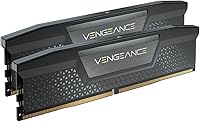
  • Capacity: This kit provides 32GB of total memory across two 16GB DDR5 DIMM modules configured for dual-channel operation.
  • Memory Type: Uses DDR5 SDRAM technology, the current generation standard offering improved bandwidth and efficiency over DDR4.
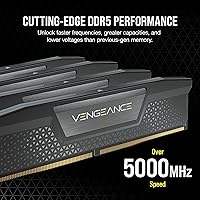
  • Clock Speed: Operates at 4800MHz, which is the JEDEC-defined baseline frequency for DDR5 memory.
  • Latency: Rated at CL40 primary latency timings, which is typical for DDR5 modules running at the 4800MHz speed tier.
  • Voltage: Runs at 1.1V operating voltage, keeping power draw and heat output low during extended workloads.
  • Form Factor: Standard DIMM form factor designed exclusively for desktop motherboards; not compatible with laptop SO-DIMM slots.
  • XMP Support: Supports Intel XMP 3.0, allowing custom memory performance profiles to be created and saved via compatible software.
  • Voltage Regulation: Each module includes an onboard PMIC (Power Management Integrated Circuit) that handles voltage regulation independently of the motherboard.
  • Platform: Optimized for Intel DDR5 motherboards, including those using Z690 and Z790 chipsets; AMD platform compatibility should be verified before purchase.
  • Software: Compatible with Corsair iCUE software, which enables per-application profile switching and memory monitoring without BIOS access.
  • Dimensions: Each module measures 5.31 x 0.28 x 1.38 inches, maintaining a low-profile height suitable for builds with large tower CPU coolers.
  • Weight: Each individual module weighs approximately 1.3 ounces, consistent with standard aluminum-heatspreader DDR5 DIMMs.
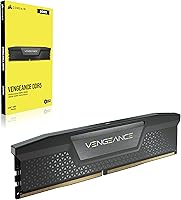
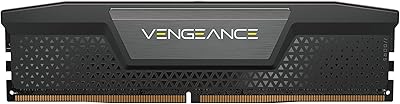
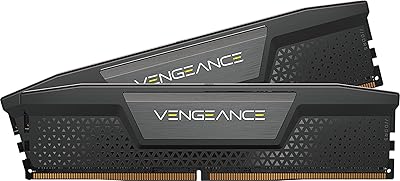
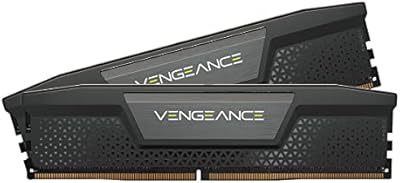
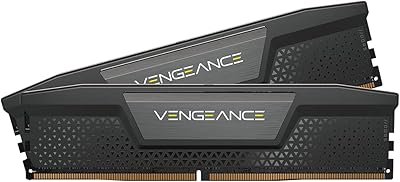
  • Color & Finish: Features a clean matte black aluminum heatspreader with no RGB lighting, suited to builds with a subdued or monochromatic aesthetic.
  • Series: Part of Corsair's Vengeance line, which targets performance-oriented desktop users who prioritize stability and value over extreme overclocking.
  • Model Number: Official model identifier is CMK32GX5M2A4800C40, which can be used to verify compatibility and register the product for warranty support.
  • First Available: This kit was first made available in December 2021, coinciding with the early rollout of Intel 12th gen DDR5 platform support.
  • Warranty: Corsair provides a limited lifetime warranty on Vengeance series memory modules, covering manufacturing defects under normal use conditions.

Related Reviews

Corsair Vengeance 32GB DDR5 SODIMM RAM
84%
93%
Overall Reliability
91%
Installation Experience
88%
Speed & Auto-Configuration
84%
Real-World Performance Gain
79%
Compatibility Range
More
Corsair Vengeance DDR5 32GB (2x16GB) 6800MHz RAM
88%
91%
Overall Performance
94%
Gaming Performance
88%
Ease of Overclocking
89%
Software Integration (iCUE)
92%
Compatibility with Intel Systems
More
Corsair Vengeance DDR5 32GB (2x16GB) 7200MHz RAM
89%
93%
Performance
94%
Speed and Responsiveness
88%
Ease of Installation
90%
Overclocking Stability
91%
Compatibility with Modern Motherboards
More
Corsair Vengeance SODIMM DDR5 32GB Laptop RAM
80%
93%
Installation Ease
89%
Speed Detection & XMP
84%
Real-World Performance
76%
Platform Compatibility
67%
Latency & Timings
More
Corsair Vengeance DDR5 64GB Desktop Memory
81%
93%
Stability & Reliability
88%
XMP Setup Experience
81%
Real-World Performance
67%
Value for Money
79%
Compatibility
More
DATO 32GB DDR5 4800MHz Desktop RAM
71%
74%
Value for Money
88%
Installation Ease
79%
System Stability
71%
Memory Speed
63%
Latency Performance
More
Corsair Vengeance SODIMM DDR5 16GB Laptop RAM
80%
93%
Ease of Installation
81%
System Compatibility
74%
Real-World Performance
79%
Value for Money
88%
Long-Term Stability
More
Acclamator DDR5 32GB 4800MHz Desktop RAM Kit
75%
88%
Value for Money
91%
Installation Ease
86%
System Stability
74%
Compatibility
41%
Overclocking Headroom
More
Corsair Vengeance DDR5 32GB (2x16GB) 5200MHz
91%
94%
Performance for Gaming
91%
Ease of Installation
88%
Overclocking Stability
90%
Multitasking Performance
89%
Power Efficiency (1.25V)
More
Corsair Vengeance RGB DDR5 32GB (2x16GB) 6400MHz
88%
91%
Performance for Gaming
94%
Overclocking Stability
88%
Ease of Setup
85%
RGB Lighting Customization
90%
Compatibility with Intel Systems
More

FAQ

Yes — and this trips up a lot of first-time DDR5 builders. After installing the modules, you need to enter your BIOS and enable XMP (sometimes labeled DOCP or EXPO on certain boards). Without doing that, your system will default to a lower JEDEC speed, often around 4400MHz or lower. It only takes a minute once you know where to look, but skipping this step is the most common reason people think the kit is underperforming.

It may work, but with some caveats. This Vengeance DDR5 kit is tuned for Intel XMP 3.0, not AMD EXPO, so on AM5 boards you might need to manually configure timings rather than relying on a one-click profile. Some users have reported instability on AM5 at XMP settings, while others have had no issues running it at JEDEC speeds. If you're building an AMD system, it's worth checking your specific motherboard's QVL list to see if this kit is listed.

Honestly, for the vast majority of games, yes. Most titles don't push memory bandwidth hard enough to show a meaningful difference between 4800MHz and 5600MHz DDR5. Where higher-frequency kits shine is in CPU-bound scenarios with very high frame rates — think competitive shooters at 1080p. For general gaming at 1440p or 4K, this Corsair memory kit will not be your bottleneck.

Not by simply adding to this kit. DDR5 kits are sold as matched pairs and are designed to work together as tested sets. If you need more memory down the line, you'd likely need to replace the entire kit with a 64GB set rather than adding two more sticks alongside these. That's a limitation of how DDR5 kits are validated and binned, not a flaw specific to Corsair.

No, iCUE is entirely optional. The modules run fine without it installed — XMP activation is handled through BIOS, not the software. iCUE is only useful if you want to monitor memory stats in real time or save and switch between custom XMP profiles from within Windows. If you prefer a lean software setup, you can safely skip it.

In most cases, yes. The low-profile heatspreader design keeps module height at 1.38 inches, which clears the majority of tower coolers including most Noctua models. That said, if your cooler hangs very low over the first DIMM slot, it's always worth double-checking the clearance specs for your specific cooler and motherboard combination before ordering.

For everyday tasks — productivity, web browsing, streaming, even most creative workloads — the real-world difference is small enough that most people won't notice it. Faster kits do offer more room to overclock and can provide measurable gains in memory-bandwidth-sensitive applications, but they cost noticeably more. The Corsair Vengeance 32GB DDR5 4800MHz Desktop RAM is a better fit for users who want reliability at a reasonable price rather than chasing peak benchmark numbers.
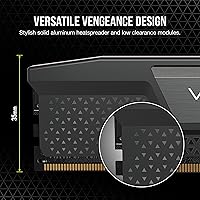
Not in this specific model. The CMK32GX5M2A4800C40 ships with a plain matte black heatspreader and no lighting whatsoever. Corsair does offer RGB variants in their Vengeance and Dominator lines, but those come at a higher price. If aesthetics are a priority, it's worth browsing Corsair's full DDR5 lineup for a lit alternative.

This 32GB DDR5 module pair has been widely reported to work reliably on Intel Z690 and Z790 chipset motherboards from brands like ASUS, MSI, and Gigabyte. For best results, check your specific motherboard's memory QVL (Qualified Vendor List) on the manufacturer's website to confirm the CMK32GX5M2A4800C40 model number is listed. That's the most reliable way to guarantee out-of-the-box compatibility.

Corsair covers Vengeance series memory with a limited lifetime warranty against manufacturing defects. In practice, this means if a module fails under normal use conditions, Corsair's support team will handle a replacement. It's one of the more reassuring aspects of buying from an established memory brand rather than a lesser-known manufacturer — especially for a component you're unlikely to replace for several years.