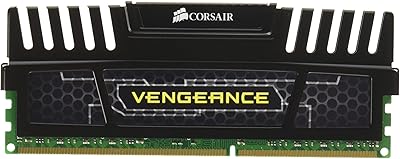
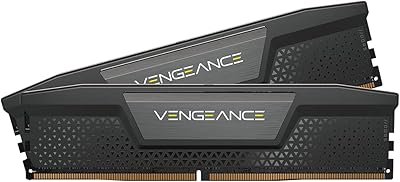
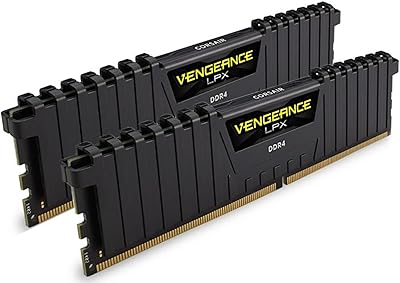
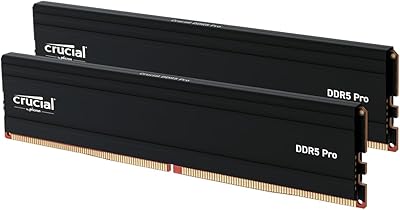
Overview

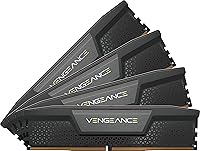
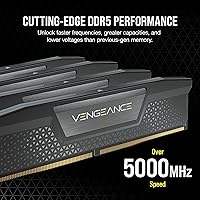
The Corsair Vengeance DDR5 192GB Desktop Memory Kit is a high-capacity DDR5 solution built for builders who genuinely need massive memory headroom — not just the bragging rights that come with it. Running four 48GB modules in a quad-channel configuration, this 192GB DDR5 kit takes full advantage of modern Intel platforms where multi-channel bandwidth directly improves throughput for parallel workloads. It launched in early 2023 as DDR5 was gaining real traction, and its 5200MHz speed sits comfortably in the mainstream DDR5 tier. That said, faster kits exist at higher frequencies if raw MHz is your priority. This is a capacity-first build, not a speed-bin play.
Features & Benefits

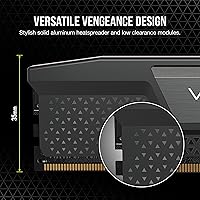
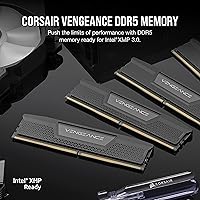
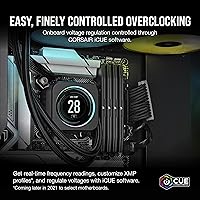
One of the more practical differences DDR5 brings is onboard voltage regulation, where each module handles its own power management rather than deferring to the motherboard — that means cleaner, more predictable behavior under load, especially useful if you want to nudge settings beyond stock. This Corsair memory upgrade also supports Intel XMP 3.0, letting you save custom profiles directly to the module itself, not just the BIOS. The low-profile heatspreader keeps compatibility wide open with large tower coolers. At 1.25V and CL38 latency, it runs conservatively relative to high-frequency DDR5 kits, which trades benchmark peaks for reliable daily stability. iCUE adds real-time monitoring if you want visibility into what the kit is actually doing.

Best For

The Vengeance DDR5 set makes the most sense for creative professionals and workstation builders who regularly bump up against memory limits. Think DaVinci Resolve timelines backed by large RAW footage caches, Blender scenes with dense geometry and textures, or environments running multiple virtual machines simultaneously — these are the workloads where 192GB of headroom actually gets used rather than sitting idle. Intel 12th and 13th Gen users will find XMP setup refreshingly straightforward. Pure gamers, though, should look elsewhere: even demanding titles rarely crack 32GB, and a tighter-latency 64GB kit would serve better at lower cost. This is a workstation-first purchase and should be evaluated as one.

User Feedback

With a 4.7-star average across more than 3,500 ratings, this 192GB DDR5 kit has earned a strong reception, and the pattern in buyer comments is consistent. XMP plug-and-play behavior gets praised repeatedly on supported Intel boards, and long-term stability under sustained workloads draws positive notes from editors and VM users alike. On the critical side, a handful of buyers report compatibility friction with certain motherboard BIOS versions, particularly on non-flagship boards where DDR5 support was still maturing at launch. AMD users should note this kit targets Intel XMP, not AMD EXPO — results on Ryzen systems are less predictable. The value-per-gigabyte equation divides opinion, with some finding it competitive for the capacity tier and others wishing for faster speeds at this price point.

Pros

  • 192GB of total capacity removes memory as a bottleneck for even the most demanding creative and technical workloads.
  • Four 48GB modules enable full quad-channel bandwidth on supported Intel motherboards, improving throughput for parallel tasks.
  • Intel XMP 3.0 support makes one-click overclocking reliable and consistent without manual BIOS tuning.
  • Onboard power management delivers cleaner voltage regulation than older DDR4 motherboard-controlled designs.
  • The low-profile heatspreader fits under virtually any large tower air cooler without clearance conflicts.
  • Operating at 1.25V keeps power draw modest compared to higher-frequency DDR5 kits that push voltage further.
  • iCUE integration offers real-time frequency and voltage visibility without needing separate monitoring software.
  • Buyers report strong long-term stability under sustained heavy workloads, including VM hosting and media rendering.
  • A 4.7-star rating across more than 3,500 reviews reflects a broad and consistent real-world track record.
  • The 5200MHz speed hits a practical sweet spot for workstation use, balancing bandwidth with stable daily operation.

Cons

  • CL38 latency at 5200MHz is conservative — competing kits offer tighter timings at similar or higher frequencies.
  • Not certified for AMD EXPO, making performance on Ryzen platforms unpredictable and potentially unstable.
  • Some buyers report compatibility issues on non-flagship motherboards where DDR5 BIOS support was still maturing at launch.
  • The sheer capacity comes at a significant cost premium that is hard to justify unless 192GB is a genuine workload requirement.
  • iCUE software adds overhead and background processes that some builders prefer to avoid entirely.
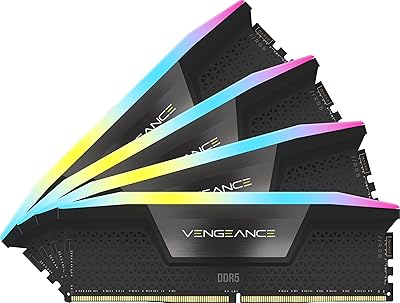
  • No RGB lighting option for builders who want visual customization alongside high capacity.
  • Custom XMP profile saving via iCUE requires software dependency that not all users want tied to their system.
  • Value-per-gigabyte is less competitive than lower-capacity DDR5 kits when total system memory needs fall below 128GB.
  • 48GB modules are an unusual size that can limit future upgrade flexibility compared to more standard 32GB or 64GB sticks.
  • Users on older Intel platforms without robust XMP 3.0 BIOS support may not get the full advertised speed without troubleshooting.

Ratings

The scores below reflect an AI-driven analysis of thousands of verified global user reviews for the Corsair Vengeance DDR5 192GB Desktop Memory Kit, with spam, bot-generated, and incentivized submissions actively filtered out before scoring. Each category is evaluated on real-world buyer experiences — not manufacturer claims — so both the genuine strengths and the friction points are represented honestly. If a category scores lower than you might expect, that reflects a recurring pattern in legitimate user feedback, not an editorial bias.

Raw Capacity Value
93%
For professionals who actually need 192GB — video editors juggling uncompressed 4K timelines, developers running four or five VMs in parallel, or animators with scenes that simply will not fit in less memory — this kit delivers in a way almost nothing else on the consumer market can. Buyers in these workloads consistently report that upgrading from 64GB or 128GB eliminated their last major system bottleneck.
The capacity advantage is wasted on anyone whose workload peaks at 32–64GB, which covers the vast majority of buyers. A handful of reviewers admitted overspending on headroom they never ended up using, which pulls the category down slightly from a perfect score when accounting for the full buyer pool.
XMP Setup Experience
88%
On validated Intel Z690 and Z790 boards, enabling XMP 3.0 is genuinely a one-toggle operation in the BIOS, and the Vengeance DDR5 set locks in at 5200MHz without further intervention. Users consistently praise how predictable and drama-free the process is compared to early DDR5 kits that required significant BIOS trial-and-error.
The experience degrades noticeably on mid-range or entry-level motherboards where DDR5 BIOS maturity was still catching up at the time of launch. Several buyers with non-flagship boards reported needing multiple BIOS updates or manual timing adjustments before hitting rated speed reliably.
Daily Stability
91%
Long-term reliability is where this 192GB DDR5 kit earns its strongest praise across the review pool. Users running sustained heavy workloads — overnight rendering jobs, weeks-long VM uptime, extended Blender bakes — report zero crashes or memory errors over months of use, which matters far more than benchmark numbers in a professional context.
A small but consistent minority of reviewers flagged occasional instability when all four DIMM slots are fully populated on certain motherboards, particularly at the rated 5200MHz XMP profile. Dropping to 4800MHz JEDEC resolved the issue for most, but that should not be necessary on a premium kit.
Platform Compatibility
67%
33%
On its intended Intel platform, this Corsair memory upgrade is well-matched to the hardware it was designed for. Buyers on Z790 boards in particular report a smooth experience with broad motherboard QVL presence and reliable module recognition across major brands including ASUS, MSI, and Gigabyte.
The lack of AMD EXPO support is a real limitation that catches some buyers off-guard, and AMD Ryzen users report inconsistent results ranging from running at reduced JEDEC speeds to outright boot failures at XMP. This is not a kit you should be purchasing for a Ryzen build without very careful verification.
Memory Speed & Latency
72%
28%
For workstation workloads dominated by large sequential reads and sustained bandwidth — think streaming high-resolution assets from a RAMdisk or feeding a CPU renderer with scene data — 5200MHz delivers adequate throughput without the instability risks that come with pushing DDR5 to its limits.
CL38 at 5200MHz is objectively behind the curve compared to competing kits that hit 6000MHz or 6400MHz with tighter CL30 timings at a similar price point. Buyers who run synthetic benchmarks like AIDA64 or MaxxMem will see this gap clearly, and it is a legitimate trade-off rather than a minor footnote.
Value for Money
69%
31%
When evaluated purely on cost-per-gigabyte at the 192GB capacity tier, this kit is hard to beat without moving to server-grade or HEDT memory platforms. For buyers who genuinely need every gigabyte of this kit, the pricing represents a reasonable premium over lower-capacity alternatives.
For anyone whose workloads could realistically be served by 64GB or 96GB, the price gap versus more modestly sized DDR5 kits is difficult to rationalize. Several reviewers also noted that faster kits at lower capacities offer better synthetic performance per dollar, which stings if speed matters more to your use case than total headroom.
Cooler Clearance
89%
The low-profile heatspreader is one of the most consistently appreciated physical design choices across user feedback. Builders using large tower coolers from Noctua, be quiet!, and Thermalright report zero clearance conflicts, which is not a given with high-capacity kits that sometimes use taller aluminum spreaders for thermal reasons.
The absence of RGB is worth flagging since some buyers purchasing at this price tier expect some visual customization. It is a minor point, but a recurring one in reviews from builders who care about internal aesthetics.
Voltage & Power Efficiency
84%
Running at 1.25V, this kit operates notably cooler and draws less power than DDR5 modules rated at 6000MHz or above, which often require 1.35V or more. For workstation builders with packed cases or limited PSU headroom across high-core-count CPU and GPU combinations, this matters in practice.
The onboard PMIC, while better than motherboard-side voltage control in theory, has occasionally been flagged in reviews as a source of unusual behavior on boards with aggressive auto-tuning features enabled. Disabling automatic voltage adjustments in the BIOS resolves this, but it adds a setup step.
iCUE Software Integration
74%
26%
For users already embedded in the Corsair ecosystem with iCUE managing other components, having real-time memory frequency and voltage readouts consolidated in one dashboard is genuinely useful. The ability to save custom XMP profiles directly to the module — not just the BIOS — is a practical differentiator for users who move their kit between test systems.
iCUE is optional, but the software itself draws mixed reviews independent of this kit: some users find it resource-heavy and prefer to run without it entirely. The value of this feature is therefore highly dependent on whether the buyer is already invested in the Corsair ecosystem.
Quad-Channel Configuration
86%
Running all four DIMM slots simultaneously in quad-channel mode gives the kit its full bandwidth advantage on Intel platforms, and buyers doing memory-intensive work — particularly database operations, large file caching, and multi-threaded rendering — report that the aggregate bandwidth is meaningfully better than dual-channel configurations at comparable speeds.
Populating all four DIMM slots inherently puts more stress on the memory controller and can tighten the stability window on some motherboards. A subset of users found that achieving 5200MHz with all four slots filled required a more recent BIOS than was shipped with their board.
Build & Module Quality
88%
Physical build quality draws near-universal praise, with buyers noting that the modules feel solid and the heatspreader adhesion is consistent across all four sticks. Dead-on-arrival reports are extremely rare relative to the volume of reviews, suggesting strong quality control at the factory level.
The all-black matte aesthetic, while clean, shows fingerprints visibly during installation and is difficult to wipe down once seated. It is a cosmetic issue rather than a functional one, but worth noting for builders who care about the finished look of an open-frame or windowed build.
Workstation Performance Impact
87%
Buyers who upgraded from 64GB or 128GB systems to this 192GB DDR5 kit consistently report tangible workflow improvements: DaVinci Resolve projects that previously required proxy workflows now run natively, and Blender scenes that caused swap file thrashing render cleanly from RAM. The real-world impact in genuinely memory-bound scenarios is hard to argue with.
In workloads that are not memory-bound — which includes most gaming, general productivity, and even moderate creative work — the performance delta versus a 64GB kit is essentially zero. Buyers expecting across-the-board speed improvements will be disappointed if their workloads do not actually saturate lower capacity options.
Upgrade Path Flexibility
61%
39%
Buying a matched quad-kit at 192GB means the memory side of a workstation build is effectively maxed out for any consumer Intel platform, removing memory capacity as a future concern entirely. That ceiling-out effect is genuinely comforting for professionals building a machine they expect to run hard for several years.
The 48GB module size is non-standard and limits options if a single stick fails outside warranty. Replacing one module with a matching 48GB stick from a different production batch risks timing incompatibilities, and there are fewer 48GB modules available on the secondary market compared to 16GB or 32GB sticks.
Documentation & Out-of-Box Experience
77%
23%
Packaging is protective and clearly organized, with all four modules individually sleeved and easy to identify. First-time DDR5 builders found the included guidance sufficient to get through physical installation without confusion, and Corsair's support documentation online covers the most common BIOS XMP enablement steps across major board brands.
The in-box documentation does not address AMD platform limitations or provide explicit guidance on which motherboard BIOS versions are recommended before installing — information that would prevent a meaningful portion of the compatibility complaints seen in user reviews.

Suitable for:

The Corsair Vengeance DDR5 192GB Desktop Memory Kit is purpose-built for professionals who routinely push their systems to the edge of available memory. Video editors cutting high-resolution footage in DaVinci Resolve, 3D artists juggling complex Blender scenes with multi-layered textures, and developers spinning up several virtual machines simultaneously will all find the 192GB capacity ceiling genuinely liberating rather than aspirational. It is equally compelling for data analysts working with large in-memory datasets or photographers batch-processing hundreds of large RAW files at once. Intel 12th and 13th Gen platform users get the added convenience of reliable XMP 3.0 enablement with minimal BIOS fuss, making the upgrade experience straightforward for builders who want performance without hours of manual tuning. If your workflow regularly forces you to close applications to free memory, this Corsair memory upgrade addresses that frustration at a fundamental level.
Not suitable for:

The Corsair Vengeance DDR5 192GB Desktop Memory Kit is a poor match for anyone building a gaming PC, a general home or office machine, or even a mid-tier creative workstation that tops out at moderate project sizes. Most games simply do not benefit from memory beyond 32GB, and even the most demanding titles leave the vast majority of this kit's capacity untouched. Budget-conscious builders will also find the value proposition hard to justify unless 192GB is a genuine requirement rather than a future-proofing impulse. AMD Ryzen users should approach with caution too, since this kit is tuned for Intel XMP 3.0 and does not carry AMD EXPO certification, meaning auto-overclock results on Ryzen platforms are inconsistent at best. Finally, builders chasing peak DDR5 frequency performance should know that 5200MHz at CL38 leaves headroom on the table compared to faster kits — if synthetic benchmarks and raw bandwidth numbers matter more than total capacity, there are better-optimized options available.
Specifications

  • Total Capacity: The kit provides 192GB of total system memory across four individual 48GB DDR5 modules.
  • Memory Type: Uses DDR5 SDRAM, the current-generation desktop memory standard offering higher bandwidth and lower operating voltage than DDR4.
  • Clock Speed: Rated at 5200MHz, operating at this frequency requires XMP 3.0 to be enabled in the system BIOS.
  • Latency: CL38 primary latency timings at 5200MHz, reflecting a capacity-optimized rather than latency-optimized configuration.
  • Operating Voltage: Runs at 1.25V, which is conservative relative to higher-frequency DDR5 kits that often require 1.35V or more.
  • Module Count: Ships as a matched quad-kit of four 48GB DIMMs intended to populate all four memory slots for full quad-channel operation.
  • Form Factor: Standard DIMM format for desktop PCs; not compatible with laptops or servers using SO-DIMM or RDIMM slots.
  • XMP Support: Supports Intel XMP 3.0, including the ability to create and save user-defined custom profiles directly to the module via iCUE software.
  • Voltage Regulation: Each module includes an onboard PMIC (power management integrated circuit) that handles voltage regulation independently from the motherboard.
  • Heatspreader: Low-profile aluminum heatspreader measuring 1.38″ in height, designed to clear large tower air coolers without modification.
  • Module Dimensions: Each DIMM measures 5.31″ long, 0.28″ wide, and 1.38″ tall, matching standard ATX and mid-tower DIMM slot footprints.
  • Kit Weight: The complete four-module kit weighs approximately 5.3 ounces in total.
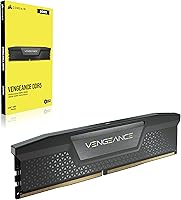
  • Color: Finished in matte black with no RGB lighting; suited to builds where clean aesthetics are preferred over visual effects.
  • Software: Compatible with Corsair iCUE software for real-time frequency monitoring, voltage readings, and custom XMP profile management.
  • Platform Support: Officially validated for Intel 12th and 13th Gen platforms with XMP 3.0-capable motherboards; AMD EXPO certification is not included.
  • Compatible Devices: Designed exclusively for desktop PC builds; not suitable for workstations using ECC-required or registered DIMM architectures.
  • Model Number: Official model identifier is CMK192GX5M4B5200C38, used to confirm compatibility with specific motherboard vendor QVL lists.
  • Release Date: First made available in March 2023, during the period of broader mainstream DDR5 platform adoption.
  • Market Rank: Holds a top-100 position in the Computer Memory category on Amazon, reflecting sustained commercial demand since launch.
  • Warranty: Corsair provides a limited lifetime warranty on Vengeance DDR5 memory modules, covering manufacturing defects under normal operating conditions.

Related Reviews

Corsair Vengeance RGB DDR5 96GB (4x24GB) 6400MHz CL32 Memory Kit
87%
94%
Performance
91%
Reliability
89%
Ease of Installation
93%
RGB Lighting Customization
90%
Overclocking Capability
More
Corsair Vengeance 8GB DDR3 Desktop RAM
76%
91%
Installation Ease
93%
Reliability & Longevity
83%
Value for Money
44%
Platform Longevity
63%
XMP Configuration
More
Corsair Vengeance 32GB DDR5 4800MHz Desktop RAM
80%
93%
Installation Ease
89%
XMP Compatibility
91%
System Stability
82%
Value for Money
74%
Gaming Performance
More
Crucial Pro 128GB DDR5-5600 Kit (2x64GB)
85%
93%
Installation Experience
91%
Stability & Reliability
89%
Performance in Productivity Workloads
74%
Gaming Performance
92%
XMP & EXPO Profile Support
More
Corsair Vengeance LPX 32GB DDR4 Memory Kit
81%
93%
Installation Ease
91%
Physical Compatibility
86%
Platform Compatibility
94%
Reliability & Longevity
67%
Value for Money
More
Corsair Vengeance LPX 16GB DDR4 Desktop RAM
81%
93%
Ease of Installation
88%
Compatibility
84%
Value for Money
67%
Memory Speed & Performance
89%
Build Quality
More
Corsair Vengeance 32GB DDR4 SO-DIMM RAM
75%
71%
Compatibility Accuracy
89%
Installation Ease
86%
Multitasking Performance
78%
Value for Money
82%
Long-term Reliability
More
Corsair Vengeance LPX 64GB DDR4 Desktop Memory
81%
89%
Platform Compatibility
92%
XMP Setup Ease
88%
Workstation Performance
91%
Physical Design
83%
Quad-Channel Bandwidth
More
TEAMGROUP T-Create Expert 64GB DDR5 RAM Kit
86%
91%
Out-of-Box Performance
88%
Memory Bandwidth
79%
Platform Compatibility
93%
Build Quality
84%
Thermal Management
More
Corsair Vengeance RGB Pro 128GB DDR4 Memory
80%
88%
Memory Performance
91%
Stability & Reliability
93%
Build Quality
86%
RGB Lighting Quality
74%
iCUE Software Integration
More

FAQ

Not reliably. This 192GB DDR5 kit is tuned for Intel XMP 3.0 and does not carry AMD EXPO certification. Some Ryzen boards will run it at JEDEC defaults without issue, but enabling the 5200MHz XMP profile on an AMD system can be hit-or-miss depending on the specific motherboard and BIOS version. If you are on an AMD platform, look for a kit explicitly validated with EXPO support instead.

Yes, one small step: after installing the modules and booting up, go into your BIOS and enable XMP 3.0 (sometimes labeled DOCP or EOCP depending on your board). Without that, the kit will run at the JEDEC default speed of 4800MHz rather than the rated 5200MHz. It is a one-time toggle that takes about 30 seconds.

Most likely, yes. The Vengeance DDR5 set uses a low-profile heatspreader that stands only about 1.38 inches tall, which clears the vast majority of large tower coolers including popular models from Noctua and be quiet! That said, if your cooler overhangs the first DIMM slot aggressively, it is worth checking the cooler manufacturer's clearance spec to be sure.

For most users, it is overkill — and that is not a criticism, just honesty. Gaming, web browsing, and even light creative work top out well below this. Where it earns its keep is in professional workflows: running multiple virtual machines simultaneously, editing uncompressed 4K or 8K video with heavy effects, working with massive 3D scene files in Blender or Houdini, or doing in-memory data processing. If none of those apply to you, a 32GB or 64GB kit will serve you just as well at a fraction of the cost.

You can physically install two modules, but that defeats part of the purpose of this kit. Running all four DIMMs in quad-channel mode gives you the full bandwidth advantage on Intel platforms. Running just two drops you to dual-channel. More importantly, matched kits are validated together — mixing modules from different batches later can introduce stability issues. If budget is a concern right now, a purpose-built 96GB or 128GB dual-channel kit might be a better starting point.

Honestly, it sits in the middle of the DDR5 speed range. You can find kits running at 6000MHz, 6400MHz, or even higher, often with tighter latency timings. This Corsair memory upgrade prioritizes capacity and stability over peak frequency, so if you run synthetic memory benchmarks against a fast 6000MHz CL30 kit, it will lose. In real-world workstation use with sustained memory pressure, the practical gap is smaller — but it exists, and it is worth knowing before you buy.

No, iCUE is optional. The kit runs fine without it — you just enable XMP in the BIOS and go. iCUE adds extras like real-time voltage and frequency monitoring and lets you create custom XMP profiles saved directly to the module. Useful for enthusiasts who want that level of control, but not required for normal operation.

The safest approach is to check your motherboard manufacturer's QVL (qualified vendor list) and search for the model number CMK192GX5M4B5200C38. High-end Z690 and Z790 Intel boards from ASUS, MSI, and Gigabyte have the most reported success, particularly with updated BIOS versions that improved DDR5 stability. Budget or entry-level boards can be more finicky, especially with all four slots populated at rated speed.

Not in this specific configuration. The Corsair Vengeance DDR5 192GB Desktop Memory Kit ships only in the non-RGB black heatspreader version at this capacity. Corsair does offer RGB DDR5 options in lower capacities under the Dominator Platinum line, but 192GB RGB kits are not currently available in their lineup.
Corsair covers this kit with a limited lifetime warranty against manufacturing defects, which is standard for their memory products and one of the more generous policies in the category. Warranty claims go through Corsair's support site directly. The general user consensus is that Corsair's RMA process is straightforward — you submit a ticket, they verify the issue, and they send a replacement. Keep your purchase receipt handy as proof of the original sale date.