Overview

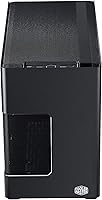
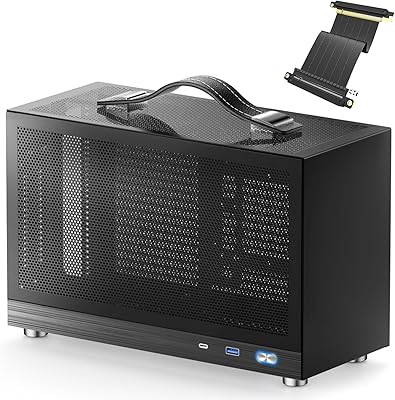
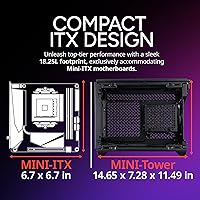
The Cooler Master NR200P V3 Mini-ITX Case is the third iteration of what has become a benchmark chassis in the small-form-factor community. At 18.6 liters, every component choice you make is shaped by that volume — there's no room for oversized ATX power supplies or sprawling cooling solutions. Cooler Master timed this release for mid-2025 to align with the RTX 5090 and RX 9070 XT launches, which tells you exactly who this case is designed for. Sitting at roughly 14.89 x 11.5 x 7.28 inches, it occupies a fraction of a mid-tower's desk footprint. That compactness comes with a firm condition: SFX PSUs only. If you're not already in the SFX ecosystem, factor that cost in before you buy.
Features & Benefits

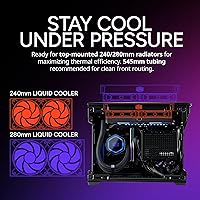
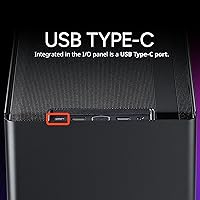
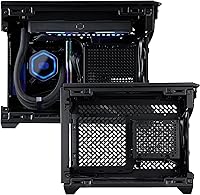
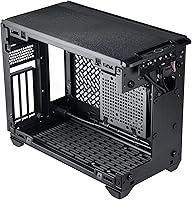
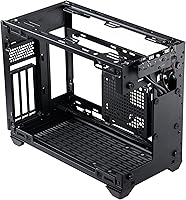
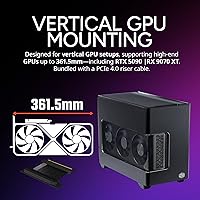
The standout addition in the NR200P V3 is the vertical GPU mount, which supports cards up to 361.5mm long — meaning the RTX 5090 slots in without modification. Critically, the included riser is a PCIe 5.0 cable, not the Gen 4 version found in older cases; that distinction matters if you're running bandwidth-hungry storage alongside a next-gen GPU. Cooling is handled by a top-mounted radiator bay that fits both 240mm and 280mm AIOs — Cooler Master recommends 400mm tubing for a cleaner front routing path, which is worth noting before you order your loop. The tool-free mesh and aluminum panels make swapping components genuinely quick. The front I/O gives you two USB 3.0 ports; no USB-C, so plan accordingly.

Best For

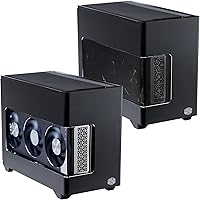
This compact chassis is purpose-built for a specific kind of builder — someone who wants flagship GPU performance in a desk-friendly footprint and is willing to work within some real constraints to get there. It's an obvious fit for anyone planning a vertical GPU showcase build with a card like the RTX 5090, where the mesh side panel turns the GPU into a display piece. Living-room and small-desk setups benefit most from the volume-to-performance ratio here. If you already own an SFX PSU and a 280mm AIO, you're basically ready to start. And for anyone coming from the original NR200P, the native PCIe 5.0 riser is the clearest reason to upgrade — no adapter needed, no bandwidth compromise.

User Feedback

With a 4.4-star average across 112 ratings, the NR200P V3 lands in a solid spot — appreciated, but not without valid complaints. Buyers consistently praise the build quality and rigidity of the panels and the satisfaction of the tool-free removal system. GPU clearance that actually lives up to the advertised 361.5mm gets mentioned repeatedly, which isn't a given in this size class. On the critical side, new builders frequently flag the SFX PSU requirement as an unexpected sourcing hurdle — it's not a dealbreaker, but it adds budget complexity. Cable management is tight at 18.6 liters, and a handful of buyers note that routing a custom loop cleanly demands patience. The PCIe 5.0 riser has drawn mostly positive remarks, though a few mention fit tolerance varies with certain GPU bracket widths.

Pros

  • Supports GPUs up to 361.5mm vertically, meaning even the largest current consumer cards fit without modification.
  • The bundled PCIe 5.0 riser cable is a genuine upgrade over Gen 4 risers found in competing cases at this price.
  • Top-mount AIO support for both 240mm and 280mm radiators gives real cooling headroom for high-TDP processors.
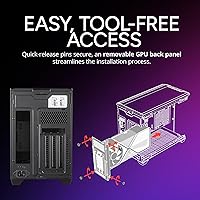
  • Tool-free side panel removal makes component swaps and maintenance noticeably faster than most cases in this category.
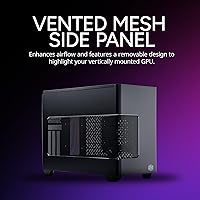
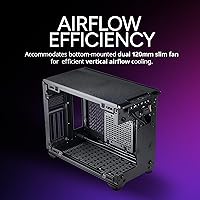
  • The vented mesh side panel improves airflow while doubling as a display window for a vertically mounted GPU.
  • At 18.6 liters, the NR200P V3 delivers a competitive volume-to-performance ratio that few ITX cases match.
  • Build quality feel — particularly the aluminum panels — reads as premium and holds up to repeated handling.
  • GPU clearance that actually matches the advertised spec, a detail buyers in this size class have learned not to take for granted.
  • The overall footprint is dramatically smaller than a mid-tower while still accommodating flagship cooling solutions.

Cons

  • SFX PSUs cost significantly more than ATX equivalents, making the total build budget higher than the case price alone suggests.
  • No front USB-C port is a real omission in 2025, especially for builders pairing this with modern peripherals and phones.
  • Cable management inside 18.6 liters demands careful planning — rushed builds will look messy and may restrict airflow.
  • The 400mm AIO tubing recommendation for clean routing is not included and requires a separate, specific component purchase.
  • PCIe 5.0 riser cable fit tolerance has been reported as inconsistent with certain GPU bracket widths by a minority of buyers.
  • The SFX-only PSU constraint eliminates a large portion of the power supply market, reducing competitive pricing options.
  • Thermal performance under sustained, heavy GPU loads depends heavily on airflow configuration — the case is not forgiving of poor fan placement.
  • At just under 9 pounds before components, portability to LAN events is workable but not as convenient as ultra-compact designs.

Ratings

The scores below reflect an AI-driven analysis of verified global buyer reviews for the Cooler Master NR200P V3 Mini-ITX Case, with spam, bot-generated, and incentivized feedback actively filtered out before scoring. Each category is rated independently, surfacing both the genuine strengths and the friction points that real builders encountered — nothing is glossed over to protect the overall impression.

Build Quality
88%
Buyers consistently describe the aluminum side panels as feeling noticeably more premium than plastic-heavy competitors at this price tier. The chassis rigidity holds up under repeated panel swaps, and there are no reports of flex or creaking once components are installed.
A small number of reviewers noted that the plastic accents around the I/O panel feel slightly inconsistent with the overall material quality of the rest of the chassis. It does not affect function, but it is visible up close and noticeable to detail-oriented builders.
GPU Compatibility
93%
The 361.5mm vertical clearance delivers on its promise — buyers running RTX 5090 and RX 9070 XT cards confirmed fitment without modification, which is not something every case can claim when marketing around specific GPU names. The vertical orientation also keeps the card cooler by allowing direct exhaust through the mesh panel.
A handful of users reported minor tolerance issues with the PCIe 5.0 riser cable fit depending on GPU bracket geometry, requiring some adjustment before the card seated cleanly. This appears to be an edge case but is worth knowing if your card has a non-standard bracket profile.
Cooling Performance
79%
21%
The top-mount 280mm AIO support combined with the vented mesh side panel creates a reasonable thermal path for high-TDP builds. Buyers running sustained gaming sessions with RTX 5090-class GPUs reported acceptable temperatures when the AIO and fan configuration were dialed in properly.
Thermal performance is sensitive to build quality and fan placement in a way that forgiving larger cases are not. Builders who rushed the cable management or skipped optimizing fan curves reported noticeably higher GPU temperatures under sustained load — the 18.6L volume leaves little room for error.
Ease of Building
74%
26%
The tool-free panel system is a genuine quality-of-life improvement that experienced ITX builders appreciate during iterative builds. Once you understand the spatial layout and plan your cable runs in advance, the workflow is logical and component access is better than the volume might suggest.
First-time SFF builders consistently found the interior cramped and the cable routing unintuitive without prior ITX experience. The tight clearances between the PSU shroud and the motherboard tray make cable management a multi-attempt process for anyone building in this form factor for the first time.
PCIe 5.0 Riser Cable
82%
18%
Including a Gen 5 riser cable in the box is a meaningful differentiator versus competing cases that ship with Gen 4 risers or no riser at all. Buyers appreciated not having to source a compatible cable separately, which can be both expensive and confusing given the inconsistent quality of third-party Gen 5 risers on the market.
A minority of reviewers flagged that the riser cable fit felt slightly loose with certain GPU bracket widths, requiring careful positioning before locking the card in place. The cable itself has not been reported as failing electrically, but the physical fit tolerance could be tighter for the price paid.
PSU Compatibility
61%
39%
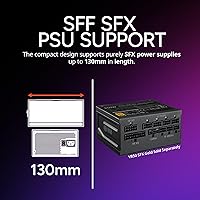
For builders already in the SFX ecosystem, the bottom-mount PSU placement keeps the center of gravity low and leaves the upper interior clean for the AIO and GPU. Popular SFX units from Corsair, Seasonic, and Silverstone all fit without issue within the 130mm length ceiling.
The SFX-only restriction is the single most cited frustration across all negative reviews, particularly from buyers who did not read the spec carefully before purchasing. Quality SFX units cost meaningfully more than ATX equivalents, and availability in certain regions is limited, which adds budget pressure and sourcing friction that first-time builders rarely anticipate.
Cable Management
62%
38%
Experienced SFF builders who used flat or individually sleeved cables reported clean results with some patience. The case does provide dedicated routing channels, and working methodically — starting with power cables before data cables — helps maintain reasonable airflow.
18.6 liters is genuinely tight, and the cable management experience is directly tied to how much time and planning you invest. Reviewers who attempted to use modular cables from bulkier SFX PSUs mentioned that the extra connectors created significant clutter near the GPU power headers.
Front I/O
58%
42%
The two USB 3.0 ports cover basic peripheral connectivity without issue for most desktop workflows. Power button placement is clean and tactile feedback is solid compared to budget cases in the category.
The absence of a front USB-C port is a recurring complaint that surfaces even in otherwise positive reviews. In 2025, connecting phones, cameras, and modern peripherals at the front of a case without adapters is an expectation, and the NR200P V3 falls short of it.
Aesthetic Design
86%
The vented mesh side panel framing the vertical GPU is one of the most visually effective design choices in this size class — buyers building showcase rigs consistently praised the result. The overall minimalist black exterior reads as intentionally restrained rather than budget-driven.
Color options are limited to black only, which is a minor but real restriction for builders coordinating a specific RGB or white-themed setup. Some reviewers also noted that the mesh panel shows fingerprints easily and benefits from microfiber maintenance.
Panel Removal & Access
91%
Tool-free side panel removal is one of the most unanimously praised aspects of this compact chassis across all buyer demographics. Panels come off cleanly, seat securely without rattling, and survive repeated removal cycles without the clips degrading — a common failure point on less refined designs.
The panel alignment on reassembly requires a deliberate press-and-click motion that can feel slightly awkward one-handed. It is a minor ergonomic note rather than a structural concern, but builders with large hands mentioned it as mildly fiddly.
AIO Radiator Support
83%
Supporting both 240mm and 280mm radiators in a top-mount position gives builders genuine cooling flexibility for high-TDP CPUs. The wider 280mm option in particular provides measurable thermal headroom when paired with a power-hungry processor under sustained workloads.
The 400mm tubing length recommendation for cleaner front routing is not communicated prominently enough at purchase, and buyers who ordered standard 300mm or 360mm tubing AIOs reported awkward routing that added unnecessary complexity to the build process.
Value for Money
77%
23%
The bundled PCIe 5.0 riser cable alone justifies a portion of the premium over older-generation ITX cases, since quality Gen 5 risers purchased separately can be expensive. Buyers who planned the build correctly — with a compatible SFX PSU already in hand — consistently felt the total package delivered fair value.
The mandatory SFX PSU purchase adds significant cost for new builders who are not already in that ecosystem, making the real entry price noticeably higher than the case itself implies. For buyers who factor in a quality SFX unit from scratch, the overall investment climbs into premium territory quickly.
Packaging & Unboxing
84%
Reviewers across multiple regions noted that the case arrived without cosmetic damage despite standard shipping handling. The protective foam inserts are well-fitted, and included accessories — riser cable, screws, and documentation — were organized rather than loose.
A small number of international buyers reported minor panel scuffs upon arrival, suggesting that the outer box protection may be marginal for longer shipping routes. It is an infrequent occurrence but worth inspecting on delivery before discarding packaging.
Upgrade Path & Longevity
81%
19%
PCIe 5.0 riser support means the case is compatible with next-generation GPU and storage platforms without requiring any adapter purchases. The Mini-ITX standard itself is stable, and the NR200P V3 chassis accommodates current flagship hardware without modification.
The SFX PSU ceiling of 130mm limits access to some of the higher-wattage SFX-L units on the market, which could become relevant if future GPU power requirements climb further. Builders planning around 1000W or above SFX-L options may find the length restriction constraining within a year or two.

Suitable for:

The Cooler Master NR200P V3 Mini-ITX Case is built for enthusiast PC builders who have made a deliberate choice to prioritize desk footprint without giving up flagship-tier hardware. If you're planning a build around an RTX 5090 or RX 9070 XT and want to keep the whole system under 19 liters, this compact chassis was genuinely designed with you in mind. It's equally well-suited to living-room or media-center builds where a discreet, clean-looking enclosure matters as much as raw performance. Upgraders coming from the original NR200P will find the native PCIe 5.0 riser cable a meaningful step forward — no third-party adapter, no compatibility guesswork. Builders who already own a quality SFX power supply and a 280mm AIO will feel right at home here, since those components slot into an ecosystem the NR200P V3 was clearly optimized around.
Not suitable for:

If you're a first-time PC builder or someone still assembling their component list from scratch, the Cooler Master NR200P V3 Mini-ITX Case introduces a few hard requirements that can catch people off guard. The SFX PSU restriction is non-negotiable — standard ATX power supplies simply do not fit, and quality SFX units carry a noticeable price premium over their ATX equivalents, which adds real budget pressure for new builders. Anyone who relies on front-panel USB-C for frequent device connections will find the dual USB 3.0 front I/O frustrating over time. Builders who prefer extensive cable routing flexibility or like to run large custom water-cooling loops should expect a genuinely tight interior that demands patience and planning. Finally, if you're after an ATX or Micro-ATX board for expandability — more PCIe slots, additional RAM slots, multi-GPU support — this Mini-ITX chassis simply cannot accommodate that hardware.
Specifications

  • Form Factor: Supports Mini-ITX motherboards exclusively; no Micro-ATX or ATX compatibility.
  • Volume: Total internal volume is 18.6 liters, placing it in the compact end of the SFF enthusiast category.
  • Dimensions: The chassis measures 14.89 x 11.5 x 7.28 inches (length x height x width).
  • Weight: Shipping weight is 8.82 pounds before any components are installed.
  • GPU Clearance: Vertical GPU mounting supports cards up to 361.5mm in length, accommodating current flagship consumer GPUs.
  • Riser Cable: A PCIe 5.0 riser cable is included in the box, enabling full Gen 5 bandwidth without a separate purchase.
  • AIO Support: The top-mount radiator bay accommodates 240mm and 280mm all-in-one coolers; 400mm tubing is recommended for front routing.
  • PSU Compatibility: Only SFX power supplies up to 130mm in length are supported; standard ATX PSUs cannot be installed.
  • PSU Position: The power supply mounts at the bottom of the chassis.
  • Side Panels: Two tool-free removable panels are included: one solid aluminum panel and one vented mesh panel for the GPU-facing side.
  • Front I/O: The front panel provides two USB 3.0 Type-A ports; there is no USB-C front I/O port.
  • Materials: The chassis is constructed from alloy steel, with aluminum side panels and plastic accents at key contact points.
  • Color: Available in black; no additional colorway options are listed for this model.
  • Model Number: The official model identifier is NR200PV3-KWNN-S00 for the standard black configuration.
  • CPU Cooler: Maximum CPU cooler height clearance is not explicitly listed; an AIO is the recommended cooling path given the vertical GPU orientation.
  • Drive Bays: Storage support follows typical SFF ITX layout with provisions for 2.5-inch SSDs; no 5.25-inch optical bay is present.

Related Reviews
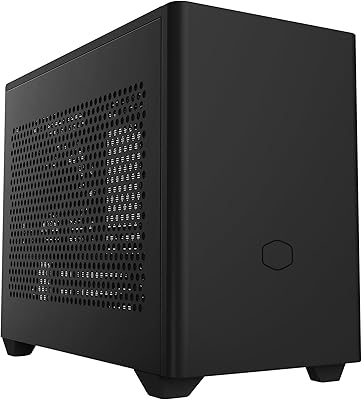
Cooler Master NR200 Mini-ITX Case
85%
91%
Build Quality
88%
Cooling Performance
94%
GPU Compatibility
84%
Ease of Assembly
86%
Airflow Efficiency
More
Cooler Master NCORE 100 MAX Mini-ITX Case
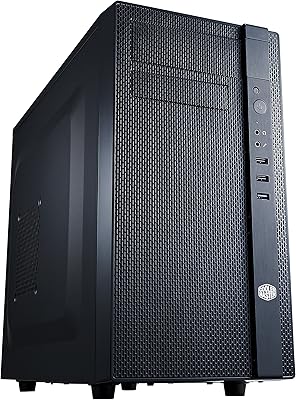
73%
88%
Build Quality
71%
Included AIO Performance
86%
PSU Quality & Reliability
79%
GPU Compatibility
58%
Cable Management
More
Cooler Master N200 Mini Tower Computer Case
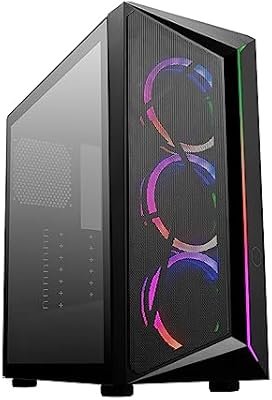
78%
91%
Value for Money
84%
Airflow Performance
73%
Build Quality
88%
Storage Expandability
86%
Cooling Compatibility
More
Cooler Master CMP510 Case
87%
91%
Cooling Performance
88%
Build Quality
85%
Cable Management
89%
Modularity & Customization
93%
Airflow & Ventilation
More
Cooler Master N400 Mid Tower PC Case
76%
88%
Airflow Performance
74%
Build Quality
86%
Value for Money
91%
Ease of Assembly
79%
Cooling Compatibility
More
SilverStone Technology SG13P Mini-ITX Case
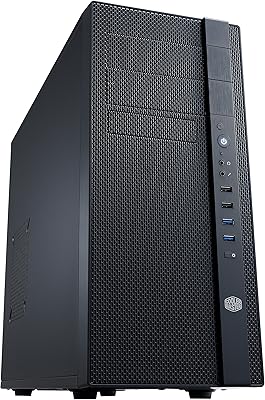
85%
89%
Build Quality
87%
Cooling Performance
91%
Storage Flexibility
95%
Size & Portability
65%
Cable Management
More
Cooler Master Force 500 ATX Mid Tower Case
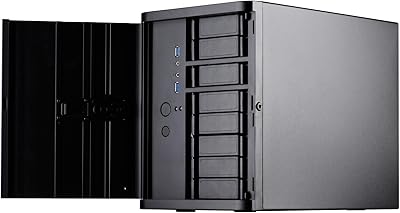
70%
83%
Build Quality
51%
Airflow Performance
57%
Cable Management
88%
Ease of Assembly
84%
PSU Compatibility
More
Thermaltake TR100 Mini-ITX SFF Case
77%
91%
Component Compatibility
78%
Build Quality
86%
Value for Money
67%
Thermal Performance
72%
Cable Management
More
Cooler Master Cosmos C700M Full-Tower Case
81%
93%
Build Quality
88%
Cooling Performance
91%
Design & Aesthetics
89%
Interior Layout & Flexibility
71%
Value for Money
More
KXRORS S300 Mini-ITX PC Case
71%
88%
Build Quality & Materials
84%
Portability & Handling
67%
Airflow & Thermal Performance
53%
CPU Cooler Compatibility
72%
GPU Compatibility & Fit
More

FAQ

It genuinely fits. Multiple buyers have confirmed the RTX 5090 slots into the vertical mount without modification. The 361.5mm clearance is a real measured spec, not a rounded estimate, so you do not need to worry about millimeter-level interference with current flagship cards.

No — and this is worth knowing before you buy. The NR200P V3 is built around SFX form factor PSUs only, with a maximum length of 130mm. Standard ATX units are physically too large to fit. Quality SFX power supplies from brands like Corsair, Seasonic, and Silverstone are the go-to choices, but budget accordingly since they typically cost more than comparable ATX units.

For most current builds, the practical bandwidth difference is minimal day-to-day, but it matters if you pair a PCIe 5.0 GPU with a Gen 5 SSD in a configuration that shares lanes. More importantly, the Gen 5 riser is forward-compatible, so you are not buying into a connector you will need to replace in a year or two.

Yes, the top-mount bay is designed to accommodate a 280mm radiator alongside a full-size GPU in the vertical position. The key detail is tubing length — Cooler Master recommends 400mm tubing for clean front routing, so check that spec before ordering your cooler.

It takes patience. At 18.6 liters, you are working in a tight envelope and every cable run needs to be planned. Sleeved or flat cables help significantly. Builders who rush this step tend to end up with restricted airflow near the GPU, which matters a lot when you are running a high-TDP card.

If you are running a PCIe 5.0 platform or planning to mount a GPU longer than what the original riser supported, yes. The bundled Gen 5 riser cable and the extended 361.5mm GPU clearance are the two most concrete improvements. If you are staying on an older GPU and PSU, the original holds up well enough that the upgrade is more optional.

Both, realistically. The vented mesh allows warm air from the GPU to exit directly rather than recirculating inside the case, which does help under sustained load. That said, thermal performance still depends heavily on your fan configuration and how well the AIO is positioned at the top. Do not expect the mesh alone to compensate for a poorly planned airflow setup.

Tool-free removal works as advertised and is one of the most consistently praised aspects of this chassis. The panels feel secure when installed — no noticeable rattling during normal desktop use — and come off cleanly without the panel clips that frustrate builders on cheaper cases.

No, and that is a genuine limitation worth calling out. The front I/O is limited to two USB 3.0 Type-A ports. If you regularly connect USB-C peripherals, cameras, or phones at the front of your case, you will need a hub or have to route cables to the rear of your motherboard instead.

The NR200P V3 is noticeably larger than ultra-compact designs like the Dan A4 (roughly 7–9 liters), but that extra volume is what buys you 280mm AIO support and full-length GPU clearance. Think of it as the middle ground — not the absolute smallest ITX case available, but one of the most capable within the 18–20 liter bracket.

Where to Buy