Overview

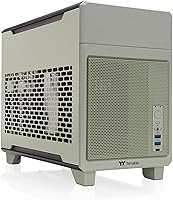
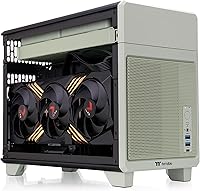
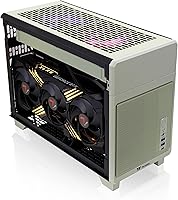
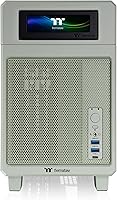
The Thermaltake TR100 Mini-ITX SFF Case is a compact chassis built for enthusiast builders who refuse to sacrifice component headroom for portability. At just under 19 liters, it occupies a sweet spot in the small form factor market that few competitors hit without charging significantly more. The dual-chamber design is a real differentiator here — it keeps the power delivery and storage tucked away from your main board, which makes the whole interior feel less chaotic than you'd expect. The matcha green finish is a bold choice, but it reads as intentional rather than gimmicky, especially compared to the all-black sea of similarly priced offerings from Fractal and Lian Li.

Features & Benefits

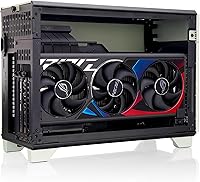
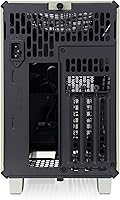
The TR100's dual-chamber layout does more than look organized — it physically separates your GPU and PSU from the motherboard zone, which genuinely helps with routing and reduces heat crossover between components. The GPU bay is generous enough to fit modern triple-slot cards at full length, so you're not stuck hunting for shorter alternatives. What really stands out, though, is the included PCIe 4.0 riser cable. Most cases at this price make you source one separately, which adds cost and compatibility headaches; having it in the box is a practical win. Radiator support up to 280mm is also uncommon at this volume, giving you real AIO options beyond a basic 120mm. CPU cooler clearance is tight, so plan accordingly with a low-profile cooler.

Best For

This mini-ITX case is an obvious pick for LAN party regulars — it's light enough to haul, sturdy enough to survive repeated transport, and the GPU stays secured thanks to the integrated GPU brace. It also works well as a living room PC where a smaller, attractive enclosure actually matters. If you're making your first jump into SFF building, the included riser cable and removable PCIe bracket lower the barrier noticeably; you're not improvising around missing accessories on day one. Upgraders downsizing from a mid-tower will find the component headroom less claustrophobic than expected — full-length GPUs fit, real AIO cooling is possible, and both SFX and SFX-L PSUs are supported, so you likely won't need a new power supply.

User Feedback

Across a large pool of verified ratings, the TR100 holds up well. Buyers consistently praise the build quality for this price tier, the eye-catching color, and the value of getting a riser cable included. The assembly experience gets described as approachable, especially by those coming from larger cases. That said, the front I/O is minimal — two USB-A ports and nothing else, which frustrates users who expected at least a USB-C header. Some also note that the ABS plastic panels feel noticeably less premium than the tempered glass side. Thermal performance under sustained load draws mixed reactions; the case manages reasonable temperatures in moderate workloads, but enthusiasts pushing everything hard may need to be intentional about fan placement and intake clearance.

Pros

  • Dual-chamber design keeps cable management cleaner than most cases at this volume.
  • Full-length, triple-slot GPUs fit without modification — a genuine rarity in sub-20-liter cases.
  • The included PCIe 4.0 riser cable saves money and eliminates a common compatibility headache.
  • Up to 280mm AIO radiator support gives real cooling options beyond a basic 120mm unit.
  • SFX and SFX-L PSU compatibility means many builders can reuse an existing power supply.
  • The removable PCIe bracket and integrated GPU brace make installation noticeably less fiddly.
  • The matcha green colorway stands out meaningfully in a category dominated by plain black enclosures.
  • Assembly experience is described by real buyers as approachable, even for first SFF builds.
  • At under 19 liters, the TR100 is portable enough for transport without feeling flimsy during use.

Cons

  • Only two USB-A ports on the front panel, with no USB-C — a noticeable omission in this day and age.
  • 68mm CPU cooler clearance forces a low-profile cooler purchase for many builders.
  • ABS plastic side panels feel less premium compared to all-steel competitors in the same price range.
  • Thermal headroom under prolonged, heavy GPU and CPU loads is limited by the enclosure's volume.
  • Cable routing can become cramped once all components are installed, especially with modular PSU cables.
  • The tempered glass panel, while attractive, adds fragility concerns during frequent transport.
  • No USB-C header on the front I/O will frustrate builders with modern peripherals or fast-charge needs.
  • Fan mounting options are restricted by the layout, limiting airflow customization compared to larger cases.

Ratings

The scores below were generated by our AI after analyzing thousands of verified global buyer reviews for the Thermaltake TR100 Mini-ITX SFF Case, with spam, incentivized, and bot-flagged submissions actively filtered out before scoring. Each category reflects the honest consensus of real builders — the genuine strengths and the friction points that show up repeatedly across independent feedback. Nothing here is averaged into false positivity; where users pushed back, the scores reflect it.

Component Compatibility
91%
Builders consistently report that fitting a full-length, triple-slot GPU without case modifications is a genuine relief compared to competitors at this volume. SFX and SFX-L PSU support also means many upgraders can carry their existing power supply into the new build without repurchasing.
The 68mm CPU cooler limit catches some buyers off guard, particularly those coming from mid-towers where tall air coolers are standard. A number of reviewers had to return or resell coolers they already owned before their build could proceed.
Build Quality
78%
22%
The stainless steel structural elements feel solid during handling, and the tempered glass panel sits flush without obvious gaps or rattle at typical desk vibration levels. Most buyers say the overall rigidity exceeds what they expected from a case in this price bracket.
The ABS plastic panels are the weak link — they flex noticeably compared to the all-aluminum or all-steel alternatives from Lian Li and Fractal at a similar price point. A handful of reviewers noted that the plastic trim around the tempered glass felt cheap relative to the rest of the chassis.
Value for Money
86%
The bundled PCIe 4.0 riser cable is the clearest value driver here — sourcing a quality PCIe 4.0 riser separately adds real cost and compatibility risk, so having it included in the box shifts the perceived value noticeably. Buyers generally agree the TR100 punches above its price class when the accessory is factored in.
Strip out the riser cable and the case itself faces stiffer competition from alternatives that offer better material quality for comparable money. A few buyers felt the front I/O omissions — specifically the absence of a USB-C port — were hard to justify at this tier.
Thermal Performance
67%
33%
For light-to-moderate workloads — everyday gaming sessions, home office use, media playback — temperatures inside the TR100 stay manageable and component noise remains acceptable. The dual-chamber layout does help isolate heat sources, which makes a real difference in builds with modestly-powered components.
Under sustained heavy loads like extended rendering, competitive gaming at high settings, or overclocked configurations, thermal headroom tightens quickly and several reviewers reported fan speeds climbing aggressively to compensate. The compact volume leaves little margin for error if your component selection runs hot.
Cable Management
72%
28%
The dual-chamber separation gives the interior a cleaner look than single-chamber designs of the same volume, and buyers building for the first time found routing more intuitive than expected. The bottom-mounted PSU placement helps keep bulky cables away from the main board area.
Once all modular PSU cables are routed and the GPU riser is connected, the remaining free space tightens considerably and closing panels cleanly becomes tricky. Reviewers with longer cable sets or non-modular PSUs flagged this as one of the more frustrating parts of the build process.
Ease of Assembly
83%
The removable PCIe bracket is consistently cited as a smart design call — it makes GPU installation far less cramped compared to cases where you have to slide a card in blind. First-time SFF builders in particular appreciated that the layout was logical enough to follow without consulting external guides.
Working around the tight CPU cooler clearance requires deliberate component sequencing, and some reviewers found that installing the AIO radiator and routing its tubing to the CPU block was awkward given the spatial constraints. Second and third builds in the case go much faster, but the first attempt has a learning curve.
Portability
88%
At just over 10 pounds empty, the TR100 is genuinely light enough for regular transport to LAN events, and its footprint fits comfortably in most large-format backpacks or dedicated PC carry bags. The integrated GPU brace gives peace of mind during movement that cheaper compact cases simply do not offer.
The tempered glass panel introduces a fragility concern for frequent travelers, and a few reviewers who transported it regularly recommended wrapping the panel separately. There is no carry handle on the chassis, which is a small but noticeable omission given how clearly portability-focused the design is.
Cooling Flexibility
69%
31%
Support for a 280mm radiator is a legitimate differentiator at this case volume — most sub-20-liter enclosures cap out at 240mm, which limits AIO options and forces builders toward pricier slim-profile units. Buyers who planned around this headroom were generally satisfied with their AIO cooling results.
Fan mounting positions are limited, which constrains how creatively you can tune airflow direction or build a multi-fan intake setup. Reviewers trying to run high-TDP CPUs and GPUs simultaneously found that the case did not give them enough control over airflow paths to prevent thermal throttling under full combined load.
Aesthetics & Design
84%
The matcha green colorway is a genuine differentiator in a category overwhelmed by black and white options, and buyers who chose it specifically for the color were largely happy with how it looks in a living room or on a styled desk. The tempered glass panel showcases components well, especially builds with RGB lighting.
The color either lands perfectly or feels out of place depending on the rest of the setup, and a small number of buyers noted the green reads slightly differently in person than in product photos — more muted in warmer room lighting. Those wanting a neutral enclosure are limited to other variants.
Front I/O
51%
49%
The two USB 3.0 Type-A ports cover basic peripheral connectivity for users who primarily connect mice, keyboards, and USB drives at the back of the machine. For minimal-desk setups where cables are routed and tucked, the front I/O is rarely used anyway.
The absence of a USB-C port is the most common single complaint across buyer reviews and is hard to overlook on a case released in late 2024, when USB-C front panels have become a baseline expectation at this price. There is no audio jack either, which adds to the frustration for users who plug in headsets at the front.
GPU Protection
89%
The integrated GPU brace is one of the more underrated features in this case — it provides real physical support for heavy triple-slot cards that would otherwise stress the PCIe slot, especially during transport. Buyers who have previously dealt with GPU sag damage in older builds specifically mentioned this as a deciding purchase factor.
The brace does not offer positional adjustability, so very thick or unusually shaped GPU shrouds may not seat against it cleanly. This is a minor issue for most standard cards, but a small number of reviewers with non-reference blower-style cards reported the fit felt slightly off.
Documentation & Setup Support
74%
26%
The included manual is clear enough for builders with some prior PC assembly experience, and Thermaltake's online resources are reasonably comprehensive for resolving common compatibility questions. Most buyers said the physical layout of the case was intuitive enough that they rarely needed to reference the manual at all.
First-time SFF builders reported that the manual does not adequately address the CPU cooler height limitation upfront, which led to some mid-build discoveries of incompatible coolers. A few reviewers also felt that radiator installation guidance was vague on fan orientation and push-pull configurations inside the constrained chamber.
Noise Isolation
63%
37%
Under light workloads the case is quiet enough for shared living spaces and home office environments where noise is a concern. The bottom-mounted PSU placement reduces fan exhaust noise propagation through the front panel area, which helps in open-desk setups.
There is no acoustic dampening material inside the chassis, which is fairly standard at this price but means fan and coil noise propagate freely through the ABS panels under load. Buyers running high-RPM fans for thermal management reported that the case does not meaningfully attenuate the resulting noise.
Riser Cable Quality
87%
The PCIe 4.0 riser cable included in the box handles current-generation GPU bandwidth without issue, and multiple builders confirmed stable operation under extended gaming sessions without signal degradation or driver errors. Having a reliable riser included rather than sourced separately removes a common SFF compatibility variable.
The riser cable length is fixed, which limits how far the GPU can be positioned from the motherboard slot — a non-issue for most builds but a constraint for builders attempting unconventional internal layouts. Some users also noted it is not labeled with a version indicator, creating brief confusion during initial setup.

Suitable for:

The Thermaltake TR100 Mini-ITX SFF Case is a strong match for builders who want a genuinely capable system in a footprint that won't dominate a desk or a bag. LAN party regulars will appreciate how the integrated GPU brace and compact form make transport less stressful, while the generous GPU bay means you're not leaving performance on the table to fit the case. It also works well for living room or home theater setups where aesthetics actually matter — the matcha green finish looks intentional rather than accidental next to a TV stand. First-time SFF builders get a meaningful head start with the PCIe 4.0 riser cable already in the box, removing one of the more frustrating sourcing steps in a compact build. Mid-tower upgraders looking to downsize will find the component headroom surprisingly accommodating, and support for both SFX and SFX-L power supplies means your existing PSU may carry over without issue.

Not suitable for:

Builders who run sustained, heavy workloads — think long rendering sessions or all-day gaming at high thermal loads — should approach the TR100 with realistic expectations, since the compact dual-chamber layout limits how aggressively you can cool a hot CPU and GPU simultaneously. The 68mm CPU cooler clearance is a hard constraint; if you already own a mid-height tower cooler, it simply won't fit, and you'll need to budget for a low-profile alternative. Anyone who relies on a USB-C front port for daily use will find the front I/O disappointing, as the two USB-A ports are the entirety of what's on offer. Builders who prefer an all-steel chassis and find ABS plastic panels unsatisfying from a tactile or durability standpoint may want to look at what Lian Li or Fractal offer at a similar price. The Thermaltake TR100 Mini-ITX SFF Case is also not the right fit for those wanting more than three expansion slots, or anyone planning an E-ATX or Micro-ATX build who might be casually browsing the SFF category.

Specifications

  • Form Factor: Supports Mini-ITX motherboards exclusively, making it purpose-built for compact single-board configurations.
  • Internal Volume: The chassis measures 18.9 liters, placing it firmly in the small form factor category without sacrificing component flexibility.
  • GPU Clearance: Accommodates graphics cards up to 360mm in length, which covers virtually all modern full-length, triple-slot consumer GPUs.
  • CPU Cooler Height: Maximum CPU cooler height is 68mm, requiring a dedicated low-profile cooler rather than a standard tower heatsink.
  • Radiator Support: Accepts radiators up to 280mm, enabling mid-size all-in-one liquid coolers for more effective CPU thermal management.
  • PSU Compatibility: Compatible with both SFX and SFX-L form factor power supplies, mounted at the bottom of the chassis.
  • Expansion Slots: Provides three expansion slots to accommodate a full-size dual or triple-slot graphics card plus minor add-in cards.
  • Front I/O: Front panel connectivity consists of two USB 3.0 Type-A ports; no USB-C header is included.
  • Included Accessory: Ships with a PCIe 4.0 riser cable pre-included, supporting vertical GPU installation and current-generation bandwidth requirements.
  • GPU Support: Features an integrated GPU brace to prevent graphics card sag, along with a removable PCIe bracket for easier installation.
  • Case Design: Dual-chamber internal layout physically separates the motherboard and CPU zone from the GPU and PSU compartment.
  • Materials: Constructed from a combination of ABS plastic, tempered glass, and stainless steel panels.
  • Side Panel: Tempered glass side panel provides a clear view of internal components and installed hardware.
  • Case Weight: The chassis weighs 10.63 pounds, balancing structural rigidity with portability for transport use cases.
  • Color Option: Available in a Matcha Green finish; the specific variant reviewed here carries model number CA-11A-00SENN-00.
  • Case Type: Classified as a Mini-Tower enclosure, offering a vertical orientation footprint suitable for desk and shelf placement.

Related Reviews
SilverStone Technology SG13P Mini-ITX Case
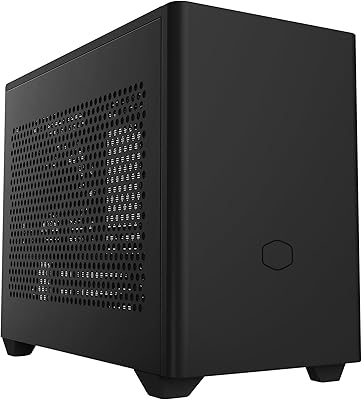
85%
89%
Build Quality
87%
Cooling Performance
91%
Storage Flexibility
95%
Size & Portability
65%
Cable Management
More
Cooler Master NR200 Mini-ITX Case
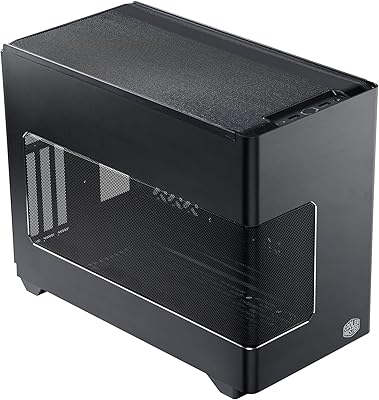
85%
91%
Build Quality
88%
Cooling Performance
94%
GPU Compatibility
84%
Ease of Assembly
86%
Airflow Efficiency
More
Cooler Master NR200P V3 Mini-ITX Case
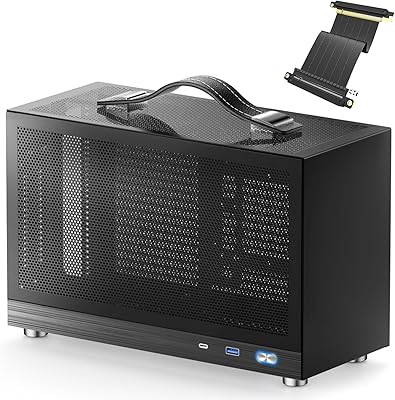
79%
88%
Build Quality
93%
GPU Compatibility
79%
Cooling Performance
74%
Ease of Building
82%
PCIe 5.0 Riser Cable
More
SilverStone DS380B Mini-ITX NAS Case
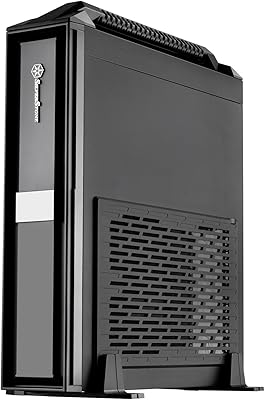
69%
93%
Drive Bay Capacity
88%
Hot-Swap Functionality
76%
Build Quality
41%
Cable Management
57%
Thermal Performance
More
KXRORS S300 Mini-ITX PC Case
71%
88%
Build Quality & Materials
84%
Portability & Handling
67%
Airflow & Thermal Performance
53%
CPU Cooler Compatibility
72%
GPU Compatibility & Fit
More
SilverStone ML08B-H Mini-ITX Slim Computer Case
86%
94%
Portability
87%
Build Quality
91%
Ease of Assembly
65%
Cooling Options
89%
Design Flexibility (Orientation)
More
Cooler Master NCORE 100 MAX Mini-ITX Case
73%
88%
Build Quality
71%
Included AIO Performance
86%
PSU Quality & Reliability
79%
GPU Compatibility
58%
Cable Management
More
Fractal Design Terra Graphite Mini-ITX Case
79%
94%
Build Quality
97%
Aesthetic Design
78%
Internal Layout & Flexibility
66%
Thermal Performance
54%
Cable Management
More
ASRock A520M-ITX/AC Mini ITX Motherboard
87%
87%
Performance
91%
Build Quality
90%
Setup & Installation
85%
Wi-Fi and Bluetooth Connectivity
93%
Processor Compatibility
More
ASRock B650E PG-ITX WiFi Mini-ITX Motherboard
70%
91%
Platform Capability
83%
Power Delivery
61%
DDR5 Compatibility
58%
BIOS Maturity
88%
Form Factor & Design
More

FAQ

Almost certainly not — the CPU cooler height limit is 68mm, which rules out most standard tower heatsinks. You will need a low-profile cooler specifically designed for SFF builds, such as options from Noctua's NH-L series or Thermalright's AXP line. Check your chosen cooler's listed height before purchasing.

Yes, the included riser is rated for PCIe 4.0, which matches the interface speed of current-generation graphics cards from both AMD and Nvidia. You should not see any bandwidth bottleneck under normal gaming or workstation use compared to a direct motherboard connection.

The TR100 only supports SFX and SFX-L form factor power supplies — standard ATX units will not physically fit. If you are coming from a mid-tower build, you will likely need to purchase a new PSU. The good news is that both SFX and SFX-L are widely available from reputable brands like Corsair, Seasonic, and be quiet!

Noise levels depend heavily on your specific components and fan choices rather than the case itself. The compact dual-chamber design does mean fans may work harder under sustained load to shift heat out of the enclosure, so choosing higher-quality, low-noise fans is worth the investment in a build like this.

Most builders report the panel comes off without much trouble, though the ABS plastic frame around it means you should handle it carefully to avoid flexing or scratching. It is not a tool-less design, so keep a screwdriver handy when you plan to work inside.

The case supports up to a 280mm radiator, which typically translates to a dual 140mm fan setup. This is a genuine advantage over many cases in this size range, which cap out at 240mm or even 120mm. Mounting location and fan orientation will depend on your specific AIO, so check clearances against your GPU height before committing.

The TR100 lands in a similar volume class to both but differentiates itself with the included PCIe 4.0 riser, the integrated GPU brace, and the more accessible price point. The Fractal Terra uses higher-end materials overall, and the Lian Li A4 is notably thinner, but neither includes a riser cable out of the box. For a first SFF build or a budget-conscious enthusiast, the TR100 offers strong overall value.

It is genuinely portable by PC standards — just over 10 pounds for the empty chassis, with a footprint small enough to pack in a large backpack or a dedicated PC carry bag. The GPU brace helps protect your graphics card during transport. That said, the tempered glass panel is worth protecting with padding if you are carrying it regularly.

The available fan mounts are more limited than in larger cases, which is a natural trade-off at this volume. The dual-chamber layout does help direct airflow more intentionally, but you will need to plan your fan placement carefully, particularly if you are running a power-hungry GPU. Prioritizing good intake coverage will make a meaningful difference in sustained thermals.

The front panel only offers two USB 3.0 Type-A ports — there is no audio jack, no USB-C, and no SD card reader. If front-panel audio access matters to you, you will need to route a cable to the rear of your motherboard or use a separate USB audio adapter.

Where to Buy