
Overview

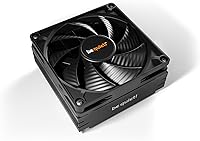
The be quiet! Pure Rock LP CPU Cooler is one of the few cooling solutions built specifically for builders who refuse to sacrifice silence when working within tight height constraints. At just 45mm tall, it fits into cases that would laugh off a standard tower cooler. be quiet! has long built a reputation around acoustics, and this low-profile cooler carries that philosophy into the small form factor space. It supports a wide range of Intel and AMD sockets out of the box, which removes a lot of guesswork at purchase time. This is not a cooler designed to compete with dual-tower flagships — it is a thermal efficiency play for compact, real-world builds.

Features & Benefits

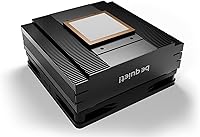
The 92mm PWM fan is the centerpiece here, and it earns its keep. Running at up to 2500 RPM, it stays well under 31 dB(A) at full tilt — roughly the ambient noise level of a quiet library. That means during typical workloads, you will barely notice it is running. The 4-pin PWM connection lets your motherboard manage fan speed dynamically, so noise drops even further during light use. Underneath the fan, copper heatpipes transfer heat directly from the CPU to an aluminum fin stack, keeping the design compact while still moving heat effectively. The 3.63 x 3.63-inch footprint also sidesteps the RAM clearance headaches that plague many SFF cooler installations.

Best For

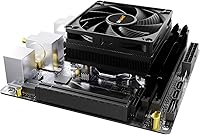
This SFF CPU cooler was designed with a specific builder in mind — someone squeezing a capable system into a mini-ITX or micro-ATX case. It is also a natural fit for HTPC builds where fan noise would otherwise compete with whatever is playing through the speakers. On the CPU side, it is most comfortable paired with mid-range chips in the 65W to 100W TDP range — think Core i5 or Ryzen 5 processors running at stock speeds. Upgraders looking to retire a noisy stock cooler without rebuilding their entire setup will find the mounting process refreshingly approachable. That said, if you are planning to push a high-TDP processor hard, this is not the tool for that job.

User Feedback

Owners of the Pure Rock LP consistently highlight the noise improvement over stock coolers as the most noticeable real-world benefit — not just marginally quieter, but noticeably so in a living room or shared workspace. Installation gets positive marks too, with most users finding the socket compatibility and mounting hardware straightforward across both Intel and AMD platforms. Where opinions split is around thermal ceiling. Users pairing it with 65W chips report solid, comfortable temperatures, but a handful running more demanding processors found the cooler working harder than they would have liked under sustained load. Long-term reliability feedback is limited given the product's relatively recent release, though the fan bearing has not drawn complaints.

Pros

  • Genuinely quiet operation — at typical workloads, the fan fades into the background entirely.
  • At just 45mm tall, the Pure Rock LP fits cases that reject virtually every other aftermarket cooler.
  • Covers a wide range of Intel and AMD sockets with no adapter kit required.
  • PWM fan control lets your motherboard dial noise down further during light or idle use.
  • Compact footprint avoids RAM slot interference, a common headache in tight SFF builds.
  • Copper heatpipe contact with the CPU die keeps heat moving efficiently despite the slim design.
  • Installation is straightforward, with most users completing the process without frustration.
  • Significantly better acoustics than stock coolers when paired with 65W to 100W TDP chips.
  • Lightweight build adds negligible stress to the motherboard, a real plus in portable or HTPC setups.

Cons

  • Thermal headroom runs thin with CPUs above 100W — sustained workloads will push temperatures higher than ideal.
  • Not a viable option for overclocking; there is simply no buffer built into the design.
  • The single 92mm fan limits airflow capacity compared to larger or dual-fan alternatives.
  • Long-term fan bearing durability is still an open question given the product's relatively short time on the market.
  • Builders in standard tower cases get no real advantage here — better-cooling options exist at similar price points.
  • The plastic fan frame feels budget-grade compared to the otherwise solid construction of the heatsink.
  • No RGB or aesthetic customization options, which matters to some SFF builders focused on visual builds.
  • Thermal performance with higher-end mid-range chips like the Ryzen 5 X-series can feel marginal under sustained load.

Ratings

Our AI-generated scores for the be quiet! Pure Rock LP CPU Cooler are produced by analyzing thousands of verified buyer reviews worldwide, with automated filtering applied to remove spam, bot submissions, and incentivized feedback. The ratings reflect both the genuine strengths that make this low-profile cooler a standout choice for SFF builders and the real limitations that matter to buyers with more demanding requirements — nothing is glossed over.

Noise Performance
91%
In living room HTPC setups and quiet home office builds, the improvement over a stock cooler is immediately noticeable — the fan effectively disappears into the background during typical workloads. Users consistently describe their systems as transformatively quieter after switching, which is precisely what the be quiet! brand has built its reputation on delivering.
Under heavy sustained loads such as extended video rendering or prolonged gaming sessions, the fan spins up and becomes more audible than at idle. A portion of users in very quiet environments found the peak RPM noise more present than expected, though most still rated it significantly better than comparable size-class alternatives.
Thermal Performance
67%
33%
Paired with a mid-range processor running at stock settings — a Core i5 or Ryzen 5 in the 65W to 95W range — temperatures remain comfortable and well within safe operating limits during everyday computing and moderate multitasking. The copper heatpipe contact efficiently draws heat away from the CPU die for this class of chip.
The 100W TDP ceiling is a practical boundary, not a soft guideline. Users running chips that regularly approach or exceed that threshold under sustained load report temperatures that climb into uncomfortable territory, with no thermal headroom left to absorb unexpected workload spikes without triggering performance throttling on the processor.
Low-Profile Design
94%
At 45mm tall, this SFF CPU cooler occupies a category where genuine aftermarket alternatives are genuinely scarce. For builders constrained to cases with strict height limits, finding a cooler that both fits and outperforms stock is often a frustrating search — and this one resolves that problem cleanly and without compromise on socket coverage.
The compact form factor is inherently self-limiting — the low profile restricts heatsink mass, which caps thermal headroom in a way that cannot be tuned or upgraded. It is a deliberate engineering trade-off, not a correctable flaw, but buyers who discover this ceiling after purchase often feel the constraint was not clearly communicated at the point of sale.
Value for Money
83%
For builders with a genuine height constraint — those assembling mini-ITX systems or dedicated HTPC cases — the price feels fair given the brand pedigree, the niche it fills, and the broad socket support that allows the cooler to follow a user across multiple platform upgrades without additional hardware purchases.
Buyers without a specific height restriction will find better thermal performance per dollar in standard tower coolers at similar or lower price points. If the case has room for a taller cooler, the value proposition weakens considerably — a meaningful portion of the price reflects the compact engineering rather than raw cooling capability.
Installation Ease
86%
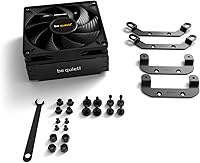
The included mounting hardware covers all supported Intel and AMD sockets cleanly, and the process is documented well enough that most builders complete it without issues on the first attempt. Users replacing a stock cooler for the first time consistently found the experience approachable, even when working inside the cramped interior of an SFF case.
Working inside a compact case naturally adds friction to any installation, and this cooler is no exception — tight quarters make thermal paste application and bracket seating more fiddly than in a mid-tower. A small number of users also noted that mounting screws require careful alignment to avoid cross-threading during the final tightening sequence.
Socket Compatibility
93%
Supporting Intel LGA 1700, 1200, 1150, 1151, and 1155 alongside AMD AM5 and AM4 out of the box removes compatibility anxiety at purchase time. Builders planning a future CPU upgrade within supported socket families can carry the cooler forward without sourcing additional brackets or adapters, which adds practical long-term value.
The compatibility list does not extend to older Intel HEDT sockets or AMD TR4 platforms, which limits reuse for workstation-class builds. For mainstream desktop users this is rarely a concern, but it is worth verifying against your exact motherboard specification if you are working outside the standard consumer socket families.
Fan Quality
84%
The 92mm fan performs smoothly and consistently across the PWM speed range, with no wobble or audible imbalance under normal operation. Users who configured a custom fan curve toward the quieter end reported the fan becoming effectively inaudible during light tasks — a meaningful quality-of-life improvement in shared living spaces and media rooms.
Long-term bearing durability is still accumulating data given the product's relatively recent market entry. A small number of buyers also noted that at maximum RPM, the fan develops a subtle harmonic resonance that is more apparent in otherwise dead-silent builds, suggesting the fan housing could benefit from additional dampening material.
Build Quality
78%
22%
The aluminum fin stack and copper heatpipes feel well-constructed and appropriately dense for the cooler's size class. Overall assembly is solid, with no rattling, structural play, or loose components reported by the majority of buyers — the heatsink itself has a reassuringly substantial feel when handled during the installation process.
The plastic fan frame is the weakest element in an otherwise respectable construction. It feels noticeably budget-grade compared to the metal heatsink it surrounds, and a handful of users noted minor flex when pressing on the fan housing — a detail that can feel out of place at this segment of the market.
RAM Clearance
88%
The compact 3.63 x 3.63-inch footprint means the heatsink does not overhang DIMM slots, which avoids one of the most common frustrations in SFF builds — incompatibility with tall RAM heat spreaders. Users with high-profile DDR4 and DDR5 modules consistently reported zero clearance issues after seating the cooler.
In isolated edge cases involving unusually wide or asymmetrically designed DIMM heat spreaders, a small number of users noted the fan bracket came close to contacting their memory modules. It is not a widespread pattern, but builders using particularly bulky RAM should verify physical clearance against their specific board and memory combination.
Mounting Hardware
79%
21%
The mounting kit covers all listed socket types without requiring separate accessory purchases, and the bracket system is stable and rattle-free once fully tightened. Most users found the hardware well-organized and logically labeled, which meaningfully reduces the chance of confusion during a first installation attempt.
The mounting process demands a degree of care — even spring-screw tension needs to be applied consistently to seat the cooler evenly across the CPU heat spreader. A subset of users felt the included instructions were insufficiently detailed for less experienced builders, particularly around the LGA 1700 backplate alignment steps.
Airflow Efficiency
73%
27%
For a 92mm fan operating within a 45mm height envelope, the 33 CFM airflow output is genuinely respectable and keeps temperatures stable on compatible processors during mixed everyday workloads. The fin stack layout channels air effectively given the significant physical constraints imposed by the low-profile format.
The fundamental physics of a compact cooler impose real ceilings — 33 CFM cannot match what a 120mm or 140mm fan displaces, and the reduced fin surface area limits heat dissipation under extended high-load scenarios. Users sustaining CPU utilization above 80% for prolonged periods will notice the performance gap versus larger coolers.
PWM Fan Control
82%
18%
The 4-pin PWM implementation works reliably with virtually any modern motherboard, giving users direct control over fan behavior through BIOS fan curve editors. Builders who configured a custom curve reported the cooler operating near-silently during browsing, media playback, and light productivity tasks — exactly the use case it was designed for.
The quality of the PWM experience depends entirely on the motherboard's own fan header implementation. Boards with limited BIOS fan control options will cap how precisely the noise curve can be tuned, and several users noted that default out-of-box fan profiles ran the cooler faster than the workload actually required.
Aesthetic Design
62%
38%
The heatsink has a clean, uncluttered appearance that suits understated builds and closed cases where the cooler is not a visual focal point. For HTPC builders or anyone prioritizing function over form, the utilitarian look is entirely adequate and does not detract from the character of the overall build.
There is no RGB lighting, no premium surface finish, and no aesthetic customization of any kind. Builders who invest effort into the visual side of their SFF projects may find the plain fan shroud and matte black heatsink underwhelming, particularly given that some competing low-profile options offer at least a brushed or anodized metal finish.
Long-term Reliability
71%
29%
be quiet! carries a strong brand track record for producing components with above-average operational longevity, and early user feedback aligns with that reputation. Buyers who have run the Pure Rock LP for over a year report consistent thermal and acoustic performance without noticeable fan degradation or mounting hardware loosening over time.
With a market launch in early 2023, multi-year reliability data is still accumulating, and the available sample size for extended-use feedback is smaller than for more established coolers. While there are no alarming failure patterns, it remains difficult to make confident long-term durability claims without a broader pool of three-plus-year usage data.

Suitable for:

The be quiet! Pure Rock LP CPU Cooler was made for a specific kind of builder, and it delivers well within that lane. If you are assembling a mini-ITX or micro-ATX system with strict case height limits, the 45mm profile solves a problem that most standard coolers simply cannot. HTPC builders who want a near-silent living room PC will find it particularly well-matched — the fan noise at typical workloads is barely perceptible against normal room ambience. It also makes a lot of sense for anyone upgrading away from a stock cooler on a mid-range Intel or AMD chip, where the acoustic improvement is substantial without requiring a full case swap. Broad socket support across current and recent Intel and AMD platforms means you are unlikely to hit a compatibility wall, which is a genuine convenience in a market where adapter kits and awkward workarounds are common.

Not suitable for:

If your build revolves around a high-TDP processor — anything regularly pushing past 100W under sustained load — the be quiet! Pure Rock LP CPU Cooler is not the right tool. Enthusiast chips like the Ryzen 9 or Core i9 class processors, especially when paired with aggressive performance profiles, will push this cooler to its limits quickly, and temperatures will reflect that. Overclockers should look elsewhere entirely; this cooler was never designed with thermal headroom to spare. Builders working inside standard mid-tower or full-tower cases who have no height restrictions will also find little reason to choose this over a taller cooler that offers meaningfully better cooling capacity at a similar or lower price. Finally, anyone prioritizing absolute maximum airflow over acoustics will find the trade-offs here frustrating rather than freeing.

Specifications

  • Cooler Height: The heatsink stands at 45mm tall, making it one of the most compact aftermarket CPU coolers available for standard desktop sockets.
  • Dimensions: Overall unit measures 3.63 x 3.63 x 1.78 inches, keeping the footprint tight and avoiding interference with adjacent motherboard components.
  • Weight: The complete assembly weighs 12.7 ounces, adding minimal stress to the motherboard — a meaningful consideration in small form factor and portable builds.
  • Fan Size: A single 92mm fan is pre-mounted to the heatsink and handles all airflow through the aluminum fin stack.
  • Max Noise Level: At full speed, the fan produces up to 30.6 dB(A), which is roughly equivalent to the ambient noise of a quiet room.
  • Max Fan Speed: The fan spins at a maximum of 2500 RPM, though PWM control typically keeps it well below that ceiling during everyday workloads.
  • Airflow: Rated airflow capacity is 33 CFM (cubic feet per minute), sufficient for moving heat away from mid-range processors under normal operating conditions.
  • TDP Rating: The cooler is rated for CPUs with a thermal design power of up to 100W, best suited to processors operating within that envelope at stock settings.
  • Fan Connector: Uses a standard 4-pin PWM connector, allowing the motherboard to actively regulate fan speed based on CPU temperature.
  • Fan Wattage: The fan draws a maximum of 4.2W during operation, contributing negligibly to total system power consumption.
  • Voltage: Operates at 12V, compatible with standard desktop motherboard fan headers without any additional power adapter.
  • Materials: The heatsink uses copper heatpipes for heat transfer, an aluminum fin stack for dissipation, and a plastic fan frame around the 92mm fan.
  • Intel Sockets: Natively supports Intel LGA 1700, 1200, 1150, 1151, and 1155 sockets without requiring a separately purchased adapter bracket.
  • AMD Sockets: Compatible with AMD AM5 and AM4 sockets out of the box, covering current Ryzen 7000 series chips as well as the prior generation.
  • Model Number: The official model identifier is BK034, which can be used to verify compatibility documentation and locate manufacturer support resources.

Related Reviews
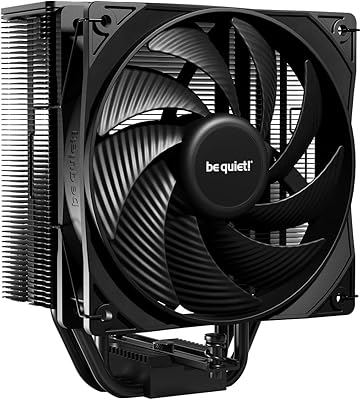
be quiet! Pure Rock 3 CPU Cooler
83%
83%
Thermal Performance
79%
Noise Level
91%
Installation Experience
88%
RAM Clearance
93%
Value for Money
More
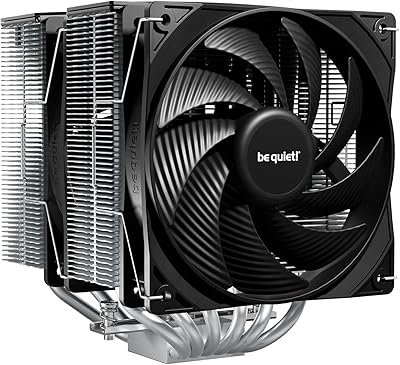
be quiet! Pure Rock Pro 3 CPU Cooler
84%
83%
Thermal Performance
88%
Noise Level
79%
RAM Clearance
91%
Ease of Installation
86%
Value for Money
More
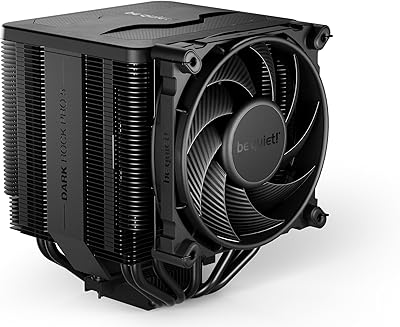
be quiet! Dark Rock Pro 5
85%
93%
Thermal Performance
89%
Acoustic Performance
96%
Build Quality
74%
Installation Experience
61%
RAM Clearance
More
be quiet! Dark Rock 5 CPU Air Cooler
85%
94%
Noise Level
83%
Thermal Performance
88%
Installation Experience
92%
RAM Compatibility
91%
Build Quality & Finish
More
be quiet! Dark Rock Elite CPU Cooler
83%
89%
Thermal Performance
93%
Noise Level
91%
Build Quality
71%
Installation Experience
74%
RAM Compatibility
More
Cooler Master V8 GTS High Performance CPU Cooler
84%
90%
Cooling Performance
88%
Ease of Installation
65%
Fan Noise
92%
Build Quality
85%
Aesthetic Appeal (LED Lighting)
More
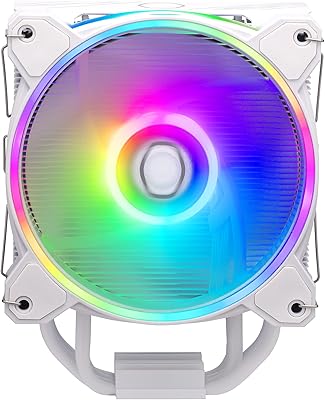
Cooler Master Hyper 212 Halo CPU Air Cooler
84%
88%
Cooling Performance
91%
Noise Level
85%
Ease of Installation
89%
Build Quality
80%
RGB Aesthetics
More
Cooler Master Hyper 212 Black CPU Cooler
79%
83%
Thermal Performance
79%
Noise Level
93%
Value for Money
76%
Installation Experience
81%
Build Quality
More
Cooler Master MasterLiquid Atmos 240 Liquid Cooler
82%
76%
Thermal Performance
88%
Noise Level
82%
Build Quality
84%
Pump Performance
91%
RGB & Lighting
More
Cooler Master 240 Elite Liquid CPU Cooler
81%
78%
Thermal Performance
82%
Noise Level
91%
Ease of Installation
76%
Build Quality
88%
RGB & Aesthetics
More

FAQ

At 45mm tall, the Pure Rock LP is specifically engineered for tight cases. Most mini-ITX cases list a CPU cooler height limit somewhere between 46mm and 60mm, so this cooler clears the bar comfortably in the majority of popular SFF enclosures. That said, always check your specific case spec sheet before purchasing — a handful of ultra-compact designs cap out below 45mm.

Yes, LGA 1700 is fully supported out of the box with no adapter needed. The mounting hardware for Intel 1700 is included in the box alongside brackets for the older 1200 and 115x socket families.

It does. AMD AM5 and AM4 are both supported natively, so whether you are building around a Ryzen 7000 or an older Ryzen 5000 chip, you are covered without tracking down a separate bracket.

be quiet! includes thermal paste with this cooler, so you do not need to source it separately for installation. For most users, the included paste is perfectly adequate for everyday use.

In practice, the be quiet! Pure Rock LP CPU Cooler is noticeably quieter than the stock coolers that ship with most processors. During light to moderate workloads, it is virtually inaudible in a normal room. Under heavier sustained loads it does spin up, but even at its loudest it stays at a level most people would describe as a soft hum rather than an intrusive fan noise.

Honestly, this is not the right cooler for overclocking. The 100W TDP rating leaves very little thermal headroom, and overclocking pushes power draw well beyond what this low-profile design can manage comfortably. If overclocking is part of your plan, you will want something with more heatsink mass.

This is one area where the compact 3.63 x 3.63-inch footprint actually helps. The heatsink does not overhang the RAM slots the way many tower coolers do, so tall memory modules are generally not an issue. Clearance problems are far more common with larger coolers than with this one.

Most users find it straightforward. The included mounting hardware covers all supported sockets, and the process does not require any unusual tools. The main thing to be mindful of in a compact case is working carefully in a tight space — the cooler itself is not the challenge, just the general environment of a small build.

For acoustics, yes — the difference is noticeable, especially under load. Stock coolers tend to ramp up aggressively and generate considerably more fan noise than this SFF cooler at comparable temperatures. Thermally, the improvement is real but modest; the bigger win is in noise reduction rather than a dramatic drop in CPU temperatures.

The 4-pin PWM connector means your motherboard handles fan speed automatically based on CPU temperature. Most modern motherboards include a fan curve editor in the BIOS, so you can tune the behavior to your preference — keeping it near-silent during idle and light tasks, and only ramping up when the CPU actually needs the extra airflow.

Where to Buy