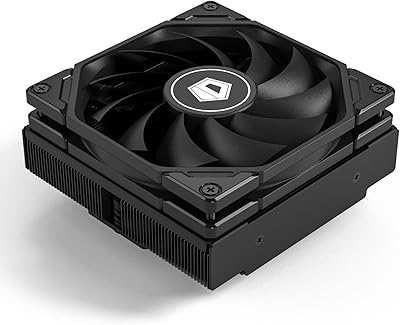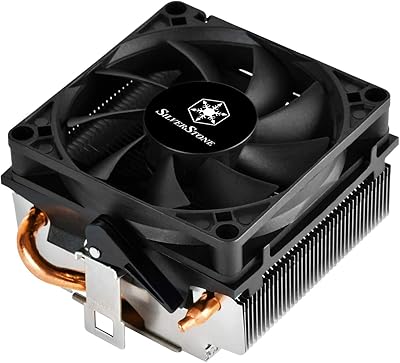
Overview

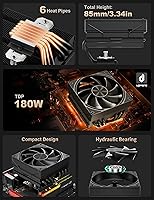
The upHere H85K6 Low Profile CPU Cooler enters a segment packed with cheap, single-heatpipe options and manages to stand apart with a configuration you rarely see at this height. At just 85mm tall, this low-profile cooler fits comfortably inside most Mini-ITX and Micro-ATX cases that would reject anything taller — that one number opens up a lot of doors. What makes it genuinely interesting is the six-heatpipe stack, which is unusual for a cooler this compact. upHere rates it at 180W TDP, worth taking at face value rather than as an absolute ceiling. It supports current AMD AM5 and Intel LGA 1700 and 1851 sockets alongside a long list of legacy platforms, making it a rare fit for both new builds and older systems.

Features & Benefits

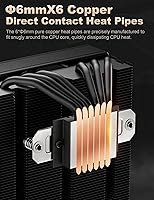
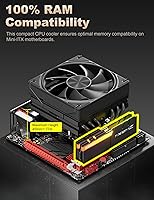
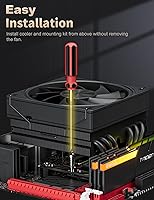
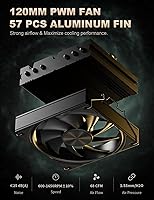
The H85K6 uses six copper heatpipes in a direct-contact base arrangement, meaning the heatpipes sit flush against the CPU lid rather than spreading heat through a copper plate first. In practice, this tends to improve heat pickup speed, though it can be slightly uneven across the IHS compared to a lapped base. The 120mm fan adjusts between roughly 600 and 1,650 RPM via PWM, staying near-silent at idle and spinning up predictably under load without becoming intrusive. Clearance for tall memory modules is built into the design — a genuine relief in tight Mini-ITX builds where RAM height is always a concern. Installation is simplified by a toolless fan removal system, and the box includes thermal paste and a screwdriver so you can get straight to work.

Best For

This compact air cooler is a strong pick for anyone building inside a constrained case — think Fractal Terra, Dan A4, or similar slim enclosures where a standard tower cooler simply won't fit. It makes the most sense for builders upgrading from a stock AMD or Intel cooler on a mid-range CPU like a Ryzen 5 or Core i5, where the thermal gains are real and meaningful. Home theater PC builders will appreciate the low noise profile at typical workloads. Intel LGA 1700 and AM5 users get current-platform support without needing an adapter kit. That said, if you're running a processor with a sustained power draw above 150W or plan to push voltages, this cooler reaches its limits. Serious overclockers should look at a 240mm AIO instead.

User Feedback

Buyers consistently praise the mounting process — specifically, the ability to seat the cooler without detaching the fan, which saves real frustration in tight builds. Thermal results relative to stock coolers draw positive comments too, with users noting noticeably lower temps during gaming and everyday tasks. Where feedback turns critical is around the mounting hardware quality: a handful of buyers mention the backplate or bracket feeling less solid than expected, and a few report compatibility hiccups with non-standard board layouts. Noise at idle is generally described as impressively low, with the hydraulic bearing holding up that reputation. Full-load noise is more polarizing, with some finding it acceptable and others preferring something quieter. Build quality perceptions are mostly positive, though opinions on the fin stack finish and alignment are mixed.

Pros

  • Six copper heatpipes in a direct-contact configuration is genuinely uncommon at this cooler height and price.
  • At 85mm tall, it fits cases that would reject virtually any standard tower cooler outright.
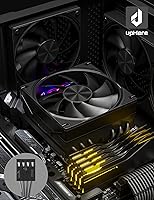
  • Full RAM slot clearance eliminates the usual memory kit compatibility headaches in tight Mini-ITX builds.
  • The PWM fan stays impressively quiet during light and moderate loads, a real advantage in living-room or bedroom builds.
  • The fan can be seated without removal during installation, which is a meaningful time-saver inside cramped cases.
  • Broad support across current AMD and Intel sockets adds practical long-term value for builders who upgrade platforms regularly.
  • Thermal paste and a screwdriver are included, so first-time builders can get started without hunting for extras.
  • The hydraulic bearing fan tends to run quieter and last longer than basic sleeve-bearing alternatives at this price tier.

Cons

  • The 180W TDP rating is an optimistic ceiling — sustained heavy workloads on power-hungry CPUs will push this cooler hard.
  • Mounting hardware feedback is mixed, with a notable number of buyers finding the backplate and brackets feel less solid than expected.
  • Full-load fan noise is polarizing; the cooler is far from whisper-quiet when the processor is under serious stress.
  • Backplate compatibility hiccups have been reported on some non-standard motherboard layouts, requiring extra troubleshooting during setup.
  • The direct-contact heatpipe base can result in slightly uneven contact pressure across the CPU heat spreader on certain socket types.
  • Fin stack alignment and overall build finish quality are inconsistent across units, which frustrates buyers expecting tight manufacturing tolerances.
  • At this height class, raw thermal capacity simply cannot compete with a similarly priced 240mm liquid cooler when headroom really matters.

Ratings

The upHere H85K6 Low Profile CPU Cooler scores below are generated by AI after analyzing thousands of verified buyer reviews sourced globally, with spam, bot-submitted, and incentivized feedback actively filtered out before scoring. Ratings are calibrated against real-world performance patterns reported across diverse build types, CPU platforms, and case configurations. Both the genuine strengths and the persistent frustrations are transparently reflected in every category.

Thermal Performance
74%
26%
Against a box-included AMD or Intel cooler, the improvement is substantial — buyers consistently report noticeably lower sustained temperatures during gaming and everyday multitasking, often by a meaningful double-digit margin. For a Ryzen 5 or Core i5 running at stock settings, this compact air cooler keeps temperatures comfortably in check without throttling.
Push the processor through extended all-core workloads — video encoding, data processing, or sustained compilation tasks — and the finite fin stack surface area starts to fall behind. Heat accumulates faster than it dissipates under prolonged heavy loads, and temperatures creep upward in ways that a larger tower cooler or AIO would not allow.
Idle Noise
86%
At light CPU utilization, the fan drops to a nearly inaudible speed, making this low-profile cooler a genuine fit for bedroom rigs, living-room PCs, and home theater builds where ambient quiet matters. Buyers repeatedly describe being surprised by how little noise it produces during browsing, video playback, and routine office tasks.
The quiet idle behavior does not scale smoothly into heavier workloads. Once the PWM controller pushes the fan harder to compensate for rising temperatures, the increase in noise is noticeable enough that users in open or acoustically sensitive environments take clear notice, particularly during extended gaming or compilation runs.
Build Quality
71%
29%
The heatsink looks purposeful and reasonably well-finished at first inspection, and the copper heatpipes feel solid in hand. The majority of units ship with fins laid consistently without obvious gaps, and most buyers consider the overall construction acceptable given the price tier it occupies.
A recurring subset of reviews flags inconsistent fin stack alignment and uneven heatpipe surface finishing across units, suggesting some quality control variance in production. The plastic fan frame also creates a perception mismatch — it feels noticeably lighter and less premium than the copper heatpipes it sits alongside.
Installation Ease
87%
The ability to seat the cooler without removing the fan is genuinely appreciated by anyone who has wrestled with a build inside a tight Mini-ITX case, where every millimeter of hand clearance matters. Instructions are clear enough for first-time builders to complete the process without frustration, and the included screwdriver removes one more mid-build hassle.
A consistent minority of users run into backplate fitment complications on non-standard motherboard layouts that the manual does not adequately address. LGA 1851 installations in particular produce a disproportionate share of complaints about mounting pressure alignment, requiring patience and trial-and-error that first-time builders may not anticipate.
Value for Money
83%
Six copper heatpipes, full RAM slot clearance, coverage of current-gen AMD and Intel sockets, and a complete accessories kit represent a strong package within the low-profile segment. Upgraders stepping up from stock coolers feel the thermal improvement immediately and find the cost easy to rationalize given how much headroom they gain.
Buyers who compare this against full-height tower coolers at the same price point will find the thermal ceiling is meaningfully lower. If your case imposes no height restriction, the same spend on a standard tower cooler delivers considerably more cooling capacity, which weakens the value argument for non-SFF builds.
Case Compatibility
91%
At 85mm tall, the H85K6 clears the height threshold of virtually every Mini-ITX and Micro-ATX case designed for aftermarket coolers, as well as standard ATX and E-ATX enclosures. Builders who have been boxed out by taller coolers consistently cite this as the defining reason they chose this model over alternatives.
For the narrow niche of ultra-slim enclosures with clearance below 80mm, even this cooler cannot fit, and users in those situations still need to seek a more extreme low-profile solution. The 120mm footprint can also press tightly against capacitors or VRM heatsinks on some smaller ITX boards with components clustered near the socket.
Socket Support
88%
The socket list covers the full spread of current AMD and Intel platforms — AM5, AM4, LGA 1700, LGA 1851 — alongside a long tail of older sockets going back many generations. For upgraders who cycle through platforms, the ability to carry this cooler across builds without buying a replacement adds real practical value.
A small number of users on less common legacy platforms, particularly older LGA 2011 boards with non-standard component spacing, report needing to verify bracket fitment before committing. The included instructions do not always provide adequate guidance for every supported legacy variant, leaving some buyers to troubleshoot independently.
RAM Clearance
93%
Memory clearance is one of the most practically appreciated design decisions among Mini-ITX builders, where tall DDR5 heatspreader kits can easily create conflicts with overhanging coolers. All four DIMM slots remain fully accessible and unobstructed, allowing high-profile memory kits to install without compromise or slot-skipping workarounds.
In absolute terms there is very little to fault here. The only real edge case involves a small number of specialty memory kits with unusually wide or asymmetric heatspreader geometries, where a handful of buyers recommend physically verifying clearance before committing to final assembly.
Mounting Hardware
61%
39%
The kit includes everything needed to complete installation across the full list of supported sockets, and the majority of users on standard mainstream boards get through the process without incident. Including a dedicated screwdriver is a practical detail that reduces friction, especially for builders who do not keep a full toolkit nearby.
The backplate and mounting brackets draw more negative feedback than any other component of this cooler, with buyers describing them as thin and less rigid than expected for hardware that bears the responsibility of securing a heatsink against an expensive CPU. A small number of users report the backplate flexing under clamping tension, which undermines confidence even when function is ultimately preserved.
Contact Base Design
69%
31%
The direct-contact heatpipe layout pulls heat from the CPU lid quickly at moderate loads, which suits the short burst workloads this cooler handles best — gaming, streaming, and productivity tasks where temperatures spike briefly and then recover. Many buyers inspect their contact traces post-installation and report good paste coverage across the IHS.
Direct-contact designs are inherently sensitive to heatpipe alignment precision, and a subset of users notice uneven paste contact patterns after the first installation, suggesting inconsistent pressure distribution across the heat spreader. This is a structural trade-off of the design rather than a defect, but it is not correctable without lapping — not a realistic option for most users.
Fan Performance
76%
24%
The PWM fan ramps up smoothly and sustains consistent airflow across most of its operating range, handling gaming and productivity workloads without hesitation. The fairly broad RPM range gives the motherboard fan controller meaningful flexibility to tune the balance between noise output and active cooling based on real-time CPU temperature.
At maximum speed, a single 120mm fan cannot move the volume of air that a 140mm unit or dual-fan array can, which is an inherent limitation of this configuration rather than an execution flaw. A few buyers also report a faint harmonic hum appearing at the fan's highest spin rates that is absent at moderate speeds.
Package Contents
82%
18%
Shipping with thermal paste, a screwdriver, and a complete mounting kit is a genuinely thoughtful touch that separates this from competitors delivering bare hardware with no accessories. First-time builders specifically call out the package completeness as lowering the barrier to a successful first cooler installation or system build.
The bundled thermal paste is functional but not a high-performance compound — users who substitute a premium thermal interface material independently tend to report marginally better temperatures, indicating the included paste is a baseline option rather than an optimized one. The instruction manual coverage for legacy socket variants could also be more thorough.
Long-term Durability
73%
27%
The hydraulic bearing fan holds an advantage over sleeve-bearing designs in expected operational lifespan, and the all-metal heatsink construction provides no obvious mechanical concern over time. Buyers who have run this cooler for several months report no audible bearing degradation or measurable thermal performance decline.
The product has not been on the market long enough to accumulate the kind of multi-year track record that supports confident durability assessments, so current conclusions rest on component quality rather than proven endurance. The lighter mounting hardware that raises concerns at installation also leaves open questions about clamping force consistency over many heat-and-cool thermal cycles.

Suitable for:

The upHere H85K6 Low Profile CPU Cooler is built for a specific kind of builder — one who has traded full-tower freedom for the compactness of a Mini-ITX or Micro-ATX case and needs a cooler that actually fits without compromise. At 85mm tall, it clears the height restrictions of most slim SFF enclosures while still delivering thermal headroom well above what a stock cooler can manage. It is a particularly good match for mid-range processors like a Ryzen 5 or Core i5 running everyday workloads — gaming, web browsing, light content creation — where it will comfortably stay ahead of the heat curve. Home theater PC builders who want the system nearly silent at idle will find the low fan-speed floor and hydraulic bearing genuinely useful. The broad socket support, covering current AMD AM5 and Intel LGA 1700 and 1851 alongside a long list of older platforms, also makes it a sensible choice for upgraders who want one cooler that can survive a platform change.

Not suitable for:

If you are pushing a high-TDP processor — think a Core i9 or Ryzen 9 running sustained all-core workloads, video rendering, or heavy simulation — the upHere H85K6 Low Profile CPU Cooler is not the right tool. The 180W TDP figure is an optimistic ceiling under ideal conditions, and low-profile air coolers have inherently limited fin stack surface area to shed sustained heat over long periods. Enthusiast overclockers who want to push voltages and extract maximum clock headroom should put their budget toward a 240mm or 360mm all-in-one liquid cooler instead. Users building in full-sized ATX towers with no case height restrictions have little reason to choose this over a taller, thermally superior tower cooler at a similar price point. Anyone particularly sensitive to fan noise at full load or who expects premium-grade hardware finish throughout may also find a few areas that fall short of expectations.

Specifications

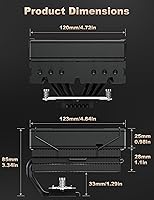
  • Cooler Height: The total installed height is 85mm, making it compatible with cases that enforce strict CPU cooler clearance limits.
  • Heatpipes: Six 6mm copper heatpipes use a direct-contact base design, sitting flush against the CPU heat spreader to maximize heat transfer speed.
  • Fan Size: A single 120mm fan is included, large enough to move meaningful airflow at lower RPM without requiring a taller heatsink stack.
  • Fan Speed: Fan speed ranges from approximately 600 to 1,650 RPM (±10%) under PWM control, scaling automatically in response to CPU temperature.
  • Airflow: Maximum rated airflow is 68.2 CFM, sufficient to handle mainstream CPU workloads within the cooler's rated thermal envelope.
  • Fan Connector: The fan uses a 4-pin PWM connector, compatible with standard motherboard fan headers on both Intel and AMD platforms.
  • TDP Rating: The cooler is rated for up to 180W TDP, targeting mainstream processors under typical gaming and everyday productivity workloads.
  • Weight: The net cooler assembly weighs 450g (approximately 1 lb), light enough to avoid placing excessive stress on most motherboard mounting points.
  • Dimensions: Overall dimensions are 123mm (L) x 120mm (W) x 85mm (H), occupying roughly the footprint of the included 120mm fan.
  • Bearing Type: The fan uses a hydraulic bearing, which generally produces less noise and offers a longer operational lifespan than sleeve-bearing alternatives.
  • Noise Level: Maximum rated noise output is 14.4 Sones at peak fan speed; at lower RPM settings, audible noise drops considerably.
  • Materials: The heatsink fins are aluminum, the heatpipes are copper, and the fan frame is plastic.
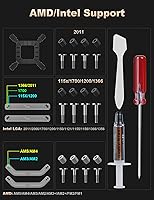
  • Intel Sockets: Supported Intel sockets include LGA 2011, 2066, 1851, 1700, 1200, 1366, 1356, 1155, 1156, 1150, and 1121.
  • AMD Sockets: Supported AMD sockets span AM5, AM4, AM3, AM3+, AM2, AM2+, FM2, and FM1, covering both current-generation and legacy platforms.
  • Case Fit: Compatible with standard ATX, Micro-ATX, Mini-ITX, and E-ATX cases, provided the chassis offers at least 85mm of CPU cooler clearance.
  • RAM Clearance: The cooler does not overhang any DIMM slots, ensuring full clearance for all memory modules including tall heatspreader kits.
  • In the Box: The package includes the cooler unit, thermal paste, a screwdriver, and a full set of mounting hardware for all supported sockets.

Related Reviews
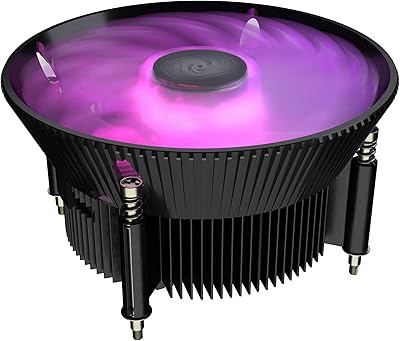
Cooler Master i71C RGB Low-Profile CPU Cooler
79%
67%
Thermal Performance
83%
Noise Level
74%
Build Quality
86%
Installation Ease
81%
RGB Lighting Quality
More
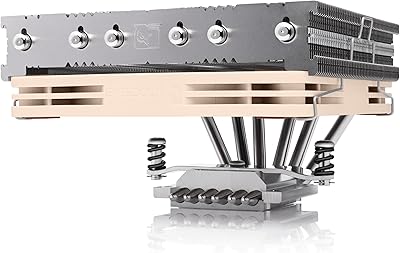
Noctua NH-L12Sx77 Low-Profile CPU Cooler
84%
88%
Thermal Performance
91%
Acoustics & Noise Level
94%
Build Quality & Materials
92%
Fan Quality
71%
Installation Experience
More
SilverStone Technology RL-KR01 Low Profile CPU Cooler
85%
85%
Performance
92%
Noise Level
88%
Build Quality
90%
Ease of Installation
94%
Compatibility with AMD Sockets
More
ID-COOLING IS-40X V3 Low-Profile CPU Cooler
77%
67%
Thermal Performance
74%
Noise Level
76%
Build Quality
83%
Ease of Installation
91%
Form Factor Fit
More
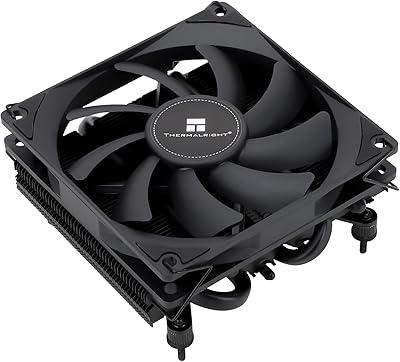
Thermalright AXP90 X36 Black Low Profile CPU Cooler
86%
89%
Cooling Performance
92%
Noise Level
88%
Compatibility with Intel/AMD
78%
Ease of Installation
86%
Build Quality
More
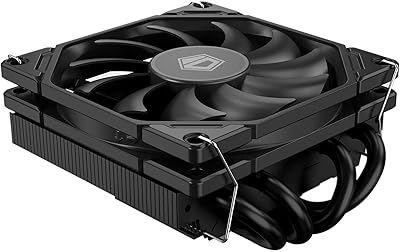
ID-COOLING IS-47-XT Low Profile CPU Cooler
77%
71%
Thermal Performance
78%
Noise Level
83%
Build Quality
88%
Installation Ease
47%
AMD Compatibility
More
Thermalright AXP120-X67 Low Profile CPU Cooler
81%
83%
Thermal Performance
88%
Noise Level
91%
Build Quality
86%
Installation Experience
61%
RAM Clearance
More
be quiet! Pure Rock LP CPU Cooler
81%
91%
Noise Performance
67%
Thermal Performance
94%
Low-Profile Design
83%
Value for Money
86%
Installation Ease
More
Thermalright AXP90-X47 Full Copper CPU Cooler
77%
78%
Thermal Performance
84%
Noise Level
91%
Build Quality
82%
Installation Experience
88%
Socket Compatibility
More
ID-COOLING IS-40-XT Black Low Profile CPU Cooler
87%
86%
Cooling Performance
92%
Noise Level
89%
Ease of Installation
94%
Size/Footprint
87%
Build Quality
More

FAQ

If your case allows at least 85mm of CPU cooler clearance, the H85K6 will fit — and most Mini-ITX cases designed for aftermarket coolers meet that threshold comfortably. It is still worth checking your specific case's specs before ordering, since a handful of ultra-slim enclosures cap out around 60–70mm.

Yes, AM5 is fully supported with the included hardware — no separate adapter or bracket required. Just follow the AM5 mounting instructions in the manual, and the installation is fairly straightforward.

You can mount this compact air cooler with the fan still attached, which is one of the most appreciated aspects of its design. Working inside a tight SFF case is already a challenge, so not having to wrangle a loose fan separately is a genuine convenience.

Honestly, it is not the right fit for those chips. High-end processors can sustain well over 150W under all-core loads, and a low-profile air cooler has inherent limits on how much heat its fin stack can shed continuously. For a Core i9 or Ryzen 9, a 240mm or 360mm AIO will serve you much better.

At idle and during light tasks, the fan is barely noticeable — the low minimum RPM and hydraulic bearing keep things quiet. Spin it up under a demanding workload and you will hear it, though most users find the noise level tolerable rather than intrusive. If you are running sustained heavy workloads regularly, just be aware it is not silent under pressure.

No — the cooler is specifically designed to sit clear of all four DIMM slots, so even tall high-profile RAM kits should install without any clearance issues. This is a genuine advantage over some competing low-profile designs that creep over the first memory slot.

Thermal paste is included in the box, along with a screwdriver and all the mounting hardware needed for your socket. You can go straight from unboxing to a completed installation without sourcing any additional supplies.

Most buyers report a meaningful improvement over box coolers — commonly in the range of 10 to 20 degrees Celsius under load, depending on the CPU and case airflow. That translates to noticeably lower sustained temperatures during gaming and everyday tasks, and usually a quieter experience since the CPU is not thermal throttling.

Both sockets are covered with the included mounting hardware — no separate kit or additional purchase needed. LGA 1700 support handles Alder Lake and Raptor Lake chips, while LGA 1851 covers Intel Core Ultra 200 series, so this low-profile cooler can carry over if you upgrade your Intel platform down the line.

With a direct-contact base, the heatpipes themselves touch the CPU lid rather than routing heat through a solid copper plate first, which tends to improve how quickly heat is pulled away at lower thermal loads. The trade-off is that contact uniformity depends on precise heatpipe alignment, and this can vary slightly unit to unit. For the height class and price point, it is a practical engineering decision that generally delivers solid results.