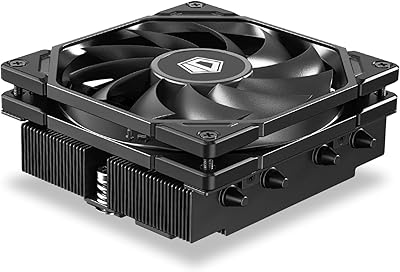
Thermalright AXP90 X36 Low-Profile CPU Cooler
Overview
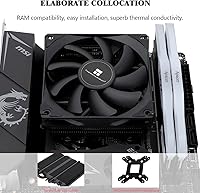
The Thermalright AXP90 X36 Low-Profile CPU Cooler is built for one specific job: keeping a system cool when there's barely any room to spare. At just 36mm tall, this compact air cooler slips into small-form-factor and mini-ITX cases where a typical tower cooler simply won't close the lid. It pairs a slim 92mm fan with four heatpipes, which is a sensible balance for something this short and squat. Rather than chasing flagship cooling numbers, it focuses on fitting into tight spaces without giving up too much thermal headroom. Broad socket coverage too, spanning recent Intel and AMD platforms, so it's not a niche fit limited to one generation of hardware. For anyone building around a compact case, that flexibility matters as much as the cooling itself.
Features & Benefits
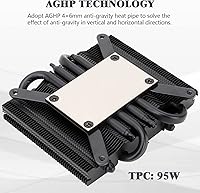
Under the hood, this CPU cooler relies on four 6mm heatpipes mated to an all-metal base, and Thermalright uses a secondary reflow soldering process to tighten that contact point, which is where a lot of heat transfer either holds up or falls apart. The backplate fastener system is worth mentioning too, since it spreads mounting pressure evenly across different sockets instead of relying on a few stressed screw points. Noise stays low, with a rated output around 22.4 dBA, so it won't announce itself in a quiet room or office setup. The slim PWM fan can ramp up under heavier loads and settle back down at idle, giving some flexibility without manual tuning. Maybe the most practical benefit, though, is the low-profile shape itself: it stays clear of tall RAM modules and case panels that often clash with taller towers.
Best For
This low-profile cooler makes the most sense for mini-ITX builds where case height is the limiting factor, not raw thermal capacity. It's also a solid match for HTPC or media center setups, where a quiet living room build matters more than chasing benchmark numbers. If you're simply replacing a stock cooler and don't plan on heavy overclocking, this is a straightforward upgrade rather than a workhorse cooler for pushed-to-the-limit chips. Socket compatibility across both modern Intel and AMD platforms means it's not locked to one upgrade path, which is handy if you tend to switch platforms every few builds. In short, it suits people prioritizing fit and quiet operation over squeezing out every last degree of headroom.
User Feedback
Feedback from buyers tends to circle around the same theme: this compact air cooler fits where bigger coolers simply can't, and people building in small cases are often relieved by that alone. Several users mention how quiet it runs during normal browsing, streaming, or office work, which lines up with its low noise rating. Installation gets praised fairly often too, with the backplate making mounting feel less fiddly than expected for such a small cooler. On the downside, a number of reviewers are upfront that it's not meant for sustained heavy workloads or aggressive overclocking, and temperatures can climb faster than with a larger tower cooler under those conditions. Taken together, the consensus is that it does exactly what it promises, as long as expectations stay realistic.
Pros
- Fits comfortably into small-form-factor and mini-ITX cases that reject taller coolers
- Runs quietly enough for living room HTPC builds and shared office spaces
- Backplate mounting system makes installation feel less fiddly than its size suggests
- Broad socket support covers recent Intel and AMD platforms without separate kits
- Compact footprint avoids clashing with tall RAM modules or case side panels
- Reflow-soldered heatpipe contact aims for steady, dependable everyday heat transfer
- Thermalright AXP90 X36 Low-Profile CPU Cooler offers a straightforward stock cooler upgrade
- PWM fan adjusts speed automatically based on workload instead of running flat out
Cons
- Not designed to handle sustained heavy workloads or aggressive overclocking sessions
- Thermal ceiling is noticeably lower than larger tower-style air coolers
- Performance under load can lag behind expectations in warmer rooms
- Limited headroom may concern users planning future high-wattage CPU upgrades
- Small size means less surface area for dissipating heat during peak demand
- Better suited to light or moderate use than demanding, all-day computing tasks
- May require closer monitoring of temperatures during longer gaming or rendering sessions
Ratings
These scores for the Thermalright AXP90 X36 Low-Profile CPU Cooler come from an AI analysis of verified buyer reviews collected worldwide, with spam, bots, and incentivized posts filtered out before scoring. Each category below reflects a blend of what real owners praised and what they wished worked better, so both the strengths and the trade-offs show up honestly.
Compact Design & Fit
Noise Level
Cooling Performance
Installation Ease
Socket Compatibility
Build Quality & Materials
Fan & PWM Control
Value for Money
RAM & Case Clearance
Overclocking Headroom
Long-Term Reliability
Weight & Portability
Suitable for:
The Thermalright AXP90 X36 Low-Profile CPU Cooler makes the most sense for anyone working within a small-form-factor or mini-ITX case where vertical clearance is the deciding factor, not an afterthought. If you're building a compact HTPC for the living room, the low noise output and slim profile mean it can sit near a TV without becoming a distraction during quiet scenes or late-night streaming. People upgrading from a stock cooler on a modest, everyday build will likely notice a real difference in both temperatures and noise without needing to relearn their case layout. It's also a practical pick for builders who switch between Intel and AMD platforms regularly, since the socket support spans both ecosystems without forcing a separate purchase. Overall, it suits buyers who value a clean fit and predictable, quiet performance over chasing maximum thermal headroom.
Not suitable for:
Anyone planning serious overclocking or running sustained, heavy workloads should think twice before relying on the Thermalright AXP90 X36 Low-Profile CPU Cooler as their primary cooling solution. Its compact height is the whole point, but that same design naturally limits how much heat it can dissipate compared to a taller tower cooler with more surface area and fans. Gamers or content creators pushing high-wattage CPUs under constant load may find temperatures climbing faster than they'd like, especially in warmer ambient conditions. Builders with full-size cases who have no height restrictions don't really need to make this trade-off, since larger coolers will simply perform better for the same effort. If raw thermal ceiling matters more than case compatibility, this isn't the right tool for that job.
Specifications
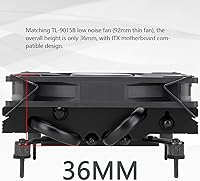
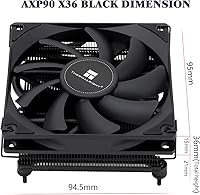
- Total Height: The cooler stands 36mm tall from base to fan, making it one of the more compact air coolers available for desktop builds.
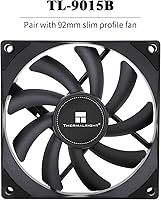
- Fan Size: It uses a 92mm TL-9015B slim PWM fan designed to fit within the cooler's low-profile footprint.
- Heatpipes: Four 6mm heatpipes run through the cooler to move heat away from the CPU surface.
- Base Material: The base and contact platform are constructed entirely from metal for direct heat transfer.
- Soldering Process: A secondary reflow soldering process is used to bond the heatpipes to the base for improved contact quality.
- Mounting System: A backplate fastener system is included to help distribute mounting pressure evenly across supported sockets.
- Noise Level: The fan is rated at approximately 22.4 dBA under normal operation.
- Fan Voltage: The fan operates on a 12V power supply with a maximum current draw of 0.2A.
- Fan Connector: It uses a standard 4-pin PWM connector for speed control through the motherboard.
- Max Fan Speed: The fan can reach a maximum rotational speed of 2700 RPM.
- Socket Support, Intel: It supports Intel sockets 1150, 1151, 1155, 1200, 1700, and 1851.
- Socket Support, AMD: It supports AMD AM4 and AM5 socket platforms.
- Weight: The cooler weighs approximately 15.84 ounces.
- Cooling Method: It relies entirely on air cooling with no liquid or pump components involved.
- Product Dimensions: The cooler measures approximately 3.72 inches by 3.74 inches by 1.42 inches.
Related Reviews
Thermalright AXP90-X53 Full Copper CPU Cooler
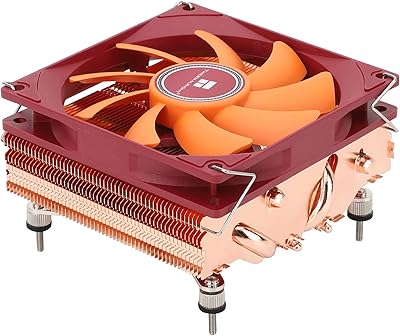
Thermalright AXP90-X47 Full Copper CPU Cooler
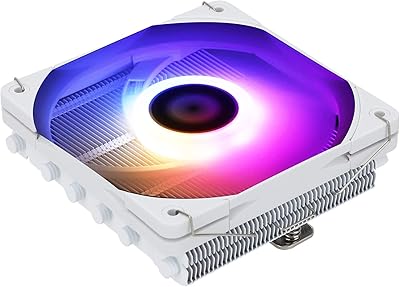
Thermalright AXP120-X67 Low Profile CPU Cooler
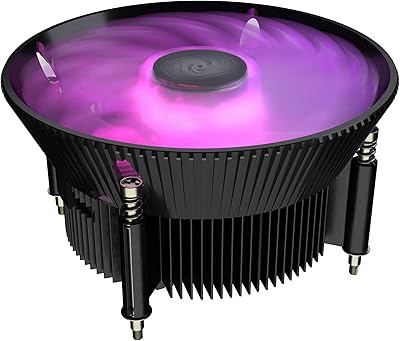
Cooler Master i71C RGB Low-Profile CPU Cooler
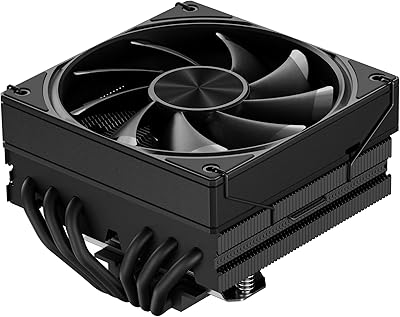
upHere H85K6 Low Profile CPU Cooler
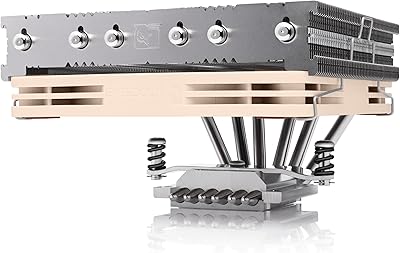
Noctua NH-L12Sx77 Low-Profile CPU Cooler
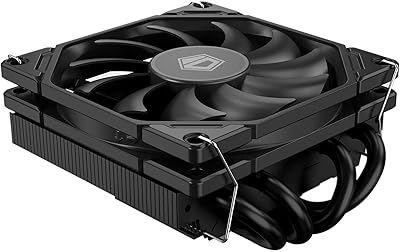
ID-COOLING IS-40X V3 Low-Profile CPU Cooler
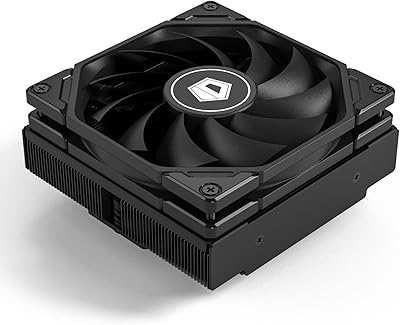
ID-COOLING IS-47-XT Low Profile CPU Cooler
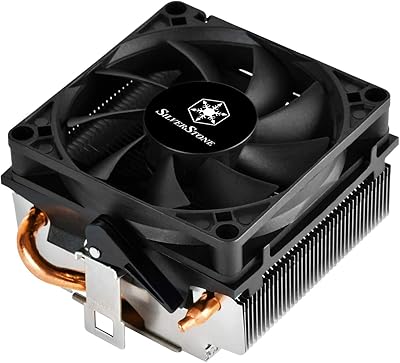
SilverStone Technology RL-KR01 Low Profile CPU Cooler