Overview

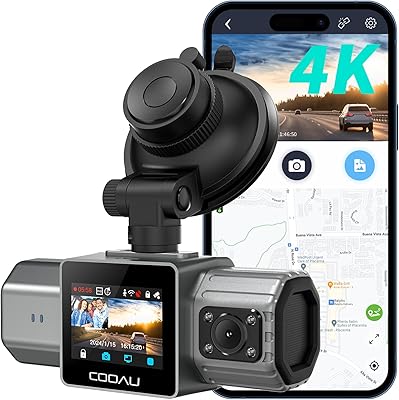
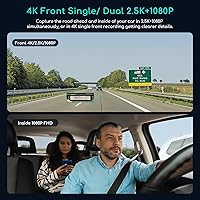
The COOAU D30S Dual Front Interior Dash Cam sits comfortably in the mid-range tier, offering a thoughtful feature set that punches above its price class for rideshare drivers and families alike. One decision worth understanding upfront: running both cameras simultaneously drops the front recording from 4K to 2.5K — still sharp, but worth knowing before you buy. When you only need front footage, the full 4K mode delivers genuinely crisp detail. The supercapacitor design — no battery at all — is a meaningful reliability edge over most competitors. Managing everything runs through the dedicated COOAUDash app, which works well enough but carries some rough edges worth knowing about.
Features & Benefits

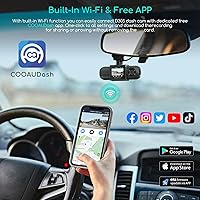
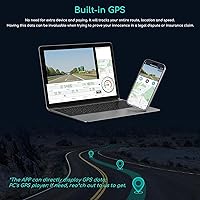
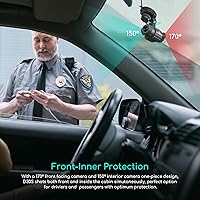
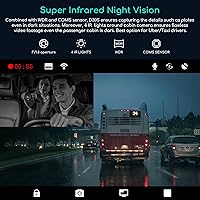
The front lens covers a wide angle that captures nearly everything across two lanes in either direction, and the F1.8 aperture combined with WDR processing keeps footage readable in tricky lighting — tunnels, bright midday glare, and dusk transitions all handled reasonably well. Switch to dual-camera mode and the cabin infrared camera becomes the real story: four IR LEDs illuminate the interior without blinding passengers, capturing faces and behavior clearly even in near-total darkness. Built-in GPS does double duty, logging routes and auto-correcting the on-screen timestamp. The Wi-Fi connection lets you pull clips wirelessly to your phone via the COOAUDash app, and OTA updates mean you rarely need to physically touch the memory card.

Best For

This rideshare camera was clearly designed with Uber and Lyft drivers in mind — the cabin IR recording addresses a real accountability gap that most single-channel dash cams simply ignore. It also makes a strong case for anyone driving regularly in hot climates: where a standard battery-based dash cam might swell, degrade, or fail after a summer in a parked car, the supercapacitor holds up. Parents monitoring teen drivers will appreciate the sharp front footage and GPS route history. And if you want trip logging without bolting on a second device, this dual-channel dash cam handles it natively — making it a well-rounded pick for cost-conscious buyers who want a serious feature set.

User Feedback

Across more than 3,300 ratings, the COOAU D30S holds a 4.3-star average — solid, though not without honest criticism. Reviewers consistently praise the night vision clarity, particularly the cabin IR camera, with several drivers noting they switched specifically because competing brands lacked usable interior recording in the dark. The supercapacitor also earns real-world credibility in hot-climate reviews. On the downside, Wi-Fi pairing issues surface frequently enough to be a genuine concern — some users report repeated drops when connecting to the app. There is also scattered feedback about loop recording hiccups with high-capacity cards, and a handful of buyers mention the suction mount losing grip over extended use.

Pros

  • Infrared cabin recording identifies passengers clearly even on completely unlit roads at night.
  • The supercapacitor design survives extreme heat reliably, unlike battery units that degrade after one hot summer.
  • Built-in GPS automatically corrects timestamps and logs full route data without a separate tracker.
  • Front-only 4K mode delivers sharp, highly legible footage when cabin recording is not needed.
  • Adjustable G-sensor sensitivity prevents constant false incident locks on rough or potholed roads.
  • The compact housing sits discreetly on the windshield without obstructing the driver's sightline.
  • OTA firmware updates via the app keep the camera current without physically handling the memory card.
  • Wide cabin coverage angle captures both front and rear seat areas in a single frame.
  • A 24-month warranty provides meaningful post-purchase protection at this price tier.
  • Loop recording handles itself quietly in the background, requiring no manual file management on smaller cards.

Cons

  • Wi-Fi pairing drops are a documented and recurring issue — do not plan around wireless clip access being reliable.
  • The suction cup mount has a known history of releasing from windshields after months of temperature cycling.
  • No memory card is included, and the camera is picky about off-brand cards, adding to the real cost.
  • Parking mode requires a separately purchased hardwire kit that is not advertised upfront with enough clarity.
  • Loop recording stability becomes inconsistent when using very high-capacity cards near the supported ceiling.
  • The COOAUDash app interface feels underdeveloped compared to rivals at similar price points.
  • Dense urban environments and parking structures can cause GPS signal lag or brief dropout on footage.
  • Long video file transfers over Wi-Fi are slow enough that most users eventually default to a card reader.
  • Factory G-sensor settings trigger false incident locks on speed bumps until manually adjusted.
  • Edge distortion from the wide-angle cabin lens can cut out rear passengers in smaller vehicle cabins.

Ratings

The COOAU D30S Dual Front Interior Dash Cam earned its 4.3-star average across more than 3,300 verified global ratings, and the scores below reflect what buyers actually experienced — not what the spec sheet promises. Our AI rating engine analyzed confirmed purchase reviews worldwide, actively filtering out incentivized, bot-generated, and low-effort feedback to isolate genuine signal. The result is an honest breakdown of where this rideshare camera genuinely delivers and where real-world use reveals meaningful limitations.
Video Clarity (Front Camera)
88%
In single-channel mode, the front lens captures road signs and license plates with impressive sharpness, even at highway speeds. Drivers regularly report being able to read plates several car lengths ahead, which matters when you need footage to hold up in an insurance dispute.
Switching to dual-channel mode drops the front recording noticeably — the trade-off from 4K to 2.5K is real, and detail at longer distances suffers for it. Buyers who primarily care about front-facing evidence quality should weigh whether they actually need the cabin camera running simultaneously.
Cabin Night Vision
91%
This is genuinely one of the standout strengths of the COOAU D30S. The four infrared LEDs illuminate the interior without creating glare or discomfort for passengers, and reviewers consistently note that faces are identifiable even in near-total darkness on unlit roads.
In very tight cabin configurations — compact cars with low rooflines — the wide-angle cabin lens can produce some distortion toward the edges, occasionally cropping a rear passenger out of frame. Positioning the mount carefully during installation helps, but it requires trial and error.
GPS Accuracy & Logging
84%
The built-in GPS locks on quickly in open areas and keeps route logs accurate enough to serve as supporting evidence in incidents. Rideshare drivers particularly appreciate that timestamps update automatically via satellite, removing any doubt about when and where a recording was made.
Signal acquisition in dense urban environments — think downtown high-rises or underground parking structures — can lag by several seconds or briefly drop. A handful of reviewers noted occasional GPS freeze on the footage overlay, though this appeared tied to older firmware versions.
Supercapacitor Reliability
93%
For drivers in hot climates, the supercapacitor is a genuine differentiator. Unlike lithium batteries that swell, degrade, or fail outright after summers baking in a parked car, the capacitor holds up season after season. Long-haul reviewers in Texas, Arizona, and Southern Europe specifically called this out as the reason they chose this camera.
The supercapacitor stores only a small charge — enough to save the current clip and shut down cleanly, not to keep recording after the car loses power. Buyers expecting extended battery-style recording after engine-off will be disappointed; the 24-hour parking mode requires a hardwire kit sold separately.
App Experience (COOAUDash)
61%
39%
When the Wi-Fi connection cooperates, the COOAUDash app is genuinely convenient — pulling a clip wirelessly to your phone and sharing it directly with law enforcement or an insurer in minutes is far faster than digging out a laptop. OTA firmware updates are handled cleanly through the same interface.
Wi-Fi pairing drops are the most consistently reported frustration in the entire review pool. Multiple users describe needing to re-pair the camera after every session, and the app occasionally fails to detect the camera even at short range. COOAU has pushed updates, but the issue persists for a meaningful portion of users.
Loop Recording Stability
69%
31%
On cards up to around 64GB or 128GB, loop recording runs reliably in the background without requiring any manual management. Most daily drivers never think about it — the camera simply overwrites the oldest footage and keeps going, which is exactly what you want.
When users push toward the maximum supported card size, scattered reports indicate the camera occasionally skips loops or creates corrupted file segments. It is not universal, but it is common enough that high-capacity card users should check footage periodically rather than assuming everything recorded cleanly.
G-Sensor & Incident Lock
79%
21%
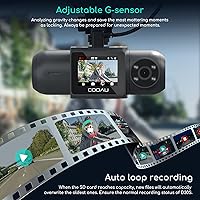
The adjustable sensitivity is a practical feature that gets real use — drivers on rough roads can dial it down to prevent constant false triggers, while city drivers on smoother surfaces can run a higher sensitivity without nuisance locks. Incident clips are saved reliably when a genuine collision occurs.
At factory sensitivity settings, speed bumps and potholes can trigger false locks more than expected, eating into available storage with protected files that require manual deletion. New users often spend the first week fine-tuning the sensitivity before finding a setting that works for their typical roads.
Parking Mode
71%
29%
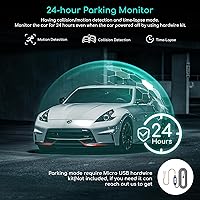
The motion and shock-triggered parking mode works as advertised when hardwired — drivers who installed the optional hardwire kit report catching door dings, hit-and-runs, and vandalism incidents in parking lots that would otherwise go unrecorded. The time-lapse option keeps storage use sensible during long stationary periods.
The hardwire kit is not included in the box, which means parking mode requires an additional purchase and installation effort that many buyers do not anticipate. Without it, parking mode simply does not function, which is a real gap given how prominently the feature is marketed.
Build Quality & Form Factor
76%
24%
The housing feels solid relative to what the price tier typically offers, and the compact profile means it does not dominate the windshield or obstruct the rearview mirror significantly. Rideshare drivers appreciate that passengers rarely notice it, which avoids awkward conversations before trips start.
The plastic finish shows fingerprints and dust more visibly than a matte housing would, and a few reviewers noted minor flex in the mount arm over several months of vibration from daily driving. It is not a structural failure concern, but it suggests the materials are not built to last a decade.
Mount & Installation
67%
33%
The suction cup mount installs in minutes without tools and allows repositioning during the initial setup phase, which is useful when dialing in the cabin camera angle. Most buyers report a straightforward out-of-box experience for basic windshield placement.
Suction cup longevity is a recurring theme in negative reviews — particularly in vehicles that experience significant temperature swings between night and midday. Several users report the mount releasing from the windshield after a few months, occasionally dropping the camera onto the dashboard during a commute.
Wi-Fi Connectivity Speed
58%
42%
Short video clips — under a minute — transfer to a smartphone at acceptable speeds, and the wireless approach genuinely beats physically removing the memory card when you just need a single incident clip in a hurry.
Longer recordings transfer slowly, and the connection frequently times out before a full file completes. Drivers who record longer trips and want to review extended footage wirelessly will find the experience frustrating enough to default back to the card reader method.
Low-Light Front Performance
82%
18%
The F1.8 aperture and WDR processing keep nighttime road footage genuinely usable — headlights do not blow out the surrounding scene as badly as cheaper lenses, and unlit stretches of road retain enough detail to identify lane markings and nearby vehicles.
Very dark rural roads with no ambient lighting still produce some grain and loss of fine detail, particularly at the edges of the frame. It performs well for an urban or suburban driver, but those who frequently drive unlit country roads at night may want a camera with a dedicated front IR emitter.
Storage Compatibility
72%
28%
Support for cards up to 256GB gives users substantial flexibility — a high-capacity card running at dual-channel quality can store well over a full day of continuous footage, which is more than enough for any rideshare shift without manual management.
No card is included in the box, which is a mild but real friction point. More practically, the camera is selective about card brands — some off-brand cards cause read errors or formatting failures, and COOAU recommends sticking to name-brand cards, which adds to the effective cost.
Value for Money
83%
Stacked against competitors at a similar price, the COOAU D30S offers a combination of dual-channel recording, infrared cabin vision, GPS, supercapacitor, and Wi-Fi that would typically push a camera into a noticeably higher price bracket. For rideshare drivers especially, the practical utility per dollar is difficult to argue with.
The app experience and mount durability issues pull the perceived value down for buyers who encounter them, since fixing those problems often involves third-party alternatives or repeat purchases. If the Wi-Fi is a key reason you are buying, the value proposition weakens considerably.

Suitable for:

The COOAU D30S Dual Front Interior Dash Cam was clearly designed with rideshare drivers at the center of its feature decisions, and that focus pays off for anyone who spends hours each day carrying passengers. Uber and Lyft drivers get something genuinely useful here: infrared cabin recording that captures the interior clearly at night, GPS-stamped routes that can corroborate a disputed trip, and a supercapacitor that survives summer heat without degrading the way a battery-based unit would after one or two hot seasons. Families with new or teen drivers will also find real value in the combination of sharp front footage and route logging — it is a practical way to verify driving habits without installing a separate tracking device. If you live somewhere that regularly hits extreme temperatures, this rideshare camera is one of the few mid-range options that handles prolonged heat exposure without reliability concerns. Budget-conscious buyers who want a meaningful feature set without paying flagship prices will find the trade-offs here are mostly manageable.
Not suitable for:

Buyers who want uncompromised 4K recording at all times should understand a fundamental limitation of the COOAU D30S Dual Front Interior Dash Cam: enabling the cabin camera drops the front resolution, and that trade-off is not optional. If front-facing detail — particularly license plate legibility at distance — is your absolute priority, you will need to choose between that and cabin coverage every time you use it. Drivers who rely heavily on smartphone app integration for daily clip review will likely find the Wi-Fi pairing experience genuinely frustrating; it is not polished enough to be a core part of a reliable daily workflow. Anyone expecting a fully passive parking mode out of the box should also know the required hardwire kit is a separate purchase. And if you frequently drive dark rural roads with no ambient lighting, the front camera's night performance, while competent in urban conditions, may fall short of what a more specialized night-vision unit can deliver.

Specifications

  • Front Resolution: Records at 4K (3840×2160) in single-channel mode, or drops to 2.5K (2560×1440) when the cabin camera is running simultaneously.
  • Cabin Resolution: The interior cabin camera records at 1080P Full HD regardless of the front camera mode selected.
  • Front Field of View: The front lens covers a 170-degree horizontal angle, capturing multiple lanes of traffic and roadside detail in a single frame.
  • Cabin Field of View: The cabin lens covers a 150-degree angle, wide enough to capture both front and rear seat occupants in most vehicle types.
  • Front Aperture: The front camera uses an F1.8 aperture combined with WDR (Wide Dynamic Range) processing to balance exposure in high-contrast lighting conditions.
  • Infrared LEDs: Four dedicated infrared LEDs on the cabin camera provide active night illumination without emitting visible light that would disturb passengers.
  • Power Source: A built-in supercapacitor replaces a traditional lithium battery entirely, providing short-term power for safe shutdown without thermal degradation risks.
  • GPS: Built-in GPS module logs vehicle location and route data, and automatically synchronizes the video timestamp to satellite time.
  • Connectivity: Built-in Wi-Fi connects to the companion COOAUDash app on iOS and Android for wireless video review, download, settings management, and OTA firmware updates.
  • Parking Mode: A 24-hour parking mode activates recording automatically when the camera detects motion or a physical shock event while the vehicle is stationary.
  • G-Sensor: An adjustable-sensitivity G-sensor detects sudden impacts or hard braking and immediately locks the current clip as a protected file to prevent loop overwrite.
  • Max Storage: Supports microSD cards up to 256GB (Class 10 or UHS-I recommended); no card is included in the box.
  • Mounting Type: Attaches to the windshield via a suction cup mount; no adhesive pad or permanent installation is required.
  • Dimensions: The unit measures 2.76 × 6.3 × 4.33 inches, keeping the windshield footprint compact enough to avoid obstructing the driver's sightline.
  • Weight: The camera unit weighs 12.6 ounces including the mount assembly.
  • Loop Recording: Continuous loop recording automatically overwrites the oldest unprotected footage when storage is full, requiring no manual file management during normal use.
  • Voice Recording: An integrated microphone captures in-cabin audio alongside video, which can be muted via the app or camera settings if local privacy laws require it.
  • Companion App: The dedicated COOAUDash app (not the older COOAU Cam or Ficam apps) is the required interface for wireless control, video access, and firmware updates.
  • Warranty: COOAU provides a 24-month manufacturer warranty, with support available directly via their official support email address.
  • In-Box Contents: The package includes the camera unit, a car charger, a windshield suction mount, an 11.81-inch USB data cable, and a printed user manual; no memory card or hardwire kit is included.

Related Reviews

LAMTTO C310 Dual Dash Camera
74%
78%
Video Clarity – Daytime
88%
IR Night Vision – Cabin
63%
Front Camera – Low Light & Night
91%
Ease of Setup
71%
Build Quality & Durability
More
COOAU D20S 4K Dual Dash Cam
83%
91%
Video Quality (Daytime)
75%
Night Vision Performance
88%
Ease of Installation
82%
App Control and Software Experience
86%
GPS Accuracy and Tracking
More
Yansoo X88 Dual Dash Cam Front and Inside 1080P
83%
89%
Video Quality
91%
Ease of Installation
92%
Value for Money
85%
Night Vision Performance
87%
Front & Inside Coverage
More
HEABOLI HP88 4K Dual Dash Cam Front and Rear
81%
91%
Video Quality
88%
Ease of Setup
85%
Parking Mode Performance
70%
App Functionality
90%
Night Vision Performance
More
IKOPO F7 4K Dual Dash Cam
80%
91%
Video Quality (Day)
83%
Night Vision Performance
79%
Build Quality & Durability
67%
Parking Mode
88%
GPS Accuracy & Usefulness
More
Aquota C5 Dual Dash Cam Front and Rear 2K+1080P
84%
89%
Video Quality (Day & Night)
85%
Ease of Installation
78%
App Control & User Interface
92%
Wide-Angle Coverage
90%
Parking Mode & Security Features
More
Milerong X25 Dual Dash Cam Front and Inside 1080P with 64GB Card
85%
92%
Ease of Installation
88%
Video Quality
85%
Night Vision Performance
89%
Field of View
61%
Parking Mode Sensitivity
More
Thinkware Q200 2-Channel Dash Cam
76%
84%
Front Camera Clarity
67%
Rear Camera Clarity
72%
Night Vision Performance
76%
Parking Mode
63%
GPS Alert Accuracy
More
Ecomoment S70 Dual Dash Cam
83%
88%
Video Quality (Front & Rear)
91%
Night Vision Performance
85%
Ease of Installation
89%
Field of View (Wide Angle)
82%
Durability & Build Quality
More
ORSKEY S800 Dual Dash Cam
73%
88%
Value for Money
82%
Front Camera Video Quality
53%
Rear Camera Video Quality
61%
Night Vision Performance
91%
Ease of Installation
More

FAQ

Yes, and it is worth understanding before you buy. When both cameras are active, the front drops from 4K to 2.5K to handle the processing load. The footage is still sharp and fully usable — license plates at moderate distance remain legible — but if front-facing clarity is your absolute priority, you would need to switch to single-channel mode and give up the cabin recording.

A supercapacitor stores a small burst of energy electrochemically, but unlike a lithium battery it does not degrade from heat cycles. In practical terms, this means a car parked in direct summer sun will not slowly kill the camera over a season or two the way it would with a battery-based unit. The capacitor holds just enough charge to save the current clip and shut down cleanly — it is not designed for extended recording after the engine is off, but it is far more durable long-term.

Not reliably. Parking mode requires a constant low-voltage power supply to the camera while the engine is off, which means you need a hardwire kit connected to the vehicle's fuse box. That kit is not included in the box and has to be purchased separately. Without it, the camera loses power when you turn off the ignition, and parking mode simply does not activate.

Honestly, it is the weakest part of the experience. The COOAUDash app works well when the connection holds, but Wi-Fi pairing drops are the most frequently cited complaint in user reviews. Short clips transfer reasonably well, but longer recordings can time out mid-transfer. If wireless access is central to how you plan to use the camera daily, expect some frustration — many owners end up using a card reader as their fallback.

In practice, most passengers do not notice it. Infrared light is outside the visible spectrum, so the LEDs do not produce a visible glow in the cabin. The camera itself has a small indicator light, but the IR illumination is invisible to the human eye, which is exactly why it works well for rideshare accountability without creating an uncomfortable atmosphere.

A 64GB or 128GB card from a reputable brand like Samsung, SanDisk, or Lexar is the sweet spot for most users. The COOAU D30S Dual Front Interior Dash Cam technically supports up to 256GB, but several buyers have reported loop recording hiccups and file corruption closer to that ceiling. Stick with Class 10 or UHS-I speed ratings, and avoid off-brand cards — the camera can be finicky about read and write speeds.
Yes. Audio recording can be turned off through the camera's onboard settings menu or via the COOAUDash app. Some jurisdictions have laws around recording passengers without consent, so this is worth checking for your region before you start using the cabin mic.

The G-sensor detects sudden changes in force — hard braking, collisions, or sharp impacts — and immediately saves the current clip as a locked file that loop recording will not overwrite. The sensitivity is adjustable, which is genuinely important. At the factory default setting, rough roads and aggressive speed bumps can trigger false locks fairly often. Most users spend the first few days dialing the sensitivity down until they find the right balance for their typical driving conditions.

It holds securely during the initial installation, but longevity is a legitimate concern based on user feedback. Temperature swings — particularly the cycle between cold mornings and hot afternoons in seasonal climates — gradually weaken suction cup adhesion over months. Some owners report the mount releasing after four to six months of daily use. Cleaning both the windshield glass and the suction cup surface regularly, and reseating the mount when temperatures drop, extends its staying power considerably.

The supercapacitor design actually handles cold starts better than most battery-based cameras, which can struggle to hold a charge below freezing. Cold weather slows supercapacitor performance slightly but does not cause the outright failures that lithium batteries are prone to in winter. Startup time may be marginally longer on a very cold morning, but the camera should power on and begin recording without issues once the car charger provides power.

Where to Buy