Overview

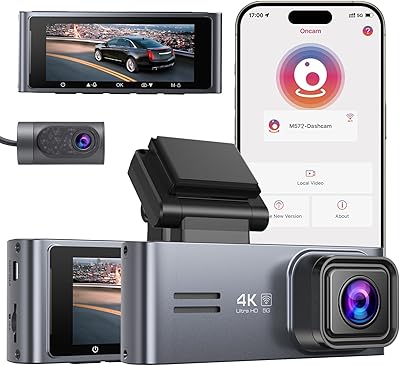
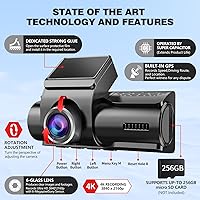
The IKOPO F7 4K Dual Dash Cam enters a crowded market with a compelling spec sheet and a few genuinely differentiating features that set it apart from the budget pack. You get simultaneous front 4K and rear 1080P recording covering a combined 310-degree field of view that leaves very little road unaccounted for. What immediately stands out is the super capacitor design — no lithium battery means no swollen or failed unit baking in a summer parking lot or dying in a deep freeze. IKOPO isn't a household name yet, but the included 64GB SD card and Type-C charger mean you're actually up and running the day it arrives, which counts for something.
Features & Benefits

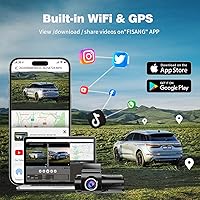
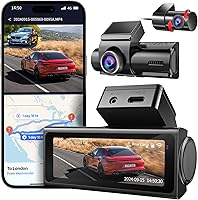
The F7's night performance hinges on its STARVIS CMOS sensor paired with wide-aperture lenses on both cameras — in practical terms, that translates to usable footage on unlit streets rather than the grainy silhouettes you'd get from a cheaper unit. HDR and WDR processing work together to prevent blown-out highlights from headlights or harsh sunlight washing out license plates. The built-in GPS records your speed and route on every clip, which is genuinely useful if you ever need to hand footage to an insurance adjuster. Wireless access via the FISANG app lets you pull clips onto your phone without touching the card, and loop recording with up to 256GB card support keeps coverage running continuously in the background.

Best For

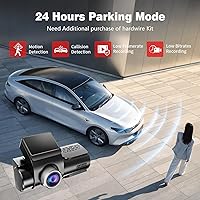
This dual-channel camera is a particularly strong pick for anyone who has watched a battery-based dash cam fail in a Phoenix August or a Minnesota January — the capacitor-based power system simply doesn't have those failure points. Rideshare and delivery drivers will appreciate having both angles covered alongside GPS-stamped routes, providing solid documentation for any disputed incident. The 21-foot rear cable makes proper installation in full-size trucks and SUVs practical without any splicing. For parking surveillance, know upfront that the fully featured mode requires a hardwire kit sold separately — a real added expense worth budgeting for if that capability is a priority from day one.

User Feedback

Early buyers are rating the F7 very highly, though 180 reviews is still a modest pool — enough to spot trends, not quite enough to declare a definitive verdict. The most consistent praise centers on night footage clarity, with users noting that low-light recordings hold up well enough to actually read plates. App connectivity draws a more mixed response; some buyers report smooth wireless performance while others mention occasional connection drops with the FISANG platform. The 3.2-inch IPS screen gets broadly positive mentions for brightness, but a handful of owners feel the windshield mount could grip more firmly on rough or unpaved roads. The early signal is genuinely encouraging, but the picture will sharpen as the review count grows.

Pros

  • Front 4K footage is sharp enough to read plates on moving vehicles — the detail that actually matters after an incident.
  • Super capacitor design survives extreme heat and cold where lithium-battery cameras routinely fail.
  • Built-in GPS automatically stamps every clip with speed and location data, genuinely useful for insurance claims.
  • Arrives ready to use with a 64GB SD card and charger included — no immediate extras required for basic operation.
  • The 21-foot rear cable is long enough for full-size trucks and large SUVs without splicing or extensions.
  • 5G Wi-Fi lets you pull clips to your phone instantly without ever touching the SD card.
  • HDR and WDR processing keeps license plates legible when driving into direct sunlight or through tunnel transitions.
  • Motion and G-sensor triggered parking mode records only relevant events, preserving storage space efficiently.
  • 18-month warranty with a stated replacement or refund policy adds meaningful purchase protection for a newer brand.
  • Wide 170-degree front and 140-degree rear coverage captures side-approaching vehicles that narrower setups miss.

Cons

  • Full parking mode requires a separately sold hardwire kit — a real added cost not reflected in the sticker price.
  • The FISANG app has a reported reliability issue on Android, with connection drops and occasional re-pairing difficulty.
  • Rear camera tops out at 1080P, noticeably softer than the front at distance — a real gap for rear plate capture.
  • Only around 180 reviews exist so far, making long-term reliability harder to assess than with established brands.
  • Windshield mount grip weakens for some users over weeks of use, especially on rougher road surfaces.
  • No cloud backup means footage is only as safe as the physical camera and card — a serious collision can destroy both.
  • GPS lock from a cold start can lag in dense urban areas, leaving a brief gap in location data at trip start.
  • Menu navigation on the device has a learning curve that some buyers find frustrating before it becomes familiar.
  • The extreme wide-angle lenses introduce peripheral distortion that is visible when reviewing clips closely.
  • Night performance from the rear camera lags behind the front, creating an inconsistency in low-light evidence quality.

Ratings

The IKOPO F7 4K Dual Dash Cam has been scored below by our AI system after analyzing verified global buyer reviews, with spam, bot-submitted, and incentivized feedback actively filtered out before any scoring was applied. The results reflect a genuine cross-section of real-world driving experiences — from daily commuters to rideshare professionals — and the scores surface both where this dual-channel camera genuinely delivers and where it falls short of expectations.

Video Quality (Day)
91%
Daytime footage from the front lens is consistently sharp enough to capture plate numbers on moving vehicles at highway speeds, which is ultimately the most practical test. Buyers repeatedly note that the 4K output holds up well even when zooming into a specific area of a clip after an incident.
The rear 1080P camera, while serviceable, is a noticeable step down from the front — fine for establishing context but not sharp enough to confidently read plates in fast-moving traffic from a distance. A few users wished the rear matched the front resolution.
Night Vision Performance
83%
The STARVIS sensor combined with the wide-aperture front lens performs well on poorly lit urban streets, producing footage where faces and license plates remain legible rather than dissolving into noise. Buyers who previously used budget cams report a clearly visible step up in low-light detail.
Performance in truly dark rural or highway conditions is more modest — the camera manages, but it is not class-leading at this price point. Some users noted the rear camera struggles more in low light than the front, which creates an imbalance in after-dark footage quality.
Build Quality & Durability
79%
21%
The super capacitor power system is the standout durability feature — drivers in Arizona summers and Minnesota winters report the unit continuing to function where lithium-battery cams have previously warped or shut down entirely. The body feels solid for its size and does not rattle excessively once mounted.
The windshield mount receives mixed feedback on long-term grip, particularly on trucks and SUVs that encounter rougher road surfaces. A handful of buyers mentioned the mount lost suction or shifted slightly over several weeks of use, requiring repositioning.
Parking Mode
67%
33%
The G-sensor and motion-triggered recording logic works well in practice — the camera captures relevant impact and movement events without burning through SD card space unnecessarily. Users in urban areas who leave vehicles on busy streets find the low-bitrate background recording genuinely useful.
Full, reliable parking mode requires the hardwire kit, which is sold separately at an additional cost that some buyers feel should have been disclosed more prominently upfront. Running the camera on the included cigarette adapter cuts power when the ignition is off, leaving parking coverage incomplete for most buyers out of the box.
GPS Accuracy & Usefulness
88%
The built-in GPS locks on quickly and the speed and location data overlaid on Google Maps footage has proven practically valuable — several buyers specifically mention using GPS-stamped clips to successfully support insurance claims or dispute traffic citations. Rideshare drivers appreciate the automatic route logging as a passive paper trail.
GPS signal can take slightly longer to acquire from a cold start in dense urban canyons with tall buildings blocking the sky, leading to a brief gap in location data at the start of some trips. This is a minor issue but worth noting for buyers who need location data logged from the very first second of every drive.
App & Wi-Fi Connectivity
71%
29%
The FISANG app handles the core tasks — live preview, clip download, and basic sharing — without requiring technical setup knowledge, and the 5G Wi-Fi connection transfers clips to a phone noticeably faster than older 2.4GHz app-connected cams at this price level.
App stability is the most polarizing aspect among buyers, with a meaningful portion reporting occasional dropped connections or difficulty re-pairing after the phone screen locks. Android users appear to encounter connectivity hiccups slightly more often than iOS users based on the available feedback pattern.
Ease of Installation
84%
The 21-foot rear cable is long enough to tuck cleanly around the headliner and down the door pillar in full-size trucks and large SUVs without any extension needed, which buyers of larger vehicles specifically call out as a relief compared to shorter-cable alternatives. The included hardware covers everything needed for a basic install.
Routing the rear cable neatly does require patience and ideally a trim removal tool, which can be intimidating for first-time dash cam installers. The instructions cover the basics but do not provide vehicle-specific guidance, so some buyers ended up consulting third-party video tutorials.
Screen & On-Device Interface
76%
24%
The 3.2-inch IPS panel is bright enough to review footage or check settings in direct sunlight without having to cup your hands around the screen, which smaller or lower-quality displays struggle with. Buyers who prefer managing clips directly on the device rather than through the app find the screen size adequate.
Menu navigation is functional but not particularly intuitive — some settings take several taps to locate, and first-time users report a learning curve before the layout clicks. The screen is more of a configuration and review tool than a primary interface, so buyers who live in the app will not notice this much.
Wide-Angle Coverage
86%
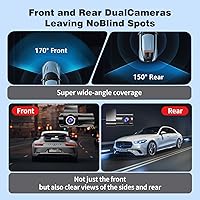
The combined 170-degree front and 140-degree rear field of view captures lane-change situations and side-approaching vehicles that narrower single-lens setups miss entirely. Parking lot incidents in particular benefit from the wide rear angle, which picks up vehicles approaching from the side.
Extreme wide-angle lenses introduce edge distortion, and some buyers note that objects near the periphery of the frame appear stretched or curved. This does not affect the evidential value of footage in most practical scenarios but is worth knowing if you intend to use clips for detailed spatial analysis.
HDR / WDR Image Processing
81%
19%
Driving directly into low morning or late afternoon sun — one of the worst conditions for any dash cam — produces footage that retains road sign and plate legibility rather than washing out to white, which buyers coming from non-HDR cameras notice immediately. Tunnel entry and exit transitions are handled cleanly.
In extremely high-contrast scenes, such as a bright midday sun reflecting off wet pavement, the processing can occasionally over-correct and produce slightly unnatural color rendering. It is a minor artifact that does not compromise the footage's usefulness but is visible to buyers who review clips critically.
Loop Recording & Storage Management
89%
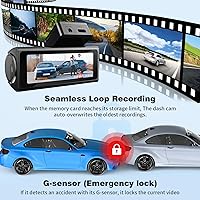
Automatic loop overwriting works reliably in the background without any user intervention, and the support for cards up to 256GB means buyers can go weeks without worrying about storage on longer road trips. The included 64GB card is enough to get started without an immediate additional purchase.
There is no built-in cloud backup option, so if the camera or card is physically damaged in a serious collision, footage recovery is not guaranteed. Buyers who want automatic off-device backup will need to rely on the app to manually transfer important clips.
Value for Money
78%
22%
The combination of 4K front recording, built-in GPS, super capacitor reliability, and an included SD card represents a solid feature-per-dollar ratio at this price tier, especially compared to name-brand alternatives that charge more for a comparable specification list. Buyers generally feel the out-of-box completeness justifies the cost.
The separately sold hardwire kit is the most commonly cited hidden cost — buyers who purchase expecting full parking mode functionality are sometimes surprised to find it requires an additional purchase. Factoring that in shifts the value proposition closer to average for the category.
Brand Trust & Support
69%
31%
The 18-month warranty with a stated free replacement or refund policy gives buyers meaningful post-purchase protection, and early users who have contacted support report reasonably prompt responses. The lifetime firmware upgrade commitment is a positive signal for a newer brand trying to build credibility.
IKOPO does not yet have the brand recognition or long-term track record of established dash cam manufacturers, which makes some buyers hesitant despite the strong early ratings. With only around 180 reviews at the time of analysis, the feedback pool is still maturing and the full reliability picture will take more time to emerge.

Suitable for:

The IKOPO F7 4K Dual Dash Cam is a strong fit for drivers who need dependable, around-the-clock documentation rather than a camera they occasionally think about. Rideshare and delivery drivers stand to benefit most — the GPS-stamped route logging and simultaneous front and rear coverage create a reliable evidence trail that holds up when a passenger disputes what happened or another driver tells a different story. Drivers in climates with harsh summers or brutal winters should pay particular attention to the super capacitor power system; if you have ever pulled a dash cam off your windshield to find it warped, dead, or leaking, this design directly solves that problem without any tradeoffs. Truck and SUV owners who have struggled with rear cameras that require extension cables will appreciate the 21-foot rear cable handling the full run cleanly. Tech-comfortable buyers who want to pull footage wirelessly to their phone after a fender bender — rather than fumbling with an SD card on the side of the road — will also find the F7 well-matched to how they actually want to use it.
Not suitable for:

Buyers whose top priority is parking lot surveillance should understand upfront that the IKOPO F7 4K Dual Dash Cam does not deliver fully featured parking mode straight out of the box — the hardwire kit required to keep the camera powered with the ignition off is sold separately, and that cost needs to be factored into the real purchase price before comparing it to competitors that include the kit. Drivers who want a single-brand ecosystem with years of established firmware history and a deep support community may find IKOPO's relative newness uncomfortable; the early reviews are encouraging, but 180 ratings is a thin foundation compared to cameras that have been on the market for several years. If rear-camera resolution is critical — say, you frequently drive in conditions where capturing rear license plates at distance is a priority — the 1080P rear lens will feel like a meaningful compromise at this price tier. Buyers who are not comfortable with app-dependent workflows and prefer a fully self-contained camera experience may find the reliance on the FISANG app for wireless clip access more friction than convenience.
Specifications

  • Front Resolution: The front camera records at 4K (3840x2160P) at 30 frames per second, delivering sharp, detailed footage suitable for capturing license plates and road signs.
  • Rear Resolution: The rear camera records at 1080P full HD, providing clear coverage of the road and vehicles behind the car.
  • Front Lens Angle: The front lens covers a 170-degree field of view, minimizing blind spots across multiple lanes of traffic.
  • Rear Lens Angle: The rear lens covers a 140-degree field of view, capturing approaching vehicles and rear parking lot activity.
  • Night Vision: Night recording is powered by a Sony STARVIS CMOS sensor with HDR and WDR processing to retain detail in low-light and high-contrast conditions.
  • Aperture: The front lens uses an F1.4 aperture and the rear uses F1.8, both designed to maximize light intake for improved low-light image quality.
  • Screen: The unit features a 3.2-inch IPS display for on-device playback, settings configuration, and real-time monitoring.
  • Power Source: The camera is powered by a super capacitor rather than a lithium battery, enabling reliable operation across a temperature range of -14°F to 158°F.
  • Connectivity: 5G Wi-Fi is built in, with wireless control and clip access handled through the FISANG app on iOS and Android devices.
  • GPS: An integrated GPS module logs speed and location data onto every recorded clip, viewable overlaid on Google Maps.
  • Storage Support: The camera supports microSD cards up to 256GB and includes a 64GB card in the box to get started immediately.
  • Parking Mode: Parking surveillance is handled via motion detection and G-sensor triggers, recording in low-bitrate mode to conserve storage space during stationary monitoring.
  • Rear Cable Length: The included rear camera cable measures 21 feet, providing sufficient length for full routing in trucks, SUVs, and larger vehicles.
  • Mounting Type: The camera attaches to the windshield via a suction-cup windshield mount included in the package.
  • Included Contents: The package includes the front and rear dual dash cam unit, a 64GB microSD card, a Type-C car charger, and a user manual.
  • Loop Recording: Loop recording automatically overwrites the oldest footage when storage is full, ensuring continuous recording without manual intervention.
  • Warranty: IKOPO provides an 18-month warranty covering free replacement or refund, along with a stated commitment to lifetime firmware upgrades.
  • Vehicle Compatibility: The system is designed to fit cars, trucks, and SUVs using the standard windshield mount and Type-C power connection.

Related Reviews
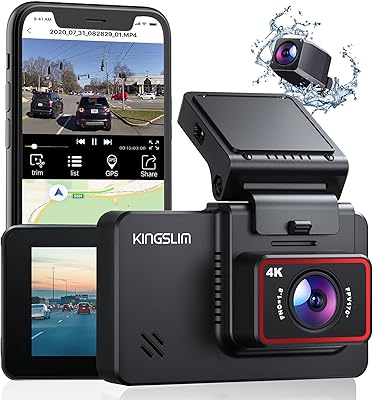
Kingslim D4 Dual Dash Cam
75%
88%
Daytime Video Quality
71%
Night Vision Performance
84%
GPS Accuracy
57%
App & WiFi Connectivity
76%
Ease of Installation
More
Thinkware U3000 4K Dual Dash Cam
86%
93%
Video Quality (4K Performance)
90%
Night Vision Performance
88%
Ease of Installation
85%
Radar Parking Mode
70%
App Connectivity & Control
More
SUVCON M02 4K/1080P Dual Dash Cam
77%
88%
Video Clarity (Daytime)
71%
Night & Low-Light Performance
74%
Rear Camera Quality
66%
App Experience (Viidure)
91%
Ease of Installation
More
70mai 4K Omni X800 Dual Dash Cam
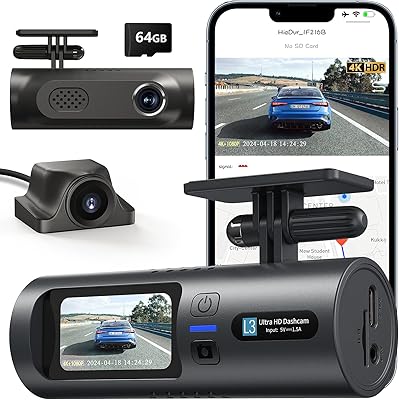
80%
91%
Night Vision Quality
93%
Video Clarity (Daytime)
88%
Rotating Camera Design
79%
4G LTE Remote Monitoring
67%
Parking Mode Usability
More
DDPAI N5 Dual Front and Rear Dash Cam
77%
88%
Video Quality (Front)
71%
Video Quality (Rear)
74%
Parking Mode & Surveillance
82%
Wi-Fi Speed & App Experience
83%
GPS Accuracy & Logging
More
YEECORE D22 4K Dual Dash Cam
85%
91%
4K Video Quality
88%
Night Vision Performance
85%
Ease of Installation
80%
App Control & Wi-Fi Connectivity
87%
Camera Field of View
More
Sarmert M572 4K Dual Dash Cam
85%
94%
Video Quality
89%
Ease of Installation
88%
Night Vision Performance
70%
Wi-Fi Connectivity
80%
App Experience
More
ROVE R2-4K Dual Dash Cam
80%
91%
Video Clarity (Front)
88%
Night Vision Performance
74%
Rear Camera Quality
78%
Wi-Fi & App Experience
86%
GPS Accuracy & Logging
More
Kingslim D6 4K Dual Dash Cam
84%
91%
4K Video Quality
88%
Night Vision Performance
84%
Ease of Setup
89%
WiFi & GPS Functionality
82%
Build Quality & Durability
More
Kolvt L3 4K Dual Dash Cam
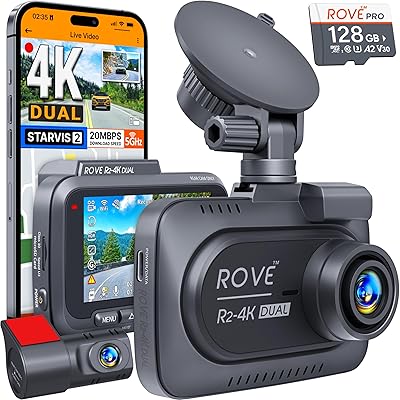
85%
91%
Video Quality
87%
Ease of Setup
83%
Parking Mode Performance
89%
Wi-Fi and App Control
85%
Low-Light Performance
More

FAQ

It can, but not with the standard cigarette lighter setup included in the box — that connection cuts power when the ignition is off. To get proper 24-hour parking surveillance, you will need to purchase the hardwire kit separately, which taps directly into the vehicle's fuse box for continuous power. It is worth budgeting for that upfront if parking mode is a priority for you.

Yes, and this is one of the genuine advantages of the F7 over many competitors. Most dash cams use lithium batteries that can swell, fail, or even become a fire hazard when baking inside a parked car in summer heat. This camera uses a super capacitor instead of a battery, which handles temperatures up to 158°F without degrading. Drivers in the Southwest or other hot climates specifically look for this feature.

No, that is one of the more convenient aspects of this dual-channel camera. The built-in 5G Wi-Fi connects to the FISANG app on your iPhone or Android phone, letting you browse, preview, download, and share clips wirelessly. Most users find pulling a clip after a minor incident much easier through the app than physically removing the card.

The app works on both platforms and handles the essential tasks well — live view, playback, and downloads. That said, Android users have reported slightly more frequent connection drops and occasional difficulty re-pairing after the phone screen locks. It is not a dealbreaker for most, but if you are heavily Android-dependent and wireless access is critical to how you plan to use the camera, it is worth knowing going in.

Yes, it is actually better suited for larger vehicles than most competitors because the rear camera cable is 21 feet long. That is enough to run the cable around the headliner and down the door pillar without any extension or splicing. Most buyer complaints about rear cable length come from cameras with 10 to 15-foot cables — this one does not have that problem.

The GPS does log your speed and location on every clip, visible when you play back footage through the app overlaid on a Google Maps view. The data is stored locally on your SD card, not uploaded to any server, so you control who sees it. Most buyers use it as protective evidence — for insurance claims or disputing a ticket — rather than anything that works against them.

The front camera handles low-light driving better than budget alternatives, thanks to the STARVIS sensor and the wide F1.4 aperture that pulls in more light. On dark residential streets or unlit highways, you can typically read plates and identify vehicles clearly. The rear camera is more modest in low light since it uses a narrower F1.8 aperture and records at 1080P — usable, but noticeably softer than the front in dark conditions.

The camera supports cards up to 256GB, and any reputable Class 10 or U3-rated microSD card in that range will work. For most daily drivers, a 128GB card hits a good balance between price and storage. If you drive long hours — rideshare, trucking, or road trips — going straight to 256GB means you rarely have to think about managing footage manually.

This is a fairly common issue mentioned by some buyers, particularly those driving on rougher roads. First, make sure the windshield is completely clean and dry before mounting — even a light film of residue reduces grip significantly. Pressing the suction cup firmly and locking it fully helps too. If the problem persists, aftermarket adhesive dash cam mounts are widely available and provide a much more permanent solution for high-vibration environments.

It is a fair concern. IKOPO is a newer brand without the years of market history that Vantrue, Garmin, or Nextbase have built up. The early buyer reviews are encouraging, but the review pool is still relatively small, so the full long-term reliability picture is still forming. The 18-month warranty and stated lifetime firmware upgrades are positive commitments for a newer brand to make. Going in with realistic expectations — solid mid-tier performance, not flagship-brand legacy — is the right frame of mind.