Overview

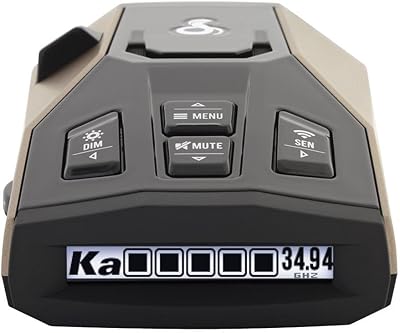
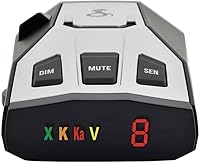
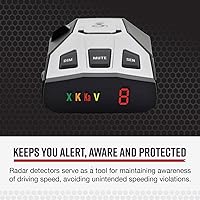
The Cobra RAD 350 sits in a sweet spot that many drivers don't expect to find at this price — a mid-range corded detector with genuine capability rather than just marketing copy. Cobra has been in this space long enough to know what commuters actually need, and this radar detector reflects that experience. It covers X, K, and Ka bands alongside laser and VG-2 signals, picking up threats from both front and rear. The OLED display is a step above what you'd normally expect here, and the compact build makes mounting straightforward whether you prefer the windshield or the dash.

Features & Benefits

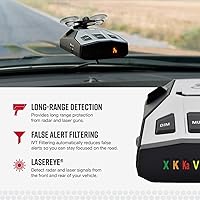
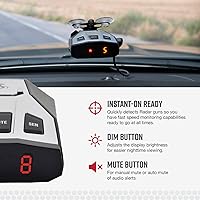
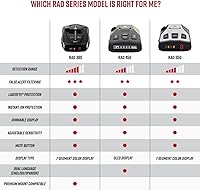
The feature that earns the most real-world appreciation is the IVT false alert filter, which cuts down on the constant beeping triggered by adaptive cruise control and collision systems in surrounding vehicles — a genuine annoyance on busy roads. Combined with front and rear laser sensors, the RAD 350 watches traffic in both directions, not just what's ahead. Distinct tones alert you to different signal types without requiring a glance at the display, though the signal strength readout is clear when you do look. It also supports premium mount compatibility, useful if you want a tidier, more permanent installation.

Best For

This radar detector makes the most sense for daily commuters who are tired of false alerts from grocery store doors or the lane-assist system in the car ahead. It's also a solid upgrade for anyone moving away from a bare-bones unit that cries wolf every few minutes. Highway drivers benefit from full band coverage, and the IVT filtering becomes especially valuable in dense traffic where modern vehicles are everywhere. Worth being clear about: this Cobra unit offers no GPS, app integration, or cloud-based alerts — and for drivers who don't need those extras, that simplicity is actually a selling point.

User Feedback

With over 3,900 ratings averaging 4.4 stars, the overall reception for this radar detector is strong within its category. Buyers consistently highlight reduced false alarms as the standout improvement over cheaper units, and the display gets frequent praise for staying readable in direct sunlight. Detection range, though, draws more divided opinions — most find it sufficient for everyday roads, but drivers upgrading from premium-tier units sometimes feel it falls short at higher highway speeds. A smaller share of users flag occasional Ka band sensitivity inconsistencies. No widespread durability complaints surface, and repeat Cobra buyers appear regularly in the reviews, which reflects a degree of earned brand trust at this price tier.

Pros

  • IVT false alert filtering meaningfully reduces nuisance beeps from nearby collision-avoidance systems during daily commutes.
  • Front and rear laser sensors provide 360-degree coverage — a genuine advantage over single-direction detectors at this price.
  • The OLED display is bright, clear, and easy to read in direct sunlight without squinting or adjusting.
  • Instant-On detection readiness helps catch brief radar pulses that older or slower units are more likely to miss.
  • No subscription fees, no app pairing, no account setup — it works immediately, every time you get in the car.
  • Full X, K, and Ka band coverage with signal strength indication gives drivers actionable, layered alert information.
  • Compact build sits unobtrusively on the windshield without blocking sightlines or feeling like an afterthought.
  • Premium mount compatibility makes a clean, permanent installation possible for drivers who dislike visible cord and suction cup setups.
  • At its price point, the Cobra RAD 350 delivers a feature set that would have cost considerably more just a few years ago.
  • Over 3,900 verified ratings averaging 4.4 stars reflects a broad, consistent base of satisfied real-world drivers.

Cons

  • Detection range at high interstate speeds trails more expensive GPS-enabled competitors by a noticeable margin.
  • No GPS means no red light camera alerts, no speed camera warnings, and no location-based false alert learning.
  • Ka band sensitivity has been flagged as inconsistent by a meaningful minority of users, which matters in Ka-heavy enforcement areas.
  • The stock suction cup mount can lose grip over time, especially in high-heat climates or on textured windshields.
  • Zero community alert sharing means the detector has no awareness of threats other drivers have already flagged ahead of you.
  • No over-the-air updates or database improvements — the unit's intelligence on day one is its intelligence indefinitely.
  • City and highway sensitivity modes are limited, leaving drivers with less control over fine-tuning alert behavior.
  • Cord management requires effort for a truly clean install; there is no wireless or battery-powered alternative here.

Ratings

The Cobra RAD 350 earns a well-deserved spot in the mid-range radar detector conversation, and the scores below reflect exactly what thousands of verified buyers discovered after weeks and months of real-world use. Our AI rating engine analyzed global user feedback, actively filtering out incentivized reviews, duplicate submissions, and bot-generated content to surface honest signal from genuine drivers. Strengths and shortcomings are weighted equally — what you see here is the unfiltered picture.

False Alert Filtering
83%
The IVT filter is the single feature buyers mention most in positive reviews. Drivers who commute through suburban and urban traffic report a dramatic drop in nuisance beeps triggered by modern lane-keep and collision-avoidance systems in surrounding vehicles, making daily use noticeably less stressful.
The filtering isn't perfect — a segment of users notes that dense shopping areas or parking lots still produce occasional false positives. It reduces the problem meaningfully but doesn't eliminate it entirely, which is worth setting expectations around before purchase.
Detection Range
67%
33%
For city and suburban driving, most users find the detection window more than adequate — enough lead time to check speed and adjust. Instant-On readiness adds a practical edge when encountering radar guns that pulse briefly rather than broadcasting continuously.
At interstate speeds, a notable share of reviewers feels the range falls short compared to higher-priced competitors. Drivers who frequently travel open highways report wanting earlier alerts, and this is the area where spending more on a premium unit shows the clearest difference.
Display Quality
88%
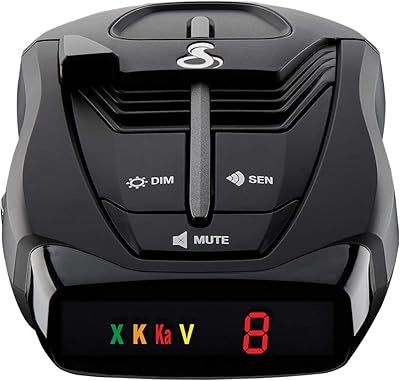
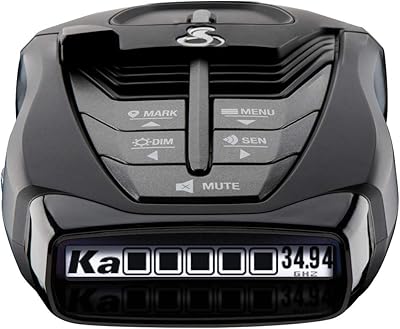
The OLED display draws consistent praise for being crisp and easy to read, even under direct sunlight — a pain point on cheaper units with dim or washed-out screens. Band identification icons and the numeric signal strength meter give drivers actionable information at a quick glance.
A minor complaint from some users is that the display can feel slightly small for quick reading while moving at speed. There are no complaints about brightness itself, but the screen real estate is limited compared to larger units in higher price tiers.
Ease of Use
91%
Setup is genuinely straightforward — plug into the 12V port, mount, and drive. There are no apps to pair, no accounts to create, and no firmware quirks to navigate out of the box. Buyers upgrading from complex multi-feature units frequently comment on how refreshing the simplicity is.
The flip side of that simplicity is a lack of customization. Users who want to adjust sensitivity profiles, mute specific bands, or configure city versus highway modes will find the options fairly limited compared to more feature-rich alternatives in the market.
Audio Alerts
82%
18%
Distinct tones for different signal types work well in practice — experienced users learn quickly which sound corresponds to which threat, allowing them to react without looking at the display. Volume is adjustable and reaches a level that cuts through road and music noise effectively.
Some buyers find the default alert tones a bit jarring, particularly in quiet cars. A handful of reviews mention wishing for a more nuanced volume graduation — the jump between low and medium can feel abrupt during quiet early-morning commutes.
Build Quality
74%
26%
The unit feels solid enough for daily in-car use — no significant complaints about creaking, rattling, or parts feeling cheap in hand. The compact dimensions make it unobtrusive on the windshield without compromising the structural feel of the housing.
It doesn't feel premium. At this price point that's expected, but a few users report the plastic finish showing minor scratches over time, and the included mount clip draws occasional criticism for feeling less robust than the main unit itself.
Value for Money
86%
At its price, the RAD 350 delivers a feature set — OLED display, IVT filtering, full band coverage — that would have cost significantly more a few years ago. Buyers who previously ran a bare-bones detector or no detector at all consistently rate the value perception very highly.
For drivers who research carefully, the gap between this unit and GPS-enabled detectors with cloud-connected alert sharing narrows faster than expected when factoring in those added capabilities. The value holds up best for straightforward use cases rather than advanced road-trip scenarios.
Mount & Installation
79%
21%
The included mount gets the job done without a complicated installation process. Premium mount compatibility is a thoughtful inclusion for buyers who want a cleaner permanent setup rather than the standard suction cup arrangement.
The stock suction cup mount is functional but generates more than a few complaints about holding strength over time, especially in cars with textured or curved windshields. Users in hot climates note it can lose grip during summer months without reinforcement.
Ka Band Sensitivity
63%
37%
Under normal road conditions, the detector picks up Ka band signals with enough lead time for most everyday driving situations. Users in areas where Ka band is the primary enforcement tool generally report satisfactory performance for typical commuting routes.
This is the most divisive performance area. A measurable portion of reviewers reports inconsistent Ka band detection — sometimes catching signals early, other times alerting with less margin than expected. It's not a widespread failure, but it appears often enough to be a legitimate concern for high-frequency highway drivers.
Laser Detection
77%
23%
Front and rear laser sensors provide 360-degree coverage, which is a genuine advantage over single-direction units. Users who have been targeted from behind by patrol vehicles specifically appreciate having rear detection, which is often absent in competing units at this price.
Like most detectors in this category, laser alerts typically arrive with minimal reaction time since police lidar is pinpoint and brief. The rear sensor adds coverage, but buyers should understand that laser detection at any price tier is more of a notification than an early warning system.
GPS & Smart Features
31%
69%
For drivers who purely want radar and laser detection without any connected-device complexity, the absence of GPS is a non-issue. The unit operates entirely standalone, which some users explicitly prefer for its reliability and zero subscription cost.
The lack of GPS-based speed camera alerts, red light camera warnings, and location-based false alert learning is a real gap for drivers who travel varied or unfamiliar routes. There is no companion app, no Defender database access, and no shared alert community — all of which competing units offer at comparable or nearby price points.
Long Road Trip Suitability
54%
46%
The core detection functions work on long trips just as they do locally — there is no degradation in performance over distance or time. Drivers doing occasional highway travel on familiar routes report no major complaints specific to extended use.
For serious road-trippers, the missing GPS integration and community-based alert sharing become real limitations over unfamiliar interstate stretches. Without location intelligence or real-time threat updates, the unit is working with less information than GPS-enabled competitors in those scenarios.
Subscription & Ongoing Cost
94%
Absolutely no subscription fees, no account required, and no paid database updates needed. You pay once and the unit works indefinitely — a meaningful advantage for cost-conscious buyers who are tired of hardware products with recurring fee structures attached.
The trade-off is a static feature set. Without a connected service, the detector cannot learn new fixed threat locations, receive over-the-air updates, or benefit from community-reported alerts. What you have on day one is what you have in year three.
Compatibility & Fit
81%
19%
Works with any 12V corded setup in standard passenger vehicles, SUVs, and trucks without adapters or special hardware. The compact footprint fits unobtrusively on most windshields without obstructing sightlines, which buyers with smaller windshield real estate specifically appreciate.
The corded-only power requirement is fine for most, but buyers hoping for a wireless or battery-operated option won't find it here. Cord management can also be a minor frustration for drivers who want a truly clean installation without visible cabling.

Suitable for:

The Cobra RAD 350 is a genuinely practical choice for drivers whose daily reality involves stop-and-go traffic, suburban commutes, and roads packed with modern vehicles broadcasting collision-avoidance signals every few seconds. If false alerts have ever driven you to switch a detector off entirely — which defeats the purpose — the IVT filtering here makes a noticeable real-world difference, even if it isn't flawless. Drivers making the jump from an old or entry-level unit will feel an immediate upgrade in display quality and alert intelligence without needing to spend significantly more. It also suits highway drivers on familiar routes who want full-band coverage — X, K, and Ka — plus the reassurance of front and rear laser detection without managing an app or paying for a subscription service. For anyone who wants a plug-in, no-fuss detector that works reliably on day one and every day after, this radar detector fits that brief cleanly.

Not suitable for:

The Cobra RAD 350 is likely to leave experienced, tech-savvy drivers underwhelmed if they're coming from a GPS-enabled unit with community-based alert sharing and automatic false alert learning. There is no location intelligence built in, no companion app, and no access to red light or speed camera databases — gaps that become genuinely frustrating on unfamiliar roads or extended cross-country trips. Drivers who spend significant time on open interstates where early detection distance is critical may also find the range adequate but not class-leading, particularly compared to premium alternatives in a higher price bracket. If Ka band sensitivity consistency matters to you — because enforcement in your area relies heavily on it — the occasional inconsistencies reported by a segment of users are worth taking seriously. Anyone prioritizing long-term smart features, cloud updates, or the kind of detection range that gives maximum reaction time at speed should invest more and look at GPS-integrated options rather than expecting this unit to punch above its design intent.

Specifications

  • Brand: Manufactured by Cobra Electronics, a long-established name in the radar detector and dash cam segment.
  • Model: RAD 350, a mid-range corded radar detector positioned above entry-level units in the Cobra lineup.
  • Dimensions: The unit measures 4.12″ in length, 2.64″ in width, and 1.35″ in height for a compact windshield footprint.
  • Weight: The detector weighs 10.1 ounces, keeping it light enough that standard mounts hold it securely without strain.
  • Display Type: Features an OLED screen with band identification icons and a numeric signal strength meter for at-a-glance readouts.
  • Bands Detected: Detects X, K, and Ka radar bands, plus laser (lidar) and VG-2 signals across the supported frequency range.
  • Frequencies: Covers 10.525 GHz (X band), 24.125 GHz (K band), and 34.7 GHz (Ka band) radar frequencies.
  • Laser Sensors: Equipped with both front and rear laser detection eyes, providing 360-degree laser coverage around the vehicle.
  • False Alert Filter: Uses Cobra's patented IVT Filter technology to suppress false alerts generated by collision-avoidance and adaptive cruise systems in nearby vehicles.
  • Instant-On Ready: Designed to detect brief, pulsed Instant-On radar gun transmissions quickly, reducing the gap between signal and alert.
  • Power Source: Powered via a corded 12V DC connection, typically through the vehicle's cigarette lighter or accessory port.
  • Voltage: Operates at 12 volts, compatible with the standard 12V accessory outlets found in the vast majority of passenger vehicles.
  • GPS: No integrated GPS — the unit does not include speed camera databases, red light alerts, or location-based learning.
  • App Connectivity: No companion app or Bluetooth pairing is supported; the detector operates entirely as a standalone device.
  • Mount Compatibility: Compatible with Cobra's premium mount accessories for drivers who prefer a more permanent or cleaner installation setup.
  • Color: Available in Black as the standard finish for the housing and exterior surfaces.
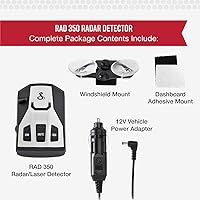
  • In the Box: Package includes the detector unit, a power cord, and a printed user manual — no additional accessories are bundled.
  • Seller Rank: Ranked number 5 in the Radar Detectors category on Amazon at time of listing, reflecting sustained purchase volume.
  • User Rating: Holds an average rating of 4.4 out of 5 stars based on 3,994 verified ratings on Amazon.
  • Manufacturer Status: The RAD 350 is not discontinued by the manufacturer and remains an active product in the Cobra lineup.

Related Reviews
Cobra RAD 480i
Cobra RAD 480i
83%
83%
Detection Range
88%
False Alert Filtering
92%
Ease of Setup
79%
App Integration
86%
CarPlay and Android Auto Support
More
Cobra RAD 380 Radar Detector
82%
88%
Value for Money
82%
Detection Range
91%
Ease of Installation
79%
Sensitivity Adjustment
84%
False Alerts Reduction
More
Cobra RAD 450 Radar Detector
85%
88%
Detection Range
92%
Value for Money
91%
Ease of Installation
89%
Display Quality
85%
False Alert Filtering
More
Cobra ACXT390 Walkie Talkies
84%
86%
Range Performance
91%
Sound Quality
88%
Build Quality & Durability
72%
Battery Life
89%
Ease of Use
More
Cobra ACXT345 Walkie Talkies
85%
88%
Range
91%
Build Quality
85%
Weather Resistance
89%
Ease of Use
92%
Battery Life
More
Cobra SC 200D Dash Cam
86%
94%
Video Quality
96%
Front Camera Performance
88%
Rear Camera Performance
85%
Night Vision
82%
GPS Accuracy
More
Cobra ACXT1035R FLT Walkie Talkies
83%
91%
Range & Clarity
88%
Waterproof & Durability
78%
Ease of Use
85%
Battery Life
82%
Voice-Activated Transmission (VOX)
More
Cobra ACXT645 Waterproof Walkie Talkies
87%
90%
Durability
85%
Range Performance
92%
Water Resistance
87%
Ease of Use
78%
Battery Life
More
Cobra SC 400D Dash Cam
80%
94%
Video Quality
89%
Ease of Setup
75%
App Performance
65%
Mounting Flexibility
91%
Emergency Alerts
More
Ohm RAD-S798Z Shower Radio
83%
91%
Water Resistance
88%
Portability
87%
Battery Life
85%
Ease of Use
65%
Sound Quality
More

FAQ

Yes, meaningfully so — the IVT Filter is specifically designed to suppress the radar-like signals emitted by collision-avoidance and automatic emergency braking systems in nearby vehicles. In practice, most users notice a real reduction compared to older or cheaper detectors. That said, it doesn't eliminate false alerts entirely, so dense parking lots or shopping centers may still produce the occasional beep.

It's about as simple as these devices get. Plug the power cord into your 12V accessory port, attach the unit to your windshield using the included mount, and you're done. There's no app to download, no account to create, and no pairing process — it just works from the moment you power it on.

It does have Instant-On detection capability, which means it's built to respond quickly to the brief radar pulses these guns emit rather than waiting for a sustained signal. Whether you get enough warning depends on your speed and proximity, but the RAD 350 handles this better than many entry-level units that simply aren't designed for it.

None at all. You pay for the hardware once and it works indefinitely — no subscription, no database updates to purchase, and no connected service fees. For drivers who are tired of hardware that comes with ongoing costs, that's a genuine plus.

Yes — the front and rear laser sensors give you coverage in both directions. This matters more than many drivers expect, since police lidar targeting from behind is a real scenario. Radar detection, however, is omnidirectional by nature, so band detection covers all angles regardless of sensor placement.

The core detection functions work fine on any road, but if you rely heavily on GPS-based speed camera alerts or community-reported threat updates, you'll feel the absence of those features on unfamiliar routes. The detector has no location intelligence, so it only responds to live signals — it won't warn you about a known fixed camera if no radar is actively broadcasting.

Very well, according to the large majority of user feedback. The OLED panel is consistently praised for staying readable in direct sunlight — a common weak point on cheaper detectors with dimmer LCD screens. You can glance at band identification and signal strength without struggling to see the screen mid-drive.

It works for most drivers in most conditions, but it has a known weak point in high-heat climates where suction cups tend to lose grip over time. If you drive in a hot region or have a textured or curved windshield, it's worth considering an aftermarket or premium Cobra mount for a more secure fit.

Just the essentials — the detector unit, a 12V power cord, and a user manual. No extra mounts, no protective case, and no accessories beyond what you need to get started. If you want a cleaner installation with cord management or a different mounting style, that's a separate purchase.

The gap is real and worth acknowledging. GPS-enabled competitors can learn and ignore recurring false alert locations, warn you about fixed speed and red light cameras, and share real-time threat alerts from other drivers on the road. This Cobra unit does none of that — it relies entirely on live signal detection. For straightforward daily commuting on familiar roads, most drivers find that trade-off acceptable. For frequent long-distance travel on unfamiliar routes, the gap in situational awareness is harder to overlook.