Overview

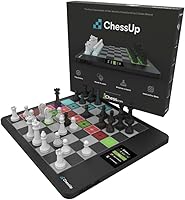
The Bryght Labs ChessUp 2 Electronic Chess Board is Bryght Labs' second-generation smart board, and it arrives with meaningfully upgraded ambitions. Smart chess boards occupy a small but growing niche, sitting somewhere between a traditional set and a dedicated chess computer. This one leans hard into learning. It's positioned at a premium price point, which means it realistically targets serious hobbyists, engaged parents, and gift-buyers who want more than a novelty. Think of it less as a decorative showpiece and more as an interactive training tool — one that demands real engagement to justify what you pay for it.
Features & Benefits

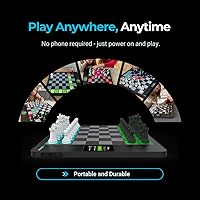
Touch any piece and the board lights up to show legal moves, hints, or flagged mistakes — that's the core interaction, and it works intuitively even for young kids. What sets the ChessUp 2 apart is built-in WiFi that lets you jump into a rated game on Chess.com or Lichess directly from the board, no phone needed. You can also dial the per-player AI difficulty, so a parent and a beginner can sit across from each other and both get an appropriately challenging experience. The companion app handles post-game review and structured lessons, while the board itself supports freeform position setup for anyone serious about opening preparation or endgame drills.

Best For

This smart chess board makes the most sense for families where skill levels are genuinely mixed — a parent who played seriously years ago, a ten-year-old just learning the pieces, and maybe a teenager somewhere in between. It's also a strong fit for self-improving players who want structured coaching feedback but don't have access to a regular club or instructor. The ability to play live online games from a physical board is a real differentiator for anyone who finds screen-only chess a bit cold. As a gift, it lands well for both kids and adult hobbyists, though the recipient should be genuinely interested in improving, not just playing occasionally.

User Feedback

With a 4.4-star average across nearly 100 ratings, the ChessUp 2 earns consistent praise for board responsiveness and how quickly new players grasp the hint system. Parents especially note that kids who previously showed little interest in chess started requesting games regularly. On the critical side, some reviews flag the initial WiFi and app pairing as a friction point — a few users needed multiple attempts before setup completed cleanly. Buyers at the premium tier occasionally questioned whether the full experience justifies the cost over a strong digital app combined with a traditional set. Owners of the original ChessUp largely view the second version as a meaningful upgrade.

Pros

  • Light-up move hints make chess immediately approachable for kids as young as 6 without parental explanation.
  • Per-player AI difficulty lets a beginner and an experienced player share a genuinely competitive game.
  • Built-in WiFi connects directly to Chess.com and Lichess — no phone or laptop needed mid-game.
  • The companion app turns every finished game into a structured learning opportunity with move-by-move review.
  • TouchSense piece detection works reliably under normal play conditions, keeping sessions fluid and interruption-free.
  • Premium build quality gives the pieces a satisfying weight that cheap electronic boards often sacrifice.
  • Supports freeform position setup, making it useful for opening prep and tactic drilling beyond casual play.
  • Owners of the original ChessUp consistently describe the second generation as a meaningful, well-targeted improvement.
  • Strong gift reception — especially for chess-curious recipients who wouldn't have purchased it for themselves.

Cons

  • Initial WiFi setup and app pairing have frustrated a notable share of buyers before the full experience became accessible.
  • The coaching and lesson content thins out quickly for intermediate or advanced players, limiting long-term study value.
  • At over five pounds with a large footprint, it is firmly a home-use board rather than a portable one.
  • Piece detection can misfire when younger children place pieces quickly or off-center on squares.
  • The carry bag for portability is sold separately, adding cost to an already premium purchase.
  • App updates have occasionally broken features that were previously working, which erodes confidence in the software side.
  • Casual players who engage infrequently are unlikely to recover the value relative to a traditional board and a free chess app.
  • Not all Chess.com game modes available in a browser are accessible through the board, limiting online play options.
  • Younger children at the lower end of the recommended age range often need adult help during early setup and sessions.

Ratings

The ratings below for the Bryght Labs ChessUp 2 Electronic Chess Board were generated by AI after analyzing verified buyer reviews from multiple global sources, with spam, bot activity, and incentivized feedback actively filtered out. Scores reflect a balanced synthesis of real ownership experiences — not marketing claims — so both the strengths and the genuine frustrations are represented transparently.

Board Responsiveness
88%
Most users report that the TouchSense piece detection works reliably across normal play conditions. Picking up a piece and seeing the board light up instantly gives beginners an intuitive, confidence-building experience that keeps sessions moving without interruption.
A handful of reviewers noted occasional missed detections when pieces aren't placed firmly in the center of a square. This seems more likely with younger kids who move pieces quickly or imprecisely, which can occasionally cause the board to misread a position.
WiFi & Online Play
74%
26%
The ability to play rated games on Chess.com or Lichess directly from a physical board — without touching a phone or laptop — is genuinely compelling for players who find screen-only chess unsatisfying. When it works, it feels like a distinct and worthwhile experience.
Initial WiFi setup drew a noticeable share of complaints. Several buyers needed multiple attempts to get the board connected, and a few reported that network compatibility with certain routers added frustrating delays before they could use the online features at all.
App Integration
71%
29%
The companion app's post-game review feature resonated with improvement-minded players. Being able to replay a physical game move-by-move on your phone shortly after finishing it bridges the gap between casual play and structured self-coaching in a practical way.
App pairing was the most consistently mentioned friction point across critical reviews. Some users found the initial Bluetooth or account linking process confusing, and a few noted that app updates occasionally disrupted features that had been working fine previously.
AI Coaching System
86%
The per-player difficulty setting is one of the smarter design choices here. A parent can play without hints while their child receives move suggestions, making family games genuinely educational rather than lopsided or discouraging for the weaker player.
Advanced players who push the AI to higher difficulty settings have noted that the coaching hints can feel redundant once you move past intermediate level. The system is clearly optimized for learners rather than competitive prep, which may underwhelm stronger players over time.
Value for Money
67%
33%
For families who will use this regularly as a teaching tool, the all-in-one nature — board, AI, online play, app lessons — does consolidate what would otherwise require multiple purchases or subscriptions. Committed users tend to feel the investment pays off over months of use.
At the premium price tier, buyers who use it casually or inconsistently are more likely to question whether a strong chess app and a traditional board would have served them just as well for considerably less. A few reviewers explicitly raised this comparison in lower-star reviews.
Ease of Setup
63%
37%
Out of the box, the physical board setup is straightforward — no assembly required, and the piece placement to start a game is immediately intuitive even for first-timers. Kids can start playing the basic board functions within minutes of unboxing.
The digital side of setup is a different story. WiFi configuration, app account creation, and syncing the board to an online chess account involve several steps that frustrated less tech-comfortable buyers, particularly older adults or parents who just wanted to start playing quickly.
Build Quality & Materials
81%
19%
The board has a solid, premium feel that aligns with its price positioning. Reviewers frequently described the pieces as well-weighted and satisfying to handle, which matters more than it might sound — cheap-feeling pieces undermine the tactile appeal of a physical board.
At 5.14 pounds, the board isn't particularly portable, and the slim 0.04-inch profile means it sits very flat on a table, which some users found slightly awkward compared to a traditional raised board. The carry bag accessory helps, but it's sold separately.
Learning Effectiveness
84%
Parents consistently noted genuine improvement in their children's understanding of piece movement and basic tactics after regular sessions. The visual feedback loop — touch a piece, see what it can do — creates repetition-based learning that textbooks and apps alone don't replicate as naturally.
The learning tools are strongest for beginners and casual improvers. Players already familiar with tactics and positional concepts may find the guided lesson content in the app covers ground they already know, with limited ability to fast-track to more advanced material.
Online Platform Compatibility
79%
21%
Supporting both Chess.com and Lichess covers the two dominant online chess communities, which means most active players already have accounts they can link immediately. This dual compatibility avoids the frustration of being locked into a single ecosystem.
Some users wanted integration beyond these two platforms, and a few noted that not all game modes available on Chess.com through a browser are accessible via the board. Correspondence chess and certain tournament formats appear to have limitations when played through the device.
Gift Appeal
89%
Among buyers who purchased this as a gift, the reception was notably positive. The premium unboxing experience, combined with the instantly interactive nature of the board, made it a standout gift for chess-curious kids and hobbyist adults who wouldn't have bought it for themselves.
It works best as a gift when the recipient is genuinely motivated to improve at chess. Several reviewers who bought it for casual players noted it ended up underused, since the full value only emerges when someone engages with the coaching and online features consistently.
Age Range Suitability
82%
18%
The recommended age of 6 and up holds up in practice. Young kids grasp the light-up hint system quickly, and the adjustable AI means the board grows with them rather than becoming obsolete as they improve. Multiple reviewers praised it specifically for this longevity.
Very young children occasionally struggled with precise piece placement on the squares, which caused detection inconsistencies. At the lower end of the recommended age range, some parental involvement during early sessions seems necessary to get the most out of the technology.
Portability
58%
42%
The slim form factor means the board stores flat without taking up much shelf space, and the optional carry bag makes transport reasonably practical for taking it to a friend's house or a chess club meeting.
At over five pounds and with a 15 by 14 inch footprint, this isn't something you'd comfortably bring on a commute or pack casually in a bag. It's better understood as a home-use board than a portable one, which may disappoint buyers expecting travel-friendly dimensions.
Upgrade from Original ChessUp
83%
Owners of the first ChessUp who reviewed the second generation consistently described it as a worthwhile step forward. The WiFi integration and improved app experience were the most frequently cited reasons for feeling the upgrade made sense rather than being a cosmetic refresh.
A small number of original ChessUp owners felt that certain core behaviors — particularly around piece detection sensitivity — hadn't improved as much as expected. The jump from generation one to generation two is meaningful, but not so dramatic that early adopters feel left behind on fundamentals.
Companion App Depth
73%
27%
The structured lesson content inside the app, especially when key moments are shown simultaneously on the physical board, creates a more engaging study experience than most standalone chess apps. The dual-screen-and-board delivery feels thoughtfully designed rather than bolted on.
App depth is solid for beginners but thins out for intermediate players. A few reviewers noted that after working through the available lessons, there wasn't enough new content to sustain long-term structured study, making the app feel like it still has room to grow.

Suitable for:

The Bryght Labs ChessUp 2 Electronic Chess Board is an ideal fit for families where players of genuinely different skill levels want to share the same board without one side being bored or overwhelmed. If you have a child learning chess from scratch alongside a parent or older sibling who already knows strategy, the per-player AI settings make that dynamic work in a way a traditional set simply cannot. Self-taught players who want honest feedback on their mistakes — but don't have access to a coach or local club — will find the combination of board hints and app-based game review surprisingly useful for steady improvement. It also suits chess hobbyists who miss the tactile feel of moving physical pieces but still want the competitive experience of playing against real opponents online. As a gift for a chess-curious person aged roughly 8 and up who is motivated to improve, it lands exceptionally well.
Not suitable for:

The Bryght Labs ChessUp 2 Electronic Chess Board is a harder sell if you're a casual player who just wants an occasional game with no interest in tracking progress or engaging with an app. The premium price point demands consistent, engaged use to justify itself — buyers who play once a month will likely feel the value equation doesn't hold up against a quality traditional set. Strong or competitive players above intermediate level may also find the coaching system too beginner-focused to offer much long-term utility. Anyone who is easily frustrated by tech setup should approach with realistic expectations, since the WiFi configuration and app pairing process has tripped up a meaningful share of buyers before they could fully enjoy the experience. Finally, if portability is a priority — travel, commuting, taking it to a friend's house regularly — the size and weight make it better suited as a permanent fixture on a desk or table at home.

Specifications

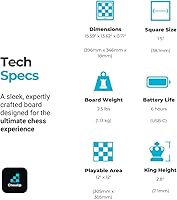
  • Dimensions: The board measures 15 x 14 x 0.04 inches, giving it a full-size playing surface in a very slim, flat profile.
  • Weight: The complete unit weighs 5.14 pounds, making it a stable desktop board rather than a travel-friendly portable device.
  • Model Number: The official model designation is CU2, identifying it as the second-generation product in the ChessUp line by Bryght Labs.
  • Manufacturer: Designed and produced by Bryght Labs, a company focused on technology-integrated chess learning products.
  • Recommended Age: Bryght Labs rates the board suitable for ages 6 and up, covering a wide range from early learners through adult players.
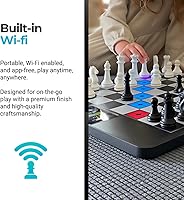
  • Connectivity: The board includes built-in WiFi, enabling direct connection to online chess platforms without requiring a paired phone or computer.
  • Platform Support: Online play is supported natively on both Chess.com and Lichess, the two largest active chess communities worldwide.
  • Piece Detection: TouchSense technology detects which piece has been lifted or placed, triggering real-time light-up feedback on the board surface.
  • Move Guidance: LED-lit squares illuminate to show legal moves, potential blunders, and coaching hints based on the active AI difficulty setting.
  • AI Difficulty: AI assistance levels are adjustable independently for each player, allowing mixed-skill sessions where one side receives hints and the other does not.
  • Companion App: A dedicated ChessUp app is available for post-game analysis, structured lessons, and progress tracking, with board and app displaying content simultaneously.
  • Position Setup: The board supports fully custom position entry, allowing users to recreate famous games, study openings, or drill specific tactical scenarios.
  • User Rating: The ChessUp 2 holds a 4.4 out of 5 star average across 96 verified ratings at the time of this review.
  • Best Sellers Rank: It ranks at #6,920 in the Electronics category and #159 in Computer Tablets on Amazon, reflecting solid niche traction.
  • Bundle Option: A Carry Bag and Piece Sacks accessory bundle is available separately for buyers who want a storage and transport solution.
  • Power Source: The board requires a power connection to operate its electronics; it is not battery-powered for fully cordless play.
  • Generation: This is the second generation of the ChessUp platform, featuring hardware and software improvements over the original model.

Related Reviews

Hosyond TDA7498E 2.1 Channel Bluetooth Amplifier Board 160W×2+220W
73%
88%
Value for Money
76%
Power Output & Headroom
83%
Bluetooth Connectivity
79%
Build & Component Quality
62%
Thermal Management
More
Chord Electronics Mojo 2
81%
96%
Sound Quality
88%
Portability & Form Factor
94%
IEM Compatibility
83%
Build Quality
91%
Input Versatility
More
Product Club Balayage Board Set of 2
88%
90%
Ease of Use
93%
Precision in Application
88%
Durability
87%
Eco-Friendliness
91%
Value for Money
More
Caldera + Lab The Eye Serum 2.4oz
88%
89%
Effectiveness for Puffiness
85%
Effectiveness for Dark Circles
91%
Skin Sensitivity Compatibility
92%
Absorption & Finish
81%
Fragrance
More
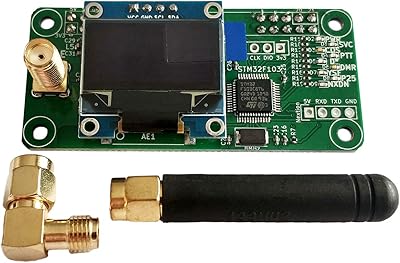
AURSINC MMDVM Hotspot Board V1.5.2
86%
87%
Performance
80%
Compatibility with Raspberry Pi
92%
Ease of Setup
85%
Build Quality
90%
User Interface & Display
More
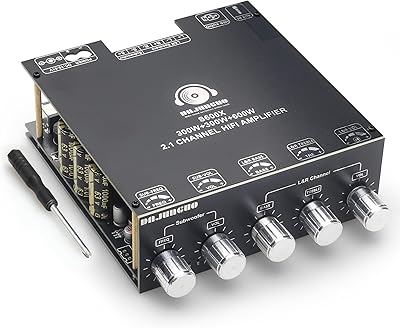
DAJUNGUO S600X
DAJUNGUO S600X
75%
78%
Power Output
74%
Audio Quality
83%
Bluetooth Connectivity
88%
Input Versatility
86%
Value for Money
More
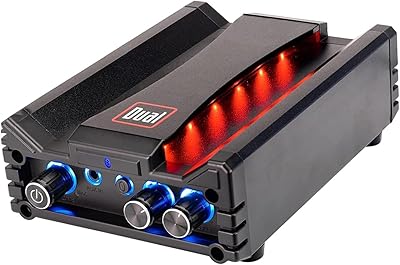
Dual Electronics DBTMA100 Micro 2 Channel Bluetooth Amplifier
88%
95%
Bluetooth Connectivity
91%
Audio Clarity
87%
Build Quality
94%
Ease of Setup
78%
Power Output
More
SweetSpot Labs Bikini & Body Bump Eraser 2-Pack
85%
88%
Effectiveness in Preventing Razor Bumps
93%
Gentleness on Sensitive Skin
85%
Ease of Application
90%
Packaging Convenience
87%
Skin Texture Improvement
More
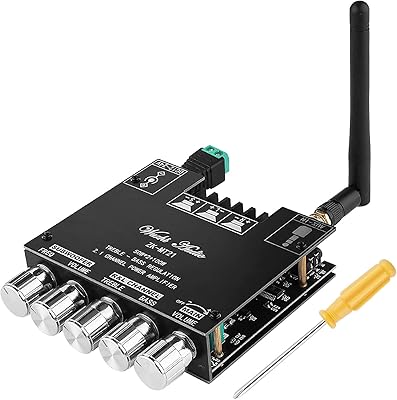
MakerHawk ZK-MT21 Bluetooth Amplifier Board 2.1
78%
88%
Value for Money
74%
Audio Output Quality
82%
Bluetooth Connectivity
86%
Ease of Setup & Wiring
61%
Thermal Management
More
Refrigmatic MEGA 2-in-1 Electronic Voltage & Surge Protector for Refrigerators
89%
89%
Ease of Use
91%
Protection Against Power Surges
85%
Setup Process
88%
Build Quality
92%
Space Efficiency
More

FAQ

Yes, you can play locally against the built-in AI or with another person sitting across from you without any internet connection. WiFi is only required if you want to play online matches on Chess.com or Lichess, or sync game data with the companion app.

The physical board is ready to use almost immediately out of the box. The trickier part is connecting it to your WiFi network and linking it to a Chess.com or Lichess account, which involves a few steps through the companion app. It is manageable for most users, but less tech-comfortable buyers should set aside some patience for the first session.

Two people can absolutely play against each other on the board. The AI coaching layer can be activated for both players simultaneously if you want, so neither side has to act as the computer opponent — it is a real two-player physical board first and foremost.

The ChessUp app is free to download and includes core features like game review and basic lessons. Some advanced content or integrations may depend on connected platform accounts such as Chess.com, which has its own free and paid tiers. Bryght Labs has not charged a separate subscription for the core app functionality.

Not at all. The light-up hint system is actually one of the most intuitive ways for young kids to learn piece movement, since the board visually shows what each piece can do the moment they touch it. You will likely want to sit with them for the first few sessions to help with setup, but the core playing experience is accessible from an early age.

The TouchSense system works well under normal play conditions, but it can occasionally misread a position if pieces are placed hastily or not centered on a square. Younger kids who move pieces quickly tend to trigger this more often than adults. It is not a dealbreaker, but it is worth teaching children to place pieces deliberately.

Yes, the Bryght Labs ChessUp 2 Electronic Chess Board supports freeform position setup, so you can manually place pieces in any configuration you want. This makes it practical for opening prep, endgame drills, or recreating positions from famous games you are studying.

It supports both platforms, which covers the two most widely used free chess communities. You can link an existing account on either platform and play live games directly from the board.

That depends on how much you value the tactile experience of moving physical pieces. If you are happy playing on a screen, the smart board does not dramatically change your learning outcomes over a strong app. Where it earns its place is for players who genuinely prefer physical boards, families who want to play together, or people who find screen-only chess unsatisfying for longer sessions.

Owners who upgraded from the first generation consistently describe the second version as a worthwhile improvement, particularly pointing to the built-in WiFi and the more developed app experience. The core piece-detection mechanic and board interaction feel similar, but the online play integration and coaching features are notably more capable in the newer model.