Chord Electronics Mojo 2

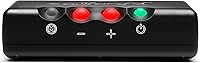
Overview
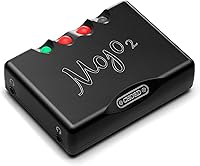
The Chord Electronics Mojo 2 is Chord's follow-up to one of the most talked-about portable DAC/amps in audiophile circles, and it builds on that legacy with meaningful improvements rather than just a fresh coat of paint. Where the original turned heads, this portable DAC/amp refines the formula — better DSP modes, enhanced processing, and the same compact, pocketable body that slips into a jacket pocket without fuss. It works equally well on a desk or on a train. That said, this is not an impulse purchase. It rewards patient listeners who are serious about what they hear, and there is a learning curve involved in getting the most out of it.
Features & Benefits
The engineering inside this Chord device is what separates it from most portable competitors. Chord's custom FPGA chip runs a WTA filter with 40,960 taps — that level of signal processing is usually the domain of serious desktop hardware. In practical terms, it means timing accuracy and low-level detail that you can actually hear, not just measure. The output impedance of 0.06Ω is particularly significant for IEM users; sensitive in-ears that hiss through lesser amps stay dead quiet here. Add in four distinct input types, dual headphone outputs for sharing a listen, and a dynamic range of 125.7 dB, and this portable DAC/amp covers almost every source and headphone pairing imaginable.
Best For
This portable DAC/amp is built for people who genuinely care about how their music sounds, not just whether it plays. If you are running demanding over-ear headphones from a laptop at a desk or a pair of sensitive IEMs from a phone during a commute, this Chord device handles both scenarios with equal confidence. Frequent travelers who carry quality headphones will find real value in something this capable at this size. It also suits home listeners who want near-desktop sound quality without dedicating shelf space to a full stack. If you are upgrading from a mid-range portable DAC, the jump in resolution and control is immediately noticeable.
User Feedback
Owner sentiment around this Chord device is largely positive, with soundstage and detail drawing consistent praise — listeners regularly describe a sense of space and precision that surprises them coming from something this small. The dual headphone jacks are a quiet favorite, practical in a way that rarely gets enough credit. The criticisms that surface most reliably are the colored-ball interface, which controls volume and DSP modes through an unconventional system that takes real time to learn, and the Micro-USB charging port. At this price tier, a USB-C port is a reasonable expectation, and its absence is a genuine frustration. Battery life is workable for shorter sessions but trails some competitors.
Pros
- Sound imaging and detail retrieval rival desktop DACs costing significantly more.
- The 0.06Ω output impedance keeps even the most sensitive IEMs completely silent.
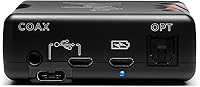
- Four distinct inputs — optical, coaxial, Micro-USB, and USB-C — cover nearly every source without extra gear.
- Dual headphone outputs let two people listen simultaneously, a rare and practical feature.
- Drives power-hungry over-ear headphones with genuine authority, not just adequate volume.
- At 10.9 ounces and pocket-sized dimensions, it travels without becoming a burden.
- Long-term owners rarely regret the purchase, consistently citing it as a lasting upgrade.
- The expanded DSP modes offer real tuning flexibility for those willing to learn the interface.
Cons
- The colored-sphere interface has a steep learning curve that frustrates many new buyers for days.
- Micro-USB charging feels genuinely outdated at this price point — a USB-C port is a reasonable expectation.
- Battery life on a single charge does not comfortably cover full-day use without access to power.
- No balanced headphone output at any connector standard, which competitors at this tier increasingly offer.
- iOS users need an additional adapter to connect, adding cost and one more item to carry.
- The casing scratches with regular pocket carry more easily than the price bracket implies.
- DSP features are largely wasted on buyers who never invest time in learning the system.
- Optical input is limited to 96kHz/24-bit, falling short of the USB input ceiling for hi-res sources.
Ratings
The Chord Electronics Mojo 2 scores here reflect an AI-driven analysis of verified global buyer reviews, with spam, bot activity, and incentivized feedback actively filtered out before scoring. Across thousands of real-world impressions from commuters, desktop listeners, and dedicated audiophiles, this portable DAC/amp earns high marks where it counts most — while its genuine friction points are represented just as transparently.
Sound Quality
Portability & Form Factor
IEM Compatibility
Build Quality
Input Versatility
Amplification Power
Ease of Use & Interface
Battery Life
Charging Port & Connectivity
Value for Money
Desktop DAC Performance
Headphone Output Count
Source Compatibility
DSP & Filters
Suitable for:
The Chord Electronics Mojo 2 is built for listeners who have outgrown what a phone or laptop can do on its own and are ready to hear what their headphones are actually capable of. If you own a quality pair of over-ear headphones or sensitive in-ear monitors and you want them driven properly — whether at a desk, on a long-haul flight, or during a daily commute — this portable DAC/amp was designed exactly for that scenario. Audiophiles who want one device that works convincingly as both a portable rig and a compact desktop solution will find it handles both without compromise. It also suits anyone upgrading from an entry-level dongle DAC who wants a substantial and lasting improvement rather than a marginal one. Those already invested in the Chord ecosystem, or considering adding the Poly wireless streamer down the line, will find the Mojo 2 integrates naturally into that setup.
Not suitable for:
The Chord Electronics Mojo 2 is not the right call for casual listeners who just want music to sound a little better than their phone speaker — the price demands genuine engagement with what you are buying. If you have never owned a dedicated DAC/amp and are uncertain whether you will notice the difference, this is a steep entry point for an experiment. Buyers who rely entirely on USB-C accessories will hit an immediate frustration with the Micro-USB charging port, and if cable convenience matters to you daily, that friction compounds quickly. Those who need all-day untethered battery life from a single charge — on hiking trips or international travel without a power bank — should look at alternatives with larger batteries. Anyone expecting a balanced headphone output, or shopping based purely on spec-sheet comparisons with competing products that offer 4.4mm connections, may feel this Chord device leaves something on the table despite its sonic strengths.
Specifications
- Form Factor: Portable DAC and headphone amplifier designed for both mobile and desktop use.
- Dimensions: The unit measures 3.26 x 2.44 x 0.9 inches, making it genuinely pocketable for daily carry.
- Weight: Weighs 10.9 ounces — substantial enough to feel premium, light enough for travel.
- Dynamic Range: 125.7 dB A-weighted dynamic range, a figure that competes directly with high-end desktop DACs.
- Distortion: Total harmonic distortion measures 0.00027% at 2.5V into 300 ohms, vanishingly low in real-world listening terms.
- Noise Floor: Noise measures 2.7 uV A-weighted with no measurable noise floor modulation under signal.
- Output Impedance: Output impedance is 0.06Ω, ensuring compatibility with even the most sensitive in-ear monitors without audible hiss.
- Power Output: Delivers 90mW into 300 ohms and 600mW into 30 ohms, covering everything from IEMs to demanding planar headphones.
- WTA Filter: Custom FPGA-based WTA filter runs across 40 DSP cores with 40,960 filter taps for precision signal reconstruction.
- Stereo Separation: Stereo separation measures 118 dB at 1kHz into 300 ohms at 2.5V, preserving fine channel distinction in complex recordings.
- Audio Inputs: Accepts signal via Micro-USB (768kHz/32-bit), USB-C dual-data coaxial (768kHz/32-bit), optical TOSLINK (96kHz/24-bit), and 3.5mm coaxial.
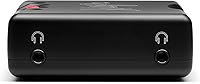
- Headphone Outputs: Features two independent 3.5mm headphone jacks, allowing simultaneous listening for two users.
- Charging Port: Uses a dedicated 1A Micro-USB port for charging, kept separate from the audio input ports.
- Compatibility: Works with personal computers, laptops, smartphones, and tablets across major operating systems without requiring proprietary drivers.
- Manufacturer: Designed and manufactured by Chord Electronics, based in the United Kingdom.
Related Reviews
Bryght Labs ChessUp 2 Electronic Chess Board
Dual Electronics DBTMA100 Bluetooth Amplifier
Refrigmatic MEGA Refrigerator Surge Protector
dockteck DH0002 M.2 NVMe/SATA SSD Enclosure

Waxness Spa Choice Natural Honey Gel Hard Wax Beads 2.2 lb / 1 kg Pack of 2

Nécessaire The Hand Cream, 2.2 fl oz
Planet Audio AC1200.2 2-Channel Car Amplifier
Asustor Drivestor 2 Lite AS1102TL NAS
SUIDEK SJW-KM202B Dual Monitor KVM Switch