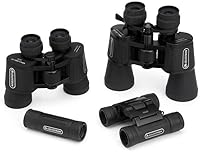
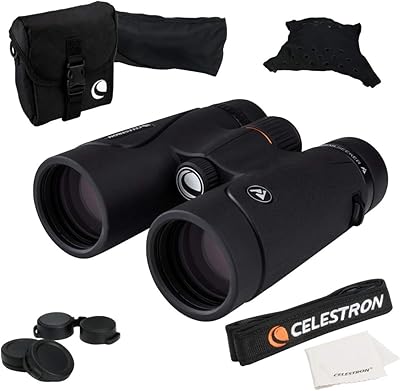
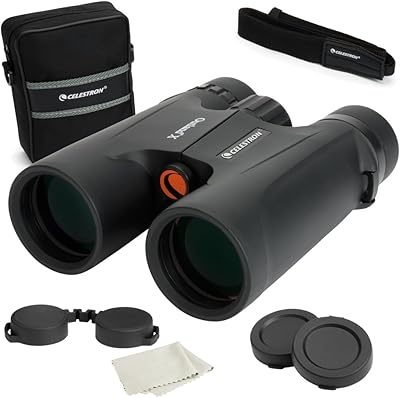
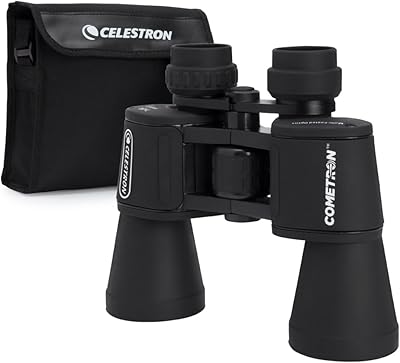
Overview

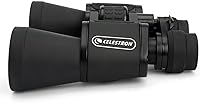
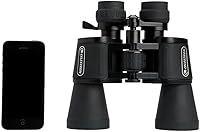
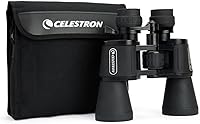
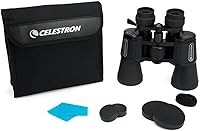
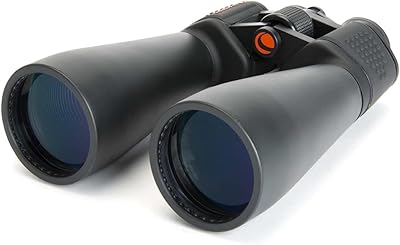
The Celestron UpClose G2 10-30x50 Binoculars represent Celestron's entry point into zoom optics — a brand that has been building telescopes and binoculars since 1960. These zoom binoculars sit firmly in the budget tier, targeting casual outdoor enthusiasts who want flexibility without a major investment. The porro prism design uses BK-7 glass, standard at this price range, and the rubber-armored body keeps things sturdy without adding unnecessary weight. A soft carrying case and neck strap come included, a practical bonus for day hikes or travel days when you want to pack light and keep gear organized.
Features & Benefits

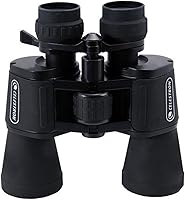
The standout feature of these zoom binoculars is the variable magnification — you can pull back to 10x for a wide, stable view or push in to 30x when something catches your eye in the distance. The 50mm objective lenses do a solid job gathering light, producing noticeably brighter images than smaller lenses typically manage. Multi-coated optics reduce internal glare and improve contrast, especially useful when scanning bright skies or open water. Eye relief is a generous 20mm at 10x, though eyeglass wearers should note it drops to 15mm at full zoom. The wide IPD range accommodates most adult users without any fuss.

Best For

The UpClose G2 50mm makes the most sense as a first pair of binoculars for someone who wants to cover multiple activities — bird watching one weekend, a stadium event the next. The zoom ring removes the need to carry multiple fixed-power pairs, which hikers and travelers genuinely appreciate. It also works reasonably well for hunters scanning terrain at varying distances without swapping gear. That said, experienced birders accustomed to sharp, fixed-power optics may find the zoom mechanism and soft edges at high magnification limiting. This Celestron pair rewards the casual user who values versatility over precision.

User Feedback

Across hundreds of reviews, a recognizable pattern emerges. Buyers consistently praise the image clarity at 10x, describing views as bright and wide enough for relaxed scanning. The carrying case earns little fanfare but gets the job done. Where opinions split sharply is the 30x end — many users report that images become soft and genuinely hard to hold steady without a tripod. Mounting these on a tripod helps significantly, and that adapter thread is there to use. The zoom ring also drew gripes about stiffness over time. On the upside, Celestron's warranty coverage and responsive customer support are cited repeatedly as reasons buyers feel confident in the purchase.

Pros

  • Variable 10x to 30x zoom means one pair covers bird watching, sports, hiking, and more without switching gear.
  • 50mm objective lenses pull in noticeably more light than smaller alternatives, helping in overcast or low-angle sun conditions.
  • At 10x, the wide field of view makes tracking moving birds or wildlife far less frustrating for beginners.
  • The rubber-armored aluminum body handles everyday outdoor bumps and drops better than it looks like it should.
  • Celestron's lifetime warranty and US-based support add real long-term peace of mind at this price tier.
  • Water-resistant housing shrugs off unexpected rain showers without requiring a mad dash for cover.
  • At 1.75 pounds, these zoom binoculars are light enough for all-day carry on a neck strap without fatigue.
  • The built-in tripod adapter thread is a legitimate upgrade path — mount these on a basic tripod and 30x becomes genuinely usable.
  • The wide IPD range fits most adult face widths without uncomfortable squinting or alignment fussing.

Cons

  • At 30x, handheld images are shaky and soft enough that the zoom range is effectively limited in real-world use.
  • The zoom ring stiffens over time on some units, making smooth magnification adjustments harder after extended use.
  • Eye relief drops to 15mm at full zoom, leaving eyeglass wearers with a noticeably clipped field of view.
  • The included soft case provides little actual protection — more of a dust bag than a carrying solution.
  • Edge sharpness is noticeably weaker than center sharpness, which bothers buyers upgrading from better fixed-power optics.
  • Close focus distance jumps to 45 feet at 30x, ruling out nearby subjects entirely at high magnification.
  • BK-7 prism glass introduces some chromatic fringing at higher zoom levels that becomes distracting against bright backgrounds.
  • The water resistance covers light drizzle only — submersion, heavy rain, or marine environments are not realistic use cases.

Ratings

The scores below for the Celestron UpClose G2 10-30x50 Binoculars were generated by AI after analyzing thousands of verified global user reviews, with spam, incentivized, and bot-flagged submissions actively filtered out. Each category reflects a balanced read of real buyer experiences — strengths and frustrations alike — so you can make a genuinely informed decision before purchasing.
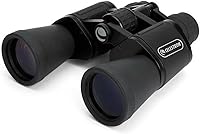
Image Clarity at Low Magnification
83%
At 10x, most buyers describe the view as bright, wide, and sharp enough to track birds in flight or follow wildlife through open terrain. The 50mm objective lenses pull in enough light that images hold up reasonably well even on overcast mornings.
Sharpness is noticeably better toward the center of the field than at the edges, a common limitation of BK-7 porro prism optics at this price tier. Users with high expectations from prior fixed-power binoculars sometimes find the peripheral softness distracting.
Image Clarity at High Magnification
52%
48%
Pushing to 25x or 30x does bring distant subjects closer, which casual users find satisfying for occasional long-range scanning at a sporting event or open landscape.
This is where the most consistent complaints surface. At 30x, images go noticeably soft, chromatic fringing becomes visible, and hand-holding becomes nearly impractical. Without a tripod, the 30x end is largely unusable for most people in real outdoor conditions.
Zoom Mechanism
61%
39%
The twist-style zoom ring allows on-the-fly magnification adjustments without removing the binoculars from your eyes, which is genuinely handy when a subject moves unpredictably in the field.
A meaningful number of reviewers report that the zoom ring stiffens over time, requiring more force to turn smoothly. Others note imprecise detenting, making it hard to return to a reliable magnification setting repeatably.
Build Quality & Durability
74%
26%
The rubber-armored aluminum housing feels solid in hand and absorbs minor impacts from everyday outdoor use. The grip texture works well even with gloves, and the overall construction feels more substantial than the price might suggest.
It is not a fully waterproof unit — the water resistance is surface-level, fine for unexpected drizzle but not prolonged exposure. Some users noted that the rubber coating near the eyecups started to peel after extended daily use.
Value for Money
81%
19%
For a first pair of zoom binoculars, the price-to-feature ratio is hard to argue with. You get variable magnification, a recognizable brand, a lifetime warranty, and a carrying case — a package that beats many comparably priced competitors.
Buyers who push beyond casual use tend to feel the limitations quickly and find themselves wanting to upgrade. At that point, the initial savings feel less impactful, since the step up to quality fixed-power optics involves spending considerably more.
Low-Light Performance
67%
33%
The 50mm objectives do a meaningful job in dim conditions compared to 42mm or 35mm alternatives. Early morning wildlife observation and dusk birdwatching sessions see noticeably usable brightness at the lower magnification settings.
At higher zoom levels, the effective exit pupil shrinks significantly, and low-light performance drops off sharply. Users expecting usable 30x views near dawn or dusk will be disappointed — that use case simply is not realistic with this optical setup.
Portability & Comfort
78%
22%
At 1.75 pounds, these zoom binoculars are light enough for all-day neck carry on a hike or nature walk without causing fatigue. The included neck strap is functional, and the compact folded dimensions fit easily into a day pack.
Extended handheld use at high magnification becomes tiring quickly due to the physical effort required to stabilize the image. A few users found the eyecup design slightly uncomfortable during prolonged viewing sessions.
Eye Relief & Eyeglass Compatibility
63%
37%
The 20mm eye relief at 10x is generous and genuinely comfortable for users without glasses, allowing relaxed, full-field viewing over extended sessions in the field.
Eye relief drops to 15mm at full 30x zoom, which creates real challenges for eyeglass wearers trying to see the complete field of view. This is a notable limitation that spectacle users should factor into their decision.
Field of View
71%
29%
At 10x, the 4.3-degree field of view translates to 225 feet at 1000 yards — wide enough to track fast-moving birds or scan a hillside comfortably without constant panning.
Zooming in collapses the field of view dramatically to just 115 feet at 30x, making it harder to locate and follow subjects. Users new to zoom optics sometimes find this narrowing disorienting until they develop the habit of locating first at low power.
Close Focus Performance
58%
42%
At 10x, the 26-foot minimum focus distance works acceptably for observing birds at a feeder or wildlife in a clearing, covering the most common casual use scenarios without issue.
The close focus distance jumps to 45 feet at 30x, which significantly limits usefulness for nearby subjects at full zoom. Butterfly watchers or anyone hoping to observe close subjects with high magnification will find this range frustrating.
Accessories & Packaging
55%
45%
The included soft carrying case and neck strap are practical extras that make the package feel complete out of the box, particularly for buyers who are new to binoculars and do not yet own any accessories.
The carrying case is thin and offers minimal padding — it is really just a dust cover rather than genuine protective storage. Several buyers mentioned replacing it quickly with a sturdier third-party case after the first outing.
Tripod Adaptability
76%
24%
The built-in tripod adapter thread is a legitimately useful feature at this price point. Mounting these on even a basic tripod transforms the 30x experience, eliminating handshake and making distant viewing far more practical.
The adapter is not prominently communicated, and many buyers do not realize it exists until they dig into the specs. First-time owners who hand-hold at 30x and give up may be missing out on a straightforward solution.
Warranty & Brand Support
88%
Celestron's Limited Lifetime US Warranty stands out as a genuine confidence booster in this price category. Multiple reviewers specifically mentioned that responsive, knowledgeable US-based support resolved their issues quickly and without friction.
The warranty covers manufacturing defects but not accidental damage, which is standard but worth noting. A small number of international buyers noted the US-centric support model created some delays in getting resolution.

Suitable for:

The Celestron UpClose G2 10-30x50 Binoculars are an honest, practical choice for anyone stepping into the world of optics for the first time and wanting one pair that handles multiple activities without committing to a specialist tool. Casual bird watchers who enjoy weekend nature walks will appreciate the ability to zoom in on a distant perch without swapping equipment, and the wide field of view at 10x makes locating fast-moving subjects far less frustrating than it would be at fixed high magnification. Hikers and travelers who want a lightweight single optic in their pack — rather than two or three purpose-built pairs — will find the zoom flexibility genuinely useful across varied terrain. Sports fans attending outdoor events, hunters scanning open fields, and concertgoers who want the occasional close-up view all fit naturally into this product's wheelhouse. If you plan to pair these with a basic tripod for extended high-magnification viewing, that combination unlocks considerably more utility than handheld use alone.
Not suitable for:

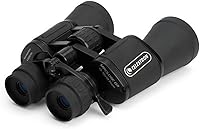
Buyers who already own quality fixed-power binoculars and are looking for a meaningful upgrade will likely find the Celestron UpClose G2 10-30x50 Binoculars a step sideways rather than forward. Serious birders, wildlife photographers scouting distant subjects, or anyone who demands edge-to-edge sharpness and consistent optical performance across the full zoom range will run into real limitations here — particularly at the 25x to 30x end, where image softness and chromatic fringing become hard to ignore. Eyeglass wearers should factor in the reduced eye relief at full zoom, which makes achieving a full field of view uncomfortable over longer sessions. Those planning primarily low-light or dawn and dusk observation at high magnification will find the exit pupil at 30x simply too small to deliver useful brightness. And buyers who want rugged, submersion-level waterproofing for kayaking, marine use, or heavy rain should look elsewhere — the water resistance here covers a light drizzle, not a downpour.
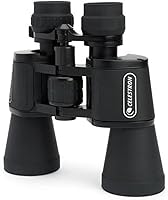
Specifications

  • Magnification: Variable zoom ranges from 10x to 30x, allowing users to adjust magnification continuously without removing the binoculars from their eyes.
  • Objective Lens: 50mm objective lenses gather substantial light for brighter, more detailed images compared to smaller 42mm or 35mm alternatives.
  • Prism Type: Porro prism configuration using BK-7 glass, a standard optical glass grade commonly found in entry-level and mid-range binoculars.
  • Lens Coating: Multi-coated optics apply anti-reflective coatings to multiple lens surfaces, improving contrast and reducing internal glare across the zoom range.
  • Field of View: Field of view measures 4.3° (225 ft at 1000 yds) at 10x and narrows to 2.2° (115 ft at 1000 yds) at 30x.
  • Close Focus: Minimum focus distance is 26 ft at 10x magnification and extends to 45 ft at the 30x end of the zoom range.
  • Eye Relief: Eye relief is 20mm at 10x magnification and decreases to 15mm at 30x, which is a practical consideration for eyeglass wearers.
  • IPD Range: Interpupillary distance adjusts between 56mm and 72mm, accommodating the full range of typical adult eye spacing.
  • Water Resistance: The exterior housing is water-resistant, providing protection against light rain and humidity but is not rated for submersion or heavy water exposure.
  • Tripod Mount: A built-in tripod adapter thread allows the binoculars to be mounted on a standard photography tripod for stable high-magnification viewing.
  • Housing Material: The body is constructed from aluminum and covered in rubber armor, providing impact resistance and a secure non-slip grip surface.
  • Weight: The unit weighs 1.75 pounds, making it manageable for extended handheld use or all-day neck-strap carry during outdoor activities.
  • Dimensions: Physical dimensions measure 3.2 x 6.3 x 7.3 inches in the folded, ready-to-carry position.
  • Included Items: Each unit ships with a soft carrying case and a built-in neck strap; no separate eyepiece caps or objective covers are specified.
  • Warranty: Covered by Celestron's Limited Lifetime US Warranty with access to US-based customer and technical support.
  • Manufacturer: Produced by Celestron, an optics manufacturer based in California that has been making telescopes and binoculars since 1960.

Related Reviews
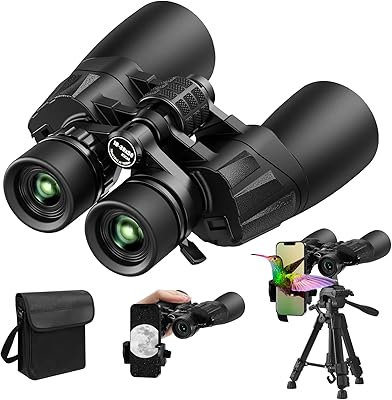
EEDABROS 10-30x50 Zoom Binoculars Pro+
76%
82%
Optical Clarity
78%
Zoom Range Usability
71%
Low-Light Performance
76%
Build Quality & Durability
84%
Waterproofing & Weather Resistance
More
Celestron SkyMaster 25x70 Binoculars
75%
84%
Optical Clarity
91%
Light Gathering
79%
Magnification Performance
72%
Build Quality
58%
Collimation Consistency
More
Celestron SkyMaster 25x100 Binoculars
76%
88%
Optical Brightness
79%
Image Sharpness & Clarity
53%
Optical Alignment Out of Box
67%
Chromatic Aberration
82%
Build Quality & Durability
More
Celestron TrailSeeker 8x42 Binoculars
82%
91%
Optical Clarity
93%
Field of View
88%
Build Quality
74%
Focusing Mechanism
78%
Eyecup Comfort & Usability
More
Celestron Outland X 10x50 Binoculars
81%
88%
Optical Clarity
83%
Low-Light Performance
86%
Build Quality
84%
Weather Resistance
91%
Value for Money
More
Celestron EclipSmart 10x25 Solar Binoculars
79%
94%
Solar Filter Safety
78%
Optical Clarity
91%
Ease of Use
83%
Build Quality
89%
Portability & Form Factor
More
Celestron Outland X 8x42 Binoculars
82%
88%
Optical Clarity
83%
Low-Light Performance
91%
Field of View
86%
Build Quality
89%
Weather Resistance
More
Celestron Cometron 7x50 Binoculars
81%
73%
Optical Clarity
84%
Light Gathering
89%
Field of View
71%
Build Quality
91%
Value for Money
More
Celestron Nature DX 10x42 Binoculars
82%
86%
Optical Clarity
83%
Build Quality
89%
Weather Resistance
91%
Value for Money
88%
Ease of Focus
More
Celestron SkyMaster 15x70 Astronomy Binoculars
83%
92%
Optical Performance
88%
Build Quality
91%
Value for Money
78%
Ease of Use
75%
Weight & Portability
More

FAQ

Honestly, not very well. At 30x, any natural hand tremor is amplified significantly, making the image jittery and hard to follow. Most real-world users find the upper end of the zoom range genuinely usable only when the binoculars are mounted on a tripod. If you plan to use the full zoom range, budget for even an inexpensive tripod.

You can, but with some caveats. The eye relief at 10x is a comfortable 20mm, which works fine for most glasses wearers. However, at 30x the eye relief drops to 15mm, which makes seeing the full field of view trickier. You may need to fold back the eyecups and press your glasses closer to the lens to get a complete picture.

There is a built-in adapter thread on the front of the body, typically covered by a small rubber plug. Remove that plug, and you can screw in a standard binocular-to-tripod adapter, then mount the whole assembly onto any photography tripod. Many users are not aware this feature exists, but it makes a real difference at higher magnifications.

They are not really optimized for astronomy. Zoom binoculars tend to have narrower maximum apertures relative to dedicated astronomy models, and the 30x end is too shaky to track stars without a very stable mount. For casual moon viewing at 10x on a tripod, they can be fun, but dedicated stargazers should look at fixed wide-angle astronomy binoculars instead.

Start at 10x and use the central focus wheel to bring a distant subject into sharp focus for your dominant eye. If the binoculars have a diopter adjustment on one eyepiece, use it to fine-tune sharpness for your other eye independently. Once both eyes are aligned, you should only need to use the central focus wheel going forward.

They are water-resistant, not waterproof. Light rain and the occasional splash are generally fine, but you should not submerge them or expose them to sustained heavy rainfall. For marine or kayaking use, a fully waterproofed and fog-proofed pair rated to a specific depth would be a safer investment.

Some stiffness when new is fairly typical with zoom binoculars and often loosens slightly with regular use. However, if it feels unusually tight or gets harder to turn over time, that is a commonly reported issue with this model. Celestron's customer support and warranty coverage are worth contacting if the mechanism becomes difficult enough to affect normal use.

BAK-4 glass generally produces slightly better light transmission and a cleaner circular exit pupil, while BK-7 can show a faint squared-off edge to the exit pupil at certain eye positions. For casual use at 10x to 15x, most people would not notice the difference. At higher magnifications or in low-light conditions, BAK-4 has a measurable edge, but it is typically found in pricier models.

At 10x with a reasonably clear view, you can expect to make out good field detail on a bird up to about 200 to 300 feet away depending on lighting and the bird's size. At higher magnification on a tripod, you can resolve subjects considerably farther out, though image quality at 30x will limit fine detail. For backyard bird watching or open habitat birding, the 10x to 15x range is where these perform best.

Not much beyond keeping dust off. The included soft case is thin and unpadded, so it is really more of a storage sleeve than a protective case. If you plan to toss these in a bag or check them in luggage, picking up a small padded hard case separately is a worthwhile small investment to avoid damage over time.