Overview

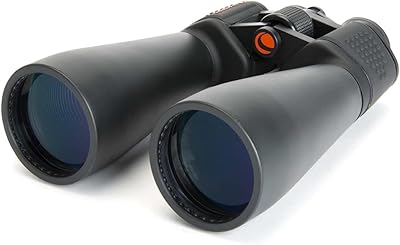
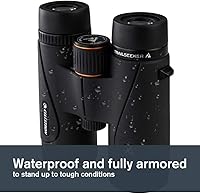
The Celestron TrailSeeker 8x42 Binoculars sit in a sweet spot that serious outdoor enthusiasts tend to appreciate — capable enough to satisfy a demanding birder, yet priced well below professional-tier glass. Celestron has been building optics since 1960, and that experience shows in the overall refinement of this model. The 8x42 configuration is a tried-and-true choice: eight times magnification is forgiving enough to hold steady by hand, while the 42mm objective lens pulls in solid light even as the sun drops. At 1.45 pounds with a magnesium alloy frame, it is not ultralight, but it feels solid without being burdensome on a long hike. The waterproof and fogproof sealing means you are not watching the sky nervously when clouds roll in.
Features & Benefits

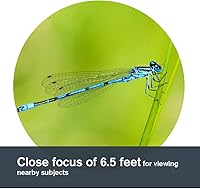
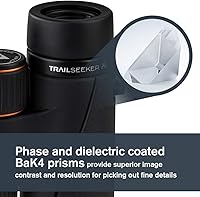
The optical stack is where the TrailSeeker 8x42 earns its keep. BaK-4 prisms with both phase and dielectric coatings are typically found on pricier glass — they improve color accuracy and contrast in a way that is immediately noticeable compared to budget binoculars. Combine that with fully multi-coated lenses on every surface, and you get an image that looks bright and clean rather than washed-out. The 8.1° field of view is genuinely wide; you can pan across a treeline and pick up a moving bird without constantly readjusting. A 6.5-foot close focus is a nice bonus for butterfly watchers. Metal twist-up eyecups with multiple lock positions and 17mm of eye relief round things out for comfortable extended viewing.

Best For

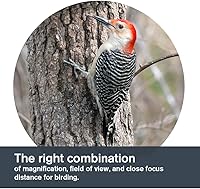
These binoculars make the most sense for birders, hikers, and nature observers who want optical quality that genuinely improves their experience without committing to a professional price point. The wide field of view is a particular strength for birding — spotting and tracking a warbler through branches is considerably easier when you are not fighting a narrow window. All-weather reliability makes them a solid pick for sports fans and wildlife watchers too. If you are upgrading from a basic pair and want to feel the difference that proper coatings make, this Celestron model delivers that shift clearly. It is less ideal if your priority is the absolute lightest pack weight on the market.

User Feedback

Across several hundred verified ratings, the TrailSeeker 8x42 holds a strong 4.6-star average, and the praise follows consistent themes: image sharpness and color rendering get mentioned repeatedly, as does build quality relative to the price. Birders in particular seem pleased with how easy it is to locate and follow subjects. That said, a handful of reviewers have noted the focusing wheel can feel slightly stiff, and a few have flagged minor eyecup wobble after extended use — nothing major, but worth knowing going in. Buyers who compared it against similarly priced Vortex options found optical performance roughly comparable, with preferences splitting on ergonomics. Collimation issues are rarely reported, which speaks well of consistency off the production line.

Pros

  • BaK-4 prisms with phase and dielectric coatings deliver noticeably better contrast than entry-level glass.
  • The 8.1-degree field of view makes locating and tracking birds in dense cover far less frustrating.
  • Waterproof and fogproof sealing holds up reliably through rain, humidity, and coastal conditions.
  • Magnesium alloy construction feels substantive and well-built without excessive weight.
  • 17mm eye relief is genuinely comfortable for extended sessions, especially for eyeglass wearers.
  • Close focus at 6.5 feet opens up practical use for butterflies and nearby nature subjects.
  • Metal multi-stop eyecups outlast plastic alternatives and lock securely into position.
  • Low-light performance at dusk is meaningfully better than budget 42mm options at a similar aperture.
  • Backed by a lifetime warranty and responsive US-based customer support.
  • Optical sharpness relative to the price point holds up well against similarly priced Vortex and Nikon alternatives.

Cons

  • Focus wheel can feel stiff and heavy in cold weather, requiring more effort than expected.
  • Eyecup twist mechanism tends to loosen over months of regular use, losing its firm detent feel.
  • Included neck strap is thin and uncomfortable on outings longer than an hour or two.
  • Lens caps fit loosely and are easy to lose in the field within the first few uses.
  • A small proportion of units arrive with minor collimation issues that cause eye fatigue.
  • Rubber armoring accumulates grime in the grip texture and is harder to clean than it looks.
  • Edge sharpness falls off noticeably compared to higher-tier glass when viewed side by side.
  • At 1.45 pounds, it is on the heavier side for a binocular carried neck-mounted all day.
  • The carrying case offers basic protection but does not feel as solid as the binoculars themselves.

Ratings

The Celestron TrailSeeker 8x42 Binoculars have been scored below by our AI system after analyzing verified purchase reviews from buyers worldwide — filtering out incentivized, duplicate, and bot-generated submissions to reflect only genuine user experiences. Across birding trips, hiking excursions, and casual wildlife watching, these binoculars drew consistent feedback on both their optical strengths and a handful of ergonomic limitations that are worth knowing before you buy.
Optical Clarity
91%
Users consistently single out the sharpness and color accuracy as the most noticeable upgrade from entry-level glass. Center sharpness holds well even at distance, and the contrast boost from the dielectric coatings becomes especially apparent when scanning a bright sky or watching birds in dappled forest light.
A small number of reviewers noticed some edge softening at the periphery of the field, which can be distracting during wide panning. It is not a dealbreaker for most, but buyers used to higher-end optics may find it a minor frustration.
Field of View
93%
The 8.1-degree field of view is one of the most praised practical features among birders and wildlife watchers. Being able to sweep across a treeline or open meadow and actually keep a moving subject in frame without constant microadjustments makes real-world use noticeably more relaxed and enjoyable.
There are very few complaints here — it is genuinely one of the stronger specs in this price bracket. The only context where buyers felt underwhelmed was when directly comparing to a small number of specialty wide-angle models that push past 8.5 degrees.
Build Quality
88%
The magnesium alloy chassis feels substantive and well-assembled straight out of the box. Reviewers who have hiked in rain, dusty trails, and humid coastal environments report that the waterproof and fogproof sealing holds up reliably without any babying required.
Some buyers noted that the rubber armoring around the body can collect grime in the grip texture over time, and a handful reported minor cosmetic scuffs appearing earlier than expected. Nothing structural, but the finish is not quite as scratch-resistant as the overall build might imply.
Focusing Mechanism
74%
26%
The central focus wheel is responsive and reasonably precise for a mid-range binocular, covering a full rotation without excessive play. Most users found it easy to dial in on subjects at varying distances during casual birding sessions without overshooting.
Stiffness in the focus wheel is the most frequently mentioned mechanical gripe — particularly in colder temperatures where the feel becomes notably heavier. A few reviewers also flagged that the focus action was inconsistent across units, suggesting slight production variance.
Eyecup Comfort & Usability
78%
22%
The metal multi-stop twist-up eyecups are a genuine upgrade over the flimsy plastic versions found on cheaper binoculars. Eyeglass wearers appreciated having reliable detents to lock into, and bare-eye users found the extended position comfortable during long observation sessions.
Eyecup wobble after repeated use was flagged in several reviews — the twist mechanism can loosen over time, losing the firmness of its stop positions. It does not break outright, but the feel degrades in a way that becomes noticeable after months of regular use.
Eye Relief
87%
At 17mm, eye relief is genuinely generous for this class of binocular. Eyeglass wearers in particular noted they could maintain the full field of view without pressing the eyecups uncomfortably against their lenses, which is not a given in this price range.
There is not much criticism here specifically. The main nuance is that users with unusually small or large interpupillary distances occasionally needed extra time to dial in the right position before the full field opened cleanly.
Close Focus Performance
84%
The 6.5-foot close focus distance opened up use cases that buyers did not necessarily expect when purchasing. Butterfly enthusiasts and macro-nature observers mentioned this specifically as a surprise bonus, with subjects at arm's length resolving clearly without distortion.
A small number of users found that focus precision at very close range was harder to maintain — the depth of field narrows quickly and the focus wheel requires more finesse. Not a flaw by design, but something to be aware of if close-range use is a primary need.
Weight & Portability
79%
21%
At 1.45 pounds, these binoculars strike a reasonable balance for a full-size 42mm model. Day hikers and birders who carry them neck-mounted for several hours generally report manageable fatigue, especially with a quality harness rather than the stock neck strap.
For ultralight-focused backpackers or anyone counting grams, there are lighter 8x32 or compact alternatives worth considering. A few reviewers who switched from compact binoculars mentioned the extra weight took adjustment, particularly on longer treks.
Low-Light Performance
82%
18%
The 42mm objective lens and fully multi-coated glass work together noticeably well at dusk — users watching deer at dawn or birds during golden hour commented that the image stayed bright and usable longer than they anticipated at this price tier.
While solid for the category, low-light performance does not match what you get from premium 42mm glass with superior coatings. In deep shade or overcast conditions, the image can look slightly flat compared to higher-end competitors in the same aperture class.
Value for Money
86%
Buyers who researched the market before purchasing consistently noted that the optical spec sheet — particularly BaK-4 prisms with phase and dielectric coatings — is difficult to match at this price point. Several reviewers made direct comparisons to Vortex and Nikon models in the same range and found the optics competitive.
A small segment of reviewers felt the price had crept into territory where a modest stretch would unlock meaningfully better options from competitors. Buyers who did not do comparison research occasionally felt the accessories — strap, case, lens caps — did not quite match the quality of the optics themselves.
Ergonomics & Grip
76%
24%
The body shape fits most adult hands naturally, and the rubber armoring provides enough grip to hold steadily even in wet conditions. Users with average-sized hands rarely mentioned any discomfort during a typical day of use in the field.
Buyers with smaller or larger hands noted the grip contours felt slightly off for their size — neither accommodating nor terrible, just neutral. The bridge design was occasionally mentioned as slightly bulky compared to slimmer competitors at similar weight.
Collimation Consistency
83%
Out-of-box collimation — meaning both barrels aligned so the image fuses correctly without eye strain — was reported as correct by the large majority of buyers. This is not something to take for granted at this price, and Celestron seems to maintain reasonable production consistency.
A small but notable minority reported subtle collimation issues on arrival, causing mild headaches during extended use. These cases were infrequent enough to suggest unit variance rather than a systemic flaw, but it is worth doing a quick test shortly after purchase.
Accessories & Packaging
63%
37%
The binoculars arrive with a carrying case, lens covers, neck strap, and cleaning cloth — a complete starter kit that means most buyers can head into the field immediately. The hard case in particular got positive mentions for being reasonably protective.
The quality of the included accessories sits firmly at functional-but-basic. The stock neck strap is thin and uncomfortable on longer outings, and the lens covers are loose enough that several users lost them quickly. Most serious users end up replacing both.
Warranty & Support
89%
Celestron backs these binoculars with a limited lifetime warranty and US-based support, which gave buyers real confidence. Reviewers who needed to contact customer service generally reported prompt, helpful responses — a meaningful differentiator in the optics category.
A few international buyers noted that warranty service logistics outside the US were less straightforward, with longer turnaround times. The warranty terms cover manufacturing defects clearly, but accidental damage falls outside coverage, which surprised some users.

Suitable for:

The Celestron TrailSeeker 8x42 Binoculars are a strong match for birders, hikers, and nature enthusiasts who want optical quality that punches above its price class without requiring a professional-level budget. If you have been using a basic sub-100-dollar pair and want to understand what better glass actually feels like in the field, this is one of the more convincing upgrades available at this price tier — the difference in contrast and image brightness is immediately apparent, not just on paper. The wide 8.1-degree field of view specifically benefits active birders who need to locate and track fast-moving subjects without constantly re-sweeping an area. Wildlife watchers and hikers who deal with unpredictable weather will appreciate that the waterproof and fogproof sealing is genuinely functional, not just a marketing checkbox. Eyeglass wearers who have struggled with budget binoculars cutting off their field of view will find the 17mm eye relief and multi-stop eyecups notably more accommodating. The 6.5-foot close focus distance is a quiet bonus for anyone who enjoys observing insects, butterflies, or nearby flora on the same outing.
Not suitable for:

The Celestron TrailSeeker 8x42 Binoculars are not the right choice for every buyer, and it is worth being clear about where the trade-offs land. If you are primarily a backpacker counting every ounce, these binoculars — at 1.45 pounds — are not ultralight, and a compact 8x32 option would serve your weight priorities better. Buyers who are already using professional-grade glass in the 500-dollar-and-up range will likely find the edge sharpness and low-light rendering a noticeable step down, as the optical performance is strong for the price tier but not class-leading in absolute terms. The focusing wheel stiffness that some users report in colder temperatures is worth knowing about if you plan to use these in winter conditions regularly. Anyone expecting premium-quality accessories out of the box will be disappointed — the included strap and lens caps are functional but basic, and most serious users end up replacing them. Finally, buyers who are sensitive to any eyecup mechanical loosening over time may find the gradual degradation of the twist-up stop positions frustrating with heavy daily use.
Specifications

  • Magnification: These binoculars offer 8x magnification, bringing distant subjects eight times closer while remaining steady enough to hand-hold without excessive image shake.
  • Objective Lens: The 42mm objective lens diameter provides a good balance of light-gathering capability and manageable physical size for field use.
  • Prism Type: BaK-4 roof prisms are used, a higher-density glass type that minimizes light scatter and supports a slimmer, more compact body profile than Porro-prism designs.
  • Prism Coatings: Phase-correction and dielectric coatings are applied to the prisms, improving contrast, color fidelity, and overall light transmission through the optical path.
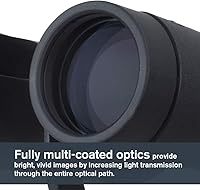
  • Lens Coatings: All optical surfaces are fully broadband multi-coated with anti-reflective coatings to reduce glare and maximize image brightness across the visible light spectrum.
  • Field of View: The field of view measures 8.1 degrees, equivalent to 426 feet at 1,000 yards, which is wide enough to track fast-moving birds or wildlife with ease.
  • Close Focus: The minimum focus distance is 6.5 feet, allowing clear observation of nearby subjects such as butterflies, insects, or close-range flora.
  • Eye Relief: Eye relief is 17mm, which is sufficient for most eyeglass wearers to maintain the full field of view without removing their glasses.
  • Eyecups: Metal multi-stop twist-up eyecups allow users to lock the eyecup at multiple positions to suit individual eye anatomy, with or without eyeglasses.
  • IPD Range: The interpupillary distance adjustment spans 55mm to 73mm, accommodating a wide range of adult facial widths comfortably.
  • Body Material: The chassis is constructed from magnesium alloy, which provides structural rigidity and impact resistance at a lower weight than comparable aluminum or polycarbonate frames.
  • Weight: The binoculars weigh 1.45 lbs (approximately 658g), placing them in the standard full-size category rather than the compact or ultralight segment.
  • Dimensions: Physical dimensions are 5 x 1.8 x 4.9 inches, making them compact enough for a daypack side pocket or a dedicated binocular harness.
  • Waterproofing: The body is fully waterproof, sealed with O-rings to prevent moisture ingress during rain, splashing, or high-humidity field conditions.
  • Fogproofing: Internal nitrogen purging prevents fogging on interior optical surfaces when moving between temperature extremes, such as from a cold car into warm, humid air.
  • Warranty: Celestron provides a limited lifetime warranty covering manufacturing defects, supported by US-based technical assistance for the life of the product.
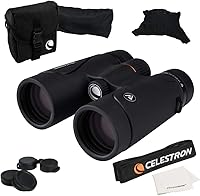
  • Included Accessories: The package includes a carrying case, lens covers for both objectives and eyepieces, a neck strap, and a lens cleaning cloth.
  • Model Number: The official model number is 71404-CGL, which can be used to verify authenticity and access support or warranty services directly through Celestron.

Related Reviews
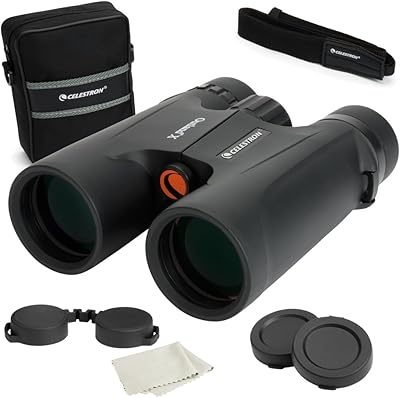
Celestron Outland X 8x42 Binoculars
82%
88%
Optical Clarity
83%
Low-Light Performance
91%
Field of View
86%
Build Quality
89%
Weather Resistance
More
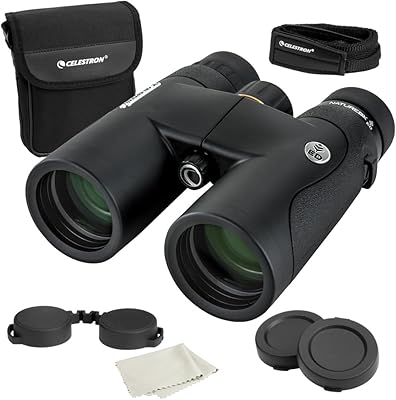
Celestron Nature DX ED 8x42 Binoculars
84%
88%
Optical Clarity
91%
Color Accuracy
83%
Low-Light Performance
86%
Build Quality
87%
Eye Relief & Comfort
More
Hontry 8x42 Binoculars
79%
83%
Optical Clarity
91%
Waterproof Performance
88%
Floating Capability
77%
Build Quality
81%
Comfort & Ergonomics
More
Celestron SkyMaster 25x100 Binoculars
76%
88%
Optical Brightness
79%
Image Sharpness & Clarity
53%
Optical Alignment Out of Box
67%
Chromatic Aberration
82%
Build Quality & Durability
More
National Geographic 8x42 Binoculars
87%
89%
Value for Money
85%
Build Quality
92%
Usability & Comfort
87%
Optical Performance
90%
Portability & Size
More
Celestron SkyMaster 25x70 Binoculars
75%
84%
Optical Clarity
91%
Light Gathering
79%
Magnification Performance
72%
Build Quality
58%
Collimation Consistency
More
Nikon PROSTAFF P3 8x42 Binocular
86%
91%
Optical Performance
95%
Waterproof/Fogproof Features
88%
Comfort for Glasses Wearers
87%
Build Quality/Durability
90%
Ease of Use for Beginners
More
Celestron Outland X 10x42 Binoculars
81%
88%
Optical Clarity
91%
Build Quality & Durability
93%
Weatherproofing
89%
Value for Money
61%
Eye Relief & Eyeglass Compatibility
More
Celestron Outland X 8x25 Binoculars
84%
92%
Portability
89%
Image Quality
90%
Waterproof Performance
87%
Ease of Use
83%
Magnification
More
Celestron EclipSmart 10x25 Solar Binoculars
79%
94%
Solar Filter Safety
78%
Optical Clarity
91%
Ease of Use
83%
Build Quality
89%
Portability & Form Factor
More

FAQ

They genuinely excel at birding. The 8.1-degree field of view is wide enough to find and follow fast-moving birds without constant readjustment, and the close focus of 6.5 feet means you can also observe subjects that are surprisingly nearby. The optical coatings help a lot in forest shade and variable light, which is where birding often happens.

Yes, for most eyeglass wearers the 17mm eye relief is sufficient. You twist the eyecups down to their lowest position, bring the binoculars up to your glasses, and the full field of view should be accessible without clipping the edges. People with unusually thick frames may need a small adjustment period, but complaints from glasses wearers are rare with this model.

It handles real field conditions well. Users have reported using these in steady rain, sea spray, and high-humidity coastal environments without any moisture getting inside. The O-ring sealing is proper waterproofing, not just splash resistance. That said, full submersion is not something these are rated for, so do not drop them in a lake and expect them to survive.

Most users find it acceptably smooth in normal temperatures, but stiffness in cold weather is a genuine and recurring complaint. If you plan to use them frequently in winter conditions — say, below freezing on a morning birding walk — the focus action can feel noticeably heavier. It loosens up as the binoculars warm from handling, but it is a real trade-off to be aware of.

Optical performance is broadly competitive across all three brands at this price tier. Reviewers who have compared them directly tend to split on preference based on ergonomics and focusing feel rather than image quality alone. Vortex has a strong reputation for customer service, and some Nikon models in this range feel slightly more refined mechanically. The Celestron holds its own optically, but if brand warranty service or focusing smoothness is your top priority, it is worth comparing hands-on before committing.

You can absolutely use them for casual stargazing. An 8x42 configuration is actually a popular choice for scanning the Milky Way, spotting lunar craters, and viewing star clusters. They are not a substitute for a telescope, but for sweeping wide areas of the night sky, the wide field of view and light-gathering of the 42mm objective are genuinely useful after dark.

Out of the box they click into position securely. Over months of regular use, some owners report that the twist mechanism begins to feel looser and the detent positions lose some of their firmness. It does not render the eyecups unusable, but it is a known wear characteristic. If you are hard on gear or use them daily, it is worth checking the eyecup feel periodically.

Use the included lens cloth for light dust removal, but for anything more serious — smudges, pollen, or moisture residue — a proper optical cleaning kit with a blower brush, lens pen, and microfiber cloth is the right approach. Avoid paper towels or clothing fabric, which can leave fine scratches on multi-coated surfaces over time. A drop of lens cleaning solution on a microfiber cloth works well for stubborn smudges.

They are designed and sized for adult use. The interpupillary distance range starts at 55mm, which may be too wide for younger children whose eyes are set closer together. Teenagers and older kids with adult-proportioned faces should be fine, but for younger children, a binocular with a narrower IPD range and lighter weight would be a better fit.

The included case is adequate for day trips and light travel — it keeps the binoculars protected from dust and minor knocks in a bag. For air travel, rough backpacking, or storage in a bouncing vehicle, a padded hard case would provide more reliable protection. A number of regular users upgrade to a third-party padded case specifically for travel, while keeping the original for everyday use.