Overview

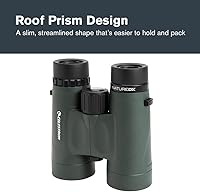
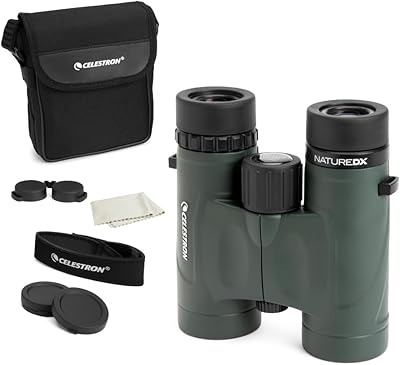
The Celestron Nature DX 10x42 Binoculars have established a solid reputation in the mid-range optics market, especially among birdwatchers and outdoor enthusiasts who want dependable glass without paying a premium. Celestron has been building optical instruments since 1960, and that heritage shows in the overall build confidence these carry. The 10x42 configuration is one of the most popular all-purpose setups for good reason — enough magnification to spot distant birds, and enough objective size to gather decent light across varied conditions. Toss in waterproofing and fog resistance, and you get a genuinely practical field companion. Just temper expectations accordingly: this is a strong mid-range performer, not a stand-in for high-end European glass.
Features & Benefits

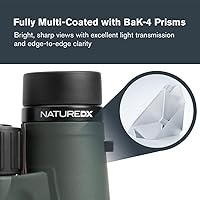
The optical system is where the Nature DX 10x42 earns its keep. BaK-4 prisms with phase coating deliver noticeably better contrast and color accuracy than the cheaper BaK-7 glass found in budget alternatives — colors look truer, and fine feather or bark details actually resolve clearly. The fully multi-coated lenses make a real difference in overcast or early-morning light, where cheaper single-coated optics tend to wash out. At 10x with a 304-foot field of view at 1,000 yards, tracking a bird in flight is genuinely manageable. The rubber-armored body handles knocks without adding bulk, and the nitrogen-purged interior prevents internal fogging when temperatures shift suddenly in the field.

Best For

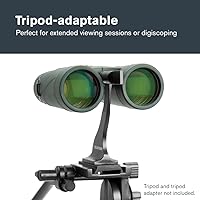
These binoculars hit a sweet spot for birdwatchers moving past entry-level gear, hikers who need something rugged enough for unpredictable weather, and travelers who would rather carry one versatile pair than multiple specialty optics. Sports fans and outdoor event-goers will appreciate the wide field and reach at distance. There is also a built-in tripod adapter socket — easy to overlook but genuinely useful for long glassing sessions over open water or hillsides. Where they fall short: serious low-light astronomy demands larger objectives, and anyone supporting precision wildlife photography work will likely want something more specialized. For general outdoor use, the value is hard to argue with.

User Feedback

With a 4.5-star average across well over a thousand ratings, the consensus on this Celestron model is consistently positive. Most owners highlight sharp center-image clarity, a smooth focus wheel, and comfortable eye relief as standout qualities — particularly appreciated by eyeglass wearers. Long-term users report the build holding up reliably through rain, dust, and cold without issues. That said, some note slight edge softness at the periphery of the image, and a few have flagged that the included neck strap feels underwhelming. Buyers stepping up from very cheap binoculars tend to be genuinely impressed; those coming down from premium glass occasionally wish for sharper edge-to-edge performance across the full field.

Pros

  • BaK-4 prisms with phase coating deliver noticeably truer colors and sharper contrast than entry-level alternatives.
  • Waterproof and nitrogen-purged construction handles rain, fog, and humidity without hesitation.
  • The 10x magnification pulls distant birds and wildlife into clear, detailed view with manageable image stability.
  • Smooth central focus wheel makes locking onto a subject fast and intuitive, even for beginners.
  • At 1.75 lbs, these binoculars are light enough for all-day wear without neck or shoulder fatigue.
  • 14mm eye relief makes these one of the more eyeglass-friendly options in this price range.
  • Built-in tripod adapter socket is a practical bonus that most rivals omit at this tier.
  • Fully multi-coated lenses keep images acceptably bright during overcast mornings and dusk observations.
  • Celestron's lifetime US warranty provides genuine long-term purchase confidence.
  • A 6.5-foot close focus distance opens up surprisingly useful range for butterflies and nearby perched birds.

Cons

  • Edge sharpness drops off visibly toward the periphery of the field of view during wide scanning.
  • The included neck strap is thin, minimally padded, and uncomfortable on longer outings — plan to replace it.
  • The carrying case feels utilitarian and offers only basic protection compared to competitors at slightly higher prices.
  • No tripod adapter is included despite the body having a dedicated socket, requiring a separate purchase.
  • Eye cup mechanisms can develop slight looseness with heavy use over time.
  • The 42mm objective size limits useful low-light performance compared to 50mm alternatives.
  • Diopter adjustment ring feels stiff initially and requires a break-in period before it operates smoothly.
  • Users familiar with wide-angle binoculars may find the 5.8-degree field slightly restrictive for fast-moving subjects.
  • Long-term seal durability beyond five or more years of hard field use remains difficult to assess from available owner data.

Ratings

The Celestron Nature DX 10x42 Binoculars score well across the board when you aggregate feedback from thousands of verified buyers worldwide — our AI has processed that pool while actively filtering out incentivized reviews and obvious bot patterns to surface what real owners actually experience in the field. Scores reflect both where these binoculars genuinely excel for outdoor and birdwatching use, and where they fall short compared to rivals at similar or slightly higher price points.

Optical Clarity
86%
Center-image sharpness consistently earns praise from birdwatchers who use these binoculars on morning walks or woodland trails. Colors read as true and naturalistic, and fine details like feather patterning or bark texture resolve clearly enough to satisfy most intermediate users in good light.
A recurring criticism is that sharpness drops off noticeably toward the outer edges of the field of view. For users who pan quickly across open landscapes or scan tree lines, that peripheral softness becomes a minor but consistent irritant.
Build Quality
83%
The rubber-armored polycarbonate chassis feels solid without being unnecessarily heavy, which matters when these binoculars hang around your neck for hours on a trail. Owners regularly report that the body handles accidental knocks and drops without visible damage or misalignment.
A few long-term users have noted that the eye cup mechanism can loosen or develop slight wobble over time, particularly with heavy rotation use. The included neck strap also draws frequent criticism for feeling cheap relative to the rest of the build.
Weather Resistance
89%
The nitrogen-purged, waterproof construction performs reliably in real field conditions — rainy morning birding sessions, humid coastal environments, and sudden temperature shifts have not caused fogging or moisture ingress for the vast majority of owners who report on this.
A small number of users in very extreme cold-to-warm transitions report brief internal condensation on rare occasions, though this appears uncommon. The waterproofing seals seem durable over time, but there is limited long-term data on seal degradation past five or more years of heavy use.
Value for Money
91%
This is consistently the most praised aspect in owner reviews. Buyers who previously used budget binoculars under fifty dollars describe the jump in optical quality as dramatic, and even more experienced birders acknowledge the feature set punches above its price tier in practical use.
Buyers stepping down from premium glass — Swarovski or Zeiss territory — are less impressed and occasionally find the value argument less compelling. Those cross-shopping against Vortex Diamondback or Nikon Prostaff sometimes feel the differences are marginal enough to complicate the decision.
Ease of Focus
88%
The central focus wheel draws consistent compliments for its smooth action and responsive feel. Birders appreciate being able to lock onto a subject quickly, and the close focus distance of 6.5 feet also opens up useful range for butterflies or nearby perched birds.
A handful of users find the diopter adjustment ring a little stiff initially, requiring some break-in use before it feels natural. There are also occasional reports of the focus wheel feeling slightly looser after extended use, though this appears to be a minority experience.
Eye Comfort & Relief
82%
18%
With 14mm of eye relief, eyeglass wearers fare noticeably better with these binoculars than with many competitors in the same price range. Most spectacle users report being able to see the full field of view without removing their glasses, which is a practical daily advantage.
The twist-up eye cups are functional but not exceptional — some users find the intermediate click-stop positions slightly imprecise, and those with unusually sensitive eye socket areas occasionally report mild discomfort during long sessions.
Light Gathering & Low-Light Performance
74%
26%
In typical overcast or early-morning conditions, the fully multi-coated 42mm lenses deliver acceptably bright, usable images that hold up well enough for dawn chorus birdwatching. Most casual users are satisfied with dusk performance in open habitats.
At the limits of usable light — deep woodland dusk or heavily overcast winter mornings — the 42mm objective size starts to show its constraints. Users expecting performance comparable to 50mm binoculars will be disappointed, and serious low-light work clearly exposes the ceiling.
Portability & Weight
87%
At 1.75 lbs and compact enough to fit in a daypack side pocket, these binoculars travel easily. Hikers and traveling birders consistently cite the balance between size and capability as a meaningful reason they chose this model over bulkier alternatives.
Compared to ultra-compact 8x25 or 10x25 models, these are still a tangible presence around your neck on a long day hike. Users who prioritize absolute minimalism in their kit occasionally wish for a slightly smaller form factor.
Field of View
81%
19%
A 5.8-degree field of view translates to 304 feet at 1,000 yards, which is wide enough to make tracking birds in flight a realistic proposition rather than a frustrating exercise. Warbler hunters and shorebird watchers specifically mention this as a practical asset.
Some users familiar with wide-angle binoculars in the 6.5- to 7-degree range find this field slightly narrow when scanning fast-moving subjects across open water or sky. It is not a dealbreaker, but it does place a ceiling on the panning experience.
Prism & Color Accuracy
84%
The BaK-4 prisms with phase coating deliver color rendering that reads as clean and natural rather than artificially warm or cool. Bird plumage looks accurate in the field, which genuinely matters when you are trying to identify species by subtle color differences.
Side-by-side comparisons with higher-tier phase-coated optics reveal a slight edge in color saturation and microcontrast in favor of pricier glass. For most buyers this gap is imperceptible in everyday use, but dedicated optics enthusiasts may notice it.
Tripod Compatibility
78%
22%
The built-in tripod adapter socket is genuinely useful and frequently underappreciated at this price point. Birders doing extended observation over open water or mountain ridges find it transforms the experience, allowing sharp, fatigue-free viewing over long sessions.
No adapter is included in the box, which requires a separate purchase that some buyers find mildly frustrating given the otherwise well-rounded kit. The adapter socket threading is standard, so sourcing a compatible part is easy, but it does add a step.
Durability Over Time
79%
21%
Long-term owners who have used these binoculars over multiple seasons report that optical alignment holds and the housing remains structurally sound with normal field use. Several reviewers mention three-plus years of consistent use without degradation in image quality.
Some owners who push these hard — frequent drops, heavy rain exposure, storage in temperature-variable vehicle compartments — report that minor issues like loose eye cups or slight barrel wobble appear more quickly than expected. Not fragile, but not indestructible.
Accessories & Packaging
58%
42%
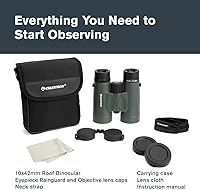
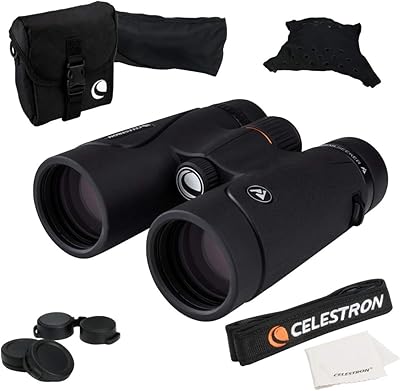
The included carrying case provides basic protection for transport or closet storage, and the lens caps do their job adequately. A cleaning cloth and neck strap are included, which covers the bare essentials for getting started in the field on day one.
The neck strap is widely considered the weakest element of the package — thin, minimally padded, and uncomfortable on longer outings. The case is functional but feels like an afterthought. Many buyers end up replacing both accessories fairly quickly.
IPD Adjustment Range
85%
The interpupillary distance range of 56 to 74mm accommodates a wide spread of users, including those with narrower or wider-set eyes than average. Families sharing a single pair or birding clubs where multiple people use the same binoculars find this range genuinely practical.
Users at the extreme ends of the IPD range — particularly those with very narrow interpupillary distances — occasionally report difficulty achieving a perfectly merged image. This is an edge case, but it is worth checking your own measurement before buying.

Suitable for:

The Celestron Nature DX 10x42 Binoculars are an excellent match for birdwatchers at the beginner-to-intermediate level who want a meaningful upgrade from cheap optics without committing to a high-end budget. Hikers, nature walkers, and wildlife observers who spend time in varied weather conditions will appreciate the waterproof, fog-resistant construction — these are binoculars you can actually use on a drizzly autumn morning without anxiety. Travelers who want a single versatile pair for everything from African safari game drives to coastal seabird watching will find the 10x42 configuration genuinely capable across all those scenarios. Sports fans and outdoor event-goers benefit from the wide enough field of view to track fast action at distance without constantly losing their subject. Eyeglass wearers in particular should take note — the 14mm eye relief is one of the more practical features at this price tier, making comfortable extended viewing realistic rather than theoretical. Anyone who values a backed warranty and established brand support will also find reassurance in Celestron's long-standing US-based service infrastructure.
Not suitable for:

The Celestron Nature DX 10x42 Binoculars are not the right tool for buyers with genuinely demanding optical requirements. Serious amateur astronomers who want to use binoculars for low-light deep-sky observation will quickly run into the limits of 42mm objectives — larger aperture glass gathers meaningfully more light for that application. Professional wildlife photographers who need binoculars as a precision scouting instrument alongside high-end camera rigs may find the peripheral sharpness and optical resolution fall short of what that workflow demands. Buyers cross-shopping against competitors like the Vortex Diamondback HD or Nikon Prostaff P7 should do a careful side-by-side comparison, as those alternatives occupy similar price territory and may suit specific preferences better. Anyone expecting accessories — a premium harness strap, high-quality case, or tripod adapter — to be included should know the bundled items are functional but basic. Finally, users who intend to push these through genuinely punishing conditions, such as saltwater marine environments or extreme temperature cycling, may find the durability ceiling lower than purpose-built marine or expedition optics.
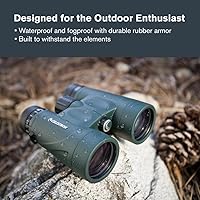
Specifications

  • Magnification: These binoculars provide 10x magnification, bringing distant subjects ten times closer than the naked eye.
  • Objective Diameter: The objective lenses measure 42mm, offering a practical balance between light gathering capability and overall portability.
  • Field of View: The angular field of view is 5.8 degrees, equivalent to 304 feet at 1,000 yards, wide enough for tracking birds in flight.
  • Close Focus: The minimum focus distance is 6.5 feet, allowing sharp views of nearby subjects such as butterflies or perched songbirds.
  • Eye Relief: Eye relief measures 14mm, making these binoculars compatible with eyeglass wearers without sacrificing the full field of view.
  • IPD Range: The interpupillary distance adjusts from 56mm to 74mm to accommodate a wide range of face widths.
  • Prism Type: BaK-4 glass prisms are used internally, providing superior light transmission and edge-to-edge clarity compared to BaK-7 alternatives.
  • Prism Coating: Phase correction coating is applied to the prisms, improving contrast and color fidelity particularly when resolving fine detail.
  • Lens Coating: All optical surfaces are fully multi-coated, maximizing light transmission across the entire visible spectrum for brighter, truer images.
  • Weatherproofing: The binoculars are fully waterproof and nitrogen-purged, preventing internal fogging caused by moisture, humidity, or rapid temperature changes.
  • Housing Material: The body is constructed from polycarbonate with a rubber armor exterior that absorbs impact and provides a secure grip in wet conditions.
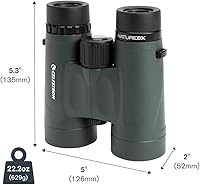
  • Weight: Total weight is 1.75 lbs (approximately 794g), light enough for extended carry on day hikes or birding outings.
  • Dimensions: The unit measures 5.3 x 2 x 4.9 inches when folded, making it compact enough for a daypack side pocket.
  • Tripod Socket: A built-in tripod adapter socket is integrated into the body, compatible with standard tripod heads (adapter sold separately).
  • Warranty: Celestron provides a Limited Lifetime Warranty for US buyers, supported by US-based technical customer service.

Related Reviews

Celestron Nature DX 8x32 Binoculars
80%
83%
Optical Clarity
81%
Build Quality
86%
Weather Resistance
88%
Field of View
67%
Low-Light Performance
More
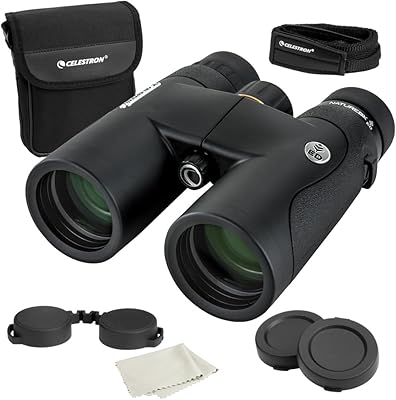
Celestron Nature DX ED 8x42 Binoculars
84%
88%
Optical Clarity
91%
Color Accuracy
83%
Low-Light Performance
86%
Build Quality
87%
Eye Relief & Comfort
More
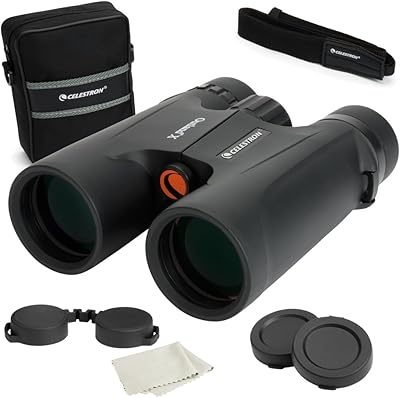
Celestron Outland X 10x42 Binoculars
81%
88%
Optical Clarity
91%
Build Quality & Durability
93%
Weatherproofing
89%
Value for Money
61%
Eye Relief & Eyeglass Compatibility
More
Celestron SkyMaster 25x70 Binoculars
75%
84%
Optical Clarity
91%
Light Gathering
79%
Magnification Performance
72%
Build Quality
58%
Collimation Consistency
More
Celestron TrailSeeker 8x42 Binoculars
82%
91%
Optical Clarity
93%
Field of View
88%
Build Quality
74%
Focusing Mechanism
78%
Eyecup Comfort & Usability
More
Celestron Nature 10x25 Monocular
85%
93%
Portability
88%
Optical Clarity
90%
Build Quality
85%
Ease of Use
91%
Waterproof & Fogproof Performance
More
Celestron SkyMaster 25x100 Binoculars
76%
88%
Optical Brightness
79%
Image Sharpness & Clarity
53%
Optical Alignment Out of Box
67%
Chromatic Aberration
82%
Build Quality & Durability
More
Bushnell Prime 10x42 Binoculars
84%
91%
Image Clarity
89%
Build Quality & Durability
85%
Ease of Use
87%
Field of View
90%
Waterproof & Fogproof Performance
More
Barska Crush 10x42 Binoculars
79%
74%
Optical Clarity
81%
Build Quality
88%
Value for Money
86%
Ease of Use
58%
Eye Relief & Eyecup Comfort
More
Bushnell Blackout Camo 10x42 Binoculars
77%
73%
Optical Clarity
84%
Build Quality
88%
Grip & Ergonomics
76%
Image Brightness
61%
Focus Wheel Feel
More

FAQ

Yes, genuinely. The Celestron Nature DX 10x42 Binoculars sit at a price point where the optical quality makes a real, noticeable difference over budget glass, but you are not overpaying for features you will not use as a newcomer. The smooth focus wheel and comfortable eye relief also make the learning curve easier.

Absolutely. The 14mm of eye relief is one of the more eyeglass-friendly specs in this price range. Most glasses wearers report being able to see the full field of view with their glasses on, though you may want to fold down the eye cups to get your eyes close enough to the lenses.

They are rated as fully waterproof and nitrogen-purged, so light to moderate rain is not a concern at all. Most owners who have used them in wet field conditions report no issues with moisture ingress. That said, extended submersion is not what these are designed for — treat them as rain-ready, not dive-ready.

No adapter is included in the box, which is a common frustration. You need a standard binocular tripod adapter with a 1/4-inch thread, which are widely available online for a few dollars. Once attached, the socket works reliably and the tripod connection makes a genuine difference for long observation sessions.

It is a genuinely close call. The Vortex Diamondback HD offers a slightly wider field of view and arguably marginally better edge sharpness, while the Nature DX 10x42 counters with a strong brand warranty and a built-in tripod socket. Both are strong choices — your decision may come down to personal handling preference and which warranty terms suit you better.

For birdwatching and general wildlife use, 10x gives you a meaningful reach advantage that most birders prefer. The trade-off is that hand tremor is more visible at 10x than at 8x, especially for extended handheld viewing. If you have very steady hands or plan to tripod-mount often, 10x is the stronger choice for spotting distant subjects.

They perform acceptably well in typical overcast or early-morning light — fully multi-coated lenses genuinely help here. Deep woodland dusk or very dark conditions will push the limits of what 42mm objectives can do, though. If low-light performance is a top priority, larger 50mm objective binoculars will give you a meaningful edge.

The eye cups function well out of the box, but a recurring theme in long-term owner reviews is that the twist-up mechanism can develop slight looseness after heavy use over a year or two. It is not a universal complaint, but it comes up often enough to be worth mentioning. Treat them with reasonable care rather than forcing them aggressively.

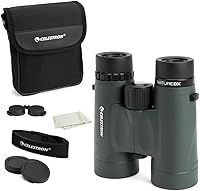
The box includes a soft carrying case, objective lens caps, a tethered eyepiece cover, a neck strap, and a cleaning cloth. The case and strap are functional but basic — many owners replace the strap fairly quickly with a wider padded option for more comfortable all-day carry. No tripod adapter is included.

The build and IPD range are designed for adults, but older teenagers and children with larger head sizes should manage fine. The minimum IPD of 56mm may be too wide for young children with narrower-set eyes, potentially preventing a fully merged image. For young kids, a purpose-built smaller junior binocular would be a better fit.