Overview

The Celestron LCD Digital Microscope II is a mid-to-premium desktop microscope built for students, educators, and hobbyists who want to observe specimens on a screen rather than through a traditional eyepiece. Its 3.5″ rotating LCD is the design choice that really sets it apart — it makes group viewing practical in a way that optical scopes simply can't match. Celestron has been a trusted name in optics since 1960, primarily in telescopes, and that credibility carries over here. This screen-based microscope is aimed at classrooms, home labs, and biology education, not professional research. It launched in 2013, so while it still serves its audience well, some specs reflect that era.
Features & Benefits

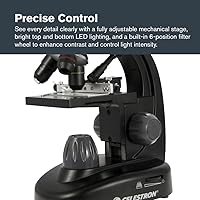
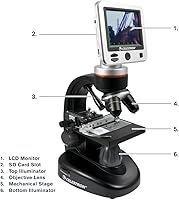
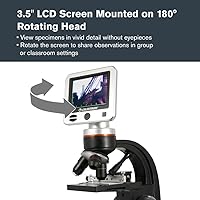
The rotating screen head is the standout here — swing it toward your audience and the whole room can follow along without anyone crowding a single eyepiece. Optical magnification runs through three objective lenses (4x, 10x, 40x), giving you practical powers of 40x, 100x, and 400x. The 1600x figure is achieved via on-screen digital zoom, so sharpness drops noticeably at that range. A mechanical stage handles fine positioning, and dual LED lighting — top and bottom — covers both transparent slides and opaque specimens. The 5MP camera records video directly to SD card, and the unit runs on wall power or batteries, which adds real flexibility for field or classroom use.

Best For

This LCD microscope fits best in the hands of classroom educators who need to show live specimens to a group without hauling in a projector — just rotate the screen and the class follows along. Middle and high school students studying biology, botany, or microbiology will find the optical range covers most of what their coursework demands. Home hobbyists, whether into insects, rocks, or general curiosity, will get genuine use out of it. It also makes a meaningful gift for scientifically curious kids around age 10 and older. And if you need to snap a specimen photo or record a short clip for a lab report, the built-in camera handles it without any additional software.

User Feedback

Sitting at 4.0 out of 5 across roughly 700 reviews, this Celestron digital microscope earns solid overall marks, though the feedback is genuinely mixed. Most praise goes to how approachable it is out of the box, with the rotating screen drawing consistent appreciation from teachers who use it in live settings. The criticisms are worth taking seriously: video tops out at VGA resolution, which feels dated at this price point, and a handful of buyers flag build quality concerns for heavy daily classroom use. Experienced microscopists tend to find the feature set too limited compared to dedicated optical scopes. For casual and educational users, though, the consensus leans positive.

Pros

  • The rotating LCD screen makes live group demonstrations genuinely easy without any extra equipment.
  • Dual LED illumination, top and bottom, handles both transparent slides and opaque specimens without swapping gear.
  • Saves images and video directly to SD card — no computer or software needed to document specimens.
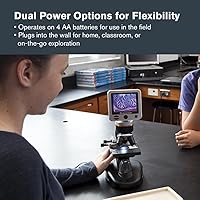
  • Runs on batteries or wall power, giving real flexibility for outdoor field use or classrooms without nearby outlets.
  • The mechanical stage makes fine slide positioning straightforward, even for younger or first-time users.
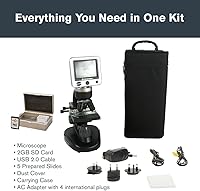
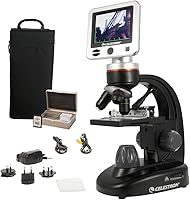
  • Arrives with five prepared slides, a carrying case, and essential cables — ready to use out of the box.
  • Celestron backs this LCD microscope with a two-year US warranty and access to US-based support.
  • Three objective lenses cover the magnification range most students and hobbyists realistically need.

Cons

  • Video resolution is capped at VGA (640×480), which feels noticeably outdated at this price point.
  • The 1600x maximum is digital zoom only — optical sharpness degrades well before you reach that level.
  • The included 2GB SD card fills up fast, especially with any video recording; plan to replace it immediately.
  • The screen resolution of 320×240 pixels makes fine specimen details appear soft or pixelated at times.
  • Some users report the rotating head mechanism loosens or develops wobble after extended classroom use.
  • No HDMI output means connecting to modern flat-screen displays often requires a hard-to-find adapter.
  • At 6.5 pounds, this screen-based microscope is a desk-first instrument despite the battery option.
  • Newer competitors now offer better specs — larger screens, HD video, higher SD card capacity — at comparable prices.
  • A small number of buyers found warranty service slow and support responses less technically detailed than expected.

Ratings

The Celestron LCD Digital Microscope II has been scored below by our AI system after analyzing hundreds of verified global buyer reviews, with spam, bot-generated, and incentivized feedback actively filtered out. The scores reflect a transparent picture of where this screen-based microscope genuinely delivers and where real users have run into frustration. Both the standout strengths and the honest shortcomings are weighted into every category.

Ease of Use
88%
Users consistently describe setting this LCD microscope up as refreshingly straightforward — plug in, load a slide, and you're viewing within minutes. Teachers especially appreciate not having to walk students through eyepiece alignment or diopter adjustments, which is a real time-saver in a busy classroom.
A few users noted the on-screen menu navigation feels slightly unintuitive at first, particularly when adjusting camera settings or toggling between illumination modes. The learning curve is short, but it does exist.
Screen Quality
74%
26%
The 3.5-inch TFT LCD draws genuine praise for making specimen viewing accessible without hunching over an eyepiece. In classroom demonstrations, the rotating head lets a teacher swing the screen toward students instantly, which reviewers describe as the single most useful feature for group learning.
At 320×240 pixels, the screen resolution is objectively limited. Finer specimen details can appear soft or pixelated, and users comparing it to even mid-range phone displays notice the difference. It gets the job done for education, but it is not a crisp, high-definition viewing experience.
Optical Magnification Quality
71%
29%
The three objective lenses — 4x, 10x, and 40x — cover the magnification range that most biology students and hobbyists actually need day to day. At 40x through 400x optical power, images are reasonably sharp and well-lit, making it suitable for standard slide work like onion cells or plant cross-sections.
The advertised 1600x is achieved entirely through digital zoom on the screen, not through optical resolution, and the image quality at that level degrades noticeably. Experienced users who understand this distinction going in are fine, but buyers expecting true 1600x optical clarity will be disappointed.
Camera & Image Capture
66%
34%
The 5MP still camera produces decent photos for lab documentation and school presentations. Being able to save images directly to an SD card without connecting to a computer is genuinely convenient, and several teachers mentioned using captured images in slideshows the same day.
Video recording tops out at VGA resolution (640×480), which is a real sticking point at this price level. For a product launched in 2013 that still sells at a premium, the video quality feels like a meaningful compromise — fine for rough documentation, but not suitable for anything requiring clear footage.
Build Quality & Durability
63%
37%
The overall construction feels solid for home use, and Celestron's long-standing reputation in optics gives some reassurance about component quality. Most casual users and hobbyists report no structural issues under normal handling conditions.
A recurring thread in negative reviews involves durability under heavy, repeated classroom use. Several educators noted wobble developing in the rotating head mechanism over time, and a few reported issues with the focus knob becoming inconsistent after extended use. It may not hold up to the rigors of a shared classroom instrument.
Illumination System
82%
18%
Dual LED lighting — top and bottom — is a practical advantage that many users highlight. The bottom light works well for transparent prepared slides, while the top light opens up viewing options for opaque specimens like coins, insects, or rock surfaces, giving this microscope more versatility than single-source models.
Some users found the brightness controls limited in fine-tuning range, noting that at lower settings the illumination can be uneven. Reflective specimens in particular can be tricky to light well without some glare, which requires some experimentation.
Mechanical Stage
79%
21%
The precision-controlled mechanical stage earns quiet but consistent praise from users who have worked with clip-style stages before. Being able to move slides in small, controlled increments makes scanning a sample far less frustrating, especially for younger or less experienced users.
The movement range is adequate but not generous, and a few reviewers noted the stage controls require a lighter touch than expected — too much pressure and you overshoot the area of interest. Not a dealbreaker, but it takes some getting used to.
Value for Money
61%
39%
For users who specifically want the screen-and-camera combination without buying a separate camera adapter, the bundled feature set does justify part of the cost. The included slides, carrying case, and international AC adapter add genuine starter value that reduces the need for separate purchases.
At its current price point, the VGA video, dated SD card capacity, and relatively low screen resolution make this a harder sell compared to newer competitors. Buyers who research alternatives often find more updated specs for similar or lower prices, making the value proposition feel less compelling than it was at launch.
Portability & Power Flexibility
83%
The option to run on either the included AC adapter or four AA batteries is more useful than it might first appear. Science teachers taking specimens outdoors, hobbyists working in a garage, or anyone without a nearby outlet will appreciate that this LCD microscope does not anchor you to a desk.
At 6.5 pounds with a footprint of 6.7 by 5.5 inches, this is not a grab-and-go instrument by any stretch. The battery option adds flexibility, but the weight and bulk mean most users treat it as a desktop-first tool that occasionally moves, rather than a genuinely portable device.
Out-of-Box Kit Contents
77%
23%
Arriving with five prepared slides, a carrying case, dust cover, and USB cable means a first-time user can start exploring real specimens immediately without sourcing accessories separately. Reviewers buying this as an educational gift particularly appreciated the completeness of the kit.
The included 2GB SD card is quite small by modern standards and fills up quickly if you record any video. Most users end up replacing it almost immediately, which feels like a missed opportunity to include something more practical given the product's price tier.
TV & External Display Output
69%
31%
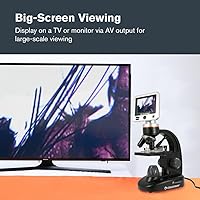
The AV output for connecting to a TV or external monitor is a genuinely useful feature for classroom demonstrations where the built-in screen is too small to share with a large group. Teachers who have used it with a classroom TV report it works reliably for live viewing sessions.
The output is standard-definition AV, not HDMI, which limits compatibility with modern flat-screen TVs that may not have legacy composite inputs. Users expecting to plug into a current classroom display panel may find themselves needing an adapter or discovering the connection simply is not available.
Focus Mechanism
72%
28%
Coarse and fine focus controls are responsive enough for routine slide work, and most users get comfortable with the focusing range fairly quickly. For standard prepared slides at 40x to 400x, achieving a clear image does not take long once you understand the focus travel.
At higher magnifications, holding precise focus becomes noticeably harder, and small vibrations from the desk or the unit itself can blur the image. A few reviewers also noted that the focus knob tension felt slightly loose out of the box, requiring careful, deliberate movement.
Brand Reputation & Warranty Support
84%
Celestron's name carries real weight in the optics community, and buyers note that having a California-based company with decades of telescope and microscope experience behind the product matters for long-term confidence. The two-year US warranty and access to US-based support add a tangible safety net.
A few users reported that warranty claims involved longer turnaround times than expected, and some felt support responses were more scripted than technically helpful. The warranty coverage is solid on paper, but experiences with actually using it have been inconsistent.

Suitable for:

The Celestron LCD Digital Microscope II is a strong fit for teachers and science educators who need to share live specimen views with a group without setting up a projector — just rotate the screen toward the class and everyone can follow along in real time. Middle and high school students studying biology, botany, or basic microbiology will find the optical magnification range (40x to 400x) covers essentially everything their coursework requires, and the ability to save images directly to an SD card makes lab documentation genuinely straightforward. Home hobbyists with an interest in insects, minerals, or natural specimens will also get real mileage out of this, particularly those who want to capture photos without fussing with adapters or third-party software. Parents searching for a meaningful, hands-on science gift for a curious child aged ten and up will find it complete enough to engage seriously without being overwhelming to set up or operate.
Not suitable for:

Buyers expecting professional-grade imaging or research-quality optics should look elsewhere — the Celestron LCD Digital Microscope II was designed for education and exploration, not scientific documentation at an advanced level. The video resolution maxes out at VGA (640×480), which is a genuine limitation if you need footage that holds up beyond a basic lab presentation. Anyone drawn in by the 1600x magnification claim should understand upfront that this figure is achieved via on-screen digital zoom, not optical resolution, meaning image sharpness deteriorates significantly at that range. Experienced microscopists who already own or regularly use compound optical scopes will likely find the feature set underwhelming, and the relatively modest build may not hold up well under the kind of heavy daily use a shared school instrument endures. If up-to-date specs matter to you — HDMI output, HD video, a larger or sharper screen — newer competitors in a similar price range now offer more for the money.
Specifications

  • Screen: Features a 3.5″ full-color TFT LCD display with a native resolution of 320×240 pixels and 4x digital zoom capability.
  • Screen Rotation: The LCD head rotates 180° to allow easy repositioning toward an audience without moving the microscope body.
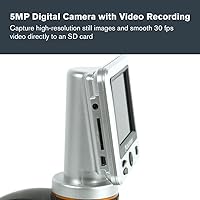
  • Camera: Built-in 5MP sensor captures still images at up to 2592×1944 pixels and records video at VGA resolution (640×480) at 30 frames per second.
  • Optical Magnification: Three objective lenses (4x, 10x, 40x) combined with a 10x digital eyepiece deliver optical magnification of 40x, 100x, and 400x.
  • Max Magnification: Total magnification reaches up to 1600x when the on-screen 4x digital zoom is applied, though image sharpness decreases at this range.
  • Objective Lenses: A 3-position nosepiece with click-stop holds 4x, 10x, and 40x objective lenses for repeatable, precise lens changes.
  • Illumination: Dual built-in LED lighting provides independently adjustable upper (incident) and lower (transmitted) illumination to suit both opaque and transparent specimens.
  • Stage: An adjustable mechanical stage enables controlled, precise X-Y movement of slides for systematic specimen scanning.
  • Storage: Includes a 2GB SD card for saving images and video; the slot supports cards up to 32GB for expanded storage capacity.
  • Connectivity: Equipped with a USB 2.0 port for computer connectivity and an AV output for displaying live or recorded content on a compatible TV or monitor.
  • Power Options: Operates on the included AC adapter with international plug attachments or on four AA batteries (not included) for cordless use.
  • Dimensions: The unit measures 6.7″ in length, 5.5″ in width, and 13″ in height when fully assembled on a flat surface.
  • Weight: The microscope weighs 6.5 pounds, making it a stable desktop instrument rather than a portable handheld device.
  • Kit Contents: Package includes the microscope, 2GB SD card, USB 2.0 cable, AV cable, five prepared slides, dust cover, carrying case, and a quick setup guide.
  • Warranty: Covered by a 2-year US warranty with support provided by Celestron's US-based customer service team.
  • Brand & Origin: Manufactured by Celestron, a California-based optics company founded in 1960, primarily known for telescopes and consumer-grade optical instruments.
  • Model Number: The official model number for this unit is 44341, first made available in January 2013.

Related Reviews
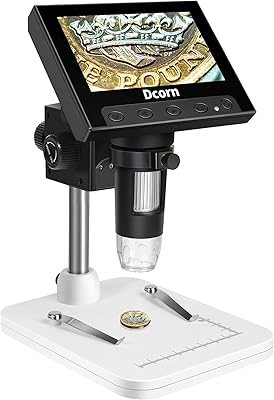
Dcorn 4.3″ LCD Digital Microscope
82%
87%
Image Clarity
81%
Magnification Performance
85%
Ease of Use
92%
LED Lighting Effectiveness
78%
Build Quality
More
Celestron Deluxe Handheld Digital Microscope
74%
81%
Image Quality at Low Magnification
51%
Image Quality at High Magnification
88%
Ease of Setup
54%
Software Compatibility
74%
Build Quality & Durability
More
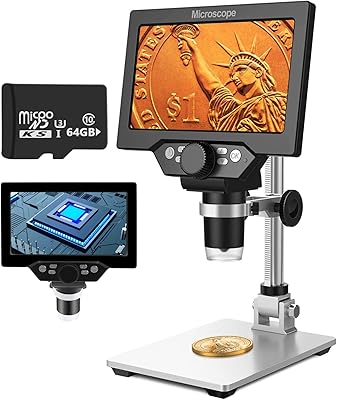
UF-TOOLS 7 Inch LCD Digital Microscope
86%
88%
Image Quality
90%
Magnification Accuracy
87%
Portability
85%
Ease of Use
84%
Battery Life
More
Koolertron 5.5-inch LCD Digital Microscope
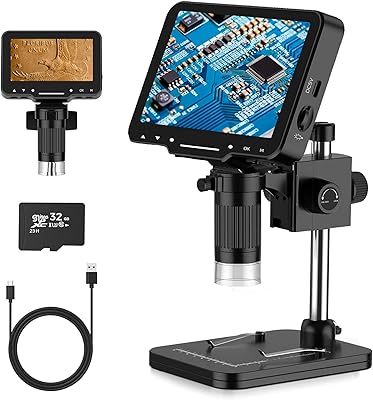
75%
78%
Image Clarity
83%
Screen Quality
71%
Build Quality
86%
Stand & Adjustability
67%
Magnification Range
More
LINKMICRO LM210 10.1″ LCD Digital Microscope
82%
89%
Value for Money
91%
Display Quality
85%
Ease of Use
87%
Magnification Performance
83%
Build Quality
More
PalliPartners 4.3-inch 1000X LCD Digital Microscope
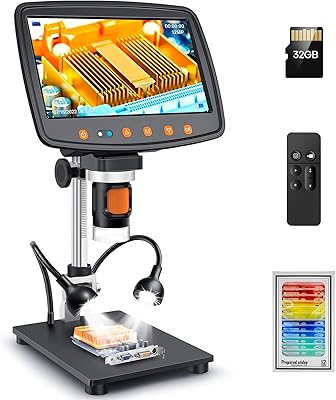
79%
83%
Image Clarity (Mid-Range Zoom)
91%
Portability & Form Factor
88%
Built-in LCD Screen
79%
Battery Life
93%
Ease of Setup & Use
More
Leipan MS1 7″ LCD Digital Microscope
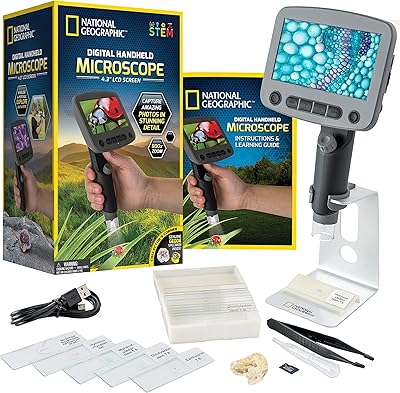
75%
83%
Screen Quality
67%
Magnification Performance
71%
Build Quality
88%
Standalone Usability
81%
Stand & Working Distance
More
National Geographic Kids Digital Handheld Microscope
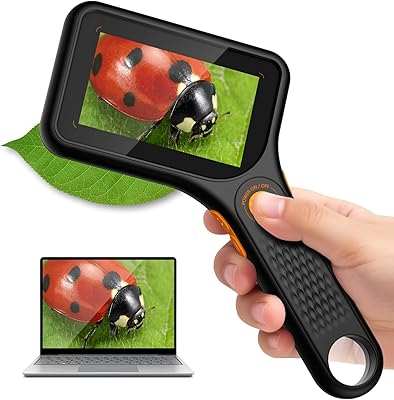
81%
88%
Ease of Use for Kids
83%
Image & Screen Quality
71%
Magnification Performance
79%
Battery Life
91%
Kit Completeness & Value
More
MAXLAPTER Pocket 100X Digital Microscope
74%
91%
Portability & Form Factor
88%
Ease of Use
63%
Image & Optical Quality
71%
Screen Quality
74%
UV Light Performance
More
TOMLOV DM702 Digital Coin Microscope 10-inch
78%
88%
Display Quality
74%
Magnification Performance
83%
Build Quality & Durability
86%
Lighting System
84%
Stand & Working Space
More

FAQ

Honest answer: it is largely a marketing number. The 1600x figure is achieved by applying a 4x digital zoom on top of the 400x optical maximum, which means the microscope is essentially enlarging a lower-resolution image rather than resolving more detail. At that level, images become visibly soft and pixelated. For practical work, the 40x to 400x optical range is where this LCD microscope actually performs well.

You can connect it to a TV using the included AV cable, which outputs a standard-definition composite signal. Most older TVs support this just fine. However, modern flat-screen TVs and classroom display panels often lack composite inputs, so you may need an AV-to-HDMI adapter. There is no native HDMI output on this unit.

The screen rotates 180°, which is genuinely useful for small group settings — a teacher can swing it toward students seated nearby without repositioning the microscope. For larger classrooms, the 3.5-inch display is too small to see from the back of the room, so connecting to an external TV via AV output works better in that scenario.

The included 2GB card is quite small and fills up quickly, especially if you record any video. The unit supports standard SD cards up to 32GB, so picking up a Class 10 SD card in the 16GB to 32GB range is a practical and inexpensive upgrade. Make sure it is a standard SD card, not microSD, unless you use an adapter.

Yes, it is well-suited for curious kids around that age and older, particularly those with a genuine interest in science. The screen-based viewing removes the frustration of eyepiece alignment, and the included prepared slides give them something to explore right away. Parental guidance is recommended initially just to help with focusing and navigating the on-screen menus.

At 400x optical magnification you can observe large single-celled organisms like paramecia or amoeba in a water sample, but bacteria are generally too small to resolve clearly at this power level — you typically need 1000x oil-immersion objectives for reliable bacterial observation. For standard biology specimens like cheek cells, plant cells, or pond water organisms, this screen-based microscope handles the work well.

It is functional but limited. Video records at VGA resolution (640×480 pixels), which is adequate for basic documentation or showing a general view of a specimen in a presentation. If you plan to zoom into recorded footage or display it on a large screen, the low resolution will be noticeable. For still image capture, the 5MP camera does considerably better.

Absolutely — it accepts standard microscope slides, which are widely available at science supply stores. The mechanical stage and standard slide clip accommodate both prepared commercial slides and wet-mount slides you make yourself from pond water, leaf samples, or similar materials. The included five prepared slides are just a starting point.

Battery life depends heavily on screen brightness and how much you use the SD card and LEDs simultaneously, but most users report a few hours of use on four AA batteries before needing to swap. It is a useful backup option for outdoor use or rooms without a convenient outlet, but for regular home or classroom use, running on the AC adapter makes more sense to avoid constantly replacing batteries.

It holds up reasonably well for occasional classroom demonstrations, but it was not designed as a heavy-duty shared instrument. Some educators who use it daily with multiple students have reported gradual loosening in the rotating head mechanism and focus knob over time. If you need something that can withstand constant handling by many students throughout the day, a more ruggedized optical scope might be a safer long-term investment.

Where to Buy

B&H Photo-Video-Audio
In stock $279.99
High Point Scientific
In stock $319.95
School Specialty
In stock $319.95
Rainbow Resource Center
In stock $319.95
Woodland Hills Camera & Telescopes
In stock $319.95
Camera Concepts & Telescope Solutions
In stock $319.95
School Outfitters
In stock $339.99