Overview

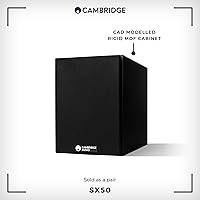
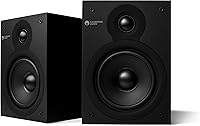
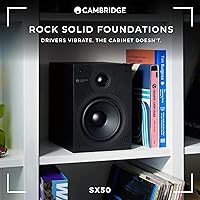
The Cambridge Audio SX-50 sits in the middle of Cambridge Audio's SX bookshelf lineup, aimed squarely at listeners who want genuine hi-fi sound without dedicating a large room or a large budget to it. At roughly the size of a hardback book, the pair fits comfortably on a desk, shelf, or small media unit. One thing to know upfront: these are passive speakers, meaning you'll need a separate amplifier or AV receiver to run them. Cambridge has officially discontinued the model, but stock remains available and the value case is still solid. The matte black cabinet feels sturdy and looks noticeably more refined than competitors at this price level.
Features & Benefits

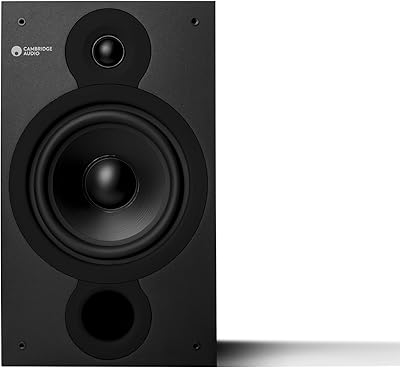
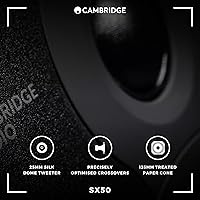
The 5.25-inch mid-bass driver uses a doped paper cone — a treatment that adds mass and internal damping to the material, which translates to a warmer, more controlled sound compared to plain paper or polypropylene alternatives. Paired with a 25mm silk dome tweeter, the high frequencies stay smooth and non-fatiguing even during long listening sessions. The speakers run at 8 ohms with 89dB sensitivity, so they're not hard to drive — a modest integrated amp in the 30–50 watt range is plenty. That said, the rear bass port does need a few inches of breathing room from the wall. The frequency response starts at 50Hz, which is respectable but honest: deep bass extension requires a subwoofer in most setups.

Best For

These Cambridge Audio bookshelf speakers punch well above their weight for stereo music listening in apartments, offices, or compact living rooms. They're also a genuinely good fit for a desktop PC or console gaming setup where space is limited but you're tired of tinny audio. Hook them up to a budget AV receiver and they work well as front channels in a 2.0 or 2.1 home theater configuration. If you're stepping up from a soundbar for the first time, this compact hi-fi speaker set will likely surprise you. Where they struggle: large, open-plan rooms and listeners who want heavy bass output without adding a dedicated subwoofer.

User Feedback

Across more than 300 ratings, the SX-50 pair holds a 4.6 out of 5 average, and the pattern in reviews is fairly consistent. Buyers repeatedly call out vocal clarity and midrange as the standout qualities — particularly for acoustic music and dialogue-heavy content. The cabinet finish also gets regular praise for looking and feeling more expensive than you'd expect. On the flip side, a handful of reviewers note that the bass feels lean in larger rooms, and a few point out that amplifier quality matters here — not just wattage. A weak or noisy amp will hold back the SX-50 pair more than it would a less-resolving speaker. Overall, the complaints are minor and mostly context-dependent rather than fundamental flaws.

Pros

  • Vocal clarity and midrange detail are genuinely impressive for the price bracket.
  • The silk dome tweeter stays smooth and non-fatiguing even during long listening sessions.
  • Cabinet build quality feels noticeably more premium than most competing speakers at this level.
  • The compact footprint fits easily on a desk, shelf, or small media unit without dominating the space.
  • Pairs well with budget AV receivers, making the SX-50 pair accessible to first-time hi-fi buyers.
  • Warm, musical tuning suits acoustic, vocal, and cinematic content particularly well.
  • The matte black finish looks clean and restrained — no flashy design choices that date quickly.
  • Holds a 4.6-star average across hundreds of verified reviews, reflecting consistent real-world satisfaction.
  • Works effectively as front channels in a 2.1 home theater setup when combined with a subwoofer.

Cons

  • Passive design requires a separate amplifier — easy to overlook and adds to the total cost.
  • Bass extension below 60Hz is limited; a subwoofer is almost necessary for bass-heavy genres.
  • Discontinued status makes future driver replacements and manufacturer support harder to access.
  • Amplifier quality matters more than raw wattage — a cheap amp will noticeably hold these speakers back.
  • The rear bass port needs wall clearance; tight shelf placement causes boomy, uneven low frequencies.
  • Soundstage depth is modest — wide imaging is good, but front-to-back layering feels somewhat flat.
  • Not well-suited to large rooms, where the cabinet size and sensitivity become genuine limitations.
  • Speaker grilles feel less robust than the cabinet itself, which can be a concern in high-traffic setups.

Ratings

The scores below are generated by AI after analyzing verified buyer reviews for the Cambridge Audio SX-50 from multiple global sources, with spam, bot activity, and incentivized feedback actively filtered out. Each category reflects a balanced synthesis of real user experiences — strengths and frustrations alike — so you get an honest picture before spending your money. Whether buyers loved the midrange clarity or wished for more low-end weight, those patterns are captured transparently here.
Sound Clarity & Detail
91%
Buyers consistently single out vocal reproduction and midrange definition as the SX-50 pair's strongest suit. Acoustic guitar, piano, and spoken dialogue come through with a crispness that genuinely surprises listeners upgrading from a soundbar or budget Bluetooth speaker. Several reviewers describe the experience as hearing familiar tracks with new detail.
A small number of listeners with a preference for very bright, analytical sound find the presentation slightly warm and relaxed rather than laser-precise. This is not a defect — it is a deliberate tuning choice — but those expecting a hyper-detailed monitor sound may want to audition alternatives.
Bass Performance
63%
37%
For a compact cabinet with a 5.25-inch driver, the SX-50 pair handles upper-bass frequencies — kick drum body, bass guitar warmth — with reasonable conviction. In a small desk setup or a bedroom, the low end feels balanced rather than hollow, and the ported design extracts more output than a sealed box of this size would manage.
Below roughly 60Hz, the physics of the small enclosure simply win. Larger rooms expose the limitation quickly, and bass-heavy genres like hip-hop or electronic music can feel undernourished. Multiple reviewers who initially skipped a subwoofer ended up adding one — factoring that cost in upfront is wise.
High-Frequency Smoothness
88%
The 25mm silk dome tweeter earns consistent praise for being non-fatiguing over long sessions. Listeners who regularly put in two or three hours of music or movies report no ear fatigue, which is not something you can say about many speakers at this price point with cheaper metal-dome tweeters.
The treble trades some sparkle and air for smoothness, which means very high-frequency shimmer — like the trailing decay of a cymbal — can feel slightly softened. Audiophiles who prefer a brighter top end may find this characteristic limiting rather than refined.
Amplifier Compatibility
74%
26%
At 89dB sensitivity and 8 ohms, this compact hi-fi speaker set is not a demanding load — most entry-level integrated amps or AV receivers in the 30 to 80 watt range drive them without strain. Budget receivers from Denon or Yamaha are commonly mentioned as solid matches that unlock the speakers' potential without overspending.
The SX-50 pair is revealing enough that a noisy or underpowered amplifier will hold them back noticeably. A handful of buyers who initially used a very cheap class-D desktop amp reported thin or congested sound, only for the problem to disappear when they switched to a better-matched source. The speakers surface your chain's weaknesses.
Build Quality & Finish
86%
The matte black cabinet finish is repeatedly called out as looking and feeling more expensive than the price implies. Panels are well-joined with no creaking under hand pressure, and the overall fit and finish holds up favorably against Klipsch and Polk entries in the same bracket. First impressions out of the box are consistently positive.
The cabinets are MDF with a vinyl wrap rather than real wood veneer, which is standard at this tier but worth knowing if longevity or furniture-grade aesthetics matter to you. A few buyers also noted the speaker grilles feel slightly flimsy compared to the cabinet itself.
Placement Flexibility
71%
29%
The compact footprint — under nine inches tall — makes these genuinely easy to position on a desk, bookshelf, or media unit without dominating the space. For apartment dwellers or anyone with a tidy, minimal setup, that physical discretion is a real practical benefit that larger floor-standers simply cannot offer.
The rear-facing bass port demands at least a few inches of clearance from the back wall. Pushed tight against a shelf wall, the low end becomes boomy and uneven. Several users in smaller setups initially struggled with placement before pulling the speakers forward, which is not always possible in a cramped space.
Value for Money
83%
Buyers who understand what they are buying — a passive speaker pair needing an amp — routinely describe the SX-50 pair as offering genuine hi-fi performance at a price that used to require spending considerably more. The combination of driver quality, cabinet build, and brand pedigree is difficult to match from competitors at the same outlay.
The total cost of entry is higher than the speaker price alone once you factor in an amplifier. For a buyer comparing against an all-in-one powered speaker, the Cambridge-only sticker price can be misleading. If you already own an amp, the value is excellent; if you are starting from scratch, budget accordingly.
Midrange Reproduction
89%
The doped paper cone driver does exactly what it is supposed to do in the midrange: adds warmth and damping that keeps male and female vocals grounded and natural. Podcast listeners and fans of singer-songwriter material are among the most enthusiastic reviewers, describing this frequency range as the clear highlight of the listening experience.
The warm midrange tuning occasionally softens the leading edge of instruments that benefit from a sharper transient attack — snare drums and plucked strings can lose a bit of bite. It is a consistent character rather than a random flaw, but listeners who prefer a leaner, faster midrange may find it slightly syrupy.
Imaging & Soundstage
77%
23%
Positioned correctly with a bit of toe-in and separation between the two cabinets, these Cambridge Audio bookshelf speakers produce a convincingly wide and stable stereo image. Instrument placement in a well-recorded mix is clear enough to make critical listening sessions genuinely enjoyable, which is uncommon at this price bracket.
The soundstage depth — the sense of layering front-to-back in a recording — is less impressive than the width. Complex orchestral or live recordings can sound somewhat flat in the depth dimension. This is partly a room and placement issue, but it is also a characteristic of the speaker's tuning at this price level.
Gaming & Movie Performance
81%
19%
Hooked up to a PC or console via a small stereo amp, these speakers handle cinematic dialogue and mid-frequency effects — footsteps, environmental cues, weapon detail — with more realism than any soundbar at this price. Gamers report improved positional awareness compared to their previous setups, particularly in story-driven and competitive titles.
Low-frequency effects in action films and explosion-heavy games expose the bass limitation again. Without a subwoofer, the impact of big cinematic moments feels reduced. For casual viewing and gaming this is a reasonable trade-off, but dedicated home theater users will want to plan a 2.1 setup from the start.
Ease of Setup
79%
21%
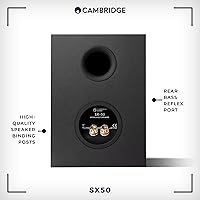
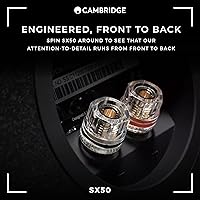
Once you have an amplifier, the physical setup is about as simple as it gets — strip some wire, connect to the binding posts, and you are listening within minutes. The binding posts are solid and accept bare wire, banana plugs, or spade connectors without fuss. No apps, no drivers, no firmware.
The passive nature of the speakers is a setup hurdle that catches some buyers off guard if they did not research carefully before purchasing. The product listing does not always make the amp requirement prominent enough, and several one-star reviews trace back entirely to a buyer expecting powered, plug-and-play behavior.
Long-Term Durability
72%
28%
Owners who have run these Cambridge Audio bookshelf speakers for two or more years report no driver degradation, no rattles developing, and no cabinet delamination. Cambridge Audio has a reasonable track record for passive speaker longevity, and the MDF construction holds up well in typical indoor home environments.
As a discontinued model, replacement parts and manufacturer warranty support are harder to access than for current-lineup products. Buyers should also note that the vinyl wrap finish can show surface scuffs over time if the speakers are handled frequently or placed in high-traffic areas without care.
Availability & Discontinued Status
58%
42%
At the time of writing, new units remain available through several retailers and marketplace sellers, often at competitive prices. For buyers who find stock, the product delivers the same performance it always has — discontinuation has not changed the hardware in any way.
The discontinued status does introduce legitimate long-term uncertainty. If a driver fails after the warranty period, sourcing a matched replacement will be genuinely difficult. Buyers planning to keep a pair for five-plus years or integrate them into a growing system should weigh this risk realistically against the current value.

Suitable for:

The Cambridge Audio SX-50 is a strong match for anyone who already owns — or is willing to buy — a stereo amplifier or AV receiver and wants a meaningful upgrade from a soundbar or built-in TV speakers without filling half a room with equipment. Apartment dwellers, students, and office workers will appreciate the compact footprint, which sits comfortably on a desk or shelf without demanding a dedicated listening space. If your primary uses are music, movies, or gaming in a small-to-medium room, the SX-50 pair delivers a level of vocal clarity and midrange warmth that genuinely punches above what competitors at this price typically offer. Hi-fi newcomers stepping into passive speaker territory for the first time will find the 8-ohm load and 89dB sensitivity easy to work with — most entry-level Denon or Yamaha receivers will drive them without any issues. They also work well as front left and right channels in a 2.1 setup if you pair them with a modest subwoofer to fill in the low end.
Not suitable for:

If you are expecting a plug-and-play experience, the Cambridge Audio SX-50 will frustrate you — these are purely passive speakers that produce no sound without a separate amplifier or receiver, and that requirement is not always obvious from the product listing. Buyers in large, open-plan living rooms or anyone who listens to bass-heavy music at high volumes will consistently find the low-end output underwhelming, even with a subwoofer in the mix, simply because the cabinet size and driver diameter have physical limits. The model has also been discontinued by the manufacturer, which means warranty support and driver replacement options are diminishing over time — a real concern if you are planning a long-term investment or building a system you expect to expand and service for years. Anyone on a very tight all-in budget should also think carefully about the total cost of entry: the speakers themselves are only part of the equation, and a worthwhile amplifier adds a meaningful additional expense. Finally, listeners who prefer a bright, analytically detailed sound signature — rather than a warm, smooth one — may find the tuning of this compact hi-fi speaker set too relaxed for their tastes.
Specifications

  • Speaker Type: Passive bookshelf speakers sold as a stereo pair, requiring an external amplifier or AV receiver to operate.
  • Woofer Driver: 5.25″ mid-bass driver using a doped paper cone for enhanced damping and warm frequency reproduction.
  • Tweeter Driver: 1″ (25mm) silk dome tweeter designed to deliver smooth, detailed high-frequency response with minimal listening fatigue.
  • Frequency Response: Rated from 50Hz to 22kHz, covering the full audible range with practical bass extension suited to small and medium rooms.
  • Sensitivity: 89dB at 1W/1m, meaning these speakers produce adequate volume without demanding high amplifier power output.
  • Impedance: 8 ohms nominal, making the SX-50 pair broadly compatible with the majority of stereo amplifiers and AV receivers on the market.
  • Amplifier Power: Recommended amplifier power ranges from 10 to 100 watts per channel, giving buyers flexibility across entry-level and mid-range amplification.
  • Enclosure Type: Bass reflex (ported) design with a rear-facing port that extends low-frequency output beyond what a sealed cabinet of this size could achieve.
  • Dimensions: Each cabinet measures 8.86″H x 6.34″W x 9.45″D, keeping the physical footprint compact enough for desk or shelf placement.
  • Weight: The pair weighs approximately 6.6 lbs (3 kg) combined, making them easy to position and reposition without assistance.
  • Connectivity: Passive wired connection via standard speaker cable terminals; accepts bare wire, banana plugs, or spade connectors.
  • Channel Config: 2.0 stereo configuration — the pair covers left and right channels and can serve as front speakers in a larger surround setup.
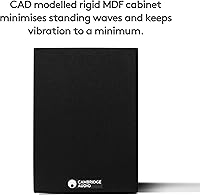
  • Finish & Color: Matte black vinyl wrap over an MDF cabinet, offering a clean, minimalist appearance that blends into most home or office environments.
  • Manufacturer: Designed and branded by Cambridge Audio, a UK-based audio company with a long track record in hi-fi speaker and electronics design.
  • Product Status: Officially discontinued by the manufacturer, though new stock continues to be available through select retailers and marketplace sellers.
  • Included Contents: Package includes one matched pair of speakers; no amplifier, speaker cable, or additional accessories are included in the box.
  • Warranty: Covered by a limited manufacturer warranty; buyers should confirm coverage terms with their specific retailer given the discontinued status.

Related Reviews

Cambridge Audio SX-60
81%
91%
Sound Quality
88%
Bass Performance
79%
Treble & High-Frequency Clarity
86%
Midrange Accuracy
84%
Build Quality
More
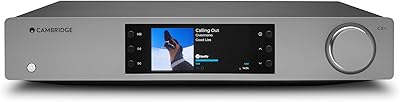
Cambridge Audio CXN100 Network Audio Player
86%
94%
Sound Quality
88%
Multiroom Compatibility
85%
Ease of Use
90%
Connectivity Options
92%
Build Quality
More
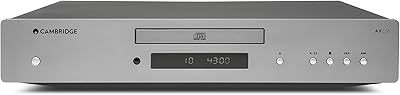
Cambridge Audio AXC35
80%
93%
Sound Quality
91%
Build Quality
89%
DAC Performance
78%
Value for Money
61%
Connectivity & Outputs
More
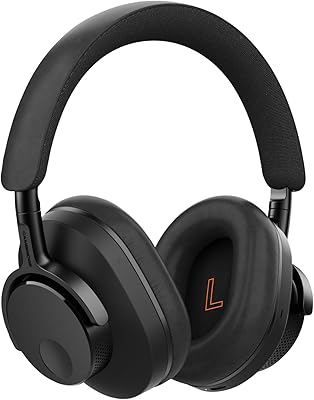
Cambridge Audio Melomania P100 SE Headphones
86%
96%
Battery Life
90%
Sound Quality
78%
Noise Cancellation
88%
Comfort & Fit
85%
Gaming Mode (Low Latency)
More
Cambridge Audio AXA25
70%
91%
Sound Quality
88%
Build Quality
84%
Value for Money
86%
Ease of Setup
79%
Input Flexibility
More
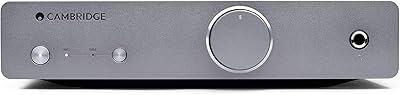
Cambridge Audio Alva Duo Phono Preamp
85%
91%
Sound Quality
88%
Noise Reduction
85%
Headphone Amplifier
90%
Build Quality
84%
Ease of Use
More
Cambridge Audio Minx Min 22
79%
91%
Sound Clarity & Detail
47%
Bass & Low-End Performance
88%
Soundstage & Dispersion
83%
Build Quality & Materials
69%
Ease of Setup & Installation
More
Cambridge Audio AXR100
81%
92%
Sound Quality
89%
Build Quality
86%
Phono Stage Performance
67%
Bluetooth Reliability
78%
AM/FM Tuner
More
Back Bay Audio FirstClass 50 Active Noise Cancelling Earbuds
85%
88%
Noise Cancellation
85%
Sound Quality
91%
Battery Life
79%
Comfort & Fit
93%
Quick Charge Feature
More
Rockville RXC50D v2 50 Farad 24V Car Audio Capacitor
84%
87%
Performance
90%
Ease of Installation
76%
Voltage Display Accuracy
85%
Bass Improvement
82%
Build Quality
More

FAQ

No — the Cambridge Audio SX-50 is a fully passive speaker, which means it draws no power directly from a wall socket. All the power comes from the amplifier or AV receiver you connect them to via speaker cable. If you do not already own an amp, you will need to factor that into your budget.
An entry-level stereo integrated amp or AV receiver in the 30 to 80 watt per channel range is a solid starting point. Brands like Denon, Yamaha, and Cambridge Audio's own amps are frequently recommended pairings. More important than raw wattage is the overall quality of the amp — a cleaner signal will noticeably improve the sound compared to a cheap high-wattage unit.

Yes, they work very well on a desk, but you still need a small stereo amplifier or DAC-amp in the chain between your PC and the speakers. Once you have that sorted, the compact footprint and detailed midrange make the SX-50 pair genuinely enjoyable for music, movies, and gaming at a desk.

For a small room and casual listening — music, dialogue, moderate gaming — the bass is respectable and not hollow-sounding. But if you listen to hip-hop, electronic, or action movie soundtracks at meaningful volume, or if your room is larger than around 150 square feet, adding a subwoofer makes a real difference. Think of the bass as competent rather than powerful.

Because the port faces the rear of the cabinet, you want at least three to four inches of clearance between the back of the speaker and the wall behind it. Pushing them flush against a wall or bookshelf backing traps the port output and creates a boomy, uneven bass response. A little breathing room goes a long way.

Technically yes, but they are better suited as front left and right channels in a 2.0 or 2.1 setup. Using them as surround or rear speakers is possible if you already have them and want to experiment, but the compact hi-fi speaker set is really designed and voiced for stereo listening rather than multi-channel surround duties.

Not especially, as long as you find new stock from a reputable seller with a clear return policy. Discontinuation means Cambridge Audio will not release firmware updates or produce replacement parts going forward, but passive speakers are mechanically simple and can last many years without needing service. The main long-term risk is a driver replacement down the road if something fails after the warranty period.

Compared to Klipsch bookshelf models in a similar range, these Cambridge Audio speakers tend to sound warmer and smoother, while Klipsch typically offers more efficiency and a brighter top end. Polk options in the same bracket are often more bass-forward out of the box. Which sounds better is genuinely a matter of personal preference, so if you can audition them side by side, it is worth doing.

Not without an amplifier in between. Most TVs only have audio output options like optical, HDMI ARC, or a headphone jack — none of which can drive passive speakers directly. You would need an AV receiver or a small stereo amp with an optical or analog input to bridge the TV and the speakers. A budget receiver handles this cleanly and also opens up surround sound options later.

No cable is included in the box — just the matched pair of speakers. You will need to buy speaker wire separately, which is inexpensive. For a typical desktop or small-room setup, a basic 16-gauge copper speaker cable is more than sufficient. The binding posts accept bare wire, banana plugs, or spade connectors, so you have flexibility in how you terminate the cable.