Overview

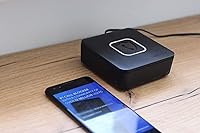
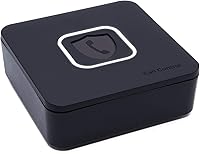
The Call Control Home WiFi Landline Call Blocker is a compact plug-in device that sits between your phone line and handset, intercepting unwanted calls before your phone ever gets the chance to ring. It relies on a cloud-updated blocklist built from millions of community-reported numbers, so the database keeps improving without any manual effort on your end. There's no monthly subscription for the core landline function — you pay once and you're covered. That said, two requirements are non-negotiable: your line must have Caller ID service, and you'll need a smartphone to use the companion app. For households drowning in robocalls, this is genuinely a set-it-and-forget-it fix.
Features & Benefits

The standout advantage of this call blocker is what happens before your phone rings — flagged numbers are intercepted at the source, so you never hear a single ring from them. That filtering is powered by CommunityIQ technology, a crowd-sourced blocklist that grows smarter as users across the network report problem numbers. Through the free app, you can also manage a personal whitelist or blacklist, which matters when a legitimate number gets caught in the filter. Adult children who've installed the WiFi landline blocker at a parent's home particularly appreciate remote management — call logs and settings are accessible from anywhere. Unlike carrier-based services, there's no ongoing fee attached.

Best For

This device hits its sweet spot with a fairly specific audience. If you're an elderly parent getting hammered by Medicare scams and political robocalls — or the adult child trying to protect them — this is probably the most practical option available. It's also a solid fit for small offices still running a landline that can't afford constant interruptions from telemarketers. If you've already tried your carrier's built-in blocking and found it underwhelming, the device offers a real upgrade without locking you into a monthly subscription. It's not a good match for anyone without a smartphone or without Caller ID on their line — those are firm, unavoidable requirements.

User Feedback

With a 3.3-star average across 71 ratings, this call blocker has a divided audience — and that's worth taking seriously. Satisfied users consistently report a dramatic drop in junk calls and appreciate how simple the initial setup is. Caregivers especially value being able to monitor a parent's call history without being on-site. On the other side, false positives are a genuine frustration — some legitimate callers get blocked, and fixing that means navigating an app several reviewers describe as clunky. WiFi connectivity issues also surface more than you'd hope, with a handful of buyers citing router compatibility problems. Overall, the experience seems highly dependent on installation conditions.

Pros

  • Calls are blocked before the phone ever rings, so there is zero disruption to your household routine.
  • The CommunityIQ blocklist updates automatically, meaning you rarely have to maintain it yourself.
  • One-time purchase with no monthly fee for landline blocking — your cost stays fixed after day one.
  • Remote app management makes this a practical tool for caregivers protecting an elderly parent's line.
  • Whitelist controls let you manually protect important numbers from ever being accidentally blocked.
  • Easy initial setup is consistently praised by buyers who got the WiFi connection working smoothly.
  • The web portal option means you can manage settings from a laptop or desktop, not just a phone.
  • A 30-day return window and one-year warranty provide a reasonable safety net if things go wrong.
  • The device works independently of any smartphone call-blocking tier — the landline function stands on its own.
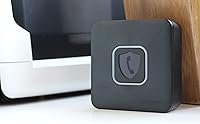
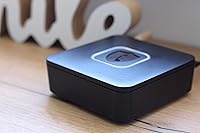
  • Compact form factor means it sits inconspicuously near your phone without cluttering the space.

Cons

  • Requires both an active Caller ID service and a smartphone — two prerequisites that can exclude the very users who need it most.
  • False positives are a real and recurring problem; legitimate callers do occasionally get blocked without warning.
  • WiFi pairing issues have frustrated a notable share of buyers, and router compatibility is not always straightforward.
  • The companion app feels dated and unintuitive to many users, particularly those who are not comfortable with technology.
  • A 3.3-star average across reviews signals that a meaningful portion of buyers did not have a satisfying experience.
  • No offline or standalone fallback — if your WiFi drops, the device's cloud-based blocking can be compromised.
  • Resolving false positives requires navigating the app, which adds friction for less tech-savvy household members.
  • There is no option to block calls based on area code or region without manual list management.
  • Some buyers report that customer support response times are slower than expected when setup issues arise.
  • The app interface has not kept pace with modern smartphone design standards, which affects day-to-day usability.

Ratings

Our editorial team used AI analysis to evaluate verified global buyer reviews of the Call Control Home WiFi Landline Call Blocker, actively filtering out incentivized, bot-generated, and low-quality submissions to surface what real households actually experience. The scores below reflect both the genuine wins and the recurring frustrations buyers encounter — nothing has been softened or inflated. Whether this device will work brilliantly or disappoint you depends heavily on your specific setup, and that reality is reflected transparently throughout.

Call Blocking Effectiveness
74%
26%
When the device is working as intended, the reduction in unwanted calls is dramatic — many households report going from a dozen or more junk calls per day down to almost none. The CommunityIQ blocklist is genuinely robust, catching robocall campaigns and telemarketer numbers that carrier-level tools often miss entirely.
False positives are a real and recurring issue, with legitimate callers — doctors' offices, local businesses, even family members — occasionally getting silently blocked. For households where missing an important call is unacceptable, this inconsistency is more than a minor annoyance.
Ease of Setup
68%
32%
Buyers who have a straightforward home network and follow the instructions carefully generally get up and running without much trouble, and many describe the initial experience as simpler than expected. The app walks you through the WiFi pairing process step by step, which helps less confident users get started.
A notable portion of buyers have hit persistent WiFi pairing problems, particularly with certain router models or dual-band network configurations. When setup goes wrong, troubleshooting it without strong technical confidence can be genuinely frustrating, and support response times have been criticized as slow.
App Quality
53%
47%
The companion app covers the functional basics — you can view call history, manage your block and allow lists, and adjust settings remotely without needing to touch the physical device. For caregivers checking in on a parent's call log from across town, even a dated app gets the job done.
The interface feels behind the times compared to modern smartphone apps, and less tech-savvy users frequently describe it as confusing or unintuitive. Several reviewers noted that navigating the app to fix a false positive is cumbersome enough to be a deterrent for older users managing it themselves.
Remote Management
82%
18%
The ability to manage the device from anywhere — via app or web portal — is one of its strongest real-world advantages, especially for adult children who have installed it at an aging parent's home. Being able to add a number to the whitelist remotely, without driving over, saves genuine time and stress.
The remote management experience is only as reliable as the device's WiFi connection, and users who experience connectivity drops report that the app can lose sync with the hardware unexpectedly. There is no offline fallback, so a dropped network connection means both blocked calls and lost visibility until reconnected.
Value for Money
77%
23%
The one-time purchase model with no ongoing subscription fee is a meaningful long-term advantage over competing services that charge monthly. For households dealing with constant robocall harassment, the math works out favorably over a year or two compared to carrier add-ons or subscription-based alternatives.
At its price point, buyers expect a more polished app experience and more consistent performance than the real-world reviews reflect. Users who encounter WiFi pairing failures or persistent false positives often feel the value proposition weakens considerably when the device requires frequent manual intervention.
Blocklist Coverage
79%
21%
The CommunityIQ database is one of the larger crowd-sourced blocklists available in this device category, and it updates automatically so you are not relying on a static list that goes stale. New robocall campaigns tend to get flagged relatively quickly once enough users across the network report them.
No crowd-sourced blocklist is perfect, and some buyers find that highly localized spam numbers — particularly those using neighbor spoofing — slip through more often than expected. There is also limited transparency about how frequently the list syncs to the device, which matters when a new spam campaign hits your area.
Hardware Build
71%
29%
The compact form factor means the device sits discreetly next to any phone base without drawing attention, and the physical build feels solid enough for something that is intended to stay plugged in permanently. Its small footprint is appreciated in tighter spaces near phone jacks.
At nearly 10 ounces, the device is heavier than it looks, which can be an issue if the phone jack location is awkward or the cable tension causes the unit to shift. A few buyers noted the housing feels utilitarian rather than refined for a product at this price tier.
Compatibility
61%
39%
The device works across a wide range of landline phone types — corded, cordless, multi-handset systems — as long as Caller ID is active on the line. That flexibility means most households with a traditional landline can technically use it without needing to replace their existing phone hardware.
The dual requirements of active Caller ID service and a compatible smartphone immediately disqualify a segment of buyers who are likely in the target demographic — particularly older adults without smartphones or households that have dropped Caller ID to reduce their phone bill. These prerequisites are not always communicated clearly at the point of purchase.
False Positive Rate
48%
52%
The device does include whitelist functionality specifically to address false positives, and buyers who proactively add important numbers before issues arise tend to have fewer problems. For those who take the time to configure the allowlist carefully upfront, the frustration level drops noticeably.
For users who rely on receiving calls from a wide or unpredictable range of numbers — home healthcare providers, contractors, government agencies — the false positive rate is high enough to create genuine risk. The experience of missing a critical call with no notification that it was blocked is the most consistently cited buyer regret.
Privacy & Data
66%
34%
The call history log stored in the app gives users visibility into what has been blocked and what came through, which provides some reassurance that the system is working and lets you audit for false positives after the fact. Most buyers appreciate having a record rather than calls disappearing with no trace.
Some privacy-conscious buyers have raised questions about how call data is handled when it passes through a cloud-connected service, particularly given that the device routes number information through external servers to perform its checks. The company's data practices are not prominently disclosed in the product materials.
Long-Term Reliability
62%
38%
Many satisfied buyers report using the device for a year or more without any hardware failures, and the one-year warranty provides some protection against defects in that window. For households that got past the setup hurdle without issues, the device tends to run quietly in the background without needing attention.
A subset of reviews describe the device losing WiFi connectivity over time, requiring periodic resets to restore functionality — a particular problem for remote setups at a parent's home where someone else would need to intervene physically. Long-term reliability seems to vary significantly depending on the home network environment.
Customer Support
51%
49%
The company does offer customer support channels and responds to some negative Amazon reviews, which suggests at least a baseline level of post-purchase engagement. Buyers who contacted support about setup issues have in some cases been walked through troubleshooting successfully.
Slow response times and inconsistent resolution quality are recurring themes in buyer complaints, particularly for users who encountered WiFi pairing problems after purchase. For less technically confident buyers who need hand-holding through setup, the support experience has fallen short of expectations more often than it should at this price point.

Suitable for:

The Call Control Home WiFi Landline Call Blocker is purpose-built for households where unwanted calls have become a genuine daily disruption rather than an occasional nuisance. It's especially well-matched for older adults who are frequent targets of Medicare scams, utility fraud calls, and political robocalls — people who want the phone to simply stop ringing with junk, without having to learn a complicated system. Adult children who manage a parent's landline remotely will find real practical value here, since the app lets them review call logs, adjust settings, and add numbers to the blocklist without ever stepping foot in the house. Small home offices still running a landline can also benefit, particularly when telemarketer interruptions eat into productivity. If you've already tried your phone carrier's built-in spam tools and walked away underwhelmed, this device represents a meaningful step up — and the one-time cost with no recurring fees makes the long-term math easy to justify.
Not suitable for:

The Call Control Home WiFi Landline Call Blocker has two hard requirements that immediately disqualify a portion of its target audience: your landline must have an active Caller ID service, and someone in the household must own a compatible smartphone to manage the companion app. If your elderly parent doesn't have a smartphone — and you don't live nearby to manage the app on their behalf — this device loses a significant chunk of its value. People hoping for a truly standalone plug-and-play experience with zero app dependency will be disappointed. The WiFi connectivity requirement also introduces a layer of technical setup that can frustrate less confident users, and some router configurations have caused persistent pairing headaches based on real buyer reports. Anyone who needs absolute certainty that zero legitimate calls will be blocked should also approach with caution, since false positives are a documented and recurring issue with the device's blocklist.
Specifications

  • Dimensions: The device measures 3.7 x 3.7 x 1.5 inches, making it compact enough to sit unobtrusively near any home phone base.
  • Weight: At 9.6 ounces, the unit is lightweight and requires no mounting or permanent installation.
  • Connectivity: The device connects to your home network via WiFi, enabling cloud-based blocklist updates and remote app management.
  • Blocking Method: Calls are intercepted and blocked before they reach your handset, so the phone never rings for flagged numbers.
  • Blocklist Tech: Call filtering is powered by CommunityIQ, a continuously updated crowd-sourced database built from millions of user-reported spam numbers.
  • Phone Compatibility: Works with landline phones that have an active Caller ID service enabled through the phone carrier — this is a firm requirement.
  • App Support: The companion app is compatible with iPhone 5S or newer running a supported iOS version, and Android smartphones running Android 6 or newer.
  • Management Options: Users can manage call settings, review call history, and update block or allow lists via the free iOS app, Android app, or web portal.
  • Subscription Model: There is no ongoing monthly fee for the core landline call-blocking function — the purchase price covers the hardware and basic service indefinitely.
  • Premium Option: An optional paid upgrade tier is available for users who also want spam call blocking on their smartphone, though it has no effect on landline performance.
  • Manufacturer: The device is manufactured by Call Control, a company specializing in call-blocking solutions for both mobile and landline phones.
  • Model Number: The official model identifier is CCHWIFI, which may be useful when contacting support or registering the product.
  • ASIN: The Amazon catalog identifier for this product is B08SBNS6VT.
  • Release Date: The device was first made available to consumers in January 2021.
  • Warranty: Call Control provides a one-year product warranty covering manufacturing defects from the date of purchase.
  • Return Policy: A 30-day customer satisfaction guarantee allows buyers to return the unit for a full refund if they are unhappy with it for any reason.
  • User Rating: The product holds a 3.3 out of 5-star average based on 71 customer ratings on Amazon at the time of this review.

Related Reviews
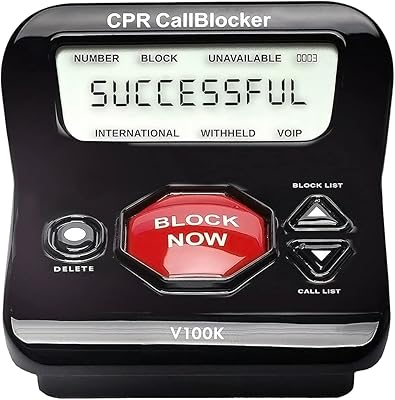
CPR Call Blocker Shield Landline Call Blocker
75%
76%
Call Blocking Effectiveness
91%
Ease of Setup
63%
Pre-loaded Database Quality
68%
Manual Blocking Experience
82%
Value for Money
More
CPR V100K Call Blocker for Landline Phones
81%
91%
Ease of Setup
78%
Call Blocking Effectiveness
93%
Ease of Use
74%
Blocklist Coverage
67%
Build Quality
More
TelPal CT-TC803 Landline Call Blocker
77%
83%
Ease of Setup
79%
Call Blocking Effectiveness
91%
Value for Money
88%
Blacklist Capacity
77%
Build Quality & Durability
More
Digitone ProSeries 3 Call Blocker
85%
91%
Effectiveness in Blocking Calls
85%
Ease of Setup
94%
Compatibility with Landline Phones
88%
Display Visibility
74%
Caller History Management
More
Linksys Velop Mesh Home WiFi System WHW0101
85%
88%
Performance for Streaming & Gaming
94%
Ease of Setup
85%
WiFi Coverage (Up to 1,500 sq. ft.)
87%
Device Support (10+ Devices)
91%
App Experience & Management
More
KERUI WiFi Home Security Alarm System DLB01
83%
88%
Ease of Installation
85%
App Experience
91%
Siren Volume & Effectiveness
83%
Expandability
88%
Voice Control Compatibility
More
Netgear Orbi RBK50 2-Pack Mesh WiFi System
72%
88%
Coverage & Range
83%
Signal Consistency
91%
Setup & Installation
84%
Ease of Daily Use
62%
Value for Money
More
NETGEAR Orbi RBK30 Whole Home Mesh WiFi System
82%
88%
WiFi Coverage
91%
Ease of Setup
85%
Performance Stability
89%
App Functionality
87%
Alexa Compatibility
More
NETGEAR Orbi RBK13 Mesh WiFi System
77%
88%
Coverage & Dead Zone Elimination
91%
Ease of Setup
67%
WiFi Speed & Throughput
83%
Roaming & Band Switching
74%
Multi-Device Performance
More
YoLink Uno Indoor Wi-Fi Security Camera
73%
88%
Ease of Setup
83%
App Experience
76%
Video Quality
67%
Night Vision Performance
81%
Pan and Tilt Control
More

FAQ

No — the landline call-blocking function is covered by the one-time purchase with no recurring fees attached. The only optional paid tier is if you want spam blocking on your smartphone too, but that has nothing to do with how the device performs on your home phone.

It should work with most cordless phone systems as long as your landline has Caller ID service active through your carrier. The device plugs in between your phone line and your base unit, so the type of handset — cordless or corded — generally does not matter. Just confirm Caller ID is enabled before ordering.

Unfortunately, a smartphone is required to set up and manage the Call Control Home WiFi Landline Call Blocker. If your parent doesn't have one but you live nearby or can manage the app remotely on their behalf, it can still work well — but if there's genuinely no smartphone in the picture at all, this device is not a practical fit.

It pulls from the CommunityIQ blocklist, which is a large, crowd-sourced database of known spam, robocall, and telemarketer numbers reported by users across the network. The list updates automatically in the background, so you don't have to manually add every bad number yourself.

False positives do happen occasionally, and it's one of the more common complaints from buyers. When it does, you can add the number to your personal whitelist through the app, which will prevent it from being blocked in the future. It's not a perfect system, but having that manual override helps.

Yes, and that's actually one of the strongest use cases for this device. Once it's set up and connected to their WiFi, you can view their call history, adjust blocking settings, and manage the whitelist or blacklist entirely through the app or the web portal — all from wherever you are.

Most buyers who had a smooth experience describe the initial setup as straightforward — plug the device into the phone line, connect it to WiFi through the app, and you're largely done. That said, some users have reported WiFi pairing issues depending on their router, so results can vary. Reading the installation instructions carefully before starting seems to make a real difference.

Not automatically, no. The device is built specifically for landlines. There is an optional premium subscription for the Call Control mobile app that can extend spam blocking to your smartphone, but that's a separate paid service and completely independent from what the hardware does for your home phone.

You would need to reconnect the device to your new network through the app, similar to how you'd re-pair any WiFi-connected device in your home. It's a minor inconvenience but not a complicated process — just treat it like setting up a new smart home gadget.

Yes — there's a 30-day satisfaction guarantee that lets you return the unit for a refund if you're not happy with it. There's also a one-year product warranty covering hardware defects. Given the mixed reviews out there, it's reassuring that the return window gives you enough time to actually test it in your real phone environment.