Overview

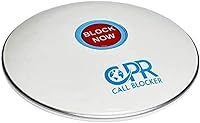
The CPR Call Blocker Shield Landline Call Blocker is a physical plug-in device that intercepts robocalls and scam calls before your phone ever rings. If you or someone you care about is constantly pestered by telemarketers and fraud callers, this is the kind of hardware fix that actually makes a dent. It works with most major US landline providers — AT&T, Verizon, Comcast, and many others — though you will need an active Caller ID service already in place. Unlike monthly subscription apps, this is a one-time purchase with no ongoing fees, making it a practical alternative for households that want quieter phones without recurring costs.
Features & Benefits

Out of the box, this call blocker arrives pre-loaded with 2,000 known scam and robocall numbers, so it starts filtering immediately without any configuration. When a new unwanted number slips through, you can add it to the block list manually with a single button press, with room for up to 1,500 additional numbers. The device is small enough to sit beside your phone base without getting in the way, weighing less than an ounce. It runs on battery power, requires no internet connection, and integrates with your existing Caller ID display so you can see who is calling before deciding whether to pick up. Nothing complicated — just plug it in and let it run.

Best For

This landline scam filter is particularly well-suited for seniors and retirees who are disproportionately targeted by Medicare fraud schemes and IRS impersonators. If your household has already tried the Do Not Call Registry with little success, the Shield device offers a more proactive layer of defense. It is also a thoughtful setup for a caregiver looking to protect an aging parent — someone who should not have to screen every call out of fear. Installation is simple enough that no technical hand-holding is needed. And since it works across all major US landline providers, compatibility is rarely a concern. If you want real call protection without apps or online accounts, this fits.

User Feedback

Holding a 4.0-star rating across a large pool of reviews, the overall reception is solidly positive — though not without fair criticism. Most satisfied buyers report a noticeable drop in unwanted calls within the first week and appreciate how painless the setup is. On the flip side, some users note that the pre-loaded block list does not catch every emerging scam number, meaning you may need to add numbers manually over time, which a few find tedious. Others expected more capacity after comparing it to pricier models in the same lineup. One thing worth flagging upfront: if your landline plan does not include Caller ID service, this device will not work — and that surprises more buyers than it should.

Pros

  • Starts blocking known scam numbers right out of the box with no setup required.
  • One-time purchase with absolutely no monthly fees or subscription costs.
  • Works with virtually all major US landline providers, including AT&T, Verizon, and Comcast.
  • Adding a new unwanted number to the block list takes a single button press.
  • Compact and lightweight enough to sit beside any phone without cluttering the space.
  • No internet connection needed — the Shield device runs fully standalone.
  • Backed by a large and generally positive review base built over years of real-world use.
  • Easy enough to install that non-technical users can handle it without outside help.
  • Long-term users consistently report sustained effectiveness over many months of use.

Cons

  • Requires an active Caller ID service on your landline plan — easily overlooked before buying.
  • The pre-loaded block list covers 2,000 numbers, which is modest compared to cloud-based alternatives.
  • Manually adding new scam numbers one by one becomes tedious if call volume stays high.
  • Total manual blocking capacity of 1,500 numbers may fill up faster than expected for heavy users.
  • Only supports a single phone line, limiting usefulness in multi-line household setups.
  • Does not update its blocked number database automatically — newer scam numbers can slip through.
  • Battery-powered operation means occasional battery replacement adds a small ongoing maintenance task.
  • Higher-tier models in the same brand lineup offer significantly more blocking capacity for heavier needs.

Ratings

The scores below reflect an AI-driven analysis of verified global user reviews for the CPR Call Blocker Shield Landline Call Blocker, with spam, bot-generated, and incentivized feedback actively filtered out to ensure accuracy. Ratings span the full spectrum of real buyer experiences — from households that saw an immediate drop in scam calls to users who ran into compatibility surprises or found the blocking capacity limiting over time. Both the genuine strengths and the honest frustrations are reflected here.

Call Blocking Effectiveness
76%
24%
Most users report a meaningful and noticeable reduction in robocalls and telemarketing calls within the first week of plugging the Shield device in. For households that were receiving multiple scam calls daily, the relief is real and immediate — particularly for known Medicare fraud and IRS impersonator numbers already in the pre-loaded database.
Because the block list is fixed at the time of manufacture, newer scam numbers and rotating spoofed caller IDs frequently slip through undetected. Users who face high volumes of calls from constantly changing numbers find themselves manually adding entries far more often than they expected.
Ease of Setup
91%
Installation consistently earns praise across reviews — the device connects between the wall jack and the phone, and it starts working right away without any configuration steps. Caregivers setting it up for elderly relatives specifically highlight how little explanation the process requires, even for people with no technical background.
A recurring pain point is the Caller ID service requirement, which is not made obvious enough during purchase. Buyers who do not currently pay for Caller ID on their landline plan discover after setup that the device cannot function without it, which generates avoidable frustration and returns.
Pre-loaded Database Quality
63%
37%
Having 2,000 known scam numbers already blocked from day one gives the device an immediate advantage over doing nothing, and many users find the most common offenders — political robocallers, warranty scams, and Medicare fraud lines — are caught reliably. For light-to-moderate call volumes, the database holds up well in the early months.
Compared to cloud-based services that maintain and push updates to hundreds of thousands of numbers in real time, the static pre-loaded list ages quickly. Scammers rotate numbers aggressively, and this landline scam filter has no mechanism to refresh its database automatically, which is a genuine structural limitation buyers should understand upfront.
Manual Blocking Experience
68%
32%
The one-button approach to blocking a number after a bad call is intuitive enough that even first-time users get it right immediately. The process takes seconds and does not require navigating any menus, which is genuinely appreciated by older users who want control without complexity.
With a manual capacity of 1,500 additional numbers, power users in high-scam-call areas can fill that space faster than anticipated, especially if they are blocking aggressively. Once the list is full, managing it requires deleting older entries — a process that is more cumbersome than the simple blocking action itself.
Value for Money
82%
18%
The one-time purchase model resonates strongly with buyers who are philosophically opposed to yet another monthly subscription. Over a year or two of use, this call blocker pays for itself quickly compared to subscription-based call protection services that charge indefinitely, and long-term users consistently affirm it keeps delivering.
Buyers who compare it to the higher-capacity models in the same brand lineup sometimes feel they chose the wrong tier for their needs, especially once manual blocking space starts running low. The value calculation shifts if you end up needing a second unit for a multi-line home.
Build Quality & Durability
79%
21%
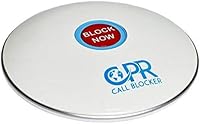
The Shield device is a compact, solid little unit that sits quietly beside the phone without drawing attention. Users who have owned one for a year or more consistently report it keeps working without any physical degradation — no connectivity issues, no button failures, no problems from everyday handling.
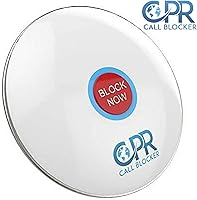
The glossy white plastic finish attracts smudges and scratches more visibly than a matte surface would, and a handful of users report it can feel a touch lightweight or toy-like when first handled. It does not feel premium, though it does feel dependable.
Compatibility
77%
23%
Broad compatibility across all major US landline providers — including AT&T, Verizon, Comcast, Ooma, and CenturyLink — means the vast majority of buyers can plug it in without a second thought about whether it will work with their service. Tone dialing support covers essentially every modern home phone setup.
Single-line-only operation is a genuine limitation for households with two or more active phone lines — each line requires a separate unit. Buyers with VoIP-only setups or providers outside the US may encounter compatibility issues that are not clearly communicated at the point of sale.
Caller ID Integration
71%
29%
When Caller ID is active, the integration works cleanly — the device reads the incoming number, checks it against the block list, and intercepts the call before the phone rings, all without any visible effort from the user. The real-time screening aspect gives households a meaningful sense of control over who gets through.
The hard dependency on a paid Caller ID subscription is a design constraint that catches a surprising number of buyers off guard, particularly those on basic or legacy landline plans. There is no workaround or fallback mode — without Caller ID data, the device is essentially inert.
Long-term Reliability
83%
Unlike software-based services that can degrade if a company changes its infrastructure or discontinues a plan tier, the Shield device operates entirely offline and continues doing exactly what it was doing on day one. Long-term owners consistently report no surprises — it just keeps working month after month.
The offline nature is a double-edged quality: while it ensures reliability, it also means the device never improves or adapts over time. The scam numbers it knew about at launch are still the only ones it knows about automatically, so its effectiveness does slowly erode as the threat landscape evolves.
Physical Design & Footprint
84%
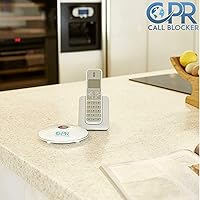
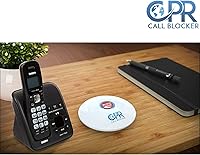
At under an ounce and roughly the footprint of a large coaster, this call blocker disappears into the phone table environment without demanding any rearrangement. Users in smaller spaces specifically appreciate that it does not add clutter or require a dedicated power outlet nearby.
The minimalist physical design means there is very little visual feedback about its status or current block list — no display, no indicator lights that convey useful information at a glance. For users who want to confirm it is actively working, the lack of any status feedback can feel like flying blind.
Battery Performance
69%
31%
The low-power design keeps battery consumption modest, and many users go extended periods without needing a replacement. For a device that runs continuously in the background, the power efficiency is generally appropriate for its role.
There is no low-battery indicator or alert, so users can be caught off guard when the device stops functioning due to dead batteries — only realizing it when calls start getting through again. Battery replacement is a minor but recurring maintenance task that subscription-free buyers sometimes forget to factor in.
Documentation & Support
61%
39%
The included instructions are straightforward enough for basic setup, and most users get up and running without needing any outside help. The simplicity of the device means there is not much that can go wrong during initial installation.
Users who run into edge cases — like a Caller ID service that is technically active but delivered differently by their provider — find the troubleshooting documentation thin and the manufacturer support difficult to reach. Online help resources for the Shield model specifically are sparse compared to what buyers expect from a mid-range product.
Scam Number Coverage Breadth
58%
42%
For common, long-running scam categories — extended warranty calls, Social Security number fraud, IRS impersonators — the pre-loaded list tends to catch a solid portion of repeat offenders that have been operating the same numbers for months or years.
Emerging scam campaigns, number-spoofing operations, and regionally targeted fraud calls are largely invisible to this device. Users in areas with concentrated telemarketing or scam activity quickly find the gaps, and the absence of any update pathway means those gaps are permanent unless manually patched one number at a time.
Suitability for Elderly Users
88%
The device was practically built with older, non-technical users in mind — it requires zero digital interaction after setup, has a single physical button for the one action users might need to take, and works silently in the background. Caregivers consistently rate it highly as a protective measure they can install and confidently leave in place.
The Caller ID service prerequisite can be an unexpected hurdle for older users on legacy basic landline plans who have never needed or paid for that feature. Without a caregiver to troubleshoot, discovering the device is not working due to a missing service can be confusing and discouraging.

Suitable for:

The CPR Call Blocker Shield Landline Call Blocker is a strong fit for older adults and retirees who rely on a home landline and have grown exhausted by the daily barrage of scam calls, Medicare fraud attempts, and relentless telemarketers. If the Do Not Call Registry has done little to quiet your phone, this device offers a more active line of defense that does not require a smartphone, an app, or any ongoing account management. Caregivers shopping for an elderly parent or relative will find it especially practical — it installs simply, runs quietly in the background, and delivers real, day-to-day relief without demanding anything technical from the person using it. It is also a genuinely smart choice for any household on a major US landline provider that wants call protection without committing to a monthly subscription service. The one-time cost makes it an easy sell compared to software-based alternatives that charge indefinitely.
Not suitable for:

The CPR Call Blocker Shield Landline Call Blocker is not the right tool for everyone, and there are a few situations where it will fall short before you even plug it in. Most critically, if your landline plan does not include an active Caller ID service, the device simply will not function as intended — this trips up more buyers than it should, so check your plan before purchasing. Users who want a constantly updated, cloud-sourced block list covering hundreds of thousands of numbers will find the pre-loaded database modest by comparison; cloud-based services like Nomorobo are better suited for that level of coverage. It also only supports a single landline, so households with multi-line setups will need multiple units. And if the person using the phone is not comfortable occasionally pressing a button to manually block new numbers that slip through, the maintenance aspect can become a quiet frustration over time.
Specifications

  • Brand: Manufactured by CPR Call Blocker, a company specializing in landline call-blocking hardware.
  • Model: The Shield is the entry-level model in the CPR Call Blocker product lineup.
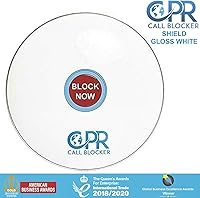
  • Color: Available in Gloss White, designed to blend with standard home phone equipment.
  • Dimensions: The device measures 5.31 x 5.31 x 0.98 inches, keeping a compact, flat footprint on any surface.
  • Weight: At just 0.64 ounces, the unit is lightweight enough to place beside or beneath a phone base without issue.
  • Power Source: Operates on battery power, requiring no wall outlet or USB connection for standard use.
  • Line Support: Designed for single-line operation only, making it suitable for one dedicated home phone line.
  • Dialer Type: Compatible with tone dialing systems, which covers the vast majority of modern US landline setups.
  • Pre-loaded Numbers: Ships with a database of 2,000 known scam, robocall, and telemarketing numbers already blocked from day one.
  • Manual Capacity: Users can manually add up to 1,500 additional numbers to the block list at any time using the on-device button.
  • Total Block Capacity: Combined pre-loaded and manual entries allow for a total of 3,500 blocked numbers across both lists.
  • Caller ID: An active Caller ID service subscription through your landline provider is required for the device to function correctly.
  • Internet Required: No internet connection is needed; the Shield device operates as a fully standalone, offline unit.
  • Subscription Fees: There are no monthly fees or recurring charges — the device is a one-time hardware purchase.
  • Answering System: Integrates with digital answering system setups common to most standard home phone configurations.
  • Compatibility: Works with major US landline providers including AT&T, Verizon, Comcast, Ooma, Charter, CenturyLink, Frontier, Fairpoint, Windstream, Hawaiian Telcom, and Cincinnati Bell.
  • ASIN: The Amazon product identifier for this item is B01LAWMIYW, first listed in August 2016.
  • Manufacturer Status: The Shield model has not been discontinued by the manufacturer and remains an active product in the lineup.

Related Reviews
CPR V100K Call Blocker for Landline Phones
81%
91%
Ease of Setup
78%
Call Blocking Effectiveness
93%
Ease of Use
74%
Blocklist Coverage
67%
Build Quality
More
Call Control Home WiFi Landline Call Blocker
66%
74%
Call Blocking Effectiveness
68%
Ease of Setup
53%
App Quality
82%
Remote Management
77%
Value for Money
More
TelPal CT-TC803 Landline Call Blocker
77%
83%
Ease of Setup
79%
Call Blocking Effectiveness
91%
Value for Money
88%
Blacklist Capacity
77%
Build Quality & Durability
More
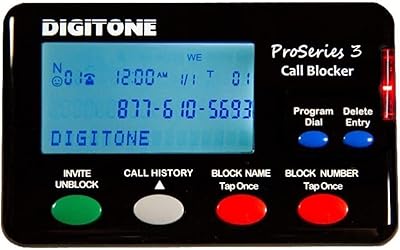
Digitone ProSeries 3 Call Blocker
85%
91%
Effectiveness in Blocking Calls
85%
Ease of Setup
94%
Compatibility with Landline Phones
88%
Display Visibility
74%
Caller History Management
More
Videtel Prepaid Calling Card $30 USD
84%
88%
Ease of Use
93%
Global Coverage
90%
Value for Money
72%
Dialing Process
85%
Reliability
More
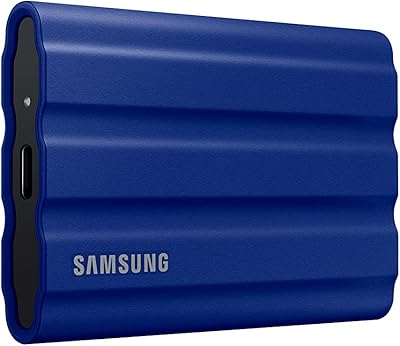
Samsung T7 Shield 1TB Portable SSD
88%
93%
Performance
91%
Durability
88%
Transfer Speed
89%
Build Quality
92%
Portability
More
SwissGear Shield 16-Inch Laptop Backpack
88%
92%
Comfort
88%
Build Quality
85%
Capacity & Organization
91%
Durability
89%
Weight & Portability
More
Videtel Prepaid Calling Card $25 USD
86%
91%
Value for Money
88%
Ease of Use
90%
International Coverage
78%
Call Quality
62%
Customer Support
More
MAFLYXDA 1080P Video Call Security Camera
84%
89%
Value for Money
78%
Video Call Functionality
90%
Motion Tracking
84%
Night Vision Performance
92%
Ease of Setup
More
Reviden DHT Blocker for Hair Growth Supplement
85%
87%
Effectiveness for Hair Growth
92%
Value for Money
90%
Ease of Use (Capsule Form)
91%
Ingredient Quality
75%
Speed of Results
More

FAQ

Setup is about as simple as it gets — you connect the device between your phone line and your existing phone, and it begins blocking calls from its pre-loaded list immediately. There are no apps to install, no accounts to create, and no configuration menus to navigate. Most people have it running in under five minutes.

The one firm requirement is that your landline plan includes an active Caller ID service. If Caller ID is not already part of your plan, the device cannot identify incoming numbers and will not be able to block them. It is worth checking with your provider before purchasing — adding Caller ID is usually inexpensive if you do not already have it.

Not automatically, but you can handle them easily. When an unwanted number that is not already on the pre-loaded list calls through, you just press the block button on the device and that number gets added to your personal block list. You have room for up to 1,500 of your own additions, so there is plenty of space for the numbers targeting your household specifically.

Nomorobo and similar cloud-based services have the advantage of a continuously updated database that can cover hundreds of thousands of numbers. The Shield device works offline with a fixed pre-loaded list, which means newer scam numbers may slip through until you block them manually. The trade-off is that this call blocker involves no subscriptions, no accounts, and no dependence on a third-party service staying operational. It is a physical tool you own outright, which some people strongly prefer.

Yes. The Shield device supports a single phone line only, so if you need coverage on two separate lines, you would need two units. It is worth noting that each device maintains its own independent block list, so numbers blocked on one line would not carry over to the other automatically.

The device works by matching incoming Caller ID information against its blocked number database. If a call comes in with no Caller ID data at all — fully anonymous — there is no number to match against, which limits what the device can do in those cases. Some users handle this by simply not answering unidentified calls regardless.

Battery life varies depending on call volume and usage, but most users find the batteries last for a reasonable stretch before needing replacement. The device is lightweight and low-power by design, so it is not a heavy drain. Check the included documentation for the specific battery type required, as this can vary by unit.

It is genuinely one of the better options for that situation. There is nothing ongoing for the person to manage — once it is plugged in, it works in the background without requiring any interaction on most days. If a new unwanted number does call through, blocking it is a single button press on the device itself. No screens, no passwords, no apps.

It is possible to block a number by mistake, especially if you press the button hastily after a call. The good news is that manually blocked numbers can be reviewed and removed from the block list, so it is not a permanent situation. The pre-loaded numbers are curated to known scam sources, so those are far less likely to create a problem for legitimate contacts.

Long-term users tend to report consistent performance over time. The device does not degrade the way software-based solutions sometimes do when services change or update — it keeps doing exactly what it was doing on day one. The main thing that changes with time is that newer scam numbers not in the original database will occasionally get through until you add them to your personal block list.