Behringer CX3400 Stereo Audio Crossover
Overview
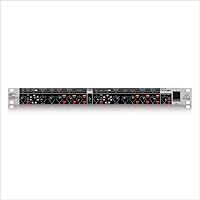
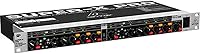
The Behringer CX3400 Stereo Audio Crossover has been a fixture in the prosumer audio market since 2001 — that kind of staying power says something. It's a rack-mount active crossover that handles stereo 2-way, stereo 3-way, or mono 4-way signal splitting within a single 1U chassis. For gigging musicians, small venue sound operators, or home studio builders piecing together an active speaker system on a realistic budget, this rack-mount unit sits in a practical sweet spot. It won't compete with boutique or professional-grade processors, but it was never meant to. Genuine flexibility at an accessible price is the real pitch here.
Features & Benefits
At the core of this stereo crossover is a Linkwitz-Riley filter design — the same filter topology found in far more expensive processors. Running at 24 dB per octave, it produces a flat summed response across the frequency band, which means your drivers work together coherently rather than fighting each other at the crossover point. Each output carries its own limiter, a practical safeguard when you're pushing volume at a live gig. A phase reverse switch per output lets you correct polarity mismatches on the fly, and a switchable subsonic filter at 25 Hz protects subwoofer cones from damaging infrasonic content. A horn EQ switch rounds things out for constant-directivity horn-loaded systems.
Best For
The CX3400 makes the most sense for people building or running systems where passive crossovers are the limiting factor. Think small PA systems, mobile DJ rigs, or home studio monitor setups where you're actively driving separate woofers and tweeters. The mono 4-way mode is particularly useful for stacked subwoofer arrangements that need precise frequency splits across multiple drivers. DIY speaker builders will also find it handy as an affordable path to an active crossover point without rolling their own circuitry. If you're running a professional touring rig or high-end studio, you'll want something more refined — but for prosumer and enthusiast applications, this rack-mount unit covers a lot of ground.
User Feedback
Buyers tend to walk away satisfied, particularly when expectations are set correctly going in. The signal path earns consistent praise — quiet and transparent for a unit at this tier — and the per-channel limiter is repeatedly called out as a feature that genuinely earns its keep. On the downside, the frequency-setting knobs have no real detents, so dialing in a precise crossover point takes patience and ideally a reference tone. The front panel has a plasticky feel that experienced engineers will notice immediately. The manual is also thin and assumes existing crossover knowledge. Those are real criticisms, though most negative reviews come from buyers who expected professional-grade build rather than a genuine product flaw.
Pros
- The signal path is impressively quiet and transparent for a unit at this price point.
- Linkwitz-Riley filters deliver flat summed frequency response, keeping drivers phase-coherent at the crossover point.
- Three flexible routing modes — stereo 2-way, stereo 3-way, and mono 4-way — cover most practical PA and studio configurations.
- Per-channel limiters actively protect speakers during high-volume live use, and users confirm they actually work.
- The switchable 25 Hz subsonic filter is a practical safeguard that saves subwoofer drivers from infrasonic punishment.
- Standard 1U rack-mount format slots neatly into any existing rack setup without fuss.
- A phase reverse switch per output allows fast polarity correction on-site without rewiring cables.
- Horn EQ switching adds useful flexibility for anyone running constant-directivity horn-loaded PA systems.
- The CX3400 has remained a viable prosumer option for over two decades, which reflects genuine functional reliability.
- XLR connectivity throughout keeps the signal balanced and compatible with professional-standard audio gear.
Cons
- Frequency crossover knobs have no fine-resolution detents, making precise and repeatable settings difficult to dial in.
- Front-panel construction feels noticeably plasticky — experienced engineers will register the quality gap immediately.
- The included manual is sparse and assumes the reader already understands active crossover fundamentals.
- Only four output channels total limits usefulness in more complex or larger multi-amplifier speaker systems.
- No digital display or frequency readout means you're setting crossover points by feel and ear rather than confirmed values.
- Not built to withstand the rigors of heavy road use; the chassis is better suited to fixed or semi-permanent installs.
- Buyers without prior crossover experience may struggle with initial setup due to minimal guidance documentation.
- Component quality inside reflects the budget price tier, which may raise long-term reliability concerns in heavy-use environments.
Ratings
Our AI has analyzed verified buyer reviews of the Behringer CX3400 Stereo Audio Crossover from multiple global platforms, actively filtering out incentivized, bot-generated, and outlier submissions to surface what real users consistently experience. The scores below reflect an honest synthesis of both the genuine strengths and the recurring frustrations that show up across hundreds of real-world use cases. Nothing has been softened or inflated — the wins and the pain points are both represented as buyers actually report them.
Signal Transparency
Filter Performance
Routing Flexibility
Build Quality
Limiter Effectiveness
Frequency Control Precision
Subsonic Filter Utility
Horn EQ Functionality
Ease of Setup
Phase Correction Tools
Rack Integration
Value for Money
Long-Term Reliability
Documentation Quality
Suitable for:
The Behringer CX3400 Stereo Audio Crossover is a strong fit for anyone building or running an active speaker system on a practical budget. Gigging musicians and small venue sound operators will appreciate the flexibility of stereo 2-way, 3-way, or mono 4-way configurations all in one rack slot — it removes a genuine operational headache without demanding a large investment. Mobile DJs and entertainers who run separate subwoofers and tops will find the signal routing clean and the per-channel limiters a welcome safety net during loud sets. Home studio builders piecing together active multi-driver monitor systems will get a lot of functional mileage out of the Linkwitz-Riley filter design, which produces coherent phase response at the crossover point. DIY speaker enthusiasts will also find it a compelling entry point into active crossover territory without the complexity of building their own filter circuitry.
Not suitable for:
Buyers expecting professional touring-grade construction or studio-quality component standards should look elsewhere before committing to the Behringer CX3400 Stereo Audio Crossover. The front-panel feel and control resolution reflect its price tier honestly — the frequency-setting knobs lack the fine detents that experienced engineers rely on for repeatable, precise crossover points, which can be genuinely frustrating in a professional workflow. Sound engineers working in high-stakes live environments where signal chain reliability is non-negotiable will likely find the build confidence lacking compared to premium-tier alternatives from brands like dbx or BSS. Anyone without prior experience using active crossovers should also be prepared for a thin manual that offers little guidance; the learning curve is real if you're starting from scratch. In short, if your application demands precision repeatability, rugged road-ready construction, or high channel count beyond four outputs, this rack-mount unit is not the right tool.
Specifications
- Model Number: The unit is officially designated as the CX3400 by Behringer.
- Filter Type: State-variable Linkwitz-Riley filters operate at a 24 dB per octave rolloff slope for precise, phase-coherent frequency separation.
- Config Modes: Three routing configurations are supported: stereo 2-way, stereo 3-way, and mono 4-way signal splitting.
- Output Channels: The unit provides 4 output channels, each equipped with an independent limiter circuit.
- Connectivity: All inputs and outputs use balanced XLR connectors for professional-standard, noise-resistant signal transmission.
- Subsonic Filter: A switchable 25 Hz subsonic filter is available per input channel to block damaging infrasonic content from reaching subwoofer drivers.
- Phase Reverse: Each output channel includes a dedicated phase reverse switch for correcting polarity mismatches without rewiring.
- Horn EQ: A switchable equalization circuit for constant-directivity horns is included to compensate for the high-frequency rolloff characteristic of horn-loaded speakers.
- Form Factor: The chassis occupies a single rack unit (1U) and fits any standard 19-inch equipment rack.
- Dimensions: Physical dimensions measure 19 x 1.75 x 8.46 inches (width x height x depth).
- Weight: The unit weighs 5.51 pounds, making it straightforward to rack-mount without significant load concerns.
- Power Source: The CX3400 is mains-powered via a corded electric connection and does not support battery or phantom power operation.
- Amplitude Response: The Linkwitz-Riley filter topology produces a flat summed amplitude response across the full frequency band when outputs are combined.
- Color Finish: The unit ships in a silver and black color scheme typical of standard 19-inch rack equipment.
- Market Availability: The CX3400 has been commercially available since October 2, 2001, and has not been discontinued by the manufacturer.
Related Reviews
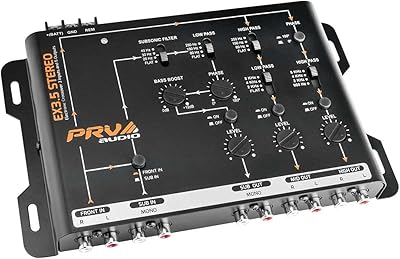
PRV Audio EX3.5 Stereo 3-Way Electronic Crossover
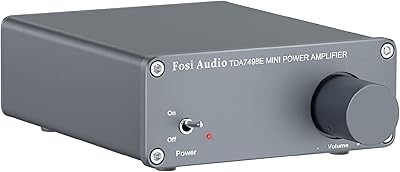
Fosi Audio TDA7498E
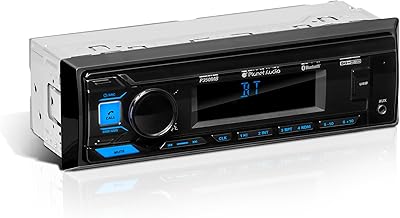
Planet Audio P350MB Single Din Car Stereo
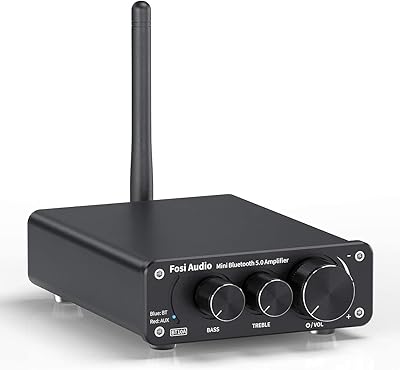
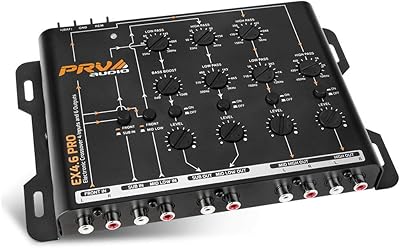
PRV Audio EX4.6PRO 4-Way Electronic Crossover
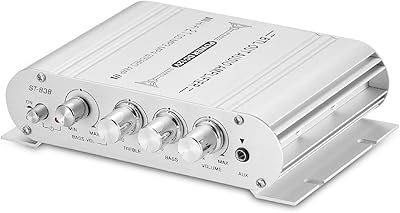
Douk Audio OK013 Mini 2.1 Channel HiFi Stereo Amplifier
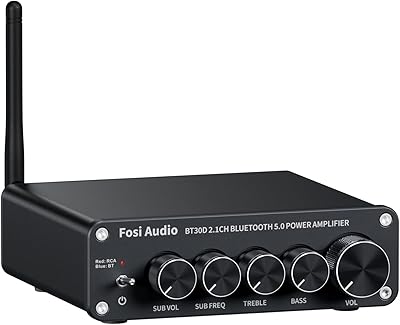
Fosi Audio BT30D
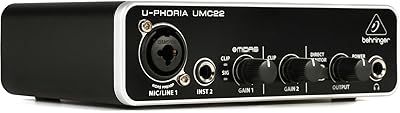
Behringer UMC22 USB Audio Interface
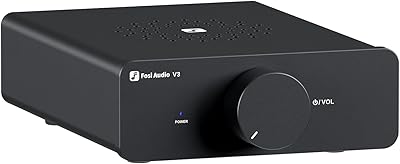
Fosi Audio V3 Stereo Amplifier
