Overview

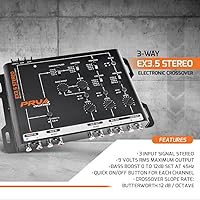
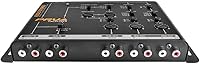
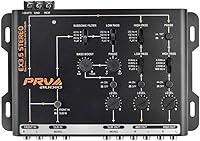
The PRV Audio EX3.5 Stereo 3-Way Electronic Crossover is a mid-range active crossover built for car audio enthusiasts who want real control over signal routing without jumping into full DSP territory. One thing to be clear about upfront: this unit processes audio signals — it does not amplify them. You still need separate amplifiers for your speakers. What it does is divide your source signal into distinct frequency bands, sending the appropriate range to each driver in your system. PRV Audio has been a fixture in the automotive sound space for over 15 years, and this crossover reflects that depth of experience. The compact chassis and familiar RCA connections keep installation approachable even for first-timers.
Features & Benefits

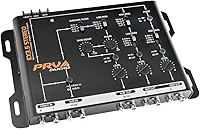
The EX3.5 Stereo gives you four RCA inputs and six outputs, routing your signal into dedicated high, mid, and sub channels — each with its own level control and on/off toggle. Filter frequency selection uses switched discrete settings rather than continuous pots, which keeps tuning repeatable and free from drift. The high channel covers 900Hz to 8000Hz; the mid channel can run flat or high-pass filtered as low as 80Hz; the sub output rolls off anywhere from flat down to 80Hz. A built-in bass boost on the sub channel adds up to 12dB centered around 45Hz. Backing all of this up are solid signal integrity figures — over 90dB SNR and less than 0.02% THD — that suggest the Butterworth slope does its job without introducing audible coloration.

Best For

This electronic crossover is best suited to builders running separate amplifiers for each speaker tier — tweeters, midrange drivers, and a dedicated subwoofer. If you are currently relying on passive crossovers built into your speakers or amplifier, moving to an active setup like this one gives you independent control over each frequency band that passive designs simply cannot match. It is also a strong fit for anyone who prefers hands-on physical tuning over laptop-based software configuration. That said, if you are only running a basic two-way system with no plans to expand, some of the flexibility here may go unused. The 3-way architecture makes it a sensible long-term investment if upgrades are on your horizon.

User Feedback

With a 4.6-star average across more than 130 verified purchases, this PRV crossover unit has earned a genuinely solid reputation. Buyers most often praise the clean, noise-free signal and the noticeable improvement in soundstage clarity once each driver is receiving only the frequencies it was designed to handle. Installation gets repeated mentions for its logical layout and clearly labeled ports — no manual-hunting required. On the critical side, a handful of reviewers note the enclosure feels a bit light, which is a fair observation even if it has no bearing on performance. The bass boost draws mixed reactions: some find it punchy and well-controlled, others simply leave it flat. Very few buyers at this price point suggest a DSP would have been the smarter purchase.

Pros

  • Splits audio into true high, mid, and sub bands, giving each driver only the frequencies it handles best.
  • Switched filter frequencies on every channel stay locked in place without drifting over time.
  • Per-channel level controls and on/off toggles let you adjust the balance without touching any wiring.
  • Signal integrity is strong — noise floor is low and distortion is kept well below audible thresholds.
  • The bass boost on the sub channel is tunable across a wide frequency range, not just a fixed bump.
  • RCA ports are clearly labeled, making the initial wiring process straightforward even for first-timers.
  • Butterworth 12 dB/octave slopes produce natural-sounding frequency rolloffs between bands.
  • Compatible with virtually any head unit or amplifier that uses standard RCA connections.
  • PRV Audio brings a long track record in car audio, which adds reasonable confidence in long-term reliability.
  • Works as a 2-way crossover too, so you are not locked into a full 3-way build from day one.

Cons

  • External amplifiers are required — this unit does nothing on its own without them, which adds to total system cost.
  • Filter frequency choices are fixed switch positions, not continuous — some users will want finer adjustment control.
  • The enclosure feels noticeably lightweight, which can be a concern during installation in tight or high-vibration spaces.
  • No remote turn-on output means you need to handle power switching through another component in your system.
  • There is no built-in EQ, time alignment, or phase control — advanced tuning still requires additional hardware.
  • The bass boost can sound heavy-handed at higher settings; most users report better results leaving it subtle or flat.
  • No companion app or software interface means all tuning is done by ear with physical controls, which takes patience.
  • Documentation and setup guidance included in the box is minimal, which may frustrate less experienced installers.

Ratings

Our AI rating system analyzed verified global buyer reviews for the PRV Audio EX3.5 Stereo 3-Way Electronic Crossover, actively filtering out incentivized, duplicate, and bot-generated feedback to surface what real installers and enthusiasts actually experienced. The scores below reflect a transparent, balanced picture — strong performance where it genuinely earns it, and honest acknowledgment of the areas where buyers ran into friction.

Signal Clarity
91%
Across a wide range of real-world installs — from daily drivers to dedicated sound competition builds — buyers consistently reported a noticeably cleaner, quieter signal compared to their previous passive setups. The sub-0.02% distortion figure translates to an audibly transparent signal path that lets your amplifiers and speakers do the work without introduced coloration.
A small number of users running very high-sensitivity amplifiers reported picking up faint interference, which may point to ground loop issues rather than the unit itself, though it was difficult for those buyers to isolate the source without additional testing.
Frequency Control Flexibility
83%
Having four discrete filter points per channel — rather than a continuous pot — means your settings stay locked once dialed in, with no drift during hot summers or vibration-heavy drives. Enthusiasts upgrading from fixed passive crossovers found the jump in control immediately noticeable when blending tweeters and midrange drivers.
The stepped filter approach does leave gaps that some installers find frustrating when their ideal crossover point falls between two switch positions. Users accustomed to parametric or fully variable DSP filters will feel the constraint most acutely, especially when trying to protect tweeters that cross over at an unusual frequency.
Ease of Installation
88%
Labeled RCA ports and a logical, uncluttered layout made wiring straightforward for a broad range of skill levels. Multiple reviewers noted they had their system running within an hour, and the per-channel on/off switches meant they could test individual bands without touching the wiring harness each time.
The included documentation is thin, and buyers without prior experience with active crossovers sometimes struggled to understand how to sequence the gain structure across the head unit, crossover, and amplifiers. A more detailed setup guide would meaningfully reduce the learning curve for first-timers.
Build Quality
67%
33%
The internal electronics are where PRV Audio clearly invested — signal performance holds up well even in hot trunk environments, and buyers running the unit for multiple years have reported no degradation in audio performance or channel function over time.
The physical enclosure draws the most criticism of any aspect of this unit. Buyers who handle a lot of car audio gear will notice immediately that the chassis feels light and somewhat insubstantial compared to competitors at similar price points, which creates understandable doubt about long-term durability even when performance does not bear that out.
Bass Boost Quality
72%
28%
When used conservatively — a few dB of boost centered in the mid-40Hz range — the sub channel boost adds welcome weight to bass-light source material without making the low end sound artificial or one-note. Users with ported enclosures in particular found a gentle boost useful for evening out their sub's output at low volumes.
Pushing the boost beyond modest levels tends to produce a thick, somewhat muddy low end that experienced listeners find fatiguing on longer drives. The fixed center frequency also means it is not ideal for sealed enclosures tuned significantly higher or lower than 45Hz, where the boost lands in the wrong part of the bass range.
Value for Money
86%
For a dedicated analog 3-way active crossover with solid signal specs and per-channel control, the price sits in a range that makes it genuinely competitive without forcing buyers to compromise on core functionality. Most reviewers felt the performance justified the spend, especially those coming from passive crossovers that offered no meaningful tuning at all.
Buyers who stretch just a bit further in budget can access entry-level DSP processors that offer time alignment, parametric EQ, and computer-based tuning — capabilities this unit simply cannot match. For those who know they want that level of control, the value argument weakens considerably.
Channel Separation
89%
The greater-than-80dB channel separation spec holds up in practice — users running high-efficiency tweeters alongside a subwoofer reported hearing a clear, defined soundstage with no bleed between frequency bands. This is particularly noticeable at lower listening volumes where crosstalk on lower-quality units tends to become audible.
No meaningful user complaints surfaced specifically about channel separation performance, suggesting this is one of the unit's more consistent strengths across varied installations and system configurations.
Compatibility
84%
Standard RCA connectivity and a wide 10V–16V operating range mean this electronic crossover slots into virtually any 12V car audio system without compatibility concerns. Buyers running multi-brand amplifier setups — mixing older and newer units — found it integrated cleanly across the board.
Factory head unit owners without aftermarket RCA outputs face an additional hurdle, as the unit requires a line-level signal and does not include or support a high-level input adapter. This adds cost and complexity for anyone starting from a stock audio system.
Tuning Experience
77%
23%
The no-software, no-laptop approach resonates strongly with installers who prefer to tune by ear in the car rather than in front of a screen. The physical controls give immediate, tangible feedback, and the ability to toggle channels on and off while music plays makes comparative listening fast and intuitive.
Without any visual feedback — no display, no signal metering — it can be genuinely hard to tell whether a subtle filter change made a meaningful difference or whether your ears are compensating. Users accustomed to real-time RTA displays or DSP software find the analog-only experience a step backward in diagnostic capability.
Output Level Control
81%
19%
Individual output level trimmers for each channel make gain staging across multiple amplifiers manageable without having to constantly adjust amplifier sensitivity knobs. Reviewers who had previously struggled to balance a 3-amp system found this feature saved significant setup time.
The trimmers are small and close together on the unit, which makes fine adjustments fiddly, especially once the crossover is mounted in a tight space like a trunk wall or underseat location. A few users noted they wished the controls had more physical resistance to prevent accidental movement.
Remote Control Options
53%
47%
The per-channel on/off buttons provide a basic but functional way to isolate individual frequency bands during tuning or troubleshooting. For users who simply want to toggle their subwoofer output on and off, the Sub Out button handles that use case without any extra hardware.
There is no wired or wireless remote turn-on output, no bass knob remote for the subwoofer boost, and no provision for dash-mounted control. Buyers who want to adjust their sub level from the driver seat without reaching into the trunk will need a separate remote gain controller wired directly to their subwoofer amplifier.
Noise Floor
88%
The greater-than-90dB SNR translates to a genuinely quiet background in real installations — users with high-efficiency tweeters, which ruthlessly expose any hiss or interference from upstream components, reported the EX3.5 Stereo passed a clean signal without adding audible noise to the system.
Proper grounding is still essential. A handful of buyers experienced an audible hum that disappeared once they corrected their ground connections, suggesting the unit is sensitive to grounding quality in the same way most analog audio equipment is, rather than being uniquely problematic in this regard.
Physical Footprint
82%
18%
At under 6.5 inches long and just over an inch tall, this PRV crossover unit fits comfortably in spaces where bulkier processors simply will not. Trunk floor installs, underseat locations, and kick panel cavities all work without the unit dominating the available space.
The slim profile does mean all RCA connections exit from the same general area, which can make cable routing tight when six output cables and four input cables all converge at once. In confined mounting locations, the cable bundle can become the bigger space challenge than the unit itself.

Suitable for:

The PRV Audio EX3.5 Stereo 3-Way Electronic Crossover is an excellent fit for hands-on car audio builders who are running separate amplifiers for their tweeters, midrange drivers, and subwoofer and want precise, independent control over which frequencies each driver receives. If you have grown frustrated with the limitations of passive crossovers built into speaker components or amplifier outputs, this unit gives you genuine active control without the learning curve of a full DSP platform. It suits installers who prefer physical knobs and switches over laptop-based software tuning sessions — you can dial things in and lock them down without ever plugging in a computer. Budget-conscious enthusiasts who want to stretch a multi-amplifier setup further will find the price-to-capability ratio compelling compared to entry-level DSP alternatives. It also works well as a forward-looking purchase for anyone currently running a 2-way setup but planning to add a third amplifier and driver tier down the road.
Not suitable for:

The PRV Audio EX3.5 Stereo 3-Way Electronic Crossover is not the right tool for anyone who expects it to power speakers directly — this is purely a signal routing device and requires external amplifiers to function as part of a complete system. Buyers who want fine-grained parametric EQ, time alignment, or digital precision tuning will find the analog switched-frequency design too coarse for their needs; a DSP processor would serve those use cases far better. If your car audio setup is simple — say, a head unit feeding a single amplifier and a passive speaker system — adding an active crossover introduces unnecessary complexity without a meaningful return. Listeners who rarely tinker with their setup and just want plug-and-play convenience may find the tuning options more intimidating than helpful. And if chassis build quality is a top priority for you, the lightweight enclosure may feel underwhelming compared to heavier-duty units at higher price points.
Specifications

  • Product Type: 3-way active electronic crossover designed to split and route audio signals to separate amplifier channels in a car audio system.
  • Inputs: 4 RCA inputs supporting 2 stereo channels and 1 mono channel for flexible source connectivity.
  • Outputs: 6 RCA outputs divided into high, mid, and sub channels (2 stereo outputs plus 1 mono output per frequency band).
  • High Out Filter: High-pass filter on the High Out channel is switchable between 900Hz, 2000Hz, 4000Hz, and 8000Hz.
  • Mid Out Filters: Mid Out channel offers a high-pass filter switchable between Flat, 80Hz, 150Hz, and 250Hz, and a low-pass filter switchable between Flat, 2000Hz, 4000Hz, and 8000Hz.
  • Sub Out Filter: Sub Out channel features a low-pass filter switchable between Flat, 80Hz, 150Hz, and 250Hz.
  • Bass Boost: Adjustable bass boost on the Sub Out channel covers 25Hz to 110Hz with a gain range of 0 to +12dB, centered at 45Hz.
  • Crossover Slope: Butterworth 12 dB/octave slope rate is used across all filter stages for smooth, natural frequency rolloff.
  • Signal-to-Noise: Signal-to-noise ratio exceeds 90dB, indicating a very low background noise floor during normal operation.
  • Distortion: Total harmonic distortion is rated below 0.02%, meaning introduced coloration is well beneath audible thresholds.
  • Channel Separation: Channel separation exceeds 80dB, keeping crosstalk between frequency bands effectively inaudible.
  • Max Output Voltage: Maximum output voltage is 9V RMS, accommodating a wide range of downstream amplifier sensitivity settings.
  • Max Input Voltage: Maximum input voltage is 4V RMS, compatible with virtually all aftermarket head units and source components.
  • Supply Voltage: Operates on 10V to 16V DC, making it fully compatible with standard 12V automotive electrical systems.
  • Current Draw: Current consumption is rated at 200mA, placing a minimal load on a vehicle's electrical system.
  • Input Impedance: Input impedance is 10K Ohms, which is a standard value ensuring compatibility with typical RCA source outputs.
  • Output Impedance: Output impedance is 470 Ohms, appropriate for driving the inputs of standard car audio amplifiers.
  • Dimensions: The unit measures 1.30″ high by 9.25″ wide by 6.30″ long, allowing installation in tight dashboard or trunk spaces.
  • Weight: The crossover weighs 1.45 lbs, making it easy to handle and mount during installation.
  • Frequency Response: Frequency response spans 20Hz to 200KHz, ensuring the unit does not restrict the signal bandwidth within the audible range.

Related Reviews

Rockville RX230 2-Way Stereo/3-Way Mono Crossover
85%
91%
Sound Quality
88%
Build Quality
85%
Ease of Use
72%
Setup and Installation
89%
Subwoofer Control
More
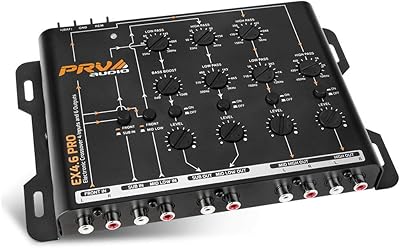
PRV Audio EX4.6PRO 4-Way Car Audio Crossover
87%
90%
Sound Quality
87%
Ease of Installation
92%
Bass Boost Effectiveness
85%
Build Quality
89%
Frequency Control Precision
More
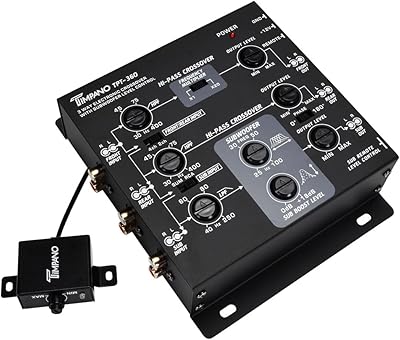
Timpano TPT-360 3-Way Electronic Crossover
85%
89%
Performance
85%
Ease of Installation
90%
Build Quality
88%
Sound Clarity & Balance
91%
Customization Options
More
Sony XS-GTF1639 6.5″ 3-Way Car Audio Speakers
84%
88%
Sound Quality
85%
Ease of Installation
75%
Bass Performance
90%
Build Quality
92%
Value for Money
More
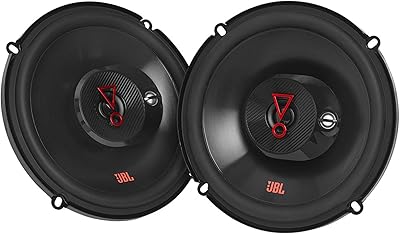
JBL Stage 3637F 6.5″ Three-Way Car Speaker
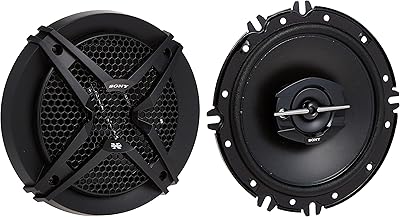
78%
86%
Sound Clarity
54%
Bass Response
83%
High-Frequency Performance
89%
Installation Ease
81%
Value for Money
More
Dual Electronics LU53PB 5.25″ 3-Way Outdoor/Indoor Speakers
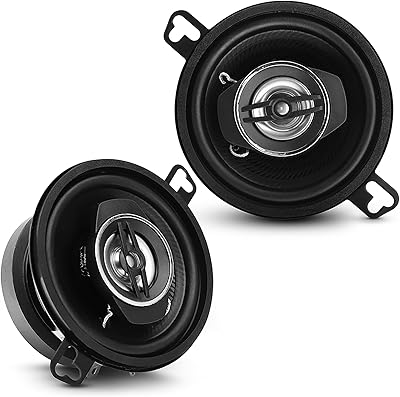
86%
88%
Sound Quality
90%
Bass Performance
85%
Build Quality
87%
Ease of Setup
83%
Durability
More
Pyle PL31BK 3.5-inch Car Coaxial Speakers
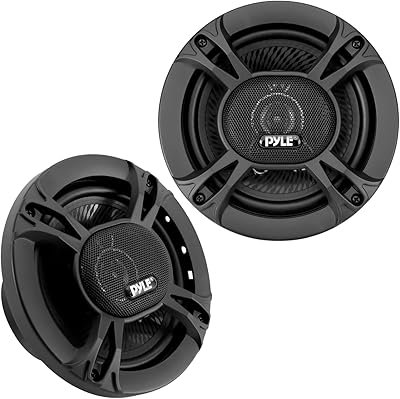
69%
83%
Value for Money
61%
Sound Quality
44%
Bass Response
88%
Ease of Installation
58%
Build Quality
More
Infinity REF-3032CFX 3.5 Inch Two-Way Car Audio Speaker
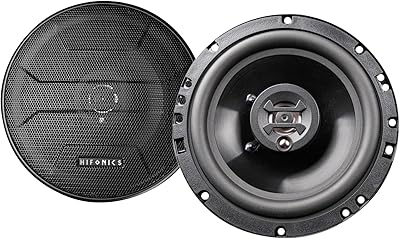
85%
87%
Sound Quality
75%
Bass Performance
91%
Ease of Installation
85%
Build Quality
92%
Value for Money
More
Pyle PL613BK 6.5-Inch 3-Way Triaxial Car Stereo Speakers
84%
86%
Audio Performance
91%
Ease of Installation
88%
Bass Quality
80%
Build Quality
85%
Compatibility with Vehicles
More
Hifonics ZS653 Zeus 6.5 Inch 3-Way Car Audio Coaxial Speakers
85%
88%
Sound Quality
85%
Bass Performance
92%
Ease of Installation
80%
Build Quality
91%
Value for Money
More

FAQ

It does not amplify anything on its own. The EX3.5 Stereo is purely a signal routing device — it takes the line-level signal from your head unit and splits it into frequency-specific outputs. You will need a dedicated amplifier connected to each output channel to actually drive your speakers.

Yes, absolutely. You can simply use the High Out and Sub Out channels while leaving the Mid Out unused or toggled off. The per-channel on/off switches make it easy to run a partial configuration without any rewiring.

It depends on whether your factory head unit has RCA preamp outputs. Most OEM head units do not, so you would typically need an aftermarket head unit with RCA outputs, or a line output converter to step down the speaker-level signal to a preamp-level signal before connecting to this crossover.

Start with your speaker manufacturer's recommended crossover points if they are listed in the spec sheet. As a general rule, tweeters commonly cross over between 2000Hz and 4000Hz, midrange drivers between 80Hz and 500Hz, and subwoofers below 150Hz. From there, use your ears and adjust in small steps until the sound feels balanced with no gaps or overlaps between drivers.

Yes. Since it uses standard RCA connections and outputs a line-level signal, it is compatible with virtually any car audio amplifier regardless of brand. Just make sure your amplifier's input sensitivity range can handle the crossover's output voltage.

The bass boost applies a shelving boost centered around 45Hz to the sub output signal, adding up to 12dB of gain in the low-frequency range. Whether to use it depends on your subwoofer and enclosure — some setups benefit from a modest 3 to 6dB bump, while others can sound bloated or distorted if you push it too hard. Most experienced users recommend starting with it at zero and only adding boost if the low end genuinely feels thin.

No, this PRV crossover unit does not include a dedicated remote turn-on output. You will need to wire your amplifier remote inputs to a switched 12V source elsewhere in your system, such as from your head unit's remote output or an add-a-fuse tap on an accessory circuit.

The unit has a flat bottom and is sized to fit in most trunk floors, under seats, or inside enclosed dash cavities. It does not include mounting tabs or a bracket in the traditional sense, so most installers use hook-and-loop fastener strips or fabricate a simple bracket from sheet metal. Make sure to keep it away from heat sources and in a spot where you can still reach the controls.

The lightweight feel is something a few buyers have noted, and it is a fair observation. That said, the enclosure just needs to protect the internals from physical contact and minor vibration — it is not a structural component. As long as you mount it securely and keep it away from moisture, the electronics inside are what determine longevity, and those have held up well based on user reports over several years.

Yes, and many people do exactly that. The switched filter positions make it repeatable, so you can flip between settings and compare how the sound changes in real time. Start with commonly recommended crossover points for your speaker types, set all output levels to midpoint, and adjust from there while listening to music you know well. A simple SPL meter app on your phone can help you check for major level imbalances, but it is not required for a functional, good-sounding result.

Where to Buy