Overview

The Behringer HA8000 V2 is a 1U rack-mountable 8-channel headphone amplifier built for the real-world demands of live stages and recording studios. Behringer targets working professionals with this line — people who need dependable, road-ready gear without spending boutique money. The V2 revision brought tighter circuitry tolerances and improved build consistency over the original model, though the core mission stays the same. Think of it as a reliable workhorse rather than a high-end audiophile showpiece. If you need clean, loud headphone feeds for a full band or production crew in a single rack slot, this headphone distribution amp is built precisely for that job.

Features & Benefits

Each of the eight outputs has its own independent volume knob, which sounds simple but matters enormously when a drummer wants it ear-splitting and a vocalist prefers a softer blend. Two separate stereo inputs let you route two distinct mix sources simultaneously — handy when a monitor engineer and a recording engineer each need their own feed. The amplifier stage handles both low- and high-impedance headphones cleanly even at full drive, while front-panel LED meters give an instant visual check on signal presence. TRS balanced connectivity keeps noise manageable on longer cable runs in larger venues or permanent installs.

Best For

Live sound engineers building in-ear monitor setups for a full band will find this 8-channel cue amplifier covers most standard configurations in one rack unit. Recording studios running group tracking sessions get individual cue mixes without a complicated patch situation. House-of-worship AV teams often rely on it for distributing click tracks quietly to musicians, and podcast or broadcast studios use it to give multiple hosts independent headphone feeds. Budget-conscious buyers who need genuine professional channel count without climbing to higher-priced alternatives will find the overall value at this price tier compelling and easy to justify.

User Feedback

This headphone distribution amp holds a strong rating across hundreds of verified purchases, with consistent praise focused on output volume headroom, straightforward setup, and the sheer value it offers for gigging musicians and studio engineers alike. Long-term owners report solid reliability through years of regular touring and fixed studio use, which counts for a lot at this price point. The most honest recurring criticism involves fan noise — the unit is not silent, and close-mic recording environments may notice it. A number of buyers also mention that the channel knobs feel slightly plasticky, which is a fair and understandable trade-off given where this sits in the market.

Pros

  • Eight independent volume controls let every musician in the room dial in their own preferred monitoring level.
  • Dual stereo inputs allow two separate mix sources to run simultaneously, which is genuinely useful in studio tracking.
  • The steel chassis feels road-ready and holds up well in standard rack configurations over extended use.
  • TRS balanced inputs help keep the noise floor manageable on longer cable runs in live and installed environments.
  • Setup requires almost no learning curve — plug in a source, connect headphones, and you are ready to go.
  • The HA8000 V2 fits in a single rack unit, making it practical for compact live rigs and tight studio racks alike.
  • Front-panel LED meters give a fast visual confirmation that signal is present, useful during rushed soundchecks.
  • Handles both low- and high-impedance headphones without requiring any configuration changes or additional hardware.
  • Long-term owners report stable performance across multiple touring seasons without component failures.
  • The overall value at this price tier is difficult to match for buyers who genuinely need eight channels of headphone distribution.

Cons

  • The cooling fan is audibly present and makes this headphone distribution amp a poor choice for quiet recording environments.
  • Individual channel knobs feel plasticky and loosely toleranced, raising durability questions under heavy daily use.
  • No per-channel mute function means silencing a single output requires physically disconnecting the headphone cable.
  • Input options are limited to TRS only, which creates friction for engineers working with XLR-heavy stage or studio setups.
  • The metering is too coarse to be useful for gain-staging; it only confirms signal presence rather than showing precise levels.
  • Some users report knob degradation or intermittent channel behavior after eighteen or more months of continuous heavy use.
  • Sensitive in-ear monitor users may detect a low-level noise floor that is inaudible in louder contexts but noticeable at low volumes.
  • The rack ears feel thinner than the main chassis and show minor flexing stress without a protective rack lid during transport.

Ratings

The Behringer HA8000 V2 scores here reflect AI-driven analysis of verified global buyer reviews, with spam, bot activity, and incentivized feedback actively filtered out before scoring. Ratings cover everything from build durability to sonic performance, giving an honest picture of where this 8-channel cue amplifier genuinely excels and where real-world buyers have run into frustration. Both the strengths and the sticking points are represented transparently so you can make a fully informed decision.

Value for Money
91%
Buyers consistently single out the price-to-channel-count ratio as the strongest argument for purchasing this headphone distribution amp. For working musicians and small studio operators who need eight independent outputs without a major capital outlay, it is difficult to find a competing unit that offers the same feature set at this tier.
A small number of reviewers who upgraded from this unit to higher-end alternatives felt the initial savings were partially offset by durability concerns over multi-year heavy use, suggesting the long-term cost equation is not as clear-cut for full-time touring professionals.
Output Power & Headroom
88%
The amplifier stage genuinely delivers on its high-output promise. Drummers and engineers running high-impedance studio cans reported clean, loud monitoring mixes with no audible clipping or harshness, which is the core job this unit was designed to do night after night.
A handful of users pairing it with particularly demanding planar magnetic headphones noted the output felt marginally strained at maximum levels, though this represents a niche edge case rather than a common complaint for the intended audience.
Build Quality
72%
28%
The steel chassis feels genuinely solid when racked up, and the overall unit does not rattle or flex under normal live or studio handling. Long-term owners who have used it consistently over two or three years without physical failures speak well of the structural integrity.
The individual channel volume knobs are a recurring sore point — multiple buyers describe them as feeling plasticky and loosely toleranced, which creates doubt about how well they hold up after hundreds of adjustments on a busy touring rig or in a high-traffic studio.
Noise Floor & Audio Clarity
74%
26%
For stage monitoring and cue mix distribution, the noise floor is more than acceptable. Engineers running click tracks and rough monitor mixes in live settings report no distracting hiss or hum, and the TRS balanced inputs help keep things clean on longer cable runs.
Critical listeners using this unit for personal headphone listening in quiet home studio environments sometimes notice a low-level noise floor that would be inaudible in a live context but becomes apparent when auditioning with sensitive in-ear monitors at low volumes.
Fan Noise
61%
39%
The cooling fan keeps the unit running reliably during extended sessions, and most live sound engineers working in loud environments have no interaction with it whatsoever. For stage racks sitting behind a curtain or in a stage-left wing, fan noise is essentially a non-issue.
In close-mic recording environments or quiet control rooms, the fan is genuinely audible and has driven some buyers to return the unit or relegate it exclusively to live use. This is the single most cited functional complaint across verified purchase reviews and deserves serious consideration before buying.
Ease of Setup
93%
Getting this 8-channel cue amplifier up and running requires almost no learning curve. Plug in your TRS stereo source, connect headphones to the front outputs, set individual levels, and you are monitoring. Both first-time buyers and experienced engineers praise how quickly it integrates into an existing rack setup.
The manual is minimal, and users wanting to understand the dual-input routing behavior for more complex configurations occasionally found themselves experimenting by trial and error rather than following clear documentation.
Channel Independence
86%
Having a dedicated volume control per output is genuinely useful when managing a room full of musicians with very different monitoring preferences. A bassist cranking their mix loud while a vocalist sits at a moderate level is a realistic daily scenario this unit handles without any crosstalk issues.
There is no per-channel mute functionality, which means engineers who want to quickly silence a specific output without pulling the headphone cable have to work around this limitation in practical live scenarios.
Input Flexibility
67%
33%
Dual stereo inputs offer more routing flexibility than single-input competitors at this price point, allowing two separate mix sources to be distributed simultaneously — a useful feature for studios running both a tracking mix and a click-only feed at the same time.
The input options are limited to TRS balanced only, with no XLR inputs natively available. Engineers coming from setups with XLR-heavy snake systems need to carry additional adapters, which adds a minor but real friction point to the workflow.
Rack Integration
89%
The 1U form factor is ideal for tight rack builds, and the front-panel layout is logical enough that an engineer can make adjustments in low-light conditions without fumbling. Road cases with this unit installed report no issues with the front panel controls being accidentally adjusted during transport.
The rack ears, while functional, feel slightly thin compared to the main chassis, and a few users noted minor flexing during aggressive road transport without a proper rack lid to protect the front panel.
LED Metering
71%
29%
The front-panel signal meters give a fast visual confirmation that a source is actively feeding the unit, which is particularly useful during soundcheck when you are troubleshooting a silent output and need to quickly verify the problem is upstream rather than in the amp itself.
The metering is basic by any standard — it shows signal presence rather than precise level information, so engineers looking for accurate gain-staging guidance from the meters alone will find them too coarse to rely on for anything beyond a simple signal-check function.
Headphone Compatibility
84%
The amp handles a wide impedance range without requiring separate settings or switches, making it genuinely plug-and-play with most professional headphone models a working band is likely to bring to a session or show. This broad compatibility reduces pre-show preparation time.
Extremely high-impedance reference headphones — the kind used for critical mastering work rather than stage monitoring — occasionally revealed limitations in drive capability, though this reflects a use case well outside the intended application for most buyers.
Long-Term Reliability
78%
22%
Users who have owned the unit for two or more years and run it through regular live seasons generally report stable performance with no component failures, which builds confidence in the overall design for buyers planning to use it as a permanent fixture in a touring or installed rig.
A smaller but consistent group of reviewers reported knob degradation or intermittent channel issues appearing after eighteen months to two years of heavy use, suggesting durability is adequate rather than exceptional for the most demanding professional schedules.
Aesthetics & Panel Design
76%
24%
The silver and black front panel looks professional in a standard rack and does not clash with common adjacent gear from other brands. The layout is uncluttered, and the channel labels are legible enough for quick identification under stage lighting conditions.
The overall aesthetic is functional rather than polished, and buyers accustomed to higher-end rack gear may find the finish quality and silkscreen printing feel slightly budget-oriented up close, though this has no bearing on actual performance.

Suitable for:

The Behringer HA8000 V2 is a strong fit for anyone who needs to distribute headphone mixes to multiple people simultaneously without building a complicated or expensive signal chain. Live sound engineers managing in-ear monitor setups for a full band will appreciate having eight independent outputs in a single rack unit, especially when stage space is tight. Recording studios running group tracking sessions — where a drummer, bassist, guitarist, and vocalist all need their own cue mix at the same time — will find this 8-channel cue amplifier handles that scenario cleanly and without fuss. House-of-worship AV teams that regularly feed click tracks or broadcast audio to a rotating cast of volunteers benefit from the straightforward per-channel level controls that require no technical training to operate. Podcast studios and small broadcast operations needing multiple simultaneous headphone feeds from a single stereo source also land squarely in the sweet spot this unit was designed for.

Not suitable for:

Buyers expecting boutique-grade audio performance or near-silent operation in a professionally treated recording environment should approach the Behringer HA8000 V2 with measured expectations. The built-in cooling fan produces an audible hum that is largely irrelevant on a loud stage but becomes a real problem in quiet close-mic recording rooms where background noise is strictly controlled. Audiophiles who plan to use this headphone distribution amp primarily for personal critical listening sessions — rather than professional monitoring distribution — will likely find the noise floor and component feel underwhelming compared to dedicated hi-fi headphone amplifiers at a similar or slightly higher price point. Engineers who rely heavily on XLR infrastructure in their live rigs may find the TRS-only inputs an ongoing inconvenience that requires carrying additional adapters. Anyone who needs per-channel muting, more granular metering, or the kind of build quality that survives years of daily abuse on a major touring circuit should factor those gaps into their decision seriously before purchasing.

Specifications

  • Headphone Outputs: The unit provides 8 independent headphone outputs, each accessible via a 6.35mm TRS (1/4-inch) jack on the front panel.
  • Input Type: Two stereo inputs accept TRS balanced connections, allowing two separate mix sources to feed the unit simultaneously.
  • Form Factor: The chassis is designed for standard 1U rack mounting, fitting any 19-inch rack rail system used in live and studio environments.
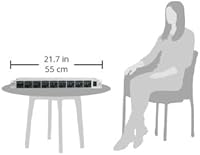
  • Dimensions: The unit measures 19.02 x 5.87 x 1.73 inches, occupying a single rack unit of vertical space.
  • Weight: The HA8000 V2 weighs 5.24 pounds, light enough for most standard rack drawers and touring road cases without loading concerns.
  • Power Source: The unit operates on corded AC mains power and does not support battery or phantom power operation.
  • Volume Controls: Each of the eight output channels features its own dedicated front-panel volume knob for independent level adjustment per listener.
  • Chassis Material: The outer enclosure is constructed from steel, providing structural rigidity suited to repeated rack-mount installation and road use.
  • Signal Metering: Front-panel LED signal meters indicate the presence of an active input signal, providing a quick visual check during setup and operation.
  • Headphone Impedance: The amplifier stage is compatible with both low-impedance and high-impedance headphones, requiring no manual configuration changes between headphone types.
  • Output Connector: All eight headphone outputs use standard 6.35mm (1/4-inch) TRS jacks, compatible with the majority of professional headphone cables and adapters.
  • Color Finish: The unit ships in a silver and black finish, consistent with standard professional rack equipment aesthetics.
  • Cooling System: An internal fan provides active cooling during operation, which may produce audible noise in very quiet environments.
  • Dual Input Routing: Both stereo inputs can be used simultaneously, enabling two distinct mix sources to be distributed across the eight outputs at the same time.
  • Brand & Series: The HA8000 V2 is manufactured by Behringer under their Professional Audio division, positioned in the mid-range professional monitoring segment.
  • Model Number: The official model designation is HA8000, with the V2 suffix indicating the second hardware revision of the original design.
  • Rack Compatibility: The unit includes standard rack ears and is designed to mount into any 19-inch professional rack enclosure without modification.
  • Connectivity Standard: All input and output connections use the TRS balanced wiring standard, reducing susceptibility to interference on longer cable runs in live settings.

Related Reviews
Behringer Podcastudio USB
86%
91%
Value for Money
94%
Ease of Use
88%
Sound Quality
82%
Build Quality
80%
Software Experience
More
Behringer XENYX X1222USB
78%
93%
Value for Money
88%
Ease of Setup
74%
Preamp Performance
82%
Onboard Compression
68%
Build Quality
More
Wyze Floodlight Camera v2
82%
89%
Video Quality
91%
Night Vision Performance
88%
Floodlight Brightness
75%
Wi-Fi Connectivity
82%
Siren Effectiveness
More
Behringer UMC22 Audio Interface
86%
88%
Sound Quality
93%
Ease of Use
92%
Value for Money
85%
Portability
79%
Build Quality
More
Wyze Cam Pan v2
Wyze Cam Pan v2
83%
92%
Value for Money
88%
Motion Tracking Performance
85%
Night Vision Quality
90%
Ease of Setup
80%
App & Software Experience
More
Behringer XENYX X1204USB Mixer
87%
89%
Sound Quality
92%
Ease of Use
85%
USB Connectivity
80%
Build Quality
90%
Portability
More
Behringer XENYX X2442USB
80%
91%
Value & Channel Density
84%
Mic Preamps & Headroom
68%
USB Recording Functionality
76%
Routing & Sub-group Matrix
82%
Build Quality & Durability
More
Contour Design ShuttlePRO v2
84%
91%
Ease of Use
88%
Ergonomics/Comfort
87%
Customization Options
75%
Software Compatibility
89%
Precision of Jog Wheel
More
TP-Link EAP610 V2
TP-Link EAP610 V2
82%
86%
Wireless Performance
91%
Setup & Installation
88%
Cloud Management & App
83%
Multi-Device Handling
79%
Range & Coverage
More
iFi Zen DAC V2
iFi Zen DAC V2
87%
93%
Sound Quality
89%
Build Quality
91%
Value for Money
88%
Connectivity Options
72%
Low Volume Imbalance
More

FAQ

It depends on your setup. In a live room or behind a stage rack, you will never notice it. But in a treated control room or a quiet close-mic environment, the fan is genuinely audible and could bleed into sensitive microphones placed nearby. If your studio doubles as a tracking space with open mics, you may want to position the rack in a separate area or closet.

You can run two separate stereo mix sources simultaneously using the dual inputs. All eight outputs draw from the available inputs, but having two discrete sources connected gives you routing flexibility — useful in scenarios where a recording mix and a separate click-only feed need to reach different headphone users at the same time.

It works fine with in-ear monitors connected via a standard 3.5mm to 6.35mm adapter. Keep in mind that highly sensitive IEMs may reveal a low-level noise floor that bulkier studio headphones mask, so if your in-ear monitors are particularly sensitive, test the noise floor at your normal listening level before committing.

Yes, the amplifier stage handles high-impedance headphones without distorting or running out of headroom for typical monitoring purposes. That said, if you are using extremely high-impedance reference headphones for critical mastering work, a dedicated high-end headphone amp will outperform this unit. For stage monitoring and cue mixes, 250-ohm headphones work without issue.

Very quickly. Connect your stereo mix source to one of the TRS inputs on the back, plug headphones into the front outputs, and set individual levels per channel. There is no software, no menu diving, and no driver installation required. Most engineers have it fully operational within a few minutes of pulling it out of the rack case.

The knobs stay put under normal conditions, but several long-term users have noted that after extended use the feel becomes looser and less precise. They are functional rather than premium, so if your rack gets physically jostled during frequent touring, it is worth doing a quick level check at each setup rather than assuming the knobs stayed exactly where you left them.

Unfortunately, no. There is no per-channel mute switch on this 8-channel cue amplifier. If you need to cut audio to a specific listener without pulling their cable, you would need to turn their individual knob all the way down, which is a workable but slightly inelegant solution for fast-paced live scenarios.

Most mixing consoles output on XLR for their monitor or auxiliary sends, so yes, you would typically need TRS-to-XLR adapters or cables to connect a console directly to this headphone distribution amp. It is a minor inconvenience but an easy and inexpensive fix — just factor it into your cable kit if you are building a new rig around this unit.

Most owners who use it regularly over one to two touring seasons report solid overall reliability with no major failures. The chassis holds up well, but the knobs are the most vulnerable component under repeated physical stress. It is not built to the same standard as boutique or broadcast-grade rack gear, but for mid-level touring and fixed installs, the track record from long-term users is generally positive.

Yes, this is actually a great fit for that scenario. A podcast studio with four to eight hosts or guests needs exactly what this unit provides — multiple independent headphone feeds from a single stereo source, with individual volume control per person. The fan noise concern is worth acknowledging, but in a room with normal ambient noise levels and closed-back headphones, most podcast setups will not have an issue.