Beeline Moto II Motorcycle GPS Navigator
Beeline Moto II Motorcycle GPS Navigator — image 1
Beeline Moto II Motorcycle GPS Navigator — image 2
Beeline Moto II Motorcycle GPS Navigator — image 3
Beeline Moto II Motorcycle GPS Navigator — image 4
Beeline Moto II Motorcycle GPS Navigator — image 5

Beeline Moto II Motorcycle GPS Navigator — image 6
Beeline Moto II Motorcycle GPS Navigator — image 7
Beeline Moto II Motorcycle GPS Navigator — image 8
Beeline Moto II Motorcycle GPS Navigator — image 9
79%
21%

Overview

The Beeline Moto II Motorcycle GPS Navigator takes a deliberately stripped-back approach to on-road navigation — and that is precisely the point. Where traditional sat navs pile on features and bulk, this Beeline navigator fits in the palm of your hand at just 2.09 inches square and under an inch thick. It arrived in late 2024 and has already gathered nearly 250 real-world ratings, giving us a reasonable picture of how it performs beyond spec sheets. At a mid-to-premium price, buyers rightfully expect reliable build quality, thoughtful design, and a riding experience that justifies stepping away from a phone mount entirely.

Features & Benefits

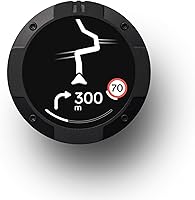
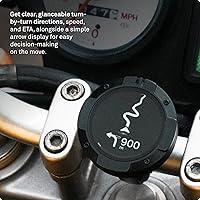
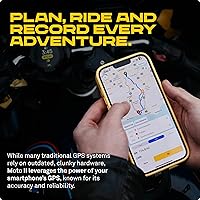
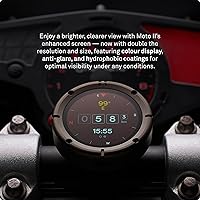
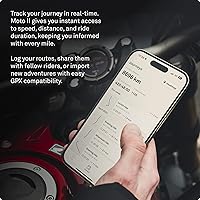
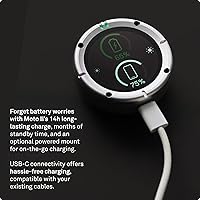
The Moto II centers around a 1.45-inch mini-map display that shows just enough — speed, distance, ETA — without pulling your attention away from the road for longer than a glance. Physical, glove-friendly buttons handle all input, which is a smarter call than a touchscreen when your hands are cold or wet. The IP67 waterproofing means it handles sustained rain and muddy off-road splashes, not just a light drizzle. Battery life is rated at 14 hours via USB-C charging, comfortably covering most full-day rides. Route planning runs through the companion app, where you can dial in curve-heavy scenic routes or default to the fastest available path.

Best For

This handlebar GPS is a natural fit for adventure tourers who want dedicated navigation without strapping a phone to their bars and worrying about battery drain or sun glare on a glass screen. Daily commuters will appreciate having a consistent, always-on device that does not require unlocking a phone at traffic lights. Riders who frequently face unpredictable weather — rain, dusty trails, muddy lanes — will find the IP67 build removes that concern entirely. That said, those wanting detailed topographic maps, lane-level guidance, or a large high-resolution display will find this device intentionally limited. It rewards riders who value simplicity and reliability above everything else.

User Feedback

With a 4.3-star average across roughly 250 ratings collected since the October 2024 launch, the Moto II has earned a genuinely positive early reception. Riders most often praise the ease of setup, the solid build quality, and the battery holding up reliably over long days in the saddle. On the critical side, some users have flagged that the companion app is a required part of the experience, which frustrates those who prefer a fully standalone device. A handful of reviews mention screen visibility as a concern under direct, harsh sunlight. Given how recently it launched, the rating pool is still growing, and it is worth checking back as longer-term ownership feedback accumulates.

Pros

  • Genuinely compact and lightweight at 5.6 ounces, adding almost nothing to handlebar clutter.
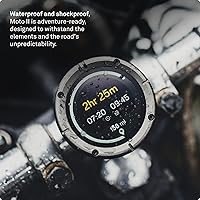
  • IP67 waterproofing handles sustained rain and muddy conditions without any protective fuss.
  • Physical glove-friendly buttons make in-ride adjustments safe and reliable in any weather.
  • A 14-hour battery rating comfortably covers full-day adventure rides on a single charge.
  • USB-C charging is a practical, modern choice that works with cables most riders already carry.
  • Route customization via the companion app lets you prioritize scenic curves or fastest paths easily.
  • The minimalist display shows exactly what matters — speed, distance, and ETA — without visual noise.
  • Solid early reputation with a 4.3-star average from real-world riders across nearly 250 ratings.
  • Shockproof construction means rough tracks and vibration-heavy rides are not a concern.
  • Works across all motorcycle types, from daily commuters to adventure bikes and cruisers.

Cons

  • Full setup and route planning depend on a companion app, which frustrates riders wanting a standalone device.
  • The 1.45-inch screen can be difficult to read clearly under intense direct sunlight.
  • Relatively new to market since October 2024, so long-term durability data is still limited.
  • No lane-level guidance or junction view support for riders navigating complex urban interchanges.
  • App dependency means a smartphone with a working connection is effectively part of the system.
  • No touchscreen input may feel limiting to riders who switch between gloves and bare hands frequently.
  • The monaural audio output is basic, and voice guidance quality may disappoint riders used to premium units.
  • Map coverage depth and update frequency have not yet been widely validated by long-term owners.

Ratings

The scores below were generated by AI after analyzing verified buyer reviews from riders worldwide, with spam, incentivized, and bot-flagged submissions actively filtered out before scoring. The Beeline Moto II Motorcycle GPS Navigator earns a strong overall reception, particularly among riders who prioritize simplicity and weather resilience — but this Beeline navigator also carries some honest weak spots that the scores reflect transparently.

Build Quality
88%
Riders consistently report that the housing feels solid and purposeful rather than plasticky, which matters when a device is bolted to handlebars and exposed to vibration all day. The shockproof construction holds up well across rough terrain, and nothing about the physical unit feels fragile or poorly assembled.
A small number of longer-term users have flagged minor surface wear on the casing after extended exposure to road grime and UV light. The review base is still young, so multi-season durability remains an open question for now.
Waterproofing
91%
IP67 certification earns genuine confidence from riders who commute through rain regularly or tour across unpredictable climates. Multiple reviewers specifically mention riding through heavy downpours without any malfunction, which is exactly the real-world validation this rating category needs.
IP67 means protection up to 1 meter of immersion for 30 minutes — excellent for rain and splashes, but not designed for prolonged submersion. A handful of riders in extremely wet environments have noted it is worth keeping the USB-C port covered when not charging.
Battery Life
84%
For most riders, the 14-hour rating translates into a full day of navigation without needing to hunt for a charge, which is the core promise and it largely holds up. Commuters in particular report running the device across multiple back-to-back rides between charges.
Real-world battery performance does dip below the rated figure when Bluetooth connectivity stays active throughout a ride or in cold weather conditions. Riders planning multi-day touring stages should plan for a USB-C top-up rather than assuming the 14-hour ceiling holds consistently.
Display Clarity
67%
33%
For glancing navigation data — speed, ETA, and the next turn — the 1.45-inch display does its job cleanly and without clutter. Riders who have made peace with its intentionally minimal format often say it is the right amount of information for focused riding.
Under direct, harsh sunlight, screen readability drops noticeably and this is one of the most recurring criticisms in the review pool. The small display size is a deliberate design choice, but it does mean riders accustomed to larger GPS screens will need an adjustment period.
Ease of Setup
86%
Most buyers report getting from unboxing to a mounted, route-loaded device in well under 30 minutes, which is a meaningful differentiator versus more complex GPS systems. The companion app pairing process is straightforward for smartphone-comfortable users.
Riders who are less familiar with app-based device configuration occasionally find the initial sync process slightly fiddly. The reliance on a smartphone app as the gateway to setup is a friction point that does not exist with fully standalone GPS units.
App Dependency
59%
41%
The companion app does deliver genuine utility — route customization between scenic and fast-path options works well, and syncing a planned route to the device before a ride becomes second nature after a few sessions. For app-comfortable riders, it is a non-issue.
This is one of the most divisive aspects across the review base. Riders who prefer a self-contained device — particularly those who tour in areas with patchy connectivity — find the app dependency frustrating and feel it undermines the standalone value proposition at this price point.
Glove Usability
89%
Physical button controls are one of the most consistently praised practical decisions in the entire product design. Riders wearing thick winter gloves or off-road gauntlets report being able to operate the device without removing their hands from a safe position.
The button layout requires a short learning period before muscle memory kicks in, and a couple of reviewers note that the buttons feel slightly stiff initially. There is no touchscreen fallback for bare-handed operation in warmer months.
Mount System
78%
22%
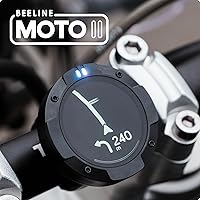
The included handlebar mount positions the unit at a natural sightline without adding significant visual noise to the cockpit. Most riders report a secure, rattle-free fit across standard handlebar diameters on a wide range of motorcycle types.
A subset of riders with non-standard or heavily accessorized handlebars found fitment less straightforward. There are occasional reports of minor vibration-related movement on particularly rough road surfaces, suggesting the mount could benefit from a more robust locking mechanism.
Navigation Accuracy
81%
19%
Turn-by-turn routing is consistently described as reliable for both urban commuting and longer road trips, with rerouting handling missed turns without significant delay. Riders using it across varied European and North American road networks generally report confidence in the directions provided.
The road-only map type means it does not serve as a true off-road or trail navigator, and some adventure riders have noted the routing can occasionally suggest less intuitive paths in rural areas with limited road data density.
Value for Money
72%
28%
For riders who genuinely want a dedicated, weatherproof motorcycle navigator with long battery life and a clean cockpit presence, the pricing sits at a justifiable point relative to the build quality and core functionality delivered. Commuters especially tend to feel the investment pays off quickly.
At the mid-to-premium price level, some buyers expect more — specifically, a larger display, offline map capability without app involvement, or more advanced routing features. Compared to similarly priced Garmin units with richer feature sets, the value calculation becomes less clear for feature-focused buyers.
Portability
93%
Weighing just 5.6 ounces and fitting neatly in a jacket pocket, this handlebar GPS is genuinely easy to transfer between bikes or take off the mount when leaving the motorcycle parked. Riders who own multiple bikes or rent occasionally appreciate how frictionless it is to move around.
There is little to criticize here — portability is one of this device's clearest strengths. The only minor note is that the compact size can make it easier to misplace when removed from the mount.
Route Customization
74%
26%
The ability to toggle between curve-seeking scenic routing and fastest-path logic via the app is a genuinely useful feature for riders who use the device across different riding moods and contexts. Adventure tourers in particular appreciate having that choice baked in.
The customization options are relatively binary — scenic or fast — and lack the granular waypoint management or advanced routing filters that dedicated touring GPS platforms offer. Riders who plan complex multi-stop routes may find the system limiting.
Audio Guidance
61%
39%
Monaural audio guidance is present and functional, giving riders a basic voice prompt layer for turn alerts without requiring visual confirmation every time. For urban commuters wearing open-face helmets, it covers the basic need adequately.
The audio quality and volume are consistently flagged as underwhelming, particularly for riders wearing full-face helmets with integrated audio systems. The monaural output lacks the clarity and integration depth of dedicated navigation audio found on premium competitors.

Suitable for:

The Beeline Moto II Motorcycle GPS Navigator was built for riders who find traditional sat navs unnecessarily complex and want something that simply works without demanding attention. Adventure tourers will appreciate how little space it takes up on the handlebars while still delivering reliable route guidance across long, varied days in the saddle. Daily commuters who are tired of wrestling with phone mounts, cracked screen protectors, and battery anxiety will find this Beeline navigator a genuinely practical upgrade. It is particularly well-suited to riders who regularly face wet or unpredictable conditions, since IP67 waterproofing provides real protection across sustained rain and dirty terrain. Anyone who values a clean, uncluttered cockpit over a dashboard of blinking data points will feel right at home with its intentionally minimal display philosophy.

Not suitable for:

Riders who need comprehensive, feature-rich navigation will likely find the Beeline Moto II Motorcycle GPS Navigator too limited for their expectations. The 1.45-inch display is deliberately small and minimal, so anyone accustomed to large-screen Garmin units with lane-level guidance, junction views, or detailed topographic overlays will feel underserved here. The device also relies on a companion smartphone app for route planning, which is a real sticking point for riders who want a fully self-contained unit that operates independently of their phone. Those who regularly ride internationally and need robust offline map support or frequent map updates should investigate whether the Moto II meets those specific requirements before committing. Riders chasing the most technically advanced navigation experience at this price point may find more capable alternatives worth the trade-off in size and weight.

Specifications

  • Screen Size: The display measures 1.45 inches diagonally, designed to show essential navigation data with minimal visual distraction.
  • Dimensions: The unit measures 2.09″ x 2.09″ x 0.81″, making it one of the most compact dedicated motorcycle navigators available.
  • Weight: At 5.6 ounces, the device adds negligible weight to any handlebar setup across all motorcycle types.
  • Battery Life: The built-in battery is rated for up to 14 hours of continuous use on a single full charge.
  • Charging: The device charges via a standard USB-C port, compatible with most modern cables and power banks.
  • Waterproofing: IP67 certification means the unit can withstand immersion in up to 1 meter of water for up to 30 minutes, and handles sustained rain without issue.
  • Durability: The housing incorporates shockproof construction to resist vibration and impact across rough roads and off-road terrain.
  • Controls: All input is handled through physical buttons engineered to be operable while wearing standard motorcycle gloves.
  • Mounting: A handlebar mount is included in the box, positioning the unit within a natural sightline for the rider.
  • Connectivity: The device pairs with a companion smartphone app for route planning and configuration, requiring a Bluetooth or app-based connection.
  • Operating System: The device runs on an Android-based operating system adapted for the motorcycle navigation use case.
  • Map Type: Navigation coverage is designed for road use, providing turn-by-turn guidance across standard road networks.
  • Audio Output: The unit includes monaural audio output for basic voice-guided navigation prompts during rides.
  • Vehicle Type: Compatible with all motorcycle categories including cruisers, sportbikes, commuters, and adventure touring bikes.
  • Launch Date: The product was first made available in October 2024, making it a recent addition to the dedicated motorcycle GPS market.
  • Color: The device is available in a black casing that suits a wide range of handlebar and cockpit aesthetics.

Related Reviews
Spy Tec Pulse Moto GPS Motorcycle Tracker
74%
73%
GPS Accuracy
84%
Real-Time Tracking Speed
88%
Installation Ease
79%
Anti-Theft Effectiveness
58%
App Experience
More
Aphqua 722 7-Inch Motorcycle CarPlay GPS Navigator
71%
83%
CarPlay & Android Auto Performance
78%
Waterproof Durability
74%
Screen Visibility
71%
Dual Bluetooth Connectivity
81%
Installation & Mounting
More
OHREX N900 9-Inch Truck GPS Navigator
68%
74%
Truck Routing Accuracy
81%
Screen Clarity
41%
Map Update Process
58%
Satellite Acquisition
79%
FM Transmitter
More
Garmin GPS 18x USB Navigation Receiver
67%
91%
Signal Accuracy
47%
Software Compatibility
78%
Build Quality
63%
Ease of Setup
84%
Long-Term Durability
More
Garmin Nuvi 2539LMT GPS Navigator
84%
91%
Ease of Use
89%
Display Quality
75%
Traffic Update Accuracy
85%
Bluetooth Connectivity
93%
Navigation Accuracy
More
Moto Watchdog OBD GPS Tracker
86%
91%
Real-Time Tracking Accuracy
88%
Ease of Installation
85%
Geo-Fencing Features
94%
No Subscription Fees
65%
Mobile App Compatibility
More
LONGRUF 710 7-Inch Car GPS Navigator
72%
81%
Value for Money
84%
Ease of Setup
61%
Screen Quality
67%
Map Accuracy
79%
Voice Guidance
More
Garmin Drive 53 GPS Navigator
76%
88%
Display Quality
91%
Ease of Use
86%
Navigation Accuracy
41%
Battery Life
63%
Mount & Stability
More
Garmin DriveSmart 55 GPS Navigator
74%
88%
Screen Readability
83%
Routing Accuracy
79%
Live Traffic Updates
91%
Ease of Use
57%
Voice Recognition
More
Liontru 7-Inch Truck GPS Navigator
70%
74%
Truck Routing Accuracy
67%
Map Coverage & Accuracy
78%
Lifetime Map Updates
83%
Screen Size & Readability
61%
Satellite Signal & Lock Time
More

FAQ

Yes, the Moto II relies on a companion smartphone app for route planning and setup. Once a route is loaded onto the device, it can navigate independently, but the initial planning step does require your phone. Riders who want a fully offline, phone-free experience should factor this into their decision.

Most riders report the battery performing close to the rated figure under normal conditions, though factors like screen brightness, temperature, and Bluetooth activity can affect actual endurance. For the vast majority of day rides, a single charge is more than enough. Longer multi-day tours may require a top-up via a USB-C power bank or bike-mounted charger.

This is one of the more common concerns raised by real-world users. The display is intentionally small and minimal, and while it performs well in overcast or shaded conditions, direct harsh sunlight can make it harder to read clearly. Positioning via the handlebar mount matters here — angling it slightly can help reduce glare.

The IP67 waterproofing and shockproof build make it physically capable of handling off-road conditions including mud, rain, and vibration. However, the map type is road-focused, so detailed trail or topographic mapping is not part of its feature set. It is best suited to adventure touring on mixed surfaces rather than dedicated off-road trail navigation.

Through the companion app, you can choose between fastest-path routing and curve-prioritizing scenic routes. It is a straightforward choice rather than a deeply customizable system, which suits riders who want quick, simple planning without spending time tweaking settings.

Yes, a handlebar mount is included in the box. It is designed to fit a wide range of standard handlebar diameters, covering most motorcycle types from cruisers to sportbikes. If you have an unusual or heavily accessorized handlebar setup, it is worth checking Beeline's compatibility guidance before purchasing.

The main advantages over a phone mount are dedicated always-on navigation without battery drain concerns, a purpose-built waterproof housing, and physical glove-friendly controls. You also avoid the risk of sun-heating a glass touchscreen or dealing with notification interruptions mid-ride. The trade-off is a much smaller screen and a less versatile device overall.

Based on available product information, the core navigation functionality does not require an ongoing paid subscription, but it is worth confirming current app terms directly with Beeline, as these can change after launch. Some features or map update mechanisms may involve account-based access through the companion app.

Setup is generally considered one of the stronger points based on early user feedback. Pairing the device with the companion app, loading a route, and mounting it to the handlebars is a quick process for most riders. Those who are less comfortable with app-based device setup may need a bit more patience initially.

It works well for both. Daily commuters benefit from the always-ready, glove-friendly design and the freedom from relying on a phone mount. The 14-hour battery means it can run through multiple commutes without needing a daily charge. Touring riders appreciate the lightweight build and weather resistance. It genuinely fits both use cases rather than being designed exclusively for one.