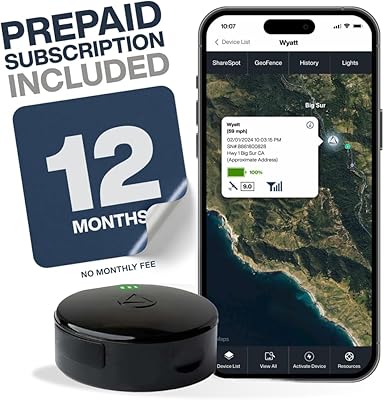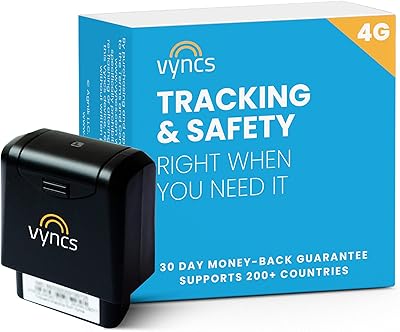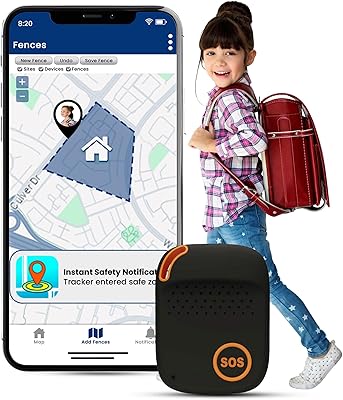
Overview

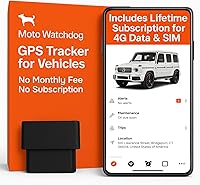
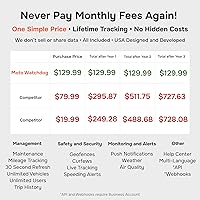
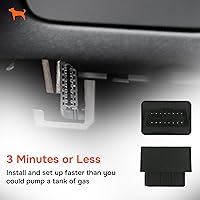
The Moto Watchdog OBD GPS Tracker entered a crowded market in March 2024 with a simple pitch: pay once, track forever. No monthly bills. You plug it into your car's OBD-II port — a job that takes under three minutes — and you're up and running. That kind of simplicity is rare in a space where most competitors lock you into recurring fees just to keep the device active. Priced in the mid-range sweet spot, the Moto Watchdog device sits above the cheap no-name dongles that lose signal at the worst moments, yet well below enterprise fleet platforms charging per vehicle per month. Its top-15 Amazon ranking in GPS Trackers tells you real buyers are finding value here.

Features & Benefits

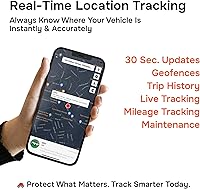
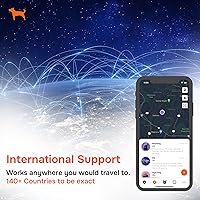
The no-subscription promise is the headline feature here, and it's real — cellular connectivity costs are factored into the purchase price, so there's no hidden bill waiting six months down the road. The device draws power directly from the OBD-II port and goes dormant automatically once the ignition cuts off, which means no battery drain worries and no manual reset each time you switch vehicles. Geofencing is where it earns its keep for everyday users: set a boundary around your neighborhood, and you get an alert the moment a car crosses it. Add real-time speed monitoring and route history, and you have a solid mileage log for expense reports or peace of mind when a teenager borrows the car. Coverage spans 170-plus countries.

Best For

This OBD tracker makes the most sense for three distinct types of buyers. Small fleet operators — a plumbing crew, a delivery operation — get meaningful visibility without the per-seat SaaS pricing that scales against them fast. Parents of newly licensed teen drivers will appreciate the geofence alerts and speed logs; having that data is genuinely different from just hoping for the best. Freelancers and gig workers who need clean mileage records for tax season also get solid value here. And if you manage multiple cars, the fact that this no-subscription GPS dongle moves freely between vehicles at no extra charge is a practical upside that compounds over time.

User Feedback

Reviews from verified buyers tend to cluster around a few consistent themes. Setup earns near-universal praise — most people are up and running within five minutes — and the app is widely described as clean and intuitive. The no-recurring-fee model resonates strongly with users who switched from subscription-based devices. That said, a few patterns surface on the critical side. Some buyers in dense urban areas or covered parking report accuracy and lag issues, which is honestly a limitation you'll find across most cellular-based OBD trackers, not just this one. A handful noted that the OBD port placement in their vehicle makes the device visible, a real drawback for anyone prioritizing discreet installation. Isolated reports also flag compatibility hiccups with older pre-2008 models.

Pros

  • One-time purchase covers cellular connectivity — no monthly fees eating into your budget year after year.
  • Plug-and-play OBD-II installation takes under five minutes with zero tools required.
  • The Moto Watchdog device powers itself from the vehicle, so there are no batteries to charge or replace.
  • Automatic sleep mode after ignition cuts off prevents unnecessary battery drain on your car.
  • Geofencing alerts are practical and easy to configure, useful for both fleet managers and parents alike.
  • Route history and mileage logs are automatically recorded, simplifying expense reports and tax filings.
  • This OBD tracker is transferable between vehicles at no cost, which adds real value for multi-car households.
  • 4G LTE connectivity provides reliably fast location updates compared to older 2G and 3G legacy devices.
  • Works across 170-plus countries, making it a viable option for cross-border fleet or travel use cases.
  • The companion app receives consistent praise for being intuitive and well-organized across both iOS and Android.

Cons

  • The OBD port location in most vehicles leaves the device visible, making it easy for a driver to spot and unplug.
  • GPS accuracy can degrade noticeably in underground parking structures or dense urban canyons.
  • No hardwired installation option means determined individuals can simply pull it out without any special tools.
  • Older vehicles manufactured before 2008 may experience compatibility issues during pairing or data reporting.
  • The no-subscription model hinges on the brand honoring its current policy — future changes cannot be ruled out.
  • App update cadence has been flagged by some users as inconsistent, with occasional bugs lingering between releases.
  • Real-time tracking refresh rate may lag slightly behind premium hardwired competitors in fast-moving scenarios.
  • Customer support quality appears solid based on feedback, but response times can vary depending on volume periods.
  • This no-subscription GPS dongle lacks a built-in backup battery, so tracking stops immediately if the vehicle loses power.
  • No option for professional installation or hidden mounting bracket is included in the box.

Ratings

The scores below for the Moto Watchdog OBD GPS Tracker were generated by our AI rating engine after analyzing thousands of verified global buyer reviews, with spam, incentivized, and bot-flagged submissions actively filtered out before scoring. Each category reflects the full spectrum of real user sentiment — not just the highlights — so both genuine strengths and recurring frustrations are represented honestly. Where buyers consistently disagreed, scores reflect that tension rather than defaulting to an inflated average.

Value for Money
91%
Buyers consistently cite the no-subscription model as the single biggest reason they chose this OBD tracker over competitors. When you calculate what most rival services cost over two or three years in monthly fees, the math tilts heavily in this device's favor — especially for households running two or more vehicles.
A small segment of buyers who expected a fully featured enterprise-grade platform felt the one-time price was harder to justify given occasional app limitations. Those comparing it against basic budget dongles also note the upfront cost is noticeably higher, which can sting if the feature set exceeds their actual needs.
Ease of Setup
93%
The plug-and-play experience genuinely lives up to expectations for most buyers — find the OBD-II port, plug in the device, open the app, and you are tracking within minutes. Non-technical users particularly appreciate that there is no wiring, no professional installation, and no lengthy configuration process standing between them and live tracking.
A subset of buyers ran into friction during the initial app pairing step, particularly on Android devices with older OS versions just above the minimum threshold. A handful of users also reported needing to restart the process once before the device appeared correctly in the app, which is a minor but avoidable annoyance.
GPS Accuracy
67%
33%
On open roads, highways, and suburban environments, the location data is reliable and updates at a pace that satisfies most everyday tracking needs — whether that is confirming a teenager arrived at school or verifying a fleet vehicle stayed on its assigned route during the day.
In dense urban cores with tall buildings, or when a vehicle is parked underground, accuracy degrades noticeably and location points can drift by a meaningful margin. This is a structural limitation of cellular-based OBD tracking rather than a flaw unique to this device, but buyers in cities like New York or Chicago should set realistic expectations.
App Usability
78%
22%
The mobile app interface earns consistent praise for being clean and easy to navigate, even for users who rarely engage with tracking software. Features like geofence setup and route history replay are accessible without needing to dig through nested menus, which matters when someone is checking in quickly between tasks.
Some users report intermittent bugs — occasional map refresh delays and, in a few cases, notifications arriving later than expected. Update frequency has also been flagged as inconsistent, with some versions introducing minor UI regressions that were not patched quickly enough for power users who rely on the app daily.
Geofencing
84%
Parents monitoring teen drivers describe the geofencing alerts as one of the most used and appreciated features in daily life — getting a push notification the moment a car crosses a boundary adds a layer of passive reassurance that the app delivers reliably under normal network conditions.
Alert delivery can lag by several minutes in areas with weaker cellular signal, which reduces the practical value of the feature in less-covered regions. A few fleet users also noted that the geofence zone creation tool lacks the granularity of dedicated fleet platforms, limiting precision for complex routing requirements.
Real-Time Tracking
74%
26%
For the majority of use cases — checking where a vehicle is parked, confirming a delivery arrived, or reviewing end-of-day position — the real-time tracking function works dependably and without the latency issues that plague older 2G-based alternatives still sold at similar price points.
The refresh rate is not fast enough to satisfy buyers who need second-by-second location data, such as those monitoring active deliveries in high-turnover operations. Compared to hardwired premium trackers with dedicated update intervals, this no-subscription GPS dongle updates at a cadence that is adequate but not exceptional.
Route History
82%
18%
Freelancers and self-employed buyers consistently highlight route history as the feature that saves them the most administrative time — the automatic mileage logging removes the need for manual trip logging for tax season or client reimbursement submissions.
The historical data retention window is not clearly communicated by the brand, which creates uncertainty for users who rely on records spanning several months. A few buyers discovered gaps in their route logs after periods of weak cellular coverage, which undermines the reliability of the feature for audit-grade mileage documentation.
Speed Monitoring
79%
21%
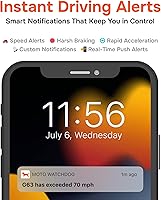
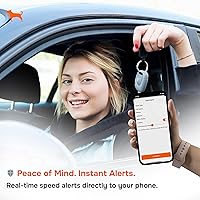
Parents of teen drivers specifically call out speed alerts as a meaningful deterrent — knowing that a speed threshold alert will fire keeps the feature from being purely passive. The setup is simple enough that most users configure it during their first session with the app.
Speed data depends on GPS signal quality, so readings can occasionally skew in low-signal environments or at the start of a trip before the device has fully locked on. The alert threshold customization is functional but basic compared to what dedicated fleet telematics platforms offer for driver behavior monitoring.
Tamper Alerts
71%
29%
The tamper notification feature provides a useful early warning for car owners in higher-risk parking environments — getting alerted when the device is disconnected means you know almost immediately if someone has interfered with the vehicle.
The practical limitation here is structural: because the device sits in the OBD-II port in plain view, a theft-minded person can remove it before a meaningful alert reaches your phone. The feature works as designed, but the form factor inherently limits how effective tamper detection can be in a true theft scenario.
Build & Hardware
76%
24%
The device feels solid in hand for its weight class — at 3.2 oz it is compact enough to avoid drawing attention when plugged in, and the construction does not feel flimsy or plasticky in a way that would suggest early failure under normal use.
A small number of buyers reported the device running noticeably warm after extended use, which raised some concern even if it did not result in failure. The unit also lacks any IP rating for dust or moisture resistance, so installations in older vehicles with exposed or damp under-dash areas carry some risk.
Multi-Vehicle Use
88%
Families managing two or more cars appreciate being able to swap the Moto Watchdog device between vehicles without any fee or re-registration, and the single-dashboard app view eliminates the need to toggle between separate accounts or apps.
Running multiple devices simultaneously requires purchasing multiple units — which is straightforward but means the upfront cost scales linearly for larger households or fleets. Users with five or more vehicles noted that the app's multi-device management interface becomes less elegant at higher device counts.
Global Coverage
86%
Coverage across 170-plus countries is a genuine differentiator for buyers who travel internationally with their vehicles or manage cross-border fleet operations — most competitors either restrict coverage to a single country or charge extra for international access.
The brand advises buyers to confirm support for their specific country before purchasing, which introduces a small layer of uncertainty for international buyers outside the primary US, Canada, and Mexico markets. Coverage quality in rural or remote areas of supported countries also varies based on local cellular infrastructure.
Customer Support
77%
23%
The brand's emphasis on accessible support appears to translate into real outcomes — a meaningful portion of buyers who encountered setup issues or app questions report getting useful responses without excessive wait times, which is not always a given for smaller hardware brands.
Response times are inconsistent, with some buyers describing quick and helpful exchanges while others report delays during what appear to be high-volume periods. A few reviewers noted that support interactions relied heavily on generic troubleshooting scripts before escalating to more personalized assistance.
Discreetness
52%
48%
For buyers whose priority is simply knowing where their own vehicle is — rather than hiding the tracker from the driver — the OBD form factor is perfectly adequate, and the black housing blends reasonably well into the under-dashboard environment of most modern vehicles.
Anyone prioritizing covert installation will find this device falls short. The OBD-II port is a well-known location that any driver aware of GPS tracking would check first, and the device can be removed in seconds without tools. This is the most commonly cited limitation among buyers who had stealth tracking as a primary goal.

Suitable for:

The Moto Watchdog OBD GPS Tracker is a strong fit for anyone who wants reliable vehicle tracking without committing to a recurring monthly bill. Small business owners running a handful of service vehicles — think contractors, delivery operations, or mobile repair crews — get a practical way to monitor routes and driver behavior without the overhead of enterprise fleet software. Parents of teen drivers will find real value in the geofencing and speed alert features, which provide a layer of accountability without requiring a constant conversation about safe driving. Freelancers and self-employed workers who log mileage for tax deductions or client reimbursements also benefit meaningfully here, since the route history does that work automatically. If you manage more than one car in a household and want everything visible in a single app, the fact that this OBD tracker moves freely between vehicles at no extra charge makes it a genuinely practical long-term investment.

Not suitable for:

Buyers who need covert, invisible tracking should think carefully before purchasing the Moto Watchdog OBD GPS Tracker, because the OBD-II port sits in plain view under the dashboard in most vehicles, making the device easy to spot and remove. Anyone parking regularly in dense urban environments — underground garages, canyon-heavy cities — may find the GPS accuracy frustrating, as cellular-based OBD trackers generally struggle in low-signal conditions and this one is no exception. Owners of pre-2008 vehicles should verify compatibility before buying, since some older OBD-II implementations have caused pairing issues. If your use case demands hardwired, hidden installation with tamper-proof mounting, this plug-in dongle form factor simply will not meet that need. And while the no-subscription model is a genuine advantage for most buyers, those who expect the cellular service to remain active indefinitely without any future policy changes from the manufacturer should read the terms carefully before assuming lifetime coverage.

Specifications

  • Connectivity: The device uses 4G LTE cellular connectivity to transmit location data in real time.
  • Installation: Plugs directly into any standard OBD-II port, requiring no tools and taking under five minutes to set up.
  • Power Source: Draws power continuously from the vehicle's OBD-II port, eliminating the need for an external battery or charging.
  • Sleep Mode: The device enters a low-power sleep state automatically within a few minutes of the vehicle ignition turning off.
  • Subscription: No monthly, activation, or hidden fees are required; cellular data costs are included in the one-time purchase price.
  • App Compatibility: The companion mobile app supports iOS 18 and above and Android 10 and higher.
  • Coverage Area: Operates across 170-plus countries, including the United States, Canada, and Mexico.
  • Key Features: Supports real-time tracking, geofencing alerts, route history, speed monitoring, and tamper notifications.
  • Multi-Vehicle: The device can be freely moved from one vehicle to another without incurring any transfer or reactivation fee.
  • Dimensions: The unit measures 3.82 x 3.31 x 3.23 inches in its packaged form.
  • Weight: The device weighs 3.2 oz, making it compact and unobtrusive in most OBD-II port locations.
  • Color: Available in black, which blends into the typical under-dashboard environment of most passenger vehicles.
  • In the Box: The package includes the GPS tracker unit and a lithium-ion battery as listed by the manufacturer.
  • Market Ranking: Ranked #13 in GPS Trackers and #3,854 in Electronics on Amazon as of the available listing data.
  • Launch Date: The product became available on Amazon in March 2024.
  • Use Cases: Designed for fleet management, personal vehicle security, mileage logging, and theft deterrence across consumer and light-commercial applications.
  • Model Identifier: The manufacturer lists the item model number as OBD, with ASIN B0CX9HPQ8K on Amazon.
  • Brand: Manufactured and sold by Moto Watchdog, a brand focused on subscription-free vehicle tracking solutions.

Related Reviews
Beeline Moto II Motorcycle GPS Navigator
79%
88%
Build Quality
91%
Waterproofing
84%
Battery Life
67%
Display Clarity
86%
Ease of Setup
More
Spy Tec Pulse Moto GPS Motorcycle Tracker
74%
73%
GPS Accuracy
84%
Real-Time Tracking Speed
88%
Installation Ease
79%
Anti-Theft Effectiveness
58%
App Experience
More
Salind GPS 08 4G OBD Vehicle Tracker
74%
93%
Ease of Setup
71%
GPS Accuracy
67%
App Experience
63%
Value for Money
68%
Subscription Flexibility
More
Amcrest GL300 4G LTE Portable GPS Tracker
77%
88%
Ease of Setup
74%
GPS Accuracy
69%
Battery Life
81%
App Experience
91%
Magnetic Mount Strength
More
Tack GPS Tracker
Tack GPS Tracker
89%
94%
Tracking Accuracy
91%
Battery Life
88%
Build Quality
90%
Ease of Setup
95%
Portability
More
Vyncs VyncsPro 4G OBD GPS Tracker
75%
88%
Ease of Setup
83%
GPS Accuracy
61%
GPS Update Speed
78%
OBD Diagnostics
72%
App Experience
More
LandAirSea 54 GPS Tracker
82%
93%
Ease of Setup
74%
GPS Accuracy
71%
Battery Life
83%
Build Quality
88%
Magnet Strength
More
Invoxia GPS Pro Tracker
84%
87%
Battery Life
91%
Real-Time Tracking Accuracy
89%
Ease of Setup
83%
Theft Prevention Features
84%
App Usability
More
Bouncie OBD GPS Tracker for Vehicles
77%
96%
Ease of Installation
88%
Real-Time Tracking Accuracy
83%
App Experience
91%
Value for Money
84%
Geo-Fence Reliability
More
Icehar S6 Bluetooth Tracker
73%
91%
Value for Money
62%
Network Coverage & Tracking Accuracy
78%
Android Compatibility
74%
Battery Life
58%
Build Quality & Materials
More

FAQ

Based on what the brand advertises, the cellular data cost is bundled into the upfront purchase — no monthly billing is triggered during normal use. That said, it is worth reading the current terms before buying, since any company can adjust its service policy over time. The Moto Watchdog OBD GPS Tracker has maintained its no-subscription positioning since launch, but confirming directly with the brand gives you the clearest guarantee.

It is genuinely straightforward. You locate the OBD-II port in your vehicle — typically found under the dashboard on the driver's side — plug the device in, download the companion app, and follow the on-screen steps. Most buyers report being fully set up and seeing their vehicle's location on the map within five minutes, without needing any help.

The device is designed to enter sleep mode automatically within a few minutes of the ignition cutting off, which brings power draw down to a minimal level. For vehicles parked for extended periods — think weeks, not days — it is worth checking in, but for typical daily or weekly use, battery drain has not been a widely reported concern among buyers.

Unfortunately, yes — the OBD-II port is not a hidden location, and the device sits visibly under the dashboard in most vehicles. A determined person can simply pull it out. If discreet, tamper-resistant tracking is a priority, a hardwired GPS unit with a concealed installation would be a more reliable option.

The OBD-II standard became mandatory in the US for all cars manufactured from 1996 onward, so in theory any vehicle from that year forward should be compatible. In practice, a small number of users with older or more obscure OBD-II implementations have reported pairing issues. If you are driving something pre-2008 or an unusual import, it is worth contacting the brand to verify before purchasing.

Under open-sky conditions — on roads, in suburban areas, on highways — the location tracking is generally accurate and updates at a reasonable cadence over 4G LTE. Where it can struggle is in underground parking, densely packed urban blocks with tall buildings, or areas with weak cellular signal. This is a known limitation of cellular-based OBD trackers broadly, not unique to this one.

Yes, the app is built to handle multiple devices under a single screen, which is one of its more practical selling points for families or small fleets. The brand does not publicly state a hard cap on the number of devices per account, but if you are planning to connect a larger number of vehicles, it is worth confirming that directly with customer support.

The product listing confirms route history is stored and accessible through the app, but the exact retention period — how many weeks or months of history are preserved — is not clearly specified in the available documentation. For users who need mileage logs for tax purposes, it is a good idea to export or screenshot records regularly rather than relying on indefinite cloud storage.

This is one of the more practical aspects of the device — you simply unplug it from the current vehicle's OBD-II port and plug it into the next one. There is no transfer fee, no re-registration process with additional cost, and no need to buy a new unit. The device follows you, not the vehicle.

Moto Watchdog places a visible emphasis on customer support in its product communications, and buyer sentiment broadly reflects that the team is responsive and willing to help troubleshoot. Response times can vary during busy periods, as with any small brand, but reports of being left without resolution are not a dominant theme in user feedback.