Overview

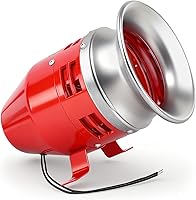
The Baomain MS-390 110V AC Motor Siren is a no-nonsense, industrial-grade alarm built for environments where sound needs to cut through machinery noise, open yards, or busy factory floors. Unlike the plastic-bodied units cluttering the budget end of the market, this motor siren is housed in solid metal construction that handles rough conditions without cracking or fading. It runs on standard 110V AC mains power, meaning it wires directly into your electrical setup — not batteries, not adapters out of the box. That makes installation a deliberate process, but it also means you get a permanently reliable signal rather than something that dies mid-emergency.
Features & Benefits

At 125 decibels, this motor siren is not quietly asking for attention — that is the kind of volume that carries across a warehouse floor, an open lot, or a rural property without difficulty. What sets a motor-driven unit apart from electronic sirens is the sound itself: rather than a flat, synthesized beep, you get a rising mechanical wail that is harder to ignore and easier to locate. The metal housing resists dents, tampering, and weather exposure better than molded plastic. It wall-mounts permanently, drawing just 0.93A, and the 500-meter audible range means it covers serious ground. A two-year manufacturer warranty rounds out a package built for long-term installation.

Best For

This industrial alarm is a natural fit for factory floors, machine shops, and warehouses where standard buzzers simply do not cut through ambient noise. It also works well for small business security — a retail yard, a storage facility, or a gated lot where a loud audible deterrent matters more than a subtle chime. Farmers and rural property owners appreciate that 500-meter throw, especially where structures are spread out. Engineers and hobbyists building custom 110V alarm systems will find the wiring straightforward once they have the right transformer in place. If you specifically want that classic, motor-driven rising wail rather than an electronic tone, this is the unit to consider.

User Feedback

Across more than 100 verified ratings, the MS-390 holds a strong 4.4-star average, and the praise is consistent: buyers repeatedly call out the raw volume, the solid feel of the metal body, and the no-fuss wiring process for those already comfortable with 110V circuits. The sound character — that mechanical, rising wail — gets specific mentions from buyers who wanted exactly that tone over a generic electronic alert. On the critical side, the most common frustration is that no transformer is included, which catches some buyers off guard. A handful also note that without prior electrical experience, professional installation is worth the expense. Buyers who came in knowing what a motor siren requires tend to leave satisfied.

Pros

  • Genuine 125dB output that real buyers confirm carries across large warehouses and open outdoor areas.
  • Metal housing resists tampering, dents, and environmental wear far better than plastic alternatives.
  • Motor-driven mechanical wail is instinctively alarming and easier to locate by ear than electronic tones.
  • 500-meter audible range makes this industrial alarm viable for large rural or commercial properties.
  • Modest 0.93A current draw integrates cleanly into most existing 110V alarm or control circuits.
  • Wall-mount design is solid and purpose-built for permanent, fixed installations that stay in place.
  • Buyers with electrical experience consistently describe the wiring terminals as logical and easy to work with.
  • Two-year manufacturer warranty provides reasonable coverage for a hardwired permanent installation.
  • Product has been continuously available since 2016, signaling long-term manufacturing stability.
  • At 4.4 stars across more than 100 verified ratings, buyer satisfaction is consistently strong among the target audience.

Cons

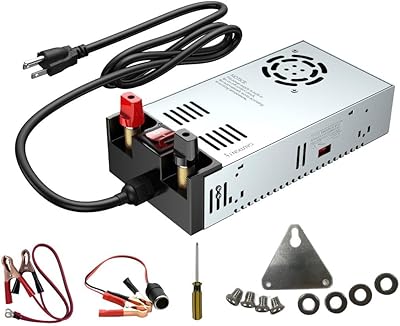
  • No transformer is included, and you cannot operate this unit without one — an extra cost many buyers miss upfront.
  • Professional electrical installation is realistically necessary for anyone without 110V AC wiring experience.
  • No IP weather rating is published, leaving outdoor exposure limits undefined and uncertain for harsh climates.
  • Zero volume or tone adjustment — once wired, output is fixed at full intensity with no way to reduce it.
  • No wireless trigger or remote control option of any kind limits integration into modern alarm systems.
  • Manufacturer documentation and after-sale support have drawn mixed feedback, especially for troubleshooting.
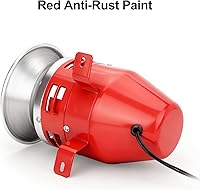
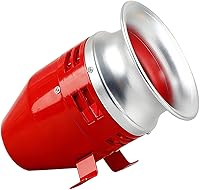
  • The bold red housing and bulky footprint make it visually prominent — it will not blend into finished interiors.
  • Long-term motor wear under high-frequency trigger cycles is a concern some experienced users have flagged.
  • Included installation instructions are minimal and offer no transformer recommendations despite it being essential.
  • Total real-world cost climbs considerably once transformer and installation labor are factored in.

Ratings

The Baomain MS-390 110V AC Motor Siren has been put through its paces by over a hundred verified buyers — factory supervisors, rural property owners, security installers, and hands-on hobbyists — and our AI has analyzed that global feedback pool, actively filtering out incentivized and bot-pattern reviews to surface what real users actually experienced. Scores below reflect both where this industrial alarm genuinely earns its reputation and where it asks buyers to manage expectations. Strengths and friction points are represented equally, so you can make a clear-headed decision before committing to a wired installation.
Sound Output & Volume
93%
Buyers across warehouse and farm settings consistently confirm that 125dB is not just a spec on paper — it carries across large open floors and outdoor yards with authority. Several reviewers noted it cut through running machinery noise that electronic buzzers had failed to penetrate, which is exactly what a motor siren is designed to do.
A small number of buyers in enclosed spaces or smaller rooms found the volume overwhelming without any attenuation control. There is no way to dial it back, so if your environment is more modest in size, this level of output may be more than you actually need.
Build Quality & Durability
88%
The all-metal housing is a genuine differentiator at this price tier, and buyers notice it immediately upon unboxing. Multiple reviewers who installed units outdoors or in dusty industrial environments reported no degradation in the shell after extended use, which speaks to the construction holding up under real working conditions.
A few buyers noted that the red paint finish showed scuffs after installation or when mounted in high-traffic areas. The internal motor mechanism, while robust for most use cases, has drawn occasional concern about long-term wear if the siren is triggered continuously for extended periods.
Ease of Installation
61%
39%
For buyers with existing electrical experience or a background in industrial wiring, the hookup process is described as clean and logical. The wiring terminals are clearly laid out, and installers familiar with 110V AC circuits found the physical mounting and connection work to be uncomplicated and quick.
This is where the MS-390 earns its most consistent criticism. The transformer is not included, and multiple buyers flagged this as an unexpected extra cost and complication. For anyone without electrical experience, this is genuinely not a plug-and-play product — professional installation is realistically necessary, and that adds time and expense.
Value for Money
79%
21%
When buyers factor in the metal housing, motor-driven mechanism, and audible range against comparable units, most feel the MS-390 lands in a fair position for what it delivers. For permanent industrial installations where you need something that will last years without replacement, the cost-per-year math tends to favor this unit.
The missing transformer shifts the real total cost upward, which frustrates buyers who budget based on the unit price alone. If you factor in transformer purchase and professional installation labor, the overall spend climbs noticeably above the initial sticker, making value perception dependent heavily on what you already have on hand.
Audible Range & Coverage
86%
The 500-meter range claim holds up well in open-environment reviews. Farm owners and outdoor facility managers specifically called out that the siren was audible at distances that surprised them, particularly in calm conditions. For large perimeter applications, this range makes a meaningful operational difference.
In built-up or obstructed environments — multiple buildings, dense vegetation, or urban settings with ambient noise — the effective range drops considerably. Buyers expecting 500-meter coverage in complex layouts should treat that figure as an open-field benchmark rather than a guaranteed specification in all conditions.
Sound Character & Tone
91%
The rising mechanical wail of a motor-driven siren is exactly what a specific segment of buyers came looking for, and it delivers precisely that. Reviewers who had previously used electronic tone sirens noted the motor siren sound is more instinctively alarming and easier to locate by ear — a meaningful distinction in emergency signaling contexts.
The sound is not adjustable in pitch or pattern — you get one tone, and it is loud and insistent. For applications where a more varied or softer alert is appropriate, this fixed mechanical wail is a limitation. A handful of buyers also noted the tone can be jarring in settings where it triggers frequently.
Housing & Weather Resistance
77%
23%
The metal shell offers a baseline of weather tolerance that plastic alternatives cannot match, and several outdoor installers reported the unit handling rain exposure without issue. For covered outdoor mounting scenarios — under an eave or inside a protected enclosure — the construction holds up reliably.
There is no stated IP weather rating for this unit, which creates uncertainty for fully exposed outdoor installations. Buyers in harsh climates with heavy rain, salt air, or extreme temperature swings should factor in some form of weatherproofing enclosure, as the manufacturer does not specify outdoor exposure limits explicitly.
Mounting & Physical Footprint
82%
18%
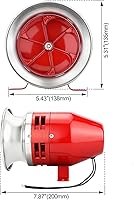
The wall-mount design is solid and purpose-built for permanent fixed placement, which suits industrial and commercial settings well. At just under three pounds, it is heavy enough to feel substantial without being awkward to position and fasten during a solo installation.
The footprint — roughly 5.6 inches square and nearly 8 inches tall — is bulkier than some buyers anticipated. In tighter mounting locations or where aesthetics matter slightly, the size and the bold red color make it a visually prominent fixture that does not blend into the environment.
Wiring & Electrical Compatibility
69%
31%
For 110V AC infrastructure, the wiring interface is clean and the current draw of 0.93A is modest enough to integrate into most existing alarm or control circuits without overloading a circuit. Electricians and experienced DIYers consistently rate the terminal layout as sensible and easy to work with.
The absence of any wireless or relay control option limits integration flexibility. There is no remote trigger, no wireless module, and no built-in timer — it is purely a hardwired, direct-trigger unit. For buyers hoping to tie it into a more sophisticated automation or smart-home adjacent system, that rigidity requires workarounds.
Manufacturer Support & Warranty
74%
26%
A two-year manufacturer warranty is a reasonable commitment for a wired industrial component, and Baomain Electric has been producing this product line since 2016 without discontinuation — a sign of product stability that buyers in long-term installation scenarios tend to appreciate.
Warranty service and manufacturer communication have drawn mixed feedback. Some buyers reported difficulty getting timely responses when issues arose, and the warranty process is not as clearly documented as buyers would prefer. For overseas-manufactured industrial hardware, after-sale support is always a variable worth factoring into the decision.
Packaging & Unboxing Experience
58%
42%
The unit arrives in functional protective packaging and is generally well-secured for transit. Most buyers reported the siren arriving without physical damage, and the build quality is immediately apparent when you handle it — the metal shell does not feel like it needed elaborate cushioning to survive shipping.
Documentation is minimal. The included instructions are basic, and for buyers without prior experience wiring motor sirens, the lack of a detailed setup guide is a real gap. There is no QR code linking to supplemental resources, and no transformer recommendation is provided despite the transformer being essential for operation.
Noise Consistency & Reliability
84%
Buyers who have run the MS-390 through repeated trigger cycles — testing alarm systems, running drills, or integrating it into automated equipment — generally report consistent output without degradation. The motor mechanism does not appear to fade or distort under normal repeated use, which is important for any life-safety application.
A small number of long-term users flagged concerns about motor wear after years of heavy cycling. While these cases appear to be outliers rather than a systemic issue, anyone planning to use this siren in a high-frequency trigger environment — multiple activations per day — should keep the motor lifespan question in mind.

Suitable for:

The Baomain MS-390 110V AC Motor Siren was built for people who need a loud, permanent, no-nonsense alarm signal and already have — or can arrange — the electrical infrastructure to support it. Factory supervisors, warehouse managers, and machine shop owners will find it a natural fit: environments where ambient noise is high and a 125dB motor-driven wail is the only tone that actually gets attention. Farmers and rural property owners with large parcels benefit from the 500-meter audible range, which covers distances that electronic chirpers simply cannot match. Small business operators securing yards, storage facilities, or gated lots will appreciate both the sound output and the tamper-resistant metal housing. Engineers and experienced DIYers building custom 110V alarm or automation systems will find the wiring interface clean and the unit reliable once properly integrated. If you know exactly what a motor siren is, why it sounds different from an electronic unit, and what your installation requires — this is a well-built option at a fair position in the market.
Not suitable for:

The Baomain MS-390 110V AC Motor Siren is not the right choice for buyers expecting a plug-and-play alarm solution they can set up in an afternoon without electrical knowledge. The transformer is not included, and that is not a minor oversight — without it, the unit simply does not operate, and sourcing a compatible one adds both cost and research time that casual buyers rarely anticipate. Anyone without prior experience working with 110V AC wiring should budget for professional installation, which meaningfully increases the total project cost. This industrial alarm is also a poor fit for smaller interior spaces, apartments, or noise-sensitive environments where 125dB would be excessive and uncontrollable. There is no wireless trigger, no remote control, no variable tone, and no smart-home integration of any kind — buyers looking for flexibility in how or when the siren activates will find the hardwired, direct-trigger design frustratingly rigid. If your application calls for something modest, adjustable, or easy to relocate, this motor siren is almost certainly more unit than you need.
Specifications

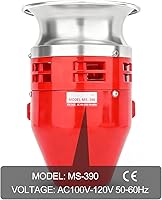
  • Model Number: This unit is manufactured under model designation MS-390 by Baomain Electric Co., Ltd.
  • Input Voltage: Operates exclusively on 110V AC mains power — no battery or DC operation is supported.
  • Current Draw: Draws 0.93A at full operation, making it compatible with standard low-load alarm control circuits.
  • Sound Output: Rated at 125 decibels, measured at a standard reference distance under open-field conditions.
  • Audible Range: Manufacturer-rated audible range of up to 500 meters in open, unobstructed environments.
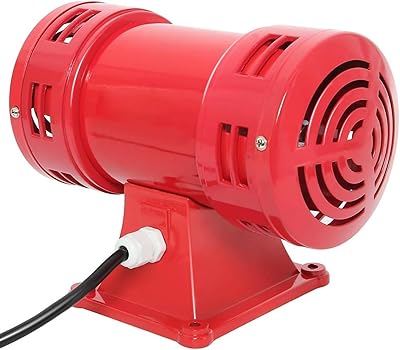
  • Housing Material: Constructed from solid metal with a red painted exterior finish for high-visibility identification.
  • Dimensions: The unit measures 5.63″ long by 5.63″ wide by 7.68″ tall, providing a compact but substantial footprint.
  • Weight: Complete unit weighs 2.74 pounds, making solo wall-mounting manageable during installation.
  • Mounting Type: Designed for permanent wall-mount installation using a fixed bracket configuration.
  • Control Method: Triggered via direct hardwired connection — no wireless, relay-optional, or remote-control functionality is built in.
  • Wireless Remote: No wireless remote is included or natively supported; all triggering is handled through direct wired circuit control.
  • Transformer: A suitable step-down transformer or power supply is required for operation and is not included with the unit.
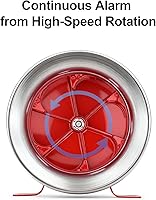
  • Siren Mechanism: Uses a motor-driven mechanical siren mechanism, producing a rising wail tone distinct from electronic synthesized alarms.
  • Color: Finished in red, consistent with standard industrial and emergency signaling equipment conventions.
  • Warranty: Covered by a 2-year manufacturer warranty provided by Baomain Electric Co., Ltd.
  • Availability Status: This product has not been discontinued by the manufacturer and has been actively sold since August 2016.
  • Market Ranking: Ranked #226 in the Security Horns and Sirens category on Amazon at the time of review compilation.
  • Battery: No battery is used or required — the unit is fully dependent on a continuous 110V AC power source.

Related Reviews
Tebrol 3500W Inverter 12V DC to 110V AC
85%
88%
Performance
91%
Ease of Setup
94%
Safety Features
92%
Power Output
60%
Fan Noise
More
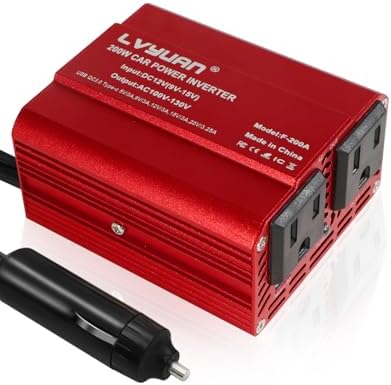
LVYUAN 200W Power Inverter 12V DC to 110V AC
87%
92%
Portability & Size
89%
Charging Performance
86%
Build Quality
94%
Noise Level
75%
Cooling & Thermals
More
Anbull 600W 12V DC Power Supply Converter
81%
83%
Output Stability
78%
Build Quality
71%
Cooling & Fan Noise
91%
Ease of Setup
93%
Power Switch Convenience
More
YaeCCC RA-0121 Air Raid Siren
74%
83%
Sound Output
88%
Build Quality
61%
Installation Ease
76%
Value for Money
71%
Volume Consistency
More
Cantonape 800 Watt Car Inverter DC 12V to 110V/120V AC Converter
85%
88%
Power Output Performance
91%
Portability & Size
87%
Durability & Build Quality
89%
Ease of Use
76%
Cooling System Effectiveness
More
Joemnwart 3000W Pure Sine Wave Power Inverter 24V DC to 110V AC
85%
91%
Power Output
89%
Efficiency
88%
Ease of Use
74%
Noise Levels
85%
Build Quality
More
GDSTIME 17251 172mm AC Axial Fan
78%
93%
Build Quality
91%
Airflow Performance
41%
Noise Level
89%
Durability & Longevity
67%
Ease of Installation
More
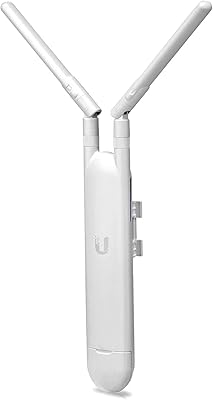
Ubiquiti UAP-AC-M Outdoor Mesh Access Point
79%
91%
Outdoor Range & Coverage
88%
Build Quality & Weatherproofing
58%
Setup & Configuration
93%
Long-Term Reliability
74%
Mesh Wireless Performance
More
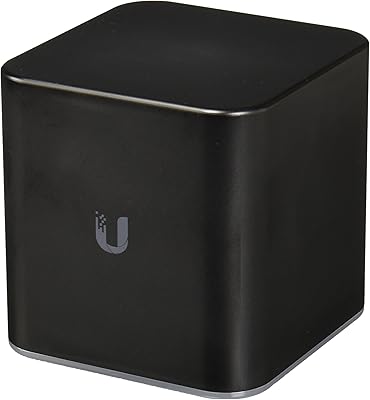
Ubiquiti airCube AC Wireless Access Point
79%
93%
Ecosystem Integration
91%
PoE Passthrough
74%
Wireless Coverage
78%
Setup & Installation
82%
Build Quality
More
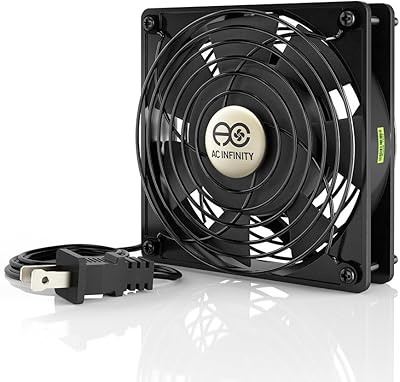
AC Infinity AXIAL 1225 120mm Muffin Fan
81%
91%
Build Quality
78%
Noise Level
72%
Airflow Performance
93%
Longevity & Reliability
88%
Ease of Installation
More

FAQ

You will need to source a compatible transformer separately — it is not included. This is the most common surprise buyers report after purchase. Make sure the transformer you choose outputs a stable 110V AC at a sufficient current rating to handle the 0.93A draw of this motor siren before you wire anything up.

It can be mounted in outdoor locations, but there is no published IP weather rating for this unit, so fully exposed installations in heavy rain, coastal salt air, or extreme freeze-thaw conditions carry some risk. Most buyers who use it outdoors mount it under an eave, inside a vented enclosure, or in a covered area that shields it from direct precipitation.

To put it plainly, 125dB is in the same range as a jet aircraft at close distance or a loud rock concert at the front of the stage. In a warehouse or open yard, it is clearly audible across the entire space and well beyond the perimeter. If you are installing it indoors in a smaller room, be aware that it will be intensely loud with no option to reduce the output.

You can absolutely use a relay between your control system and this motor siren — that is actually the most common integration approach for factory and automation setups. The siren itself is a straightforward hardwired load; anything that can switch a 110V AC circuit can trigger it, whether that is a relay, a contactor, or a manual switch.

If you are comfortable working with 110V AC circuits and understand how to safely isolate power before wiring, the terminal layout is logical and the hookup is not complicated. That said, if you are not experienced with mains-voltage wiring, bringing in a licensed electrician is genuinely the right call here — this is not a low-voltage project where mistakes are forgiving.

A motor-driven siren produces a rising, sweeping mechanical wail — think old civil defense sirens or emergency vehicle sounds — rather than the flat, repetitive beep of an electronic unit. Many buyers specifically choose this industrial alarm because that sound is more instinctively alarming and carries differently through ambient noise than a synthesized tone.

No. This unit is rated strictly for 110V AC input. Running it on 220V or 240V without a proper step-down transformer would likely damage the motor mechanism and could create a safety hazard. If you are outside North America or in a location with a higher mains voltage, you will need a suitable step-down transformer before connecting this siren.

No — the MS-390 operates at full output whenever it is triggered, and there is no built-in way to adjust the volume, change the tone pattern, or set a duration limit. What you get is a fixed, full-power mechanical wail for as long as power is applied to the circuit. If variable output or tone selection matters for your application, this unit is not the right fit.

The 500-meter figure is an open-field benchmark, and most buyers confirm it holds up well in genuinely open environments — large farms, outdoor yards, and open factory campuses. In settings with multiple buildings, dense vegetation, or significant background noise, expect the effective range to be meaningfully shorter. Treat 500 meters as a best-case ceiling, not a guaranteed floor.

The unit is designed for wall mounting, but buyers should verify what fasteners are included in the box, as the packaging contents can vary and hardware specifications are not detailed on the product listing. Having a set of appropriate lag screws or bolts on hand before you start installation is a sensible precaution, especially if you are mounting to masonry or metal framing.