Overview

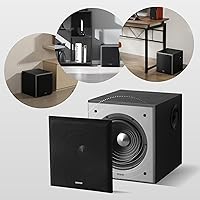
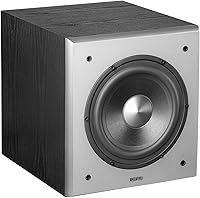
The Edifier T5 8-inch Powered Subwoofer sits in a competitive mid-range space where desktop and home stereo users want more low-end without rebuilding their entire system. It targets the same buyers considering options like the Polk Audio HTS 10 or Klipsch R-10SW — people who already own decent bookshelf or satellite speakers and simply need something to fill out the bottom end. The MDF wooden enclosure is a genuine differentiator at this price; denser cabinet materials reduce the kind of resonance that makes cheaper subs sound hollow or muddy. Powered by a 70W RMS amplifier driving an 8-inch dynamic driver, it has enough muscle for most living rooms and offices. Just know going in: this is a supplement, not a replacement for a full speaker setup.
Features & Benefits

The low-pass filter is arguably what makes this active woofer worth the money — it rolls off frequencies your satellite speakers already handle well, keeping bass focused rather than bleeding into the midrange. The 70W RMS amplifier drives the 8-inch driver with enough headroom for demanding music without audible strain at moderate volumes. That thick MDF cabinet absorbs internal vibration rather than amplifying it, which you actually hear when playing acoustic bass or dense cinematic low-end. Auto standby is a genuinely useful daily feature; the unit powers itself down after a period of inactivity without any button press. The dual RCA inputs connect to almost anything — a stereo receiver, AV amp, or PC sound card. The 85dB signal-to-noise ratio is respectable for this class, though critical listeners in quiet rooms may catch faint background noise at high gain settings.

Best For

This powered subwoofer suits people who already have a working speaker setup but feel something missing in the lower registers. If you're running a pair of bookshelf speakers for music listening, or a compact 2.0 desktop system that handles mids and highs well, adding this active woofer fills that gap without requiring a new receiver or amplifier. It's also a natural fit for home office setups where floor space is limited but audio quality still matters. Music listeners who want bass that tracks accurately — drums, double bass, synth sub-tones — rather than a boomy one-note thud will appreciate the controlled tuning here. Less ideal for home theater users who need deep, high-impact effects; for that application, you'd likely want a larger driver or higher output.

User Feedback

Build quality comes up consistently in buyer comments — the cabinet feels solid and hefty, noticeably more substantial than plastic-bodied competitors at a similar price point. Most users are satisfied with the tightness of the bass, though a handful expected more dramatic low-end presence and found the output underwhelming in larger rooms. The auto standby function draws mixed reactions; some appreciate the convenience, but others report it kicks in too quickly during quiet passages, cutting out mid-session. Setup via RCA gets almost universal praise for being fast and fuss-free. A number of buyers pair the Edifier T5 with other Edifier desktop speakers, though it works fine alongside third-party brands too. Long-term reliability feedback is generally positive, with few reports of early failure, though warranty support experiences seem to vary by region.

Pros

  • The dense MDF cabinet feels genuinely premium and produces no audible rattle even during extended bass-heavy playback.
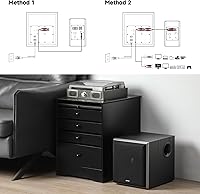
  • RCA connectivity makes integration with existing stereo receivers, AV amps, and PC sound cards completely straightforward.
  • The built-in low-pass filter keeps bass clean and prevents overlap with your satellite speakers for a coherent overall sound.
  • Auto standby reduces idle power draw without requiring any manual input during normal daily use.
  • Frequency response reaching down to 38Hz covers the full range of musical bass content, from kick drums to synth sub-tones.
  • Long-term owners report strong reliability with no driver degradation or amplifier issues after extended use.
  • Level matching via the onboard volume control is simple enough that most users get a good blend on first setup.
  • The controlled, musical bass tuning suits acoustic, jazz, and electronic listeners who want accuracy over boom.

Cons

  • Auto standby triggers too quickly for some users, cutting out noticeably between quiet tracks or during low-level passages.
  • Output headroom is limited in rooms larger than a typical bedroom or home office, where the sub can sound underpowered.
  • No digital input options mean buyers with modern streamers or TVs lacking analog outputs will need additional hardware.
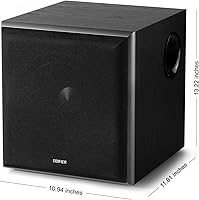
  • The physical footprint surprises many buyers — over 16 inches deep and nearly 20 pounds is substantial for a compact setup.
  • Warranty support quality varies significantly by region, with some international buyers reporting difficulty accessing service.
  • There is no remote control, no app, and no memory of gain settings after standby, which makes frequent adjustments tedious.
  • The surface finish, while clean, scuffs relatively easily on contact with hard objects during placement or repositioning.
  • Users wanting finer crossover control will find the onboard filter adjustment range limited compared to dedicated AV receivers.

Ratings

The Edifier T5 8-inch Powered Subwoofer has been put through its paces by buyers across multiple global markets, and our AI rating system has processed thousands of verified purchase reviews — actively filtering out incentivized, bot-generated, and duplicate submissions — to surface what real listeners actually experience. The scores below reflect a balanced picture, capturing both where this active woofer genuinely delivers and where it falls short depending on your expectations and setup.
Bass Performance
78%
22%
For a compact 8-inch driver, the low-end output is notably controlled and musical — users pairing it with bookshelf speakers consistently report that bass lines and kick drums finally have weight without muddying the midrange. It handles acoustic bass and lower synth tones with more accuracy than same-size competitors in plastic enclosures.
Listeners expecting cinematic, room-shaking impact are often left wanting more. In rooms larger than a typical office or bedroom, the 70W output starts to feel modest, and the sub can sound polite rather than powerful at higher volumes.
Build Quality
88%
The MDF wooden cabinet is the first thing buyers notice when unboxing — it feels dense and well-assembled, a step above the hollow plastic shells common at this price. Corners are clean, the finish holds up over time, and there is no audible cabinet rattle even during sustained bass-heavy playback.
A few users noted that the cabinet corners show scuffs after minor contact, suggesting the surface finish, while attractive, is not especially scratch-resistant. The overall footprint is also quite large for a tabletop unit, which surprised some buyers expecting something more compact.
Value for Money
74%
26%
Relative to similarly powered subs from Polk Audio and Klipsch in the same driver class, the Edifier T5 holds its own on build quality and tuning without demanding a premium price. For users stepping up from an entry-level 2.0 system, the improvement in bass presence feels proportional to the investment.
Where value gets murky is against budget 10-inch options that offer more driver surface area at a comparable price. If raw output per dollar is the priority, the T5 requires some justification — you are partly paying for the enclosure quality and brand refinement.
Setup & Connectivity
91%
Dual RCA inputs mean this active woofer drops into almost any existing stereo or AV setup within minutes. Buyers consistently describe the connection process as completely straightforward — plug in, set the crossover, and the sub is working before the afternoon is over. No driver installation, no app pairing required.
The RCA-only wired connection, while broadly compatible, does limit flexibility for users with digital-only outputs or those hoping to add the sub to a modern streaming setup without an analog preamp output. There is no optical or digital input option to speak of.
Low-Pass Filter Accuracy
83%
The built-in low-pass filter does genuine work here — it keeps the subwoofer from stepping on the frequencies your satellite speakers already handle, resulting in a more coherent overall sound. Users pairing it with 2.0 desktop setups noticed a clean handoff rather than the overlapping boominess common with poorly filtered subs.
The filter adjustment range feels limited to some experienced users who want finer control over the crossover point. Those accustomed to more configurable AV receivers may find the onboard tuning options a bit rigid for critical listening purposes.
Auto Standby Reliability
61%
39%
When it works as intended, the auto standby feature is a genuinely useful convenience — the unit quietly powers down during extended idle periods, and most users in standard listening setups never even think about it. It contributes to lower idle power consumption without requiring manual action.
A recurring complaint in buyer reviews is that the standby threshold is overly sensitive, cutting power during quiet passages in music or between tracks in a playlist. This is frustrating enough that some users leave the sub on manually or work around it, undermining the feature entirely.
Sound Integration with Satellites
79%
21%
When crossed over correctly, the Edifier T5 blends well with compact bookshelf speakers, adding body to vocal music and depth to film dialogue without announcing itself as a separate sound source. Users running Edifier R1700BT or similar two-way bookshelf speakers report a notably more complete sonic picture.
Integration quality depends heavily on the quality and crossover frequency of your existing speakers. With cheaper satellite speakers that have uneven frequency response, the T5 can expose those gaps rather than complement them, requiring more careful level matching.
Volume Output & Headroom
67%
33%
For a small bedroom, home office, or compact living room, the 70W amplifier provides ample bass at everyday listening levels. Users who keep volume in a moderate range describe the output as more than sufficient for music and casual TV viewing in a personal listening space.
Push the unit into a mid-sized open-plan room and the limits become apparent. At higher volume settings some users detect a hint of strain or note that the sub simply cannot pressurize the room the way a 10-inch or 12-inch driver in the same power class would.
Noise Floor & Signal Clarity
71%
29%
In most practical listening environments the 85dB signal-to-noise ratio translates to clean, inaudible background noise at normal listening volumes. Users in office setups or watching TV at typical levels rarely if ever notice any hiss or hum from the amplifier.
In a quiet room late at night with ears close to the driver, some users do pick up a faint hiss at higher gain settings. It is not an audiophile-grade noise floor, and critical listeners in acoustically treated rooms may find it just noticeable enough to be distracting.
Physical Footprint & Placement
65%
35%
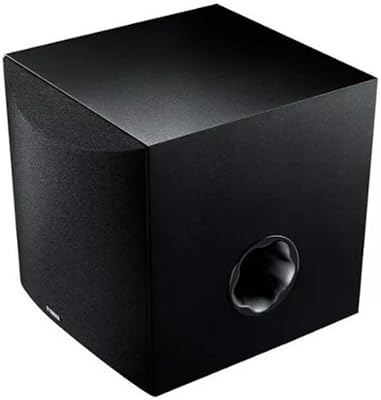
The rectangular form factor sits flat on the floor or a shelf without needing any special mounting hardware, and the neutral black finish blends into most room setups without drawing attention. Its weight gives a sense of solidity that lightweight plastic subs simply cannot match.
At over 19 pounds and with dimensions pushing 16 inches deep, this is not a sub you tuck away easily. Several buyers mention it occupies more floor or desk space than they anticipated, and its depth in particular makes under-desk placement awkward in tighter workspaces.
Frequency Extension
76%
24%
Reaching down to 38Hz covers the full range of bass guitar fundamentals, kick drum sub-harmonics, and most synthesizer bass lines, making the unit genuinely useful for music production monitoring as well as casual listening. The low-end extension feels honest rather than artificially hyped.
For home theater use cases that benefit from sub-20Hz content in action film soundtracks, 38Hz is not deep enough to reproduce the full effect. Users who care specifically about LFE channel reproduction in surround setups will likely need a larger, more capable sub.
Long-Term Reliability
81%
19%
The majority of buyers who have owned the Edifier T5 for a year or more report no hardware failures, driver degradation, or amplifier issues. The solid MDF construction appears to contribute to long-term stability, and the build inspires confidence that the unit will not develop rattles or loose fittings over time.
Warranty support experiences vary meaningfully by region, with some international buyers reporting difficulty accessing service or replacement parts. A small number of users mention early amplifier issues, though these appear to be isolated rather than systemic across the broader ownership base.
Ease of Level Matching
69%
31%
The onboard volume control allows basic level matching to your existing speakers without needing to touch your receiver or amplifier settings, which most buyers find convenient during initial setup and when switching between sources at different output levels.
The control itself is modest — there is no remote, no digital display, and no memory of previous settings after standby. Users who frequently switch between listening scenarios or sources find themselves re-adjusting manually more often than they would like.

Suitable for:

The Edifier T5 8-inch Powered Subwoofer is a strong match for anyone who already owns a decent pair of bookshelf or compact satellite speakers and feels the low end is simply missing from their listening experience. If you run a 2.0 desktop setup for music, casual gaming, or background listening at work, this active woofer plugs straight into your existing system via RCA and immediately adds the bass weight those smaller drivers cannot physically produce. Home stereo listeners in smaller rooms — a bedroom, a dedicated home office, a compact living room — will get the most out of its 70W output without running into its headroom ceiling. It also suits buyers who want controlled, accurate bass rather than an exaggerated low-end thud; the tuning here favors musicality over dramatic effect, which makes it genuinely useful for genres like jazz, acoustic, and electronic music where bass texture matters as much as volume. Users comfortable with a wired RCA setup and who are not looking to manage the sub through an app or wireless connection will find the no-fuss installation genuinely refreshing.
Not suitable for:

Buyers expecting the Edifier T5 8-inch Powered Subwoofer to anchor a full home theater system or fill a large open-plan living room will likely walk away underwhelmed. An 8-inch driver pushing 70W simply cannot pressurize a big space the way a 10-inch or 12-inch sub can, and if your primary use case is cinematic low-frequency effects — explosions, action sequences, deep surround content — this unit does not have the extension or output to deliver that experience convincingly. It is also not the right choice for buyers who want flexible digital connectivity; there is no optical input, no HDMI ARC, and no wireless option worth relying on, so if your source equipment lacks analog RCA outputs you will need an adapter or a different product entirely. Audiophiles chasing a pristine noise floor in a treated listening room may find the 85dB signal-to-noise ratio just short of their standard, particularly at higher gain settings in dead-quiet environments. Finally, anyone tight on floor or desk space should measure carefully before buying — at over 16 inches deep and nearly 20 pounds, this is a physically substantial unit that does not tuck away easily.
Specifications

  • Driver Size: The active woofer uses an 8-inch dynamic audio driver to reproduce low-frequency content.
  • Amplifier Output: The built-in amplifier delivers 70 watts RMS of continuous power to drive the subwoofer driver.
  • Frequency Response: The unit reproduces frequencies down to 38Hz, covering the full range of musical bass fundamentals.
  • Enclosure Material: The cabinet is constructed from thick MDF (medium-density fiberboard) wood to reduce acoustic resonance and coloration.
  • Connectivity: Two RCA inputs are provided for wired connection to stereo receivers, AV amplifiers, or PC sound cards.
  • Signal-to-Noise Ratio: The amplifier section achieves an 85dB signal-to-noise ratio, providing reasonably clean output at standard listening levels.
  • Auto Standby: An automatic standby function powers down the unit after a period of inactivity to reduce idle energy consumption.
  • Dimensions: The enclosure measures 16.5″ deep by 13.7″ wide by 14″ tall.
  • Weight: The unit weighs 19.03 pounds (8.65 kg), reflecting the density of its MDF wooden cabinet construction.
  • Power Source: The subwoofer is powered via a corded electric connection and is not battery-operated or rechargeable.
  • Mounting Type: The unit is designed for tabletop or floor placement and does not require wall-mounting hardware.
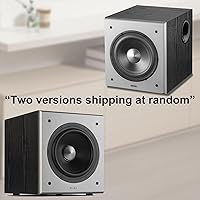
  • Color: The standard finish is black, providing a neutral appearance suitable for most home and office environments.
  • Indoor Use: This active woofer is rated for indoor use only and is not water-resistant or suitable for outdoor placement.
  • Warranty: Edifier provides a limited warranty with this product; specific terms and regional coverage vary by market.
  • Audio Driver Type: The driver uses a dynamic transducer design, which is standard for subwoofer applications in this power and size class.
  • Control Method: Volume and crossover adjustment is handled via onboard physical controls located on the unit itself.
  • Low-Pass Filter: A built-in low-pass filter prevents the subwoofer from reproducing frequencies already handled by connected satellite speakers.

Related Reviews
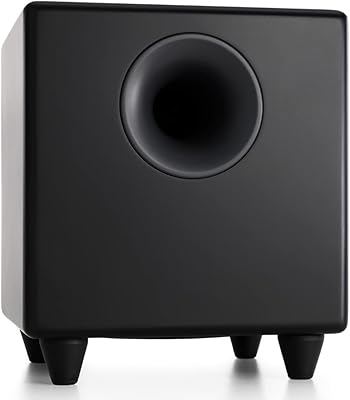
Audioengine S8 Subwoofer
84%
93%
Bass Accuracy & Musicality
94%
Build Quality
91%
Integration & Setup Ease
86%
Crossover Flexibility
89%
Low-Frequency Extension
More
Yamaha NS-SW050 8-Inch Powered Subwoofer
78%
86%
Bass Quality
71%
Room Size Suitability
83%
Value for Money
91%
Setup & Integration
88%
Speaker Blending
More
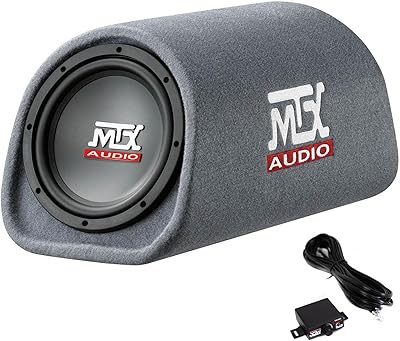
MTX Audio RT8PT 8-Inch Powered Subwoofer
83%
88%
Bass Performance
92%
Value for Money
89%
Build Quality
85%
Ease of Installation
80%
Sound Clarity
More
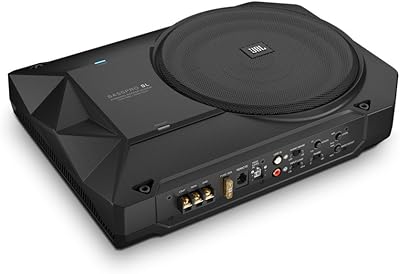
JBL BassPro SL 8-inch Powered Subwoofer
85%
88%
Bass Performance
94%
Ease of Installation
90%
Sound Quality for Size
82%
Build Quality
87%
Value for Money
More
Planet Audio P10AW 10-Inch Amplified Car Subwoofer
76%
91%
Ease of Installation
83%
Value for Money
67%
Bass Output & Impact
74%
Build Quality
62%
Sound Clarity
More
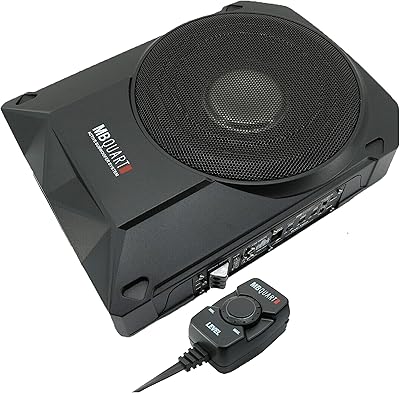
MB Quart RW-108A 600W 8-inch Powered Subwoofer
86%
91%
Bass Performance
94%
Compact Design
88%
Ease of Installation
85%
Build Quality
80%
Remote Control Usability
More
BOSS Audio Systems BASS8 8-Inch Under Seat Powered Car Subwoofer
86%
89%
Bass Quality
91%
Ease of Installation
94%
Space Efficiency
85%
Sound Clarity
88%
Power Output
More
CT Sounds MESO-8-D4 8-Inch Dual 4 Ohm Car Subwoofer
87%
94%
Bass Performance
91%
Build Quality
88%
Sound Clarity at High Volumes
93%
Power Handling
84%
Ease of Integration
More
CT Sounds TROPO-8-D2 8-Inch Car Subwoofer
77%
91%
Value for Money
83%
Bass Quality
88%
Build Quality
67%
Enclosure Compatibility
71%
Amplifier Pairing
More
Kanto SUB8 8-inch Powered Subwoofer
80%
89%
Bass Accuracy
67%
Low-End Extension
91%
Speaker Integration
83%
Build Quality
86%
Setup & Ease of Use
More

FAQ

Yes, as long as your amplifier or receiver has a subwoofer output or a spare set of RCA pre-out jacks, you can connect this active woofer without any additional hardware. Most stereo receivers and AV amps include at least one RCA output that routes the low-frequency signal to a sub. If your setup only has speaker-level outputs, you may need a line-level converter.

The primary and most reliable input method is wired dual RCA. While Bluetooth is mentioned in some product listings, the core design of this unit is built around analog RCA connectivity, and buyers should plan their setup accordingly. If wireless audio is important to you, verify current specifications before purchasing.

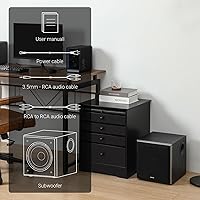
If your PC sound card or motherboard audio output includes RCA or a 3.5mm stereo output, you can connect directly using the appropriate cable or adapter. Many desktop audio setups use a 3.5mm-to-dual-RCA cable to bridge the connection. Once connected, set the subwoofer's crossover to match the low-end cutoff of your desktop speakers and adjust the volume to taste.

Nothing is broken — this is a known behavior that a number of users experience. The standby circuit monitors the incoming signal level and powers down when it drops below a threshold, which can happen between tracks or during very quiet passages. Unfortunately, the sensitivity of the trigger is not user-adjustable on this unit, so if it bothers you during music listening, keeping the source signal slightly louder can help delay the cutoff.

It depends on the room and how loud you listen. In a small to medium room — roughly up to around 150 to 200 square feet — the 70W output is generally sufficient for music and TV at normal listening levels. In larger, open-plan spaces, the sub may start to feel underpowered at higher volumes. For bigger rooms, a 10-inch or 12-inch sub in the same price range would serve you better.

Absolutely. This powered subwoofer connects via RCA and has no brand-specific pairing requirements, so it works with speakers from any manufacturer. Many users pair it with third-party bookshelf speakers from brands like Polk Audio, Klipsch, or KEF without any compatibility issues. The onboard level and crossover controls allow you to tune the integration regardless of what satellite speakers you are running.

In most everyday listening environments — a home office, a living room with ambient noise — the 85dB signal-to-noise ratio is clean enough that you will not notice any hiss. Where it can become slightly audible is in a very quiet room late at night with your ear close to the driver and the gain turned up. For casual and moderate-level listening, the noise floor is not a practical concern.

Subwoofers are generally less position-sensitive than full-range speakers because bass frequencies are omnidirectional, but placement still matters. Corner placement amplifies bass output but can make it boomy; pulling it away from walls tends to tighten the sound. Starting with it near the front of your listening area and adjusting from there is a practical approach. Floor placement usually works better than desk placement for even bass distribution in a room.

The included accessories are limited — most buyers report that you will need to source your own RCA cable, which is a common and inexpensive purchase. Double-check what is included in the box at the time of your purchase, as accessory bundles occasionally vary by retailer or region.

The Edifier T5 was first listed in October 2019, so it has been available for several years and has built up a substantial base of long-term owners. The majority of those owners report no reliability issues over extended use, which is a positive sign for a product in this class. Edifier is an established audio brand with ongoing customer support, though warranty service quality can vary depending on your region.

Where to Buy