Overview

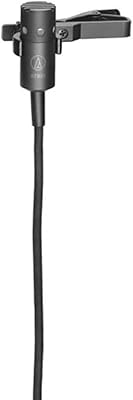
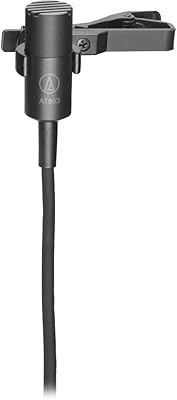
The Audio-Technica AT899 Lavalier Condenser Microphone has been a workhorse in broadcast and live production for years, and it earns that reputation. At just 5mm in diameter, the capsule is genuinely tiny — small enough to disappear into a lapel or shirt collar without anyone noticing it is there. This lavalier mic draws on Audio-Technica's deep professional audio heritage, offering dual power options — phantom or battery — making it equally at home on a film set or in a house of worship with no phantom-capable mixer on hand. A permanently attached 9.8ft cable with TA3F connector feeds into an included XLR power module, completing a clean professional signal chain.
Features & Benefits

The omnidirectional polar pattern is one of the AT899's most practical traits — it picks up voice consistently from nearly any angle, which takes real pressure off precise placement during a live show or recording session. A low-frequency roll-off switch cuts down on low-end rumble and clothing rustle before the signal ever reaches your mixer, a genuinely useful feature in noisy live environments. Running on phantom power, this subminiature lav achieves a dynamic range wide enough to handle both soft conversational speech and louder stage moments without distorting. Self-noise is low enough that recorded voice stays intelligible and clean. The included accessory kit — clips, windscreens, element covers — is thorough by any standard.

Best For

This lavalier mic is a natural fit for anyone who needs clean, hands-free audio without the mic being visible on camera. TV presenters, news anchors, and documentary subjects benefit most from the near-invisible profile. It is equally well-suited for lecturers in large auditoriums or houses of worship where consistent, natural-sounding voice pickup matters more than tight directionality. Stage actors and corporate trainers who record sessions for later use will find the XLR signal chain slots neatly into professional audio workflows. Buyers should note, however, that this is strictly a wired mic — wireless variants are entirely separate products that require additional transmitter hardware and are not included here.

User Feedback

People who use the AT899 in professional settings consistently highlight voice clarity as a standout quality — speech comes through articulate and natural, even in reverberant spaces like sanctuaries or conference halls. The tiny capsule size earns plenty of praise too; sound engineers and on-camera talent appreciate how easily it tucks away under clothing. The recurring criticism is the TA3F connector on the mic cable — it is non-standard, and users frequently mention needing an adapter to connect to typical XLR mixers or portable recorders. A handful of reviewers also note that battery mode delivers a noticeably narrower dynamic range than phantom power. Long-term durability reports are largely positive.

Pros

  • Voice intelligibility is excellent — speech stays clear and natural across a wide range of acoustic environments.
  • The 5mm capsule is genuinely tiny and conceals easily under clothing, lapels, or even hair.
  • Dual power options mean it adapts to both phantom-capable rigs and field setups running on a standard AA battery.
  • The omnidirectional pattern removes stress around precise mic positioning during live events.
  • A low-frequency roll-off switch tackles clothing rustle and low-end rumble before it hits the signal chain.
  • The included accessory kit is thorough — clips, windscreens, and element covers cover most real-world mounting scenarios.
  • Long-term durability reports from working professionals are consistently positive for both the cable and the capsule.
  • Available in both black and beige, making it easier to match skin tone or wardrobe on camera.
  • RoHS compliance signals that construction and component sourcing meet recognized quality and safety standards.

Cons

  • The TA3F mic connector is non-standard and will likely require a separate adapter for most XLR mixers and recorders.
  • Battery operation delivers a significantly narrower dynamic range than phantom power — a real limitation in louder venues.
  • The 9.8ft cable is permanently attached, so a damaged cable means dealing with the whole mic assembly.
  • Wireless use requires purchasing a compatible transmitter body separately, adding meaningful cost and complexity.
  • Users new to professional audio may find the XLR power module setup confusing without prior experience.
  • No 3.5mm or USB connection means it is completely unusable without professional-grade recording equipment.
  • The AT899 sits at a price point where budget-conscious buyers may expect a more forgiving connector standard.
  • Beige color option is only available on wireless-ready variants, limiting matching choices on the wired version.

Ratings

Our AI rating engine analyzed verified global buyer reviews for the Audio-Technica AT899 Lavalier Condenser Microphone, actively filtering out incentivized, bot-generated, and spam submissions to surface what real working professionals actually experience. Scores reflect the full picture — where this subminiature lav genuinely excels and where it creates friction — so you can make a clear-eyed purchasing decision.

Voice Clarity & Intelligibility
93%
This is consistently the most praised aspect across reviewers from broadcast, worship, and lecture hall environments alike. Speech comes through articulate and natural even in reverberant spaces, and multiple users specifically noted that dialogue stayed intelligible without heavy post-processing in video production workflows.
A small number of reviewers working in very noisy environments — busy event floors, outdoor markets — found that the omnidirectional pickup captured more ambient noise than expected, slightly muddying speech intelligibility when the mic was not positioned close enough to the speaker.
Capsule Size & Concealability
96%
At 5mm in diameter, the capsule is genuinely easier to hide than most competitors at any price level. TV talent and documentary subjects consistently report it disappearing completely under a shirt or lapel, and on-camera reviewers note it creates no visible bump even under fitted clothing.
A handful of users point out that while the capsule itself is tiny, routing the attached cable discreetly still requires some skill and planning — particularly under stiff or structured garments where the wire can create a visible line.
Connector Compatibility
54%
46%
The balanced XLR output from the power module integrates cleanly into professional mixing consoles, stage rigs, and broadcast desks without any signal degradation. Users already working in fully professional audio environments rarely encounter friction in this area.
The TA3F connector on the mic cable is non-standard, and this catches a meaningful number of buyers off guard. Reviewers frequently mention needing to source a separate adapter to connect to portable field recorders or standard-format gear, which adds unexpected cost and setup friction — especially for buyers newer to professional audio.
Phantom vs Battery Performance
71%
29%
On phantom power, the dynamic range is wide enough to handle everything from a whispered interview to a projected stage voice without audible distortion, and reviewers in fixed-installation settings like houses of worship consistently rate this performance highly.
The gap between phantom and battery operation is noticeable enough that several reviewers explicitly caution against relying on battery power in demanding environments. The narrowed dynamic range on battery becomes a real issue during live events where audio levels fluctuate unpredictably.
Build Quality & Durability
82%
18%
Working professionals — sound engineers, AV technicians, and theatre crews — generally report that the AT899 holds up well through repeated daily use. The capsule housing feels solid for its size, and the power module has a reassuringly substantial feel compared to cheaper lavalier accessories.
The permanently attached cable is the most cited long-term vulnerability, with a number of reviewers reporting wear at the junction between the cable and capsule after extended heavy use. There is no field-replaceable cable option, which raises the stakes for any physical damage to that connection point.
Low-Frequency Roll-Off Switch
84%
Sound engineers working live events and theatre productions consistently highlight this switch as a practical, well-implemented feature. Flipping it on before a lecture or stage performance noticeably reduces the low-end rumble and clothing rustle that would otherwise require EQ correction in the mix.
Some reviewers feel the roll-off is applied a touch aggressively, and a few vocalists using the mic for singing noted it trimmed slightly more warmth from male voices than they would have preferred, requiring some post-session EQ adjustment to compensate.
Accessory Kit Completeness
88%
The included accessory package is frequently called out as one of the more generous bundles in this mic category. Having both the viper clip and magnet clip in the box means users can handle most clothing types without ordering anything extra before their first shoot or event.
A few users note that the windscreens included are better suited to indoor use and provide limited protection in genuinely breezy outdoor conditions. Reviewers shooting outdoor documentary content often end up purchasing a more substantial windscreen separately.
Ease of Setup
67%
33%
For buyers already comfortable with XLR-based audio workflows, getting the AT899 up and running is straightforward. The power module is logically laid out, the roll-off switch is clearly marked, and the XLR output connects cleanly to standard professional gear without any configuration fuss.
Buyers without prior professional audio experience frequently describe the initial setup as confusing — particularly around the TA3F connector, the power module's role in the signal chain, and the phantom power requirements. Several reviewers wished the included documentation were more detailed for first-time users.
Omnidirectional Pattern Practicality
78%
22%
For presenters who move their heads frequently or speakers who cannot maintain a fixed position — lecturers pacing a stage, pastors gesturing during a sermon — the omnidirectional pattern removes the frustration of constantly chasing the pickup sweet spot, and reviewers in these settings consistently appreciate that reliability.
In open or acoustically live spaces, the lack of off-axis rejection means ambient noise gets picked up more readily than it would with a directional lav. Reviewers recording in cafeterias, event halls, or outdoor environments note this as a genuine limitation that requires careful gain staging to manage.
Cable Management
63%
37%
The 9.8ft cable length is practical for most professional applications, giving enough slack to route from the capsule down through clothing and to a belt-mounted power module or transmitter without tension. Reviewers in theatrical and broadcast settings find the length well-judged.
Because the cable is permanently attached and non-replaceable, managing it carefully is essential — and several reviewers find that keeping it tidy under clothing during active movement requires more time and clips than they anticipated. A damaged cable effectively sidelines the entire mic element.
Value for Money
76%
24%
Professional users who rely on this lavalier mic regularly tend to view it as solid value given its audio performance and brand pedigree. For a working broadcast or theatre environment where the mic pays for itself quickly, the investment feels justified by the consistency of results.
Buyers who discover they also need an adapter for their recorder, or who find the battery performance limiting in their specific use case, sometimes feel the total effective cost ends up higher than anticipated. Compared to newer competitors in a similar range, some reviewers feel the connector design has not kept pace with the market.
Wireless System Compatibility
47%
53%
Audio-Technica produces wireless-specific variants of this lav designed to mate with their wireless transmitter systems, and users in those dedicated ecosystems report clean integration when using the correct SKU.
This wired version is not designed for wireless use, and a surprising number of buyers purchase it expecting wireless compatibility that simply does not exist. Reviewers who needed a wireless solution consistently report disappointment and the need to return or supplement with an entirely separate purchase.
On-Camera Visibility
91%
Cinematographers and video producers consistently single out the low-reflectance capsule finish as genuinely effective — even in close-up shots under studio lighting, the mic rarely catches the eye. The beige color option earns specific praise for matching lighter skin tones convincingly on camera.
A handful of reviewers note that the cable, while thin, can occasionally create a faint line visible under very tight or light-colored shirts when no additional concealment tape is used. This is minor but relevant for high-end narrative or commercial production work.

Suitable for:

The Audio-Technica AT899 Lavalier Condenser Microphone is purpose-built for professionals who need reliable, discreet voice capture in demanding real-world environments. TV presenters, news anchors, and on-camera documentary subjects will appreciate how easily the 5mm capsule disappears under clothing or into a lapel without creating a visible bump on screen. Lecturers, pastors, and keynote speakers working with PA systems in large venues benefit from the omnidirectional pickup, which stays consistent even when a speaker turns their head or shifts position at a podium. Stage actors and theatre production teams working with XLR-based wireless transmitter systems will find this lavalier mic integrates cleanly into professional audio rigs. Corporate trainers and educators recording video content for online distribution will also get clean, intelligible results — especially when phantom power is available from a mixer or audio interface.

Not suitable for:

Buyers expecting a plug-and-play experience with a standard USB or 3.5mm setup should look elsewhere — the Audio-Technica AT899 Lavalier Condenser Microphone is built around a professional XLR signal chain that requires compatible gear to function at all. The TA3F connector on the mic cable is non-standard, meaning most users will need a separate adapter before it connects to a typical XLR mixer or portable field recorder, which is an easy detail to overlook at purchase. Anyone hoping to go wireless will need to factor in the cost of a compatible transmitter body separately, as this is strictly a wired microphone. Running on a single AA battery rather than phantom power noticeably narrows the dynamic range, so battery-only setups in loud environments may leave users wanting more headroom. Hobbyists, podcasters, or casual content creators who just need a simple clip-on mic for a laptop or smartphone will find the setup requirements and overall complexity more trouble than it is worth.

Specifications

  • Polar Pattern: The microphone uses an omnidirectional pickup pattern, capturing sound equally from all directions around the capsule.
  • Capsule Diameter: The capsule measures just 5mm across, making it one of the smallest condenser lav capsules available in professional audio.
  • Frequency Response: Audio is captured across the full range of 20Hz to 20,000Hz, covering the complete spectrum of human speech and beyond.
  • Signal-to-Noise Ratio: The signal-to-noise ratio measures 64dB, meaning background self-noise from the mic itself remains very low during quiet speech recordings.
  • Dynamic Range: Running on phantom power, the mic achieves a dynamic range of 108dB, providing clean headroom between the softest and loudest sounds it can handle.
  • Maximum SPL: The capsule handles up to 138dB SPL on phantom power before distortion becomes audible at 1% THD.
  • Power Options: The mic operates on either phantom power between 11 and 52V DC drawing approximately 2mA, or a single standard 1.5V AA battery.
  • Output Impedance: Output impedance measures 200 ohms on phantom power and 250 ohms on battery, both well-suited to professional balanced input stages.
  • Cable Length: A 9.8ft (3.0m) cable is permanently attached to the microphone capsule and terminates at the included power module.
  • Connectors: The mic cable uses a TA3F connector at the power module input, while the power module outputs a standard balanced 3-pin XLR signal.
  • Mic Weight: The capsule itself weighs just 0.56g (0.02 oz), making it light enough to clip to fabric without causing any noticeable drag.
  • Transducer Type: The mic uses a fixed-charge plate, permanently polarized condenser transducer — a design common in professional broadcast lavalier applications.
  • Roll-Off Switch: A switchable low-frequency roll-off filter is built into the power module to reduce rumble, handling noise, and proximity-effect buildup.
  • Included Accessories: The package includes a clothing clip, viper clip, magnet clip, lanyard (black models), windscreens, element covers, and single and double mic holders.
  • Available Colors: The microphone is available in low-reflectance black or beige to suit different on-camera or skin-tone matching requirements.
  • RoHS Compliance: The mic is fully RoHS compliant, meaning it is free from hazardous substances as defined under the relevant EU directive.

Related Reviews
Audio-Technica PRO70
78%
88%
Audio Clarity
91%
Build Quality
83%
Noise Rejection
61%
Handling & Clothing Noise
86%
Versatility
More
Audio-Technica AT875R
83%
93%
Sound Rejection
94%
Form Factor & Compactness
88%
Vocal Clarity
82%
Handling Noise Reduction
86%
Build Quality & Durability
More
Audio-Technica AT829CW Lavalier Microphone
80%
88%
Sound Quality
89%
Voice Intelligibility
84%
Noise Rejection
93%
Discreetness
91%
Wearability
More
Audio-Technica AT831B Cardioid Lavalier Microphone

70%
91%
Audio Clarity
83%
Noise Rejection
78%
Build Quality
54%
Ease of Setup
72%
Value for Money
More
Audio-Technica AT4022 Omnidirectional Condenser Microphone
82%
93%
Sound Accuracy
89%
Build Quality
91%
Noise Floor
78%
Polar Pattern Utility
84%
Compatibility
More
Audio-Technica AT4021 Cardioid Condenser Microphone
81%
93%
Tonal Accuracy
88%
Noise Floor Performance
87%
Build & Durability
84%
Value for Money
92%
Transient Response
More
Audio-Technica AT4040
83%
92%
Sound Transparency
88%
Build Quality
86%
Transient Response
83%
Value for Money
84%
Off-Axis Rejection
More
Audio-Technica AT803 Lavalier Condenser Microphone
82%
88%
Audio Clarity
79%
Build Quality
76%
Value for Money
83%
Noise Rejection
91%
Power Flexibility
More
Audio-Technica ATR6550X Condenser Shotgun Microphone
72%
81%
Audio Clarity
78%
Directionality Control
67%
Build Quality
91%
Ease of Setup
83%
Value for Money
More
Audio-Technica AT831CW
85%
92%
Vocal Clarity
96%
Feedback Rejection
88%
Acoustic Instrument Miking
94%
Connector Reliability
89%
Form Factor & Concealment
More

FAQ

The Audio-Technica AT899 Lavalier Condenser Microphone requires either a phantom-power-capable mixer, audio interface, or preamp — or a standard AA battery inserted into the included power module. The power module outputs a balanced XLR signal, so you will also need an XLR cable to connect it to your recording or PA gear. It is not plug-and-play for laptops or smartphones without additional adapters.

This is a wired microphone, and the cable is permanently attached. Audio-Technica does offer wireless-compatible variants of the AT899 designed to connect directly to specific transmitter bodies, but those are separate products sold under different SKUs. This wired version is not designed to plug into a wireless transmitter without significant modification.

The TA3F is a locking mini-XLR connector used on the mic cable where it meets the power module — it is not a standard connector you will find on typical mixers or audio interfaces. The included power module handles this connection internally and outputs a standard 3-pin XLR at the other end, so as long as your gear accepts standard XLR, you should be fine. Just make sure you are connecting the XLR end of the power module to your equipment, not the mic cable end.

Yes, and it is worth knowing before you commit to a battery-only workflow. On phantom power, the dynamic range is 108dB, which gives you plenty of headroom for varied environments. On battery, that drops to 86dB — still workable for controlled settings like a conference room or classroom, but noticeably tighter if you are recording in unpredictable or louder spaces. If phantom power is available, use it.

The 5mm capsule is small enough to sit under a thin shirt or blouse with very little visible bump. A common technique is to loop the cable under the garment and bring the capsule through a small gap between buttons, or tape it to the inside of a collar. The included viper clip and magnet clip give you solid non-destructive attachment options for thicker or layered clothing. A windscreen slipped over the capsule also helps reduce any rubbing noise from fabric contact.

Probably not the most practical option for that use case. Podcasters and home studio users typically want USB connectivity or a simple 3.5mm input, whereas this lavalier mic is built around a professional XLR signal chain. If you already own a quality XLR interface and want to record voice in a hands-free format, it can work well — but the cost and setup complexity would outpace simpler solutions designed with home recording in mind.

Unfortunately, the cable is permanently attached to the capsule, so a damaged or broken cable effectively means the entire mic element needs to be replaced or sent in for repair. This is a common trade-off with subminiature lavalier designs, where detachable cables would add too much bulk near the capsule. Treating the cable carefully — avoiding sharp bends near the capsule end and coiling loosely for storage — significantly extends its working life.

It can, depending on placement and environment. Omnidirectional mics do not reject off-axis sound the way a cardioid pattern does, so ambient noise in a loud room will get picked up more readily. The practical solution is keeping the capsule as close to the speaker's mouth as possible — typically on the upper chest — so the voice-to-noise ratio stays favorable. The low-frequency roll-off switch also helps clean up low-end rumble that can make a recording feel muddy in reverberant spaces.

Users who work with it regularly in broadcast and theatrical settings generally report solid long-term durability. The capsule housing and cable construction hold up well under normal professional handling, though the cable junction near the capsule is the most vulnerable point with any lav mic. Storing it coiled loosely in a case rather than wrapped tightly around the power module helps preserve the cable over time.

Color choice is purely cosmetic and has no effect on audio performance. Black is the standard option and works well for dark clothing, hair, or stage settings. Beige blends better against lighter skin tones and fair-colored garments, which can make a meaningful visual difference in on-camera applications where concealment matters. Both colors include the same accessories and hardware.