Overview

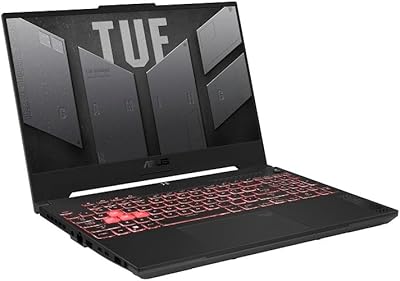
The ASUS TUF Gaming F15 2023 Gaming Laptop arrives at a price point where most competitors cut corners on GPU power — but this one doesn't. Pairing an Intel Core i5-13500H with an RTX 4050 running at a full 140W TGP, this TUF Gaming F15 delivers gaming muscle you typically find on pricier machines. Against rivals like the Lenovo IdeaPad Gaming 3 or Acer Nitro 5, it stands out by including a MUX Switch — a feature usually reserved for higher-end models. The TUF series has a reputation for rugged builds, and the military-grade testing claims translate to a chassis that feels like it can handle daily bag-tossing. Just know that DDR4 RAM and a 1080p display are deliberate trade-offs to keep costs in check.

Features & Benefits

The star of the show is the RTX 4050 running at its full 140W power limit. Many laptops ship the same GPU at 80W or 95W, which meaningfully caps frame rates in demanding titles — so the unrestricted wattage here actually matters in practice. The MUX Switch is a genuine perk at this price: it routes frames directly through the GPU, bypassing integrated graphics entirely, and the automatic switching keeps battery drain reasonable during lighter use. The 144Hz panel covers 100% sRGB, sharp enough for casual photo editing alongside gaming sessions. The PCIe Gen 4 SSD loads games quickly, though 512GB fills up fast. RAM is DDR4, not DDR5 — functional, but a fair point of comparison against newer competitors.

Best For

This mid-range gaming laptop hits a sweet spot for college students and first-time PC gamers who need one machine to handle everything — classes, late-night gaming, occasional photo edits. Esports players get particular value here: at 144Hz with the GPU running at full tilt, titles like Valorant, CS2, and Apex Legends stay buttery smooth. The accurate color output also makes it a reasonable pick for digital art students who can't justify a separate workstation. If you care more about durability than having the slimmest profile in a lecture hall, the ASUS TUF F15's build philosophy fits. Battery life, though, will need managing — plan on finding an outlet during longer stretches away from your desk.

User Feedback

Owners consistently praise gaming performance and display quality for the money — and the keyboard gets high marks for feel during long sessions. Where feedback turns critical: battery life is the most common complaint, with many users reporting just 3 to 4 hours under mixed workloads, so pack your charger. Fan noise at full load is real and noticeable, though not unbearable. Armoury Crate, ASUS's bundled management software, gets frequent criticism for bloat; the fix most users land on is simply uninstalling it. A smaller number of owners mention mild keyboard deck flex. Longer-term users occasionally flag thermal performance degrading over time, though driver stability tends to hold up well.

Pros

  • The RTX 4050 runs at its full 140W power limit — not the throttled variants common in competing laptops.
  • A MUX Switch at this price tier is rare and provides a measurable performance boost during dedicated gaming sessions.
  • The 144Hz panel with 100% sRGB coverage handles both competitive gaming and color-accurate creative work well.
  • The TUF chassis is built to survive daily commuting and bag use better than most slim-and-light gaming alternatives.
  • PCIe Gen 4 SSD speeds make game and app load times genuinely fast in everyday use.
  • Wi-Fi 6 keeps online multiplayer stable and responsive even on crowded networks.
  • The keyboard feel earns consistent praise from owners who use it for long typing and gaming sessions alike.
  • RAM slots are user-accessible, making future memory upgrades straightforward without voiding usability.
  • Advanced Optimus automatically manages GPU switching, keeping battery drain reasonable during lighter tasks.
  • Priced competitively against the Lenovo IdeaPad Gaming 3 and Acer Nitro 5 while offering better GPU headroom.

Cons

  • Battery life under mixed workloads regularly falls short of four hours — a real drawback for all-day portability.
  • Fan noise at full gaming load is loud enough to be disruptive in quiet shared spaces like libraries or open offices.
  • The built-in webcam quality is below average and will likely require an external camera for professional video calls.
  • DDR4 RAM is functional but already a generation behind competitors shipping DDR5 at comparable price points.
  • 512GB base storage fills up fast with modern game installs — a larger SSD or external drive becomes necessary quickly.
  • Armoury Crate software is widely criticized for bloat and unreliability; most owners recommend uninstalling it promptly.
  • Some users report mild keyboard deck flex under firm typing pressure, which may bother detail-oriented buyers.
  • No Thunderbolt port limits connectivity options for users who rely on fast external storage or specialized peripherals.
  • The 1080p resolution ceiling means no upgrade path for buyers who anticipate wanting sharper visuals in the future.
  • Long-term owners occasionally report thermal performance softening over time, suggesting periodic maintenance may be needed.

Ratings

The scores below were generated by our AI engine after analyzing thousands of verified global owner reviews for the ASUS TUF Gaming F15 2023 Gaming Laptop, with spam, bot activity, and incentivized feedback actively filtered out before any scoring was applied. Each category reflects the honest distribution of praise and frustration real buyers reported — nothing is smoothed over or inflated to flatter the product. Where this TUF Gaming F15 genuinely delivers, the scores show it; where it falls short, that is reflected just as transparently.

Gaming Performance
89%
Owners consistently report that the RTX 4050 at full 140W keeps frame rates well above 60fps in demanding titles at 1080p, and esports games like Valorant and CS2 run effortlessly above the 144Hz display cap. The MUX Switch delivering an additional 5 to 10 percent boost during dedicated sessions is a detail that experienced buyers genuinely notice.
A handful of users pushing ultra settings in the most graphically demanding 2024 titles found the i5-13500H occasionally creating CPU-side bottlenecks during large open-world scenes. Those chasing maximum fidelity in titles like Cyberpunk 2077 may need to settle for high rather than ultra settings to maintain smooth performance.
Display Quality
84%
The 144Hz panel with 100% sRGB coverage earns consistent praise from both gamers and casual creative users — photo editing looks accurate without needing an external monitor, and competitive gaming feels genuinely responsive compared to the 60Hz panels common at this price range. Owners upgrading from budget laptops frequently describe the display as a noticeable quality jump.
Brightness levels draw criticism from users who work near windows or in sunlit environments, with the panel struggling to compete against ambient glare. The 1080p resolution cap also generates frustration from buyers who expected a sharper picture after seeing how well the GPU handles the workload, with some wishing ASUS had offered a 1440p option.
Build Quality
78%
22%
The TUF chassis passes MIL-STD-810H testing, and day-to-day owners report it feels more confident in a backpack than most comparably priced gaming laptops. Hinges hold their position firmly, and the overall rigidity of the lid and base earns favorable comparisons to pricier machines from competing brands.
A recurring complaint involves mild keyboard deck flex under firm typing pressure, which undermines the otherwise solid chassis impression during longer writing sessions. Some users also note that the plastic finish, while durable, does not feel as premium as metal-bodied rivals like the ASUS ROG Zephyrus line sitting one tier above.
Battery Life
47%
53%
Advanced Optimus does a reasonable job extending battery life during light tasks like note-taking and web browsing by switching to integrated graphics automatically, which gives the system better endurance than a purely manual setup would allow. Users who primarily browse and type between gaming sessions report the efficiency features make a noticeable difference.
Real-world battery life under mixed workloads consistently lands between three and four hours, which is a hard limit for all-day campus use without access to an outlet. Owners are near-unanimous on this point — the charger is not optional equipment, it is a daily carry requirement, and several buyers expressed regret at not factoring this more heavily into their purchase decision.
Thermal Management
73%
27%
Under gaming loads, the dual Arc Flow Fan setup keeps the CPU and GPU temperatures from reaching throttling thresholds in most tested scenarios, and sustained performance over long gaming sessions holds up better than what owners reported from the Acer Nitro 5 at the same price point. The cooling architecture gives the 140W GPU room to breathe.
Sustained heavy workloads — particularly rendering or extended AAA gaming sessions in warm environments — push surface temperatures on the keyboard deck to levels some users describe as uncomfortable for bare-hand contact. A smaller group of long-term owners also noted gradual thermal degradation after 18 or more months of regular use, suggesting a repaste may eventually be necessary.
Fan Noise
58%
42%
During light use, the fans stay quiet enough that working in a shared space or library is not disruptive, and the system manages idle and browsing tasks without the fans spinning up aggressively. Buyers who primarily game with headphones on report that fan noise is largely a non-issue in practice for their use case.
Under full gaming load, the fan noise is loud enough to be clearly audible across a desk and noticeable to people nearby in quieter shared environments. This is the single most common complaint in negative reviews, and owners who game without headphones or work in noise-sensitive spaces report finding it genuinely disruptive during extended sessions.
Keyboard & Trackpad
81%
19%
The keyboard earns consistent praise for its travel depth and tactile feedback, with many users highlighting it as one of the better typing experiences available in this price range — a meaningful quality-of-life detail for students juggling coursework and gaming on the same machine. The inclusion of a numeric keypad is welcomed by buyers who use spreadsheets regularly.
The trackpad receives more mixed feedback, with some users describing it as functional but lacking the precision and surface quality found on ultrabooks or higher-end laptops. Dedicated gaming mice are almost universally recommended by owners, and the trackpad is generally treated as an emergency fallback rather than a daily driver input.
Value for Money
86%
Among mid-range gaming laptops, this TUF Gaming F15 offers a combination of full-power GPU, MUX Switch, and accurate display that buyers consistently note is difficult to match at the same price from Lenovo or Acer. Owners who compared it directly against the IdeaPad Gaming 3 and Nitro 5 before buying frequently cite the unrestricted GPU wattage as the deciding factor that justified the purchase.
The DDR4 memory standard undercuts the value perception for technically informed buyers who note that competing configurations at similar prices have begun shipping DDR5, which offers better future-proofing even if day-to-day gaming differences are modest. The 512GB base storage also feels tight for the money when modern game installs routinely exceed 80 to 100GB each.
Webcam Quality
39%
61%
The webcam covers basic use cases like casual video calls with friends and family, and in a well-lit environment the image is passable for informal communication. For buyers who do not regularly attend video meetings, its limitations are easy to overlook entirely.
In any serious remote work or academic setting, the webcam is a consistent point of frustration — image quality is soft, low-light performance is poor, and the output compares unfavorably to even mid-range smartphone cameras. A significant number of owners purchased an external USB webcam within weeks of buying the laptop specifically to address this gap.
Storage Performance
83%
The PCIe Gen 4x4 SSD delivers genuinely fast sequential read and write speeds that translate to quick game load times and snappy system boot, a tangible everyday improvement over the Gen 3 drives that shipped in many competing laptops around the same period. Users migrating from HDD-based machines consistently describe the speed difference as one of the most impactful upgrades they have experienced.
The 512GB capacity is the limiting factor here — modern game libraries fill the drive faster than most buyers anticipate, and owners regularly report needing an external drive or a secondary SSD within a few months of purchase. The base configuration leaves little headroom for both a game library and a working file collection without careful ongoing management.
Connectivity
67%
33%
Wi-Fi 6 performs reliably in online multiplayer and handles congested home networks better than the Wi-Fi 5 modules found in older competing laptops, which is genuinely appreciated by users in dense apartment buildings or dorms. Bluetooth pairing for headsets and controllers works without reported issues across the owner base.
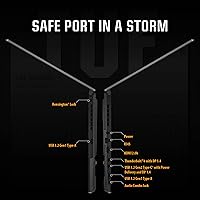
The absence of Thunderbolt is a real limitation for buyers who had planned to use a high-bandwidth dock, fast external NVMe storage, or an eGPU — and this gap is not always apparent until after purchase. Two USB 3.0 Type-A ports is also a lean selection for users who simultaneously connect a mouse, headset, and external drive without a hub.
Software Experience
52%
48%
Windows 11 Home runs without issues on the hardware, and the underlying system stability and driver support from ASUS over the laptop's first year of availability received generally positive marks from owners tracking updates. Those who uninstall Armoury Crate report a noticeably cleaner out-of-box experience.
Armoury Crate is the single most criticized aspect of the software package — users describe it as bloated, occasionally prone to interfering with Windows updates, and unreliable in its fan profile management. The consensus among experienced owners is to uninstall it promptly and configure performance settings through Windows directly, which is an unfortunate workaround for a core system utility.
Portability
69%
31%
At just over four pounds, the ASUS TUF F15 is manageable for commuters making regular trips between home, campus, or a coworking space, and the chassis does not feel unwieldy tucked into a standard 15-inch laptop sleeve. Buyers stepping down from older, heavier gaming laptops frequently note the weight as a pleasant improvement.
Paired with the power brick — which is sizable — the total carry weight adds up quickly and makes all-day bag carry noticeably heavier than an ultrabook alternative. The battery life limitations also mean the charger is not optional, compounding the portability trade-off for anyone hoping to travel light between locations.
Upgradeability
77%
23%
Accessible RAM slots and a straightforward bottom panel removal process make upgrading memory a realistic DIY task for buyers comfortable with basic hardware work, which adds long-term value by extending the useful life of the system. Several owners report successfully upgrading to 32GB within the first year to future-proof their configuration.
Storage upgrade options depend on whether the secondary M.2 slot is populated, and some configurations ship with only a single slot available, catching a portion of buyers off guard. The GPU and CPU are soldered to the motherboard, as expected for a laptop of this type, so those components are not user-replaceable regardless of skill level.

Suitable for:

The ASUS TUF Gaming F15 2023 Gaming Laptop is a strong fit for college students and first-time PC gamers who want a single machine capable of handling coursework, competitive gaming, and occasional creative work without stretching their budget to breaking point. If your game library leans toward esports titles — Valorant, CS2, Apex Legends, or similar — the 144Hz display and full-power RTX 4050 will keep frame rates well above what you actually need, and the experience genuinely feels premium at this price tier. Light photo editors and digital art students will appreciate the 100% sRGB color accuracy, which is not a given on laptops in this range. Buyers who value durability over a razor-thin chassis will feel at home here too — the TUF line is built to survive the kind of daily wear that comes with commuting and backpack life. If you game primarily at a desk and treat portability as a secondary need, this mid-range gaming laptop checks nearly every important box.

Not suitable for:

The ASUS TUF Gaming F15 2023 Gaming Laptop will likely disappoint buyers who need genuine all-day untethered use — battery life is a known weak point, and expecting more than three to four hours of real-world mixed use is setting yourself up for frustration. If you are considering it as a professional video editing or 3D rendering workstation, the DDR4 memory and 512GB base storage start to feel limiting quickly, and competitors offering DDR5 RAM or more expandable storage at similar prices deserve a serious look. The 1080p display cap is a deliberate cost trade-off, so anyone chasing higher resolution for content creation or future-proofing will need to look elsewhere. Power users who rely on Thunderbolt for fast external storage or eGPU setups will find its absence a genuine connectivity gap. And if a whisper-quiet work environment matters to you, this TUF Gaming F15's fans under heavy load will be a daily annoyance.

Specifications

  • Processor: The Intel Core i5-13500H is a 12-core 13th-gen mobile CPU designed to handle gaming, multitasking, and productivity workloads without becoming a bottleneck at 1080p.
  • Graphics Card: The NVIDIA GeForce RTX 4050 runs at a full 140W Max Total Graphics Power, placing it meaningfully above throttled variants of the same GPU found in competing thin-and-light gaming laptops.
  • Display: The 15.6-inch FHD panel operates at 1920x1080 resolution with a 144Hz refresh rate and covers 100% of the sRGB color gamut, making it suitable for both fast-paced gaming and color-sensitive creative tasks.
  • Memory: 16GB of DDR4-3200MHz RAM is installed across accessible slots, allowing users to upgrade capacity in the future without complex disassembly.
  • Storage: A 512GB PCIe Gen 4x4 NVMe SSD provides fast read and write speeds, reducing game load times and system boot duration noticeably compared to older Gen 3 drives.
  • MUX Switch: An integrated MUX Switch with Advanced Optimus routes frames directly from the discrete GPU to the display during gaming, bypassing the integrated graphics and improving performance by approximately 5 to 10 percent.
  • Cooling System: Two 84-blade Arc Flow Fans work in tandem to move heat away from the CPU and GPU during sustained workloads, balancing thermal control with reasonable noise output under typical gaming conditions.
  • Wireless: Wi-Fi 6 (802.11ax) and Bluetooth are included, providing low-latency wireless connectivity suited for online multiplayer gaming and peripheral pairing.
  • Operating System: Windows 11 Home comes pre-installed, providing access to the full modern Windows ecosystem including DirectX 12 Ultimate for compatible games.
  • Dimensions: The chassis measures 13.94 x 9.88 x 0.88 inches, keeping the footprint manageable for a 15.6-inch gaming laptop without resorting to an ultra-thin profile that would compromise cooling.
  • Weight: At 4.14 pounds, this TUF Gaming F15 is portable enough for daily commuting, though it is heavier than ultrabooks and will be noticeable in a backpack over longer carries.
  • USB Ports: Two USB 3.0 Type-A ports are included for connecting peripherals such as gaming mice, external drives, and headsets at full transfer speeds.
  • Battery: A built-in Lithium Ion battery powers the system and is included in the box; real-world mixed-use battery life typically falls in the three to four hour range under normal workloads.
  • Optical Drive: No optical drive is included, which is standard for modern gaming laptops of this form factor and keeps the chassis thinner and lighter.
  • Color: The laptop is offered in a muted blue colorway with a textured finish that resists fingerprints better than glossy or fully matte black chassis designs.
  • Build Standard: The TUF series chassis undergoes MIL-STD-810H military-grade testing for resistance to shock, vibration, humidity, and temperature fluctuations, reflecting a focus on long-term durability over premium aesthetics.

Related Reviews
ASUS TUF F15 Gaming Laptop i5-10300H, 8GB RAM, 512GB SSD, GTX 1650
82%
84%
Performance in Gaming
88%
Build Quality & Durability
86%
Display Quality
58%
Battery Life During Gaming
91%
Value for Money
More
ASUS TUF Gaming A17 2023 Gaming Laptop

72%
88%
Gaming Performance
91%
CPU Performance
74%
Thermal Management
71%
Display Quality
83%
Build Quality
More
ASUS TUF FX505DT 15.6″ Gaming Laptop
70%
78%
Gaming Performance
84%
Display Quality
83%
Build Quality
76%
Value for Money
81%
Keyboard & Trackpad
More
ASUS TUF A16 16-inch Gaming Laptop
74%
83%
Gaming Performance
81%
Build Quality
77%
Thermal Management
72%
Display Quality
88%
RAM & Multitasking
More
ASUS ROG Strix G16 2023 Gaming Laptop
72%
93%
Gaming Performance
91%
Thermal Management
88%
Display Quality
84%
Build Quality
81%
Keyboard & Trackpad
More
ASUS ROG Flow Z13 (2023) Gaming Laptop Tablet, 1TB SSD
85%
94%
Gaming Performance
92%
Display Quality
88%
Portability
61%
Battery Life
91%
Build Quality
More
ASUS TUF A16 Gaming Laptop, Ryzen 7 7735HS, 32GB RAM, 1TB SSD
84%
91%
Performance
88%
Display Quality
74%
Battery Life
86%
Build Quality
92%
Gaming Experience
More
ASUS TUF A15 Gaming Laptop, AMD Ryzen 7 7435HS, 64GB RAM, 2TB SSD
85%
92%
Gaming Performance
88%
Multitasking Capability
85%
Cooling System Efficiency
83%
Build Quality
70%
Portability
More
ASUS TUF F16 Gaming Laptop, Intel i7-14650HX, 32GB RAM, 2TB SSD, RTX 5060
84%
94%
Performance
91%
Gaming Experience
89%
Display Quality
88%
Build Quality and Durability
86%
Cooling and Thermals
More
ASUS TUF Gaming A15 (2023) Ryzen 7 7735HS, 16GB RAM, 1TB SSD, RTX 4060
83%
94%
Gaming Performance
89%
Build Quality
90%
Display Quality
92%
Thermals (Cooling System)
68%
Battery Life
More
ASUS TUF A16 Gaming Laptop, Ryzen 7 7735HS, 64GB RAM, 2TB SSD, 16″ 165Hz
84%
94%
Performance
90%
Display Quality
75%
Battery Life
65%
Portability/Weight
88%
Build Quality
More

FAQ

Yes, the RAM slots on this TUF Gaming F15 are user-accessible with basic tools. Removing the bottom panel gives you access to the SO-DIMM slots, so upgrading from 16GB to 32GB is a straightforward process that most people comfortable with basic hardware tasks can handle at home.

Not always — and this distinction matters. The RTX 4050 here runs at a full 140W Max TGP, while many competing laptops restrict the same GPU to 80W or 95W to manage heat or extend battery life. A lower wattage cap directly reduces in-game performance, so the unrestricted configuration here is a genuine advantage worth factoring into comparisons.

Honestly, it is a weak point. Under mixed use — browsing, note-taking, occasional video — expect somewhere around three to four hours before you need to plug in. For a full day of classes without access to an outlet, that will not cut it. Pack the charger and plan around it rather than hoping for the best.

The MUX Switch bypasses the integrated GPU when you are gaming, sending frames directly from the RTX 4050 to the screen. This cuts out the processing overhead of routing through integrated graphics and typically translates to a 5 to 10 percent frame rate boost. During gaming, yes, you want it active. Advanced Optimus will handle switching automatically, but you can also set it manually for consistent behavior.

For photo editing, it holds up reasonably well — the 100% sRGB display ensures colors are accurate enough for serious work, which is not always guaranteed at this price range. Video editing is more demanding, and while the hardware can handle it, 512GB of storage fills up quickly with footage files, so an external drive becomes a near-necessity for heavier projects.

Under sustained gaming load, the fans are audible — noticeably so in a quiet room. In a library or a quiet office, it would stand out. During lighter tasks or web browsing, the system stays much quieter and the fans often barely spin up. If noise is a top concern, a pair of headphones solves most of the problem from your end, but people nearby will still hear it under load.

That is what a large portion of owners end up doing. Armoury Crate is ASUS's system management and RGB control software, and while it does offer useful controls for fan profiles and performance modes, many users find it unreliable, resource-hungry, and prone to interfering with updates. If you want a clean setup, uninstalling it and using manual Windows power settings is a popular and practical alternative.

No, Thunderbolt is not included on this model. For most gamers and students, the two USB 3.0 ports and Wi-Fi 6 cover everyday needs just fine. If you rely on a Thunderbolt dock, fast external NVMe enclosure, or plan to use an eGPU setup, that absence is a genuine limitation worth factoring into your decision.

The TUF series has a solid track record for chassis durability, and the MIL-STD-810H rating is not purely marketing — the build genuinely feels robust. That said, some long-term owners have reported gradual thermal performance softening, which is common across most gaming laptops and can often be remedied with a repaste of the CPU and GPU after a couple of years. Driver stability tends to be solid, and ASUS generally provides driver updates for a reasonable period after launch.

At 1080p, the RTX 4050 at full wattage handles most current AAA titles at high settings with playable frame rates, and in some lighter titles you can push to ultra without much compromise. Graphically demanding games like Cyberpunk 2077 or Alan Wake 2 at ultra settings will push the GPU hard and may require stepping down to medium-high to maintain smooth frame rates above 60fps. For esports titles and older AAA games, expect consistent performance well above 60fps with settings near maxed.