

Overview

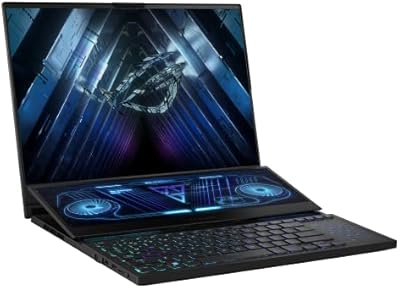
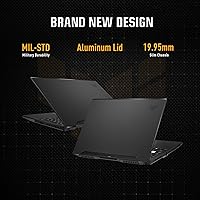
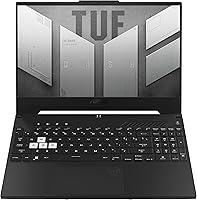
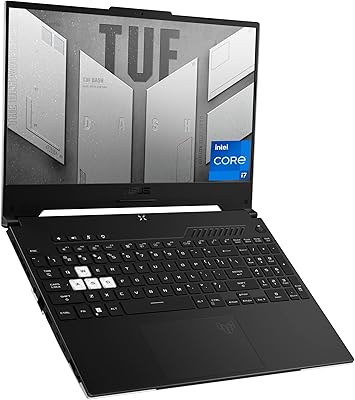
The ASUS TUF Dash 15 2022 Gaming Laptop sits in a category that's genuinely hard to fill: thin enough to carry daily, powerful enough to handle real gaming, and priced where most students and working adults actually shop. Unlike bulkier TUF siblings, this chassis measures under an inch thick and weighs just over four pounds — a meaningful difference when it's bouncing around in a backpack. The 2022 refresh wasn't purely cosmetic; the jump to 12th-gen Intel and DDR5 memory represents a real generational step. Add MIL-STD-810H certification and you have a machine built to survive the kind of travel and everyday abuse that glossier laptops simply can't handle.

Features & Benefits

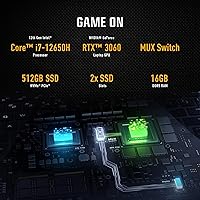
What actually separates this TUF Dash 15 from most competitors at this price isn't the RTX 3060 alone — it's the MUX Switch. Most gaming laptops route GPU output through the integrated graphics chip, bleeding performance in the process. Flip the MUX Switch and the RTX 3060 communicates directly with the display; in practice, that can translate to 10–20% more frames in GPU-heavy titles. The i7-12650H's hybrid core layout keeps background tasks from stealing performance mid-game. The 144Hz IPS panel stays smooth in fast-paced shooters and looks decent for everyday use. One caveat worth knowing upfront: the RAM ships in single-channel configuration, which limits GPU bandwidth until you slot in a second stick.

Best For

This ASUS gaming laptop is a natural fit for college students who need one machine for everything — morning lectures, study sessions, and evening gaming without hauling separate devices. Remote workers who game on the side will appreciate the slim profile; this isn't a machine you'll resent carrying. Competitive players get the most out of it — titles like Valorant and CS2 run smoothly at 144Hz, and the MUX Switch delivers a genuine edge that cheaper machines don't offer. That said, if you need 4K output or expect all-day battery away from an outlet, the Dash 15 2022 isn't the right call.

User Feedback

Owners are broadly satisfied, but a few patterns show up consistently enough to mention honestly. The MUX Switch draws the most specific praise — buyers frequently note real FPS gains after enabling it, which isn't something mid-range laptop owners say often. On the other side, fan noise under sustained gaming load is a recurring complaint; the cooling works, but it's audible. Battery life deserves a realistic framing: light productivity use gets you close to the rated figure, but expect two to three hours of actual gaming. The 512GB SSD fills quickly with modern titles, though the drive is user-upgradeable. Keyboard feel earns consistent approval for the price bracket.

Pros

  • The MUX Switch delivers a real, measurable FPS boost that most competing laptops at this price simply skip.
  • At just over four pounds and under an inch thick, this TUF Dash 15 travels far more comfortably than typical gaming machines.
  • MIL-STD-810H certification provides genuine durability assurance, not just marketing language.
  • The 144Hz display keeps fast-paced competitive games fluid and responsive without tearing.
  • Thunderbolt 4 support opens the door to fast external storage and future eGPU upgrades.
  • DDR5 RAM at 4800MHz provides a forward-looking memory foundation compared to older DDR4 rivals.
  • The i7-12650H hybrid core layout handles multitasking smoothly without gutting gaming performance.
  • Per-key RGB and keyboard feel are consistently praised by owners as punching above the price bracket.
  • Wi-Fi 6 connectivity keeps online gaming stable and reduces latency on compatible routers.
  • The SSD is user-upgradeable, giving buyers a practical path to expand storage without replacing the machine.

Cons

  • RAM ships in single-channel configuration out of the box, limiting GPU bandwidth until a second stick is installed.
  • Real-world gaming battery life lands around two to three hours — plan to stay near an outlet.
  • Fan noise under sustained gaming load is loud enough to be distracting in quiet environments.
  • 512GB of built-in storage fills quickly with modern AAA titles installed simultaneously.
  • The 1080p display has no higher-resolution option for buyers who want sharper visuals or HDR.
  • Enabling the MUX Switch requires a system reboot, which interrupts workflow more than a simple toggle would.
  • No dedicated number pad, which matters to users who rely on it for productivity tasks.
  • Single-channel RAM limitation is not clearly disclosed at purchase, catching some buyers off guard post-delivery.

Ratings

The scores below reflect AI-driven analysis of verified global user reviews for the ASUS TUF Dash 15 2022 Gaming Laptop, with spam, bot-generated, and incentivized submissions actively filtered out before scoring. Each category captures both the genuine strengths buyers praise and the real frustrations they report — nothing is glossed over. The result is a transparent, balanced picture of where this ASUS gaming laptop delivers and where it falls short.

Gaming Performance
88%
The RTX 3060 paired with a hardware MUX Switch gives this machine a measurable edge over comparably priced rivals that route GPU output through integrated graphics. Buyers playing competitive titles consistently report smooth, high-frame-rate sessions that hold up well in fast-paced games like Valorant, Apex Legends, and CS2.
At demanding settings in graphically intense AAA titles, frame rates can dip enough to remind you this is a mid-range card, not a flagship. Users pushing ray-tracing at high settings without DLSS enabled will notice the GPU working hard, sometimes accompanied by thermal throttling during extended sessions.
MUX Switch Advantage
91%
The MUX Switch is one of the most consistently praised hardware features across owner reviews, with many buyers specifically calling out visible FPS gains after enabling it through the BIOS. For competitive players who care about every frame, this single feature meaningfully justifies choosing this laptop over alternatives that lack it entirely.
Activating or deactivating the MUX Switch requires a full system reboot, which makes mid-session switching impractical. A small number of users found the setting buried in the BIOS rather than surfaced through a dedicated software toggle, which adds a learning curve for less technical buyers.
Battery Life
41%
59%
Under genuine light-use conditions — web browsing, document editing, or streaming video with brightness managed — the battery holds up reasonably well for a gaming machine, getting through a decent portion of a workday on a charge.
Real-world gaming battery life consistently lands between two and three hours, making the eight-hour rated figure essentially irrelevant for buyers who want to game away from a power outlet. This is one of the most frequent complaints across verified reviews and represents a genuine limitation for students who move between classes without reliable charging access.
Build Quality & Durability
84%
The MIL-STD-810H certification here reflects actual tested resilience against drops, vibration, humidity, and temperature extremes — not just marketing language. Owners who travel regularly or use this in unpredictable dorm and campus environments report confidence in the chassis holding up to daily wear.
The lid and palm rest areas show measurable flex under deliberate pressure, which is an unavoidable compromise of the slim design. A subset of long-term users notes that the plastic finish around the keyboard deck can show minor scuffing after several months of heavy daily use.
Portability
86%
At 4.41 pounds and under an inch thick, this TUF Dash 15 genuinely competes with productivity ultrabooks for carry comfort — remarkable for a machine housing dedicated gaming hardware. Students and remote workers consistently highlight how non-burdensome it feels in a standard backpack compared to thicker gaming rivals.
The power brick adds meaningful bulk and weight to any travel bag, and gaming away from the adapter is impractical given the battery limitations. Those coming from ultralight productivity laptops may still find the overall carry package heavier than expected once the charger is included.
Display Quality
74%
26%
The 144Hz refresh rate delivers genuinely smooth visuals in fast-paced competitive titles, and the anti-glare coating reduces the frustrating reflections that plague glossy-panel alternatives in bright environments. For everyday use — browsing, streaming, and productivity — color accuracy is adequate and viewing angles are acceptable.
The 1080p resolution looks slightly soft on a 15.6-inch panel to buyers accustomed to higher-density displays, and color coverage falls short of what creative professionals or content editors would need. There is no HDR support or high-resolution upgrade path, which limits the display's appeal beyond gaming and general productivity.
Thermal Management
69%
31%
The dual Arc Flow fans with anti-dust tunnels keep CPU and GPU temperatures controlled enough to avoid meaningful thermal throttling under sustained gaming load, which is genuinely important for long sessions. The anti-dust design also adds practical long-term value for owners who game in dusty environments or rarely clean their hardware.
Fan noise under full gaming load is loud enough to be distracting in quiet shared spaces, and owners using this laptop in a library or bedroom with others nearby will almost certainly need headphones. The system ramps fan speed aggressively even during moderate workloads, which some users find audibly intrusive relative to expectations.
RAM Configuration
58%
42%
The 16GB DDR5 at 4800MHz is a generationally modern memory standard that handles multitasking and background processes without complaint, and the second slot makes upgrading to dual-channel straightforward for buyers willing to add a matched stick.
Shipping with a single-channel configuration out of the box is a genuine performance compromise that limits GPU memory bandwidth and is not clearly disclosed at purchase. Buyers who do not research this beforehand may never realize they are leaving meaningful performance on the table until they read deeper into community forums post-purchase.
Storage
63%
37%
The 512GB PCIe NVMe SSD delivers fast load times and system responsiveness, and the drive is user-accessible and upgradeable without voiding the warranty for most buyers. For moderate game libraries or users who manage installed titles carefully, the stock capacity is workable.
Modern AAA titles routinely consume 80 to 150GB each, and a 512GB drive fills faster than most buyers anticipate once a handful of games are installed alongside system files and applications. The base storage capacity feels under-specced for a dedicated gaming machine in 2022, and the cost of upgrading should be factored into the purchase decision upfront.
CPU Performance
87%
The i7-12650H hybrid core architecture handles simultaneous gaming and background workloads — video calls, browser tabs, Discord — without the performance degradation that plagued single-architecture predecessors. Students and remote workers who multitask heavily between gaming and productivity tasks report consistently responsive daily performance.
The efficiency cores, while useful for background task management, can introduce occasional unpredictability in workload scheduling that shows up in benchmarks as inconsistency rather than sustained peak performance. Buyers coming from desktop workstations may notice the CPU throttles under prolonged all-core loads when the cooling system reaches its limits.
Keyboard & Trackpad
78%
22%
The keyboard earns consistent praise across verified reviews for its travel depth and tactile feel, which is notably better than many competing gaming laptops in the same price bracket. Per-key RGB backlighting works reliably and offers enough customization to satisfy both gamers and buyers who just want a professional-looking white backlight.
The trackpad is functional but not particularly large, and buyers who rely heavily on precision pointer control for creative work or detailed productivity tasks will likely reach for an external mouse. A number of users also note the lack of a dedicated number pad, which matters more than expected for spreadsheet-heavy workflows.
Connectivity & Ports
82%
18%
Thunderbolt 4 is a standout inclusion for a mid-range gaming laptop, enabling high-speed external storage, multi-monitor setups, and future eGPU enclosures that extend the machine's long-term usefulness. Wi-Fi 6 support keeps online gaming stable and responsive on compatible routers, which owners in campus housing and shared apartments consistently appreciate.
The three USB 3.0 Type-A ports cover most peripheral setups, but buyers with multiple simultaneous USB devices — controllers, headsets, external drives, webcams — will hit the port count limit quickly without a hub. There is no SD card slot, which frustrates photographers and content creators who work with camera media regularly.
Value for Money
83%
Within the mid-range gaming laptop segment, the combination of a hardware MUX Switch, Thunderbolt 4, DDR5 memory, and MIL-STD-810H certification at this price point is genuinely difficult to replicate from competitors. Buyers who understand what they are getting — and plan the RAM upgrade — consistently rate this machine as punching above its cost.
The single-channel RAM out of the box and the base 512GB storage mean that realizing the machine's full value requires additional spending post-purchase that the upfront price does not reflect. For buyers on a strict budget who cannot immediately upgrade these components, the perceived value diminishes relative to what the spec sheet initially promises.
Software & Out-of-Box Experience
71%
29%
Windows 11 Home comes pre-installed without an excessive amount of third-party bloatware, and the ASUS Armoury Crate software gives users a single interface to manage fan profiles, RGB lighting, and MUX Switch settings. The out-of-box setup is reasonably clean and gets most buyers into gaming within an hour.
Armoury Crate has a history of performance and stability complaints from users across ASUS product lines, and some Dash 15 owners report needing to reinstall or manually update the application to get reliable MUX Switch toggling. A small but vocal subset of users find the software bloated relative to the simple hardware controls it manages.

Suitable for:

The ASUS TUF Dash 15 2022 Gaming Laptop was built for people who need a single machine to pull double duty — and actually does it well. College students are the clearest fit: the slim, sub-inch chassis slides into a backpack without complaint, the MIL-STD-810H rating means it can handle the occasional knock, and the RTX 3060 with MUX Switch delivers genuinely capable gaming after a long study day. Remote professionals who want to unwind with games after work will appreciate that this machine doesn't broadcast itself as a bulky gaming rig. Competitive multiplayer players — especially those invested in titles like Valorant, CS2, or Apex Legends — get real, measurable value from the 144Hz display and MUX Switch combination that many rivals at this price point simply don't offer. Anyone upgrading from a several-year-old mid-range laptop will feel the DDR5 memory and 12th-gen CPU as a noticeable step forward in everyday responsiveness.

Not suitable for:

Buyers who need all-day untethered battery life should look elsewhere — the ASUS TUF Dash 15 2022 Gaming Laptop rates at eight hours under light use, but realistic gaming sessions drain the battery in two to three hours, making an outlet a near-constant companion. Content creators who work in color-sensitive applications will find the 1080p IPS panel limiting; there is no high-resolution or wide-color-gamut option here. If your game library runs deep — multiple AAA titles installed simultaneously — 512GB of storage will feel tight fast, and while the drive is upgradeable, that is an added cost and effort to account for. Power users who want maximum GPU throughput out of the box should know the RAM ships in single-channel configuration, which leaves performance on the table until a second stick is added. Those who game primarily in a quiet environment, or share living space with light sleepers, may find the fan noise under sustained load genuinely disruptive.

Specifications

  • Processor: Intel Core i7-12650H with 10 cores (6 performance, 4 efficiency) clocked up to 4.7GHz and 24MB cache handles demanding workloads without throttling everyday tasks.
  • Graphics: NVIDIA GeForce RTX 3060 with 6GB GDDR6 memory runs at up to 105W with Dynamic Boost, supporting Ray-Tracing and DLSS.
  • MUX Switch: A hardware MUX Switch allows the GPU to output directly to the display, bypassing the integrated graphics and improving frame rates noticeably in GPU-bound titles.
  • Display: 15.6″ IPS-type panel runs at 1920x1080 resolution with a 144Hz refresh rate and anti-glare coating for reduced reflections.
  • Memory: 16GB of DDR5 RAM running at 4800MHz is installed in a single-channel configuration out of the box, with a second slot available for expansion.
  • Storage: 512GB PCIe NVMe M.2 SSD provides fast load times and is user-replaceable for buyers who need additional capacity later.
  • Battery: The built-in lithium-ion battery is rated up to 8 hours under light productivity use; sustained gaming reduces that figure to approximately 2–3 hours.
  • Connectivity: Ports include Thunderbolt 4, three USB 3.0 Type-A, HDMI, and a 3.5mm audio combo jack for broad peripheral compatibility.
  • Wireless: Wi-Fi 6 (802.11ax) and Bluetooth 5.2 provide fast, low-latency wireless connectivity for both gaming and peripheral use.
  • Cooling: Dual Arc Flow fans with anti-dust tunnels actively channel heat away from internal components and help extend long-term system longevity.
  • Weight: The chassis weighs 4.41 pounds, placing it among the lighter options in the mid-range gaming laptop segment.
  • Dimensions: At 13.94 x 9.88 x 0.81 inches, the laptop is notably slim for a machine housing dedicated gaming hardware.
  • Build Standard: MIL-STD-810H military-grade certification covers testing against drops, vibration, humidity, and temperature extremes.
  • Operating System: Windows 11 Home is pre-installed, providing compatibility with modern software, DirectX 12 Ultimate, and gaming platform clients out of the box.
  • Keyboard: The full-size keyboard features per-key RGB backlighting and is generally regarded by owners as comfortable for both typing and gaming.
  • Audio Wireless: Bluetooth 5.2 supports modern wireless peripherals and headsets with stable, low-latency pairing at typical desktop distances.
  • Platform: The Intel hardware platform supports Thunderbolt 4, enabling external GPU enclosures and high-speed storage devices up to 40Gbps.
  • Model Number: The official model identifier is FX517ZM-AS73, useful for locating compatible spare parts, RAM upgrades, and warranty documentation.

Related Reviews
ASUS TUF Dash 15 2022 Gaming Laptop
69%
74%
Gaming Performance
82%
Display Quality
83%
Build Quality
61%
Thermal Management
47%
Battery Life
More
ASUS TUF A16 16-inch Gaming Laptop
74%
83%
Gaming Performance
81%
Build Quality
77%
Thermal Management
72%
Display Quality
88%
RAM & Multitasking
More
ASUS TUF FX505DT 15.6″ Gaming Laptop
70%
78%
Gaming Performance
84%
Display Quality
83%
Build Quality
76%
Value for Money
81%
Keyboard & Trackpad
More
ASUS ROG Zephyrus Duo 16 Gaming Laptop
74%
94%
Display Quality
91%
Raw Performance
76%
Dual-Screen Workflow
78%
Thermal Management
58%
Fan Noise
More
ASUS TUF A16 Gaming Laptop

74%
84%
Gaming Performance
71%
Display Quality
83%
Build Quality
58%
Thermal Management
54%
Fan & Noise Level
More
ASUS TUF F15 Gaming Laptop
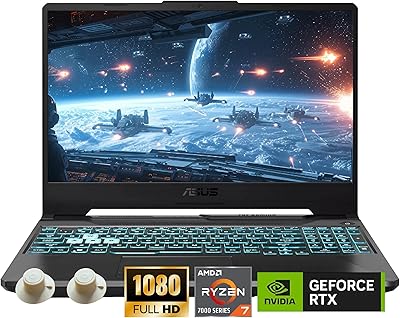
71%
74%
Gaming Performance
81%
Display Quality
86%
Build Quality & Durability
67%
Processor Performance
58%
RAM & Multitasking
More
ASUS TUF A15 Gaming Laptop, AMD Ryzen 7 7435HS, 64GB RAM, 2TB SSD
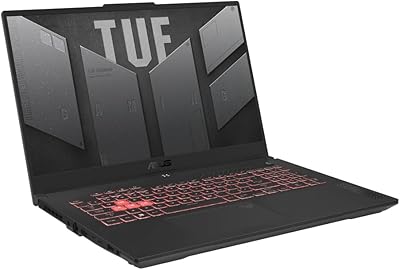
85%
92%
Gaming Performance
88%
Multitasking Capability
85%
Cooling System Efficiency
83%
Build Quality
70%
Portability
More
ASUS TUF Gaming A17 2023 Gaming Laptop
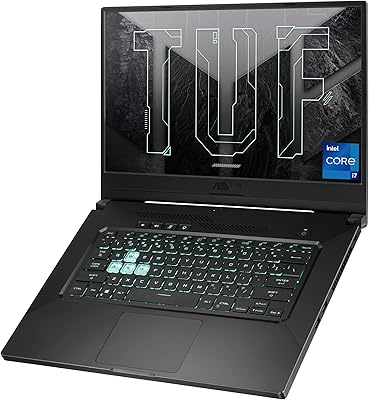
72%
88%
Gaming Performance
91%
CPU Performance
74%
Thermal Management
71%
Display Quality
83%
Build Quality
More
ASUS TUF Dash 15 2021 Gaming Laptop
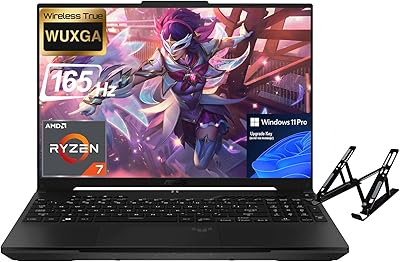
71%
74%
Gaming Performance
91%
Portability
83%
Display Quality
58%
Thermal Management
82%
Build Quality
More
ASUS TUF F16 Gaming Laptop, Intel i7-14650HX, 32GB RAM, 2TB SSD, RTX 5060
84%
94%
Performance
91%
Gaming Experience
89%
Display Quality
88%
Build Quality and Durability
86%
Cooling and Thermals
More

FAQ

It makes a real, measurable difference. Most gaming laptops route GPU output through the integrated graphics chip, which costs you frames. When you flip the MUX Switch on the Dash 15 2022, the RTX 3060 talks directly to the display instead. In GPU-heavy games, owners regularly report 10 to 20 percent better frame rates after enabling it. The catch is that switching requires a reboot, so it is not something you toggle mid-session.

Unfortunately, no. The ASUS TUF Dash 15 2022 Gaming Laptop ships with a single 16GB stick installed in one of two available slots, which means it runs in single-channel mode by default. This limits the memory bandwidth available to the GPU and leaves some performance on the table. Adding a matched second 16GB DDR5 stick is the most cost-effective hardware upgrade you can make to this machine.

Under sustained gaming load, the fans are audibly loud — noticeable enough to be distracting in a quiet room. Casual or less intensive games keep things reasonably quiet, but if you are pushing the GPU hard for an extended session, headphones are a practical necessity. The thermal solution works well; temperatures stay controlled, but ASUS prioritizes cooling performance over acoustics here.

Only under light conditions — think web browsing, note-taking, or streaming video with screen brightness turned down. During gaming, real-world battery life drops to roughly 2 to 3 hours. If you plan to game away from an outlet regularly, this is a genuine limitation to factor into your decision. For productivity use between classes or meetings, the battery holds up reasonably well.

It depends on your library. A handful of modern AAA titles can consume 200 to 300GB on their own, so 512GB fills up faster than most buyers expect. The good news is that the M.2 slot is accessible and user-upgradeable, so swapping in a 1TB or 2TB drive is straightforward if you are comfortable opening the bottom panel. Budget for that upgrade if you plan to keep a large game library installed simultaneously.

Yes, the Dash 15 2022 supports external displays via HDMI and Thunderbolt 4. You can connect a 4K monitor externally, though keep in mind the GPU is a mid-range card — expect compromises in frame rate at 4K in demanding titles. For 1080p or 1440p external monitors used for productivity or moderate gaming, it works well. The Thunderbolt 4 port also supports DisplayPort output for compatible monitors.

For its size and price range, the build quality is genuinely good. The MIL-STD-810H certification is not just a sticker — it reflects testing against real-world stressors like drops, vibration, and temperature swings. The chassis has some flex under pressure, as most thin laptops do, but day-to-day carry in a padded bag is no problem. It handles the rigors of student life better than similarly priced machines with glossier but flimsier builds.

Better than you might expect from a gaming laptop at this price. The key travel is decent, the layout is standard without awkward shortcuts crammed in, and the per-key RGB does not feel gimmicky in practice. Extended typing sessions are comfortable, and the trackpad is accurate enough for productivity tasks. Writers and students who use this machine for coursework alongside gaming tend to have few complaints about the input experience.

Yes, Thunderbolt 4 is fully capable of supporting an eGPU enclosure, which is a genuinely useful future-proofing option. In practice, whether an eGPU improves gaming performance depends on the bandwidth overhead and the specific games you play — some titles benefit more than others. For pushing external 4K monitors or connecting professional docks with multiple peripherals, the Thunderbolt 4 port is one of the more versatile features this machine offers.

The MUX Switch is the clearest differentiator — many competing RTX 3060 laptops at similar prices skip it entirely, which means this ASUS gaming laptop extracts more real-world GPU performance than the spec sheet alone suggests. The slim chassis and MIL-STD-810H rating also stand out in a category where most rivals lean bulkier. The trade-offs are the single-channel RAM out of the box and the shorter-than-average gaming battery life, both of which are worth weighing against the performance advantages before buying.

Where to Buy